Liberia: Regions, Cities & Travel Guide
Liberia is a country on the West African coast, where Atlantic surf meets rainforest, with Monrovia as its capital.
Hotel links are affiliate links: booking through them may earn us a commission, at no extra cost to you. It never affects how places are ranked. How this works


Top destinations in Liberia
One city to start from, then drill into its areas and hotels.
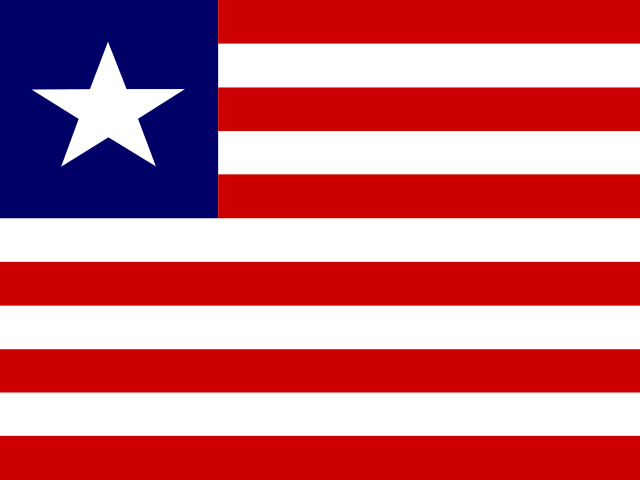 Liberia
Monrovia
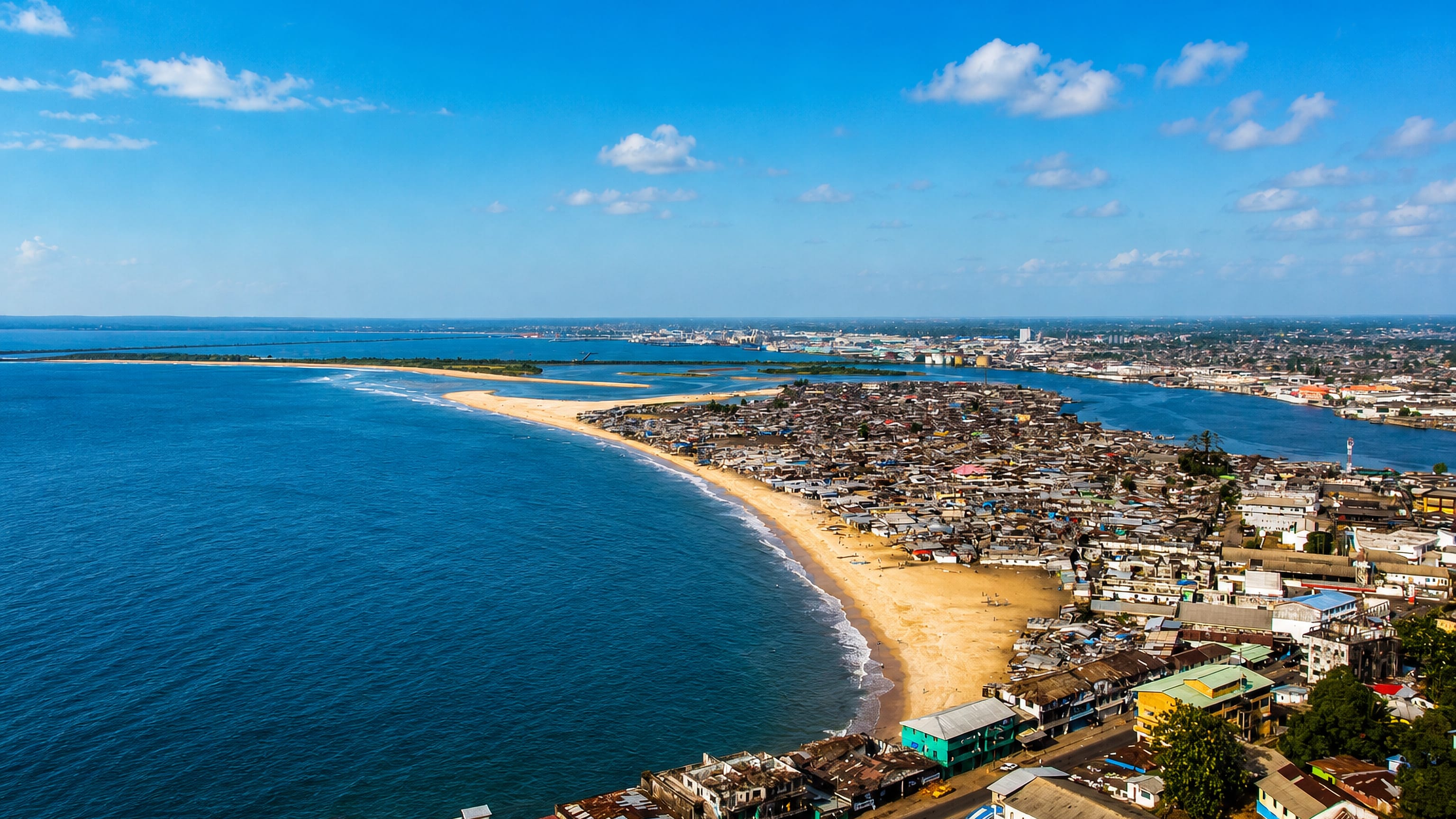
The Atlantic breaks against Cape Mesurado at Monrovia, the capital of Liberia and the seat of Montserrado County, known for the Liberian National Museum.Where to stay →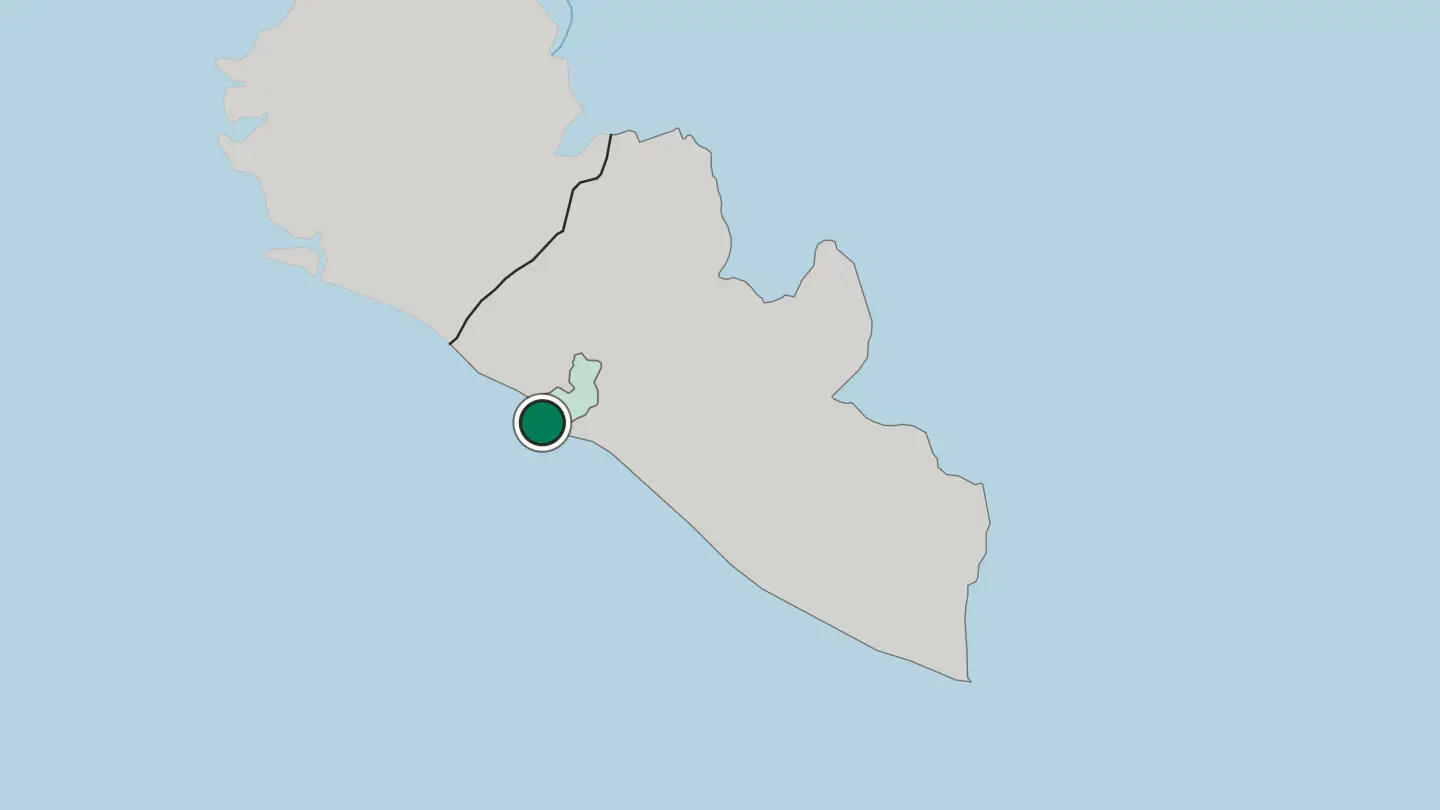
Hotel links are affiliate links: booking through them may earn us a commission, at no extra cost to you. It never affects how places are ranked. How this works
Browse by region
One region so far — open it to see its cities and towns.
About Liberia
Liberia carries a founding story unlike any other in Africa.
What is Liberia known for?
Freed African Americans settled its coast from 1822, and in 1847 they declared an independent republic that still stands as the continent's oldest. English is official. It shares daily life with more than 20 indigenous tongues, from Kpelle to Bassa to Vai.
The country is known for its music too: hip co, a Liberian style that fuses hip hop with colloquial street speech, packs concert halls once the dry season comes. Along the northwest shore, Robertsport draws surfers to some of West Africa's most consistent point breaks.
Where is Liberia?
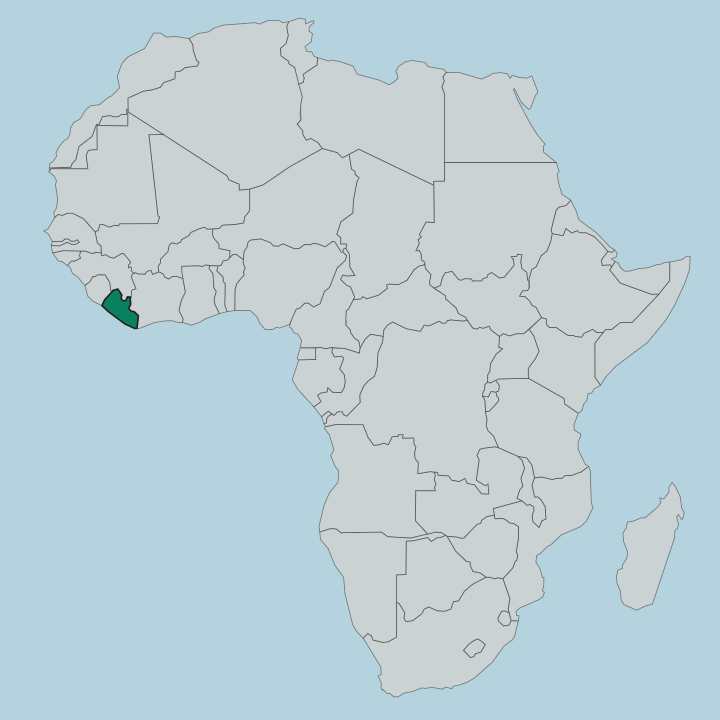
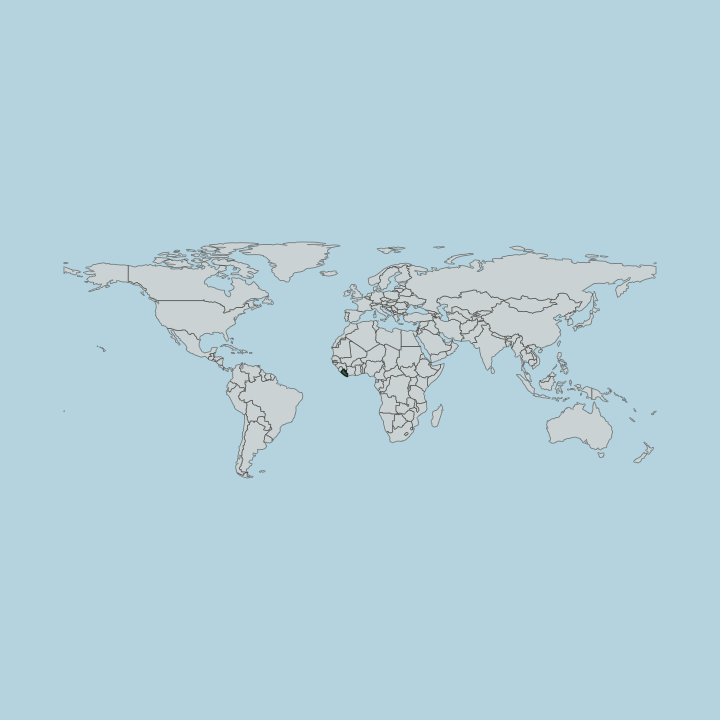
Liberia occupies a stretch of the West African coast between Sierra Leone, Guinea, and Ivory Coast, with the Atlantic along its whole southern edge. The shoreline is low and sandy, a run of beaches broken by bar-enclosed lagoons, mangrove swamps, and rocky headlands. Cape Mesurado rises at Monrovia, and Cape Palmas marks the far southeastern corner near Harper.
Behind the coast the land climbs. Inland, most of the country is a dissected plateau scattered with low mountains, rising toward the Guinea frontier where the Nimba Range straddles the border in the north. The highest point wholly inside the country is Mount Wuteve, in the northwestern highlands.
Rivers order this interior and nearly all of them run south to the sea. The Saint Paul River reaches the Atlantic near Monrovia, the Cestos River drains the central forest, and the Cavalla, the longest, traces much of the eastern boundary with Ivory Coast. In the northwest the Mano River forms the line toward Sierra Leone.
Dense tropical rainforest still cloaks large tracts of the interior, most famously the biodiverse expanse protected as Sapo National Park. From surf-line to forested ridge, the country packs a lot into a small map.
What is the history of Liberia?
Liberia's modern story begins with a settlement founded in 1822, when the American Colonization Society landed freed and free-born African Americans on the coast near Cape Mesurado. The first shore base stood on Providence Island, in the estuary at what would become Monrovia. Over the following decades more than fifteen thousand settlers crossed the Atlantic, and the community they formed came to call itself Americo-Liberian.
They built churches, houses, and a form of government modelled on the American republic they had left. Independence came on 26 July 1847, when eleven men signed a declaration and established the free Republic of Liberia, with Joseph Jenkins Roberts elected its first president. No African republic is older.
The settler elite held political power for well over a century, ruling over far more numerous indigenous peoples such as the Kpelle, the Bassa, and the Gio. That imbalance shaped much of what followed, including the upheavals of the late twentieth century. The past is not sealed away in Liberia.
It lives in place names, in the flag's single star, and in the Independence Day parades that still fill Monrovia's streets each July.
What is Liberia like?
Liberian culture braids two threads: the Americo-Liberian settler heritage and the traditions of the country's indigenous peoples. English is the shared language of school and state, but daily life runs in Kpelle, Bassa, Vai, and more than twenty other tongues, each carrying its own songs and storytelling. Food anchors the table.
Cassava becomes dumboy and fufu, pounded to a smooth dough and eaten with pepper soup, while jollof rice and hearty stews thick with palm oil turn up at every gathering. Music is the loudest expression of the modern national mood. Hip co, born in the 1980s and sharpened through years of hardship, sets political and everyday lyrics to hip hop in Liberian street English, and its concerts pack out venues once the dry season arrives.
Masking traditions and secret societies still shape ceremony in the forest counties, from initiation rites to carved masks. Christianity and Islam both hold deep roots, and community life leans on church, mosque, and extended family alike. The result feels distinctly Liberian.
It reads as neither wholly African American nor wholly West African, but a culture of its own making.
What is the climate of Liberia?
The country is hot and tropical the year round. Liberia runs on two seasons rather than four. The rains fall from May to October, heaviest along the coast where wet Atlantic air piles up against the land, and Monrovia counts among the wettest capital cities on earth.
From November to April the dry season takes over, warmer and clearer, and the dusty harmattan wind sometimes drifts down from the Sahara. Heat stays constant. Temperatures hold between the high twenties and low thirties Celsius almost everywhere.
The calendar here turns on rain, not on cold.
How do you get to Liberia?
Nearly all visitors arrive by air. Roberts International Airport, near the town of Harbel in Margibi County, is the country's main gateway, sitting roughly an hour's drive southeast of Monrovia. Flights connect through regional hubs such as Accra, Lomé, and Casablanca, with onward links to Europe.
From the airport, most travellers pre-arrange a hotel car or taxi for the road into the capital, since public transport is limited. Land crossings from Sierra Leone, Guinea, and Ivory Coast exist but are slow. Plan the connection before you land.
Updated September 2026