Armenia · Ararat
Where to Stay in Masis, Ararat
Masis holds the commodity railway station that works Yerevan's freight, on the left bank of the Hrazdan out toward Mount Ararat.
Hotel links are affiliate links: booking through them may earn us a commission, at no extra cost to you. It never affects how places are ranked. How this works


Where to stay in Masis
The practical side of choosing where to sleep.
The choice at Masis runs between the commodity yard and Yerevan. A room in the town puts the Hrazdan, the offices of Masis Municipality and the flat run toward Mount Ararat within reach, and it leaves the capital's whole stock of rooms nine kilometres up the road rather than downstairs. Wagons set the pace here.
Anyone whose day is set by the station, the municipal offices, or the church of the Holy Mother of God at Ghukasavan wants the town side; anyone working through Erebuni Fortress and the Erebuni Museum does not. Yerevan carries the alternative. Nine kilometres is short enough that basing in the capital costs a visitor to Masis almost nothing in travel, and Karmir Blur and Teishebaini sit on that side of the gap along with most of the rest of the list.
The town answers with quiet and with distance from the capital's traffic, which is worth something to anyone whose reason for coming is the railway rather than the ruins. Rail work argues for the town; sightseeing argues for the capital. Ghukasavan sits on the same record.
Its church of the Holy Mother of God is the one named building the record puts on this side of the gap, so a stay in Masis that is not about the railway usually turns on getting out into the Ararat Province rather than into the city.
Few places to stay in Masis — most visitors book in Yerevan nearby.
Find hotels in Masis
Direct booking searches for these neighbourhoods.
The station side
The streets around the freight station that loads for Yerevan, where Masis Municipality keeps its offices and the working day belongs to wagons rather than to visitors. Few places to stay nearby — book ahead.Find hotels in The station sidea base out on the plain, with the church of the Holy Mother of God at Ghukasavan the one named stopThe Hrazdan bank toward Ghukasavan
The open side of Masis, where the flat ground runs on toward Mount Ararat, visible from most of the town, and Ghukasavan keeps its church of the Holy Mother of God. Beds are limited here, so book early.Find hotels in The Hrazdan bank toward GhukasavanHotel links are affiliate links: booking through them may earn us a commission, at no extra cost to you. It never affects how places are ranked. How this works
About Masis
Freight, not sightseeing.
What is Masis known for?
The commodity station at Masis handles rail traffic on Yerevan's account, and that yard, rather than any monument in the town, is what the record has most to say about the place. Trains once ran through here to link the capital with the Nakhichevan Autonomous Soviet Socialist Republic, a connection that ended when the border with Azerbaijan closed. Masis Municipality keeps its seat here.
What are the main landmarks in Masis?
Most of the listed sites lie toward Yerevan. Erebuni Fortress, the Erebuni Museum and the Yerevan Velodrome all name or stand on the capital's side, and Karmir Blur and Teishebaini are recorded on the same stretch of ground. The Armenian Railways Museum belongs on any Masis list.
The church of the Holy Mother of God at Ghukasavan closes it.
What is the history of Masis?
Masis grew from three villages, Narimanlu, Zangibasar and Ulukhanlu. The Soviet government merged them in 1953 as Hrazdan, and in 1969 the settlement took the name Masis, the Armenian name for the peak of Mount Ararat, as the centre of the re-founded Masis raion. It became an urban-type settlement in 1971.
It then grew around farm produce and light industry, with a furniture factory and a unit of the Yerevan carpet weaving factory. Its large commodity station once linked Yerevan with the Nakhichevan Autonomous Soviet Socialist Republic, until the border with Azerbaijan closed. Masis became a town of the new Ararat Province in 1995.
Where is Masis?
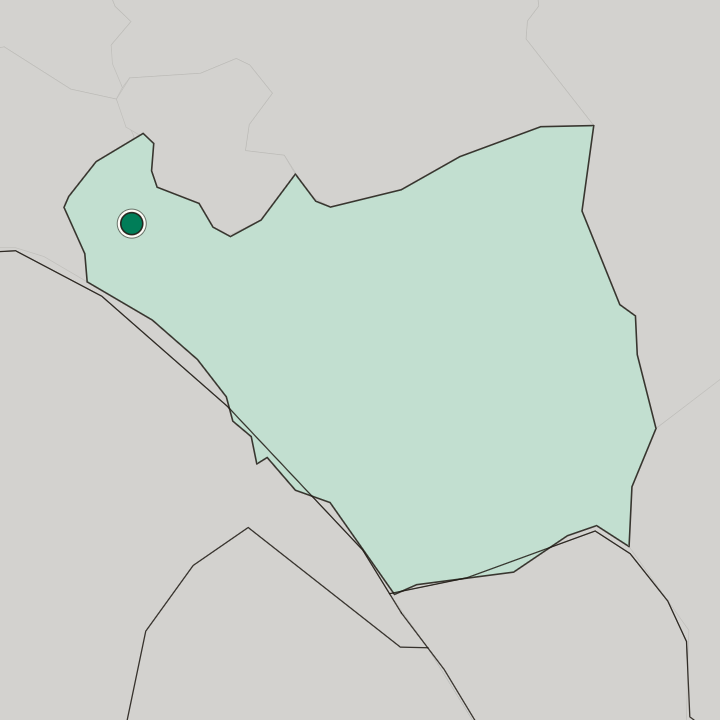
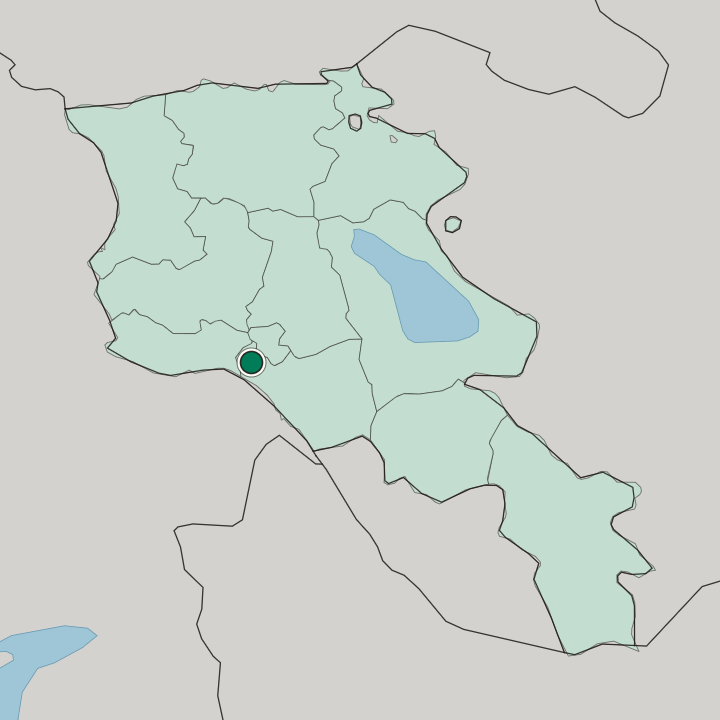
Masis stands on the left bank of the Hrazdan. Flat country runs in every direction from the town, north-east to Yerevan nine kilometres off and south-west toward Mount Ararat, and the Hrazdan cuts through it on its own line. Ararat Province takes in this ground.
The built-up part of Masis is small against all that, a compact block of streets rather than a spread along the river.
What is the climate of Masis?
The plain does the work here. Open ground between the Hrazdan and Mount Ararat gives the weather nothing to break on, so Masis takes the full swing of an inland season without a coast or a ridge to soften either end of it. Shade is a built thing.
What the town has of it comes from streets and yards rather than from relief, which matters most on the long bright stretch of the year when the plain holds the heat.
How do you get to Masis?
Yerevan is the doorway. Nine kilometres of flat road separate Masis from the capital, which puts the town inside an easy drive of everything arriving there and makes the trip out a short one in either direction. The railway is a different matter.
Masis holds a commodity station worked on Yerevan's account, and the onward run of that line toward the Nakhichevan Autonomous Soviet Socialist Republic has been shut since the border with Azerbaijan closed.
Common questions
What is the best area to stay in Masis?
The station side: days set by the Masis commodity yard and the offices of Masis Municipality. The Hrazdan bank toward Ghukasavan: a base out on the plain, with the church of the Holy Mother of God at Ghukasavan the one named stop. Yerevan: lists that begin at Erebuni Fortress, the Erebuni Museum and Karmir Blur.
Good for
Updated October 2026