
Armenia: Regions, Cities & Travel Guide
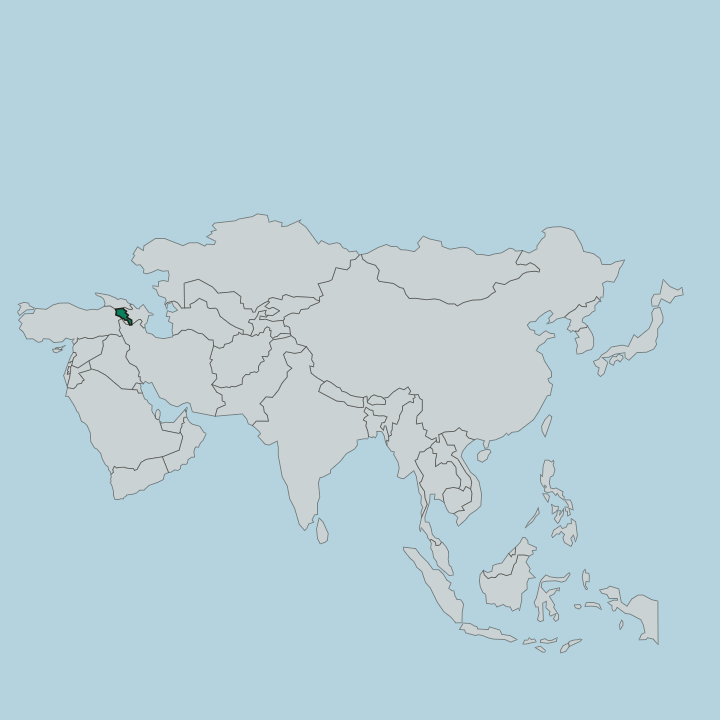
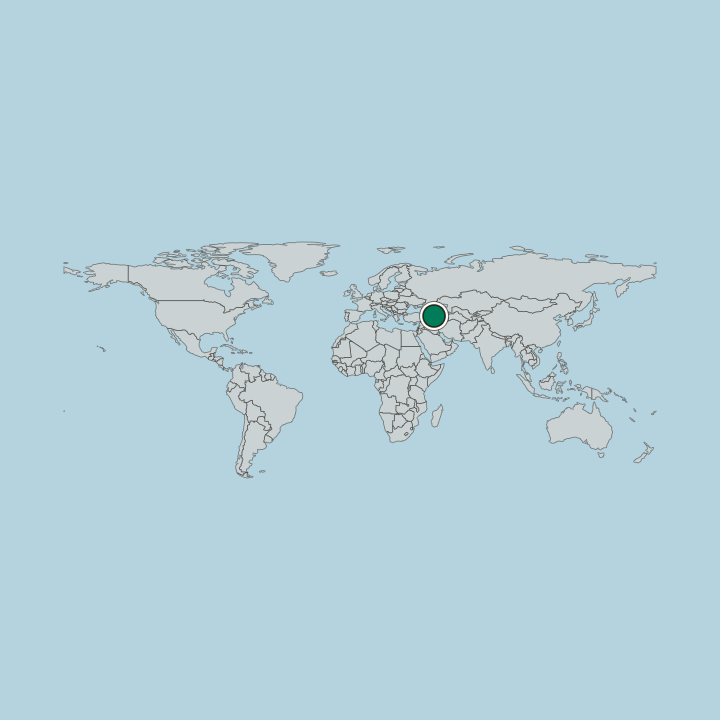
Armenia is a landlocked country in the Caucasus, set in the Armenian highlands between Europe and Asia, with Yerevan as its capital.
Hotel links are affiliate links: booking through them may earn us a commission, at no extra cost to you. It never affects how places are ranked. How this works


Top destinations in Armenia
Cities to start from, then drill into areas and hotels.
 Armenia
Yerevan
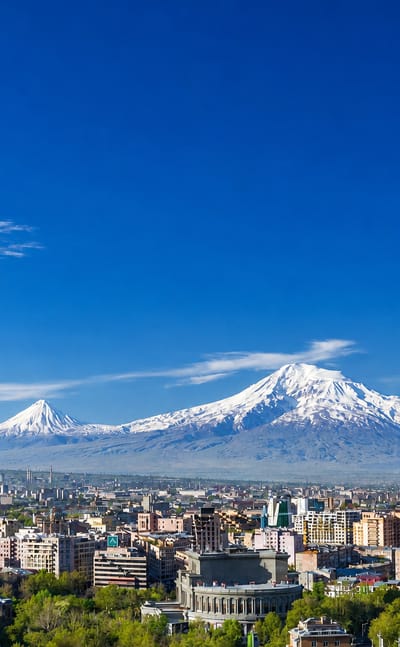
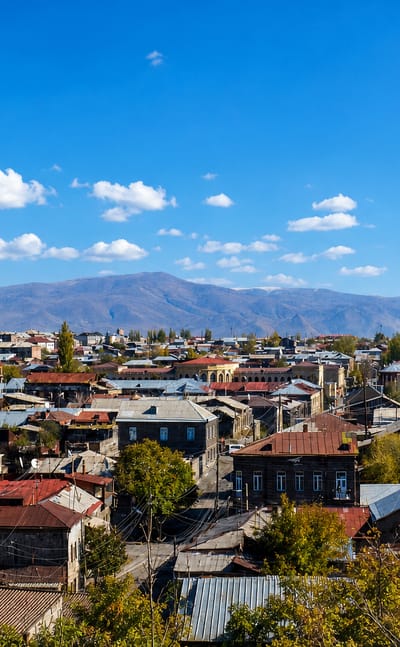
Yerevan rises along the Hrazdan River on the Ararat Plain, the capital of Armenia and one of the world's oldest continuously inhabited cities.Where to stay →
 Armenia
Gyumri
Gyumri, the second-largest city in Armenia, is the cultural centre of Shirak Province in the northwest of the country.Where to stay →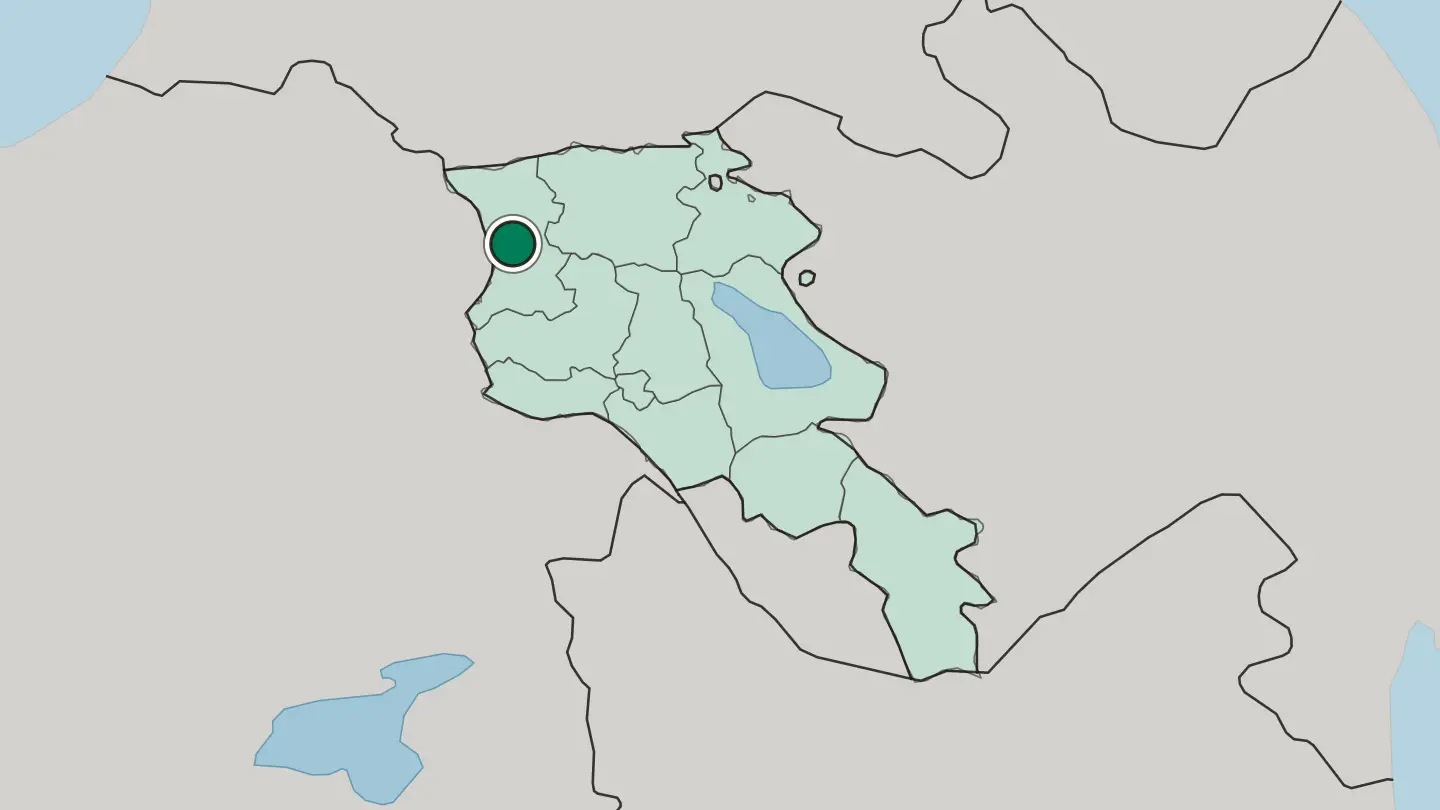 Armenia
Vagharshapat
Vagharshapat, still widely called Echmiadzin, holds the Mother See of Holy Etchmiadzin and its cathedral, a short run west of Yerevan.Where to stay →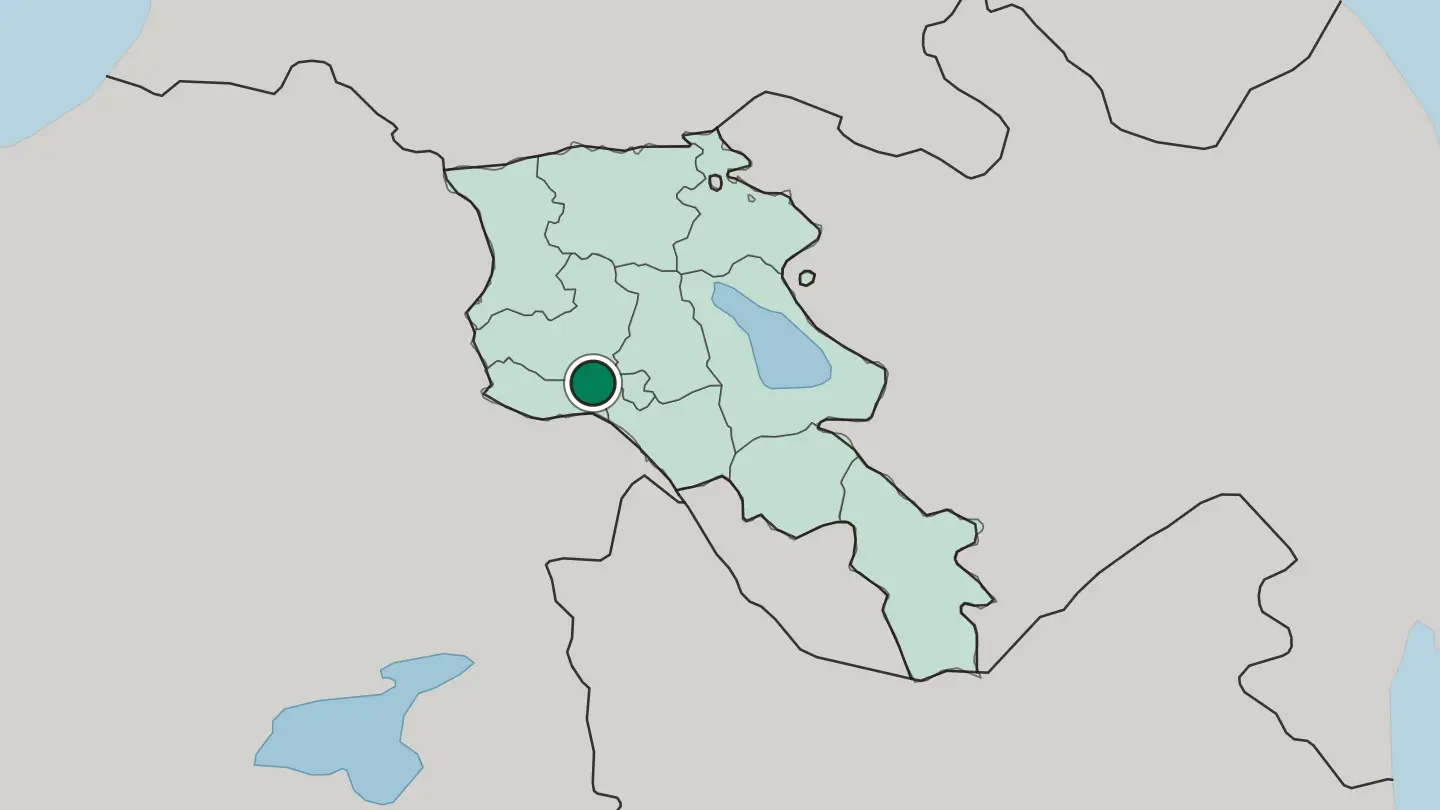
 Armenia
Vanadzor
Vanadzor is the third city of Armenia and the capital of Lori, lying in a green mountain valley in the north where three river valleys join.Where to stay →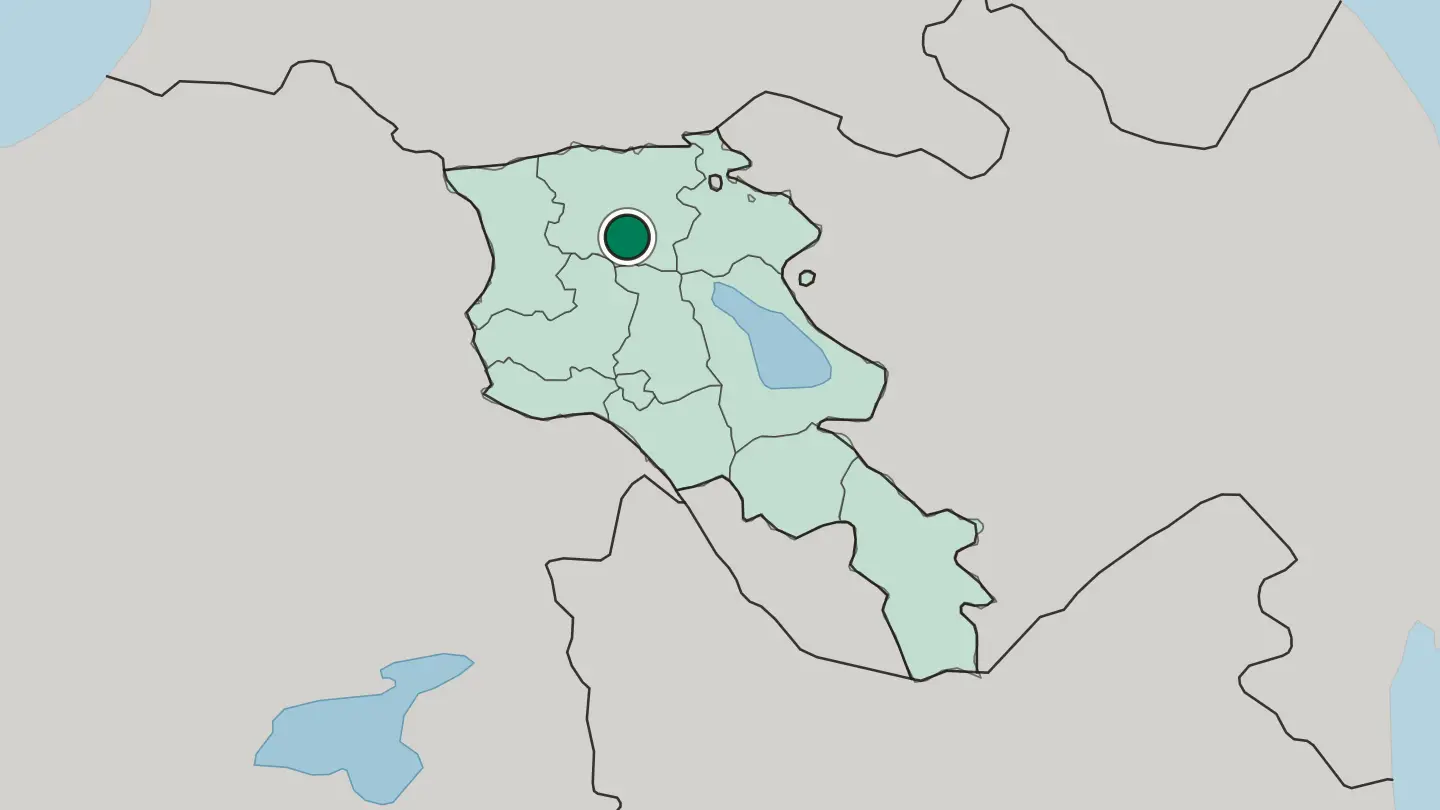 Armenia
Kapan
Kapan, capital of Syunik, fills a Voghji River valley under the northern slopes of Mount Khustup in southern Armenia.Where to stay →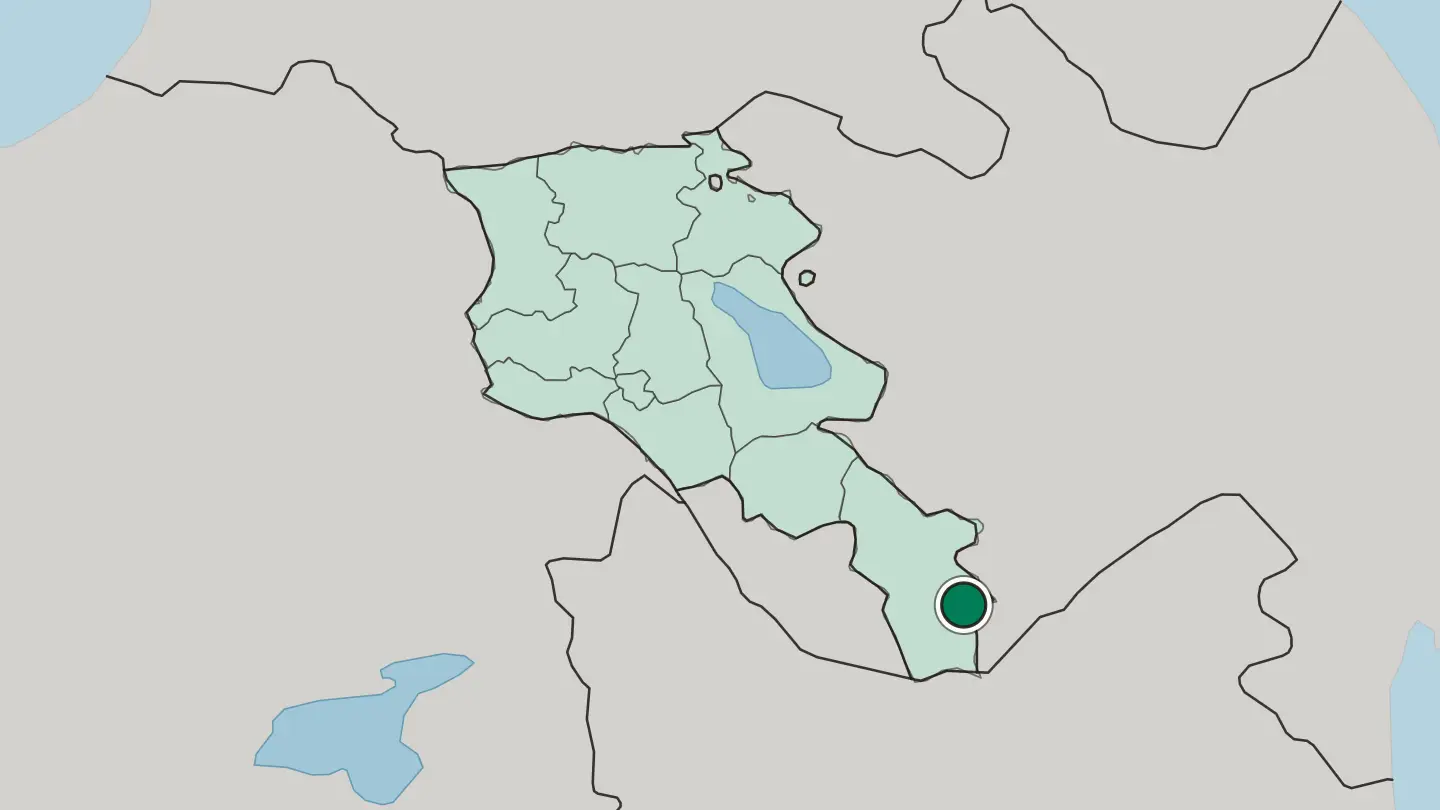 Armenia
Ijevan
Ijevan is the administrative centre of Tavush Province in northern Armenia, on the Aghstev below the Ijevan ridge of the Gugark Mountains.Where to stay →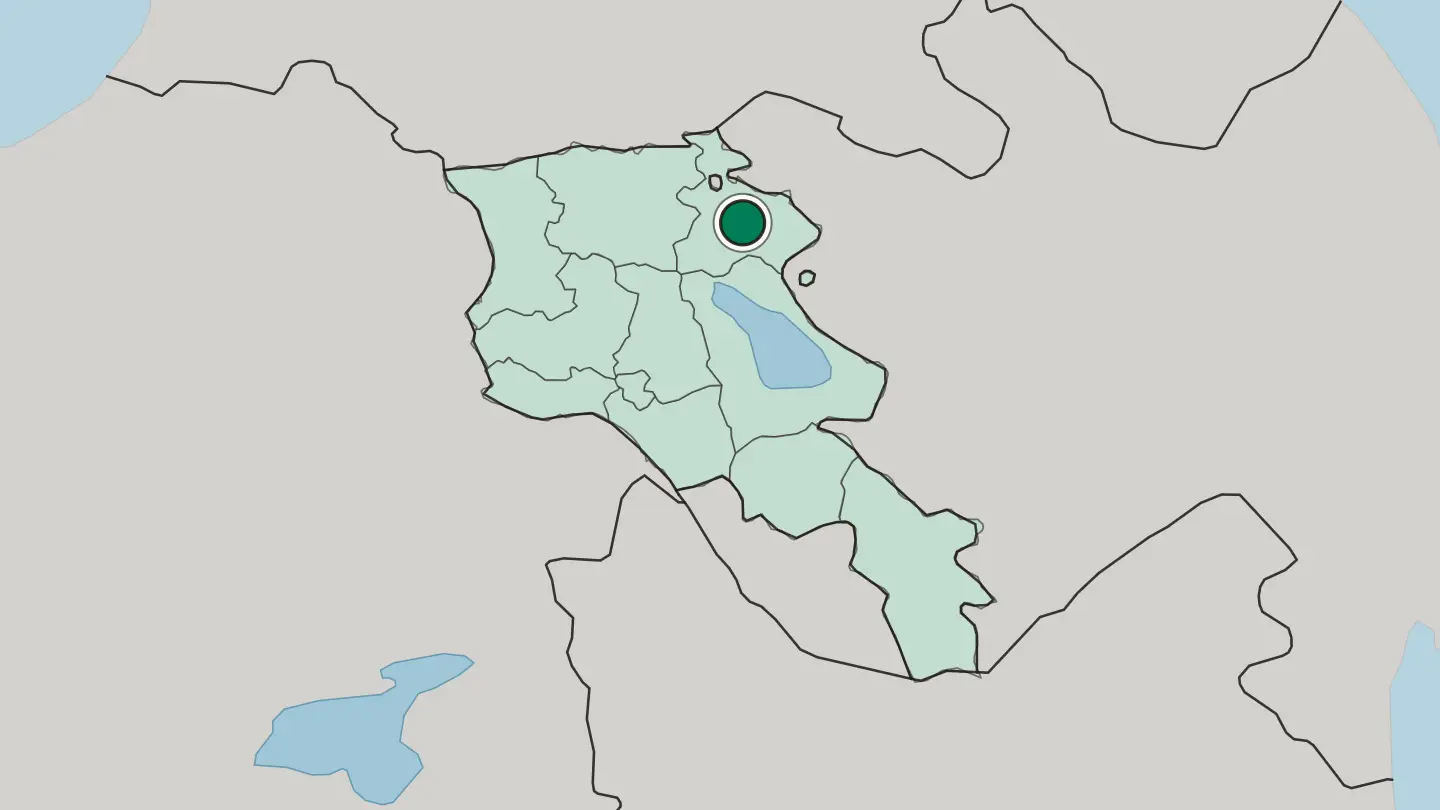
 Armenia
Abovyan
Abovyan is a modern town on the highlands north of Yerevan in Armenia, on the road to Lake Sevan.Where to stay →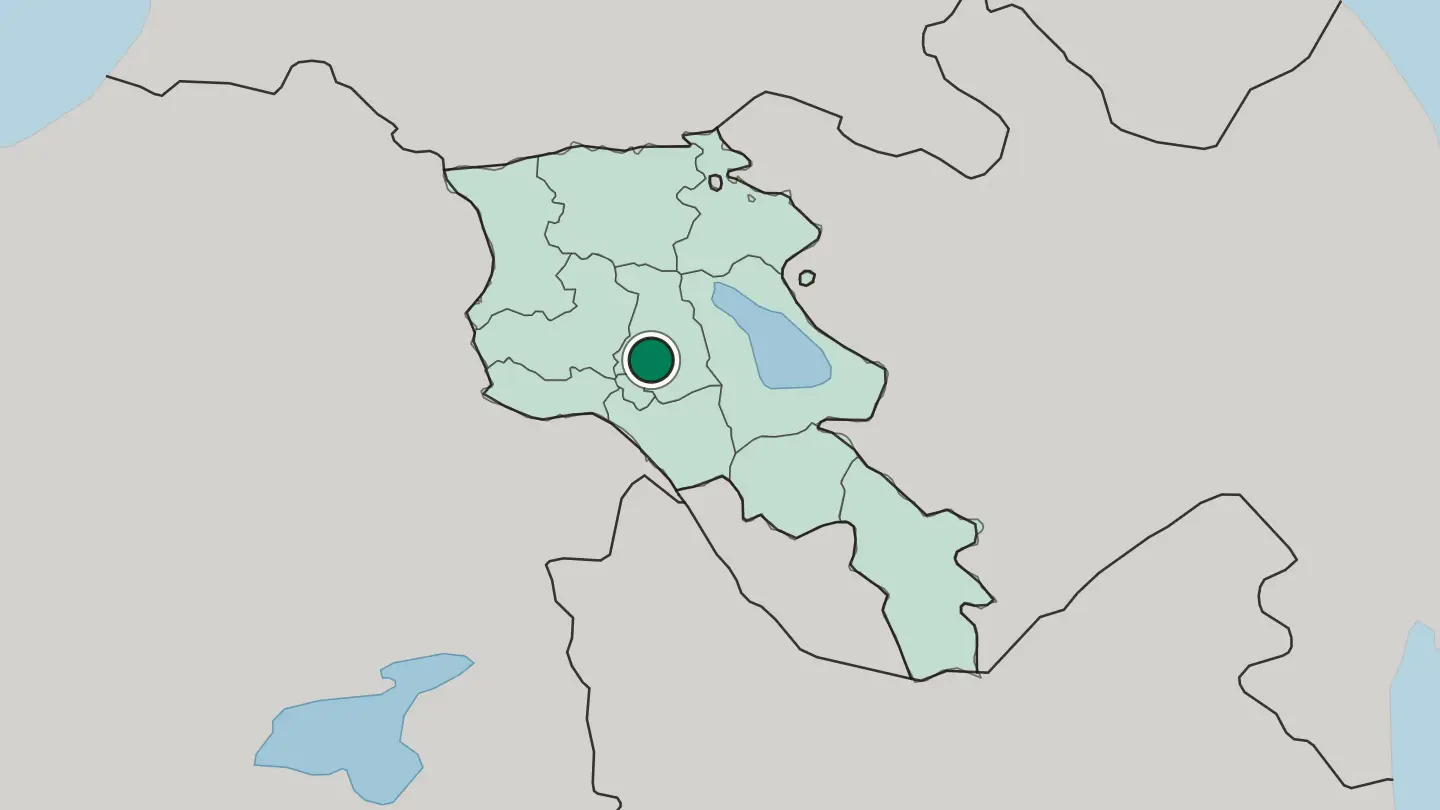 Armenia
Sevan
Sevan is an Armenian resort city on the northwestern shore of Lake Sevan, about 3 km back from the water beneath the monastery of Sevanavank.Where to stay →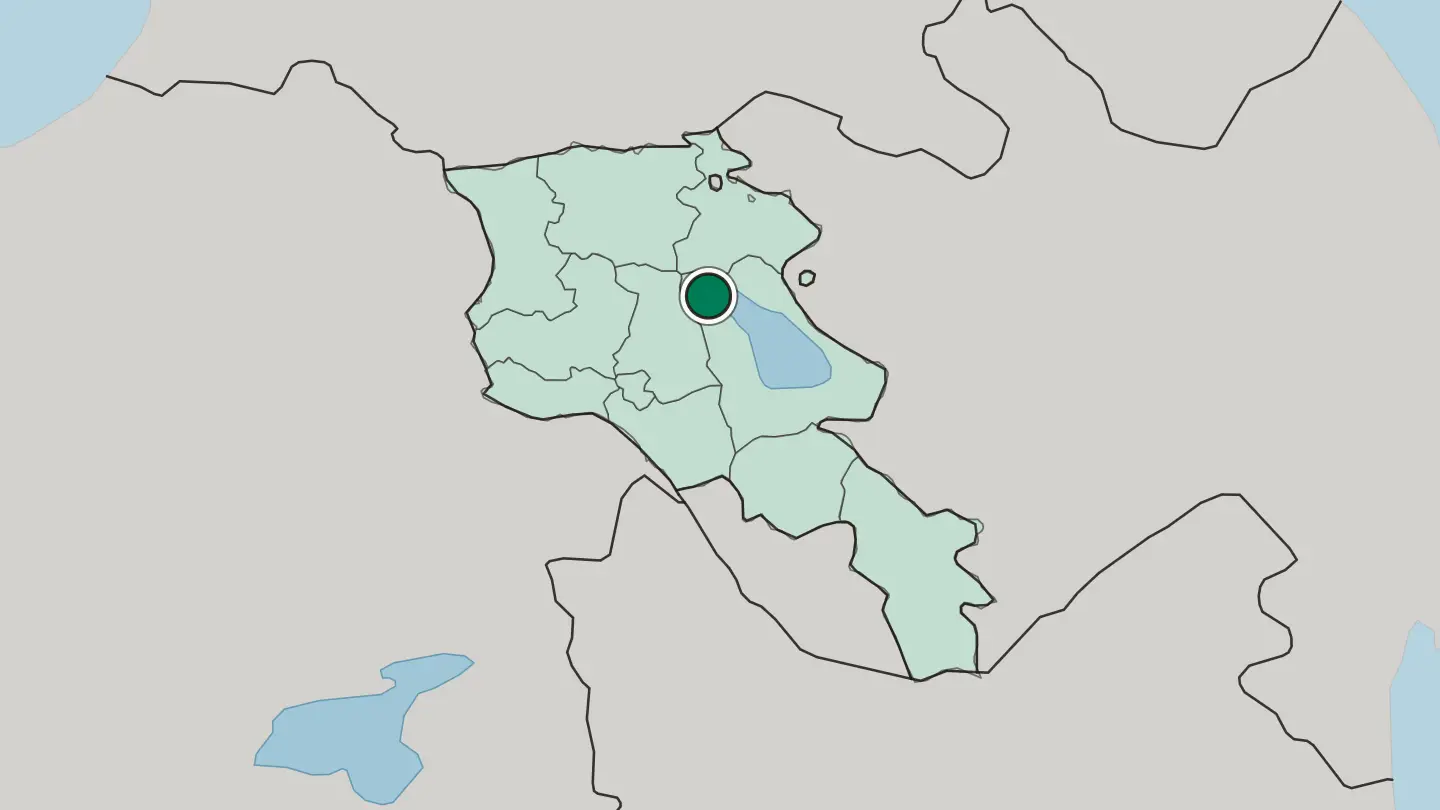 Armenia
Ashtarak
Ashtarak keeps Karmravor, the best-preserved Armenian church of the 7th century, on the left bank of the Kasagh gorge northwest of Yerevan.Where to stay →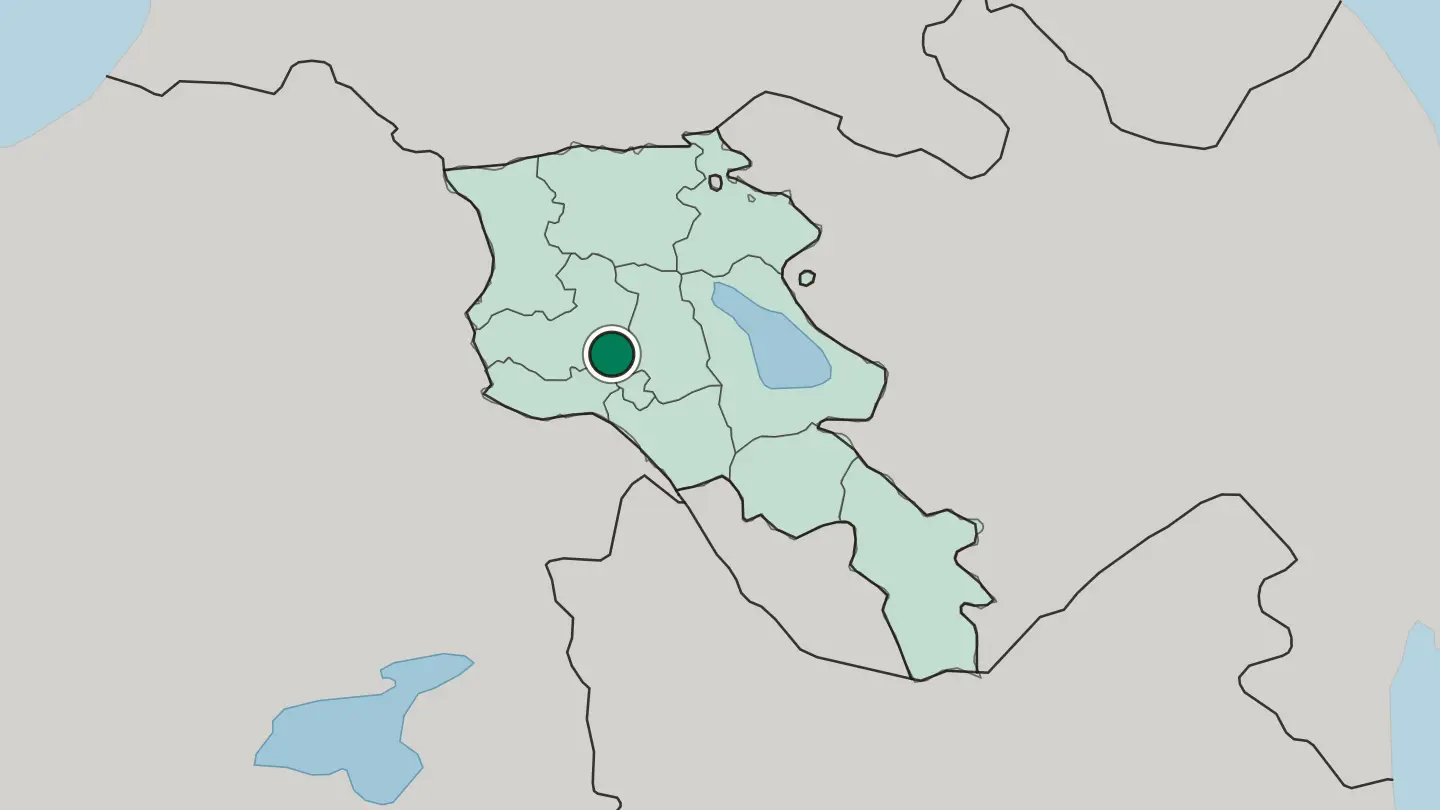
Hotel links are affiliate links: booking through them may earn us a commission, at no extra cost to you. It never affects how places are ranked. How this works
Regions of Armenia
Armenia
Aragatsotn
Aragatsotn is Armenia's province around Mount Aragats, the country's highest peak, north-west of Yerevan.Towns & cities →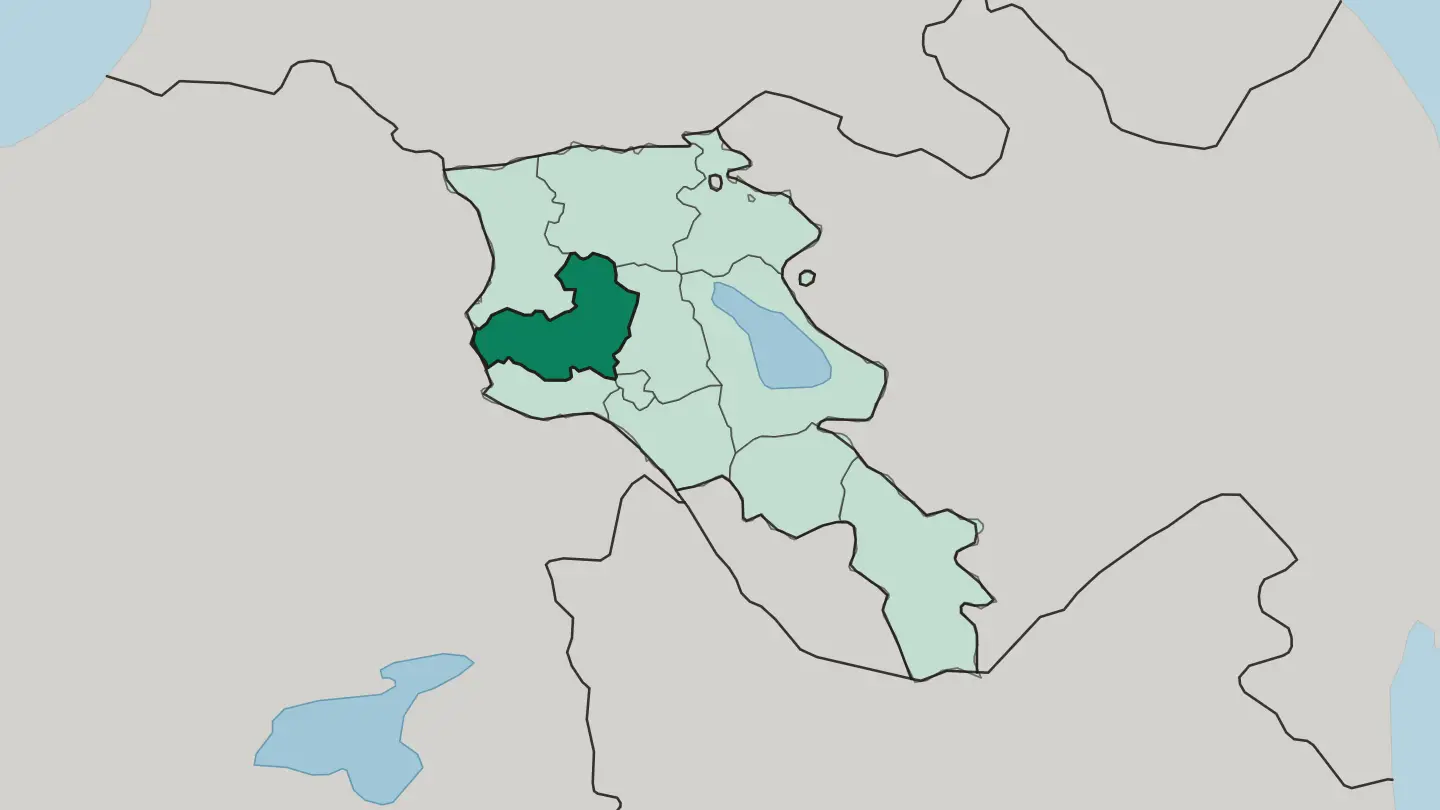 Armenia
Ararat
Ararat is central Armenia's plainland province, its western edge the Aras river and Mount Ararat filling the skyline across the Turkish border.Towns & cities →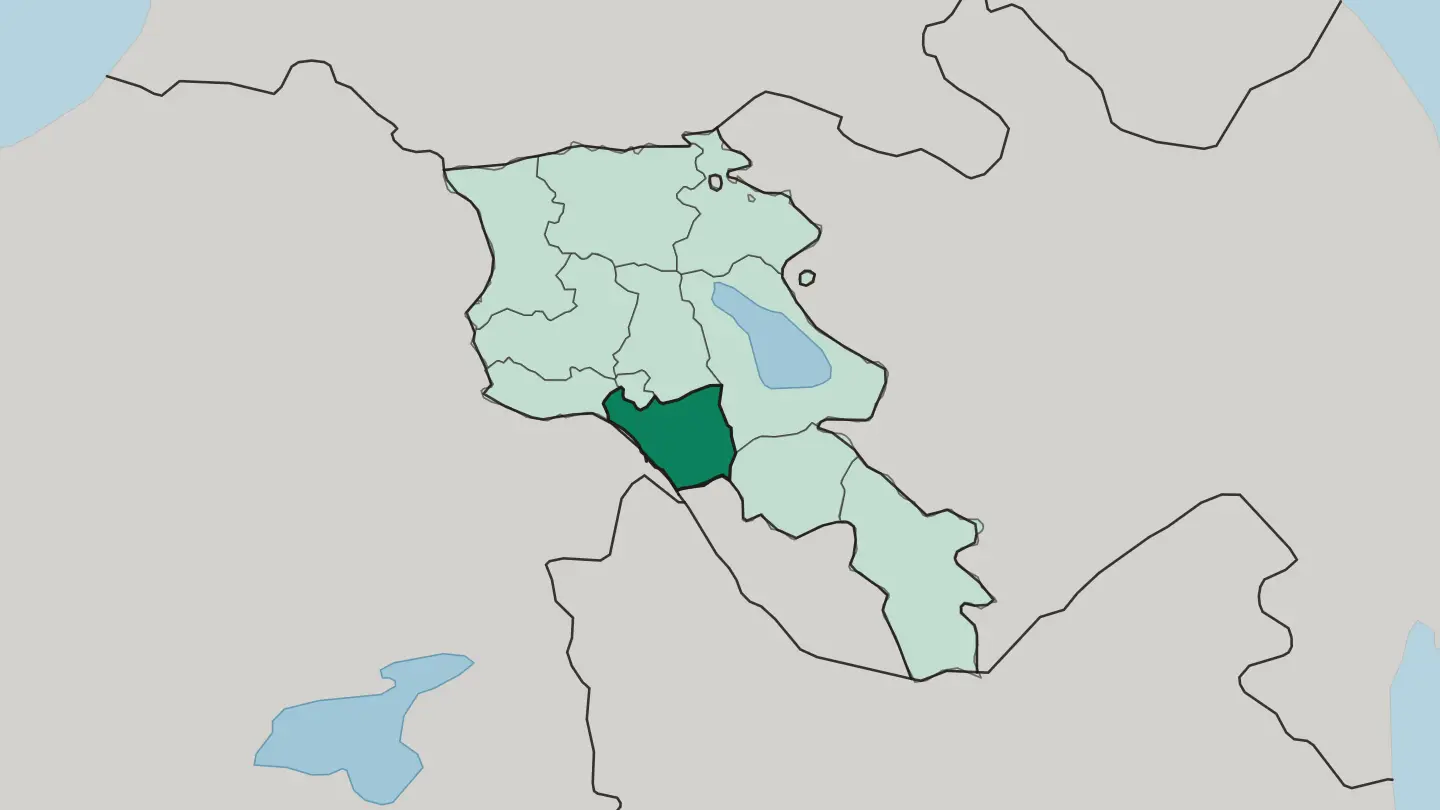 Armenia
Armavir
Armavir is Armenia's smallest province, holding Etchmiadzin, the mother church of the Armenian Apostolic faith, on the Ararat plain.Towns & cities →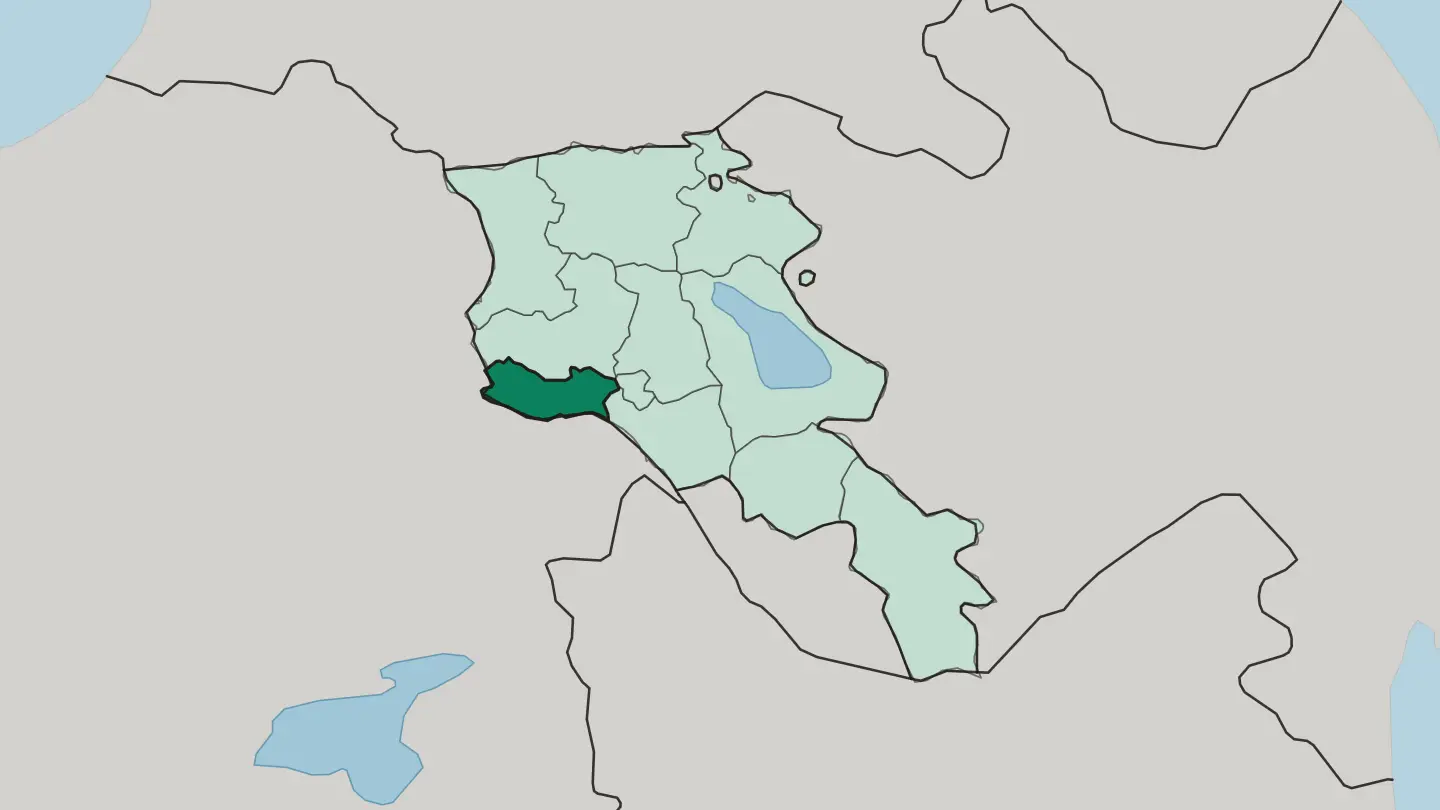 Armenia
Gegharkunik
Gegharkunik is the largest province of Armenia, wrapped around Lake Sevan, the great alpine lake of the Caucasus.Towns & cities →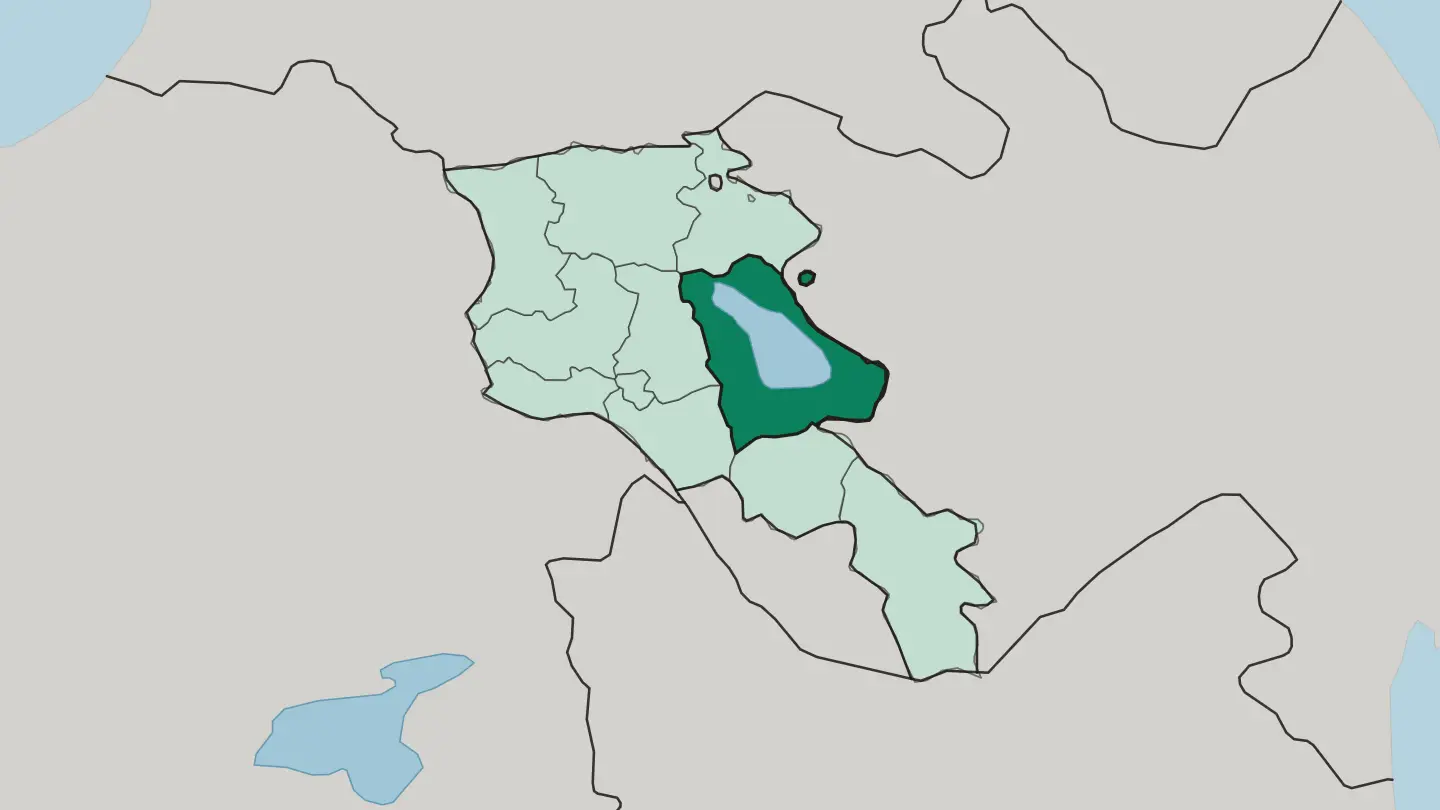 Armenia
Kotayk
Kotayk is Armenia's landlocked heart, where the Gegham mountains rise above Garni temple and the Tsaghkadzor ski slopes.Towns & cities →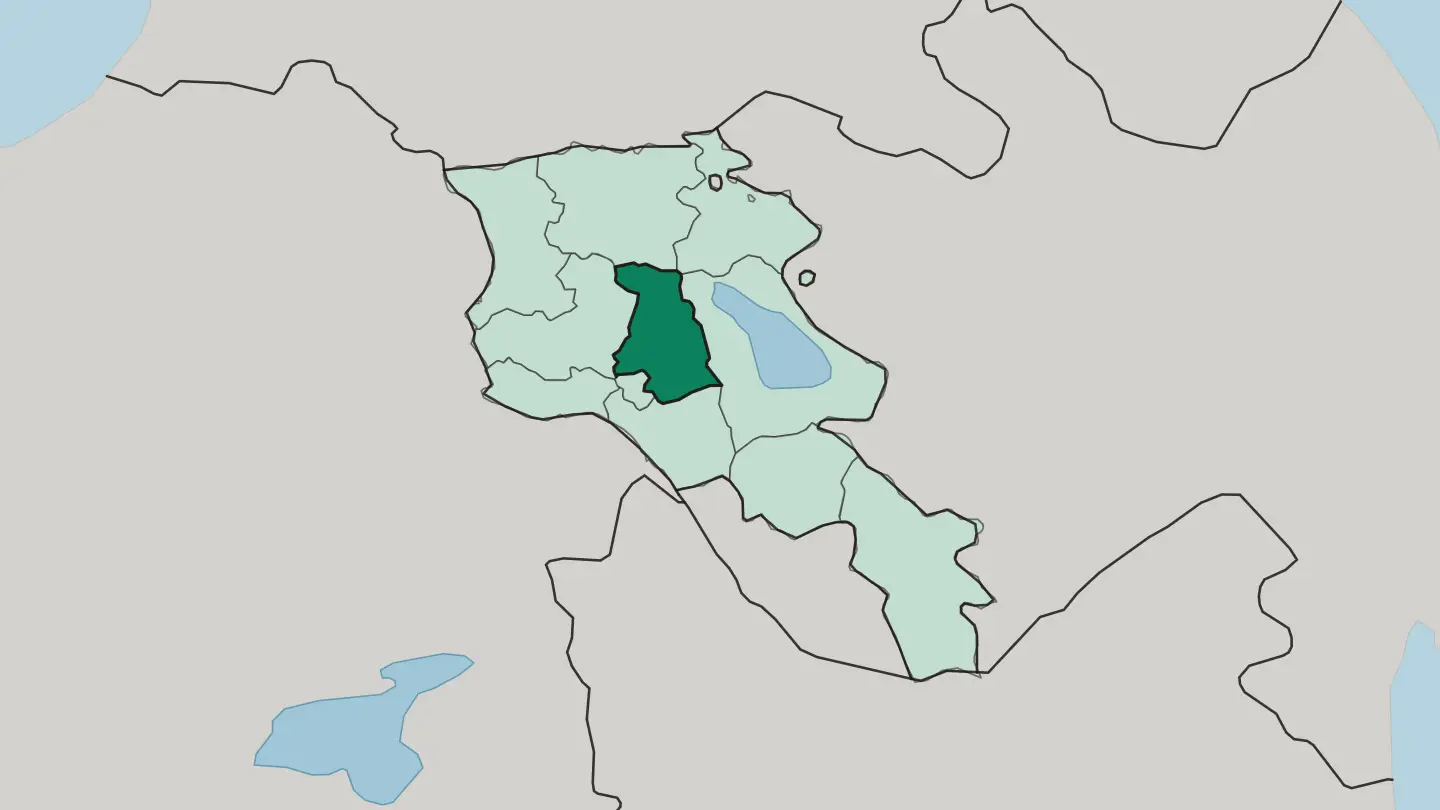 Armenia
Lori
Lori is Armenia's northern mountain province, where the Debed cuts a deep canyon past the medieval monasteries of Haghpat and Sanahin.Towns & cities →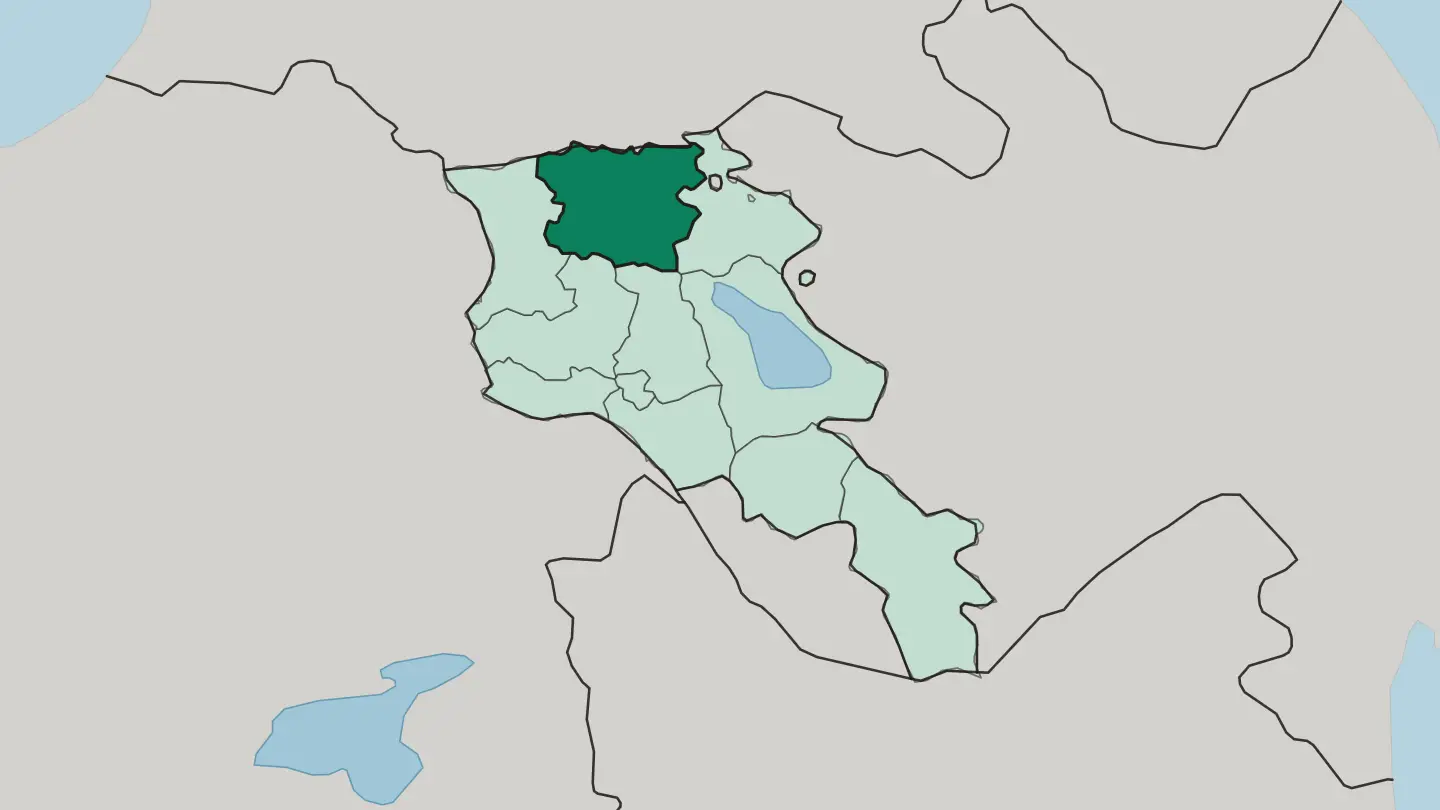 Armenia
Shirak
Shirak is the high, cold north-western corner of Armenia, built of black tuff around its second city, Gyumri.Towns & cities →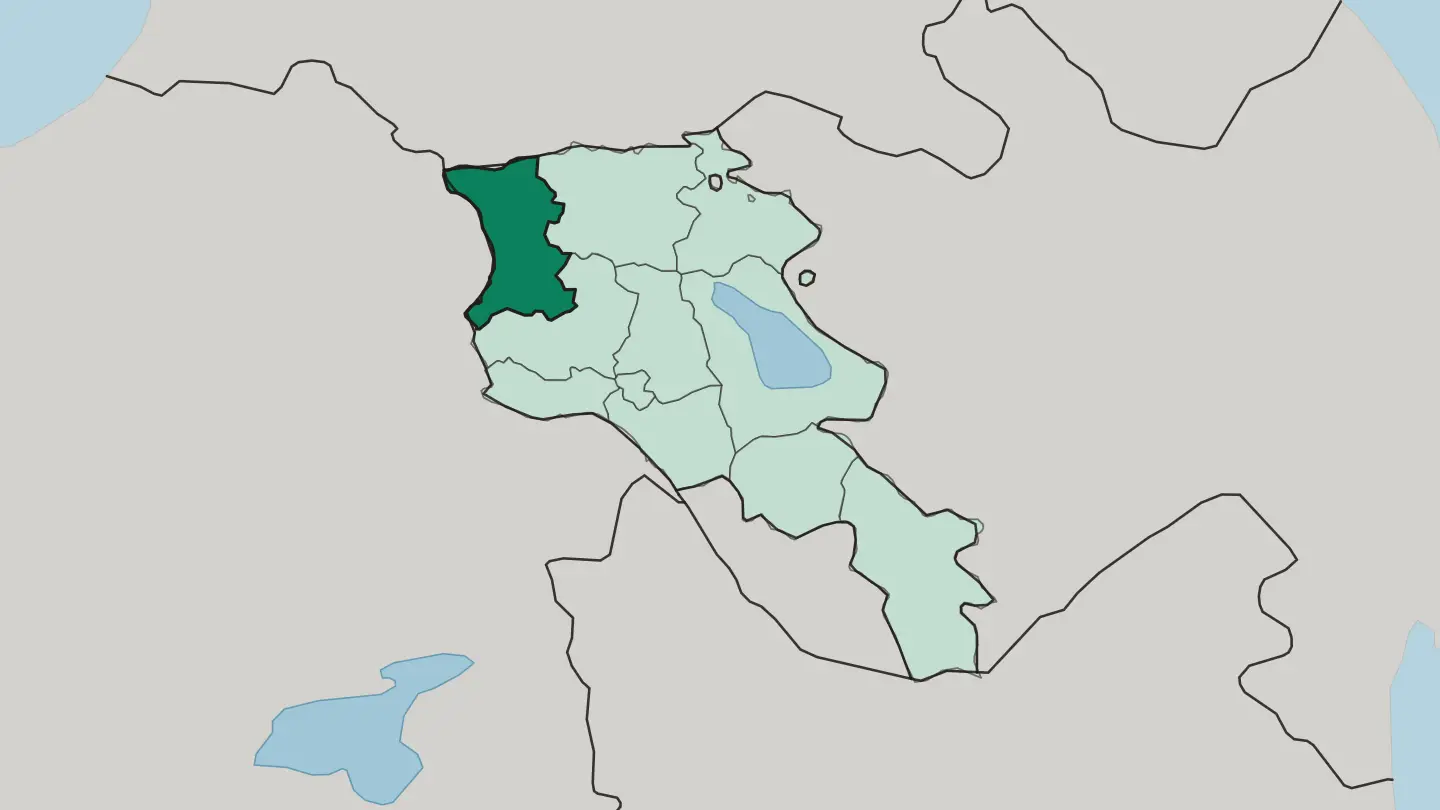 Armenia
Syunik
Syunik is Armenia's mountainous southern province, holding the Zangezur peaks, Tatev monastery and the main highway down to the Iranian border.Towns & cities →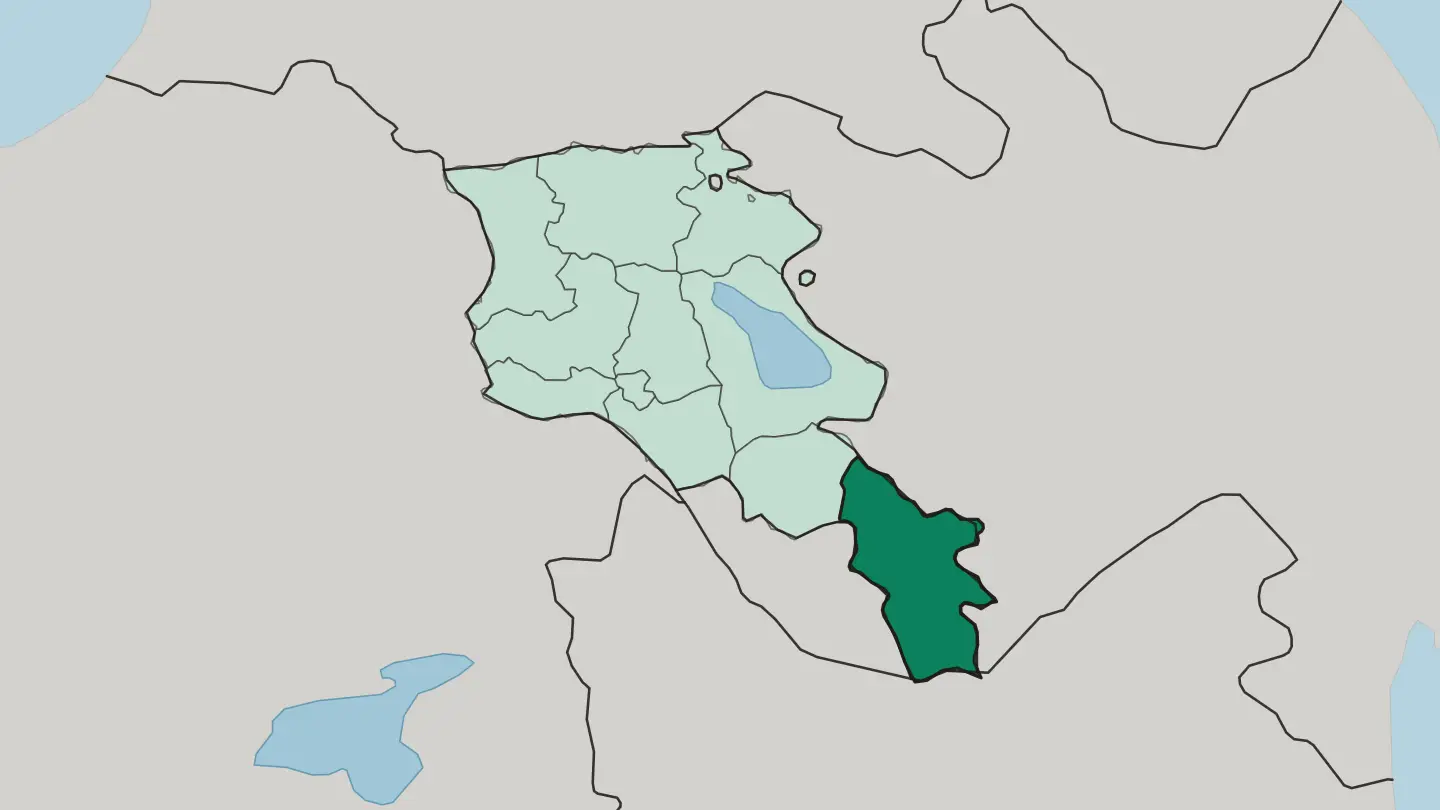 Armenia
Tavush
Tavush is the forested northeast corner of Armenia, where the Aghstev river runs past Dilijan and Ijevan toward Georgia.Towns & cities →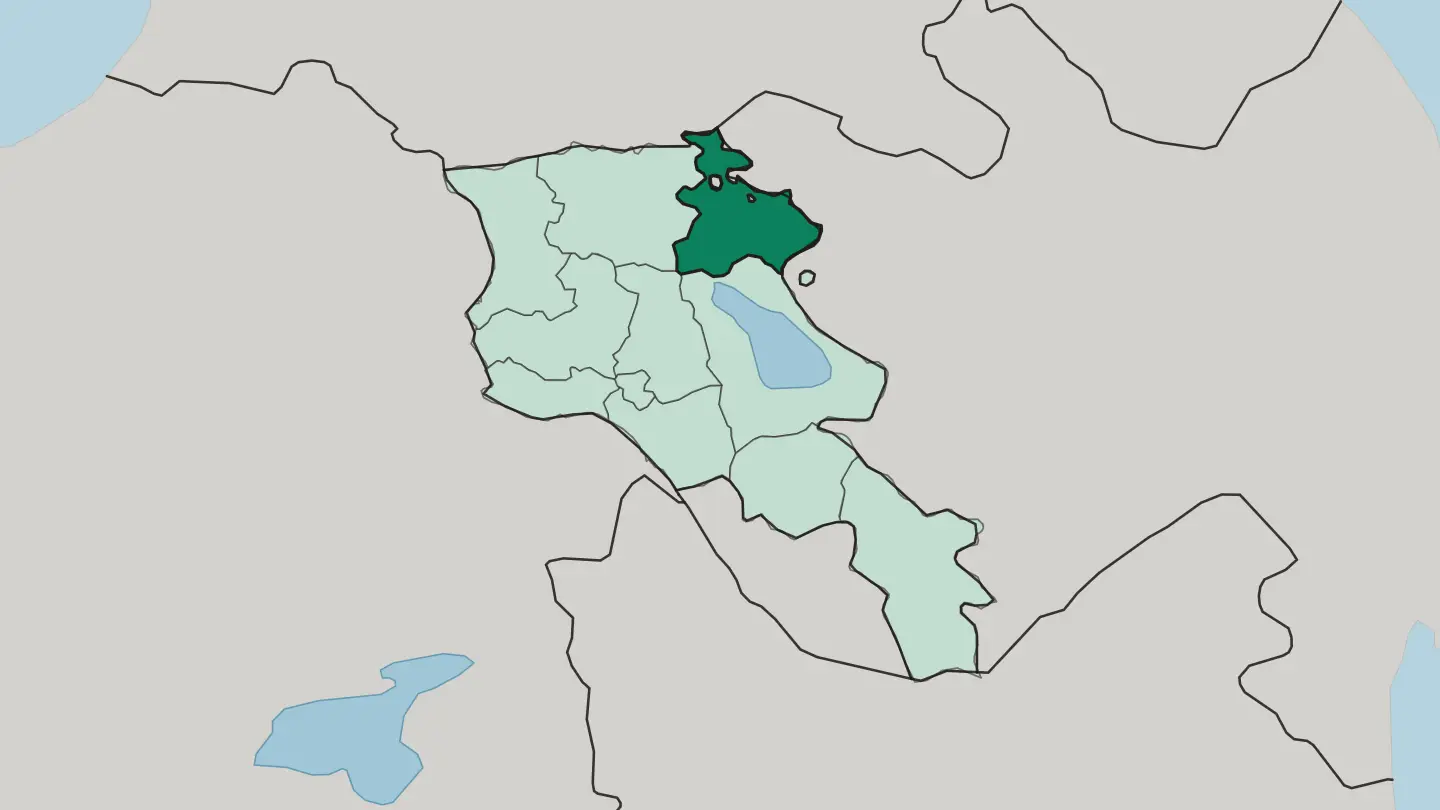 Armenia
Vayots Dzor
Vayots Dzor is Armenia's wine country, a thinly settled mountain province of red-cliff monasteries and the world's oldest winery.Towns & cities →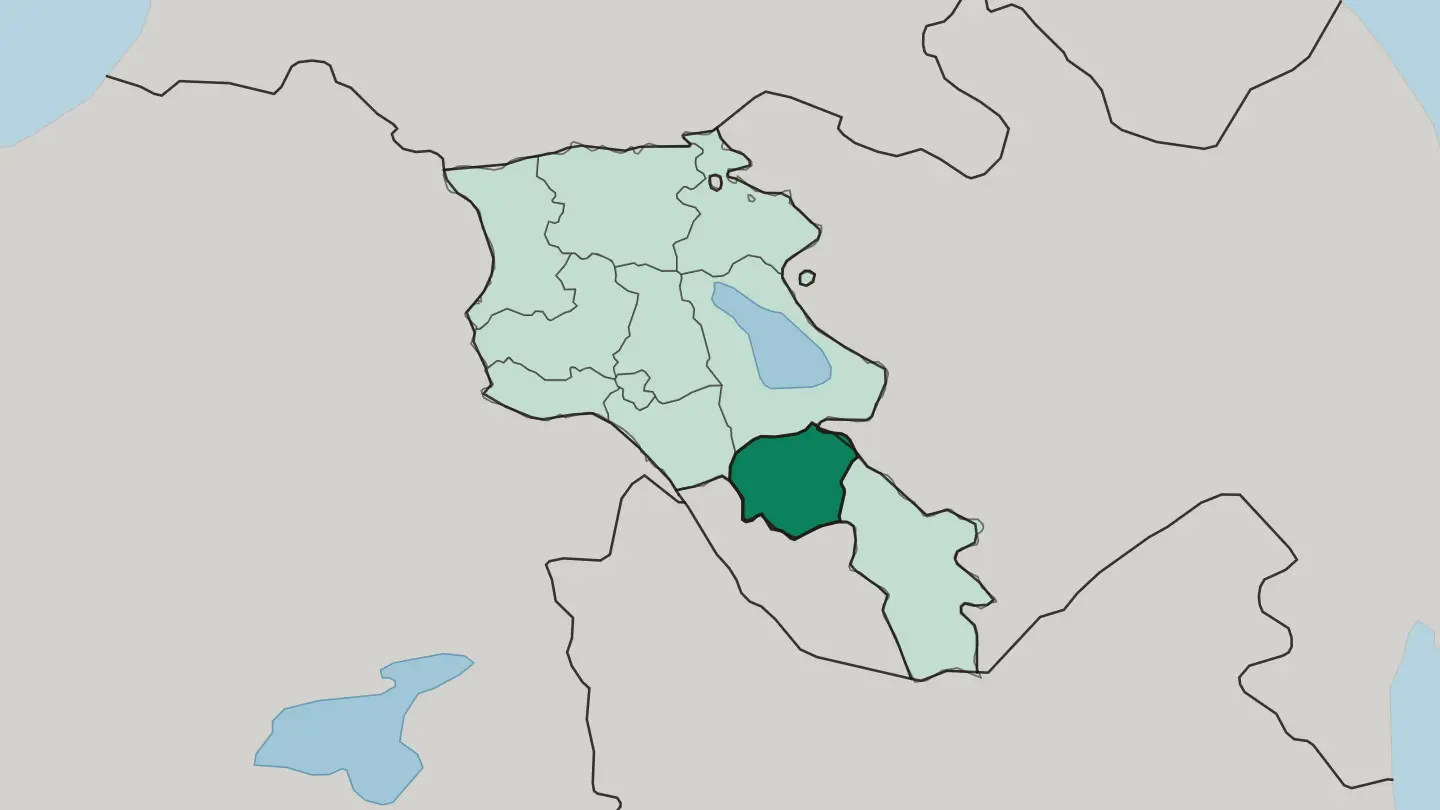 Armenia
Yerevan
Yerevan is the capital region of Armenia, the administrative seat of the country's oldest city, set on the Hrazdan River in the Ararat Plain.Towns & cities →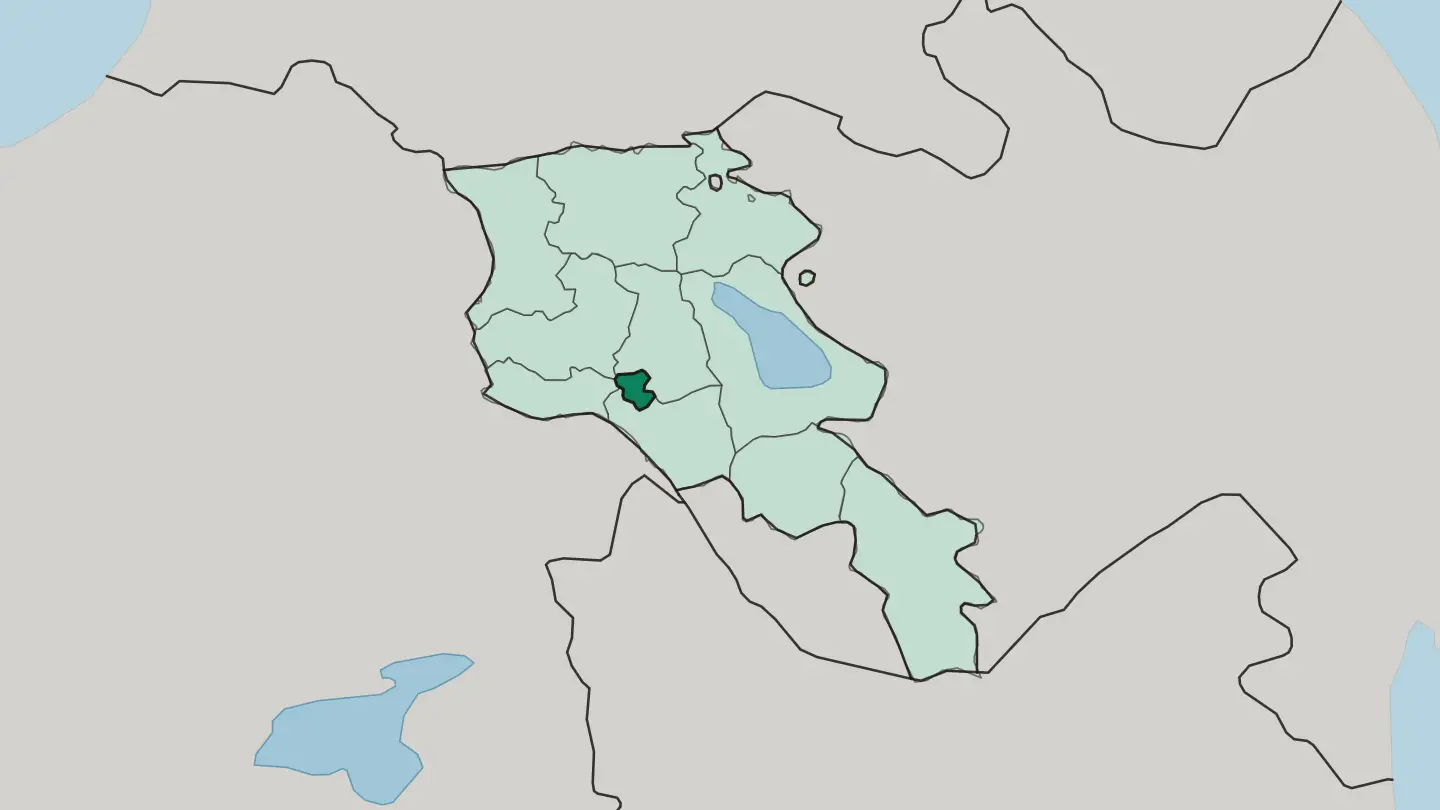
Explore by experience
Not sure which place? Start from how you want to travel.

About Armenia
What is Armenia known for?
Armenia is best known as the first country in the world to adopt Christianity as its state religion. The landlocked republic sits in the Caucasus, set in the Armenian highlands of West Asia and straddling the line between Europe and Asia. Its capital is Yerevan.
Faith and mountains mark the country far more than any coastline, for Armenia holds none at all.
Where is Armenia?
Armenia is a landlocked country in the Caucasus, set high in the Armenian highlands of West Asia. It has no coastline. The land straddles the divide between Europe and Asia, a highland republic whose ground climbs to upland and ridge rather than settling into open plain.
Elevation, not shoreline, is the defining fact of its geography, and every route in or out of the country crosses land rather than water. Armenia's borders run to four neighbours and one exclave. Turkey lies to the west and Georgia to the north.
To the east sits Azerbaijan, while Iran and the Azerbaijani exclave of Nakhchivan close off the south. Within this ring of frontiers, the country keeps to the heights of the Caucasus, cut off from any sea. Yerevan, the capital and largest city, stands as the financial centre of this highland republic.
From the capital the rest of Armenia opens outward across the highlands, reached by road and rail through the mountains. No harbour serves it. The Caucasus holds Armenia on every side.
What is the history of Armenia?
Armenia carries one of the oldest recorded histories in the Caucasus. The land was once the centre of an empire, a power seated in the Armenian highlands long before the modern borders were fixed. In antiquity Armenia became the first country in the world to adopt Christianity as its state religion, a turn that has shaped its identity down every century since.
That single decision set the country apart among the nations of the ancient world, binding faith to nationhood in a way few other places can claim. The church and the highlands have carried that inheritance together. Far later the country was drawn into the Soviet Union, where it spent decades as a Soviet republic within the wider union.
Independence came in 1991, and the modern Republic of Armenia took its present form. Through empire, conversion and Soviet rule, the country kept to the heights of the Caucasus and to Yerevan at its centre. Each era left its mark on the highlands.
The past runs deep here. Armenia measures its history in millennia rather than centuries, an ancient nation still holding its old ground between Europe and Asia.
What is Armenia like?
Armenian culture rests on faith, language and the highlands. Christianity has been the state religion since antiquity, the first such adoption anywhere, and the church remains woven through Armenian life. The Armenian language, written in its own alphabet, carries the country's identity as surely as its mountains do.
The mark of that early faith stands in stone across the country. Together, church and tongue set Armenia apart as its own world in the Caucasus. The country sits between Europe and Asia, and its culture draws on both without belonging wholly to either.
Long centuries as a crossroads, an empire and later a Soviet republic left their layers on Armenian life, yet the through-line has always been the old faith and the old tongue. Craft and song run old here. Yerevan gathers all of it as the capital, the largest city and the cultural centre of the nation.
This blend of European and Asian currents, bound together by faith and language, gives Armenia a character unlike any of its neighbours. To be Armenian is to belong to the highlands and the church at once.
What is the climate of Armenia?
Armenia has a temperate, continental climate, shaped by its height in the Armenian highlands and its distance from any sea. The Armenian winter bites hard. Summers turn warm and dry across the uplands, and the gap between the seasons runs wide in a landlocked country ringed by the mountains of the Caucasus.
The weather here is firmly of the interior.
How do you get to Armenia?
Nearly all arrivals to Armenia come through Yerevan, the capital and largest city. The country is landlocked, so no route reaches it by sea. Travellers arrive by air into Yerevan or come overland from Armenia's neighbours, crossing into the highlands from the surrounding Caucasus rather than from any coast.
From Yerevan the rest of the highlands opens up by road and rail. There is no coast to sail to.
Common questions
What is the best area to stay in Armenia?
Yerevan: first-time visitors to Armenia who want the capital's hotels and onward links across the highlands.
Good for
Updated September 2026