Angola
Cabinda, Angola — Towns & Travel Guide
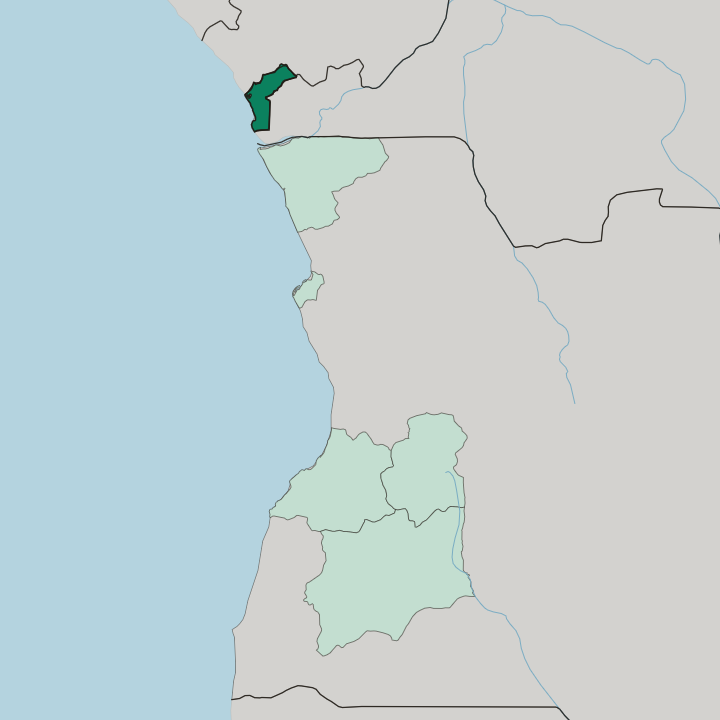
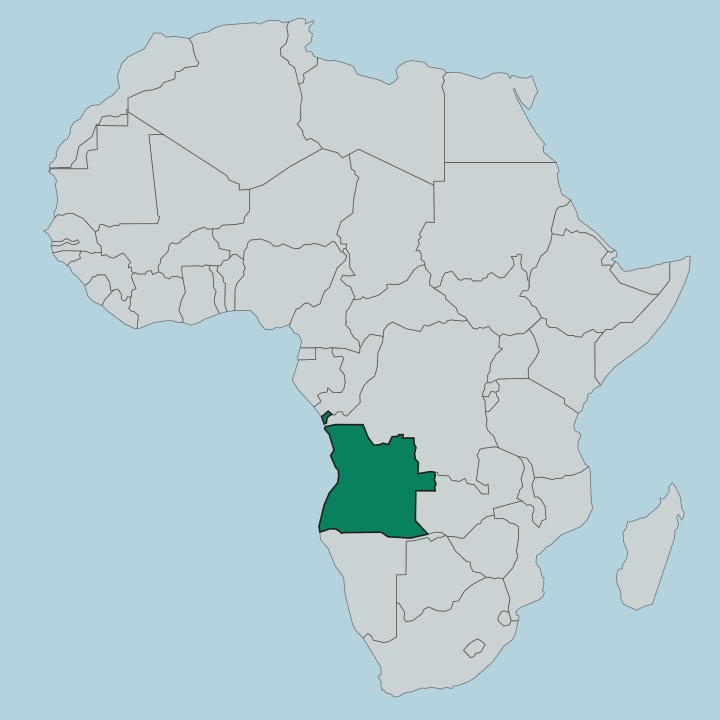
Cabinda is an exclave province of Angola, cut off from the rest of the country by a strip of land belonging to the Democratic Republic of the Congo.
Hotel links are affiliate links: booking through them may earn us a commission, at no extra cost to you. It never affects how places are ranked. How this works


Towns & cities in Cabinda
One town here has its own guide — it links to where to stay.
 Angola
Cabinda
Cabinda, also called Chioua, is the capital of Cabinda Province, an exclave of Angola and one of the country's main oil ports.Where to stay →
Hotel links are affiliate links: booking through them may earn us a commission, at no extra cost to you. It never affects how places are ranked. How this works
About Cabinda
Africa has exactly one exclave.
What is Cabinda known for?
Cabinda is that place, held apart from the rest of Angola by a strip of Democratic Republic of the Congo territory, and the separation is the fact every other fact here hangs from. Four municipalities divide it: Belize, Buco-Zau, Cabinda and Cacongo. Visitors are mostly here on petroleum business rather than for sightseeing, and entry involves visa and permit requirements that make the province harder to reach than its size suggests.
Where is Cabinda?
Separation defines the map. Cabinda has no land connection to the rest of Angola, because a strip of Democratic Republic of the Congo territory runs between the province and the country it belongs to, and that gap is what makes it an exclave rather than an ordinary province. Africa has no other.
The province is compact compared with the country it answers to, and its four municipalities, Belize, Buco-Zau, Cabinda and Cacongo, divide a single block of ground rather than a scattered one, which keeps internal travel a matter of crossing one province rather than several. Tropical, and south of the equator. Cabinda lies in the tropical band of the southern hemisphere, which sets the shape of its year, and the province occupies a block of ground detached from the main body of Angola on every landward side.
The capital shares the province's name. Locally it goes by Tchiowa, and the alternative spellings Tsiowa and Kiowa turn up in the same sources, so a traveller reading about the place will meet one city under several labels before working out that all of them mean the same town. Nowhere in Cabinda is far from anywhere else.
What is Cabinda like?
The capital answers to more than one name. Portuguese supplies the official form, Cabinda, while local usage gives Tchiowa, and the same name is written Tsiowa and Kiowa depending on the source, which means the city carries its own naming history in plain view of anyone reading a map. Portuguese is the language of administration.
Underneath it the local forms persist, and a visitor who notices the difference between the official spelling and the spoken one has understood something real about the place before arriving. Status is contested here, and the fact belongs in any honest account. Cabinda is administered as a province of Angola, and that status has been disputed by several political organisations within the territory, which is a question a visitor need not settle but should know exists. 1975 is the year recorded for the province.
Four municipalities carry the local structure, Belize, Buco-Zau, Cabinda and Cacongo, and everyday life is organised through them rather than through the argument above them. Travel here is mostly work travel, and the petroleum sector accounts for the larger share of arrivals rather than any holiday trade.
What is the history of Cabinda?
1975 is the year on the record. Cabinda's modern standing as a province of Angola dates from then, and the exclave arrangement, with Democratic Republic of the Congo territory lying between it and the rest of the country, has framed its administration ever since. That status has been disputed.
Several political organisations within the territory have contested it, a fact recorded alongside the province's own description rather than in place of it. Belize, Buco-Zau, Cabinda and Cacongo carry the four municipal divisions that structure it.
What is the climate of Cabinda?
The tropics run the calendar. Cabinda lies in the tropical band of the southern hemisphere, so the year follows a tropical pattern rather than a four-season one, and the swing a European visitor expects between summer and winter is not the axis anything here turns on. Seasons invert against the north.
Belize, Buco-Zau, Cabinda and Cacongo all sit inside the same compact block of ground, which leaves the four municipalities working from one set of conditions rather than several.
How do you get to Cabinda?
Getting in is the hard part. Cabinda is separated from the rest of Angola by Democratic Republic of the Congo territory, so an overland approach from the country it belongs to means crossing a third state's ground, and that alone reshapes any itinerary drawn on a map. Visa and permit rules add the rest.
Access restrictions are the reported obstacle rather than distance, and most arrivals are working in the petroleum sector rather than travelling for their own reasons. Plan the paperwork before the route.
Common questions
What is the best area to stay in Cabinda?
Cabinda city (Tchiowa): The one practical base inside the exclave. Cacongo: A municipality stop outside the capital's petroleum orbit. Buco-Zau: Reaching the municipalities away from Tchiowa.
More regions in Angola
Updated September 2026