Angola: Regions, Cities & Travel Guide
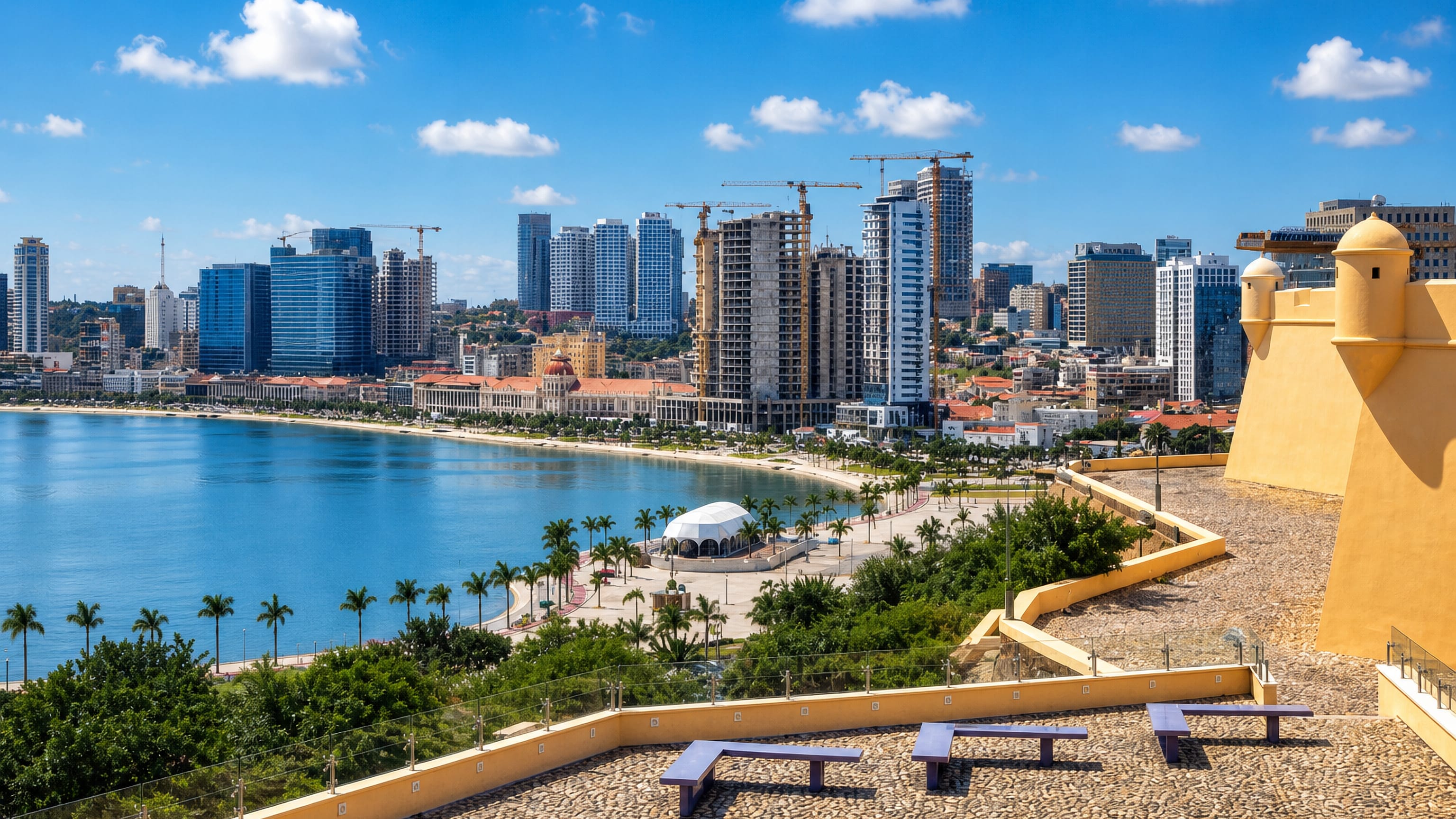
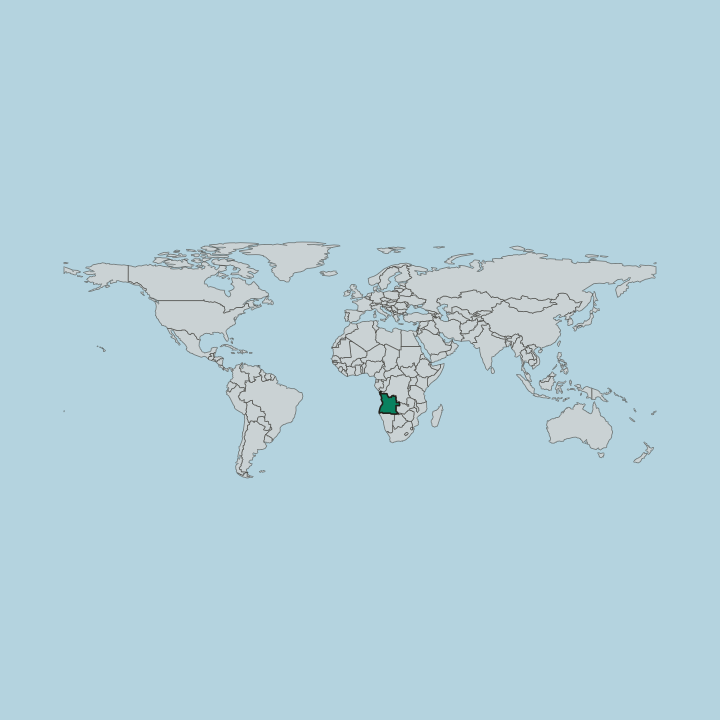
Angola is a country on the Atlantic coast of Southern Africa, its capital Luanda facing the sea.
Hotel links are affiliate links: booking through them may earn us a commission, at no extra cost to you. It never affects how places are ranked. How this works


Top destinations in Angola
Cities to start from, then drill into areas and hotels.
 Angola
Luanda
Atlantic surf breaks below the bluffs at Luanda, the capital and chief seaport of Angola on its northern coast, known for the Cathedral of Luanda.Where to stay →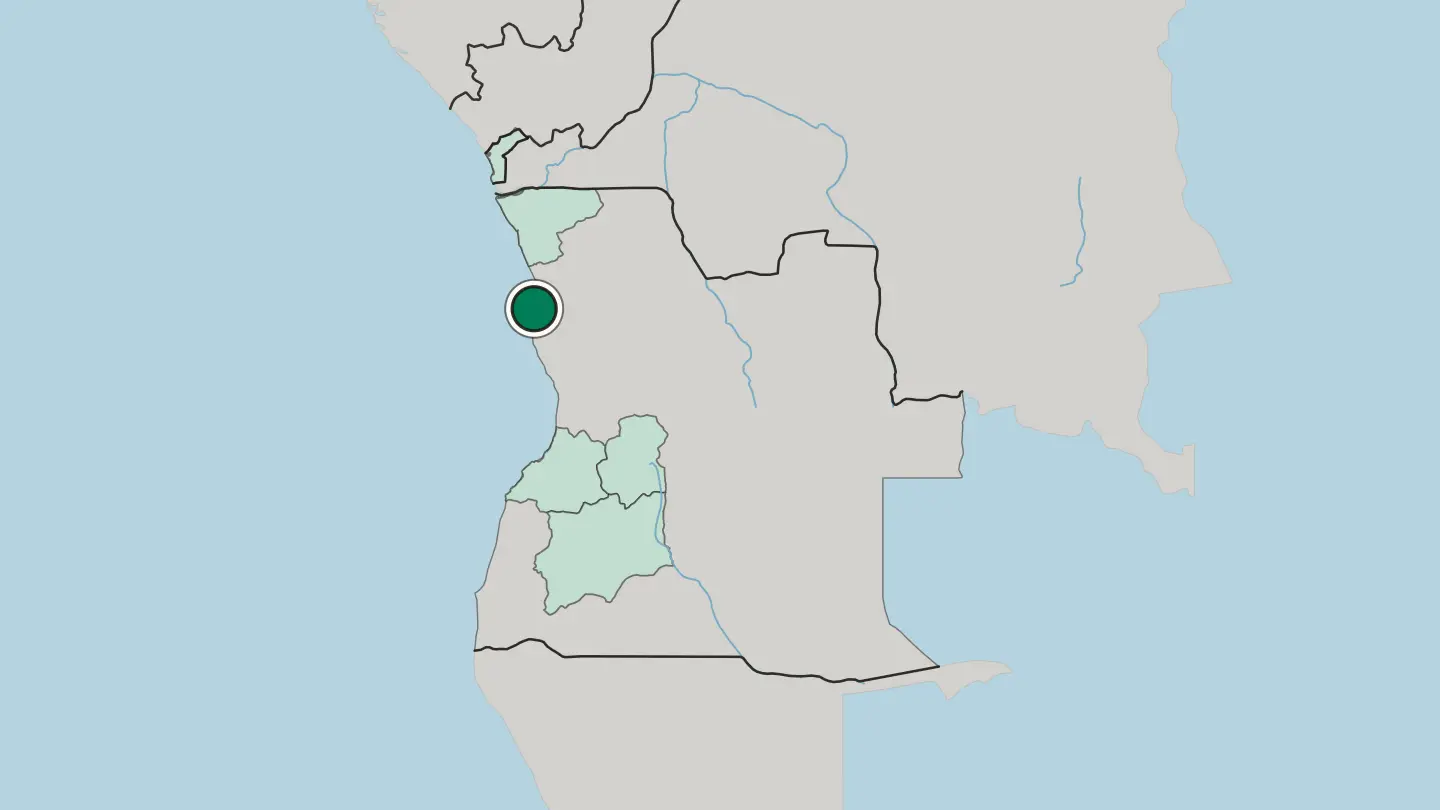 Angola
Cabinda
Cabinda, also called Chioua, is the capital of Cabinda Province, an exclave of Angola and one of the country's main oil ports.Where to stay → Angola
Benguela
Benguela is a city of Angola's Atlantic coast, an old Portuguese port of palm-lined avenues, the ocean end of the great railway to the copper country.Where to stay →
 Angola
Huambo
Huambo, laid out in 1912 as Nova Lisboa, is the capital of Huambo Province and a main hub on the Caminho de Ferro de Benguela.Where to stay →
 Angola
Lubango
Lubango is a highland city of southwest Angola, the capital of Huíla, on a cool plateau above a great mountain pass, watched over by a statue of Christ.Where to stay →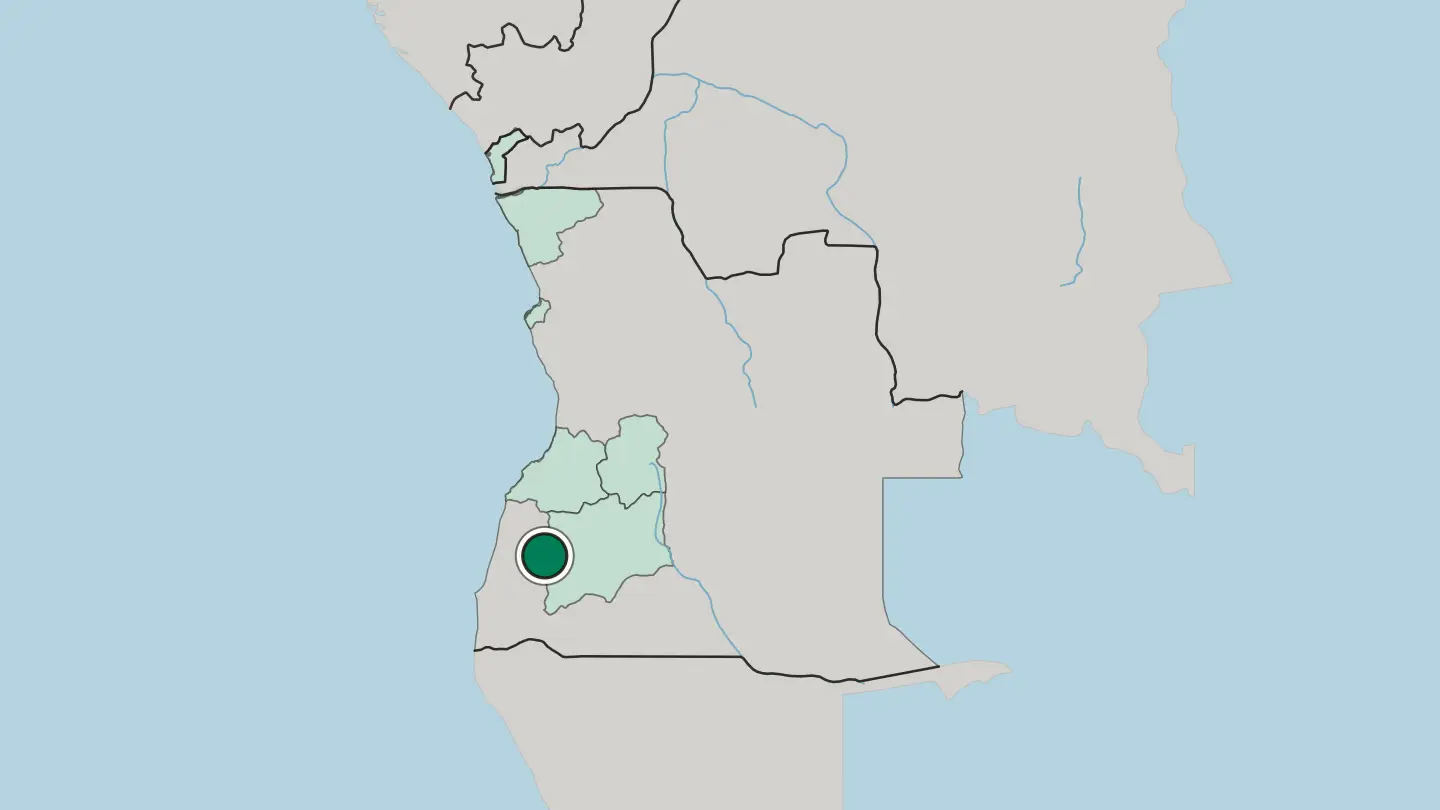 Angola
Mbanza Kongo
Mbanza Kongo, capital of Angola's Zaire Province, was the royal seat of the Kingdom of Kongo and joined the World Heritage list in 2017.Where to stay →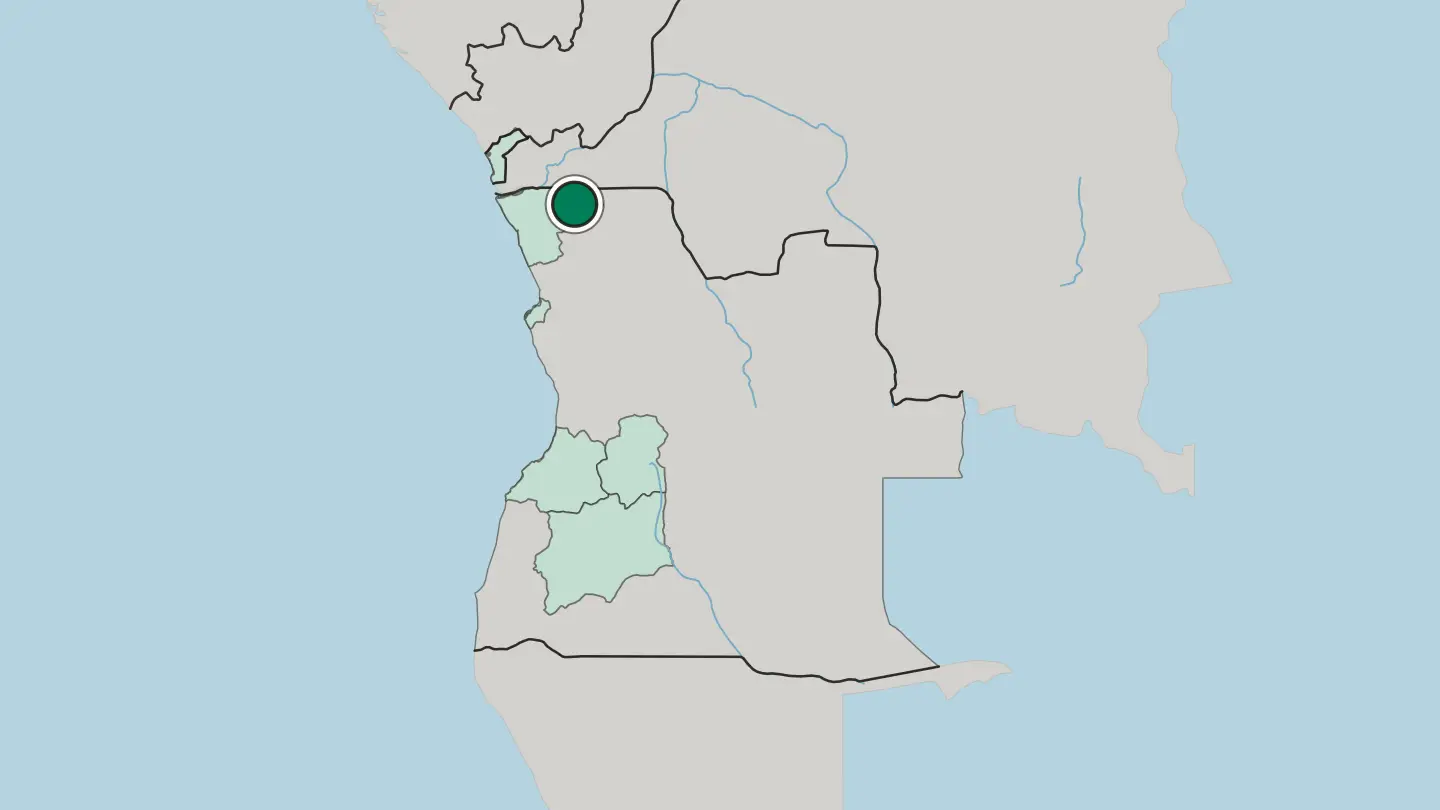
 Angola
Lobito
Lobito is an Angolan coastal city in Benguela Province, founded in 1843 on the Atlantic Ocean north of the Catumbela Estuary.Where to stay →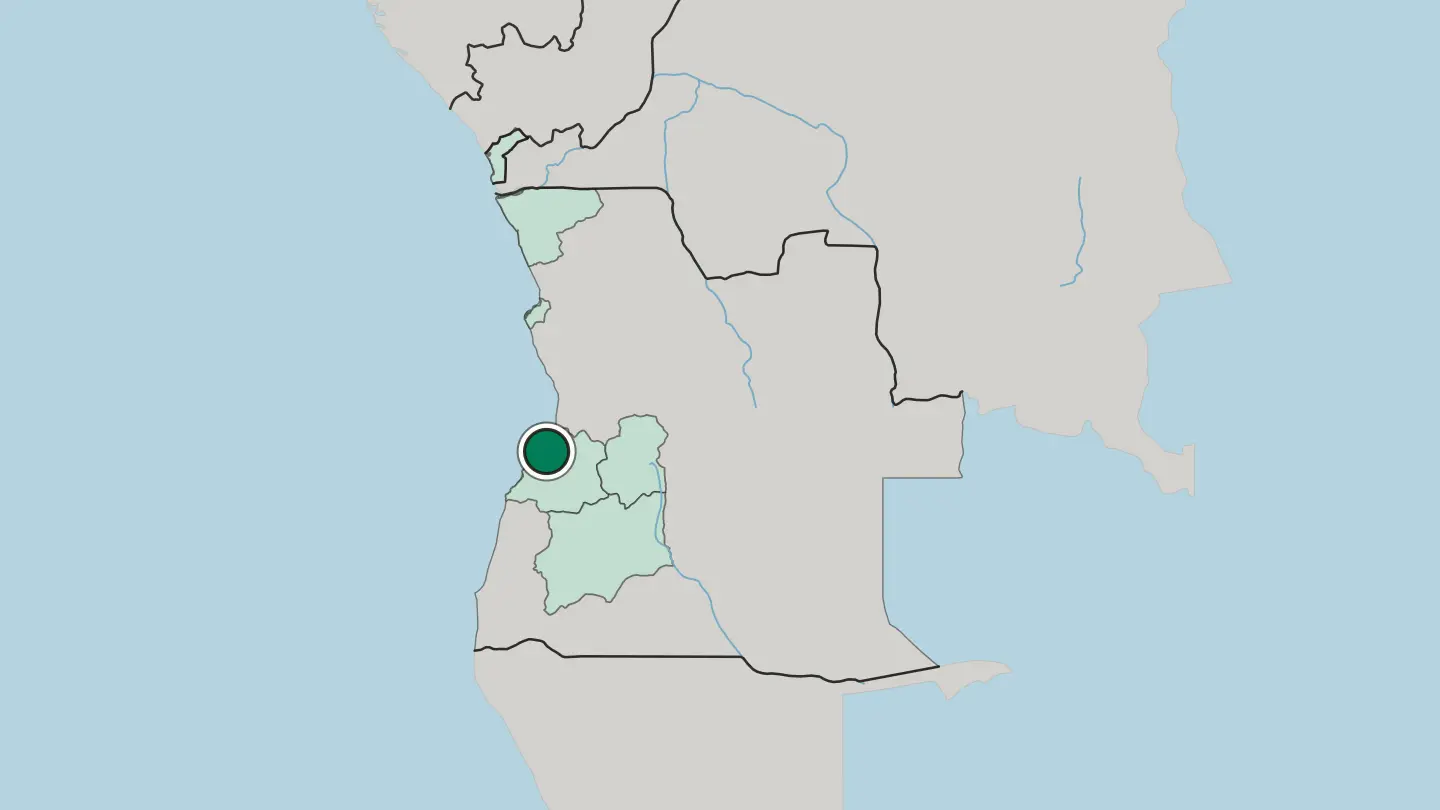
Hotel links are affiliate links: booking through them may earn us a commission, at no extra cost to you. It never affects how places are ranked. How this works
Regions of Angola
Angola
Benguela
Benguela Province fronts the Atlantic Ocean in the west of the country, sharing its name with the coastal city that serves as its capital.Towns & cities →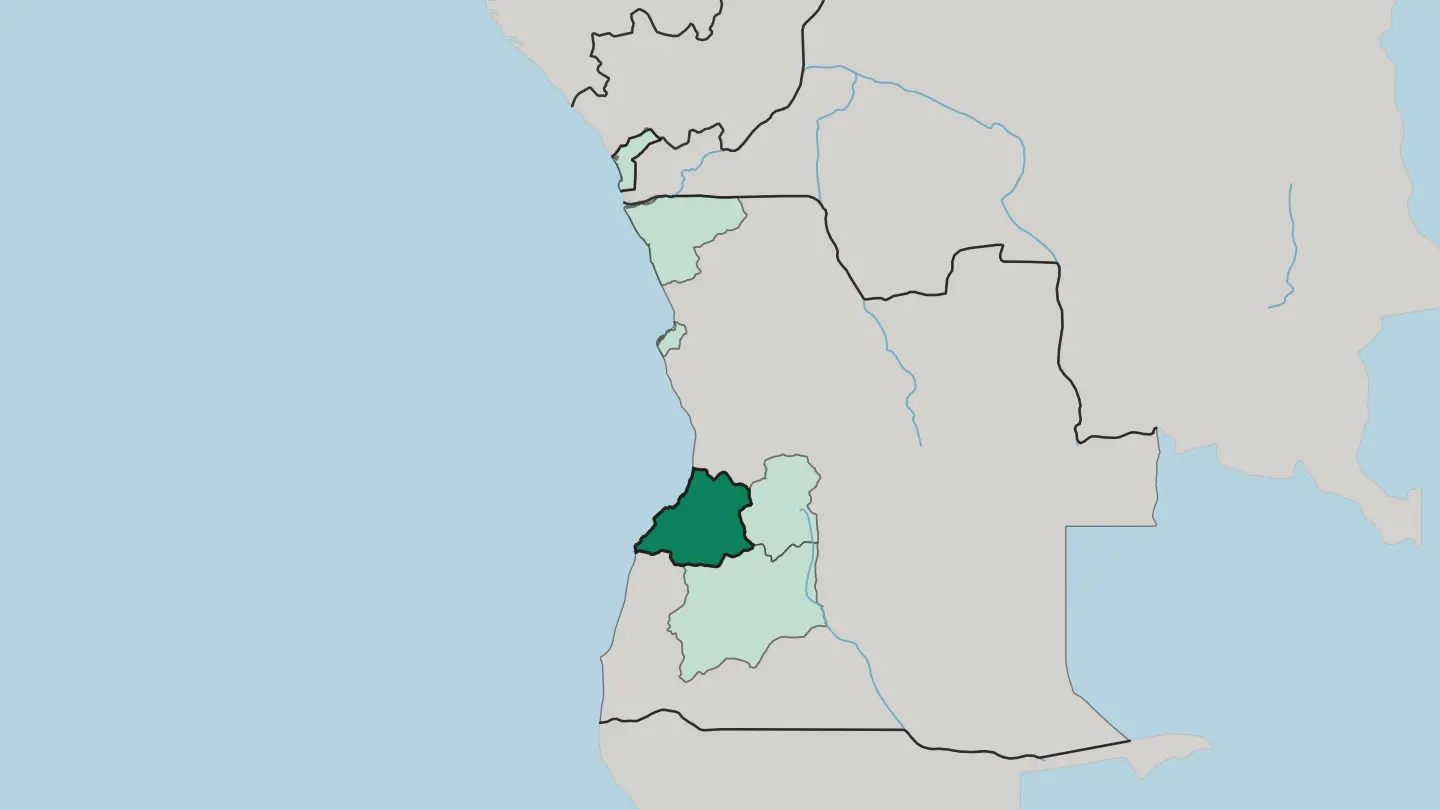 Angola
Cabinda
Cabinda is an exclave province of Angola, cut off from the rest of the country by a strip of land belonging to the Democratic Republic of the Congo.Towns & cities →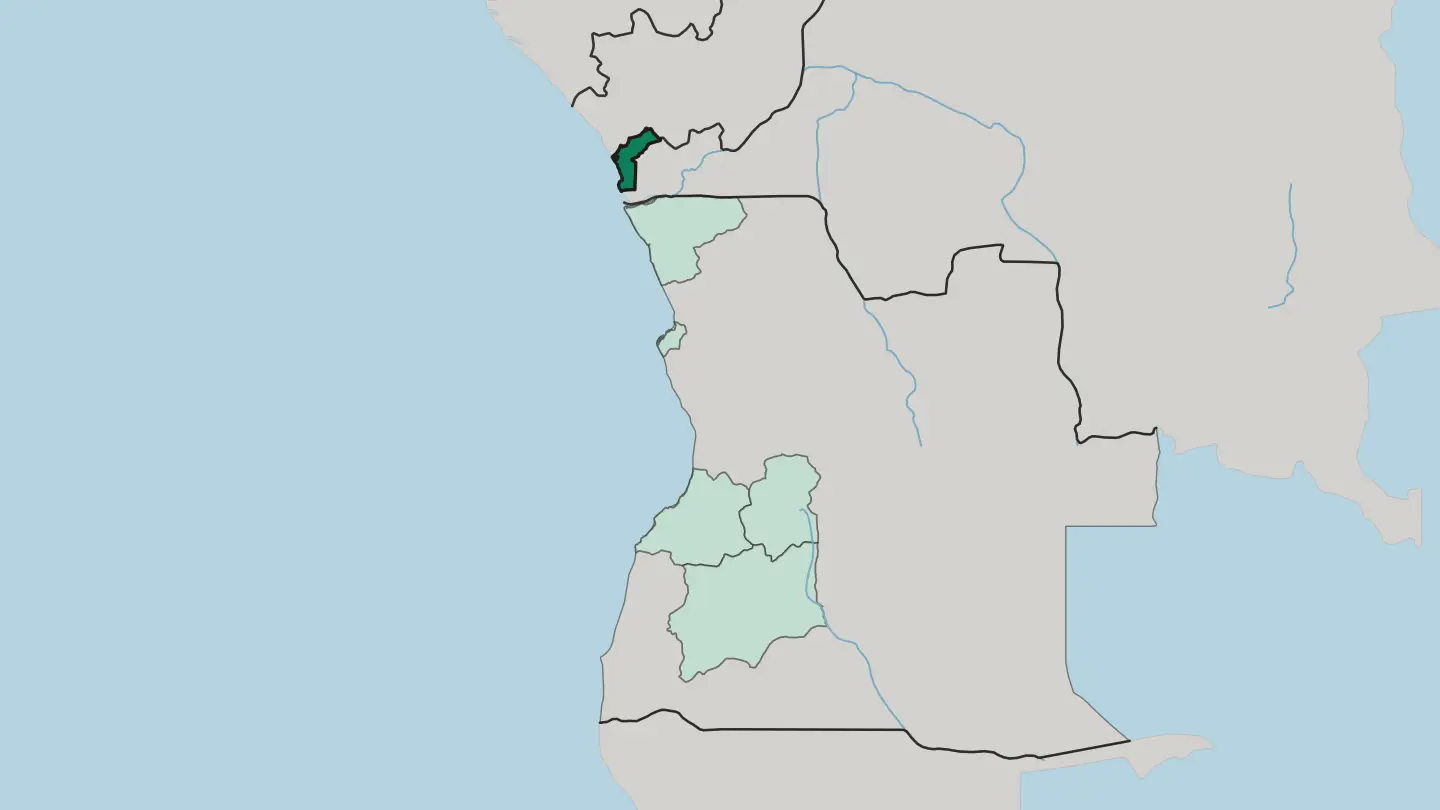 Angola
Huambo
Huambo Province sits in the Central Region of Angola, one of the smaller provinces by area and a long inland run south east of Luanda.Towns & cities →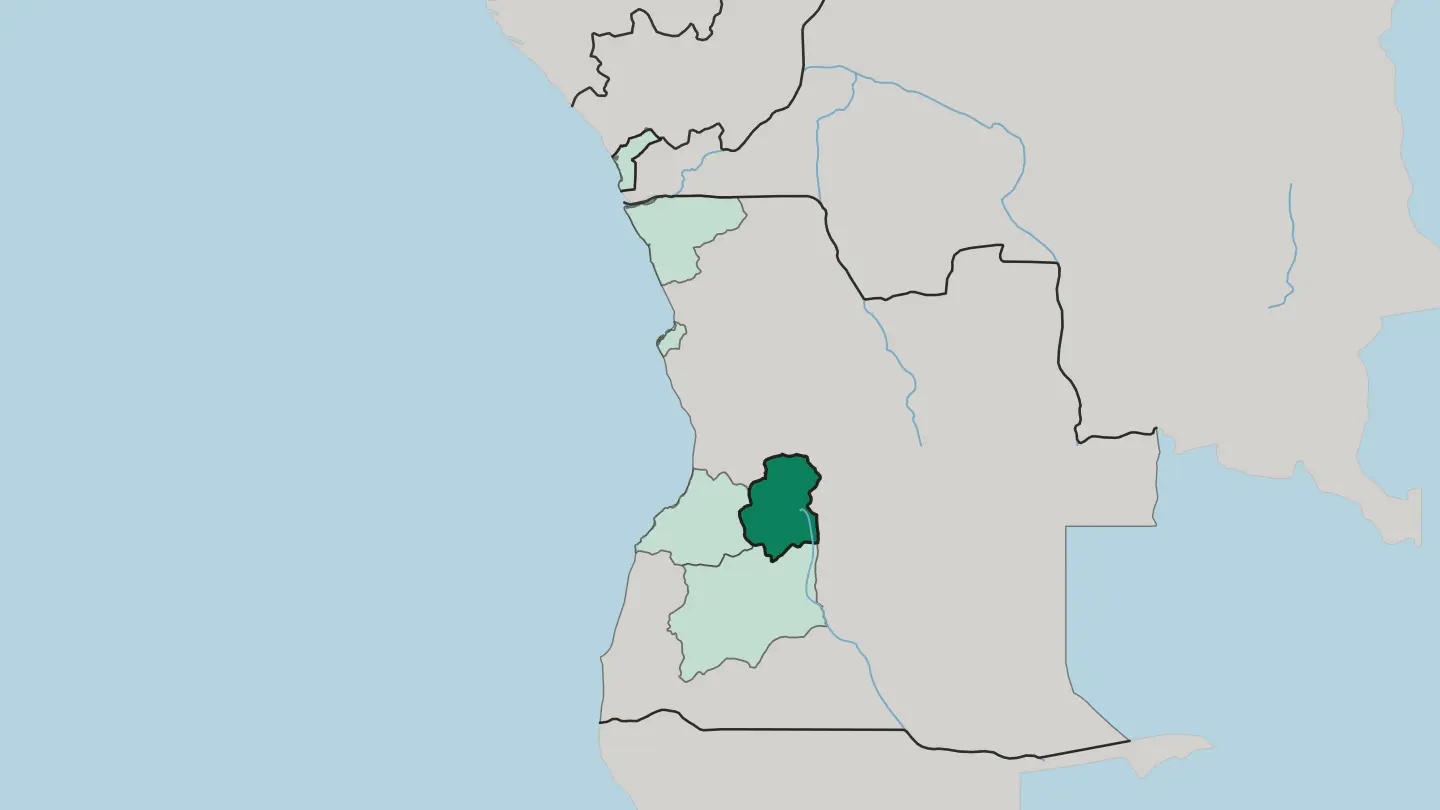 Angola
Huila Province
Huíla Province is an Angolan province with Lubango as its capital, and reed basket-making counts among the industries that work across it.Towns & cities →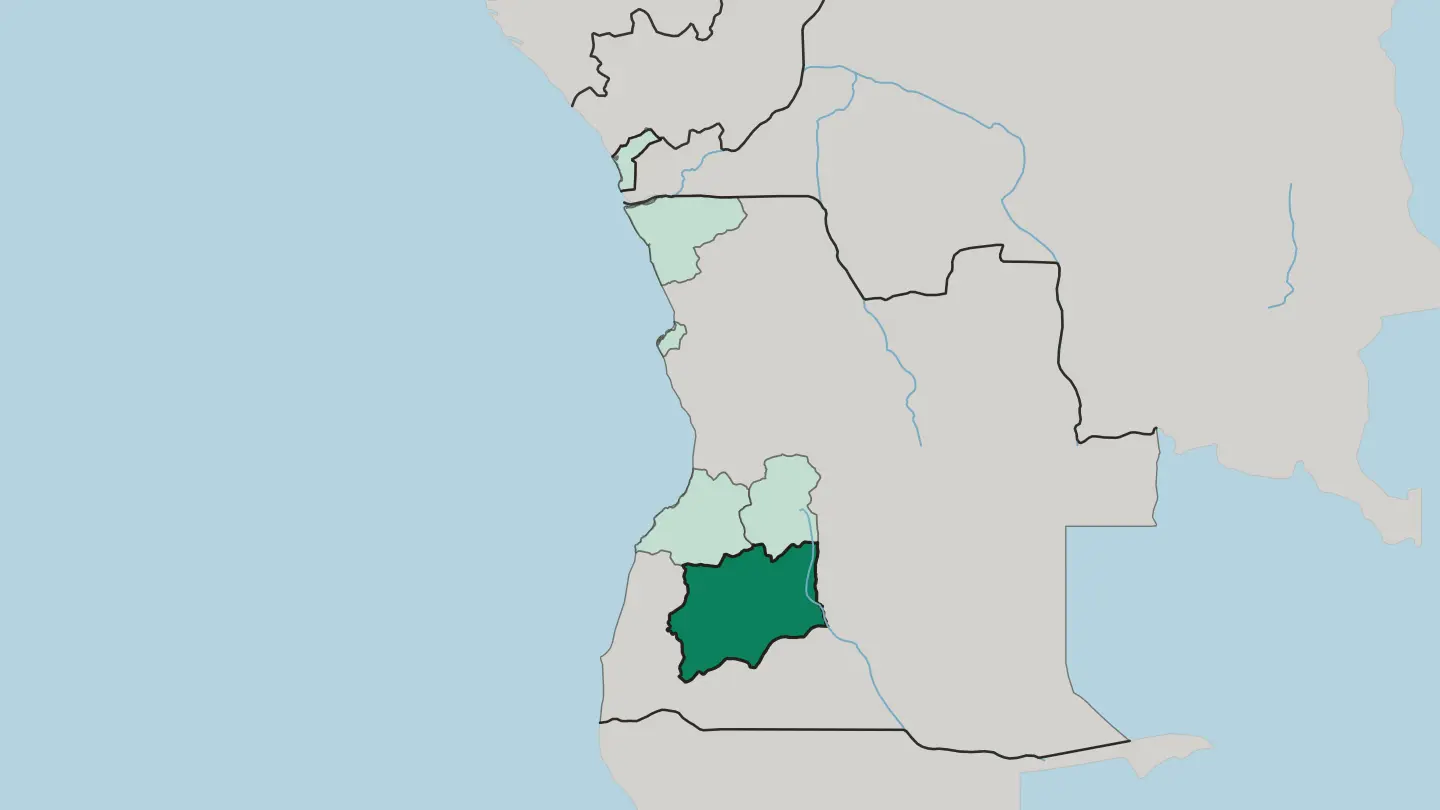 Angola
Luanda Province
Luanda Province is the small coastal province of Angola that holds the capital, Luanda, and its Atlantic seaport.Towns & cities →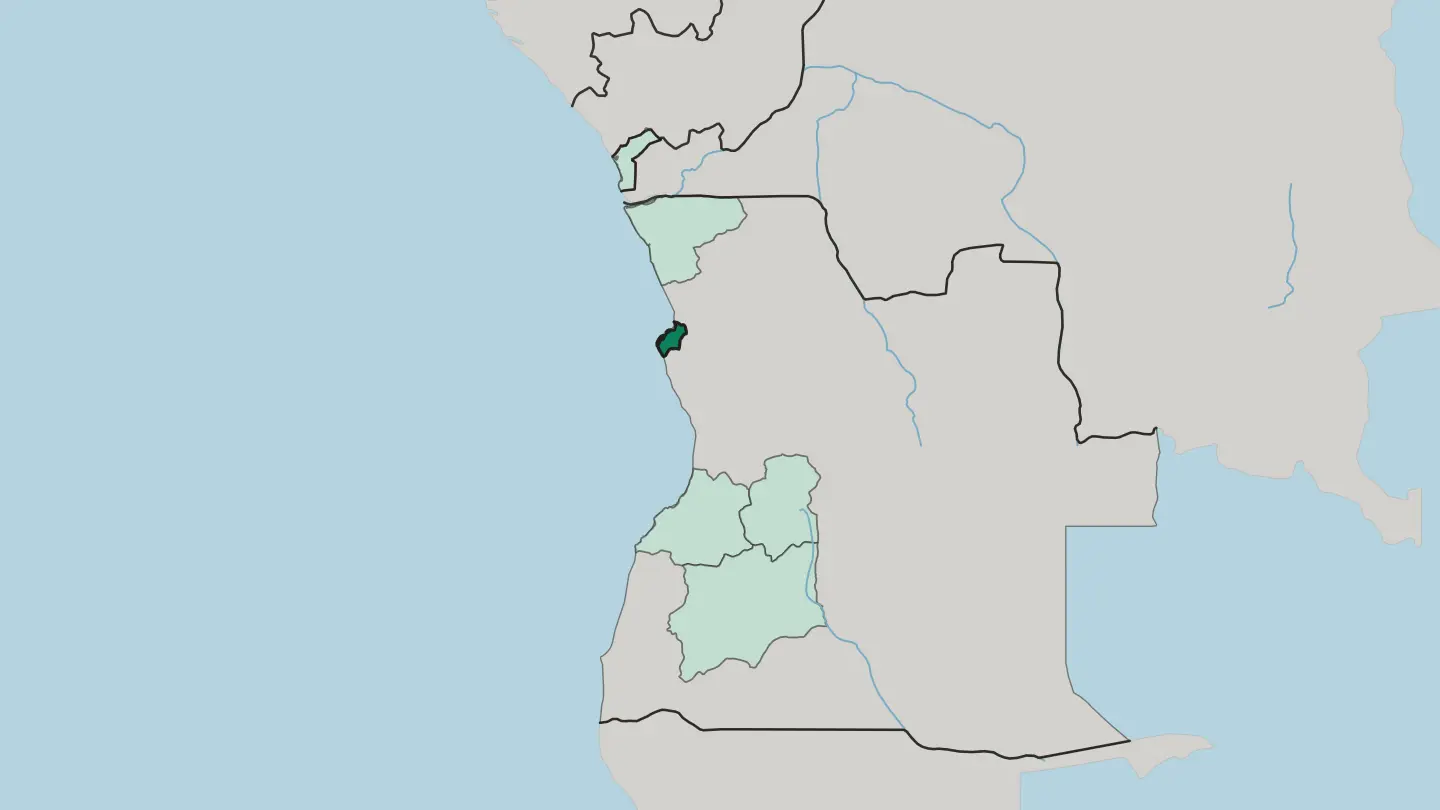 Angola
Zaire
Zaire is an Angolan province on the Atlantic Ocean, with Mbanza Kongo, seat of the old Kingdom of Kongo, as its capital.Towns & cities →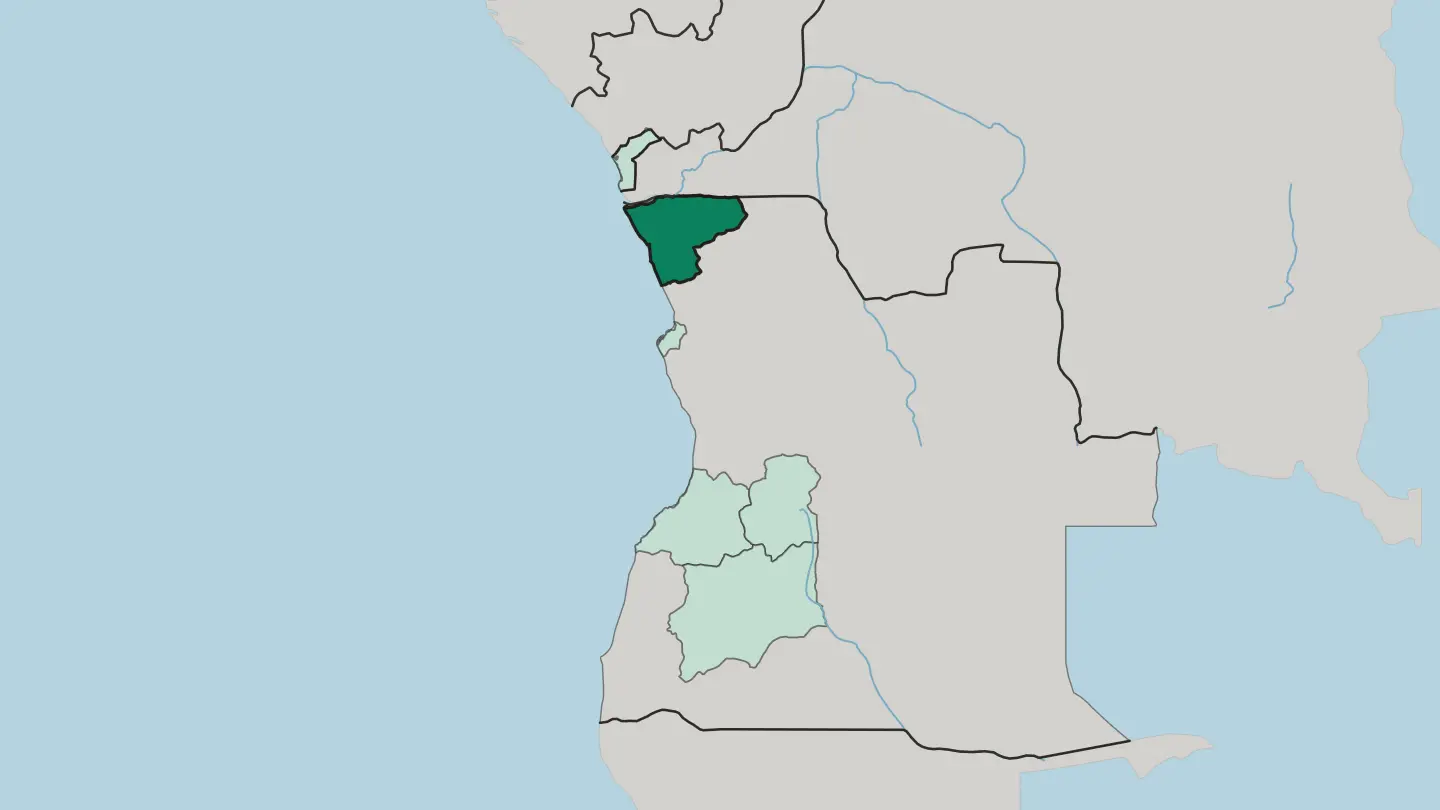
About Angola
What is Angola known for?
Angola is the second-largest Portuguese-speaking country on earth. Luanda, the ocean-front capital, sets the pace. Its music carries far: semba shaped Brazilian samba across the Atlantic, and kizomba grew out of the Luanda dance halls before travelling to floors on every continent.
Inland, the Cuanza River drives hydro-power and irrigation, while the Kalandula Falls drop over a wide curtain into the Lucala gorge. Oil and diamonds built it. The Serra da Leba pass, coiling up the escarpment above Lubango, is the picture most Angolans recognise instantly.
Where is Angola?
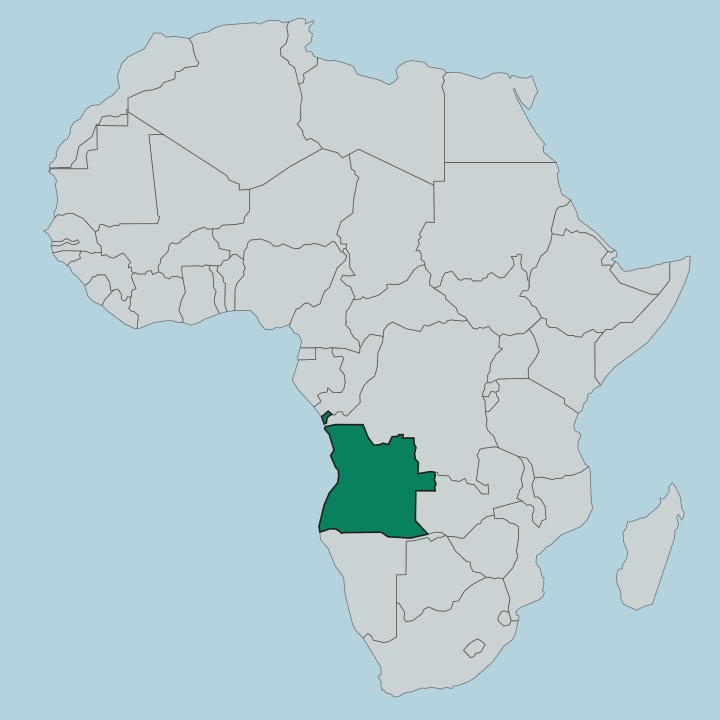
Angola stacks four landscapes between the Atlantic and the interior. A narrow coastal lowland runs the length of the country, from the mouth of the Congo in the north past Luanda and Benguela to the dunes near Namibe. Behind it the ground rises sharply.
A great escarpment lifts the land toward the central plateau, the planalto, a broad expanse of dry savanna where the highland provinces of Huambo and Bié sit above much of the surrounding terrain. Mount Moco, the country's high point, crowns the western edge of that plateau. In the far south-west the coast turns to desert, the Angolan reach of the Namib, where fog rolls in off a cold sea onto bare sand.
Water orders the interior. The Cuanza rises on the plateau and runs west for the length of the country before reaching the Atlantic below Luanda, carrying much of Angola's hydro-power along the way. On the Lucala, a Cuanza tributary in Malanje Province, the Kalandula Falls spread across a wide rock lip.
To the north, separated from the mainland by a strip of Democratic Republic of the Congo territory, lies the oil-rich exclave of Cabinda, whose Maiombe forest belongs to the rainforest belt of Central Africa. Few countries pack this much contrast into one map.
What is the history of Angola?
Angola's story begins long before the Portuguese arrived. The Kingdom of Kongo held the north from around the fourteenth century, a state that reached from the Atlantic inland toward the Kwango and traded across the wider region. To its south stood the kingdoms of Ndongo and Matamba, and across the central plateau the Ovimbundu polities that would later give the highlands their character.
From these older powers the country takes deep roots. Portuguese ships reached the Congo mouth in 1483, and Luanda was founded as a coastal outpost in 1576. For centuries the colony fed the Atlantic slave trade, shipping enormous numbers of people to Brazil across the sea.
Conquest of the interior came slowly and was not complete until the twentieth century. Armed struggle against colonial rule opened in 1961 and ran for over a decade. Independence arrived in 1975, and with it a long civil war that pitted the ruling MPLA against rival movements and drew in outside powers before it finally ended in 2002.
The peace that followed reshaped the country. Reconstruction rebuilt roads, ports, and the shattered rail lines to the coast, and the scars of the war years are still visible in the towns of the plateau.
What is Angola like?
Angola runs on rhythm. Semba, the older Luanda street sound, gave the country its social dance and fed directly into Brazilian samba across the Atlantic; kizomba, slower and closer, grew out of the same city in the following generation and now fills dance floors worldwide. Music here is not a backdrop.
It is how neighbourhoods gather. Portuguese is the shared language, a legacy of five centuries of contact, but it sits over Kimbundu, Umbundu, Kikongo, and other tongues that carry the country's many peoples. The kitchen shows the same layering.
Funge, a smooth cassava or maize porridge, comes dunked into muamba de galinha, a chicken stew rich with palm oil, garlic, and okra, and the coast adds grilled fish straight off the Atlantic. Faith and football fill the weekend, and the Benguela carnival pours drums, feathers, and costume into the streets each year. Craft matters too.
Chokwe masks and carving from the eastern provinces are prized across Central Africa, sold from workshops that pass their patterns down through families. The Ovimbundu of the highlands, the Bakongo of the north, and the Ambundu around Luanda each keep their own customs. One flag, many nations.
What is the climate of Angola?
Angola runs on two seasons rather than four. A dry, cooler stretch settles in from about June to September, and a hot, rainy one takes over from October into April. The catch is the coast.
The cold Benguela Current chills the shoreline from Luanda south, holding rain offshore and drawing in the low fog that Angolans call cacimbo. Inland it changes with height: the plateau around Huambo stays mild and green, while the far south-west near the Namib barely sees rain at all. Cabinda, up north, is the wettest, tropical corner.
How do you get to Angola?
Most journeys to Angola begin at Luanda. The capital's international airport is the main gateway, handling long-haul links to Lisbon and São Paulo and the flag carrier TAAG's connections across Africa. Angola is a large country, so getting around means flying or driving long stretches.
Domestic flights hop to Huambo, Benguela, and Lubango, while the rebuilt Benguela Railway climbs from the port of Lobito toward the interior. A visa is required for most nationalities. Plan the internal legs early.
Updated September 2026