Argentina · Tierra del Fuego Province
Where to Stay in Río Grande, Tierra del Fuego Province
Río Grande is the industrial capital of Tierra del Fuego Province, a city on the north coast of the Isla Grande de Tierra del Fuego.
Hotel links are affiliate links: booking through them may earn us a commission, at no extra cost to you. It never affects how places are ranked. How this works


Where to stay in Río Grande
The practical side of choosing where to sleep.
Beds cluster in the grid around the Municipal Museum of the City of Rio Grande Virginia Choquintel. The Fuegian Museum of Art stands within the same core, so a room there puts the collections, the shops and the shore within a walk of one another, which counts for a good deal in a place where wind discourages long detours on foot. You should take the centre for a one-night stop.
The buildings are low and the streets wide, laid out for a working city rather than for visitors, and the lodging follows that pattern with practical rooms. The other choice lies outward. Toward the edges, where the works that make Río Grande the industrial capital of Tierra del Fuego Province take over from housing, rooms come with parking and a clear start on the road that runs across the Isla Grande de Tierra del Fuego.
That road reaches Ushuaia, 212 kilometres off. Anyone crossing the island in a day gains more from the outward streets than from the centre, since nothing in this city stands far from anything else and the north coast stays within reach from either side. Neither side is scenic.
What decides it is parking.
Find hotels in Río Grande
Direct booking searches for these neighbourhoods.
Centre by the Virginia Choquintel museum
The grid around the Municipal Museum of the City of Rio Grande Virginia Choquintel puts the Fuegian Museum of Art and the shore within a short walk.Find hotels in Centre by the Virginia Choquintel museumdrivers making the run to Ushuaia at first lightIndustrial edge toward the island road
Rooms beside the works that make Río Grande the industrial capital of Tierra del Fuego Province keep parking and the road across the island at hand.Find hotels in Industrial edge toward the island roadHotel links are affiliate links: booking through them may earn us a commission, at no extra cost to you. It never affects how places are ranked. How this works
About Río Grande
What is Río Grande known for?
Industry, not scenery, gives Río Grande its standing: the city works as the industrial capital of Tierra del Fuego Province and the economic centre of the Argentine part of the island. The museums are small. The Municipal Museum of the City of Rio Grande Virginia Choquintel keeps the city's own record, and the Fuegian Museum of Art shows work made on the Isla Grande de Tierra del Fuego. Ushuaia lies 212 kilometres to the south-west.
What are the main landmarks in Río Grande?
Museums carry most of what there is to see. The Municipal Museum of the City of Rio Grande Virginia Choquintel holds the record of the city itself, while the Shanti House Museum gathers minerals, shells and fossils, and the Fuegian Museum of Art shows painting and sculpture made on the island. Two smaller collections add to those: the Astes Private Museum and the Akawahia Yoirka School Museum.
The Rafaela Ishton Indigenous Community is based here as well.
What is the history of Río Grande?
The city dates from 1921, on the north coast of the eastern part of the Isla Grande de Tierra del Fuego. Río Grande belongs to Argentina, at the far southern end of the country, and the ground it stands on was used long before the town by the Indigenous people whose descendants are organised as the Rafaela Ishton Indigenous Community. The museums hold that record.
The Municipal Museum of the City of Rio Grande Virginia Choquintel gathers the material history of the place, while the Akawahia Yoirka School Museum keeps its collection inside a school. Industry set the later course. Río Grande became the industrial capital of Tierra del Fuego Province and the economic centre of the Argentine side of the island, a role that marks it out from Ushuaia, the provincial capital 212 kilometres to the south-west.
The two cities face different water. Beside the works stand collections of another kind: the Fuegian Museum of Art for work made on the island, the Shanti House Museum for minerals and fossils, and the Astes Private Museum in private hands. What the city keeps of its short past is gathered in those rooms rather than in old streets, because the streets themselves are barely a century old.
Where is Río Grande?
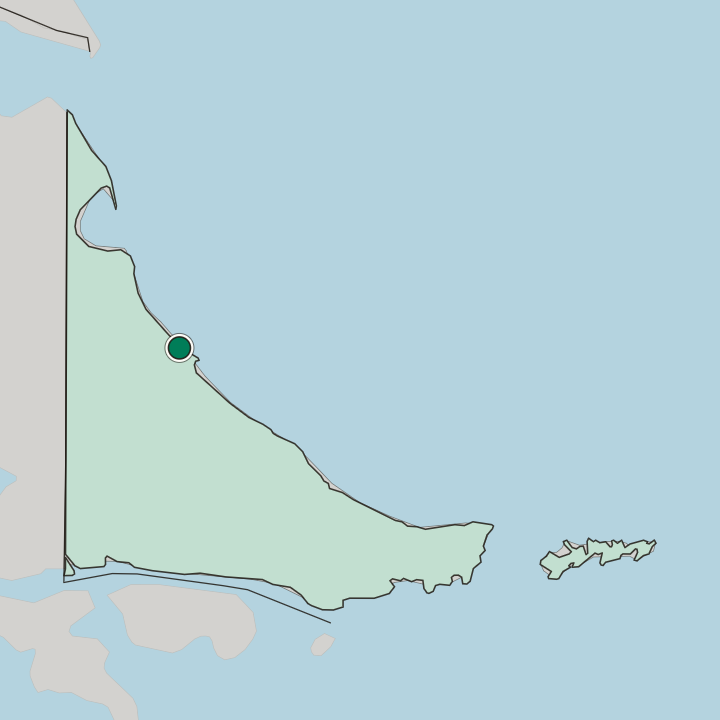
Río Grande occupies the north coast of the eastern part of the Isla Grande de Tierra del Fuego, on flat open ground at the sea. The coast is the city's edge. Ushuaia, the capital of Tierra del Fuego Province, lies 212 kilometres to the south-west, and the island carries the road that joins the two across country with little relief to break it.
What is the climate of Río Grande?
The sea along the island's north coast rules the year, holding Río Grande in a cool temperate regime where the gap between the warm months and the cold ones stays narrower than the far southern setting suggests. The wind seldom stops. Nothing shelters the site, since the Isla Grande de Tierra del Fuego runs flat to the water on this side, so weather crosses the streets without a break and the warmest weeks stay mild rather than hot.
How do you get to Río Grande?
Overland is how nearly everyone reaches the city. The run from Ushuaia covers 212 kilometres to the north-east, crossing the Isla Grande de Tierra del Fuego from the provincial capital to the north coast, and that road is the link tying the two cities of Tierra del Fuego Province together. Freight matters as much as travellers.
Río Grande works as the economic centre of the Argentine side of the island, so its industry rather than its sights sets the pattern of arrivals.
Common questions
What is the best area to stay in Río Grande?
Centre by the Virginia Choquintel museum: one-night stops that want the island collections on foot. Industrial edge toward the island road: drivers making the run to Ushuaia at first light.
Good for
Another city in Tierra del Fuego Province
Updated September 2026