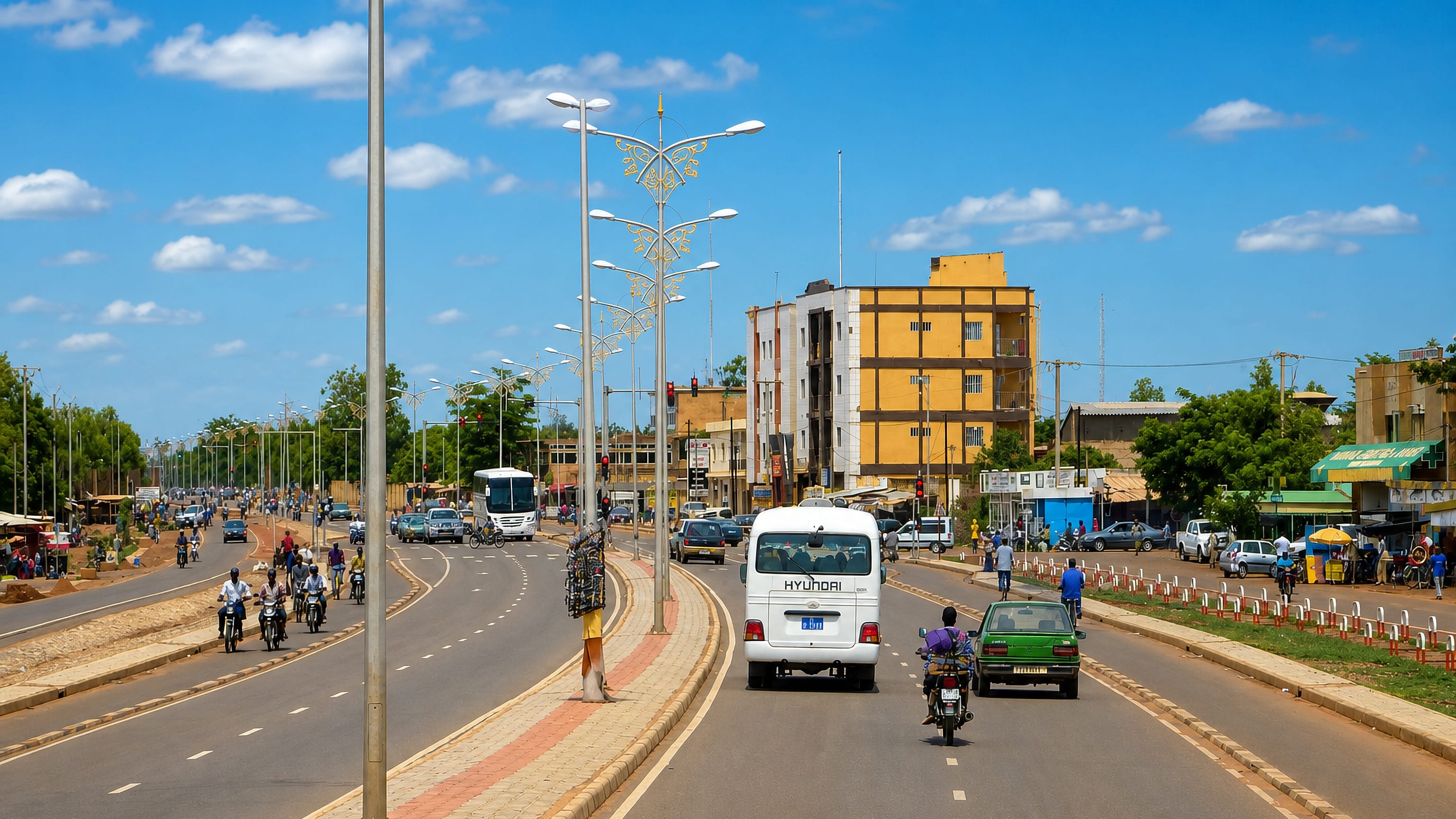
Burkina Faso: Regions, Cities & Travel Guide
Burkina Faso is a landlocked country in West Africa, its savanna plateau crossed by the Volta rivers, with Ouagadougou as its capital.
Hotel links are affiliate links: booking through them may earn us a commission, at no extra cost to you. It never affects how places are ranked. How this works


Top destinations in Burkina Faso
Cities to start from, then drill into areas and hotels.
 Burkina Faso
Ouagadougou
Ouagadougou is the capital and largest city of Burkina Faso, a Mossi royal seat on the plateau of Kadiogo, known for its national museums.Where to stay →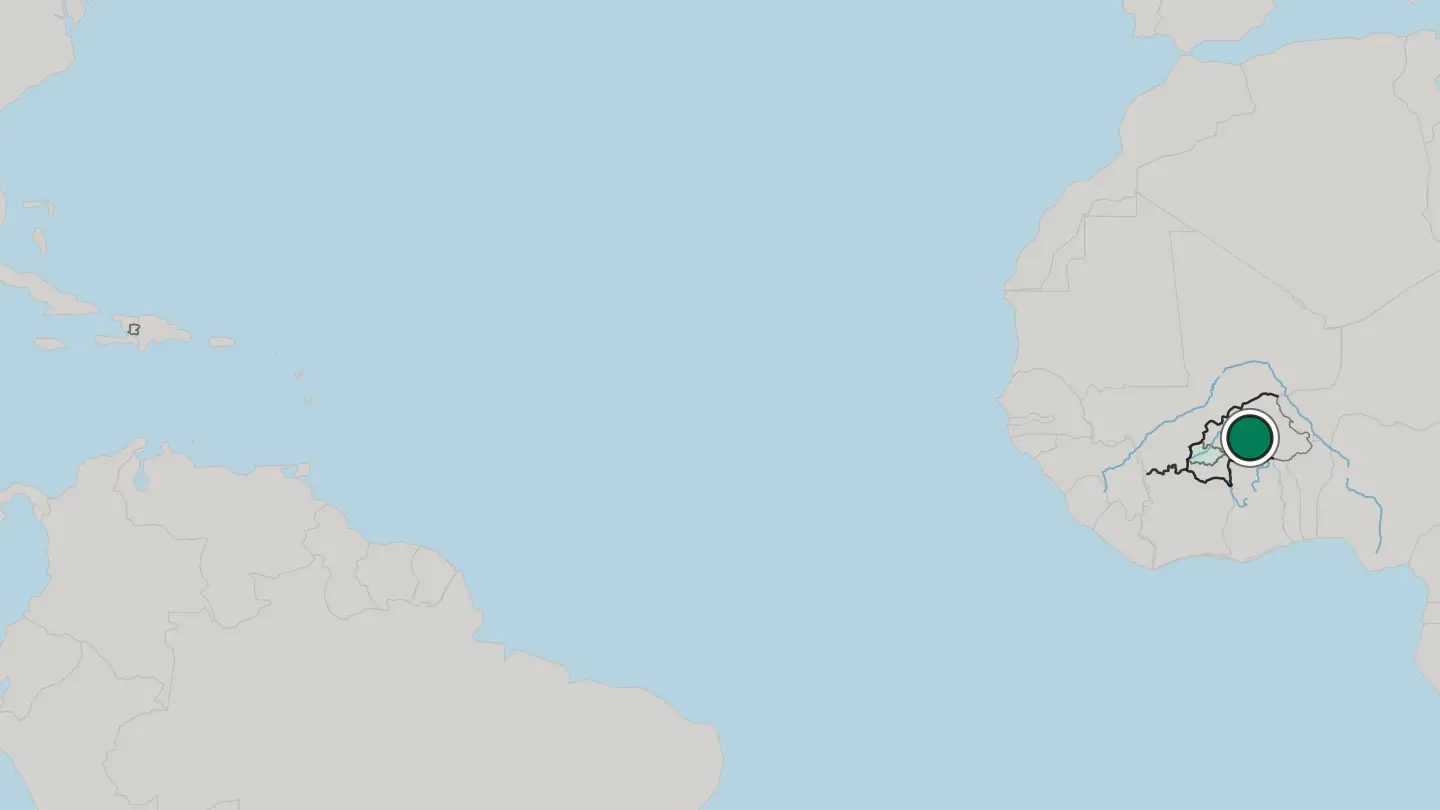
 Burkina Faso
Bobo-Dioulasso
Bobo-Dioulasso is Burkina Faso's second-largest city, a centre of music and culture in the High-Basins Region.Where to stay →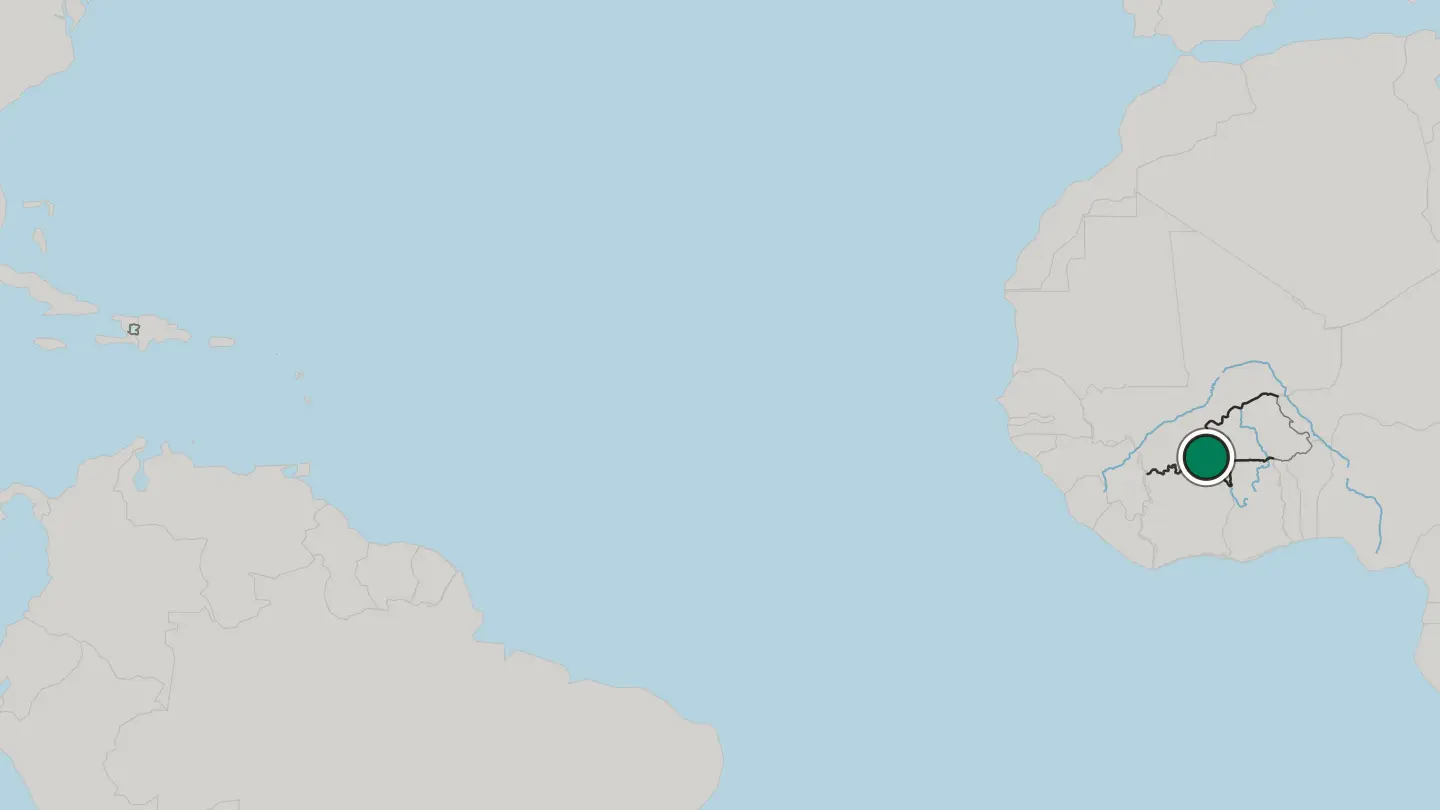
Hotel links are affiliate links: booking through them may earn us a commission, at no extra cost to you. It never affects how places are ranked. How this works
Regions of Burkina Faso
Burkina Faso
Centre
Centre is the region of Burkina Faso built around the capital, Ouagadougou, on the plateau of Kadiogo province.Towns & cities →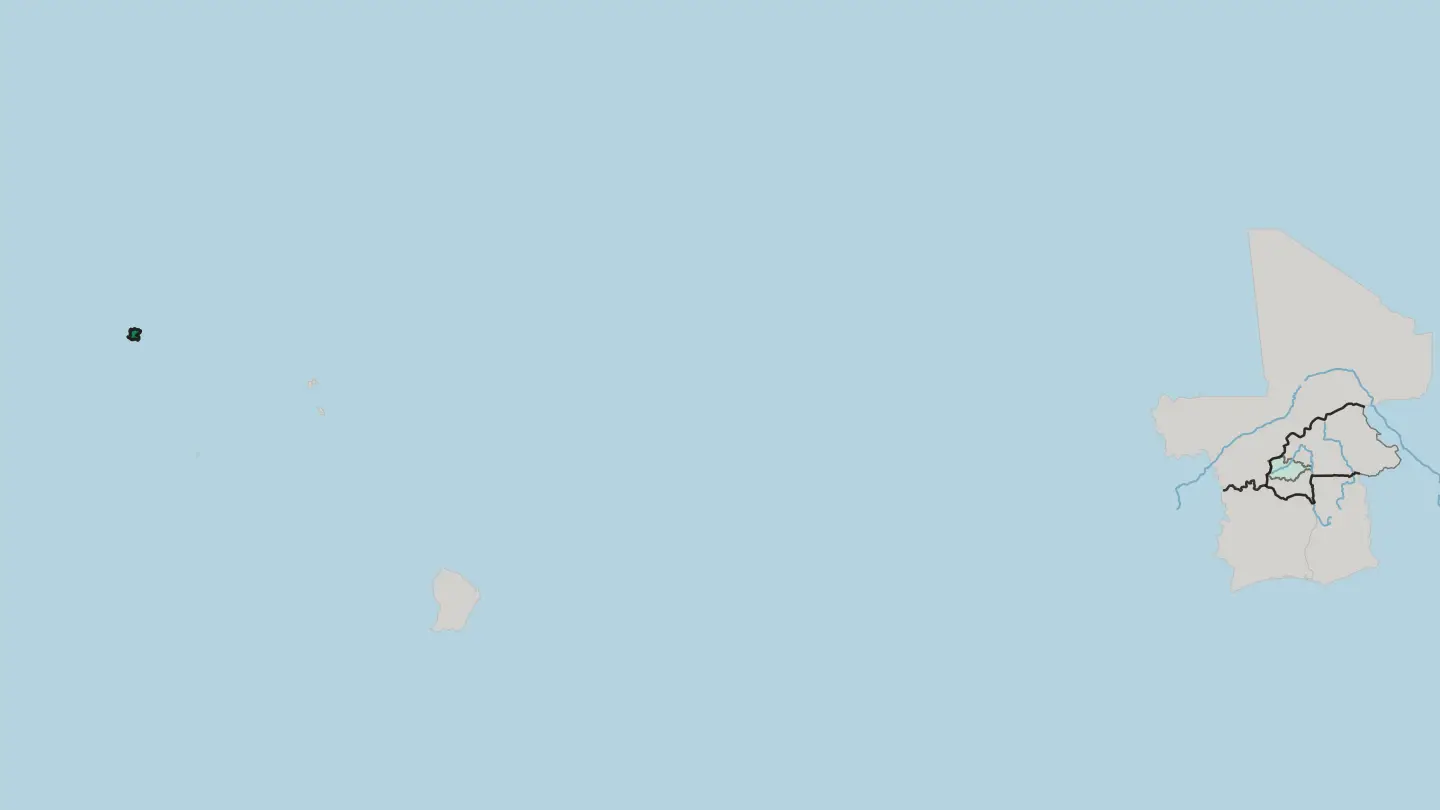 Burkina Faso
High-Basins Region
The High-Basins Region, renamed Guiriko, is one of Burkina Faso's seventeen administrative regions, with Bobo Dioulasso as its capital.Towns & cities →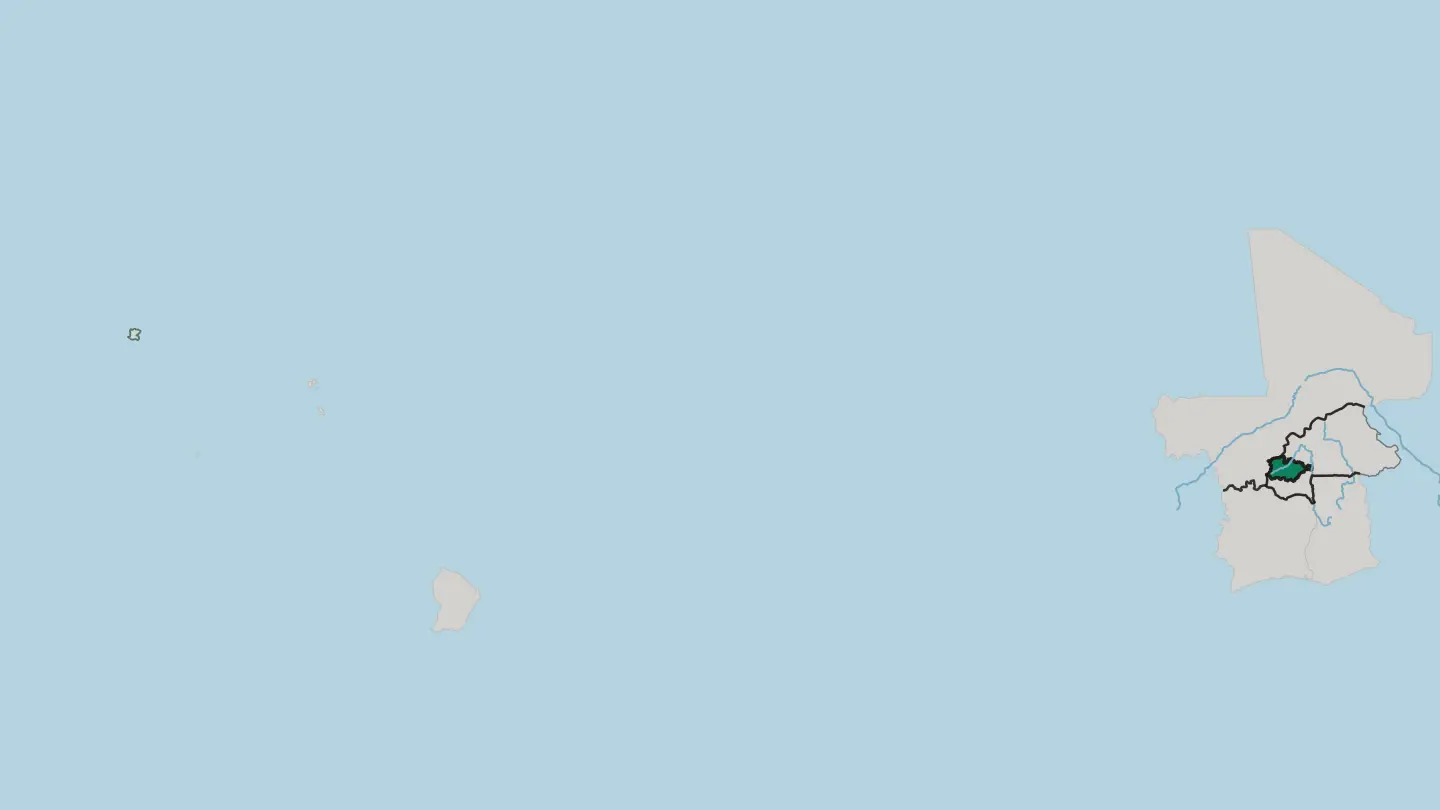
About Burkina Faso
Burkina Faso is known for its living traditions.
What is Burkina Faso known for?
Ouagadougou hosts FESPACO, the largest film festival on the continent, drawing African cinema to the capital every second year. The country's second city, Bobo-Dioulasso, keeps a mud-brick Grand Mosque built in the Sudano-Sahelian style. Out west the Sindou Peaks rise as a jagged sandstone ridge near Banfora, where waterfalls and Lake Tengrela break the savanna.
Music, mask, and market carry the rest.
Where is Burkina Faso?
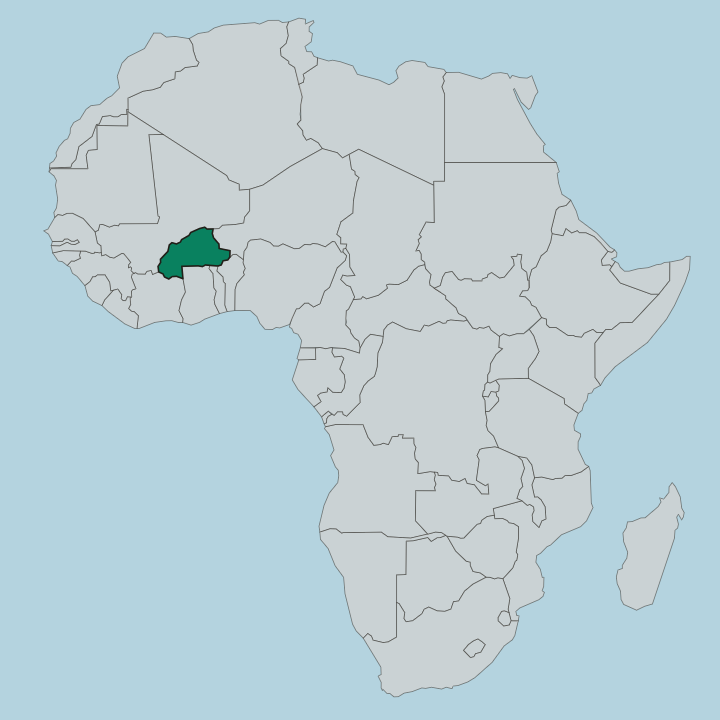
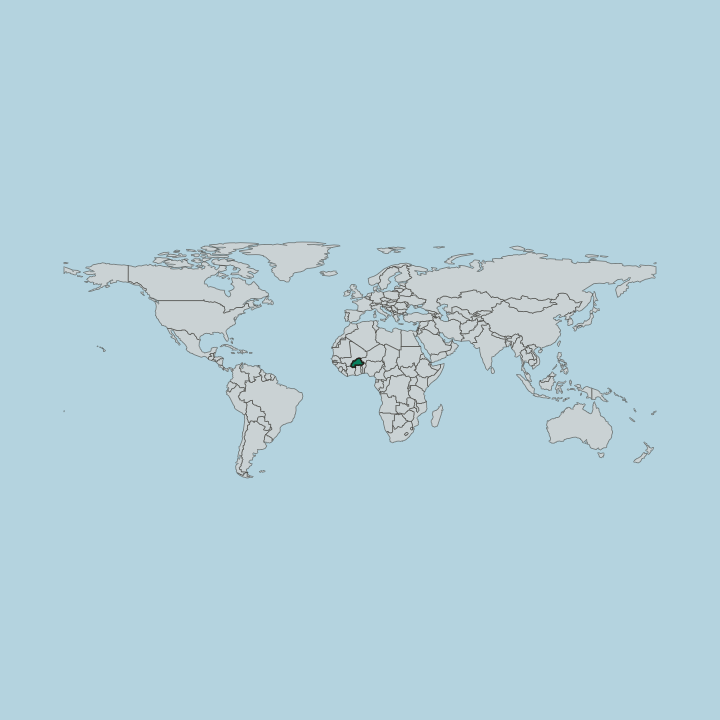
Burkina Faso sits landlocked in the heart of West Africa, ringed by six neighbours and reaching no sea in any direction. Most of the country is a peneplain, a gently undulating surface of savanna scored here and there by isolated hills, the worn stumps of an ancient Precambrian massif. The land does not climb much.
Only in the south-west does it lift, where a sandstone massif throws up cliffs and pinnacles and carries Mount Ténakourou, the highest ground in the country. That is where the Sindou Peaks stand, a serrated wall of eroded rock near Banfora, and where the Banfora escarpment feeds waterfalls and the reedy shallows of Lake Tengrela. Water here is named after colour.
The three principal rivers, the Black Volta or Mouhoun, the White Volta or Nakambé, and the Red Volta or Nazinon, all run south to join in Ghana and form the Volta. Their valleys carry the densest woodland in a country that otherwise thins from wooded savanna in the south to open Sahel scrub in the north. Ouagadougou sits near the middle of this plateau, roughly equidistant from every border.
From the southern gallery forests to the dry northern rangelands, the country is a study in gradual change.
What is the history of Burkina Faso?
Burkina Faso's story is anchored in the Mossi Kingdoms. From around the eleventh century, mounted Mossi warriors built a set of centralised states across the central plateau, and the strongest of them, the Kingdom of Ouagadougou, still keeps its ruler. The Mogho Naba reigns there yet, a living link to that older order.
Those kingdoms held off outside conquest for centuries, trading and fighting across the savanna until the French pushed in at the end of the nineteenth century. Colonial rule folded the territory into French West Africa, and in 1919 the French carved out a colony they called Upper Volta, after the three Volta rivers. Independence came on 5 August 1960, and the Republic of Upper Volta took its own seat among nations.
The great turn came in 1984. That year the president Thomas Sankara renamed the country Burkina Faso, "the land of upright people", stitching the name together from two of its own languages. He pressed reforestation against the encroaching desert, campaigned on health and literacy, and cut the country's reliance on foreign aid.
His government did not last. Yet the name he gave endures, and with it a sense of the country's own dignity.
What is Burkina Faso like?
Culture in Burkina Faso runs through film, music, mask, and the shared plate. Ouagadougou turns into the capital of African cinema every second year for FESPACO, when directors from across the continent screen and compete for the Étalon de Yennenga. Bobo-Dioulasso answers with the Semaine Nationale de la Culture, a biennial gathering of the country's dance, wrestling, and craft.
The masks matter here. Among the Bwaba, Nuna, and Winiama peoples, tall fibre and wood masks come out for planting and funeral rites, carrying the spirits of the bush into the village. The table is unshowy and central.
Tô, a stiff paste of millet, sorghum, or maize flour, is the everyday staple, eaten with an okra sauce or a green sauce of baobab or sorrel leaves. Riz gras, rice simmered in a rich tomato broth with meat, is the dish of feasts and gatherings. Dozens of peoples share this country, the Mossi most numerous among them, alongside Fula herders, Bobo, and Gourmantché.
Their languages number in the dozens. What binds them is a reputation, well earned, for openness to the stranger who arrives.
What is the climate of Burkina Faso?
Burkina Faso runs hot and dry, softening only in the rains. The north lies in the Sahel, where scant rain falls and the land stays thorn scrub, while the south catches more and greens into wooded savanna. Rain comes in one season, roughly May to October, heaviest in August around Ouagadougou.
The dry months belong to the Harmattan, a dusty north-east wind off the Sahara that hazes the sky and cools the nights. One wet season, one long dry one. The country lives by that rhythm.
How do you get to Burkina Faso?
Nearly all visitors arrive by air at Ouagadougou. The capital's airport sits close to the city centre, and a second international gateway serves Bobo-Dioulasso in the west. Being landlocked, the country is reached overland from its neighbours as well, by road and by the old railway line that runs down to the coast at Abidjan in Côte d'Ivoire.
Distances inside the country are large, so most travel between regions goes by bus or bush taxi along the main routes out of the capital. Plan the internal legs early. The roads set the pace.
Good for
Updated September 2026