Ivory Coast · Vallée du Bandama
Where to Stay in Bouaké, Vallée du Bandama
Bouaké is the second-largest city of Ivory Coast, seat of the Gbêkê Region, standing on the Abidjan-Niger Railway north of Yamoussoukro.
Hotel links are affiliate links: booking through them may earn us a commission, at no extra cost to you. It never affects how places are ranked. How this works


Where to stay in Bouaké
How the choice of base plays out on the ground.
Two sides of Bouaké take visitors. Streets around Saint Teresa of Infant Jesus Cathedral put the cathedral and the tour de Bouaké within walking reach, which suits a short stay built on the city itself rather than the road out. Distances in the centre are short.
Rail is the second pull, and beds near the Abidjan-Niger Railway suit anyone arriving late from Abidjan or leaving north the next morning. Anyone here for a day or two should weigh the cathedral quarter first, since it keeps the two named landmarks and the shortest walks in one place. Out from the middle, the city gives way to the roads, and a room on the Yamoussoukro side puts the drive southwest to the capital and the run toward Lake Kossou ahead of the morning.
That side trades walking for driving. Gbêkê Region spreads around the city, and the Vallée du Bandama District is administered from these streets, the plainest reason Bouaké carries the weight of a capital in the middle of Ivory Coast. Beds by the Abidjan-Niger Railway and beds by the cathedral serve different mornings: one is about the departure, the other about the walk in.
The choice follows the itinerary.
Find hotels in Bouaké
Direct booking searches for these neighbourhoods.
Cathedral quarter
The cathedral and the tour de Bouaké stand within the same few streetsFind hotels in Cathedral quarterLate arrivals off the Abidjan-Niger Railway and early runs northBeside the Abidjan-Niger Railway
Rooms within reach of the line that ties Bouaké to AbidjanFind hotels in Beside the Abidjan-Niger RailwayDrivers leaving southwest for Yamoussoukro or Lake KossouThe Yamoussoukro side
The southwest exit toward Yamoussoukro and the Lake Kossou roadFind hotels in The Yamoussoukro sideHotel links are affiliate links: booking through them may earn us a commission, at no extra cost to you. It never affects how places are ranked. How this works
About Bouaké
Trade and rail built Bouaké.
What is Bouaké known for?
The city carries three levels of subdivision at once, seat of the Vallée du Bandama District, of the Gbêkê Region, and of the Bouaké Department, an administrative weight few towns of its size hold. Saint Teresa of Infant Jesus Cathedral rises above the streets, and the tour de Bouaké stands over them. Freight still runs the Abidjan-Niger Railway.
What are the main landmarks in Bouaké?
Two structures carry the city's name. Saint Teresa of Infant Jesus Cathedral is the building Bouaké is known by, a Catholic cathedral among the streets of the centre and named for Teresa of the Infant Jesus. The tour de Bouaké gives the place its one tower.
Both belong to the largest settlement of the Gbêkê Region, and both sit within the district that Vallée du Bandama is administered from.
What is the history of Bouaké?
The founding year is 1899. What the record fixes after that is the railway: the Abidjan-Niger line, running north from Abidjan through Bouaké and on toward the interior, put the town on the country's main axis of movement. Roughly 350 kilometres of track separate the two cities.
Yamoussoukro, the national capital, lies about 100 kilometres to the southwest. Freight and passengers moving between the south and the northern towns pass through here, and that traffic is the oldest continuous fact anyone can state about the place. The distances made the junction.
Administration followed the traffic. Bouaké holds three levels of subdivision at once, the Vallée du Bandama District, the Gbêkê Region, and the Bouaké Department, a concentration that makes the city the working capital of the middle of Ivory Coast rather than merely its largest inland market. Saint Teresa of Infant Jesus Cathedral and the tour de Bouaké are the two structures the city is known by.
Each layer of government draws officials, records, and traffic to the same streets, which is why Bouaké works as a hub for ground far wider than its own built-up area. It ranks second in the country by size. Lake Kossou lies southwest.
Where is Bouaké?
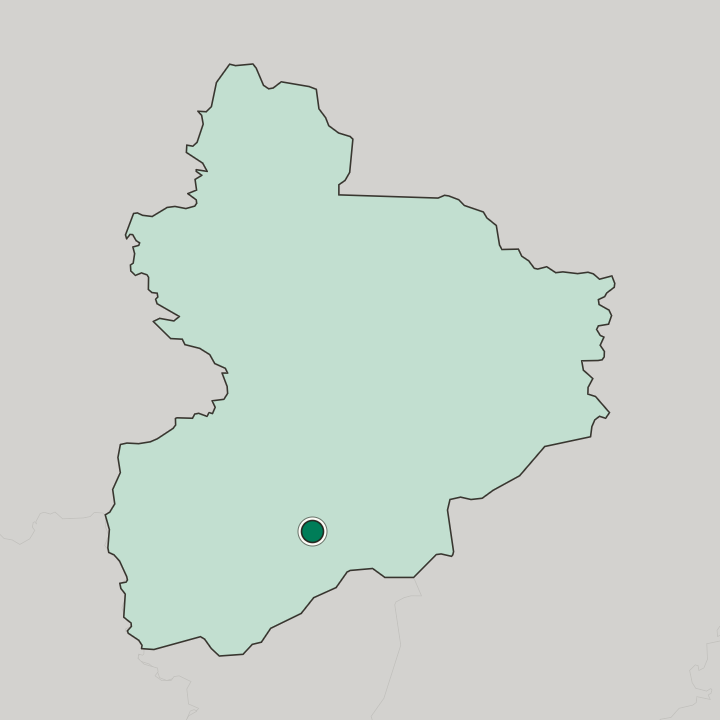
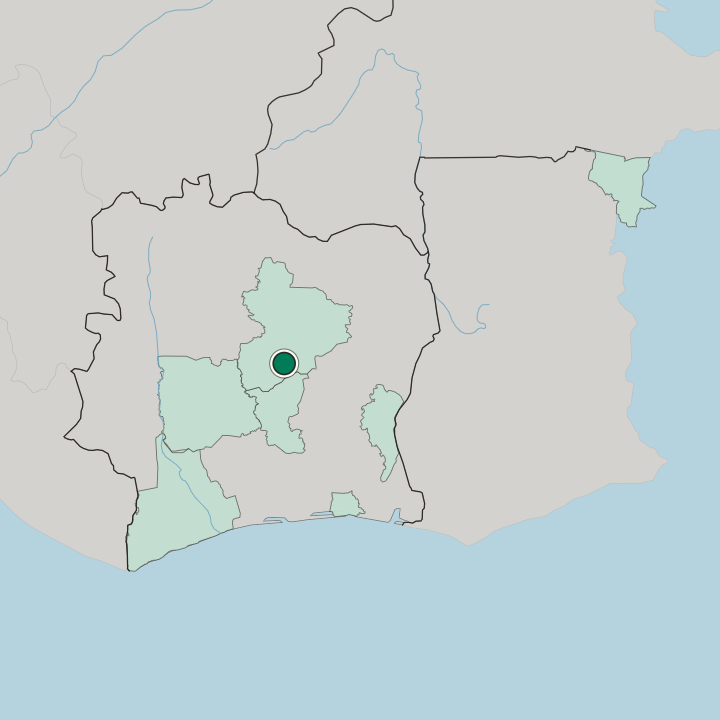
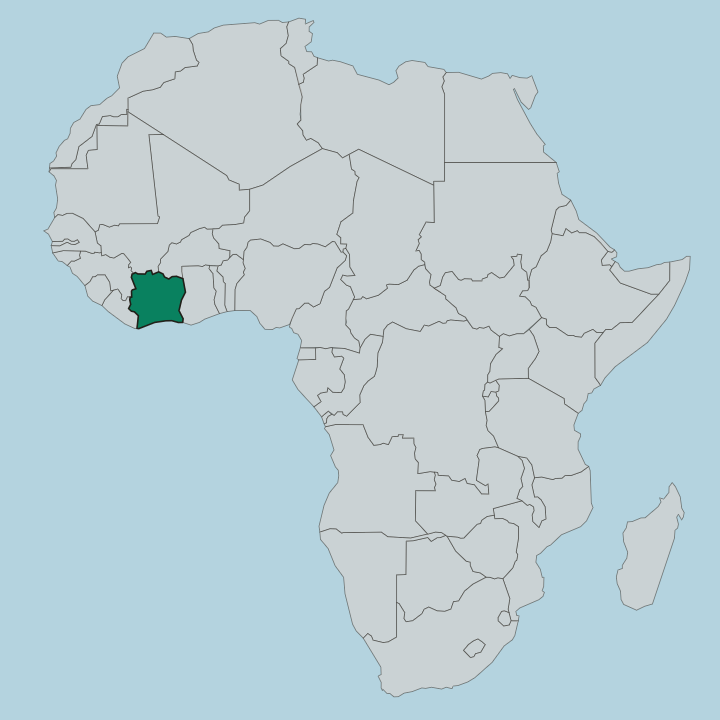
Distance shapes Bouaké. The city stands in the middle of Ivory Coast, roughly 350 kilometres north of Abidjan, about 100 kilometres northeast of Yamoussoukro, and some 50 kilometres northeast of Lake Kossou, the largest lake in the country. The Abidjan-Niger Railway runs through on its way north, and the Vallée du Bandama District is administered from here.
Gbêkê Region surrounds it.
What is the climate of Bouaké?
Warmth holds steady all year. Bouaké lies in the tropical band north of the equator, in the middle of Ivory Coast, so the year divides into wet and dry stretches rather than into four seasons of the temperate kind. Rain sets the calendar more than temperature does.
Lake Kossou holds the country's largest body of fresh water southwest of the Gbêkê Region.
How do you get to Bouaké?
Most arrivals come by road or rail. Trains on the Abidjan-Niger Railway link Bouaké with Abidjan, roughly 350 kilometres south, and carry on north toward the interior, while the road between the two cities covers the same ground. Yamoussoukro sits about 100 kilometres southwest, the national capital and the nearest big city.
Lake Kossou lies out that way too.
Common questions
What is the best area to stay in Bouaké?
Cathedral quarter: Short stays walking to Saint Teresa of Infant Jesus Cathedral. Beside the Abidjan-Niger Railway: Late arrivals off the Abidjan-Niger Railway and early runs north. The Yamoussoukro side: Drivers leaving southwest for Yamoussoukro or Lake Kossou.
Good for
Updated September 2026