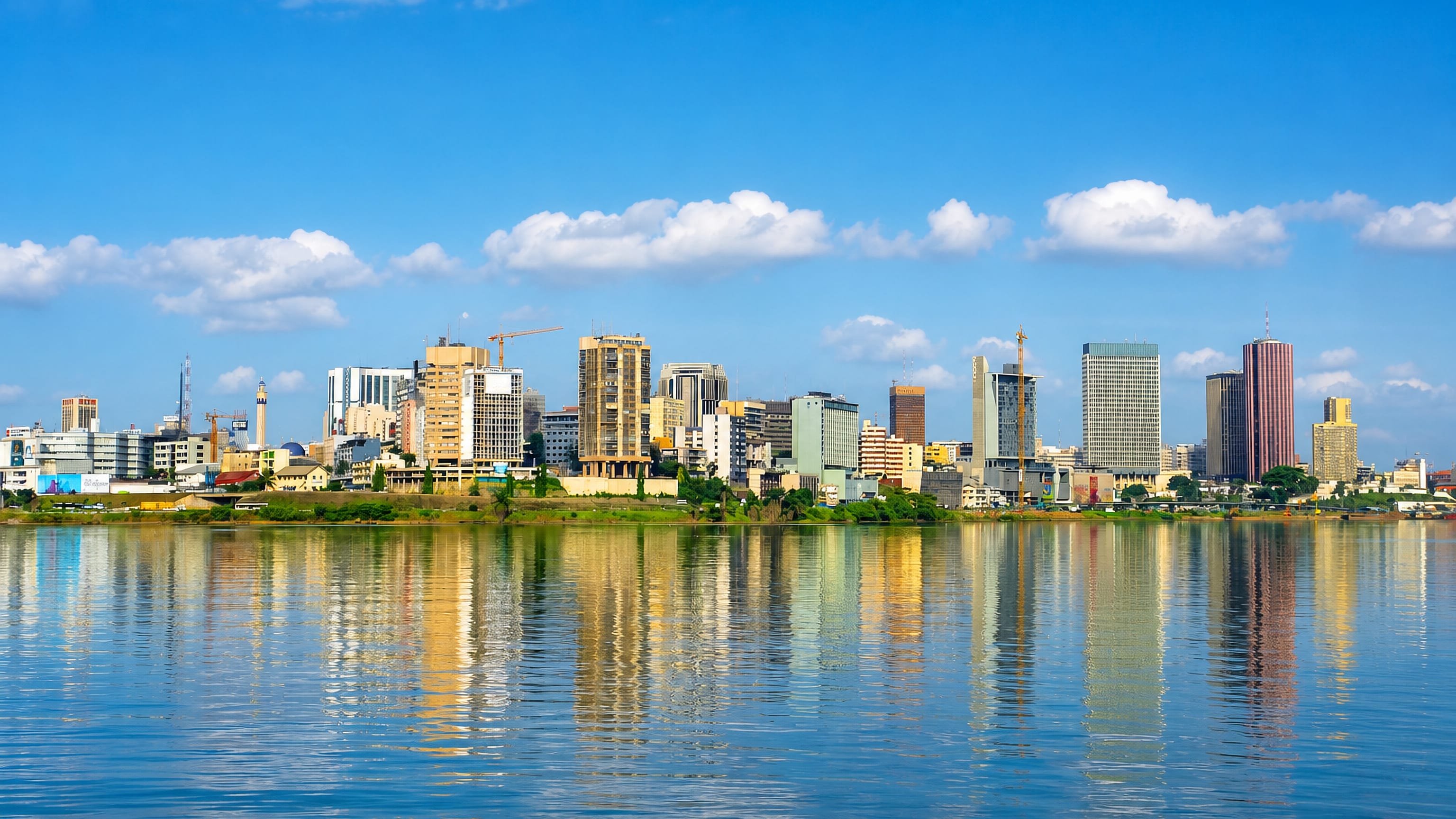
Ivory Coast: Regions, Cities & Travel Guide
Ivory Coast is a country on the Gulf of Guinea in West Africa, with Yamoussoukro as its capital and Abidjan as its largest city.
Hotel links are affiliate links: booking through them may earn us a commission, at no extra cost to you. It never affects how places are ranked. How this works


Top destinations in Ivory Coast
Cities to start from, then drill into areas and hotels.
 Ivory Coast
Abidjan
Abidjan is the largest city of Ivory Coast and a cultural crossroads of West Africa, founded in 1898 and its capital from 1933 until 1983.Where to stay →
 Ivory Coast
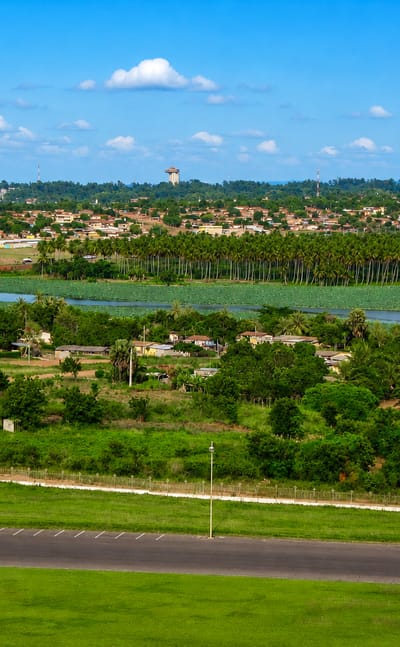
Yamoussoukro
Wide paved boulevards run through rolling hills at Yamoussoukro, the capital of Ivory Coast and an autonomous district north-west of Abidjan.Where to stay →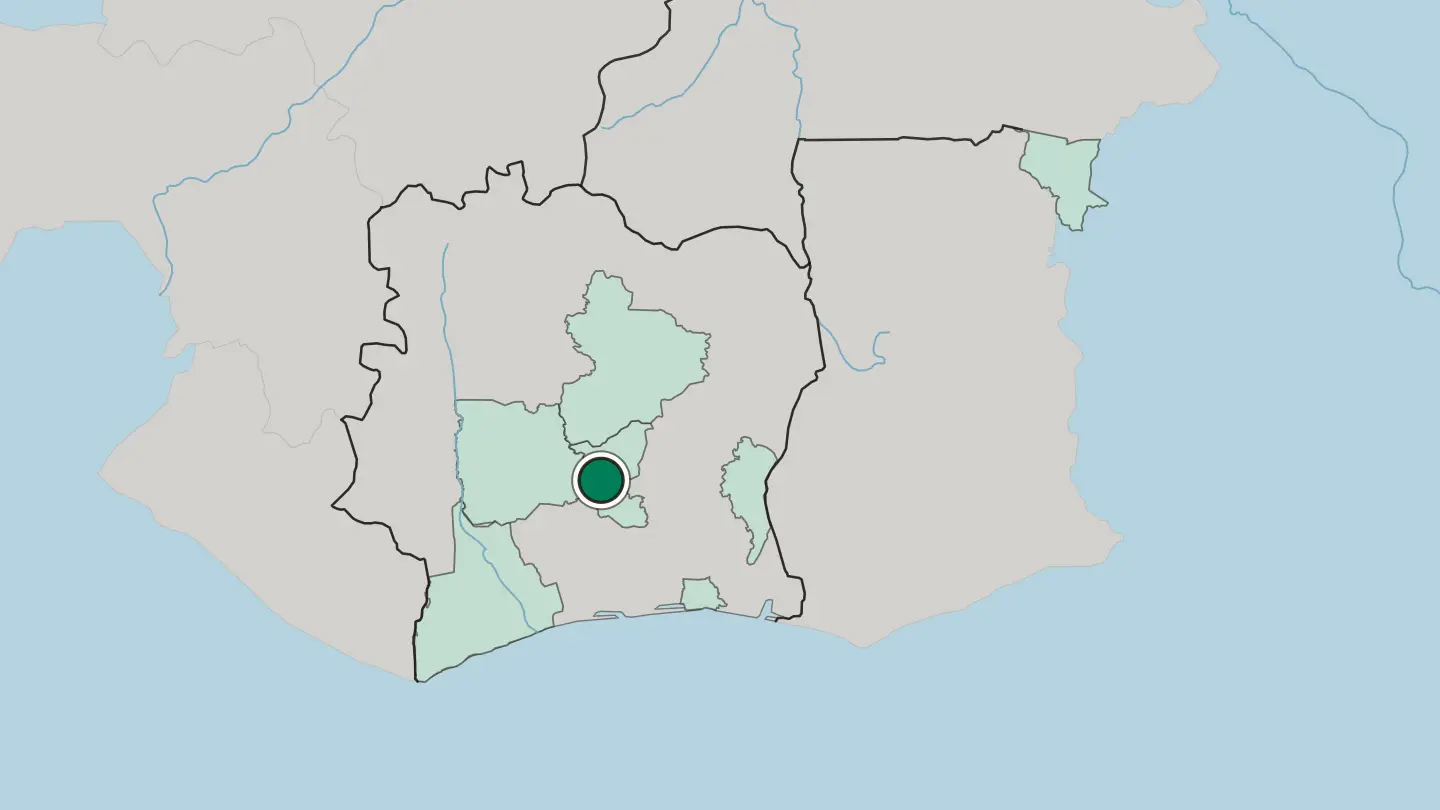 Ivory Coast
Bouaké
Bouaké is the second-largest city of Ivory Coast, seat of the Gbêkê Region, standing on the Abidjan-Niger Railway north of Yamoussoukro.Where to stay →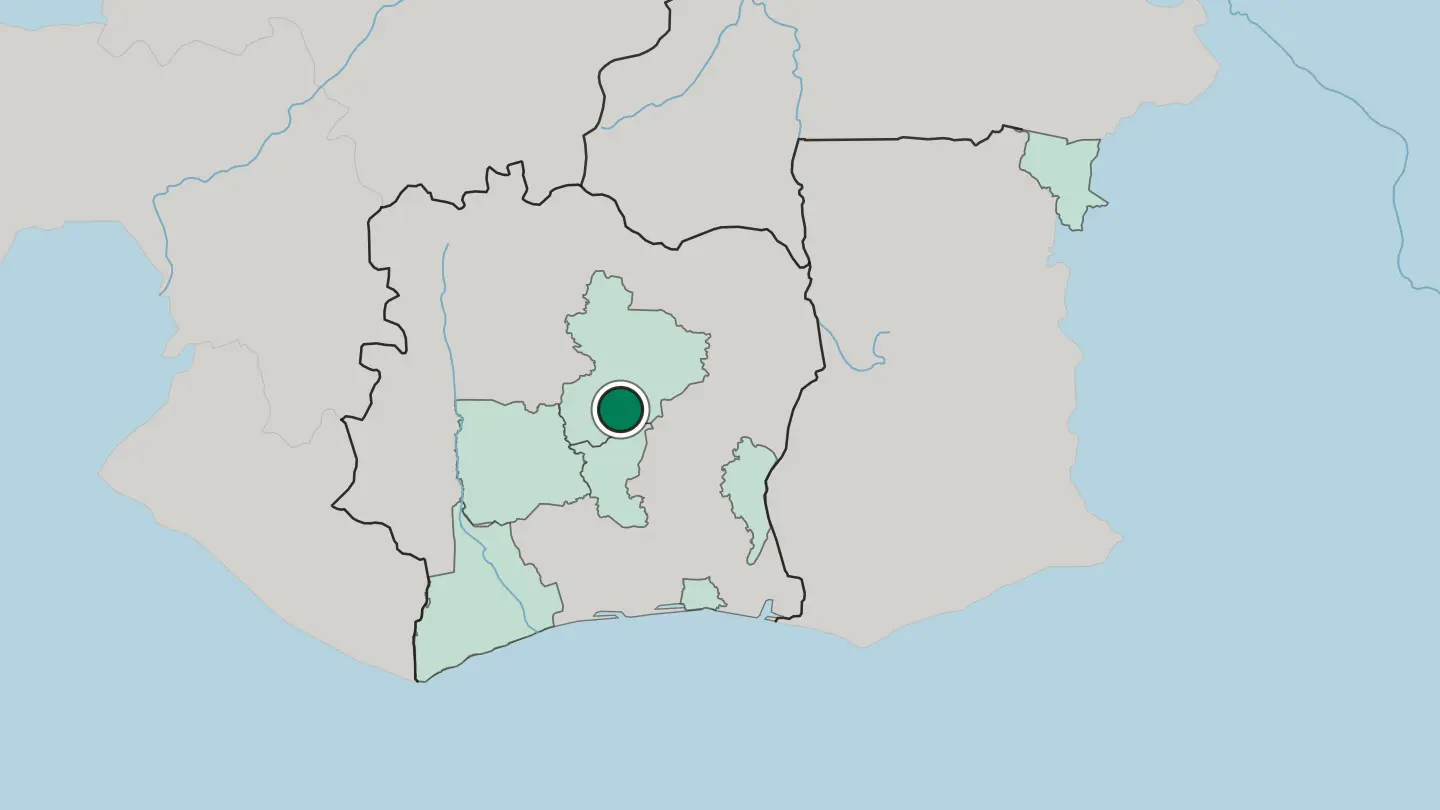 Ivory Coast
San-Pédro
San-Pédro is a city of the southwest coast of Ivory Coast on the Atlantic, the country's second port, the harbour that ships the world's cocoa to the sea.Where to stay →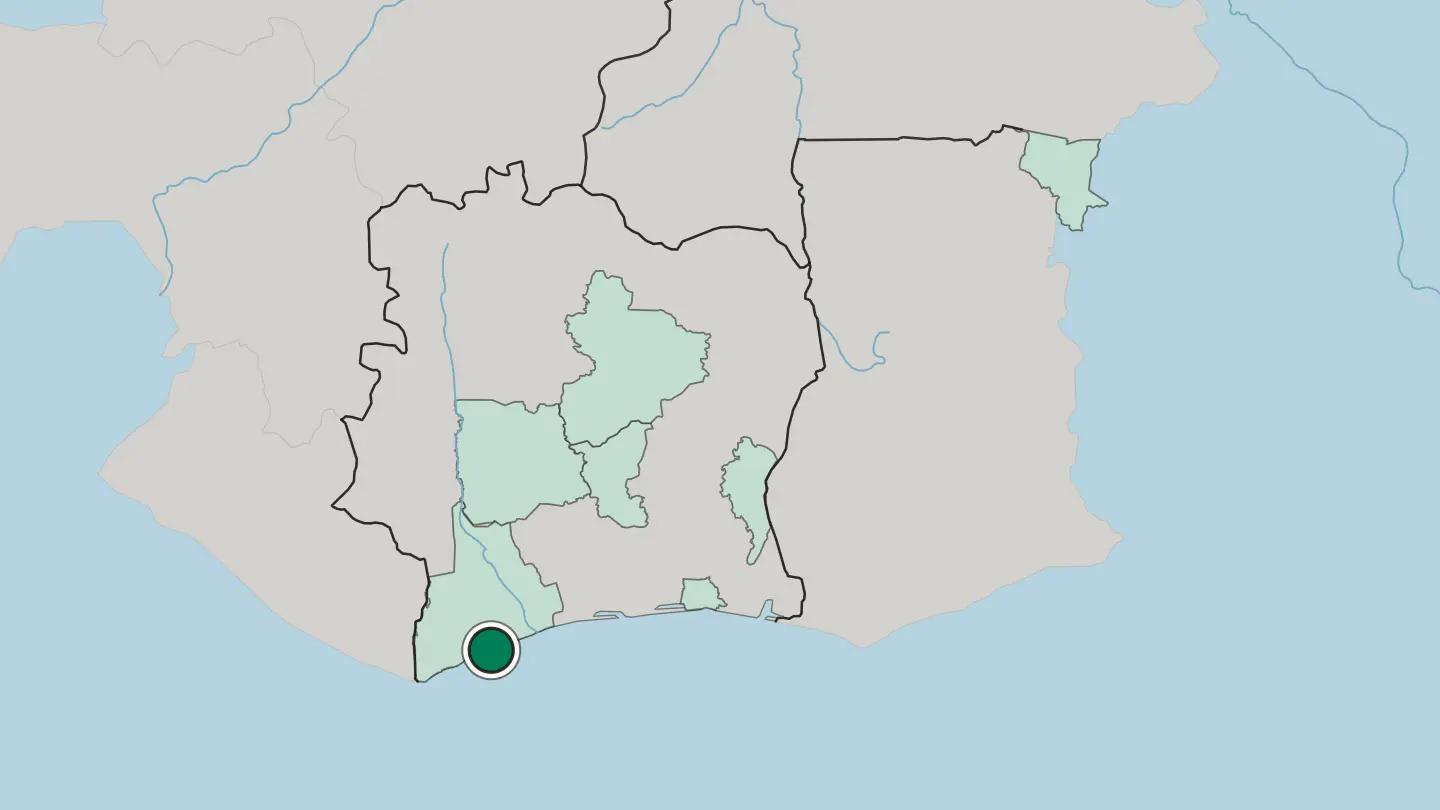
 Ivory Coast
Korhogo
Korhogo is the seat of the Savanes District and the Poro Region, the largest city of the Northern Savanna of Côte d'Ivoire.Where to stay →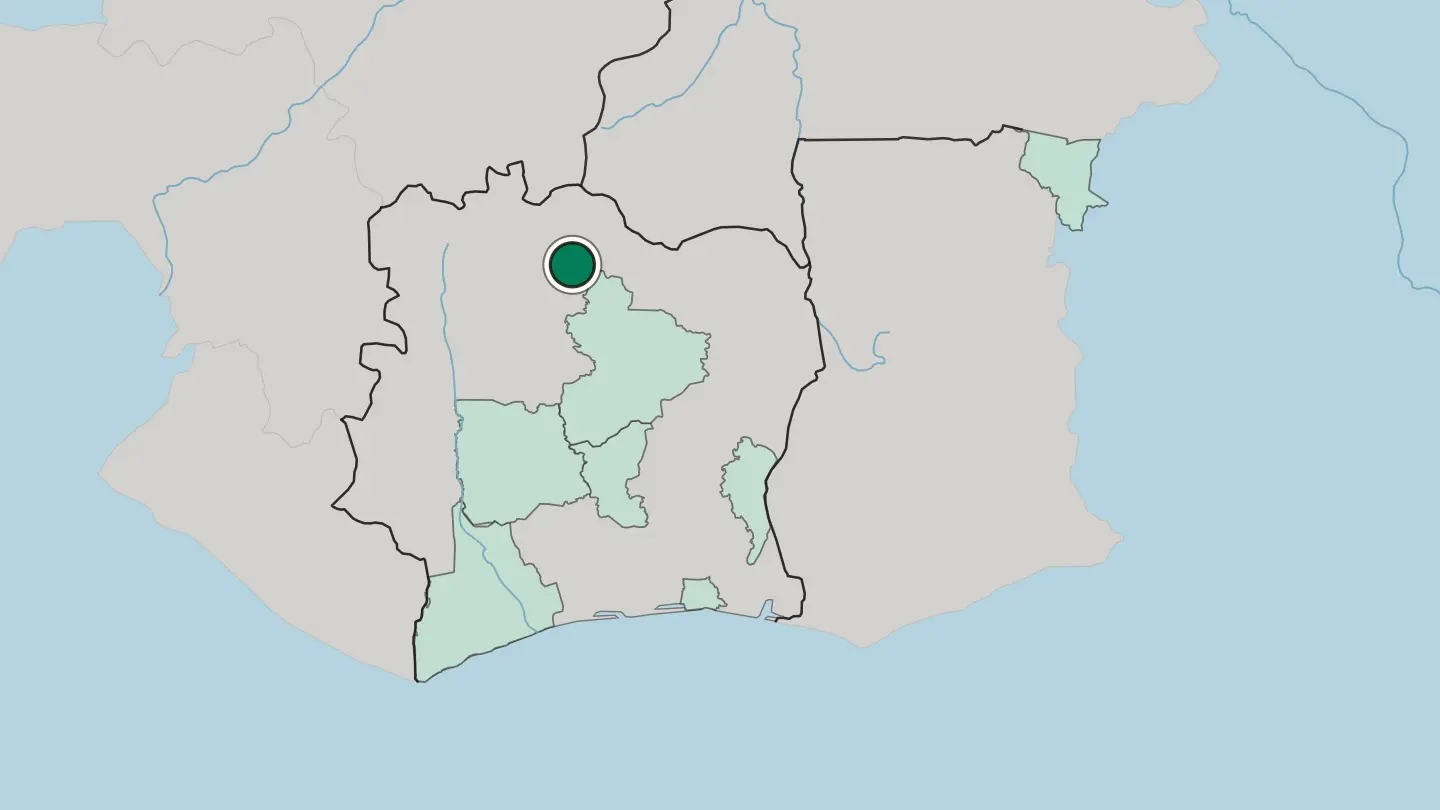 Ivory Coast
Grand-Bassam
Grand-Bassam is a town of Ivory Coast on the Atlantic, the old French colonial capital, a faded quarter of colonial mansions between lagoon and sea.Where to stay →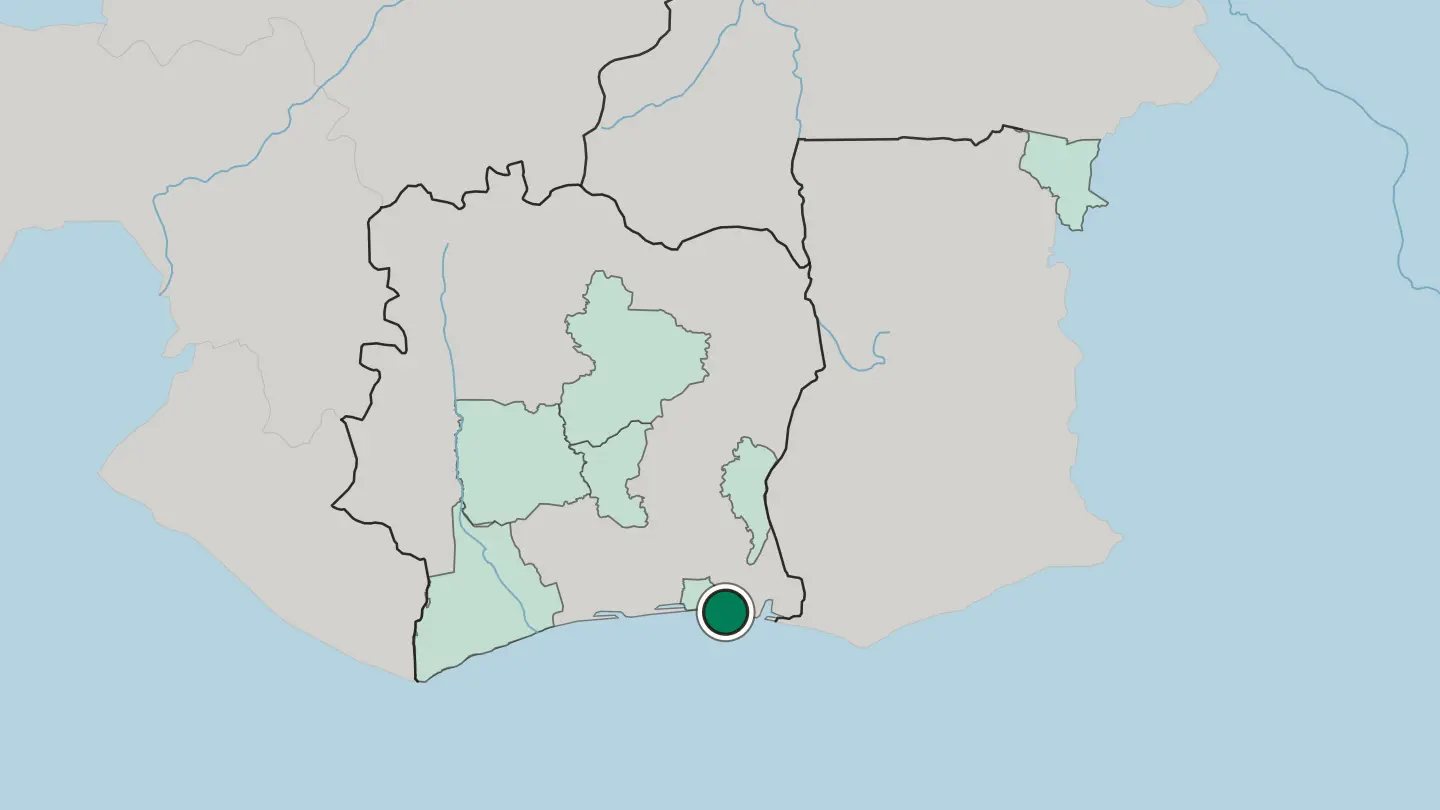
 Ivory Coast
Bingerville
Bingerville sits on the Ébrié Lagoon some 10 kilometres east of Abidjan, a commune and sub-prefecture known for its botanical garden.Where to stay →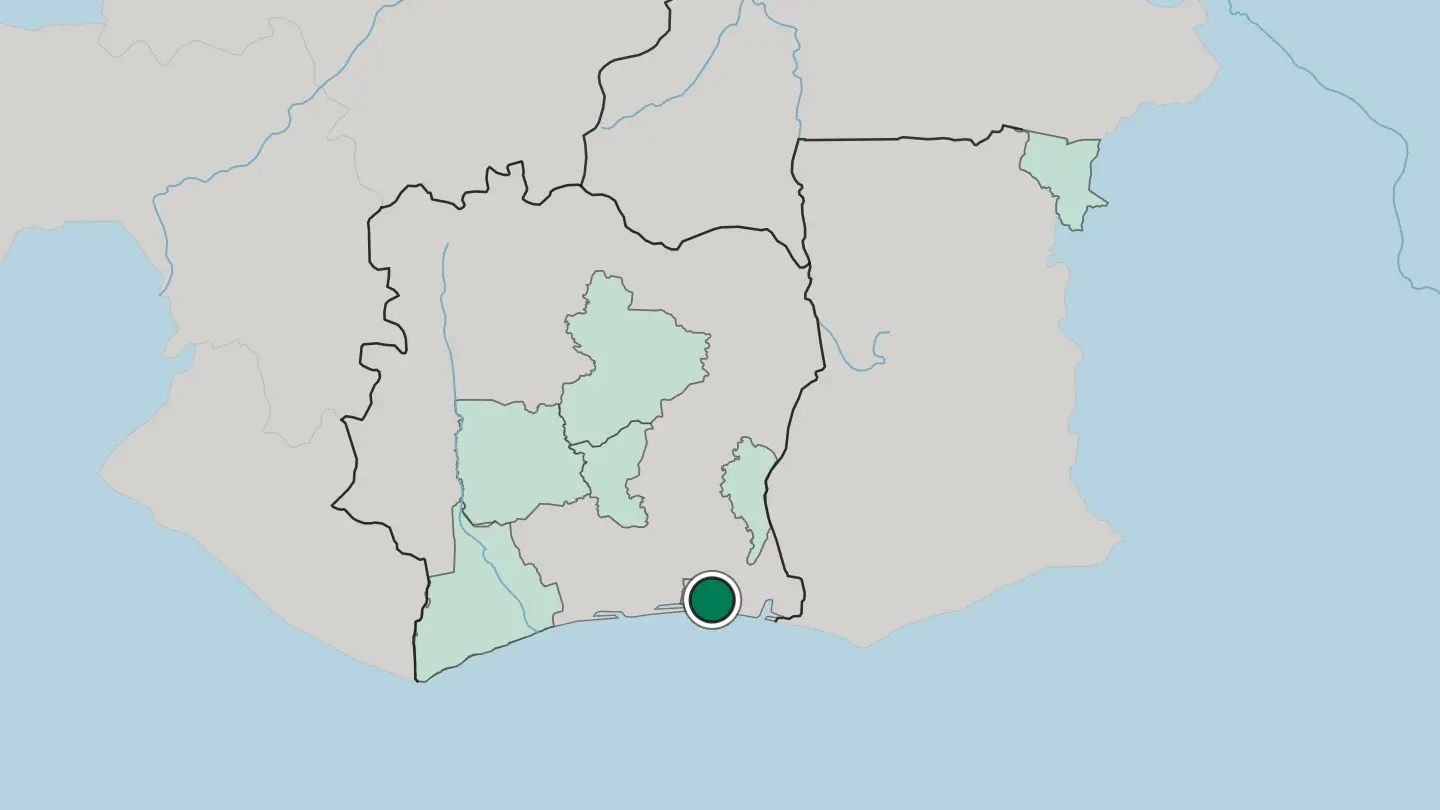 Ivory Coast
Daloa
Daloa is the seat of the Sassandra-Marahoué District in western Ivory Coast, a cocoa trading city with its own airport and cathedral.Where to stay →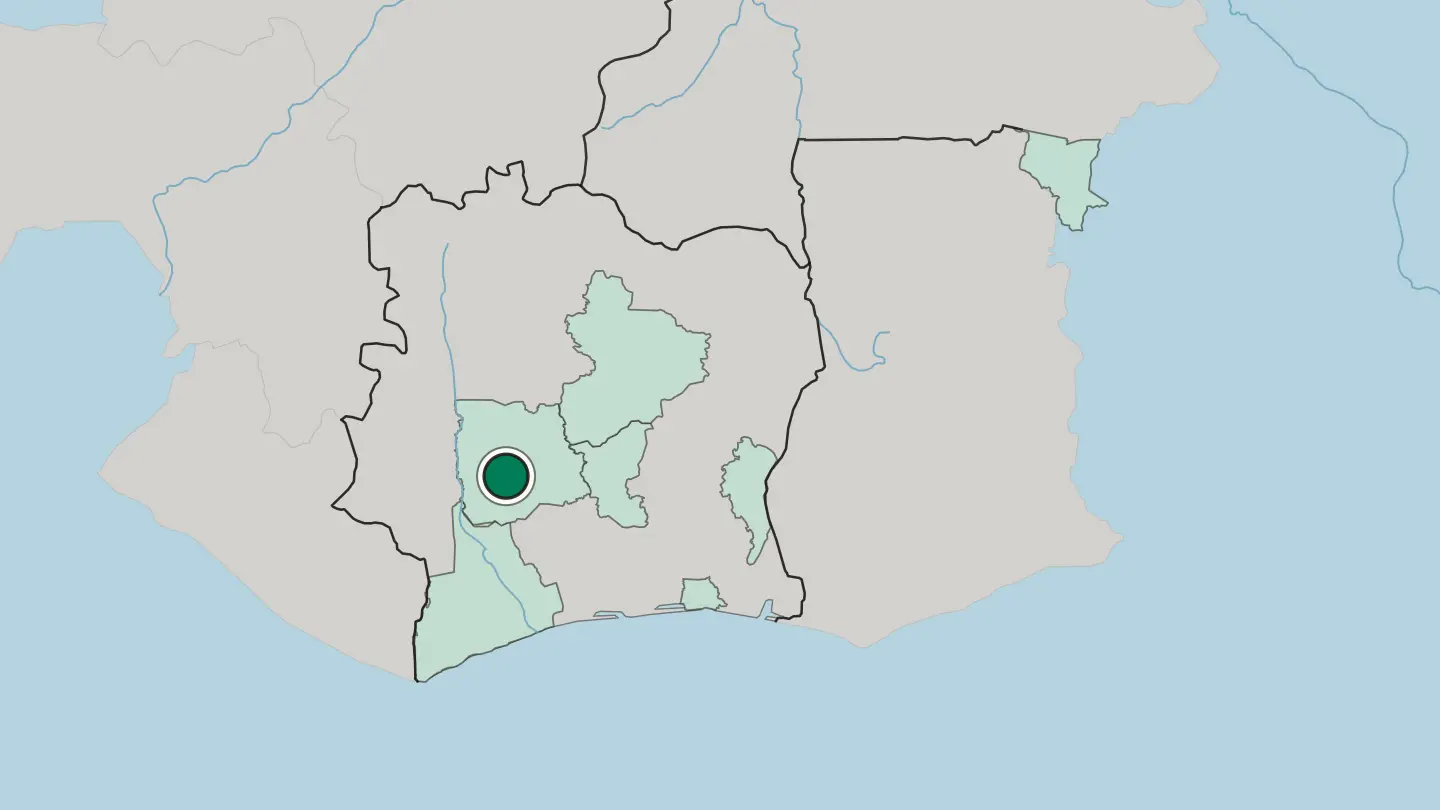
Hotel links are affiliate links: booking through them may earn us a commission, at no extra cost to you. It never affects how places are ranked. How this works
Regions of Ivory Coast
Ivory Coast
Abidjan
Abidjan is a region of Ivory Coast built around its namesake city, the country's economic power base and a cultural crossroads of West Africa.Towns & cities →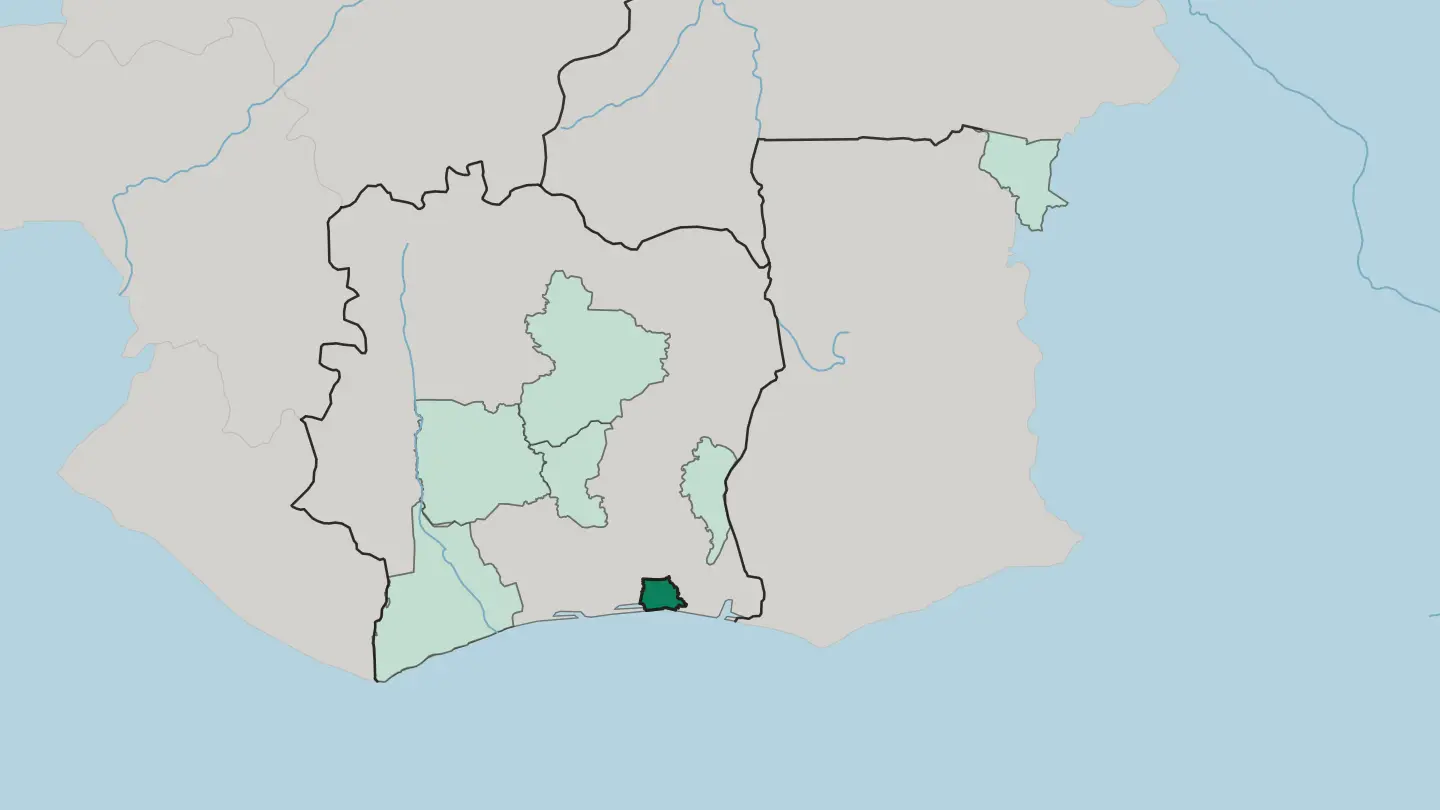 Ivory Coast
Bas-Sassandra
Bas-Sassandra is one of the fourteen administrative districts of Ivory Coast, with San-Pédro as its capital.Towns & cities →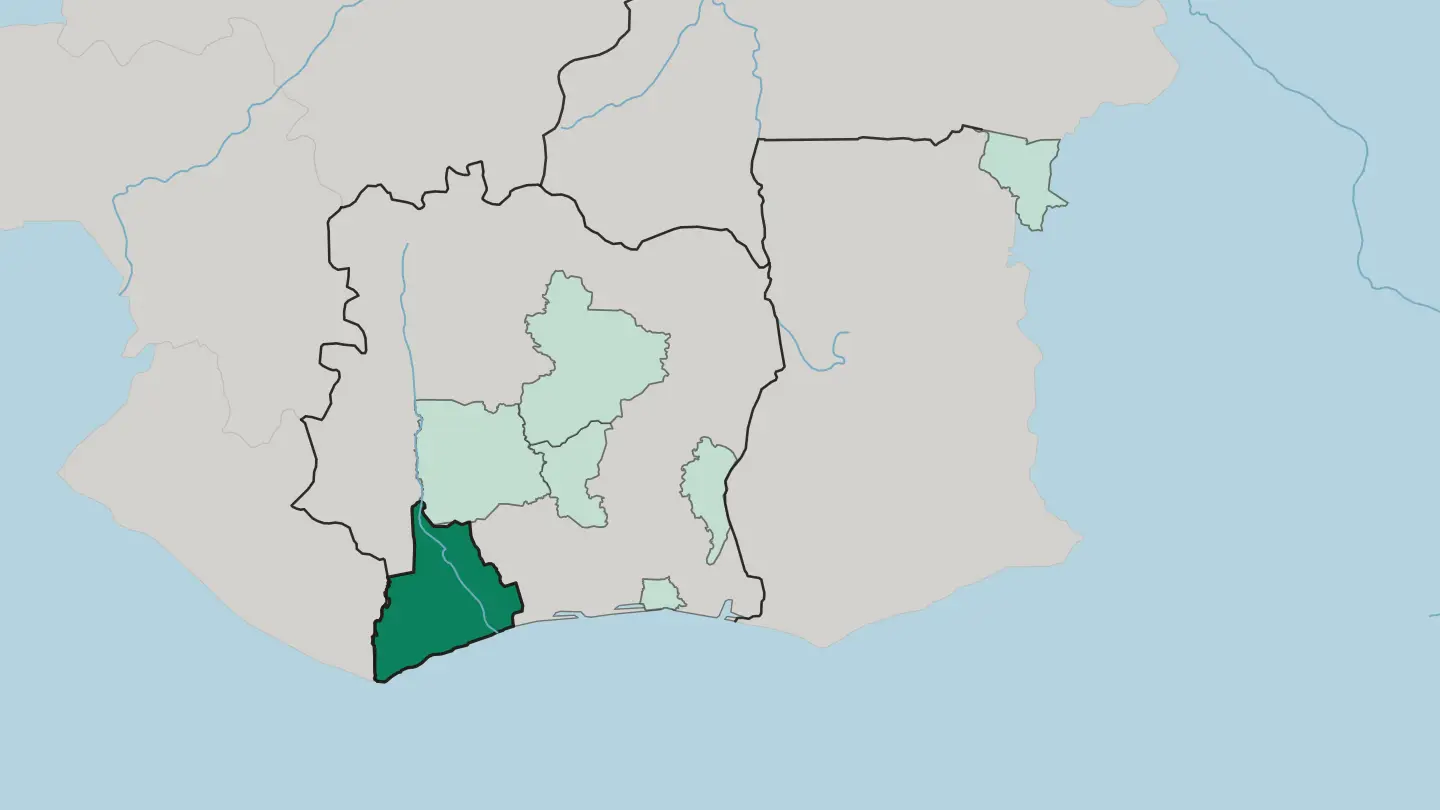 Ivory Coast
Comoé
Comoé is one of the fourteen districts of Ivory Coast, running from the Ghana border to the Atlantic Ocean, with Abengourou as its capital.Towns & cities →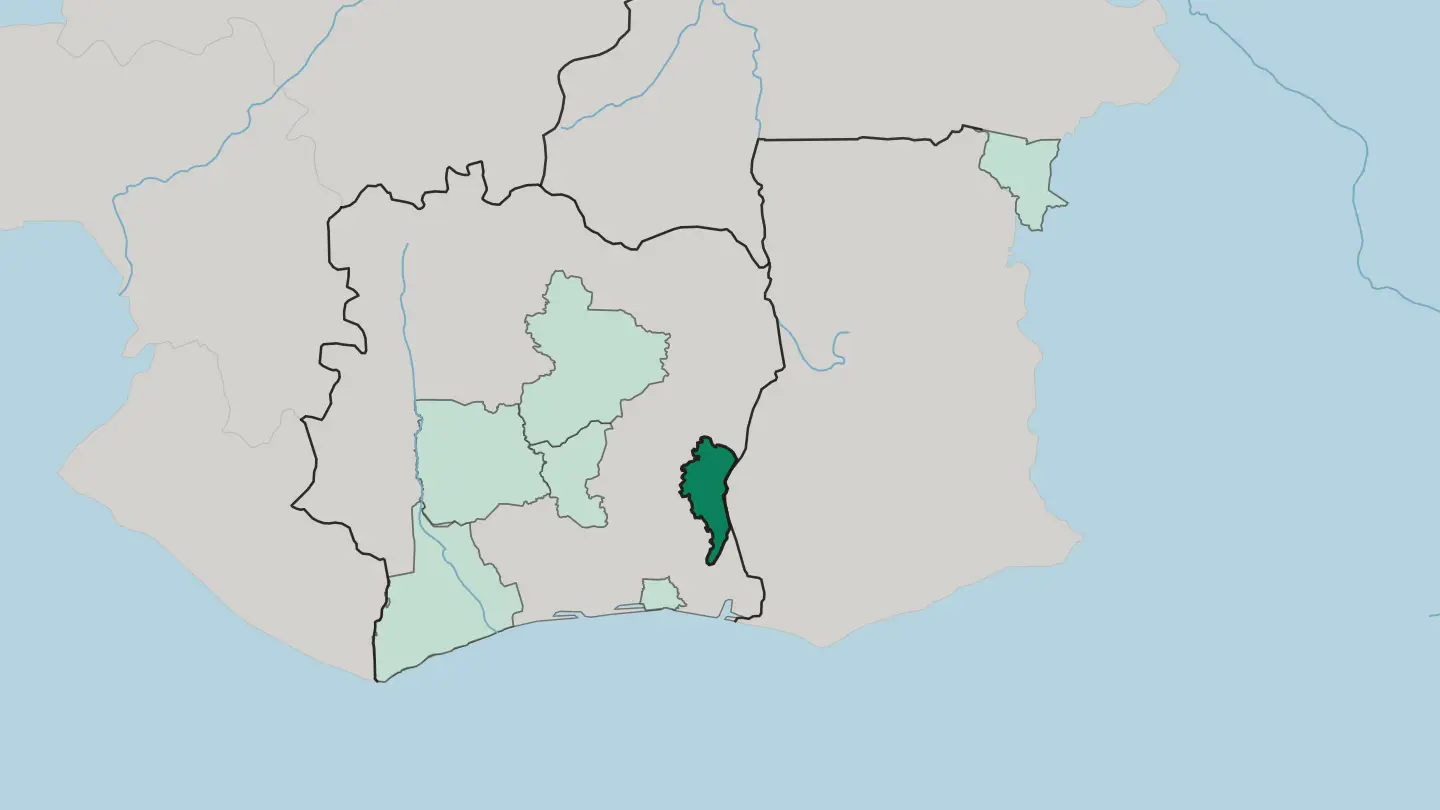 Ivory Coast
Lacs
Lacs is a district of Ivory Coast whose name, French for lakes, gathers the country's political capital of Yamoussoukro at its heart.Towns & cities →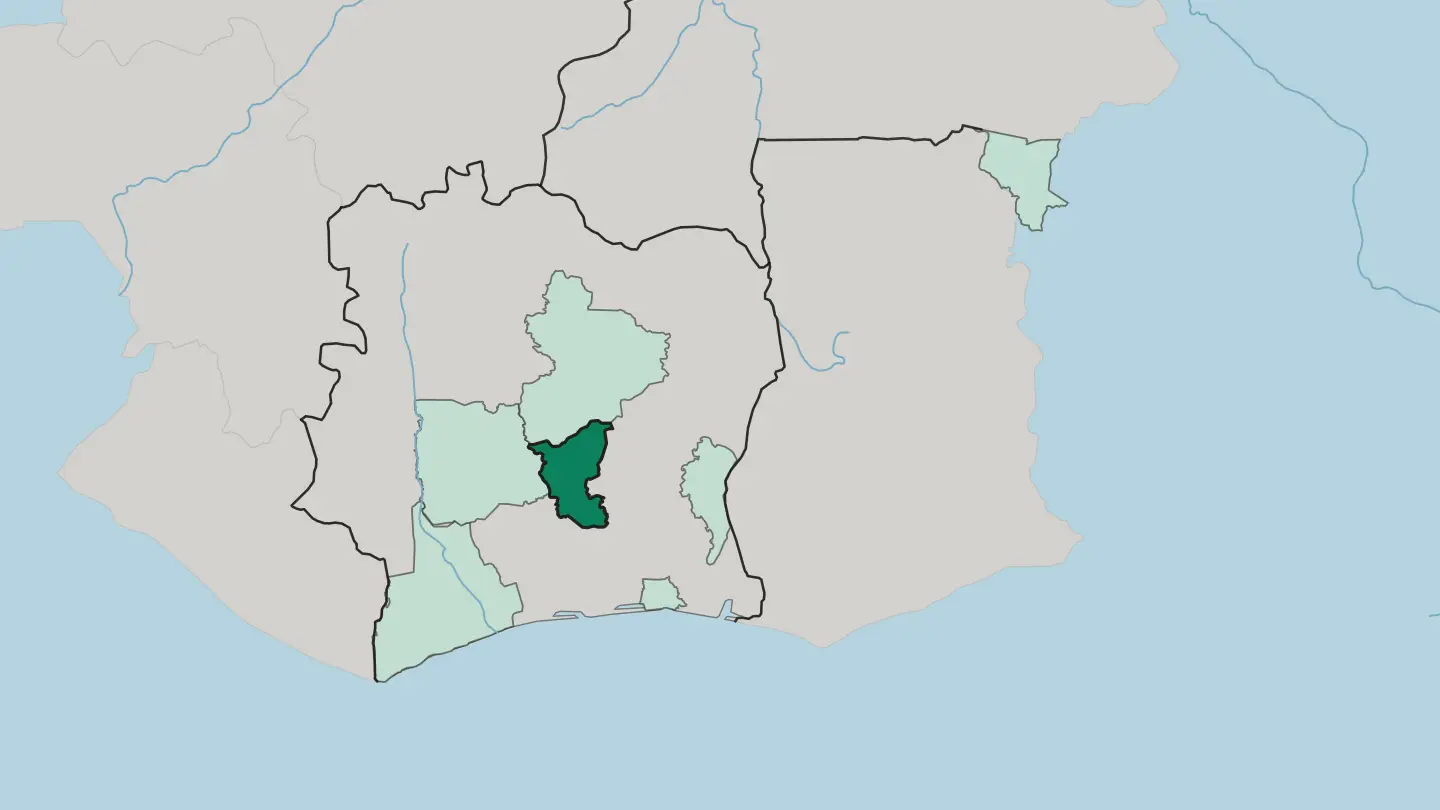 Ivory Coast
Sassandra-Marahoué
Sassandra-Marahoué is one of fourteen administrative districts of Ivory Coast, run from the interior city of Daloa.Towns & cities →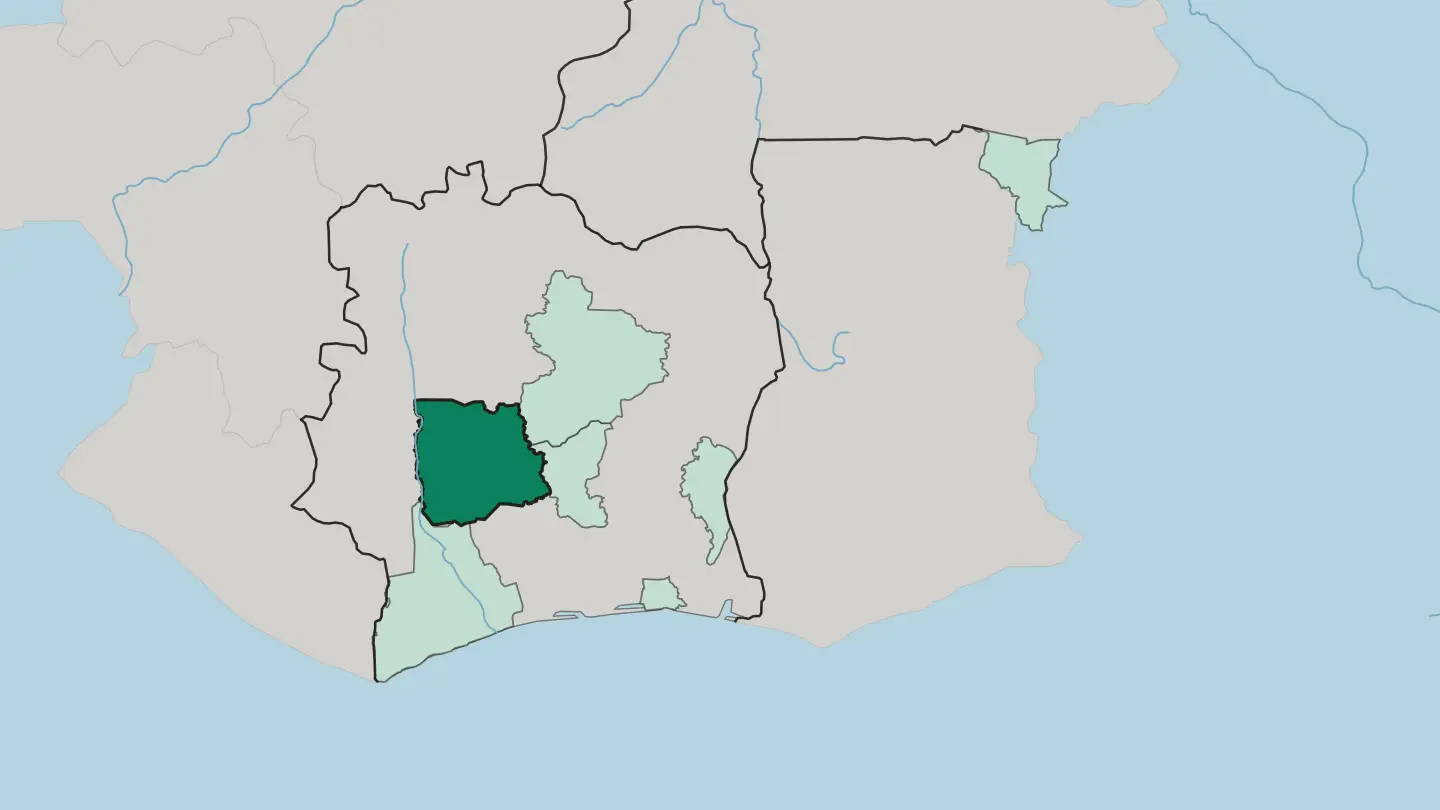 Ivory Coast
Savanes
Savanes reaches the top of Ivory Coast, the northernmost of the country's fourteen districts, with Korhogo as its seat.Towns & cities →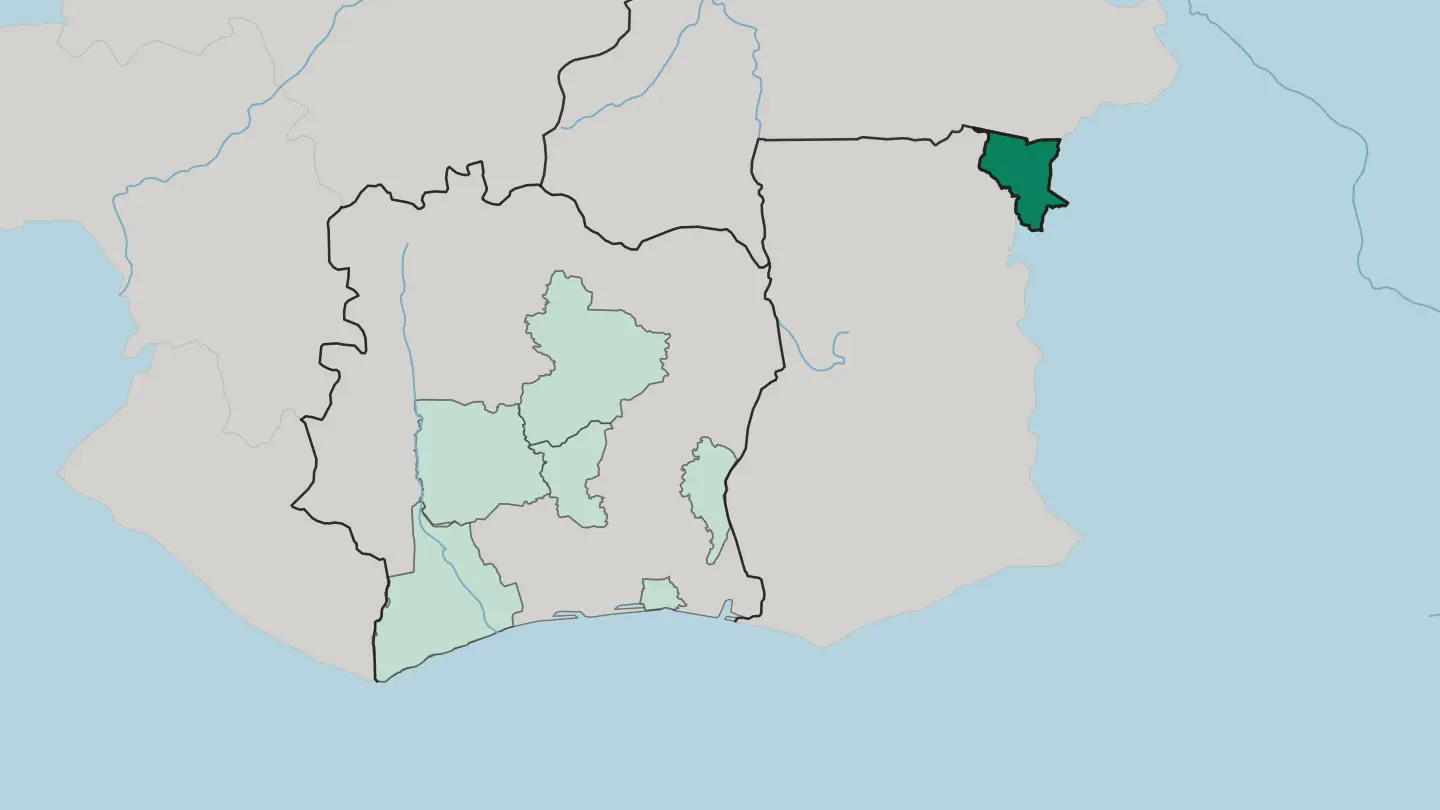 Ivory Coast
Vallée du Bandama
Vallée du Bandama is the north-central district of Ivory Coast, named for the Bandama and administered from Bouaké.Towns & cities →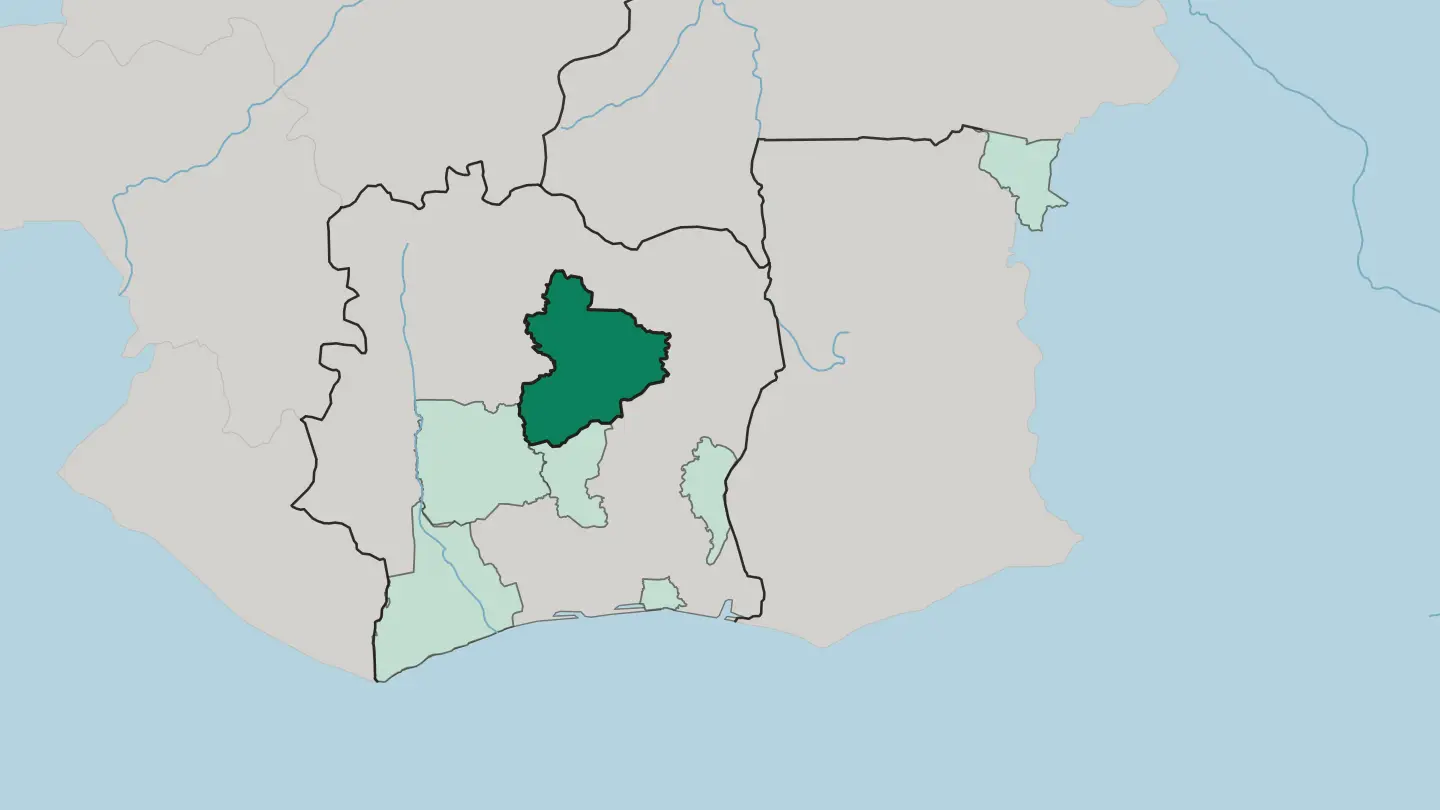
About Ivory Coast
What is Ivory Coast known for?
Cocoa built this country, and Ivory Coast is still the world's largest exporter of cocoa beans. Abidjan is the draw for most arrivals. Its lagoon-side skyline and the Plateau district mark the country's economic centre, while inland at Yamoussoukro the Basilica of Our Lady of Peace rises over the savanna.
Beaches run east from Grand-Bassam to Assinie. The western hills around Man break the coastal flatness with waterfalls and forest.
Where is Ivory Coast?
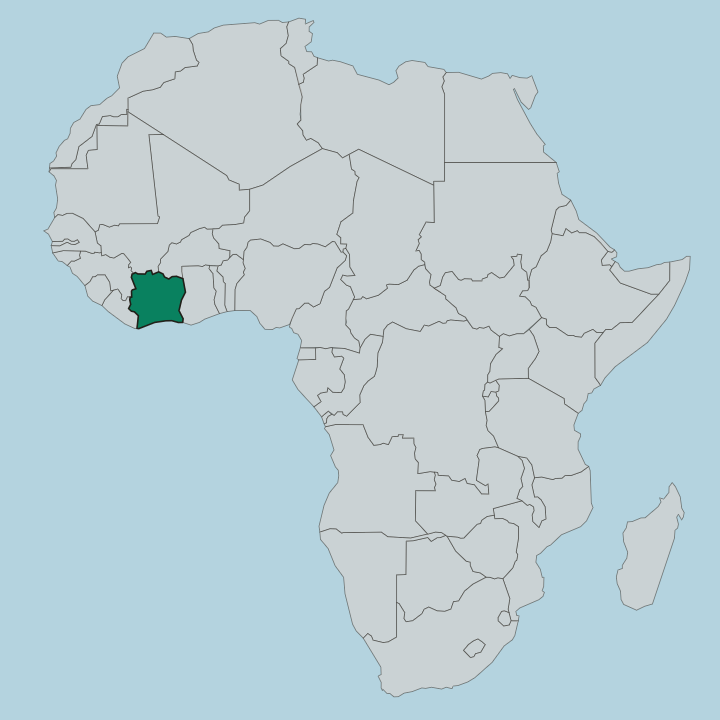
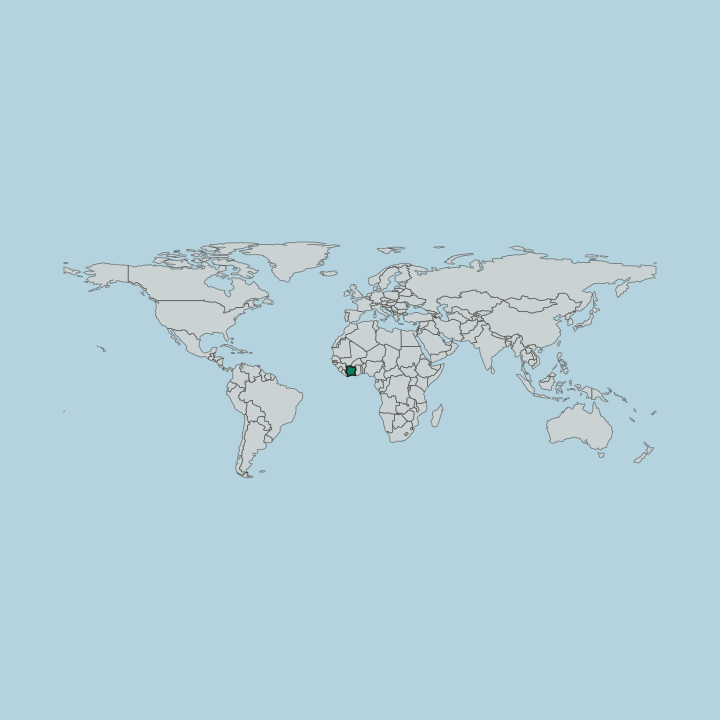
Ivory Coast fills a rough square of West Africa between Liberia and Guinea to the west, Mali and Burkina Faso to the north, and Ghana to the east, with the Gulf of Guinea closing the south. The land tilts from the sea toward the interior. A low coastal belt of sandbars and lagoons, including the Ébrié Lagoon that Abidjan wraps around, gives way to dense rainforest across the south, then to open savanna over the northern half of the country.
Large rivers order this space. The Bandama, the Sassandra in the west, and the Comoé in the east all run south to the sea, cutting through the plateau as they go. The far west rises hardest.
There the Man highlands climb toward the Nimba Range on the Guinean and Liberian border, where Mount Nimba tops out at 1,752 metres. Forest thins as you travel north. Around Bouaké, near the middle of the country, wooded land opens into the grasslands that stretch on toward the Sahel.
From lagoon to summit, the relief is gentle at the coast and steep only in the west.
What is the history of Ivory Coast?
The coast took its name from the ivory trade that European ships worked here from the seventeenth century, well before any colony was drawn. France declared a protectorate along the shore in 1843 and made Côte d'Ivoire a formal colony in 1893, later folding it into French West Africa and running its economy on forced-labour plantations of coffee and cocoa. Resistance to that system shaped the country's first leader.
Félix Houphouët-Boigny, a Baoulé chief's son and a planter himself, organised African growers against forced labour in the 1940s, won a seat in the French assembly, and steered the territory toward self-rule. Independence came in 1960, with Houphouët-Boigny as first president. He held power until his death in 1993, keeping close ties to France and pouring cocoa wealth into roads, schools, and his birthplace of Yamoussoukro, which he raised to official capital.
The decades after him were harder. A disputed succession and regional divisions pulled the country into civil conflict in the 2000s, splitting north from south before a fragile reunification. That long arc still marks the map.
The economic weight sits in Abidjan and the south, while the political capital and the old leader's monuments stand inland at Yamoussoukro.
What is Ivory Coast like?
Ivory Coast holds some seventy languages inside one set of borders, and no single group speaks for the whole. The Baoulé and other Akan peoples dominate the centre and east, the Bété the forested south-west, the Dan and Senufo the western hills and northern savanna, while Dyula runs as a trade tongue across markets everywhere. French ties it all together.
The mix shows in music. Abidjan gave birth to coupé-décalé and to a home-grown zouglou that carries street politics in its lyrics, and the city's studios push those sounds across French-speaking Africa. Masks matter here too.
Among the Dan around Man and the Senufo of the north, carved masks and the dances that wear them still mark initiations, funerals, and festivals rather than sitting behind glass. Food leans on the land. Attiéké, a fermented cassava couscous, comes with grilled fish or with kedjenou, a slow-steamed chicken stew, on tables from roadside stalls to Abidjan's maquis eateries.
Religion divides broadly by region, with Muslims more numerous in the north, Christians in the south, and traditional beliefs threaded through both. The Basilica at Yamoussoukro answers the north's great mosques in stone. Unity here is a working arrangement, not a single face.
What is the climate of Ivory Coast?
The country's weather splits north from south. Along the coast around Abidjan and Grand-Bassam the climate is equatorial, hot and humid year-round, with a long rainy stretch from April into July and a shorter one late in the year. The north runs drier.
Around Bouaké and the savanna beyond, a single wet season from about May to October gives way to a hard dry spell when the dusty harmattan wind blows down off the Sahara. Rain, not temperature, marks the seasons here.
How do you get to Ivory Coast?
Nearly everyone arrives through Abidjan. Félix Houphouët-Boigny International Airport, on the city's southern edge, is the country's main gateway and the hub for onward hops. From there a decent trunk road runs north through Yamoussoukro and Bouaké, and the coastal highway east reaches Grand-Bassam and Assinie within an hour or two.
The port city of San-Pédro handles the south-west, both by road and by a smaller airport. Distances inland are real, so many travellers fly the longer legs and drive the short coastal ones.
Good for
Updated October 2026