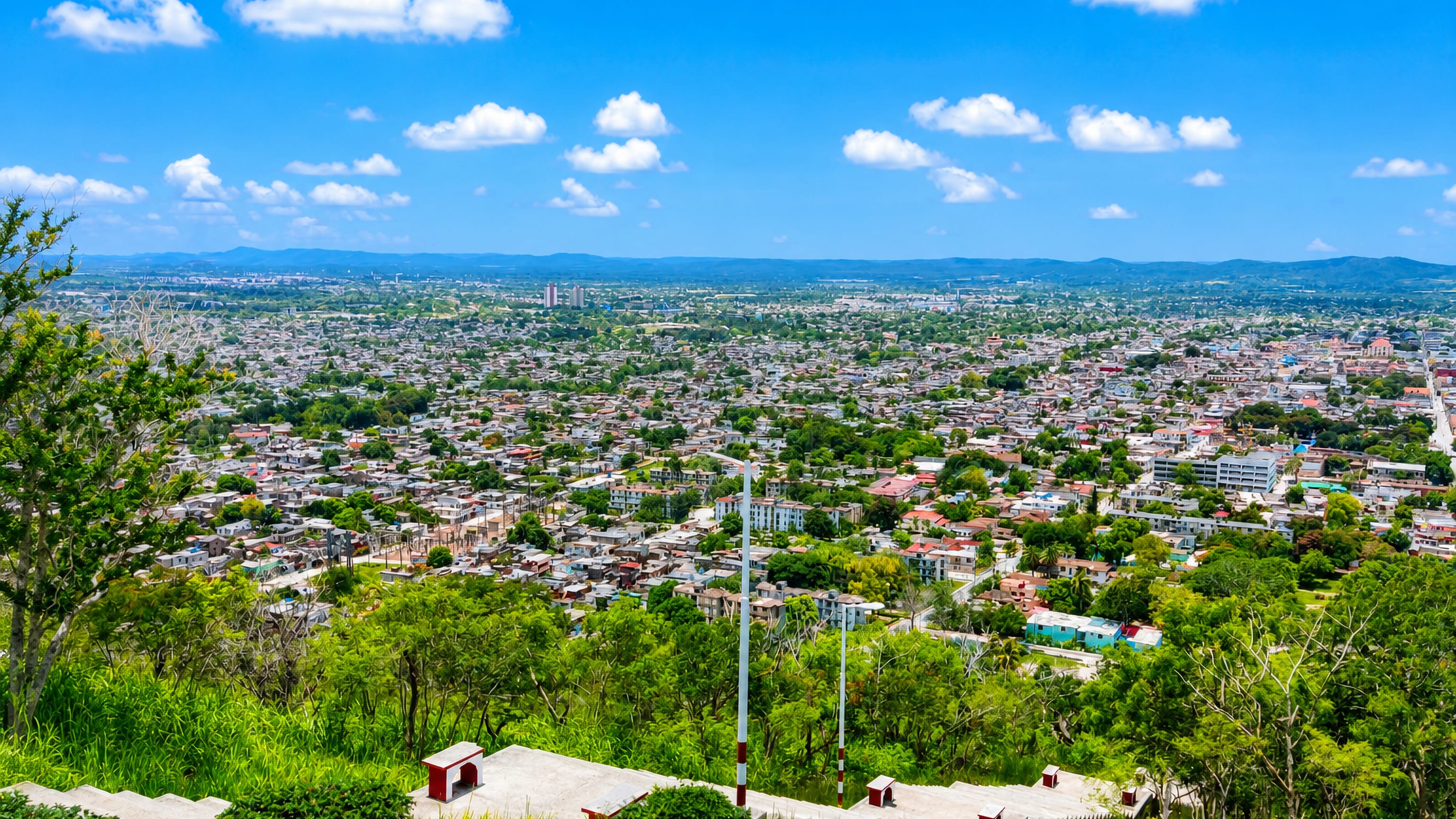
Cuba · Provincia de Holguín
Where to Stay in Holguín, Provincia de Holguín
Holguín, capital of Provincia de Holguín in Cuba, dates from 1523 and centres on Saint Isidore Cathedral and the Calixto García museums.
Find your area →


Where to stay in Holguín
How the choice of base plays out on the ground.
Saint Isidore Cathedral and the Church of San José stand a few blocks apart, and rooms in that stretch put both churches, the Glorieta Albanés and the Calixto García museums inside one easy morning walk. Compactness is the whole argument. Holguín works as a provincial capital rather than a resort, so beds gather where the civic buildings and the museums are instead of along any single strip.
The grid is small. Around the Monument to Major General Calixto García the streets run wider and carry the through traffic of Provincia de Holguín, which suits arrivals by road and early departures the next morning. Museum days argue for the older blocks.
Calixto García's birthplace museum and the Carlos de la Torre y Huerta Natural History Museum open onto squares rather than through roads, and a room nearby turns two separate visits into one short circuit. Options thin beyond the grid. Streets behind Saint Isidore Cathedral trade the noise of the squares for a slightly longer approach, and in a city of this size that difference is measured in minutes rather than in transfers.
About Holguín
One name recurs here.
What is Holguín known for?
Calixto García's birthplace museum stands close to the Monument to Major General Calixto García, and the same few blocks hold the Carlos de la Torre y Huerta Natural History Museum, Saint Isidore Cathedral and the Church of San José. Squares do the rest of the work. The Glorieta Albanés carries a name of its own, and Provincia de Holguín keeps its administrative business in the city that shares the province's name.
What are the main landmarks in Holguín?
Six names carry most of the sightseeing. Saint Isidore Cathedral and the Church of San José hold the religious ground, while the Monument to Major General Calixto García marks the general whose name recurs across Holguín. A pair of museums comes next.
Calixto García's birthplace museum keeps the domestic side of that story, and the Carlos de la Torre y Huerta Natural History Museum handles the natural sciences from a building on the same short circuit. The Glorieta Albanés completes the list.
What is the history of Holguín?
Holguín dates from 1523. That year places the settlement among the early colonial foundations of Cuba, and the grid of squares that still orders the centre belongs to that period rather than to any later plan. Saint Isidore Cathedral and the Church of San José stand on that older ground, the two religious buildings the city is identified by.
The date is the fixed point. Everything named in the centre came afterwards, from the two churches to the museums that occupy older houses around the squares. Calixto García gives the city its second layer.
The Major General was born in Holguín, and the house is kept as Calixto García's birthplace museum while the Monument to Major General Calixto García stands separately as the public memorial. His name travels. Provincia de Holguín takes its name from the city at its centre, so the general, the province and the settlement of 1523 end up bound into a single set of references that a visitor meets within a few streets.
The Carlos de la Torre y Huerta Natural History Museum and the Glorieta Albanés belong to later chapters, added to a centre that had already fixed its shape.
Where is Holguín?
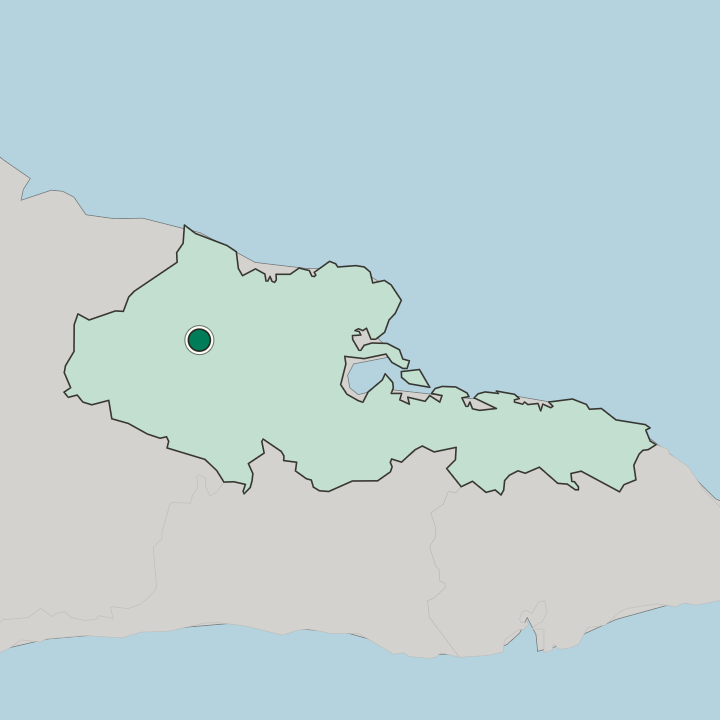
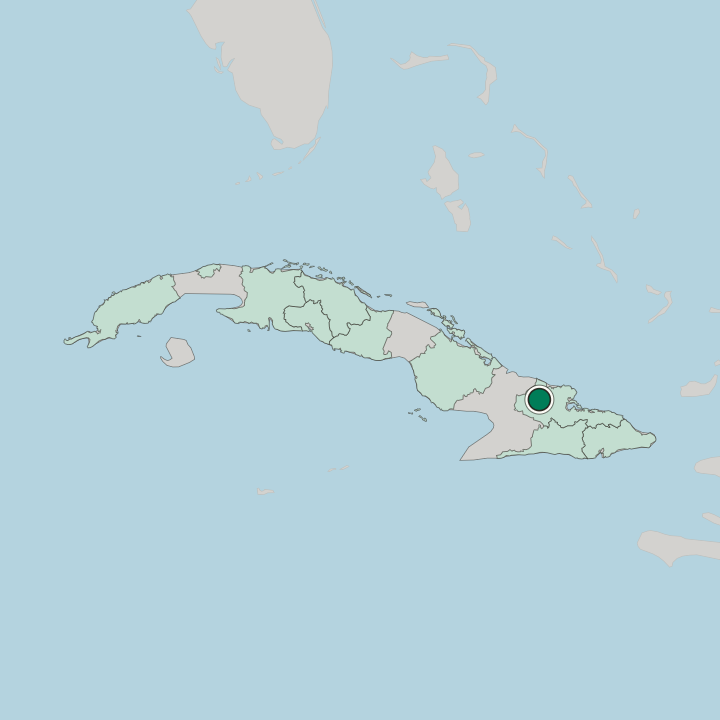
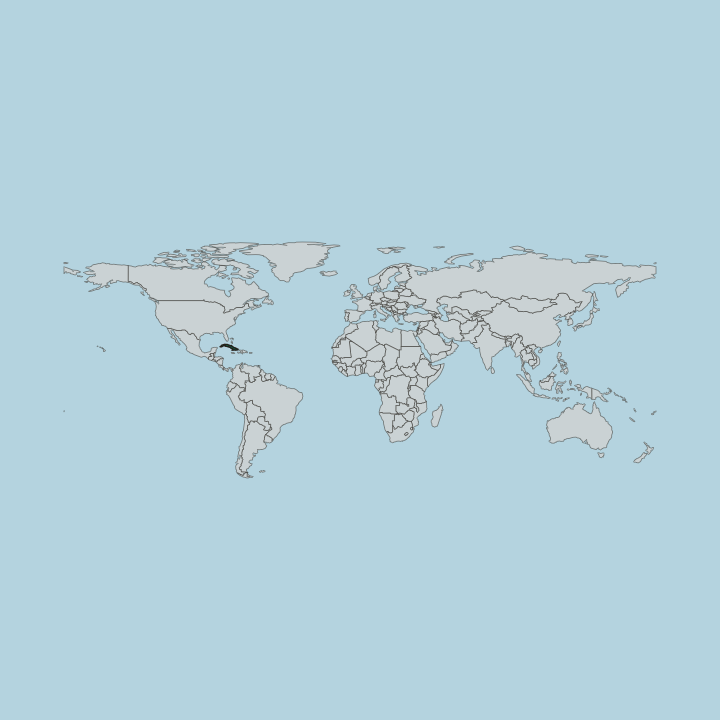
Holguín sits inside the tropics. The municipality takes in a wide stretch of Provincia de Holguín, which means the built centre accounts for only a part of the territory the city name covers. The squares set the scale.
Saint Isidore Cathedral, the Church of San José and the Glorieta Albanés stand near enough to one another that the historic core reads as a compact block rather than a spread of separate quarters.
What is the climate of Holguín?
Holguín lies well inside the tropical belt, so the year divides into wetter and drier stretches instead of into warm and cold ones, and the swing between the coolest and the warmest months stays modest. Finding shade beats picking a month. The open squares around Saint Isidore Cathedral and the Glorieta Albanés are hottest in the middle of the day, and visitors across Provincia de Holguín tend to work around that stretch rather than through it.
How do you get to Holguín?
Holguín functions as the administrative centre of Provincia de Holguín, and the road traffic of the province converges on the city, which is what makes it a practical base for the surrounding municipalities. Arrivals land in a walkable grid. Saint Isidore Cathedral, the Church of San José, the Monument to Major General Calixto García and Calixto García's birthplace museum stand within the same few blocks, so getting between them asks nothing more than a pair of shoes.
Good for
Updated September 2026