Curaçao: Regions, Cities & Travel Guide
Curaçao is a Dutch-Caribbean island country off Venezuela, its capital Willemstad wrapped around the Sint Anna Bay.
Hotel links are affiliate links: booking through them may earn us a commission, at no extra cost to you. It never affects how places are ranked. How this works


Top destinations in Curaçao
One city to start from, then drill into its areas and hotels.

 Curaçao
Willemstad
Willemstad, capital of Curaçao, splits across Sint Anna Bay into Punda and Otrobanda, with a UNESCO-listed centre on both sides.Where to stay →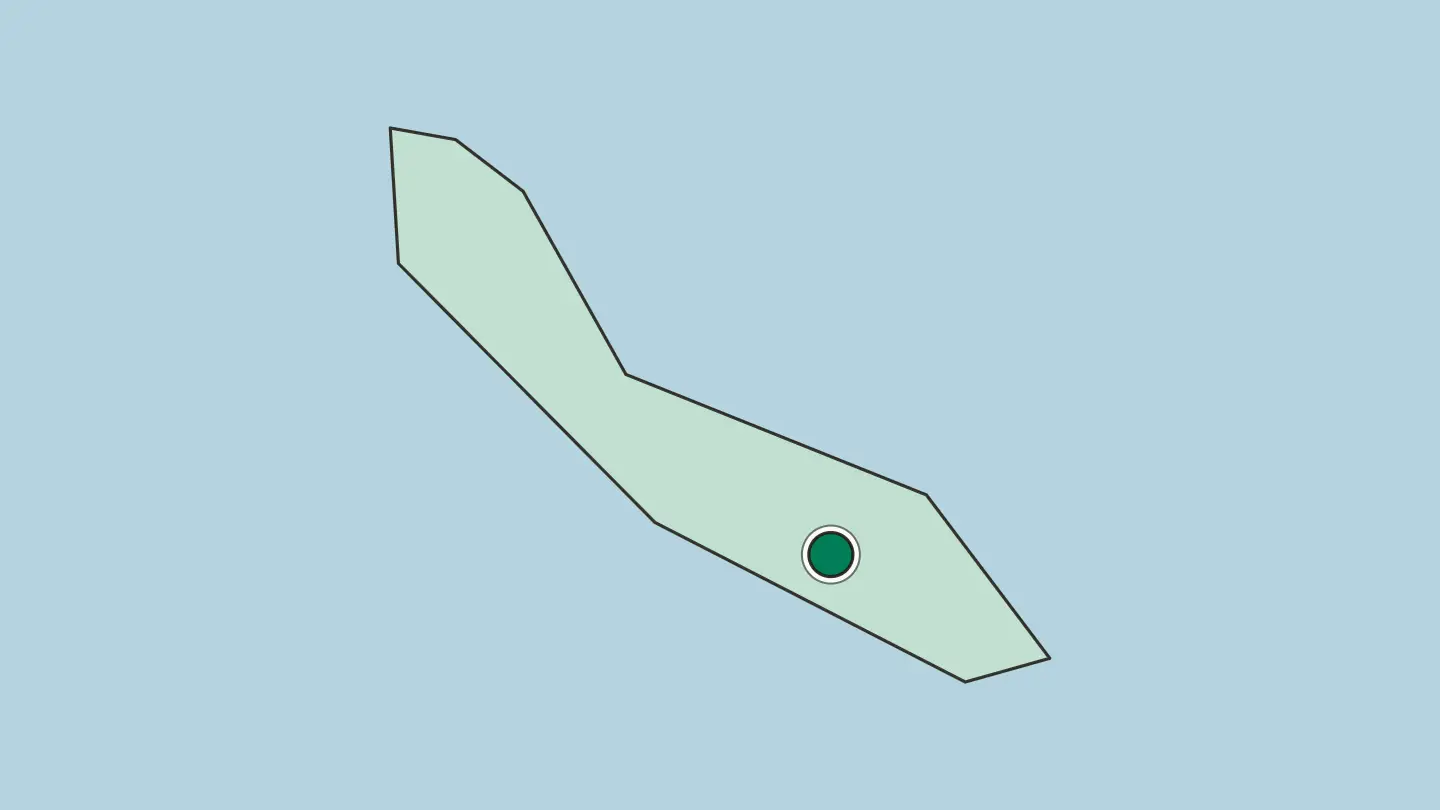
Hotel links are affiliate links: booking through them may earn us a commission, at no extra cost to you. It never affects how places are ranked. How this works
Browse by region
One region so far — open it to see its cities and towns.
About Curaçao
What is Curaçao known for?
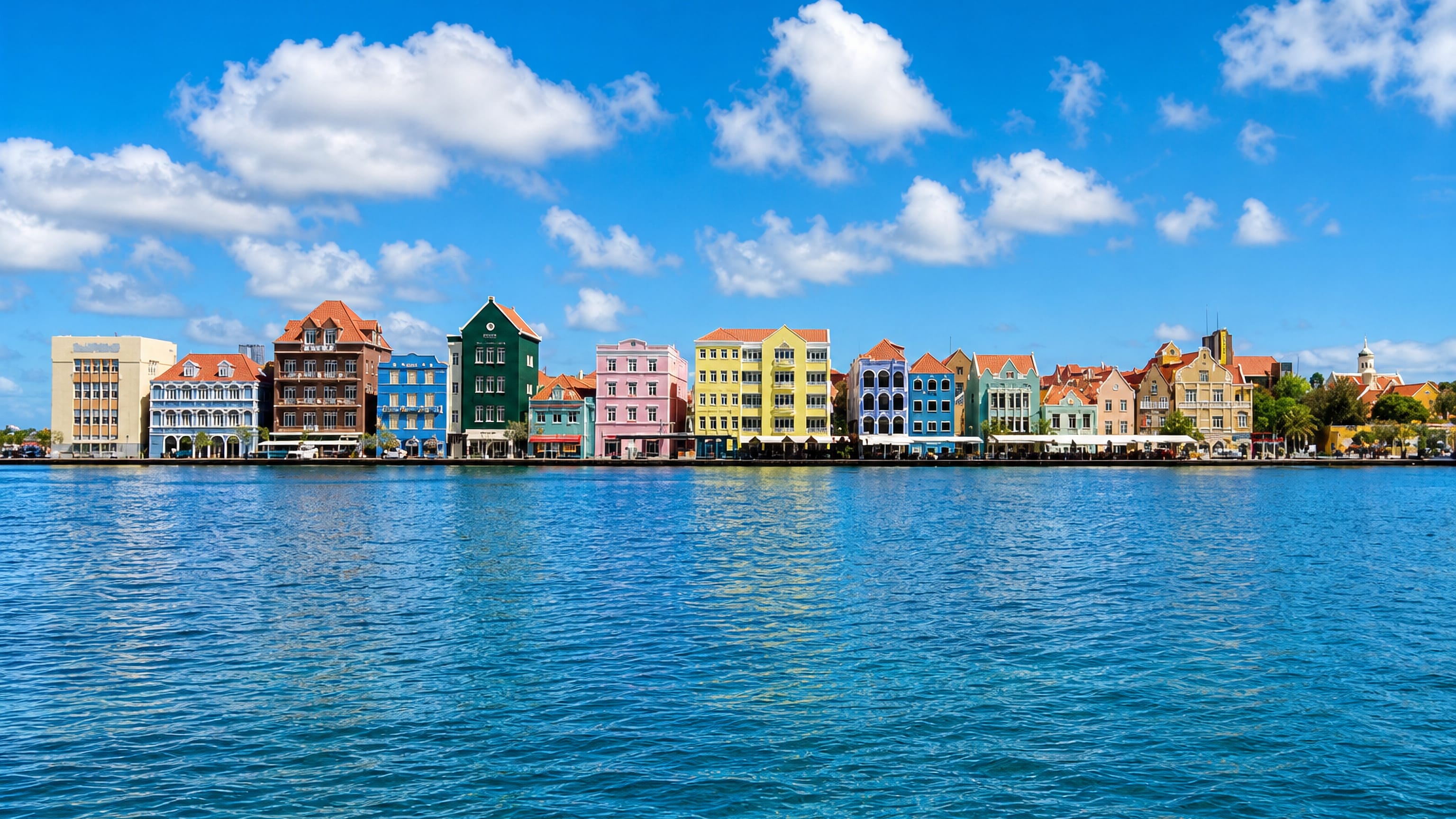
Curaçao is known first for Willemstad, whose pastel merchant houses along the Handelskade line one of the most photographed waterfronts in the Caribbean. Colour defines it. The old town's four quarters, the arid interior spiked with cactus and watapana trees, and the reef-fringed coves of the south coast give the island its look.
Christoffelberg rises over the dry north-west, and the liqueur that carries the island's name pours a bright, unmistakable blue.
Where is Curaçao?
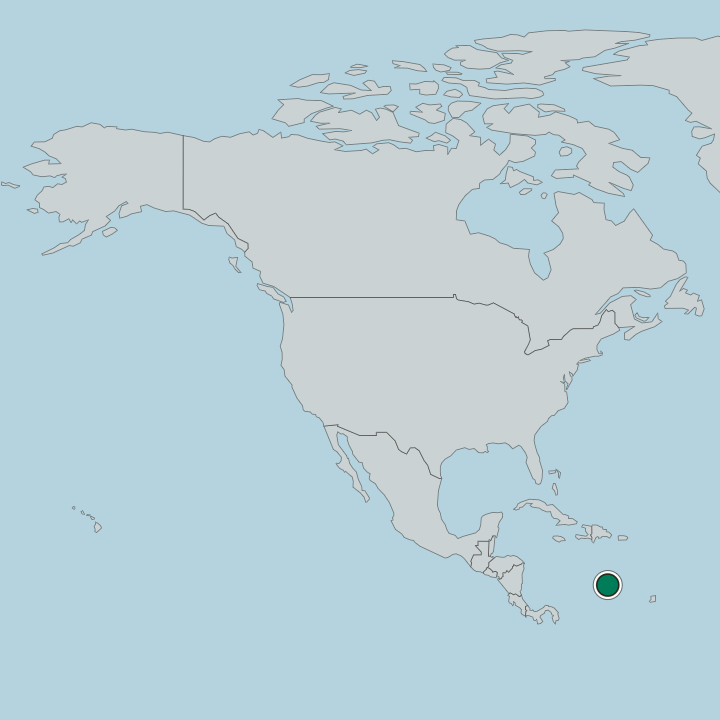
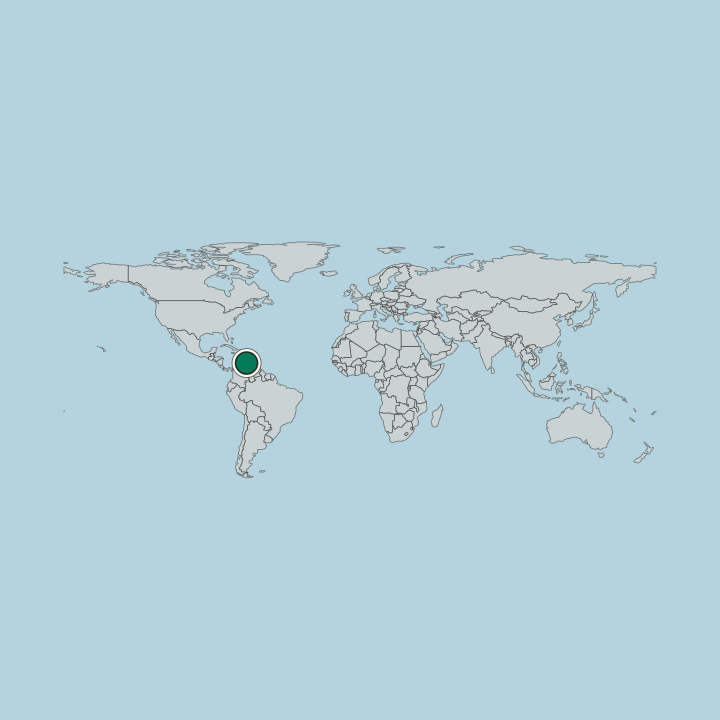
Curaçao is a thin, hilly island lying in the southern Caribbean Sea, north of Venezuela and south-east of Aruba, the largest of the ABC islands. It sits below the belt where most Atlantic hurricanes track, so the water stays calm through the seasons that batter islands further north. Rainfall here is scarce.
Steady north-east trade winds strip moisture from the air, leaving a scrub of cactus, thorny shrub, and the wind-bent watapana, or divi-divi, tree that leans permanently to the south-west. Coral cliffs and small sheltered coves cut the coast, and the reef begins close to shore. The island splits into two outer districts around its capital.
Bandabou covers the wilder north-west, where Christoffelberg, the highest point at 372 metres, rises inside Christoffelpark. Bandariba holds the south-east and the long point of Oostpunt. Between them sits Willemstad, built on both banks of the Sint Anna Bay, a narrow inlet that opens inland into the broad natural harbour of the Schottegat.
Off the south-east lies Klein Curaçao, a flat, uninhabited islet reached only by day boats. From arid ridge to reef, the island is compact.
What is the history of Curaçao?
The Dutch West India Company seized Curaçao from Spain in 1634 and built Fort Amsterdam on the eastern bank of the Sint Anna Bay, the settlement that grew into Willemstad. The harbour made the island. Its deep, sheltered Schottegat drew traders, and through the 17th and 18th centuries Curaçao became one of the Atlantic's largest slave-trading depots, where thousands of enslaved Africans were held and sold onward across the Americas.
That trade left the island's deepest scar and its deepest roots. Slavery was abolished in 1863, and the freed and the many who came after shaped the Afro-Creole society that endures. Prosperity returned early in the 20th century when the Isla refinery opened to process oil from the Venezuelan fields, drawing workers from across the region.
Politics reshaped the island in stages. Curaçao joined the Netherlands Antilles in 1954, an autonomous partner within the Kingdom of the Netherlands. When that federation was dissolved, the island became a self-governing constituent country in its own right in 2010.
Dutch, African, and Iberian strands run through all of it. The past here is worn plainly, not hidden.
What is Curaçao like?
Curaçao carries the mix of every people the harbour ever drew, and it speaks in a language of its own. That language is Papiamentu. Born among the enslaved and the indigenous under Dutch rule, it braids Portuguese, Spanish, Dutch, and West African words into a creole that most of the island speaks daily, alongside Dutch and English.
It runs through the music too. Tumba, named for the conga drums that drive it, and the harvest songs of seú tell island stories in Papiamentu, and the pre-Lenten carnival fills Willemstad's streets with them. The kitchen tells the same story of fusion.
Krioyo cooking leans on African, Iberian, and Arawak roots, and its emblem is keshi yena, a shell of Dutch Edam cheese baked around spiced meat, first improvised by enslaved cooks from the rinds left behind. Goat stew, funchi, and fresh reef fish round out the table. Dozens of nationalities share the island, and the old town's Dutch gables, its synagogue, and its African-rooted rhythms sit within walking distance of each other.
Curaçao is not a large island. It contains a great deal.
What is the climate of Curaçao?
Curaçao has a hot, semi-arid climate held steady by the trade winds. Rain is scarce, under 600 millimetres a year, and the sun is reliable across a long dry stretch from January to September, with the wetter months arriving from October to December. Wind rules here.
Constant north-east trades cool the coast and keep the humidity lower than the wider Caribbean, and the island's place south of the main hurricane track spares it the storms that hit islands to the north.
How do you get to Curaçao?
Curaçao International Airport, the Hato field on the north coast a short drive from Willemstad, is the island's single gateway. It carries direct flights from Amsterdam, Miami, and other hubs across the Americas and Europe. From the terminal it is a quick run into the capital by taxi or bus.
Cruise ships tie up at the Sint Anna Bay in the heart of the old town, stepping passengers straight into Punda and Otrobanda. Most arrivals fly. The harbour handles the rest.
Good for
Updated September 2026