French Guiana: Regions, Cities & Travel Guide
French Guiana is an overseas department of France on the north-eastern coast of South America, between Suriname and Brazil, with Cayenne as its capital.
Hotel links are affiliate links: booking through them may earn us a commission, at no extra cost to you. It never affects how places are ranked. How this works


Top destinations in French Guiana
One city to start from, then drill into its areas and hotels.
 French Guiana
Cayenne
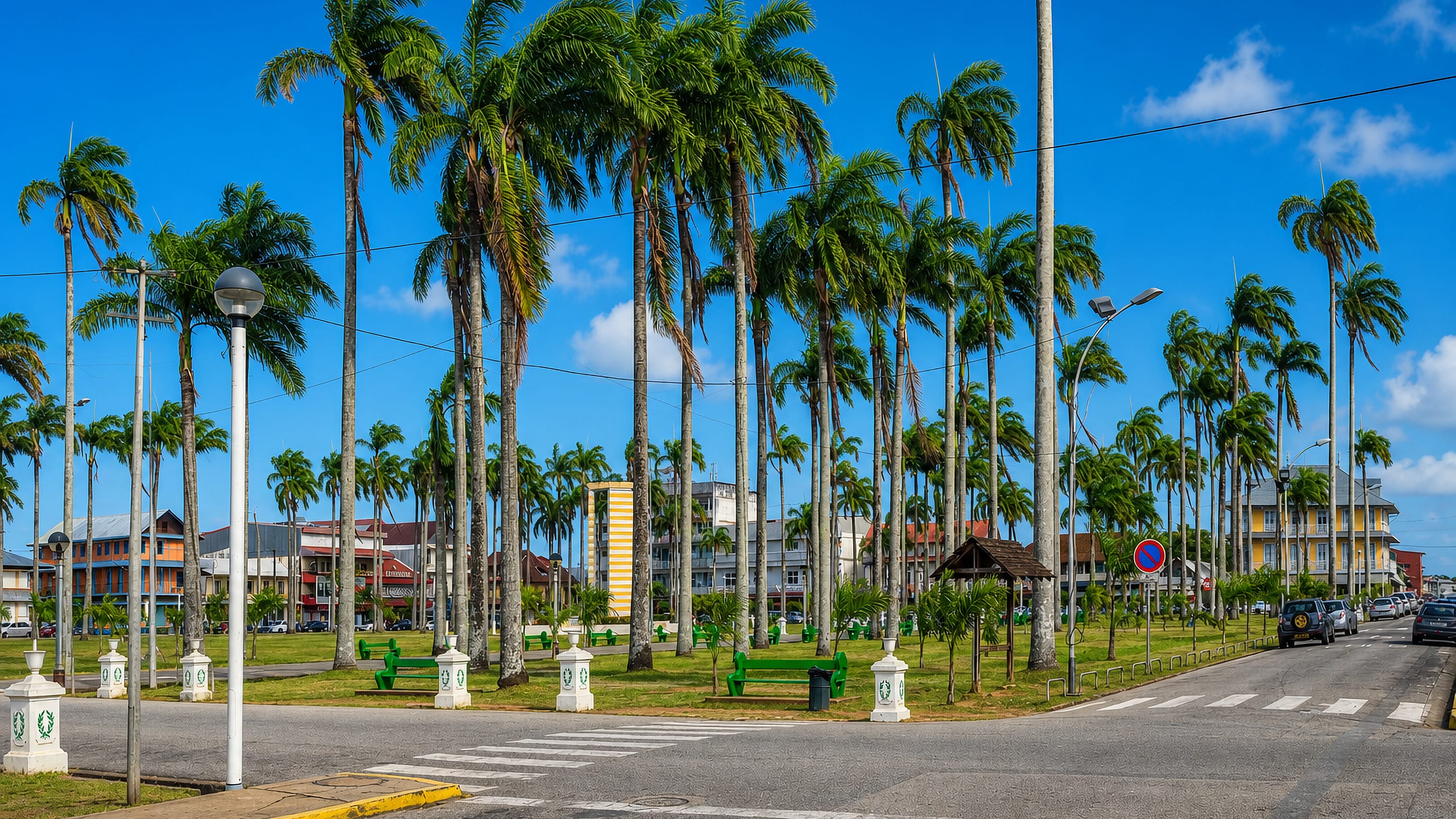
Palms line place des Palmistes at Cayenne, the capital of French Guiana on a former island at the mouth of the Cayenne River, facing the Atlantic.Where to stay →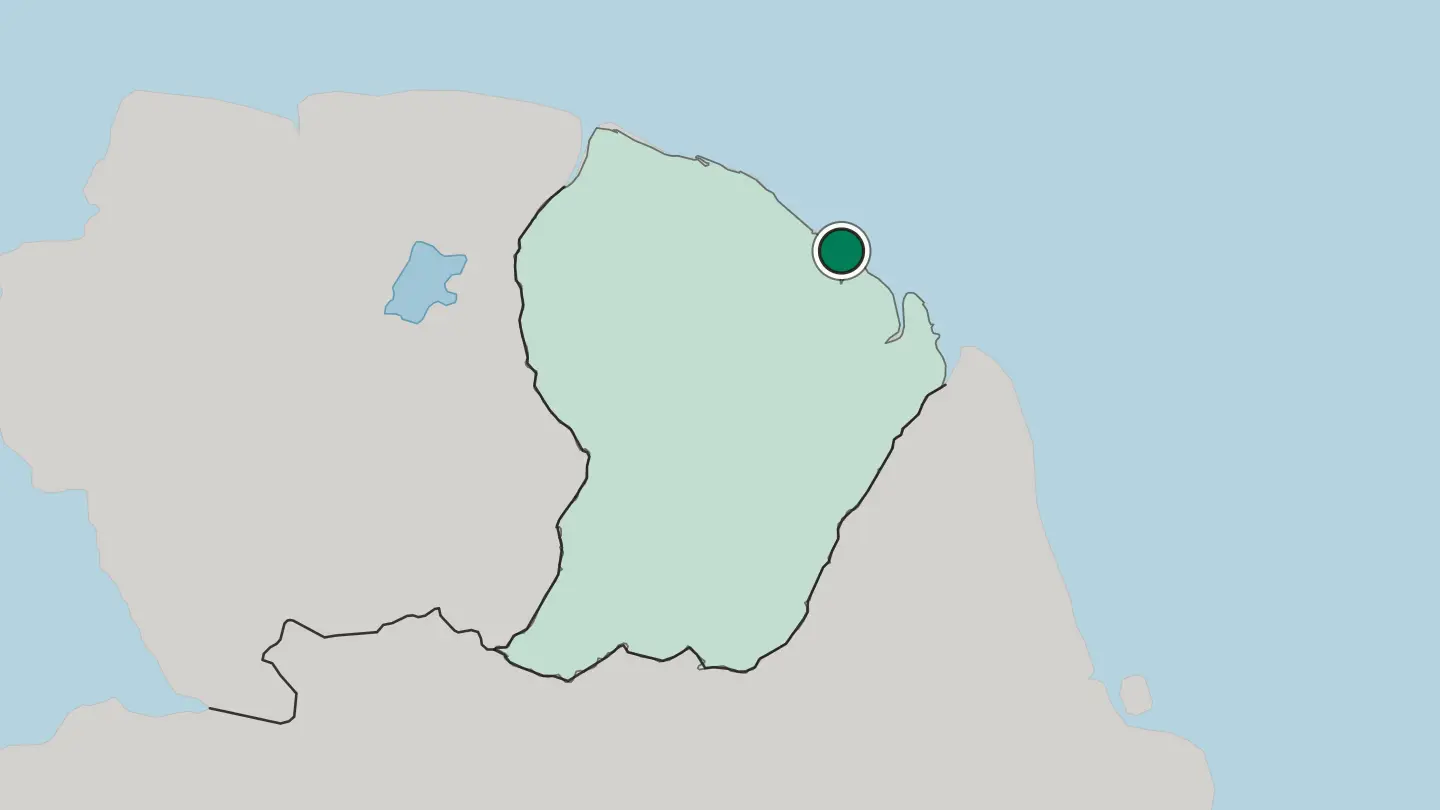
Hotel links are affiliate links: booking through them may earn us a commission, at no extra cost to you. It never affects how places are ranked. How this works
Browse by region
One region so far — open it to see its cities and towns.
About French Guiana
What is French Guiana known for?
French Guiana carries a reputation built on rockets and rainforest in almost equal measure. From Kourou, on the coast west of Cayenne, European rockets climb toward space at the Guiana Space Centre. The interior tells a wilder story.
Dense Amazonian forest covers most of the territory, drained by the Maroni along the Suriname border and the Oyapock along the frontier with Brazil, and broken only by scattered river villages. Offshore lie the Îles du Salut, the notorious penal islands. Green defines the rest.
Where is French Guiana?
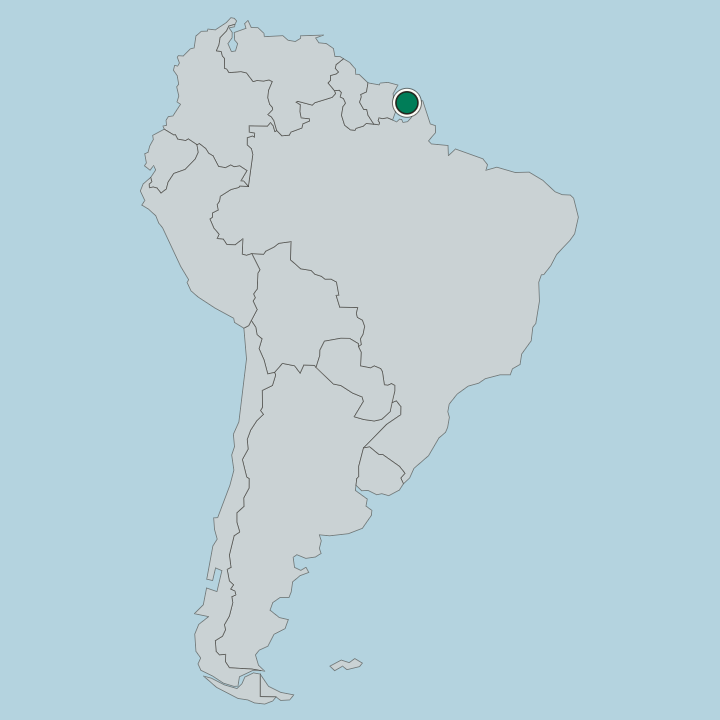
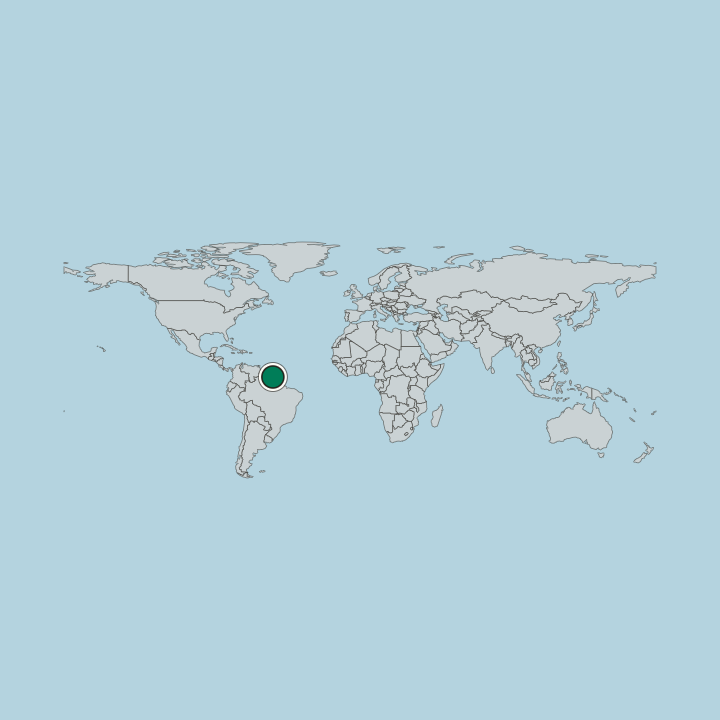
French Guiana occupies the north-eastern shoulder of South America, wedged between Suriname and Brazil on the Atlantic edge of the continent. The Maroni traces its whole western border with Suriname, while the Oyapock marks the eastern frontier with Brazil, and both rivers run generally north toward the sea. The land splits cleanly into two.
A low, swampy coastal band, the Terres Basses, holds almost the entire population and every sizeable town, from Cayenne on its peninsula to Kourou, Sinnamary, and Saint-Laurent-du-Maroni. Behind it rises the Terres Hautes, an eroded granite upland cloaked in dense equatorial forest that climbs gently inland for hundreds of kilometres. Rivers order everything here.
The Mana, the Sinnamary, the Approuague, and the Kourou drain the interior toward the coast, cutting the only practical highways through forest that has almost no roads. Most of the territory stays roadless. The remote centre, around the airstrip village of Saül, feeds the headwaters of several of those rivers and sits inside the vast Guiana Amazonian Park.
Green forest reaches nearly to the tideline.
What is the history of French Guiana?
French Guiana's recorded past turns on two hard chapters: penal servitude and a slow road to becoming French soil. France first tried to plant colonists here in the 1600s, and the coast changed hands with the Dutch, English, and Portuguese before Paris held it for good. The darkest era came later.
From the middle of the nineteenth century until the 1950s, France ran the territory as a penal colony, shipping tens of thousands of convicts to camps at Saint-Laurent-du-Maroni and to the Îles du Salut offshore, the group that includes the infamous Devil's Island. Conditions were lethal. Disease and heat killed most who were sent, and only a fraction ever returned to France, a system the writer Henri Charrière fixed in the public mind.
Slavery had shaped the coast long before the bagne. Its abolition in 1848 sent freed people into the forest, where Maroon communities took root along the rivers. The turning point came in 1946, when France abolished the colony and made French Guiana a full overseas department with the same standing as any in mainland France.
Regional status followed in 1974. The old convict cells at Saint-Laurent still stand as museums.
What is French Guiana like?
French Guiana holds one of the most layered populations anywhere in South America, packed onto a thin coast. Creole society, descended from enslaved Africans of the plantation era, forms the largest group and gives the territory much of its language, its music, and its cooking. The kitchen shows the mix plainly.
Bouillon d'awara, a dark stew simmered for hours from the pulp of the awara palm, anchors the Easter table, while roti and colombo curries mark the Indian and Caribbean strands, and fresh river fish turns up everywhere. Deep in the forest, Maroon peoples along the Maroni keep West African-rooted traditions of carving, drumming, and language that set them apart from the coast. Amerindian peoples, the territory's first settlers, hold the interior and the upper rivers.
A different thread runs through the hills around Cacao and Javouhey, where Hmong refugees resettled from Laos in the 1970s and now supply much of the fresh produce sold at Cayenne's markets. French is the official language, but Guianese Creole is the everyday tongue of the coast. Many worlds share one shoreline.
What is the climate of French Guiana?
French Guiana sits close to the equator and stays hot and wet the year round. The forest reads as true rainforest, humid and green in every season, with heavy rains from around December to July and a drier spell over the northern summer. Trade winds off the Atlantic take the edge off the coastal heat at Cayenne and Kourou.
The interior stays steamier still. Rain feeds the Maroni, the Oyapock, and the forest rivers that carry most inland traffic.
How do you get to French Guiana?
Nearly every visitor arrives at Cayenne, Félix Eboué Airport, near Matoury just south-west of the capital. Long-haul flights link it directly to Paris, the main air bridge to Europe, alongside routes to the French Caribbean at Fort-de-France and Pointe-à-Pitre. Small aircraft matter here.
Because roads reach only the coast and a few river towns, bush planes connect Cayenne to interior strips at Saül and Maripasoula, and river pirogues do the rest. A single coastal road ties Saint-Laurent-du-Maroni to Cayenne and Kourou. Beyond it, the rivers rule.
Good for
Updated September 2026