French Guiana · Guyane
Where to Stay in Cayenne, Guyane
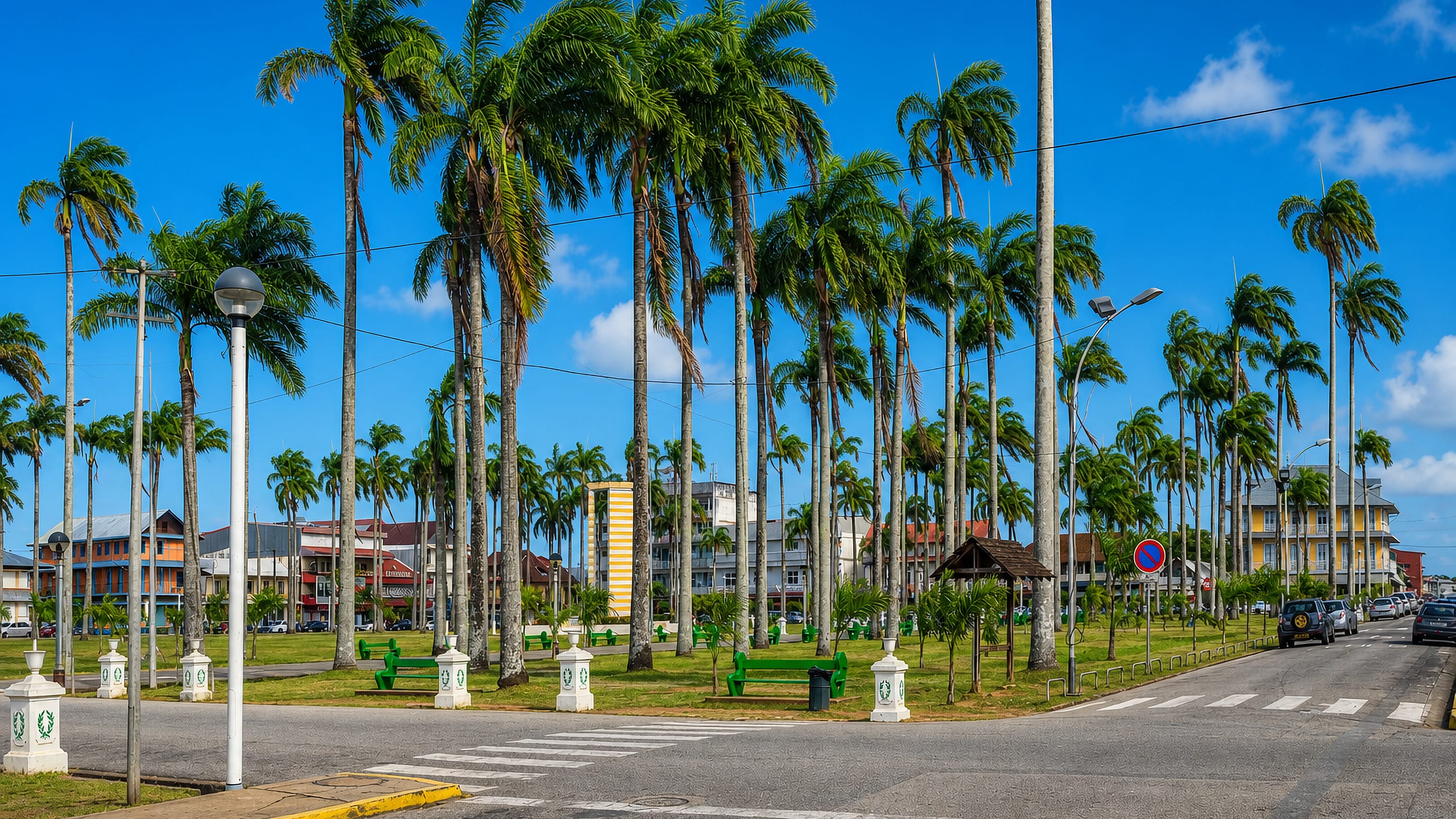
Palms line place des Palmistes at Cayenne, the capital of French Guiana on a former island at the mouth of the Cayenne River, facing the Atlantic.
Hotel links are affiliate links: booking through them may earn us a commission, at no extra cost to you. It never affects how places are ranked. How this works


Where to stay in Cayenne
Where visitors usually base themselves, and why.
Cayenne concentrates its lodging in the old town on the former island at the mouth of the Cayenne River, where the streets gather around place des Palmistes. The square anchors the centre. Around it stand Cayenne Cathedral and the musée départemental Alexandre-Franconie, and the surrounding grid of the old capital of French Guiana puts the museums, the market, and the Atlantic waterfront within easy reach on foot.
If you want the landmarks of Cayenne at your door, the blocks around place des Palmistes are the natural base. Closer to the water the old port quarter runs down toward the coast. The Magasin du port and the former customs house near the harbour mark the working edge of the city, where the marshland flats meet the Atlantic below the low hills that ring the town.
Stay near the harbour to reach the seafront and the river mouth quickly. Between the palm-shaded square and the port, the compact heart of Cayenne holds most of what a first visit to the capital of Guyane wants close by.
Find hotels in Cayenne
Direct booking searches for these neighbourhoods.
place des Palmistes and the old town
The blocks around place des Palmistes gather Cayenne Cathedral and the musée départemental Alexandre-Franconie, the civic core of French Guiana's capitalFind hotels in place des Palmistes and the old townTravellers who want the harbour, the Magasin du port, and the Atlantic waterfront at the river mouththe old port quarter by the Cayenne River
The port streets run down past the Magasin du port and the old customs house to where the Cayenne River marshland meets the Atlantic below the town's hillsFind hotels in the old port quarter by the Cayenne RiverHotel links are affiliate links: booking through them may earn us a commission, at no extra cost to you. It never affects how places are ranked. How this works
Things to do in Cayenne
Ranked by global recognition; descriptions from Wikidata (CC0).
Museums & Galleries
3- Maison-Musée de Félix Éboué Heritage
- musée départemental Alexandre-Franconie
- Museum of Guyanese Cultures
Churches & Religious Sites
2- Cayenne Cathedral Heritage
- Chapelle de l'île Royale Heritage
Stadiums & Sports
1- Stade de Baduel
Landmarks & Notable Places
3- Maison d'Alfred Dreyfus Heritage
- chalet Bourda Heritage
- Magasin du port Heritage
worth knowingacross 4 categories in Cayenne
About Cayenne
What is Cayenne known for?
Cayenne is known as the capital and prefecture of French Guiana and the largest Francophone city of South America. Its square is its heart. Around place des Palmistes stand the landmarks of the old town, from Cayenne Cathedral to the musée départemental Alexandre-Franconie, while the city's motto, fert aurum industria, speaks of work bringing wealth.
The port city stands on a former island at the mouth of the Cayenne River and looks out to the Atlantic from the coast of Guyane.
What are the main landmarks in Cayenne?
Cayenne gathers its landmarks around place des Palmistes and the old town of French Guiana's capital. The square sets the scene. Cayenne Cathedral rises nearby, the musée départemental Alexandre-Franconie and the Museum of Guyanese Cultures hold the city's collections, and the Statue of Victor Schœlcher stands among the civic monuments.
Down toward the harbour the Magasin du port marks the old port trade. Together these built landmarks trace the history of Cayenne from square to seafront.
What is the history of Cayenne?
Cayenne was founded in 1664 on a former island at the mouth of the Cayenne River, on the Atlantic coast of what became French Guiana. The site chose itself. A patch of firm ground amid the surrounding marshland gave a defensible foothold by the river mouth, and from that base the settlement grew into the capital and prefecture of the French territory in South America.
Its motto, fert aurum industria, meaning work brings wealth, records the labour that built it. Over the centuries Cayenne became the administrative heart of the colony and later the overseas department. Its old town filled with the buildings that still stand around place des Palmistes, among them Cayenne Cathedral and the musée départemental Alexandre-Franconie, while the port quarter down by the water handled the trade of the coast.
Among the city's monuments, the Statue of Victor Schœlcher recalls the ending of slavery in the French territories. From its founding by the river mouth, Cayenne has stayed the chief city of French Guiana and the largest Francophone city of South America.
Where is Cayenne?
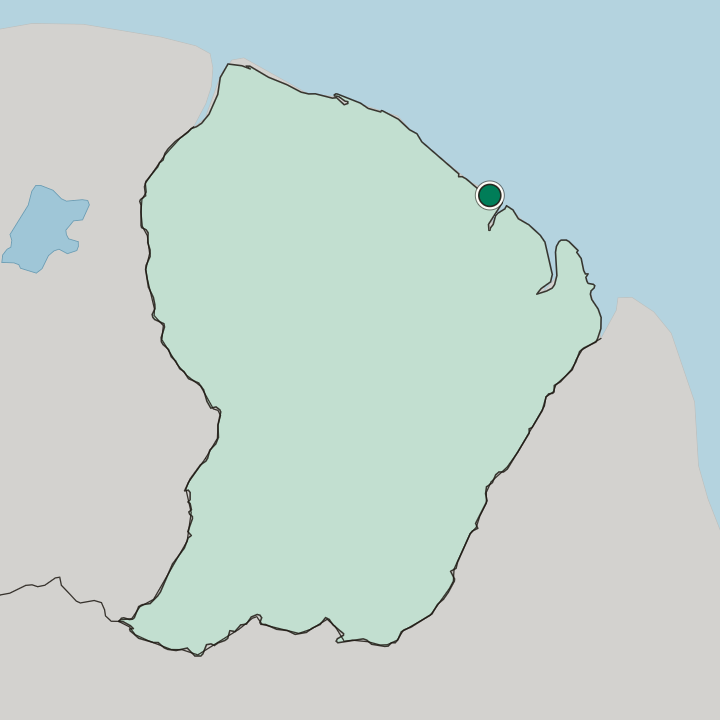
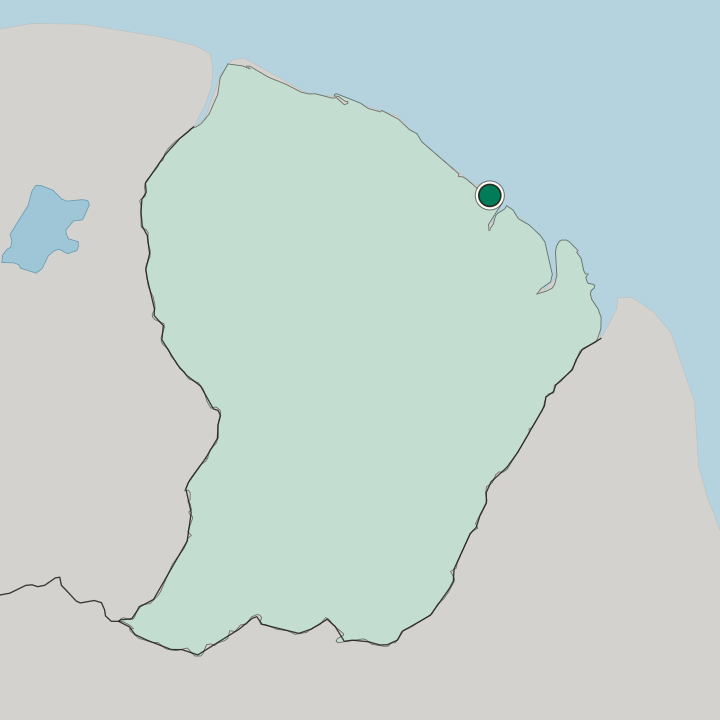
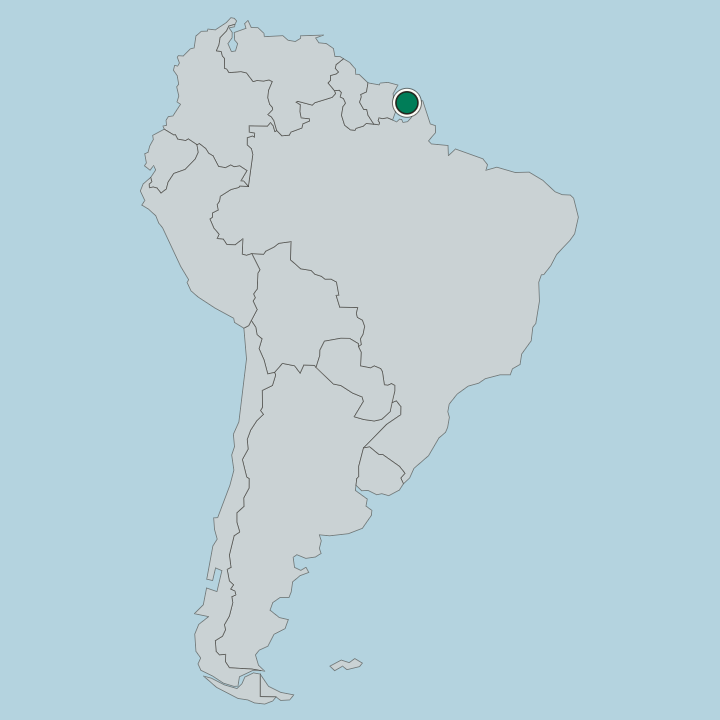
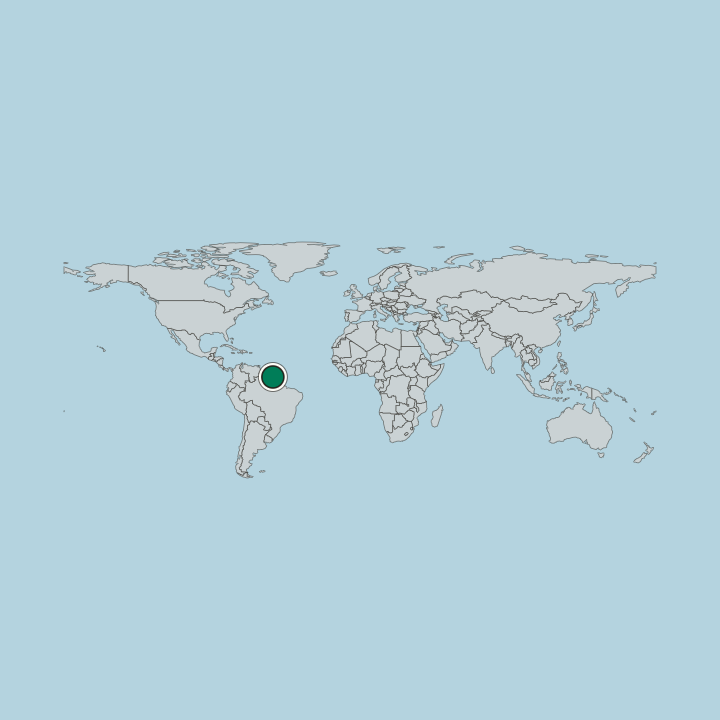
Cayenne stands on a former island at the mouth of the Cayenne River, on the Atlantic coast of French Guiana in South America. Water and marsh surround it. The old town sits on firm ground amid the marshland that spreads around the river mouth, and low hills ring the settlement above the flats where the Cayenne River meets the sea.
As the capital of Guyane, the port city faces the Atlantic from the northern coast of the continent.
What is the climate of Cayenne?
Cayenne has a tropical climate set by its low coastal position at the mouth of the Cayenne River. Warmth holds year round. Heavy seasonal rains sweep the Atlantic coast and soak the marshland around the river mouth, while a drier stretch breaks the year between the wetter months, and the sea keeps the air humid over the town.
The surrounding hills catch the same rains. This wet warmth marks the capital of French Guiana through the seasons.
How do you get to Cayenne?
Cayenne is reached by air and by sea as the main entry point for French Guiana on the Atlantic coast. It is an important seaport. Ships call at the port near the mouth of the Cayenne River, air links tie the capital of Guyane to France and the wider region, and roads run out along the coast and into the interior of South America from the city.
The harbour handles the sea traffic. From the coast the routes fan out across the department from Cayenne.
Common questions
What is the best area to stay in Cayenne?
place des Palmistes and the old town: First-time visitors who want Cayenne Cathedral, the palm-shaded square, and the museums of the old capital on foot. the old port quarter by the Cayenne River: Travellers who want the harbour, the Magasin du port, and the Atlantic waterfront at the river mouth.
Good for
Updated September 2026