Guadeloupe
Guadeloupe — Towns & Travel Guide
Guadeloupe is a French overseas department in the Caribbean, an archipelago whose main islands, Basse-Terre and Grande-Terre, form a butterfly shape.
Hotel links are affiliate links: booking through them may earn us a commission, at no extra cost to you. It never affects how places are ranked. How this works


Towns & cities in Guadeloupe
One town here has its own guide — it links to where to stay.
 Guadeloupe
Les Abymes
Les Abymes is the largest commune of Guadeloupe, spread across the west side of Grande-Terre beside Pointe-à-Pitre in the Lesser Antilles.Where to stay →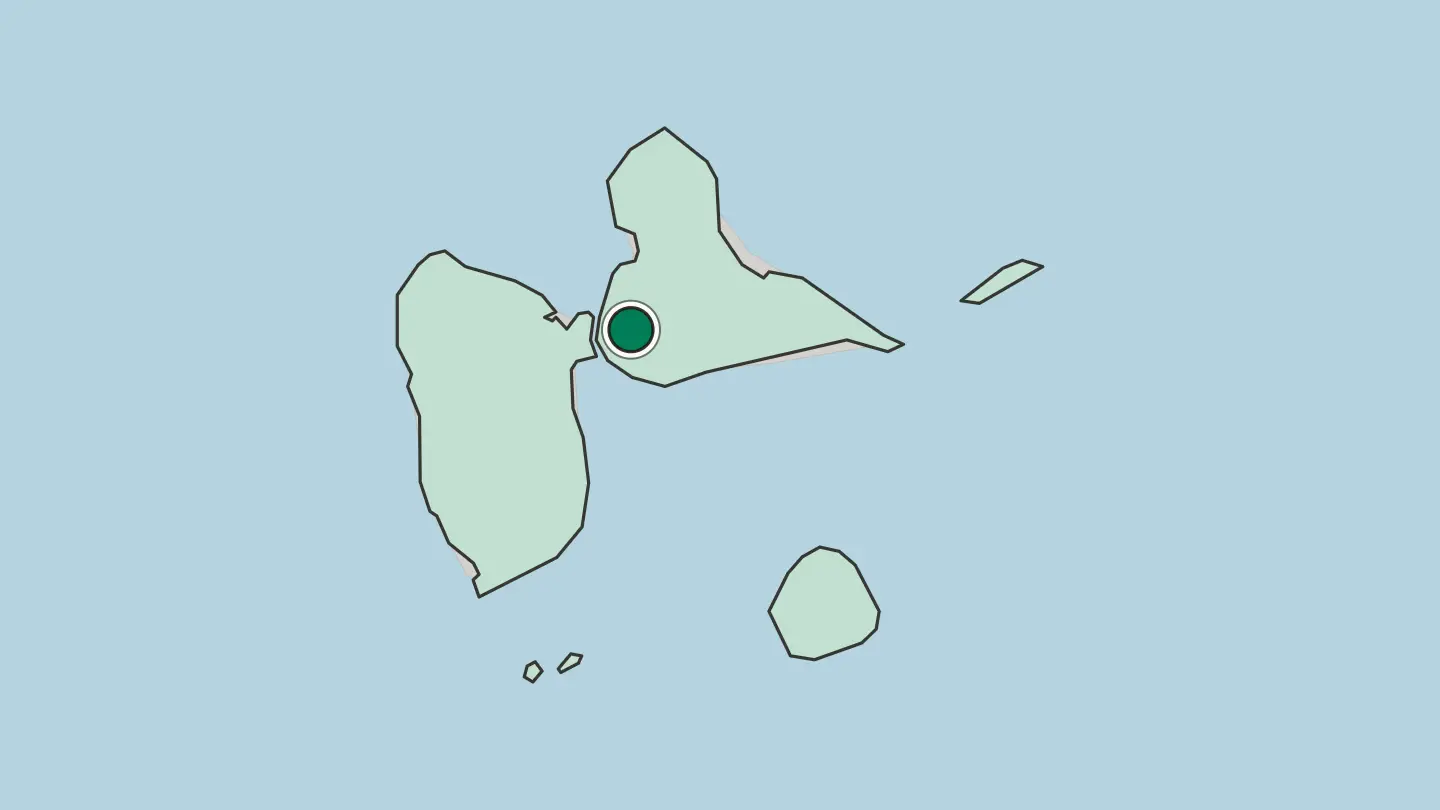
Hotel links are affiliate links: booking through them may earn us a commission, at no extra cost to you. It never affects how places are ranked. How this works
About Guadeloupe
Two islands make the butterfly.
What is Guadeloupe known for?
Basse-Terre and Grande-Terre lie beside each other, and the outline the pair draws is the reason Guadeloupe is also known as the Butterfly Island. Smaller islands complete the set. Marie-Galante, La Désirade and the Îles des Saintes are inhabited too, and the creole name Gwadloup covers all of them as readily as the French one does.
Where is Guadeloupe?
Six inhabited islands make up Guadeloupe. Basse-Terre and Grande-Terre are the large pair, read together as the butterfly the archipelago is named for, while Marie-Galante, La Désirade and the two Îles des Saintes lie apart from them. Islets do the rest.
Some 30 uninhabited islets and 3 inhabited ones fill in around the department, which is why a distance measured on paper here rarely matches the journey it takes. Water separates almost everything else. Neighbours sit close on every side.
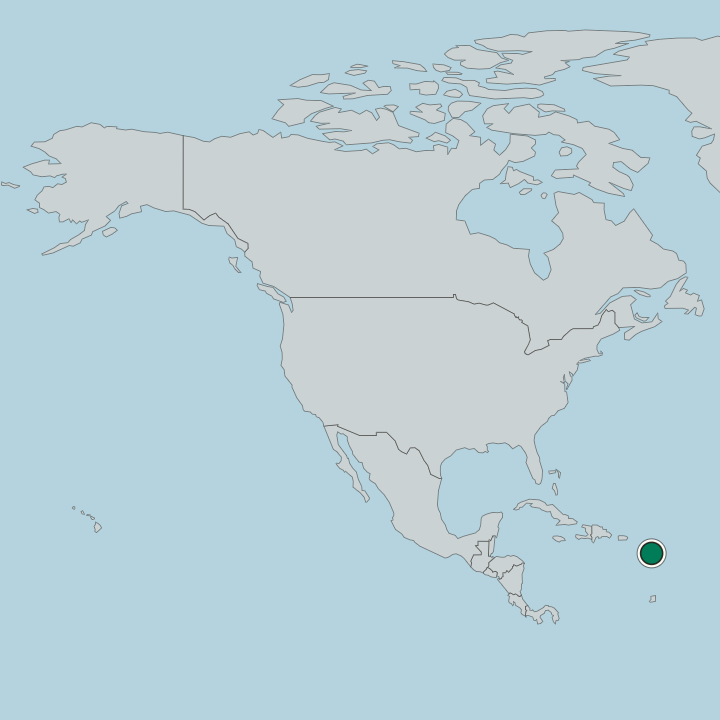
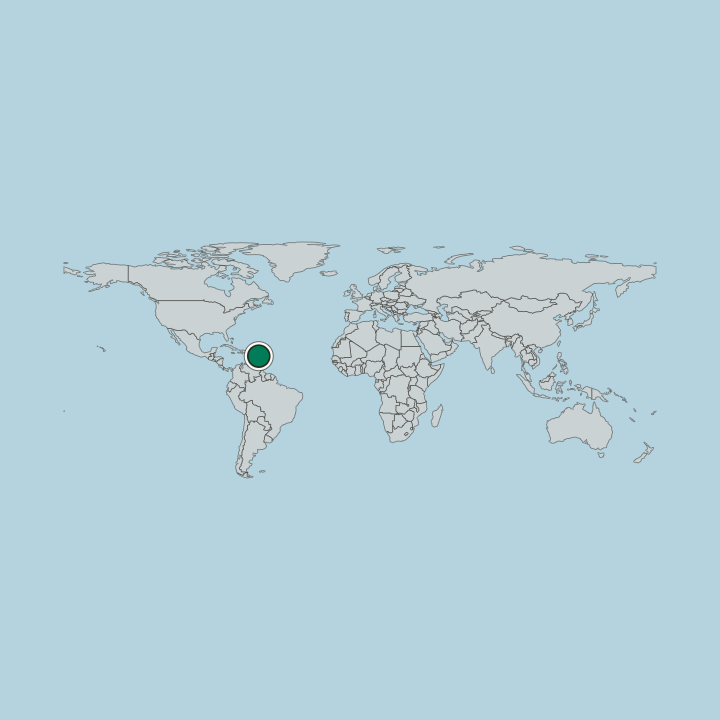
Antigua and Barbuda and Montserrat lie to the north, Dominica to the south, and Puerto Rico away to the north-west, which puts Guadeloupe in the middle of a chain rather than out on its own. The sea is always the boundary. Coasts here face open water on all sides, and the west coast of Basse-Terre Island, where the capital stands, is a different proposition from the built-up ground of Grande-Terre Island around Pointe-à-Pitre and Les Abymes.
France governs it as a region. That status, held since 1946, makes the archipelago an overseas department as well as a group of Caribbean islands.
What is Guadeloupe like?
Two names sit side by side. Guadeloupe is the French name and Gwadloup the creole one, carried by an archipelago that has been a department and region of France since 1946. The nickname is a third.
Butterfly Island describes the outline of Basse-Terre and Grande-Terre rather than any single place, and it is the form most visitors carry away. Life is split between three centres, not one. Basse-Terre holds the capital, Pointe-à-Pitre the commerce and Les Abymes the largest town of the six inhabited islands, so no single place speaks for the whole department the way a mainland capital would.
Grande-Terre Island carries two of the three. The outer islands keep a footing of their own. Marie-Galante, La Désirade and the two Îles des Saintes are separated by water from the butterfly, and reaching them is a decision rather than a detour.
The sea frames all of it. Puerto Rico lies away to the north-west. Neighbouring islands are close, with Antigua and Barbuda, Montserrat and Dominica in the same chain, and Guadeloupe sits inside that chain as much as it sits inside the French administrative system.
What is the history of Guadeloupe?
The date on the record is 1946. That is when Guadeloupe took the status it still holds, an overseas department and region of France, and every administrative line in the archipelago runs from it. Three towns divide the roles.
Basse-Terre keeps the capital on the west coast of Basse-Terre Island, while Pointe-à-Pitre is the main centre of business and Les Abymes the largest town, both on Grande-Terre Island.
What is the climate of Guadeloupe?
The Caribbean sets the terms here. Every coast in Guadeloupe is exposed to open water, so conditions on Grande-Terre Island and on the west coast of Basse-Terre Island are read from the sea rather than from any inland pattern. Wind reaches all six islands.
Marie-Galante, La Désirade and the Îles des Saintes take the same weather as the butterfly, with little between them and the open sea to break it.
How do you get to Guadeloupe?
Arrival is onto Grande-Terre Island. Pointe-à-Pitre and Les Abymes sit beside each other there, and between them they hold the commerce and the largest town of Guadeloupe, so the Grande-Terre side rather than the capital is where most arrivals sort themselves out. Basse-Terre comes after.
Reaching Marie-Galante, La Désirade or the Îles des Saintes means a crossing in every case, since the outer islands are separated from Basse-Terre and Grande-Terre by water.
Common questions
What is the best area to stay in Guadeloupe?
Pointe-à-Pitre and Les Abymes: arrivals wanting the Grande-Terre Island business side within reach. Basse-Terre: a base at the capital on the west coast of Basse-Terre Island. Marie-Galante and the Îles des Saintes: island-hopping stays that only a crossing can reach.
Good for
Updated September 2026