Guadeloupe: Regions, Cities & Travel Guide
Guadeloupe is a French Caribbean archipelago whose two main islands, Basse-Terre and Grande-Terre, form a butterfly shape.
Hotel links are affiliate links: booking through them may earn us a commission, at no extra cost to you. It never affects how places are ranked. How this works


Top destinations in Guadeloupe
One city to start from, then drill into its areas and hotels.
 Guadeloupe
Les Abymes
Les Abymes is the largest commune of Guadeloupe, spread across the west side of Grande-Terre beside Pointe-à-Pitre in the Lesser Antilles.Where to stay →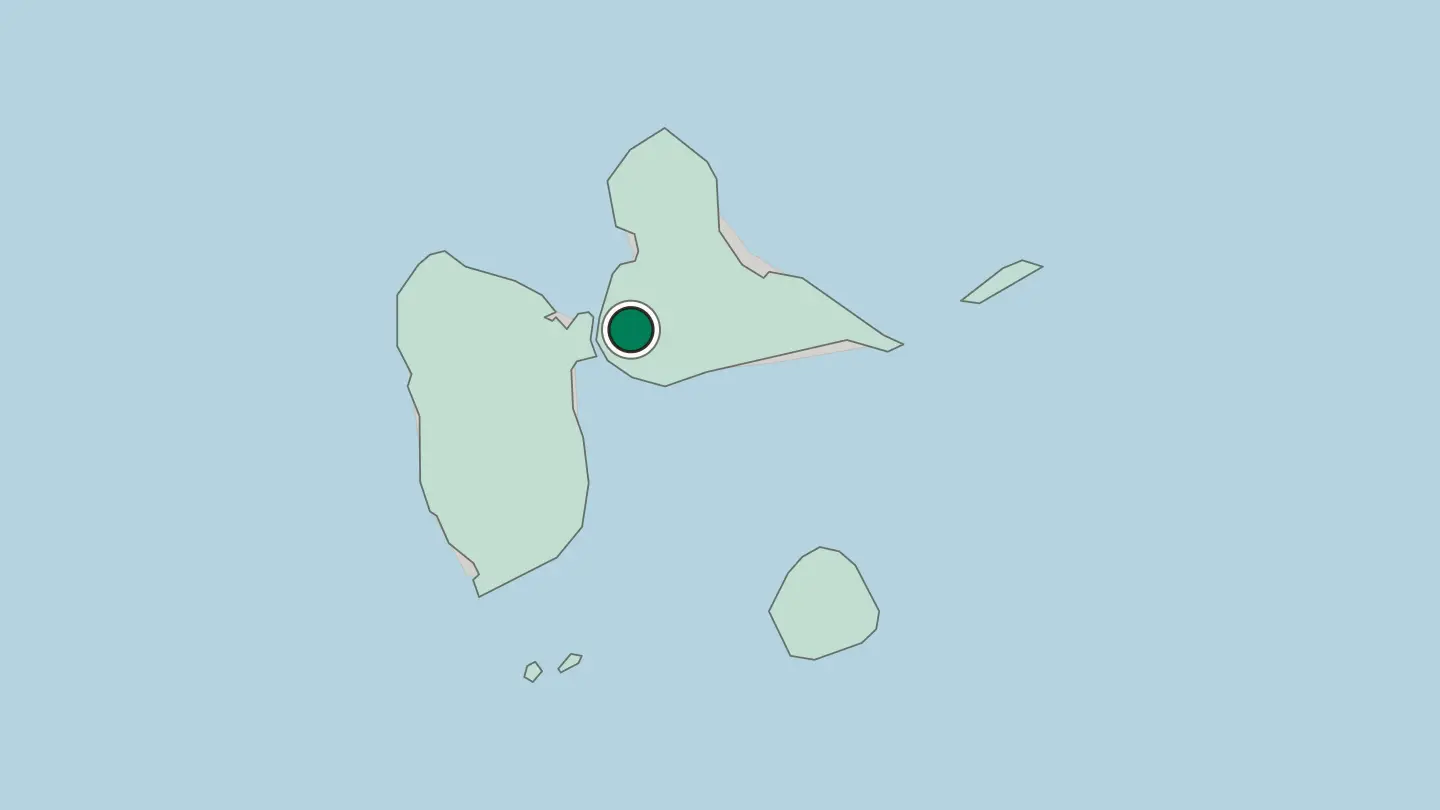
Hotel links are affiliate links: booking through them may earn us a commission, at no extra cost to you. It never affects how places are ranked. How this works
Browse by region
One region so far — open it to see its cities and towns.
About Guadeloupe
What is Guadeloupe known for?
Locals call it Gwadloup, and the archipelago wears two faces at once. Volcanic Basse-Terre climbs to La Grande Soufrière, the tallest peak in the Lesser Antilles, while flat Grande-Terre unrolls the white-sand lagoons of Sainte-Anne and Saint-François along its south coast. Rum, gwoka drumming, and colombo curry carry its Creole character.
Beyond the two wings lie Marie-Galante and the Îles des Saintes, quieter islands reached by ferry from Pointe-à-Pitre.
Where is Guadeloupe?
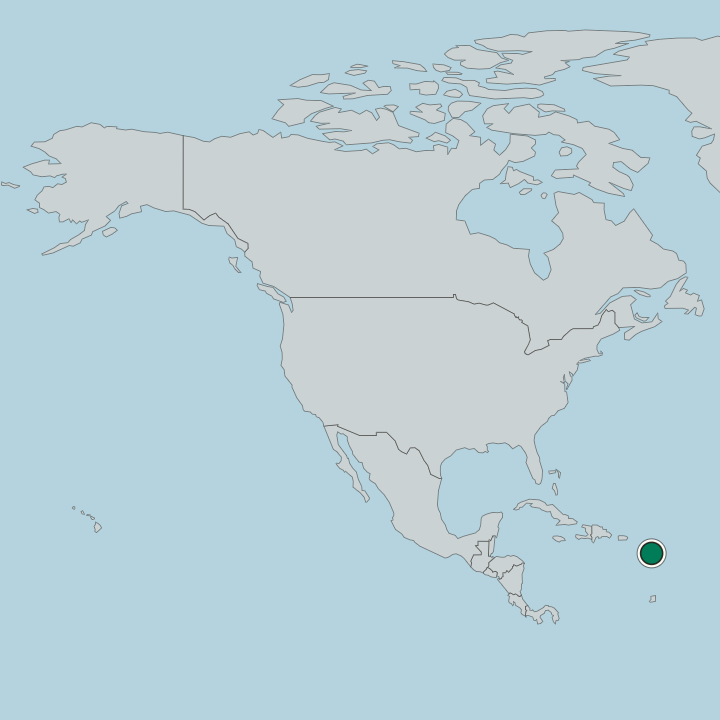
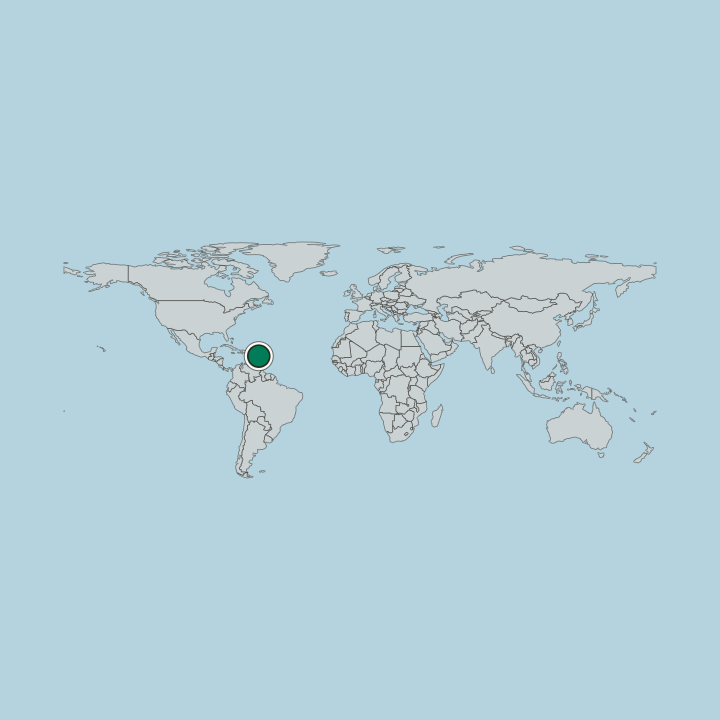
Guadeloupe sits in the eastern Caribbean, in the middle of the Lesser Antilles, south of Antigua and north of Dominica. Its heart is two islands pressed together into a butterfly. The narrow salt-water channel of the Rivière Salée and the shallow bays of the Grand Cul-de-Sac Marin and Petit Cul-de-Sac Marin split the wings, so that a short bridge is all that joins Basse-Terre in the west to Grande-Terre in the east.
The two halves could hardly be less alike. Basse-Terre is high, wet, and volcanic, rising through dense rainforest to La Grande Soufrière, an active volcano and the highest summit in the Lesser Antilles. Grande-Terre is a low limestone plateau, dry and rolling, edged on the south by white beaches and coral reefs and on the north by cliffs that take the open Atlantic head-on.
Beyond the two main islands the department scatters outward. Marie-Galante is a near-circular limestone disc of cane fields and windmills; La Désirade is a tilted limestone ridge to the east; and the Îles des Saintes guard a deep bay to the south. Together the inhabited islands and their surrounding islets make up a compact but varied archipelago.
Contrast is the theme. Mountain and mangrove sit within an hour of each other.
What is the history of Guadeloupe?
Kalinago people knew the archipelago as Karukera, the island of beautiful waters, long before Europeans arrived. France seized it in 1635 and turned the land to sugar. Over the next two centuries planters cleared Grande-Terre and the lower slopes of Basse-Terre for cane, and worked those estates with enslaved Africans shipped across the Atlantic in their tens of thousands, until the colony's whole economy rested on that labour.
Slavery was abolished, restored under Napoleon, then abolished again. The final decree, driven in Paris by Victor Schœlcher, was proclaimed on the islands in May 1848, and roughly eighty-seven thousand people walked free. Indentured workers from India followed onto the plantations afterward, adding another thread to the population.
The islands stayed French through it all. In 1946 Guadeloupe stopped being a colony and became an overseas department, its people full French citizens with seats in the National Assembly in Paris. That status still shapes daily life.
The euro, French law, and the Creole spoken in the market all trace back to this braided past.
What is Guadeloupe like?
Guadeloupean culture is Creole to its core, a blend of African, French, and Indian strands that plays out most clearly in music and food. Its signature sound is gwoka, a drum-and-chant tradition born on the sugar estates and inscribed on UNESCO's heritage list. From that root grew zouk, the fast dance-floor music that the band Kassav' carried out of the islands to the world in the 1980s.
The kitchen tells the same layered story. Colombo, a curry brought by Tamil indentured workers, simmers alongside French-descended court-bouillon, crisp salt-cod accras, and the pressed-bread bokit sold from roadside stalls. Rum runs through everything, distilled from the cane that once defined the place and poured into the ti-punch that opens most gatherings.
Carnival crowns the year. For weeks before Lent, gwoka ensembles and masked bands parade through Pointe-à-Pitre and Basse-Terre in a rolling street festival. French is the official language, but Guadeloupean Creole is what most people speak at home and in the market.
Two languages, one island voice.
What is the climate of Guadeloupe?
Guadeloupe is warm and humid all year, cooled by the northeast trade winds that give it the tropical maritime climate of the Leeward Islands. Islanders mark two seasons rather than four. The drier Carême runs from January into April, when the breeze is steadiest and the beaches busiest, while the greener, wetter hivernage stretches from June through November.
That second stretch overlaps the Caribbean hurricane season, most active from August to October. Rain also depends on where you stand: the windward slopes of Basse-Terre soak up far more than dry, low-lying Grande-Terre. Pack for heat, and watch the sky.
How do you get to Guadeloupe?
Nearly everyone flies into Guadeloupe Pôle Caraïbes, the airport at Les Abymes just outside Pointe-à-Pitre. Long-haul services connect it directly with Paris in under nine hours, and regional carriers hop across to the neighbouring French Antilles and other Caribbean islands. Once you land, the smaller islands are reached by sea.
Ferries leave Pointe-à-Pitre for Marie-Galante, La Désirade, and the Îles des Saintes, and a longer crossing links Guadeloupe with Martinique and Dominica. Rent a car. It is the practical way to explore the two main islands, where distances stay short but the winding mountain roads of Basse-Terre run slow.
Good for
Updated September 2026