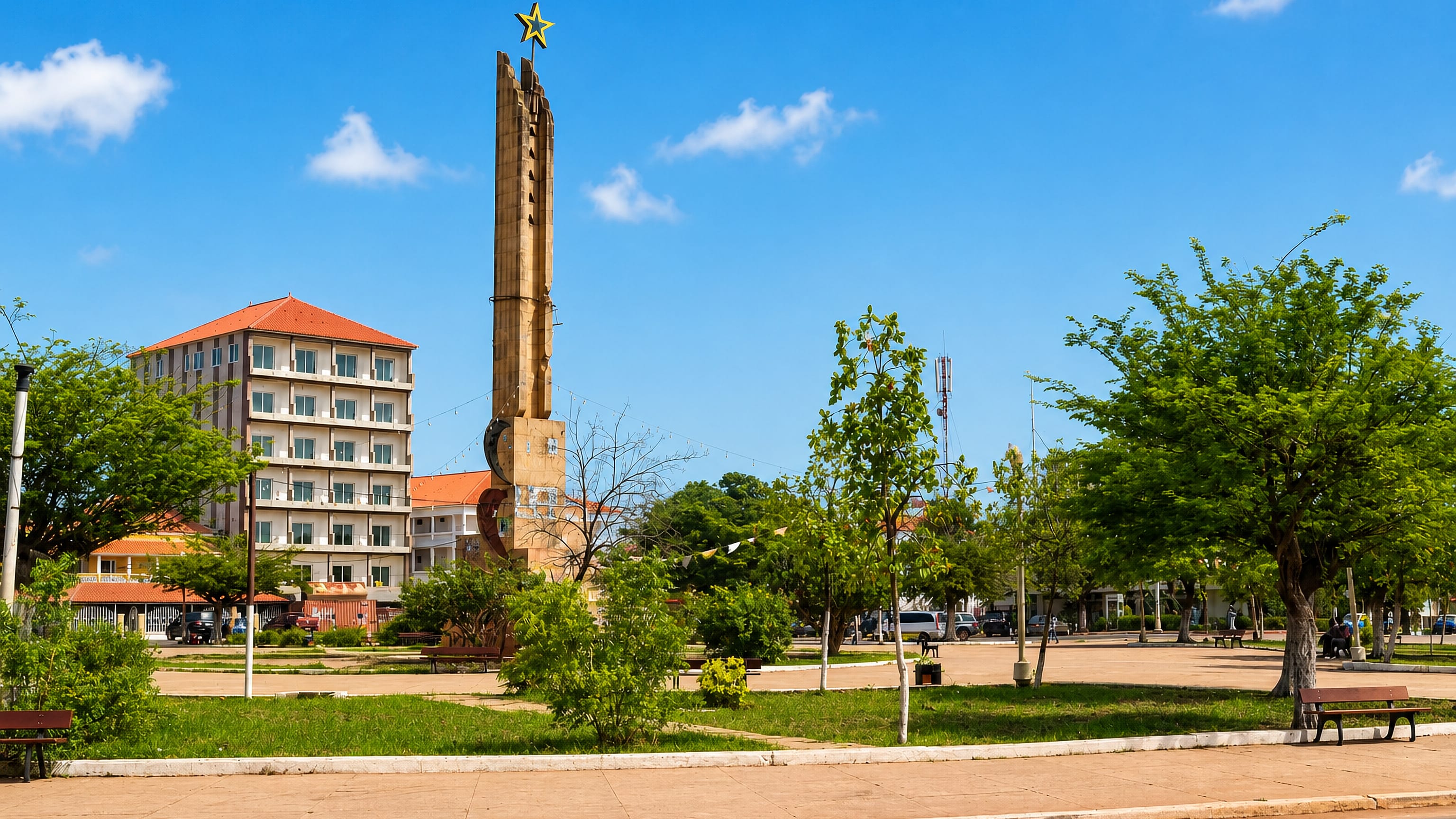
Guinea-Bissau: Regions, Cities & Travel Guide
Guinea-Bissau is a small West African country of tidal plains and the Bijagós Archipelago, its capital Bissau set on the Geba estuary.
Hotel links are affiliate links: booking through them may earn us a commission, at no extra cost to you. It never affects how places are ranked. How this works


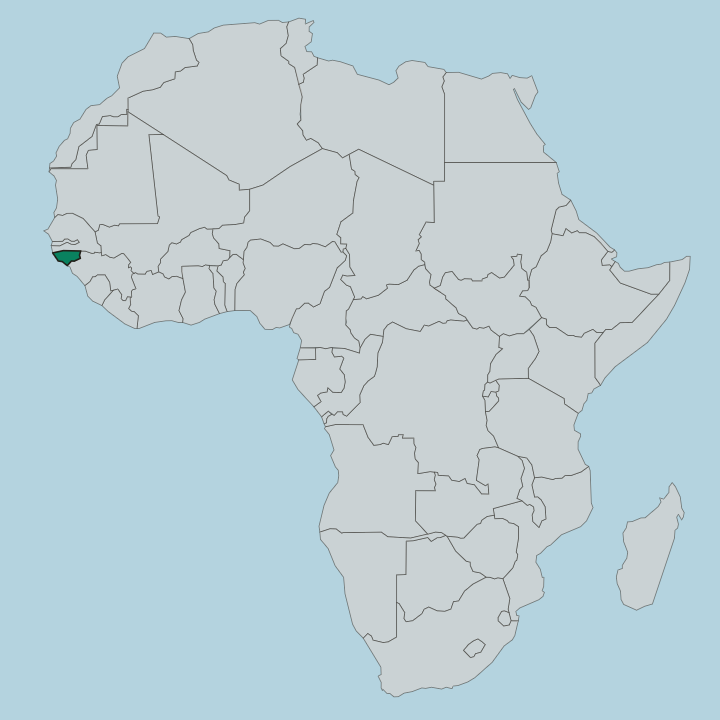
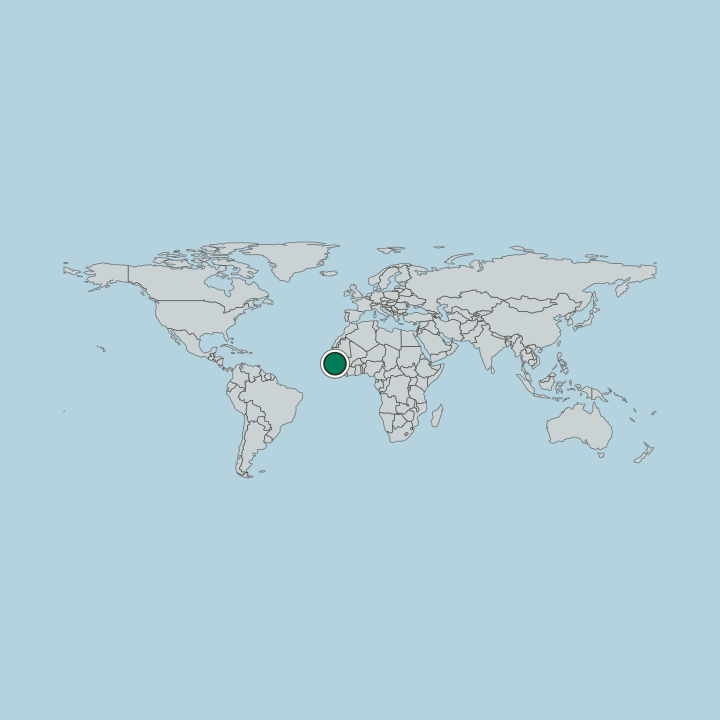
Top destinations in Guinea-Bissau
One city to start from, then drill into its areas and hotels.

 Guinea-Bissau
Bissau
Bissau, capital and largest city of Guinea-Bissau, is the country's major port, standing on the Geba River estuary off the Atlantic Ocean.Where to stay →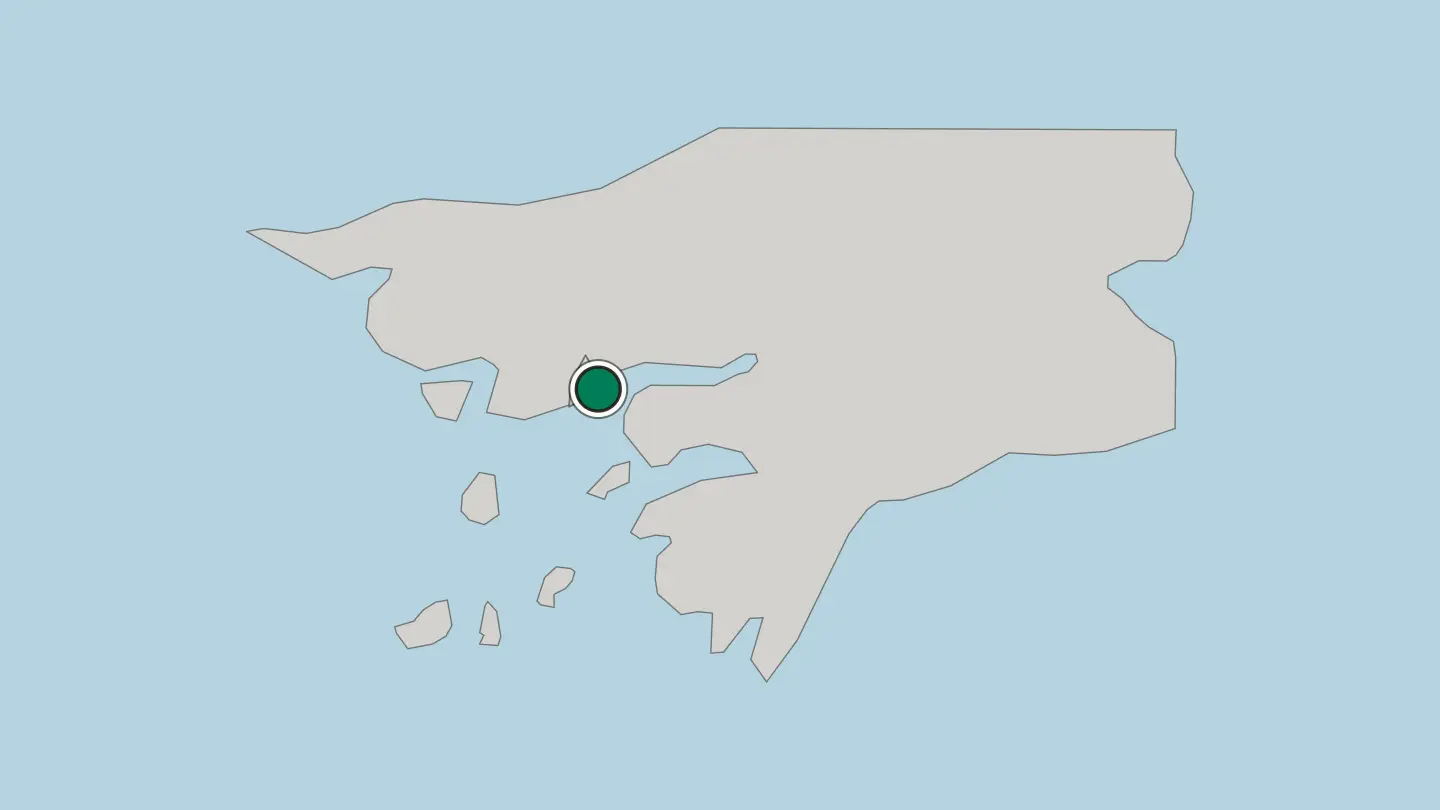
Hotel links are affiliate links: booking through them may earn us a commission, at no extra cost to you. It never affects how places are ranked. How this works
Browse by region
One region so far — open it to see its cities and towns.
About Guinea-Bissau
What is Guinea-Bissau known for?
The Bijagós Archipelago defines Guinea-Bissau for most travellers. Some 88 islands and islets scatter off the coast, and the Orango group is known for saltwater hippos and nesting sea turtles. The mainland is quieter and greener.
Bissau keeps the faded pastel arcades of its Portuguese past, Cacheu preserves an early colonial fort above its river, and the Geba threads inland toward the market town of Bafatá. Rice paddies, mangrove creeks, and slow ferries set the pace.
Where is Guinea-Bissau?
Guinea-Bissau sits on the West African coast between Senegal to the north and Guinea to the south-east, a compact country of barely more than thirteen thousand square miles. Almost all of it is low. A wide coastal plain, cut by swampy estuaries the Portuguese called rias, lies so flat that tidal water pushes as far as 60 miles inland along the serpentine, mangrove-lined rivers.
The land climbs only gently as you move east. There the plain gives way to a forest-savanna mosaic across the Bafatá plateau and the Gabú plain, wooded grassland grazed by cattle and cut for rice. Water orders everything.
The Geba runs the length of the country, draining the interior before it widens into the broad estuary that Bissau overlooks, while the Corubal loops in from Guinea along the southern border and the Cacheu drains the north. Offshore lies the country's signature landscape. The Bijagós Archipelago spreads some 88 islands and islets across shallow, silt-laden waters, a maze of channels, sandbanks, and mangrove that shelters manatees, turtles, and even hippopotamuses that swim between the islands.
Little of the country rises above 300 feet.
What is the history of Guinea-Bissau?
Long before Europeans arrived, the coast and islands were home to the Balanta, later joined by the Mandinka and Fula who moved in from the interior. Portuguese navigators reached these rivers in the fifteenth century, and Cacheu grew into one of the earliest colonial settlements in sub-Saharan Africa, a fortified river port that fed the Atlantic slave trade. The colony stayed coastal.
For centuries the interior lay beyond Portuguese reach, held instead by African kingdoms and trading networks that answered to no European flag. The modern struggle began in 1956, when Amílcar Cabral founded the PAIGC. His movement launched an armed campaign in 1963 and, from rural liberated zones, wore down a colonial army it could never defeat outright, holding the countryside while Portugal clung to the towns.
Cabral was shot dead in 1973. Portugal granted independence in 1974, and the new state took the name of its capital to set itself apart from neighbouring Guinea. The decades since have been turbulent, marked by coups, a brief civil war, and fragile governments.
His ideas still shape how the country sees itself.
What is Guinea-Bissau like?
Guinea-Bissau is one country and many peoples at once. The Balanta of the southern coast, the Fula and Mandinka of the eastern savanna, the Papel and Manjaco of the north-west, and the islanders of the Bijagós each hold their own languages, faiths, and rites. Kriol binds them together.
This Portuguese-based creole grew up in the colonial river ports and now serves as the everyday tongue across the whole country, spoken far more widely than the official Portuguese. Music carries the national voice. Gumbe, the country's best-known style, fuses roughly ten folk traditions into a rolling polyrhythm, its lyrics in Kriol turning on the day's news and gossip.
Faith runs along the same plural lines. Islam is strong in the Fula and Mandinka interior, while animist belief endures among the Balanta and the Bijagós islanders, whose age-grade initiations and sacred groves still order village life. At the table, rice is the staple and the prestige dish, served with sauces of palm oil, peanuts, and fish, or as the spiced jollof shared across West Africa.
Everyday life is loud, communal, and river-paced.
What is the climate of Guinea-Bissau?
Guinea-Bissau is hot and tropical the year round. Two seasons split the calendar. A monsoon rainy season runs from June to November, when south-westerly winds drench the coast and the rivers swell, and a dry season from December to May brings the dusty north-easterly harmattan off the Sahara.
The heavy rains soak the mangrove coast and the Bijagós far more than the drier eastern savanna around Gabú. Most travellers come in the dry months.
How do you get to Guinea-Bissau?
Nearly everyone arrives by air at Bissau. Osvaldo Vieira International, a few miles from the city, is the country's only international airport, linked chiefly to Lisbon, Dakar, Casablanca, and Praia. Overland routes cross from Senegal in the north and Guinea in the south-east, though roads are rough and slow.
From Bissau's port, ferries and chartered boats carry travellers out to the Bijagós Archipelago. Plan the island legs around the tides.
Good for
Updated September 2026