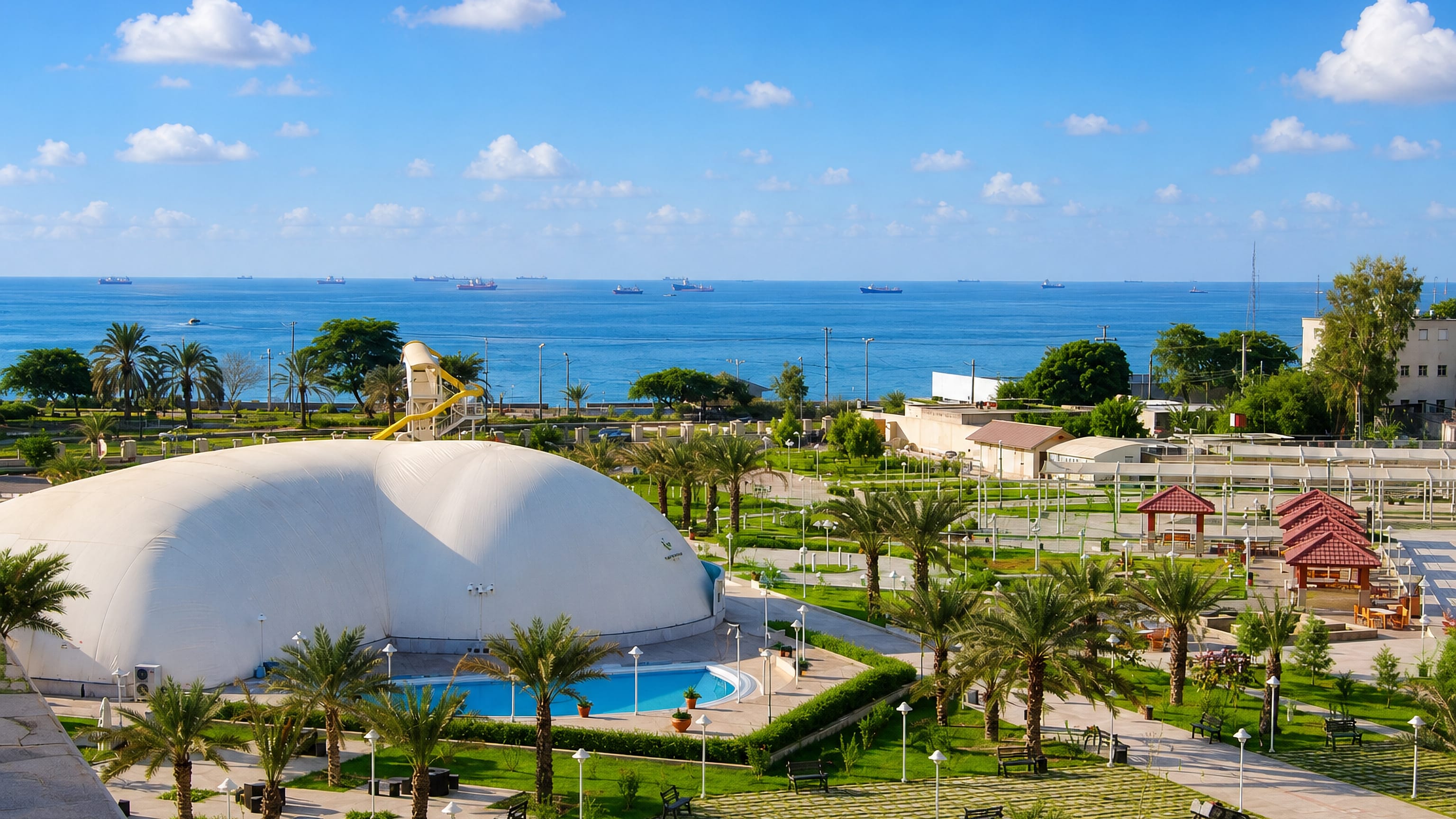
Iran · Hormozgan Province
Where to Stay in Bandar Abbas, Hormozgan Province
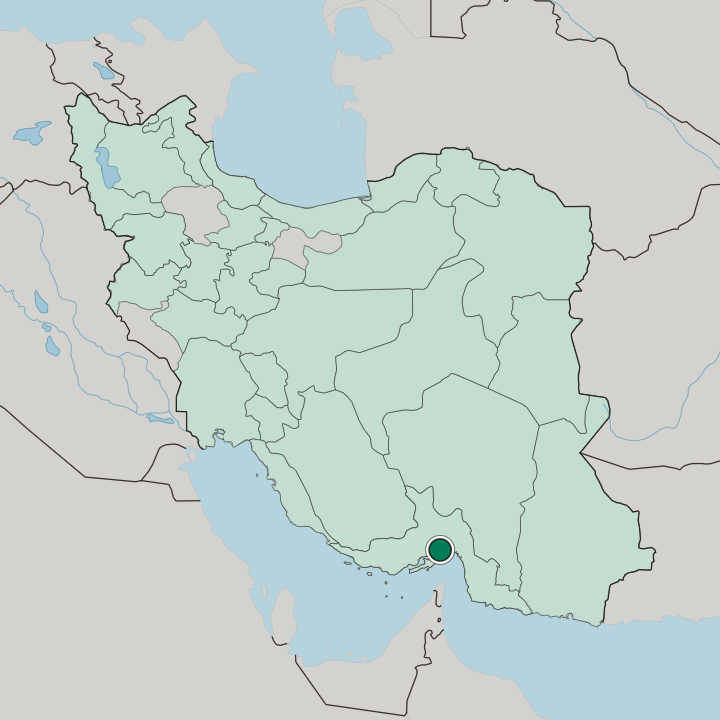
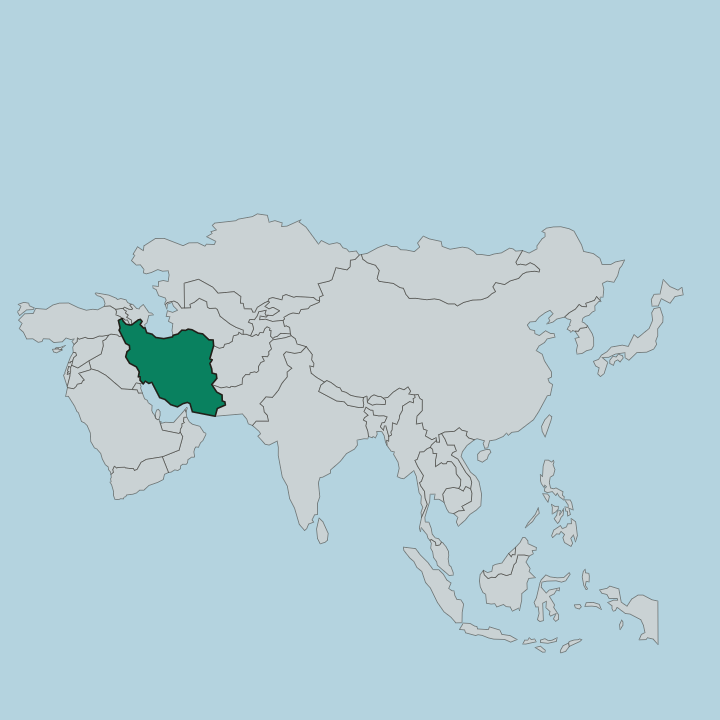
Bandar Abbas is a Persian Gulf port in Hormozgan Province, southern Iran, guarded by the old Gombroon Castle on the strait.
Find your area →


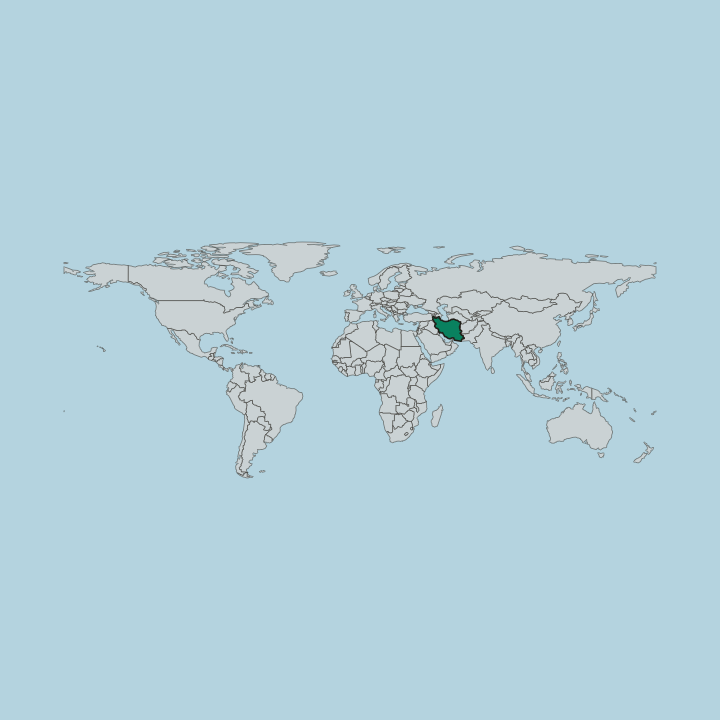
Where to stay in Bandar Abbas
The practical side of choosing where to sleep.
Where you stay in Bandar Abbas depends on the old town or the shore. The heart of the city, around the Jameh Mosque and the Shah Hosseini Ab Anbar, keeps the merchant houses and the bathhouses within a walk, and it suits anyone who wants the history over a sea view. Streets here run narrow against the heat.
Rooms cluster near the mosques and the old reservoirs, close to the shaded lanes of the centre. The waterfront is the other choice. Along the Persian Gulf, the ferry terminals and the corniche face the islands offshore, and staying here trades the shaded lanes for the open sea and the boats bound for them.
Sea air softens the nights. If you want the water and the ferries, base yourself on the shore; if you want the mosques and the reservoirs, stay in the old town. Either way, the Gulf is always close.
Things to do in Bandar Abbas
Ranked by global recognition; descriptions from Wikidata (CC0).
Churches & Religious Sites
2- Jameh Mosque of Bandar Abbas Heritage
- Galehdari Mosque Heritage
Castles & Historic Sites
8- Hindu Temple Heritage
- Kolah Farangi Mansion (Bandar Abbas) Heritage
- Galehdari Hammam Heritage
- Ahmadi House (Bandar Abbas) Heritage
- Gombroon Castle Heritage
Show 3 more →
- Museum Ab Anbars (Bandar Abbas) Heritage
- Galehdari House (Bandar Abbas) Heritage
- Gap Hammam Heritage
worth knowingacross 2 categories in Bandar Abbas
About Bandar Abbas
Ships define Bandar Abbas.
What is Bandar Abbas known for?
This is Iran's great southern port, set where the Persian Gulf narrows toward the open sea, and its trade has run through the harbour for centuries under the old name of Gombroon. Gombroon Castle still marks that past. Cargo moves day and night.
What are the main landmarks in Bandar Abbas?
Gombroon Castle anchors the old shore. Nearby, the Jameh Mosque and the Galehdari Mosque raise their domes over the streets, while the Kolah Farangi Mansion and the Galehdari House show how the city's merchants once lived. Water and steam left their own monuments.
The Shah Hosseini Ab Anbar and the Gap Hammam still stand among the lanes, reservoir and bathhouse together.
What is the history of Bandar Abbas?
Bandar Abbas grew up around trade and water. Long before its modern name, the port was known as Gombroon, and Gombroon Castle still stands as the mark of that older harbour, when European and Persian ships met on this coast to move the goods of the Gulf. Merchants built for the heat as much as for wealth.
Wealth came and went. Much of the old town runs on water it had to hoard, storing against the dry season what the coast could never take for granted. Ab anbars, the deep domed reservoirs of the desert coast, held the year's drinking water against the dry season, and the Shah Hosseini Ab Anbar, the Long Ab Anbar, and the Round Ab Anbar survive among the streets as monuments to that craft.
Water meant survival here. Bathhouses stood beside the reservoirs, and the Gap Hammam and the Galehdari Hammam kept the rhythm of daily life. Grand houses rose as well, the Kolah Farangi Mansion and the Sharif House among them.
Faith shaped the skyline too, with the Jameh Mosque and the Galehdari Mosque gathering the city to prayer.
Where is Bandar Abbas?
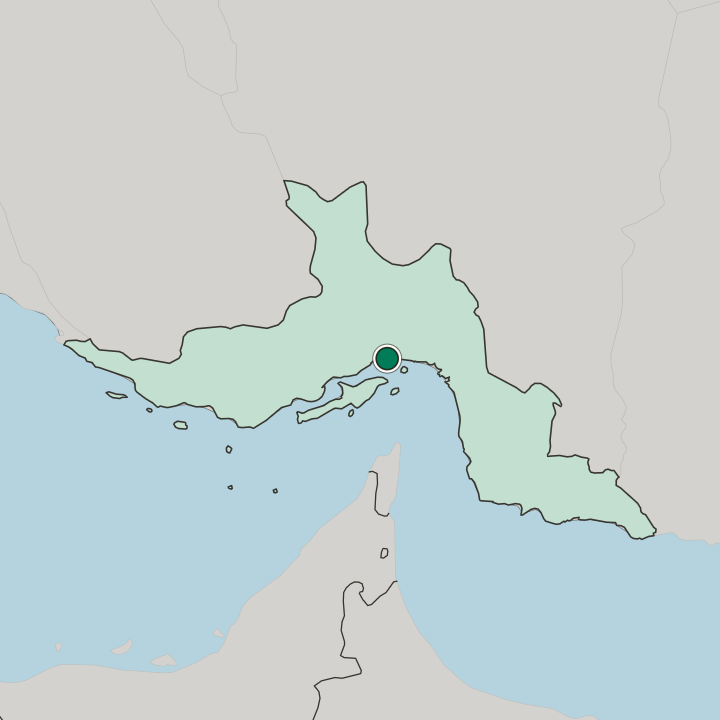
The Persian Gulf meets the ocean near here. Bandar Abbas spreads along a low, hot shore in the far south of Iran, facing the strait that carries much of the region's shipping, with dry mountains rising inland behind the coastal plain. Islands lie offshore in the haze.
Trade and heat both come off the water.
What is the climate of Bandar Abbas?
Heat rules the year. Bandar Abbas bakes through long, fierce summers when the Gulf turns the air thick and humid, and even the winters stay warm along this southern coast. Rain is scarce.
The sea offers the only real relief.
How do you get to Bandar Abbas?
The port is the point. Bandar Abbas sits at the mouth of the Persian Gulf, a hub for ferries out to the Gulf islands and ships bound for the wider sea, and roads and rail run north from it into the Iranian interior. Flights land from the larger cities.
Most who come are heading for the water, the islands, or the trade that fills the docks.
Good for
Another city in Hormozgan Province
Updated September 2026