Iran
Hormozgan Province, Iran — Towns & Travel Guide
Hormozgan is Iran's south coast on the Strait of Hormuz, a mountainous province of Persian Gulf islands run from the port of Bandar Abbas.
Find your area →


Towns & cities in Hormozgan Province
Pick a town or city — each links to where to stay.

 Iran
Iran
Bandar Abbas
Bandar Abbas is a Persian Gulf port in Hormozgan Province, southern Iran, guarded by the old Gombroon Castle on the strait.Where to stay →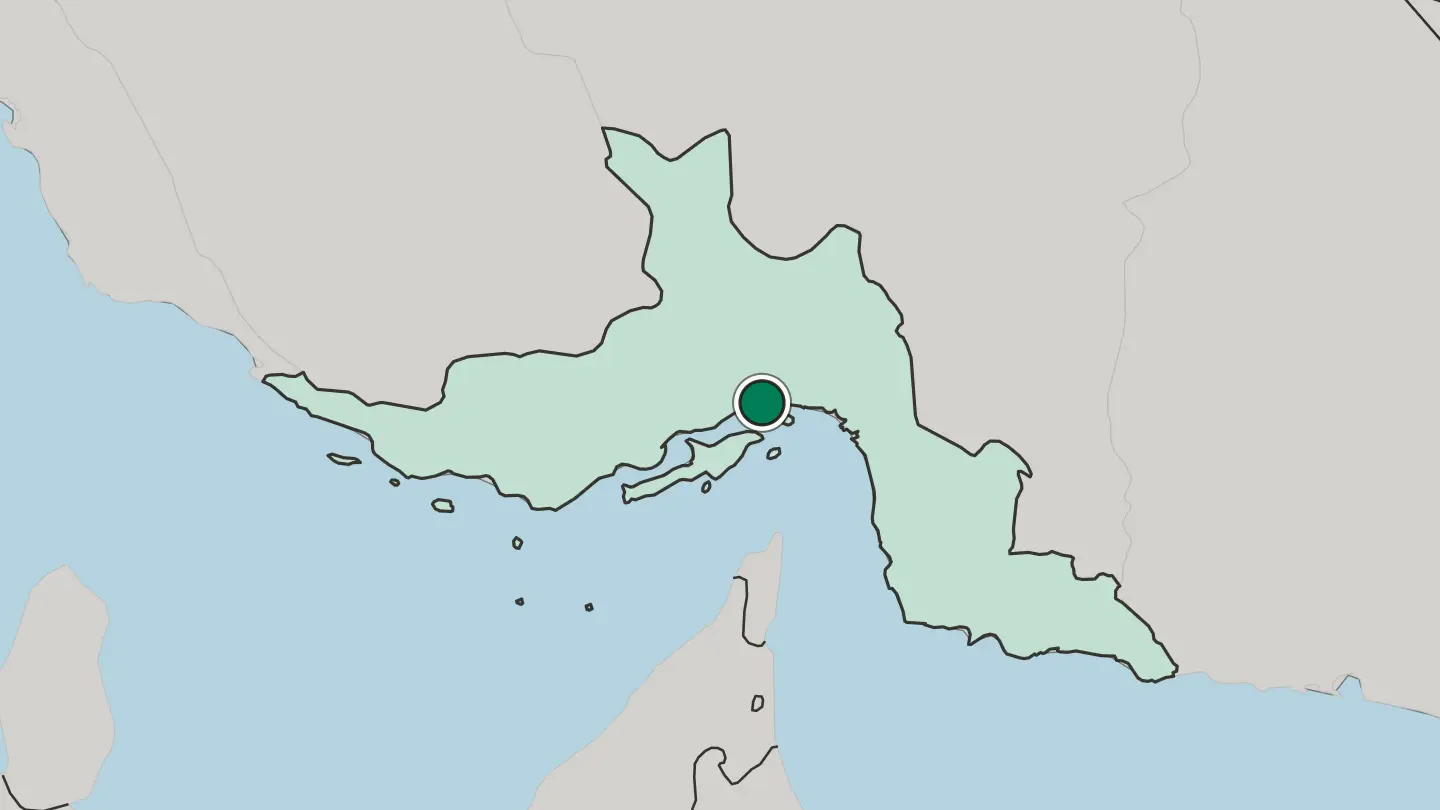
 Iran
Iran
Mīnāb
Mīnāb, a Gulf Region city in Hormozgan province, heads Mīnāb County and counts Hezareh Castle among its recorded sites.Where to stay →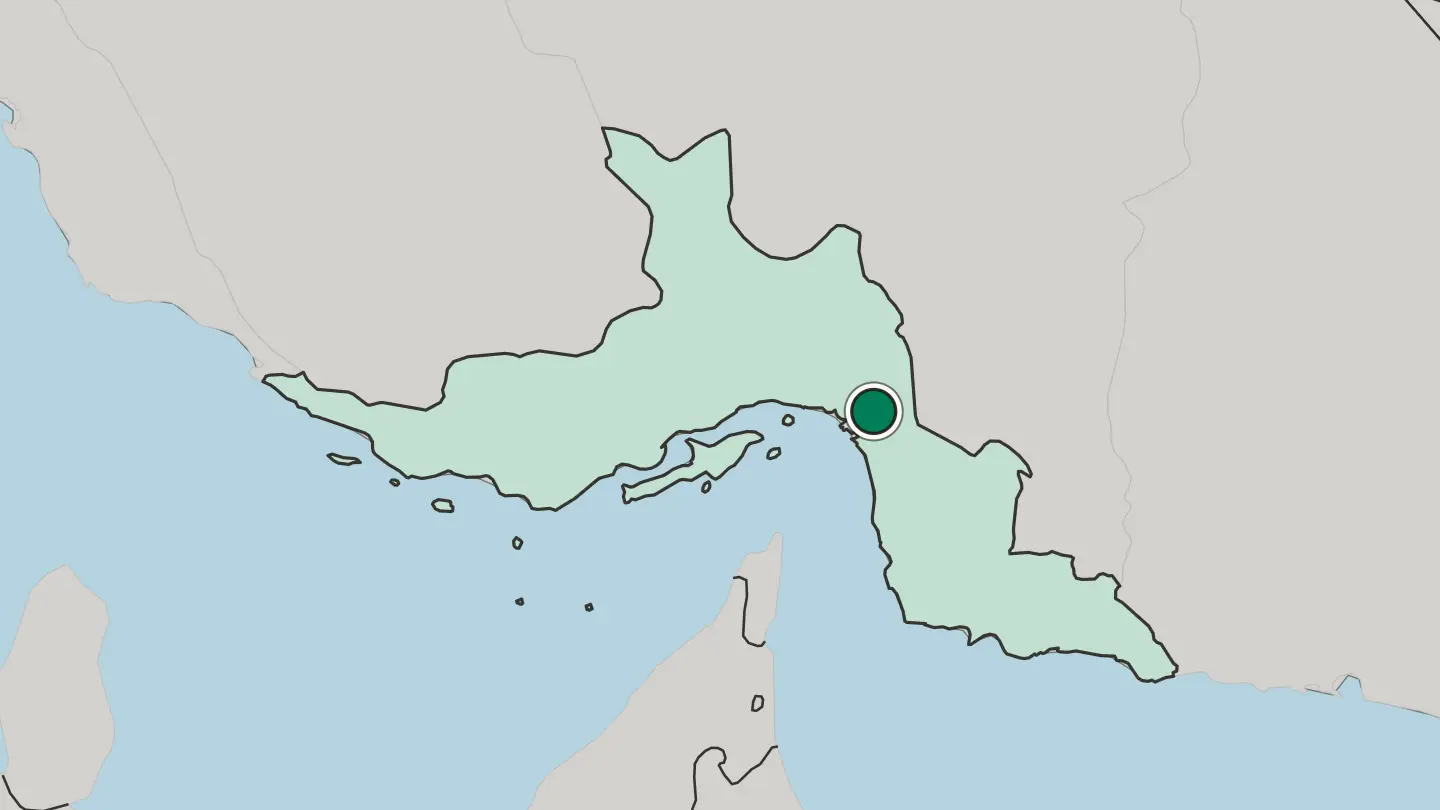
About Hormozgan Province
What is Hormozgan Province known for?
Hormozgan is known first for the Strait of Hormuz, the narrow sea gate between the Persian Gulf and the Gulf of Oman. Its capital, Bandar Abbas, is Iran's most important port. Offshore lie the islands: Qeshm, a free trade zone, and Hormuz, whose hills of red and ochre soil give it the name Rainbow Island.
The province is hot. Bandari music, dance and dress set its coast apart from inland Iran.
Where is Hormozgan Province?
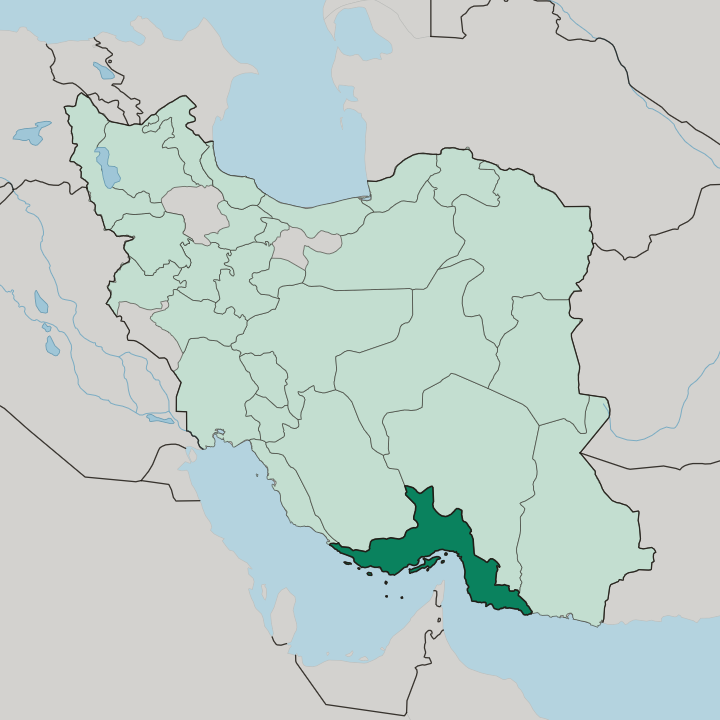
Hormozgan runs along Iran's southern edge, a long coast on the Persian Gulf and the Gulf of Oman. It is mostly mountain. The southern tip of the Zagros Range drops almost straight to the water, leaving little flat ground between the peaks and the sea.
That coast stretches for a thousand kilometres, and fourteen islands lie scattered off it in the Persian Gulf. Qeshm sits close to the mainland near Bandar Abbas. Beyond the water to the south lie Oman and the United Arab Emirates.
The Strait of Hormuz is the heart of it. Here the province narrows toward the sea gate that joins the Persian Gulf to the Gulf of Oman, with the Omani coast facing it across the channel. Rivers are few and short.
The Minab River, dammed above the town of Minab, gathers what little water drains off the mountains and supplies Bandar Abbas. Inland, the Geno massif rises behind the capital, a protected biosphere of springs and desert slopes. Bandar Lengeh lies west along the shore, Minab east toward the strait.
The heat comes off the gulf.
What is Hormozgan Province like?
The coast of Hormozgan feels closer to the Gulf than to the rest of Iran. Centuries of trade did that. Dhows crossed to Arabia, India and the East African coast, and the port towns took in people and customs from all of them.
The result is Bandari culture, named for the ports themselves. Its music leans on the drum and a reed pipe, and its dances carry rhythms with African roots. Many people here are Sunni Muslims.
The everyday tongue is a Bandari dialect of Persian, with Arabic heard along the water. Dress marks the region as much as sound. In Bandar Abbas and Minab, older women still wear the boregheh, a stiff gold-and-black face mask.
The wooden lenj boats are a craft of their own. Built by hand on Qeshm and the smaller ports, they once sailed the monsoon trade, and their building and navigation are recognised as living heritage. Food comes from the sea.
Fish, shrimp and dates fill the markets, spiced heavily in a way that reflects the old India route. Heat shapes daily life too, and the busiest hours fall in the cool of early morning and evening.
What is the history of Hormozgan Province?
Hormuz was once a wealthy trading kingdom, first on the mainland and then on the small island that still carries the name. The Portuguese seized that island in 1515 and held it with a stone fort for over a century, controlling the mouth of the Gulf. Shah Abbas I ended it.
In 1622 his forces, backed by the English East India Company, drove the Portuguese out, and the mainland port that grew up in their place took his name: Bandar Abbas, the Port of Abbas.
What is the climate of Hormozgan Province?
Hormozgan is hot and, on the coast, heavily humid. Summers are punishing. From late spring through autumn the air off the Persian Gulf turns thick and sticky, and the middle of the day empties out until the heat eases.
Rain barely falls, and most of the little that comes arrives in winter. Winter is the season to visit: the coast and the islands settle into warm, dry days, which is why the tourist boats to Qeshm and Hormuz run mainly then.
How do you get to Hormozgan Province?
Most travellers reach Hormozgan by air into Bandar Abbas, whose airport takes domestic flights from Tehran and the other Iranian cities. Qeshm and Kish have their own airports as well. The province is also the southern end of Iran's rail network, and trains run up from Bandar Abbas toward Tehran.
The islands are reached by boat. Passenger ferries and speedboats cross from Bandar Abbas to Qeshm and Hormuz through the day, a short hop across the Strait of Hormuz.
Common questions
What is the best area to stay in Hormozgan Province?
Bandar Abbas: ferries and the island crossings.
Good for
More regions in Iran
Updated October 2026