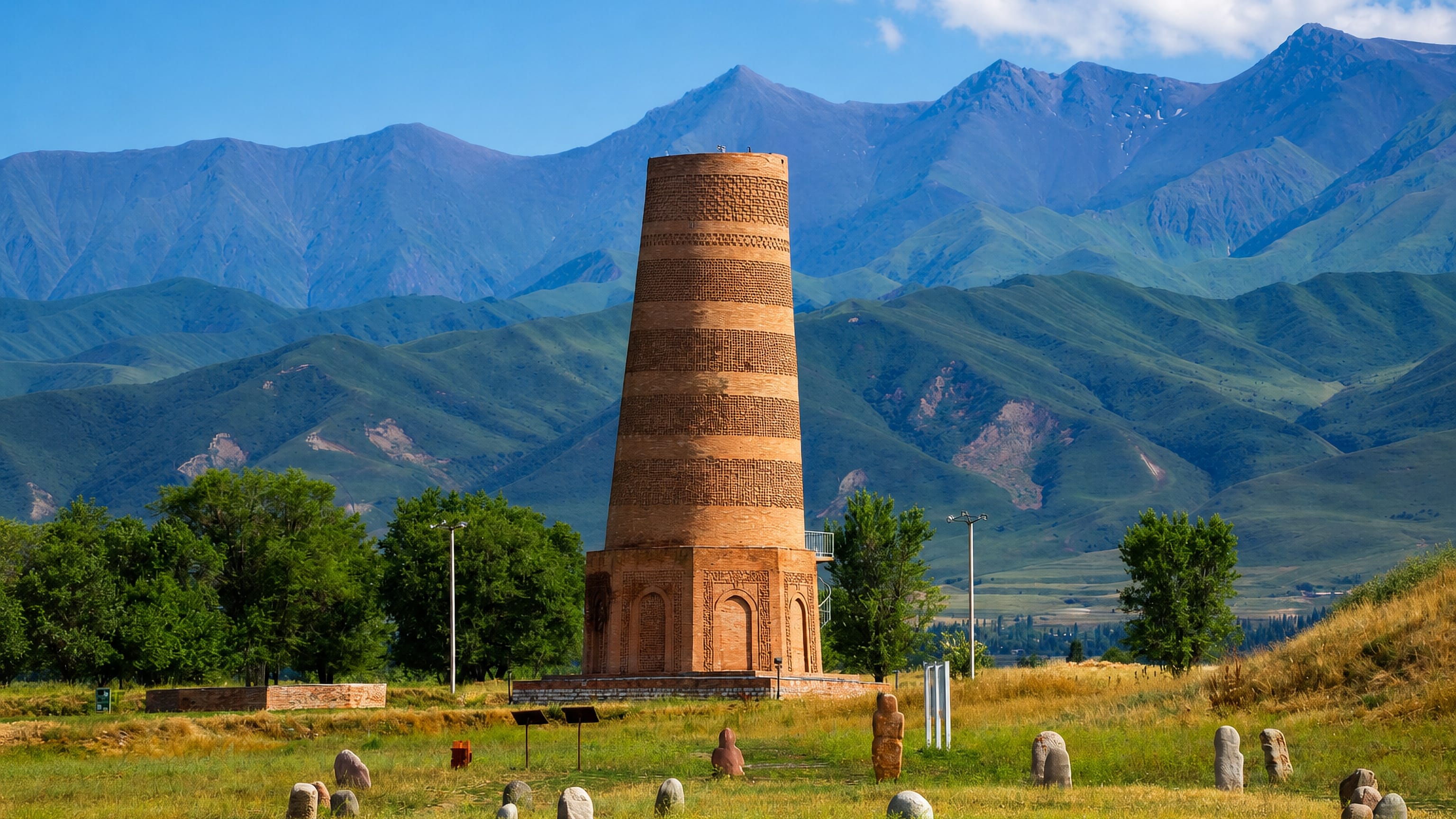
Kyrgyzstan · Chuyskaya Oblast’
Where to Stay in Tokmok, Chuyskaya Oblast’
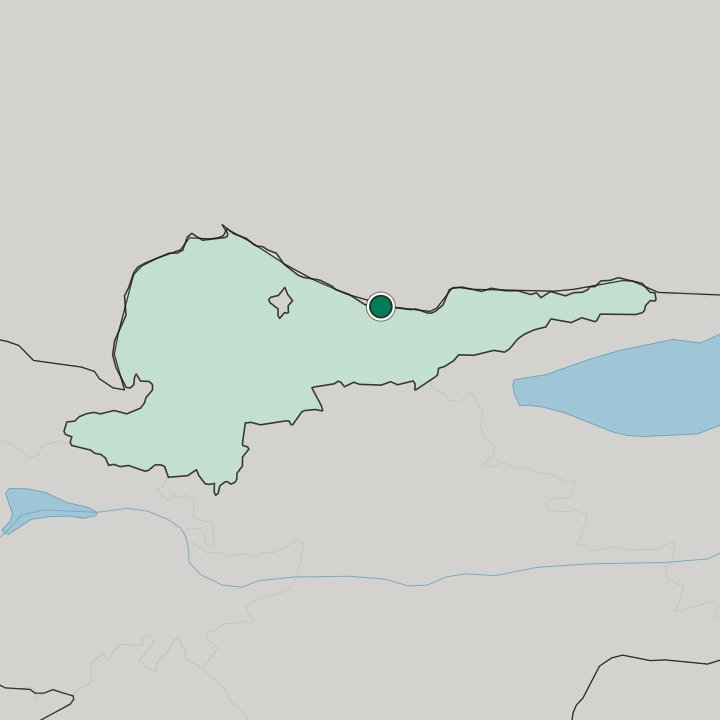
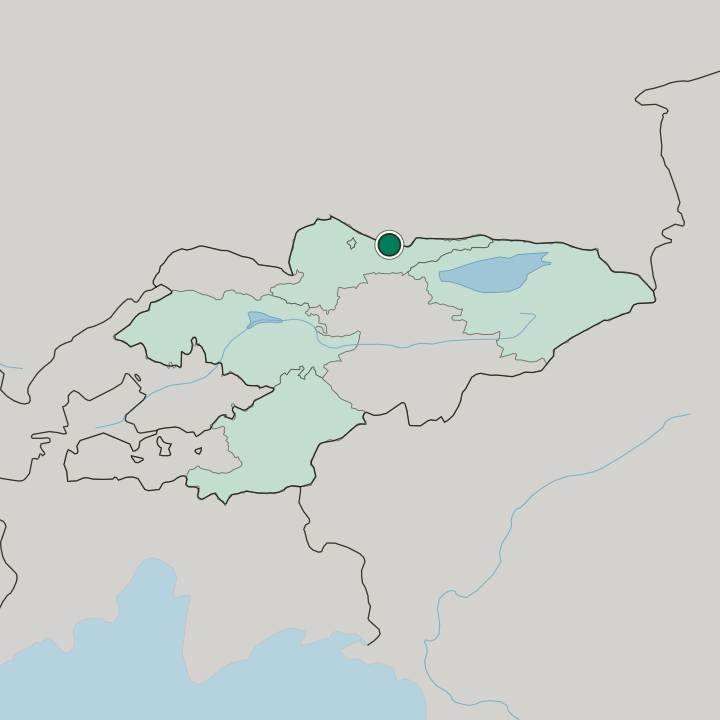
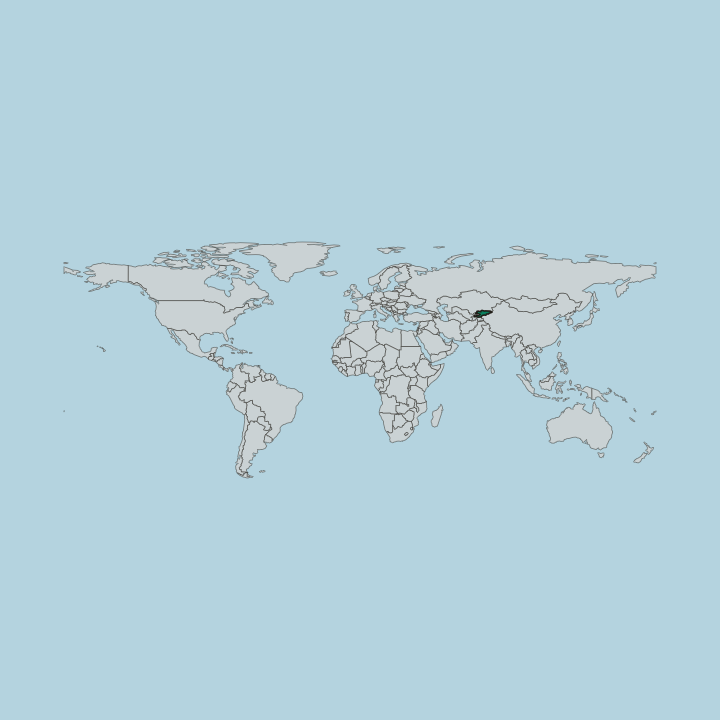
Tokmok sits in the Chüy Valley east of Bishkek, with the sites of Balasagun and Suyab beside it and the river Chu to the north.
Hotel links are affiliate links: booking through them may earn us a commission, at no extra cost to you. It never affects how places are ranked. How this works


Where to stay in Tokmok
How the choice of base plays out on the ground.
The obvious question is whether to stay at all. Bishkek lies west along the Chüy Valley, close enough that a good many people see Balasagun and Suyab on a day out and sleep back in the capital, which is the arrangement most visitors default to. Tokmok answers a different need.
A room here belongs to travellers moving east through the valley, or north toward the river Chu and the border with Kazakhstan, for whom the capital is a detour rather than a base. Choice inside the town is narrow. Tokmok was the administrative seat of Chüy Region from 2003 to 2006, and the rooms that came with that job are still what a visitor books, near the middle rather than out toward the sites.
The sites are the reason to be here. Balasagun and Suyab lie outside the built-up streets, so a bed in the centre means a short ride out and back rather than a walk, and nobody should book expecting either one on the doorstep. The town sits at 816 metres.
Height like that changes what a visitor packs, even in a valley that reads as flat country on a map.
Few places to stay in Tokmok — most visitors book in Bishkek nearby.
Find hotels in Tokmok
Direct booking searches for these neighbourhoods.
The middle of Tokmok
Central streets that kept their rooms from the Chüy Region seat yearsFind hotels in The middle of TokmokJourneys on north toward the river Chu and the Kazakhstan borderThe Chu river edge
The northern edge of Tokmok, pointed at the Chu and the Kazakhstan crossing. Lodging is scarce in this area; reserve in advance.Find hotels in The Chu river edgeHotel links are affiliate links: booking through them may earn us a commission, at no extra cost to you. It never affects how places are ranked. How this works
About Tokmok
Balasagun and Suyab come first.
What is Tokmok known for?
Both stand in the Chüy Valley beside Tokmok, and they are the reason a traveller turns off the road from Bishkek rather than carrying on along the valley to somewhere with more to occupy an evening. The town itself is a working one. It held the administrative seat of Chüy Region from 2003 to 2006.
The river Chu runs north of it.
What are the main landmarks in Tokmok?
Two names dominate: Balasagun and Suyab. Both sit in the Chüy Valley within reach of Tokmok, and between them they account for nearly everything a visitor is here to see, since the town's own streets carry little that a passing traveller would stop for. The valley supplies the rest.
The river Chu runs north of the town toward the border with Kazakhstan, while Bishkek lies west along the valley.
What is the history of Tokmok?
Tokmok dates from 1825. That founding year sits oddly beside the two names the Chüy Valley is better known for, Balasagun and Suyab, which are recorded as places in their own right rather than as parts of the town. The valley held cities before it held Tokmok.
Balasagun and Suyab are both in the Chüy Valley, and their survival as names on a map is the reason the area carries more history than a town founded in 1825 would suggest on its own. Whatever stood here before then is recorded under other names. Suyab and Balasagun are the two the record keeps.
Administration came and went. Tokmok was the administrative seat of Chüy Region from 2003 to 2006, a spell short enough that the seat had moved on again before the town's name settled into anyone's idea of a regional capital. Geography outlasted the paperwork.
The river Chu still runs north of the town toward the border with Kazakhstan, Bishkek still lies west along the Chüy Valley, and Tokmok still sits at 816 metres between the two, which is very much the position it was founded in. Токмок is the official form.
Where is Tokmok?
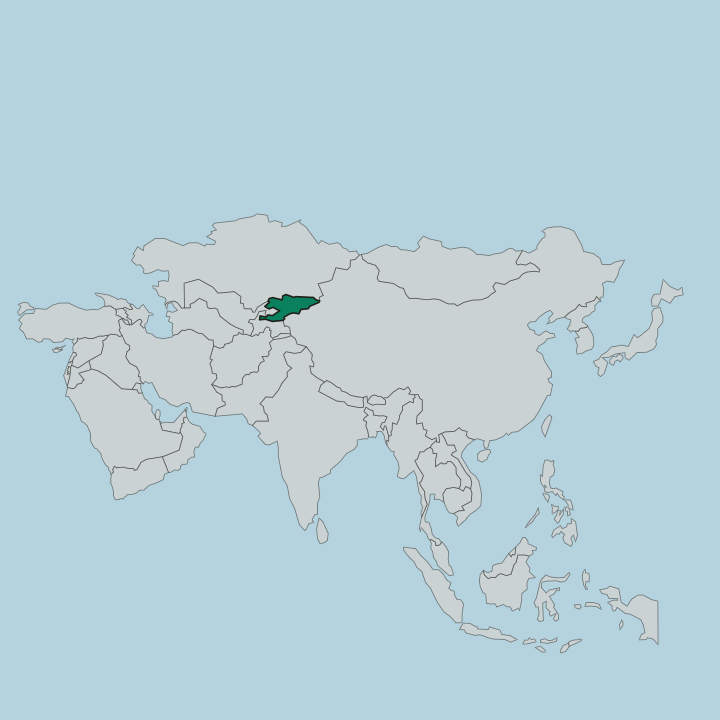
The Chüy Valley sets the frame. Tokmok lies along it east of Bishkek at 816 metres above sea level, with the river Chu and the border with Kazakhstan just to the north and the sites of Balasagun and Suyab in the same stretch of valley. Chüy Region surrounds the town.
The valley runs west toward Bishkek, and Tokmok sits partway along it with Kazakhstan a short way north.
What is the climate of Tokmok?
Altitude is the local variable. Tokmok stands at 816 metres in the Chüy Valley, in the temperate band of the northern hemisphere, which gives it a proper winter and a summer the valley floor holds onto longer than the ground rising on either side. The Chu runs north of town.
Anyone walking out to Balasagun or Suyab is doing it on open valley ground, so the season decides the length of the visit more than the distance does.
How do you get to Tokmok?
Bishkek is the way in. The capital lies west along the Chüy Valley, and the road east from it is what brings almost everyone to Tokmok, whether they are stopping for Balasagun and Suyab or carrying on through the valley. North of town is the river Chu.
The border with Kazakhstan runs beyond it, which puts Tokmok on the approach to a crossing as well as on the road running east through the Chüy Valley.
Common questions
What is the best area to stay in Tokmok?
The middle of Tokmok: Rides out to Balasagun and Suyab from a base in Tokmok. The Chu river edge: Journeys on north toward the river Chu and the Kazakhstan border. Bishkek, west along the valley: Day trips to Balasagun and Suyab that end back in the capital.
Good for
Updated October 2026