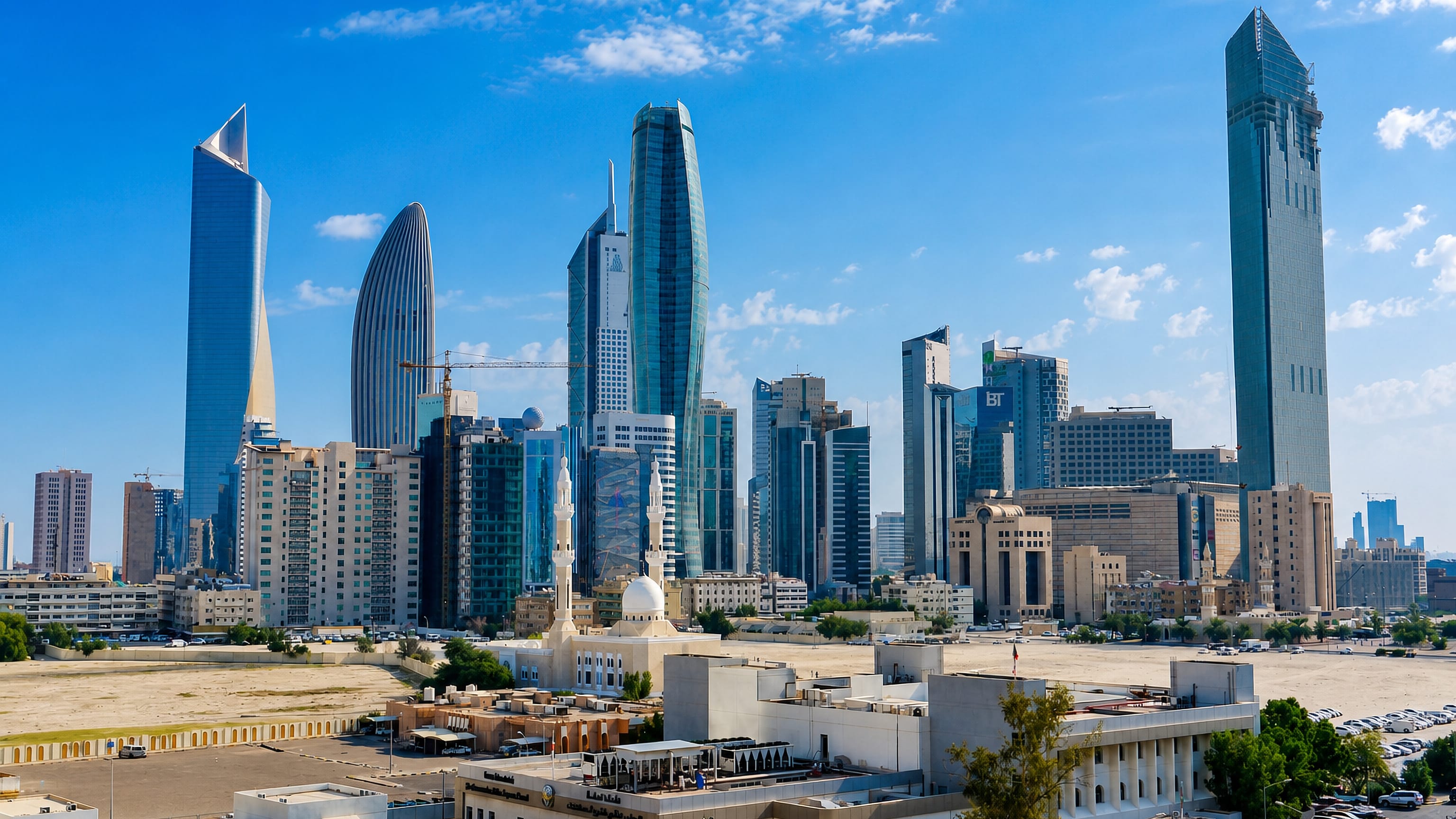
Kuwait: Regions, Cities & Travel Guide
Kuwait is a Gulf city-state at the head of the Persian Gulf, wedged between Iraq and Saudi Arabia, centred on Kuwait City.
Hotel links are affiliate links: booking through them may earn us a commission, at no extra cost to you. It never affects how places are ranked. How this works


Top destinations in Kuwait
One city to start from, then drill into its areas and hotels.
 Kuwait
Kuwait City
Kuwait City stands on the south shore of Kuwait Bay on the Persian Gulf, the capital of Kuwait, known for the Kuwait Towers and Sadu House.Where to stay →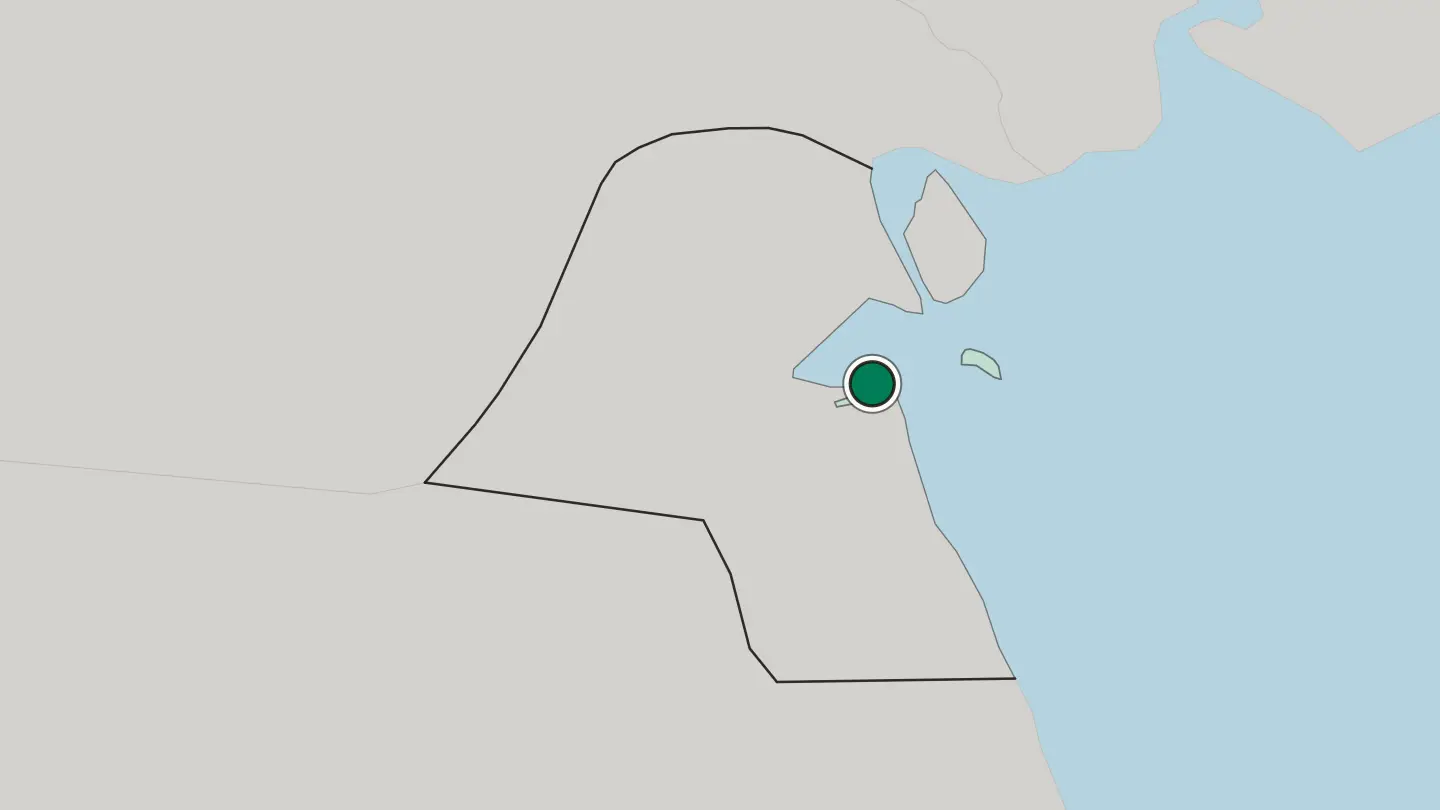
Hotel links are affiliate links: booking through them may earn us a commission, at no extra cost to you. It never affects how places are ranked. How this works
Browse by region
One region so far — open it to see its cities and towns.
About Kuwait
What is Kuwait known for?
Kuwait is known for oil wealth and an older seafaring past that predates it. Long before the wells, its merchants ran pearling dhows across the Persian Gulf and traded with Basra and Bombay. The capital holds the memory.
Kuwait Towers rise over the seafront, the alleys of Souq Al-Mubarakiya still sell loomi and cardamom, and the men's diwaniya keeps its evening rhythm of Arabic coffee and dates. Beyond the city stretch the low desert and the islands of Failaka and Bubiyan.
Where is Kuwait?
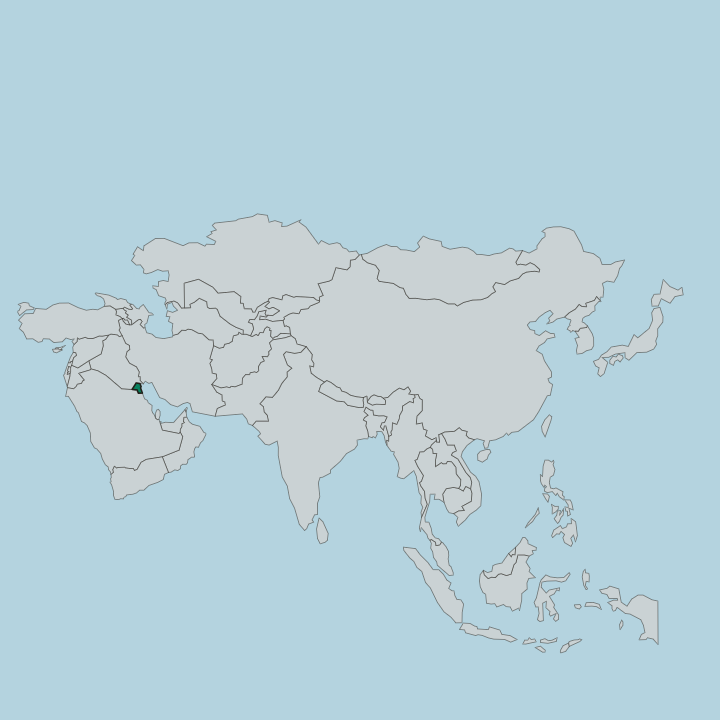
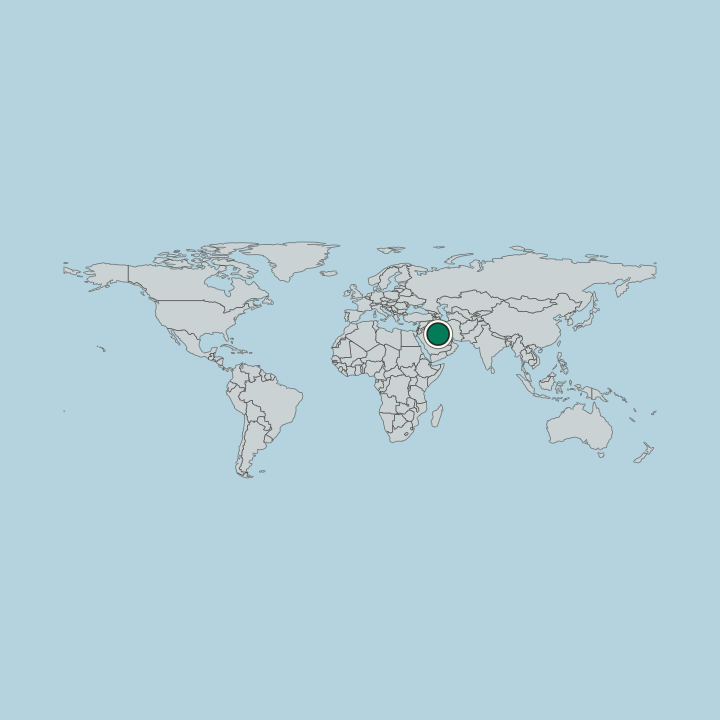
Kuwait occupies the north-eastern corner of the Arabian Peninsula, at the head of the Persian Gulf, with roughly 500 km of coastline facing the water. Iraq borders it to the north, Saudi Arabia to the south, and Iran lies just across the Gulf, closer to Kuwait than to any other of the Gulf states. The land itself is nearly flat.
Most of the country is a low sandy desert of gravel plains and shallow depressions, sloping gently down toward sea level in the east, with few of the tall dunes the region's image suggests. Relief is modest. The one clear break in the terrain is the Jal Az-Zor escarpment, a low ridge that rises near the northern coast above Kuwait Bay and reaches around 145 metres, high enough that migrating falcons perch along its cliffs at dawn.
Offshore, a scatter of islands fills out the map. Bubiyan, the largest, is a flat sweep of salt marsh and shallow lagoon that draws migrating birds moving between Eurasia and Africa, while Failaka, north-east of the capital, carries ruins going back to Bronze Age Dilmun and Alexander's Greeks. The desert holds few permanent watercourses.
There are no rivers to speak of, and fresh water comes largely from desalination and from aquifers beneath the sand.
What is the history of Kuwait?
Kuwait began as a fishing and trading settlement on the bay, first known as Qurain, the little horn, for the low rise beside the water. In the early eighteenth century clans of the Bani Utub moved down into the harbour, and in 1756 they chose Sabah I as their sheikh, founding the Al Sabah line that still rules. It was the waters of the bay that built Kuwait.
Kuwait grew rich as an entrepôt where horses, ghee, pearls, timber, and spices changed hands between Basra, Persia, and India, and its pearling fleets sailed the Gulf each summer for the banks offshore. Then oil rewrote everything. Commercial crude was struck in the desert south in the late 1930s, and by the time Kuwait gained full sovereignty in June 1961 the pearling economy had given way to petroleum.
The gravest test came in 1990. Iraqi forces invaded on 2 August, occupying the country for seven months until a coalition drove them out and Kuwait was liberated on 26 February 1991, its oil wells left burning behind the retreat. From pearling harbour to oil state, the thread is the sea and what lay under the sand.
What is Kuwait like?
Kuwaiti culture sits at the meeting of Bedouin desert and Gulf maritime life, held together by family and by an unhurried code of hospitality. Its most distinctive institution is the diwaniya. In these regular gatherings, usually in a room set aside for the purpose, men talk politics, business, and family news over Arabic coffee and dates, and the custom has long acted as the country's informal parliament.
Food carries the same inheritance. Machboos is the dish that defines the table, layering spiced rice over chicken or Gulf fish and turning it sour and bright with loomi, the dried Basra lime that flavours so much of the country's cooking. The pearling past is honoured openly.
Wooden dhows are kept and raced, sea shanties survive, and the harbour at the western edge of the capital still moors working boats. Against this run the marks of the oil era: the seafront Kuwait Towers, the wide state mosque, the malls of Salmiya. The two registers are not really at odds.
A family may spend a winter weekend camped in the desert and the next evening in a Gulf-front café. What binds it is the sea, the sand, and the long habit of gathering.
What is the climate of Kuwait?
Kuwait has one of the hottest desert climates on earth. Summers, from June into September, are long and brutal, with afternoons routinely above 40°C and heat waves that have pushed past 50°C in the shade. The shamal makes it worse.
These north-westerly winds lift walls of dust across the desert in early summer, dropping visibility to almost nothing over Kuwait City. Winters, by contrast, are short and mild, with cool nights and daytime figures around 10 to 20°C, the season when the desert briefly greens after rain. Rainfall stays scant all year.
How do you get to Kuwait?
Flights bring in nearly every visitor to Kuwait. Kuwait International Airport, on the desert edge south of the capital in the Farwaniya governorate, is the hub for the national carrier and a wide net of Gulf and long-haul flights. The country is small.
Once on the ground, distances are short, and a taxi or hire car reaches Kuwait City, the Salmiya seafront, or the southern oil towns within the hour. Overland routes cross from Saudi Arabia to the south and, when open, from Iraq to the north.
Good for
Updated September 2026