
Lesotho: Regions, Cities & Travel Guide
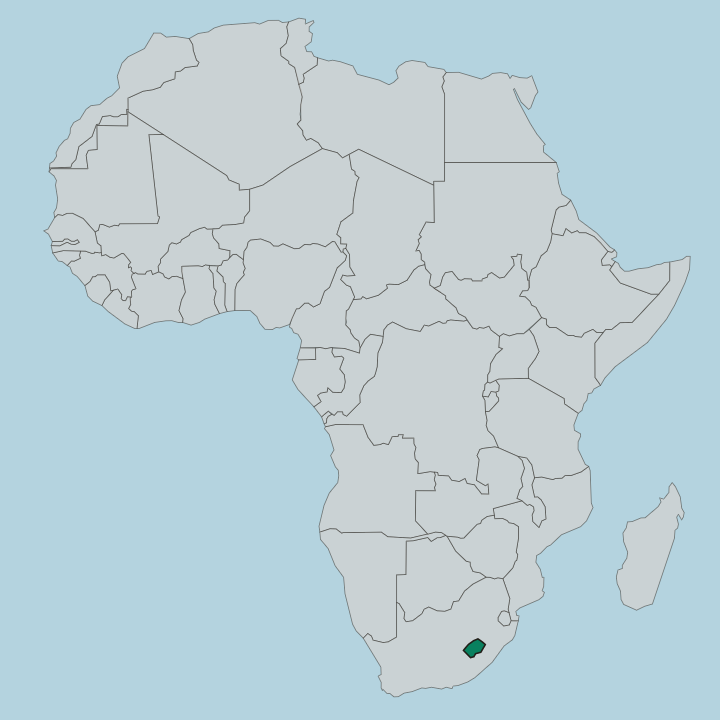
Lesotho is a landlocked kingdom encircled entirely by South Africa, set high in the Maloti Mountains, with Maseru as its capital.
Hotel links are affiliate links: booking through them may earn us a commission, at no extra cost to you. It never affects how places are ranked. How this works


Top destinations in Lesotho
One city to start from, then drill into its areas and hotels.

 Lesotho
Maseru
Maseru is the capital of Lesotho, a city on the Caledon River at the border with South Africa, its Sesotho name meaning red sandstones.Where to stay →
Hotel links are affiliate links: booking through them may earn us a commission, at no extra cost to you. It never affects how places are ranked. How this works
Browse by region
One region so far — open it to see its cities and towns.
About Lesotho
Lesotho earns its nickname, the Kingdom in the Sky.
What is Lesotho known for?
Every square kilometre sits above 1,000 metres, so even the lowlands around Maseru begin where other countries' mountains end. The high country holds the draws. Thabana Ntlenyana, the tallest peak in southern Africa, rises in the eastern Maloti Mountains, while the Maletsunyane Falls plunge from a basalt lip near Semonkong.
The engineered lakes of the Lesotho Highlands Water Project flood the deep interior valleys.
Where is Lesotho?
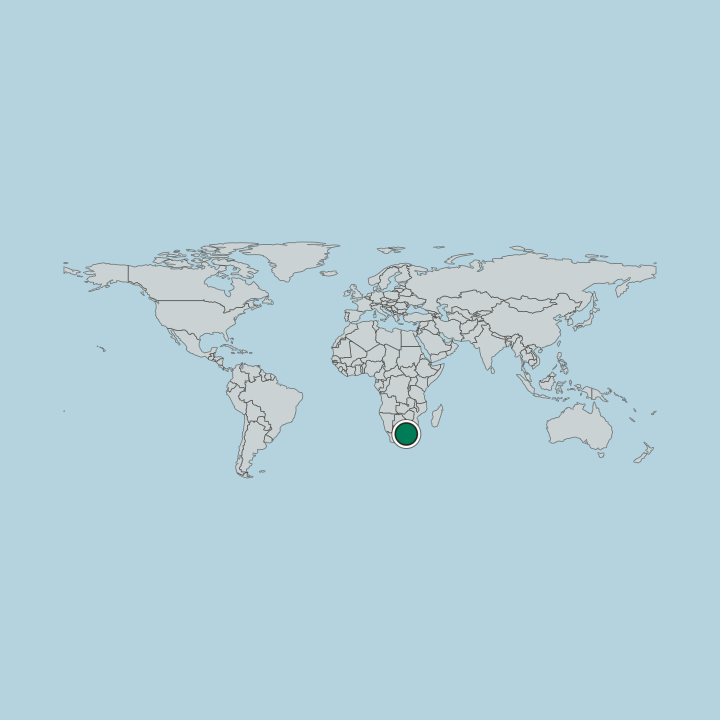
Lesotho is a landlocked country in southern Africa, surrounded on every side by South Africa, and it holds a distinction no other nation shares. Its lowest ground, where the Senqu river valley drops toward the border, still stands at 1,388 metres, higher than the floor of any other country on earth. The land divides into three belts.
A narrow strip of lowlands runs along the Caledon River in the west, where Maseru and most of the population sit; a band of foothills climbs behind it; and beyond those rise the highlands of the Maloti Mountains, which merge along the eastern rim with the great wall of the Drakensberg. The relief is the whole story here. Thabana Ntlenyana, the highest summit in southern Africa, crowns the eastern Maloti Mountains at 3,482 metres, and the ridgelines rarely fall away between the peaks.
Rivers begin up here. The Senqu, known downstream in South Africa as the Orange River, rises in the northern mountains and carves west and south across the country, gathering the meltwater and rain that the Lesotho Highlands Water Project now stores behind its dams. Deep gorges cut the basalt.
The Maletsunyane Falls drop nearly 192 metres in a single thread near Semonkong, one of the tallest single-drop waterfalls on the continent. From lowland riverbank to alpine ridge, the ground climbs relentlessly.
What is the history of Lesotho?
Lesotho traces its nationhood to a single mountain and a single king. In 1824 Moshoeshoe I led his followers onto Thaba Bosiu, a flat-topped sandstone stronghold whose sheer approaches could be defended by a handful of men. From that fastness he gathered scattered lineages and refugees, welding a Sotho identity out of a period of upheaval that had thrown the region's peoples into flight.
The plateau held. Waves of raiders and Boer commandos broke against its cliffs, and Moshoeshoe matched force with diplomacy, playing rivals against one another to keep his kingdom whole. Pressure from settlers pushing across the Caledon River finally drove him to seek British protection, and in 1868 his territory became a protectorate, its western farmlands already lost by treaty.
The Basotho kept their land through the colonial decades, unlike much of the region. Independence came on 4 October 1966, when the protectorate of Basutoland became the Kingdom of Lesotho, taking a royal name that reached straight back to the founder. Moshoeshoe still anchors the national story.
His grave crowns Thaba Bosiu, and the mountain remains the ceremonial heart of the country. From a defended hilltop to a sovereign kingdom, the thread is unbroken.
What is Lesotho like?
Lesotho is among the most ethnically unified countries anywhere, and the Basotho carry their identity in cloth and craft. The wool blanket is the clearest badge of all. Worn across the shoulders and pinned at the chest, it keeps the highland cold at bay and leaves the arms free for the reins of a surefooted Basotho pony, the animal that still moves people through country where roads give out.
Above the blanket sits the mokorotlo, the conical grass hat whose silhouette echoes a mountain peak and which stands on the national flag. Sesotho carries the culture in words. Praise poetry, proverbs, and song hand down history and lineage by mouth rather than by page, and the language remains the daily tongue of nearly everyone.
Food stays close to the mountain soil. Papa, a stiff maize porridge, anchors the plate beside moroho, the cooked wild greens gathered from the fields, with beans and a slow meat stew when there is one. Pony trekking, herding, and horse racing fill the highland calendar.
From the reins of a pony to the words of a praise poem, daily life and heritage run together.
What is the climate of Lesotho?
Altitude rules the weather across Lesotho. Summers from October to April are mild and green, when afternoon storms roll off the Maloti Mountains and feed the rivers. The cold season grips the Lesotho highlands fiercely.
Between June and August the highlands freeze, mornings drop below zero, and snow settles on the passes around Thabana Ntlenyana and the Drakensberg rim, making Lesotho one of the rare African countries with a reliable ski season. The lowlands near Maseru stay a touch warmer year round. Thin mountain air means sharp sun by day and cold nights in every season.
How do you get to Lesotho?
Most travellers reach Lesotho overland from South Africa. The busiest gateway is the Maseru Bridge crossing over the Caledon River, a short drive from Bloemfontein straight into the capital. Flights are sparse.
Moshoeshoe I International Airport, southeast of Maseru, is served mainly by the short hop from Johannesburg, so many visitors simply drive across a land border instead. For the eastern highlands, the steep gravel switchbacks of the Sani Pass climb from South Africa toward the Drakensberg and demand a four-wheel drive. Inside the country, mountain roads set the pace.
Good for
Updated September 2026