
Luxembourg: Regions, Cities & Travel Guide
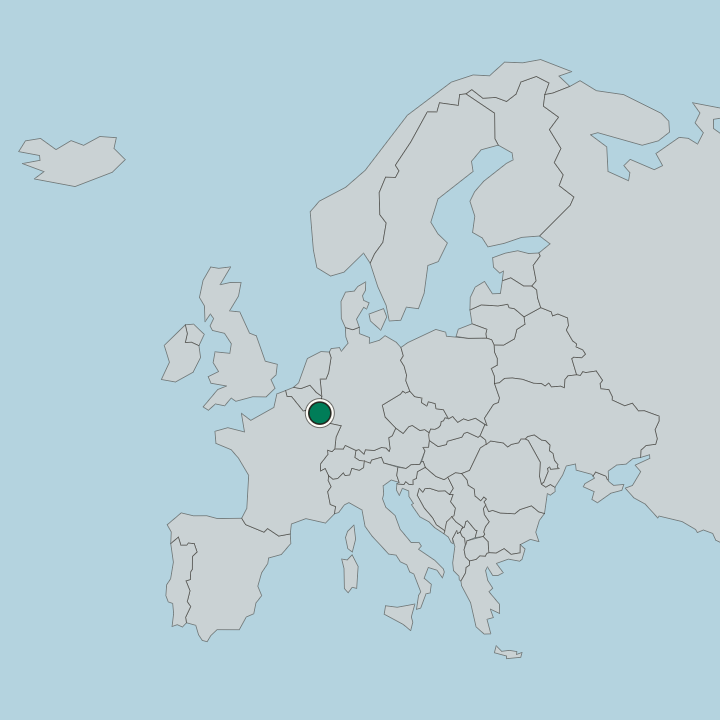
Luxembourg is a landlocked Grand Duchy in Western Europe, wedged between Belgium, Germany and France, ruled from its clifftop capital.
Hotel links are affiliate links: booking through them may earn us a commission, at no extra cost to you. It never affects how places are ranked. How this works


Top destinations in Luxembourg
One city to start from, then drill into its areas and hotels.
 Luxembourg
Luxembourg
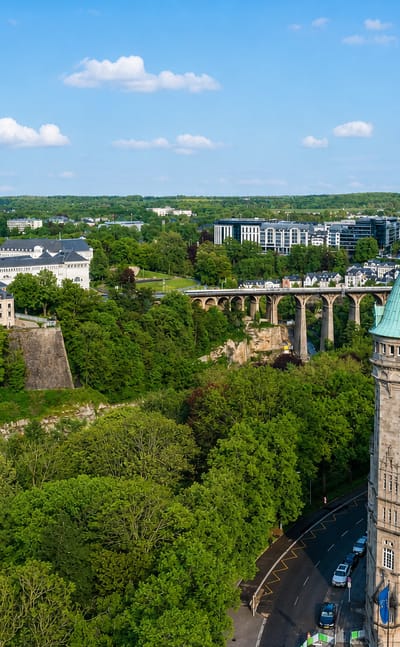
Sandstone ramparts ring the old town of Luxembourg, capital of the Grand Duchy, known for the Bock promontory and Notre-Dame Cathedral.Where to stay →
Hotel links are affiliate links: booking through them may earn us a commission, at no extra cost to you. It never affects how places are ranked. How this works
Browse by region
One region so far — open it to see its cities and towns.
Explore by experience
Not sure which place? Start from how you want to travel.
About Luxembourg
Few countries pack this much variety into so little ground.
What is Luxembourg known for?
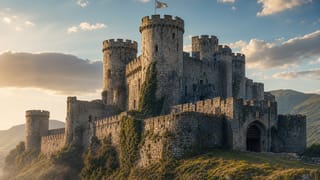
Luxembourg City rises on sandstone cliffs above the gorges of the Alzette, its old fortress casemates cut straight down into the living rock and now walkable. North of it the wooded plateaus of the Oesling climb toward the Ardennes, crowned by the medieval bulk of Vianden Castle. South and east the land softens into vineyards along the Moselle and the eroded sandstone ravines of the Mullerthal.
You cross it in an hour. You remember it for years.
Where is Luxembourg?
Luxembourg is one of Europe's smallest sovereign states, and its map splits cleanly in two. The northern third, the Oesling, belongs to the Ardennes massif that spills over from Belgium and Germany, a country of high wooded plateaus cut by steep river valleys where towns like Wiltz and Clervaux shelter in the folds. This is the rougher and emptier half, cooler too.
The southern two-thirds form the Gutland, the "good country", a lower and more fertile landscape of sandstone plateaus, marl depressions and open farmland that carries most of the population and nearly all the cities. Rivers order the whole of it. The Alzette threads north through the capital, having carved the deep gorges that made Luxembourg City defensible, before joining the Sûre.
Along the eastern border the Moselle marks the frontier with Germany and warms enough south-facing slopes to ripen the country's white-wine vineyards. In the east the Gutland throws up its strangest terrain: the Mullerthal, a maze of eroded sandstone cliffs, ravines and mossy gorges that earns its nickname of Little Switzerland. The far south, the old Terres Rouges or red-earth belt around Esch-sur-Alzette, was mined for iron ore that built the nation's fortunes.
Small as it is, the country changes underfoot every few kilometres.
What is the history of Luxembourg?
Luxembourg began with a single rock. In 963 Count Siegfried acquired a small ruined Roman fort on the Bock promontory above the Alzette, called Lucilinburhuc, the "little fortress" that gave the country its name. Around that stronghold a town, a county and eventually a European power grew.
Its position at the crossroads of Latin and Germanic Europe made the fortress irresistible to greater neighbours, and over the centuries Burgundians, Habsburgs, the French, the Spanish and the Prussians each garrisoned and enlarged it until it ranked among the strongest defences on the continent, the so-called Gibraltar of the North. That strength was also a curse. In 1815 the Congress of Vienna raised Luxembourg to a Grand Duchy but tied its crown to the Dutch king, and a first Treaty of London in 1839 split away its French-speaking western half to Belgium, fixing the modern borders.
A second Treaty of London settled the rest in 1867. Under it the great powers guaranteed Luxembourg's independence and perpetual neutrality, and the fortifications that had defined the capital for nine centuries were ordered dismantled. Freed of its walls, the country reinvented itself.
Iron ore in the southern Terres Rouges drove an industrial boom, and after two German occupations in the world wars, this small state became a founding member of the European project, its capital now one of the seats of the European Union.
What is Luxembourg like?
Luxembourg runs on three tongues at once. Luxembourgish, a Moselle-Franconian language, is what people speak at home and in the street; French carries law and administration; German dominates the press and the classroom. Children move between all three before they finish school, and roughly half the country's people are foreign-born, which makes the mix even broader.
The result is a small nation entirely at ease speaking to the rest of Europe. That crossroads shows up at the table. The national dish, Judd mat Gaardebounen, pairs smoked pork collar with broad beans in a rich stock, hearty country cooking born of a farming past.
Along the Moselle the vineyards turn out crisp Rieslings, Pinot Gris and the sparkling Crémant that locals drink at every celebration. Tradition still marks the calendar in vivid ways. Each spring the town of Echternach holds its Dancing Procession, a hopping pilgrimage in honour of Saint Willibrord that has drawn the faithful for centuries and is recognised by UNESCO.
Festivals, wine harvests and castle fairs fill the warmer months. Old and new sit side by side here, from medieval abbeys to the glass institutions of Kirchberg, without any sense of contradiction.
What is the climate of Luxembourg?
Luxembourg has a temperate oceanic climate shaped by Atlantic winds. Rain comes in every season. Summers stay mild and green, and winters are cool and grey rather than harsh, though the higher plateaus of the Oesling turn genuinely cold and see snow far more often than the sheltered Gutland below.
The Moselle valley, warmed on its south-facing slopes, runs a touch milder and drier, which is exactly why the vineyards thrive along it. Autumn is the country at its finest, when the vines and the Ardennes forests colour.
How do you get to Luxembourg?
Most visitors arrive through Luxembourg Airport at Findel, the country's only commercial airport, a short ride east of the capital. Trains and roads link the city onward to Brussels, Paris and the German Rhineland, so many travellers reach the Grand Duchy overland from neighbouring hubs. The country is tiny.
Once you are in, nationwide public transport, buses and trains alike, carries you free of charge to almost every town. From the capital you can be among the Moselle vineyards or below Vianden Castle within the hour.
Good for
Updated September 2026