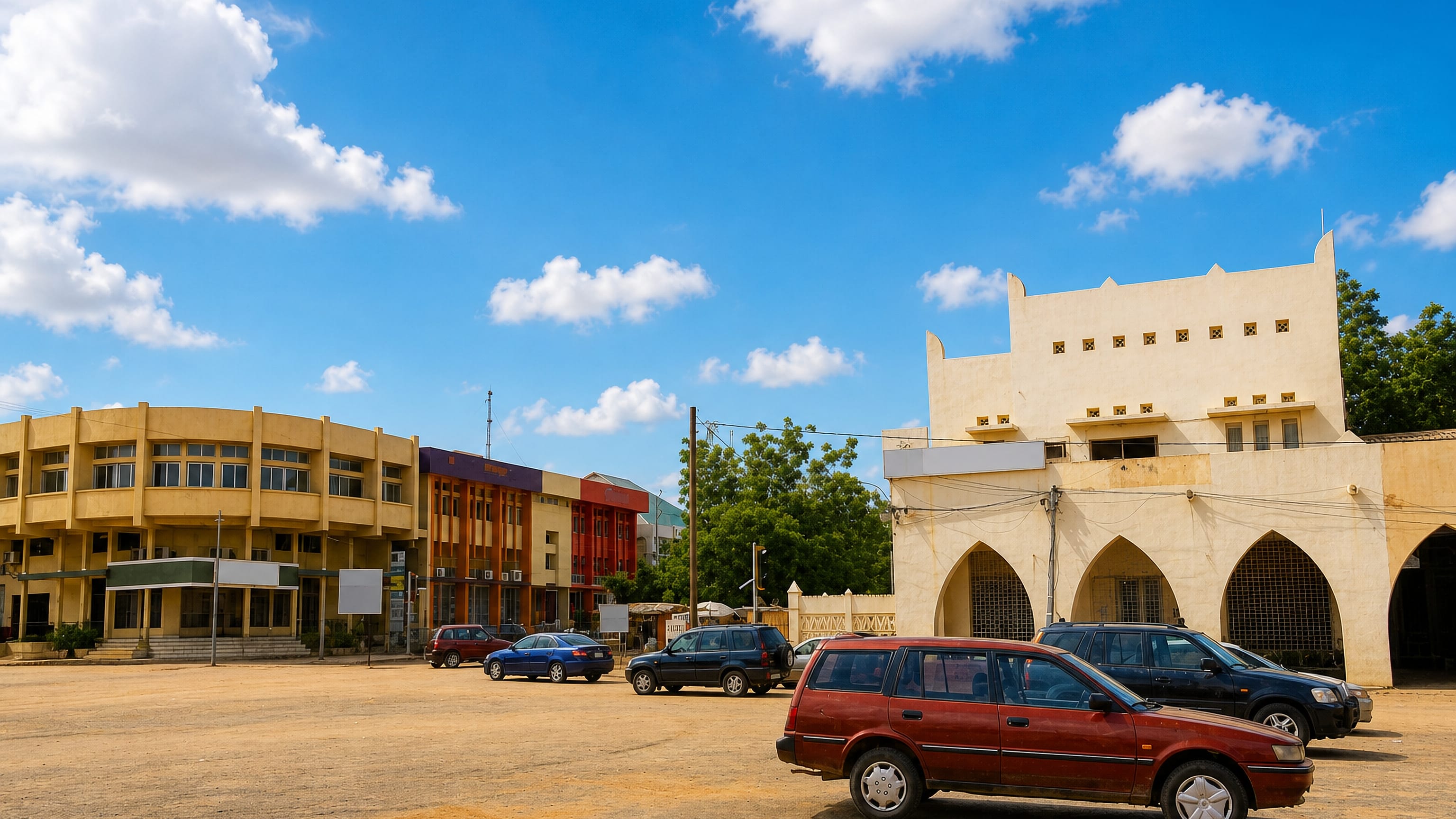
Niger · Maradi
Where to Stay in Maradi
Maradi is the administrative centre of Niger's Maradi Region, a trading city on ground running north from Kano and Katsina over the Nigerian border.
Hotel links are affiliate links: booking through them may earn us a commission, at no extra cost to you. It never affects how places are ranked. How this works


Where to stay in Maradi
Where visitors usually base themselves, and why.
Maradi or Niamey, that is the whole of the choice. Anyone whose reason for coming is the border trade toward Kano and Katsina, or business with the offices that run the Maradi Region and the Maradi Department, wants a bed in the city itself rather than a long haul out from the capital each time. Rooms here serve traders and officials first.
The city is counted among the prosperous ones of the Republic of Niger, and beds follow that trade, but they are pitched at people who arrived to do something rather than at people who arrived to look at something. Niamey answers a different question. As the national capital it carries the wider range, and a traveller who wants choice will find more of it there, yet every night spent in Niamey is a night spent away from the frontier that gives Maradi its reason to exist.
The distances do not shrink. Splitting a week between the Urban Commune of Maradi and the crossings toward Kano and Katsina works far better from a base in Maradi than from anywhere else, and the reverse holds for anyone whose real interest lies in Niamey with Maradi as a single leg of a longer route. Choose by where the days will be spent.
If you are here for the frontier and its commerce, stay in Maradi; if you are here for the country at large, Niamey is the sounder base and Maradi becomes a stop rather than a home.
Find hotels in Maradi
Direct booking searches for these neighbourhoods.
Maradi
The city's own streets, second in the Republic of Niger only to Niamey, where the frontier trade sets the working day.Find hotels in Maradiarrivals from outside Niger treating Maradi as one leg of a longer routeNiamey
The capital, wider in range than Maradi and the usual first stop, though a long way from the Nigerian frontier.Find hotels in NiameyHotel links are affiliate links: booking through them may earn us a commission, at no extra cost to you. It never affects how places are ranked. How this works
About Maradi
Trade is the plain answer.
What is Maradi known for?
Maradi ranks behind only the capital, Niamey, among the cities of the Republic of Niger, and it holds that rank on the strength of goods moving back and forth across the frontier with Nigeria, where Kano and Katsina sit almost directly below it. Both the Maradi Region and the Maradi Department take their names from the city. Both are run from here.
Sources differ over whether Maradi is the country's second or third city, but none of them disputes that it is among the most economically prosperous.
What are the main landmarks in Maradi?
Maradi has no signature building. The sources that describe the city set down its rank, its administration, and its commerce rather than any single building, so a visitor arriving with a list of sights will find that list short. Function stands in for spectacle.
Maradi is the seat of the Maradi Region, the seat of the Maradi Department beneath it, and an Urban Commune in its own right, and those three roles overlap across one set of streets. The crossings toward Kano and Katsina shape a day here more than any monument would.
What is the history of Maradi?
Maradi's beginnings are poorly documented. No founding year attaches to Maradi in the sources that describe it, and what they set down instead is the administrative shape the city has taken: centre of the Maradi Region, seat of the Maradi Department, and an Urban Commune with standing of its own. Those layers belong to the Republic of Niger's division of its territory.
The name runs through all three. Region, department, and commune all carry the word Maradi, which is the clearest sign the sources give that the city came before the boundaries drawn around it. Growth is the other thread.
Maradi has become the second city of the country, ahead of every centre except Niamey, and the counts that different sources publish disagree enough that some place it second and others third, a disagreement that says something about how fast the city outran its own record-keeping. Prosperity followed the same line. Among the cities of Niger this one is reckoned a commercial success, and the reason sits south of it, where the frontier with Nigeria and the pull of Kano and Katsina beyond turned this stretch of country into a place where goods move rather than merely pass.
None of that is ancient. It is the making of a city whose earlier centuries the available record does not reach.
Where is Maradi?
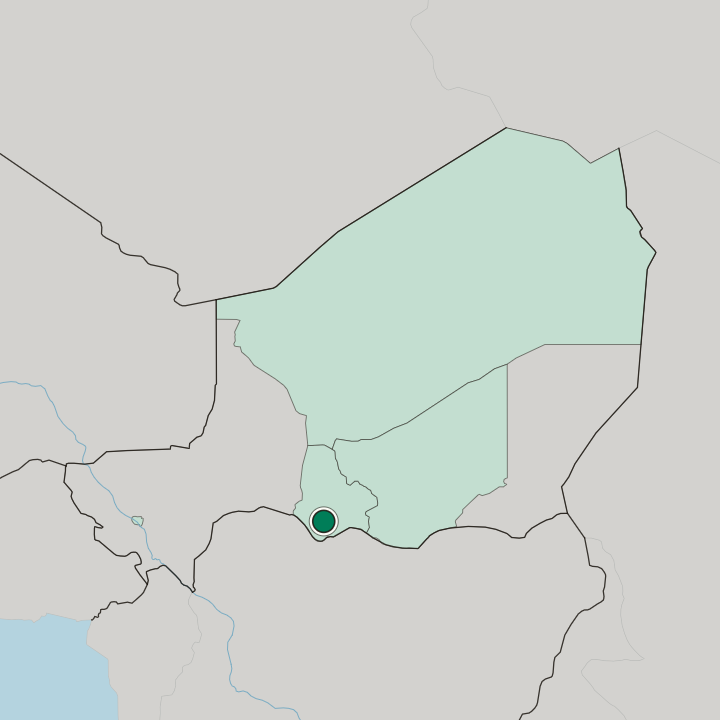
Maradi stands inland. Kano and Katsina lie almost directly below the city across the frontier with Nigeria, and those two are the markers the sources reach for whenever they try to fix where Maradi sits at all. The region around it carries its name.
The Maradi Region takes in only a short stretch of the country's border with Nigeria, which makes this a corridor rather than a broad hinterland, and the city works as the administrative point on it. No river or coast appears in the record.
What is the climate of Maradi?
Heat runs through the whole Maradi year. Maradi lies inside the tropics and north of the equator, so the year divides into wet and dry rather than into warm and cold, and the northern half of the calendar governs the seasons here. No sea moderates any of it.
Nothing in the record puts a coast or a river near the city, and the open ground running south toward Kano and Katsina gives the air little to work against, which leaves position and season doing the work that water does elsewhere.
How do you get to Maradi?
Everyone comes to Maradi by road. The sources describing Maradi name no airport, no rail line, and no terminal, what they give is the city's position against two fixed points, the Nigerian towns of Kano and Katsina below the frontier, and Niamey, the capital, where journeys from outside Niger tend to start. Both approaches matter.
Movement between Maradi and the Kano and Katsina side of that border is the reason the city is counted a prosperous one, and a traveller reaching it will be following one of those two lines rather than any third.
Common questions
What is the best area to stay in Maradi?
Maradi: traders working the Kano and Katsina crossings and callers at the Maradi Region offices. Niamey: arrivals from outside Niger treating Maradi as one leg of a longer route.
Updated September 2026