Oman · Muḩāfaz̧at ad Dākhilīyah
Where to Stay in Bahlā’, Muḩāfaz̧at ad Dākhilīyah
Bahlā' is a fortified oasis town in northern Oman, built around Bahla Fort, the country's first UNESCO-listed fort, added in 1987.
Hotel links are affiliate links: booking through them may earn us a commission, at no extra cost to you. It never affects how places are ranked. How this works


Where to stay in Bahlā’
Where the beds are, and what that means for the visit.
Bahla Fort decides it. The walls are the reason people come to Bahlā', and a bed within sight of them turns the fort from a stop on a day trip into something walkable at the hours when the light and the heat are both on your side. The oasis is small.
This is a working town rather than a resort, so the choice is less about districts than about how far from the fort a room sits and whether the drive back across the interior at night is one worth making. Jabrin is the other pull. Travellers pairing the two landmarks often prefer a base that keeps both within a short run rather than one that favours the fort alone, which argues for the outer edge of the town over its oldest lanes.
Pottery belongs to the same trip. Bahlā' is known for the craft, so a stay long enough to watch it made is a different proposition from an overnight between drives. Plan ahead. Muḩāfaz̧at ad Dākhilīyah is interior country at the foot of the Jebel Akhdar highlands, and a room here is worth arranging before arrival rather than after it.
Find hotels in Bahlā’
Direct booking searches for these neighbourhoods.
The lanes under Bahla Fort
The oldest ground of the town gathers directly beneath Bahla Fort, which puts the walls and the oasis palms a few minutes from the door.Find hotels in The lanes under Bahla FortTrips taking Bahla Fort and Jabrin in a single run across the interiorThe Jabrin edge of town
The outer streets shorten the drive to Jabrin while keeping the fort and the potters of Bahlā’ inside an easy return.Find hotels in The Jabrin edge of townHotel links are affiliate links: booking through them may earn us a commission, at no extra cost to you. It never affects how places are ranked. How this works
About Bahlā’
Pottery and mud brick.
What is Bahlā’ known for?
Bahlā' is known for a distinctive local style of pottery and for the immense 14th-century mass of Bahla Fort, which rises at the foot of the Jebel Akhdar highlands and was the first fort in Oman that UNESCO added to its list. Jabrin is the second landmark named with it. Together they make Muḩāfaz̧at ad Dākhilīyah a province people cross the interior for, and the oasis around the walls supplies the water that made a town possible at all.
What are the main landmarks in Bahlā’?
The 14th-century bulk of Bahla Fort is one of four historic fortresses at the foot of the Jebel Akhdar highlands, and it was the first fort in Oman that UNESCO added to its list, in 1987. Mud brick at scale. Jabrin is the second name attached to the town, and the pottery of Bahlā' is the third thing Muḩāfaz̧at ad Dākhilīyah is known for at this end of the interior.
What is the history of Bahlā’?
Walls came out of mud. Bahla Fort was raised in the 14th century from earth and brick rather than cut stone, and its survival is why a small town in the Omani interior is discussed at all beyond the province it sits in. The oasis paid for the walls.
A fortified settlement this far inland needed water before it needed defences, and the palms of Bahlā' supplied the first while the fort supplied the second. Recognition came late. In 1987 UNESCO entered Bahla Fort on its list, the first fort in Oman to be added there, and the inscription put an interior oasis on a register otherwise dominated by far larger sites.
Jabrin belongs to the same story. It is the other landmark named with the town, and the pair marks Muḩāfaz̧at ad Dākhilīyah as fortress country rather than coast. Potters kept working through all of it.
The style of pottery the town is known for is a living craft rather than a museum exhibit, and it has outlasted every phase of the fort's own history. Four historic fortresses stand at the foot of the Jebel Akhdar highlands, and Bahla is the one that was listed first.
Where is Bahlā’?
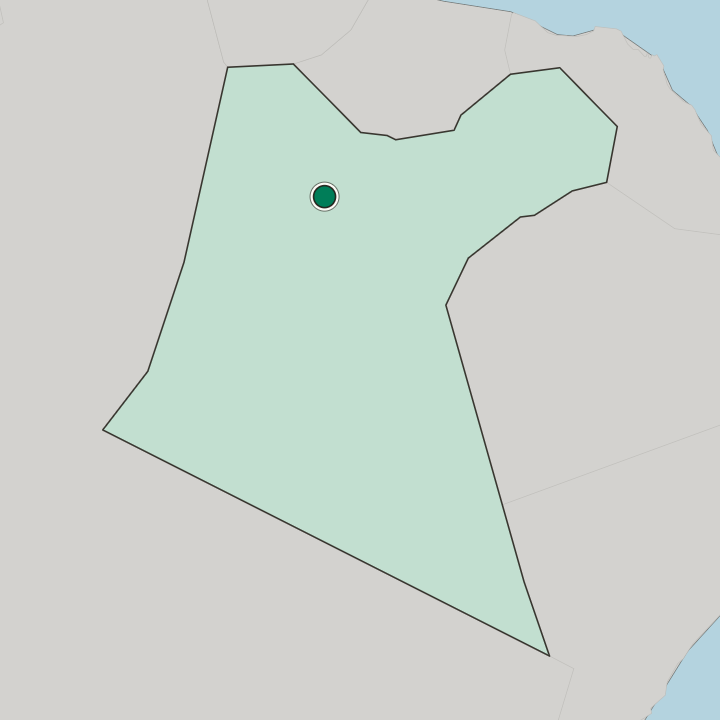
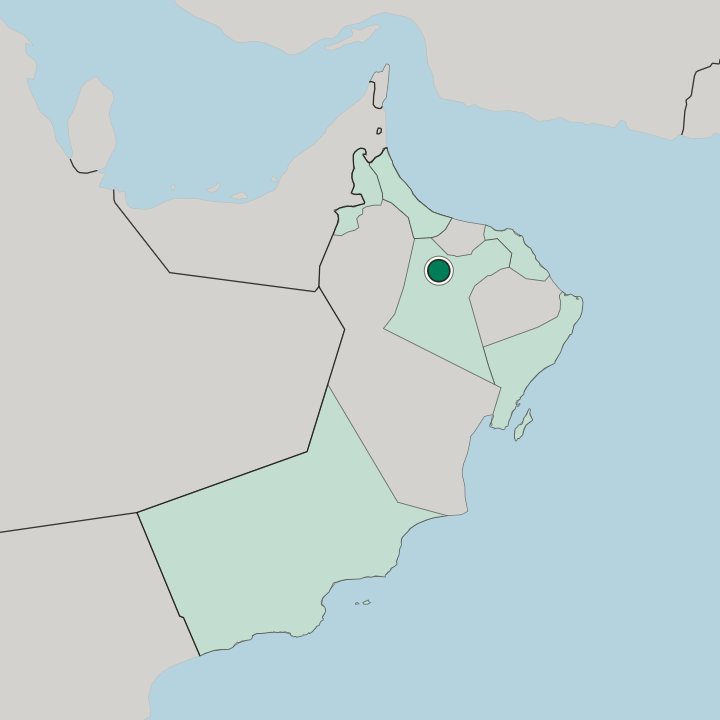
Bahlā' sits inland. The town lies in the interior of northern Oman at the foot of the Jebel Akhdar highlands, and the oasis is what makes settlement possible at this distance from the sea. Palms mark the ground.
Muḩāfaz̧at ad Dākhilīyah is the province around it, tropical in band but dry in character, and the belt of fortresses running along the base of those highlands follows the same line of water that the town does.
What is the climate of Bahlā’?
The Jebel Akhdar highlands set the terms. Bahlā' sits at their foot in the tropical band north of the equator and a long way from any coast, which leaves the town to the temper of the interior rather than to sea air. Shade is the oasis's other job.
Palms and mud-brick walls do more for a midday hour here than anything the sky offers, and Bahla Fort rewards an early start far better than an afternoon one.
How do you get to Bahlā’?
Roads cross the interior to reach it. Bahlā' lies inland in Muḩāfaz̧at ad Dākhilīyah at the foot of the Jebel Akhdar highlands, so arrival means a drive across northern Oman rather than an approach along the sea. Jabrin is the usual second stop.
Most trips take the two landmarks in one run, which means the road between them does more work than any single approach into the town does.
Common questions
What is the best area to stay in Bahlā’?
The lanes under Bahla Fort: Reaching the 14th-century fort walls on foot before the sun is high. The Jabrin edge of town: Trips taking Bahla Fort and Jabrin in a single run across the interior.
Another city in Muḩāfaz̧at ad Dākhilīyah
Updated September 2026