Oman: Regions, Cities & Travel Guide
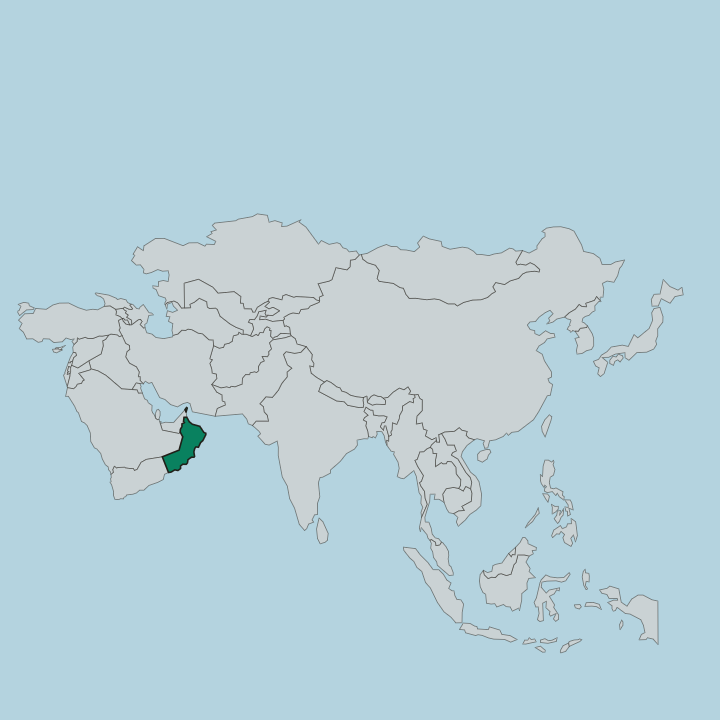
Oman occupies the south-eastern corner of the Arabian Peninsula, from the Hajar peaks to the Dhofar coast, with Muscat as its capital.
Hotel links are affiliate links: booking through them may earn us a commission, at no extra cost to you. It never affects how places are ranked. How this works


Top destinations in Oman
Cities to start from, then drill into areas and hotels.
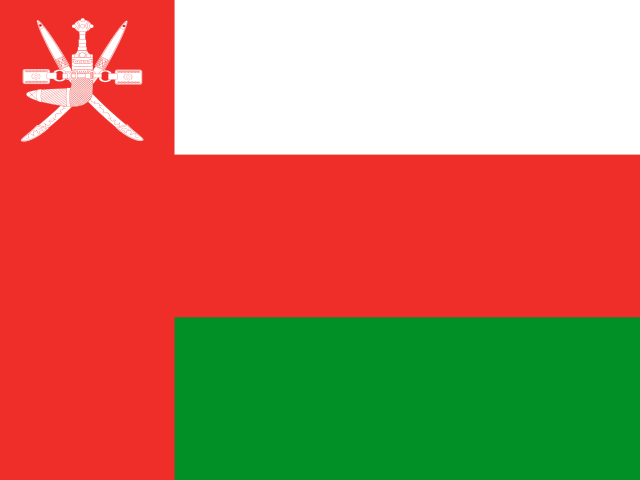 Oman
Oman
Muscat
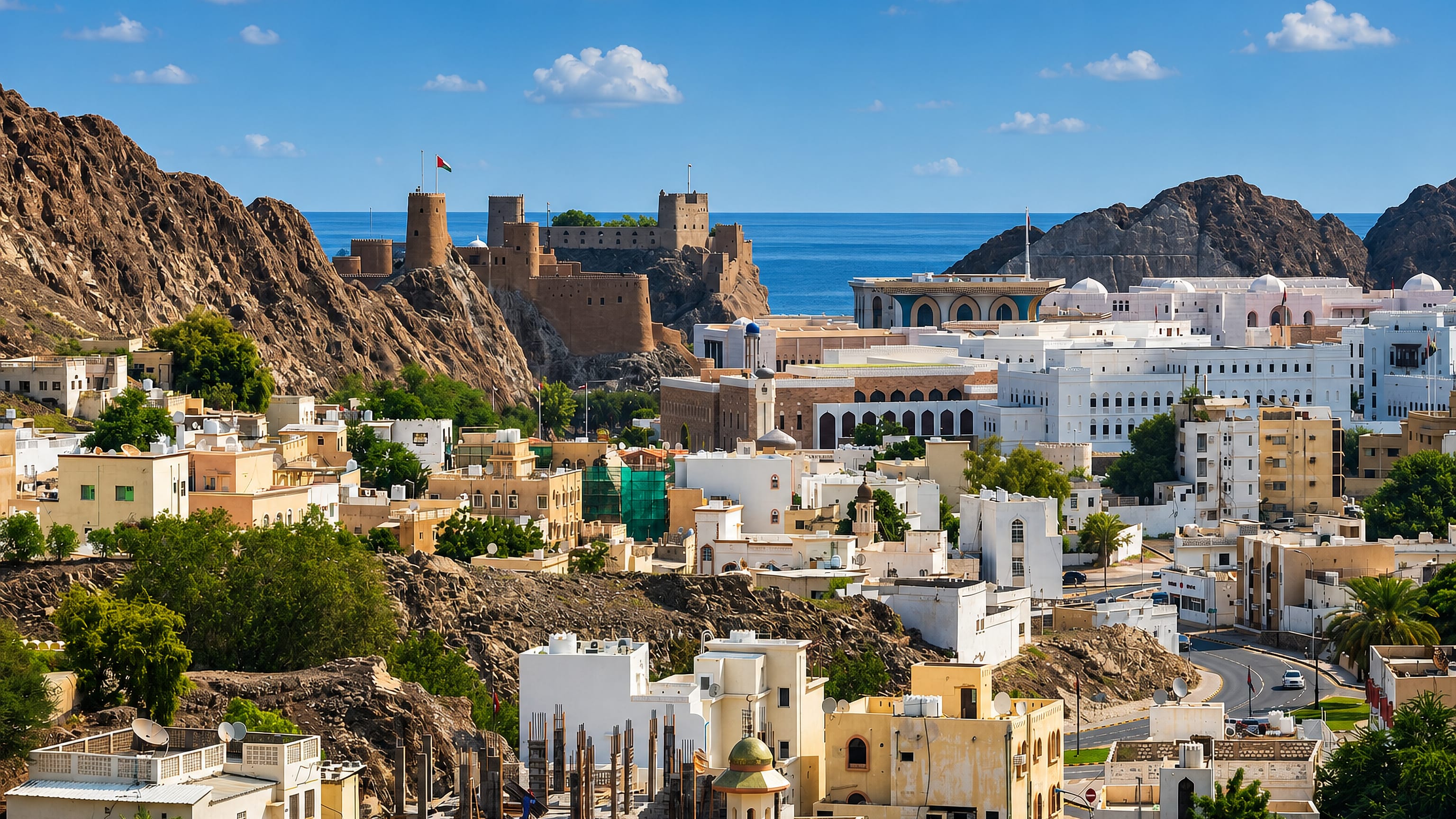
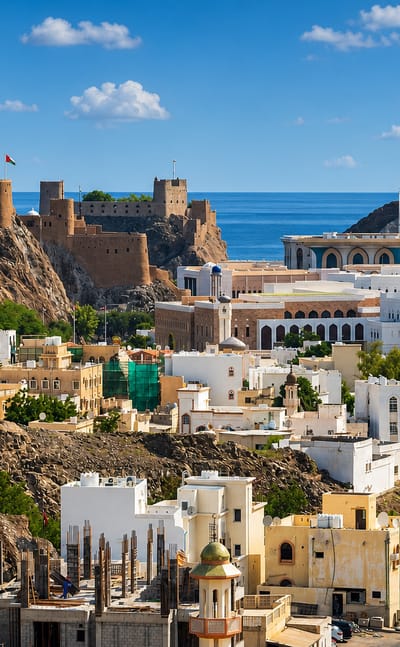
Low white buildings press between the Hajar Mountains and the Gulf of Oman at Muscat, capital of Oman, known for Fort Al Jalali and the Muttrah harbour.Where to stay →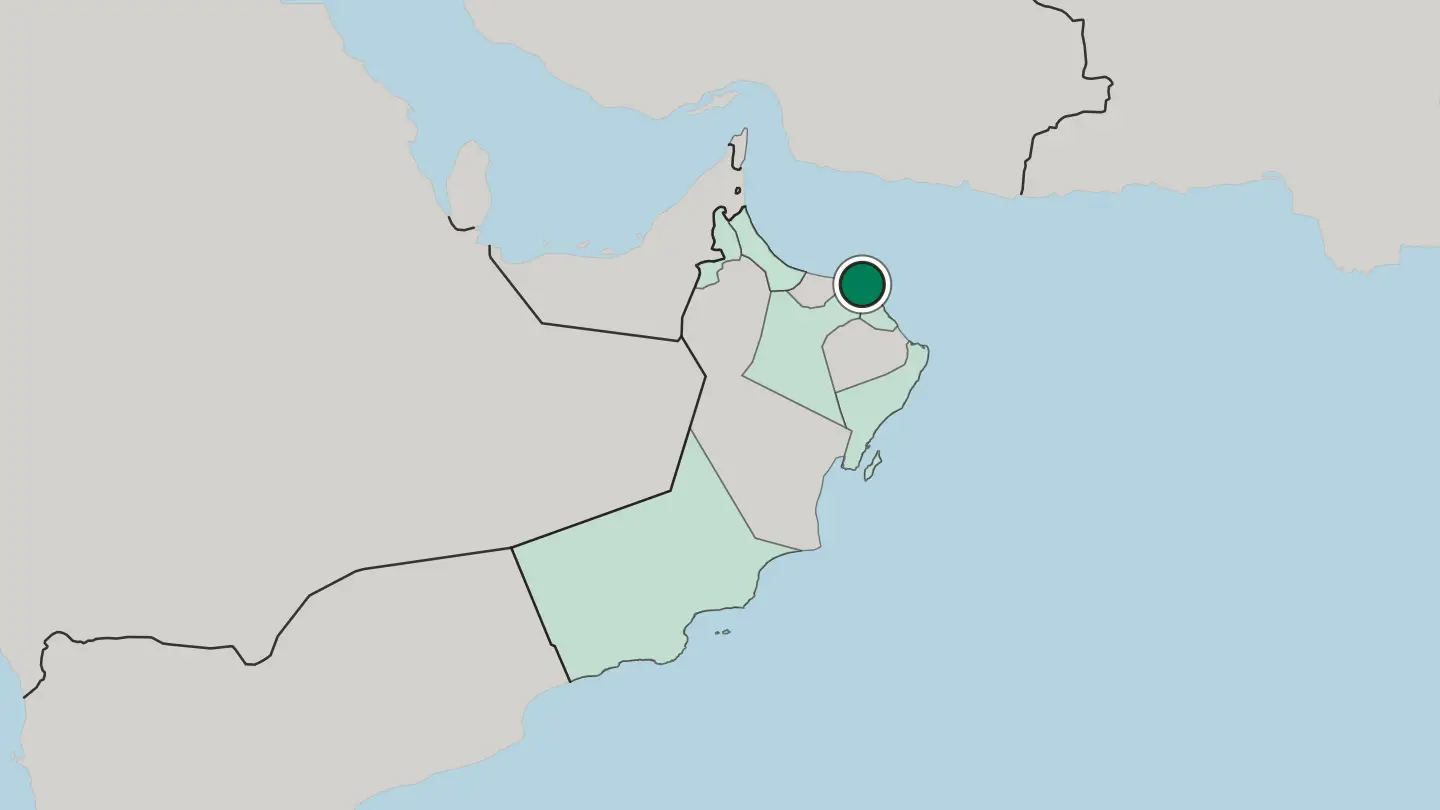
 Oman
Oman
Şalālah
Salalah is a city of Dhofar in south Oman on the Arabian Sea, old capital of the frankincense trade, greened each summer by a monsoon unique in Arabia.Where to stay →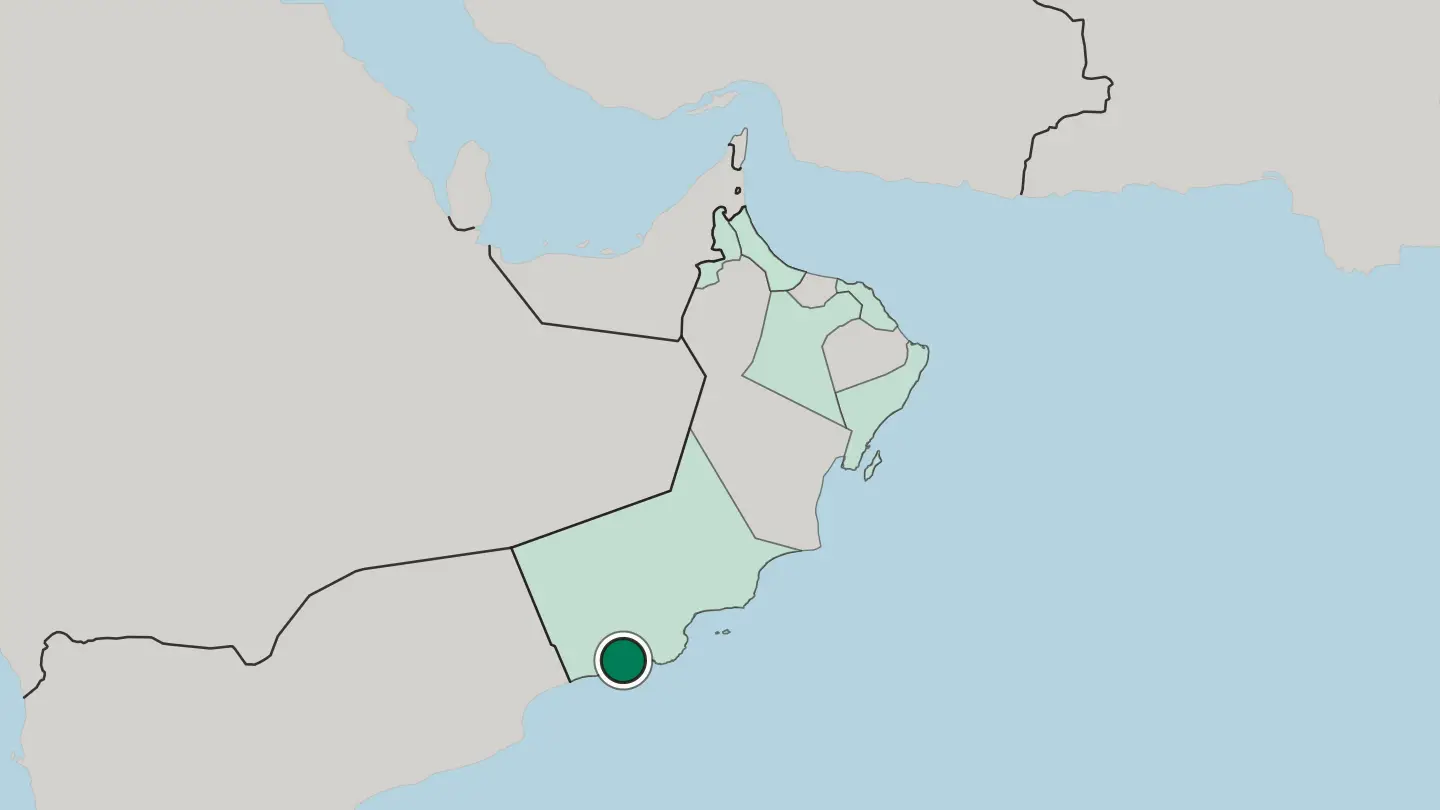 Oman
Oman
Sohar
Sohar is a city of northern Oman on the Gulf of Oman, an old sea port of the Batinah coast, remembered as the port of Sinbad and a land of ancient copper.Where to stay →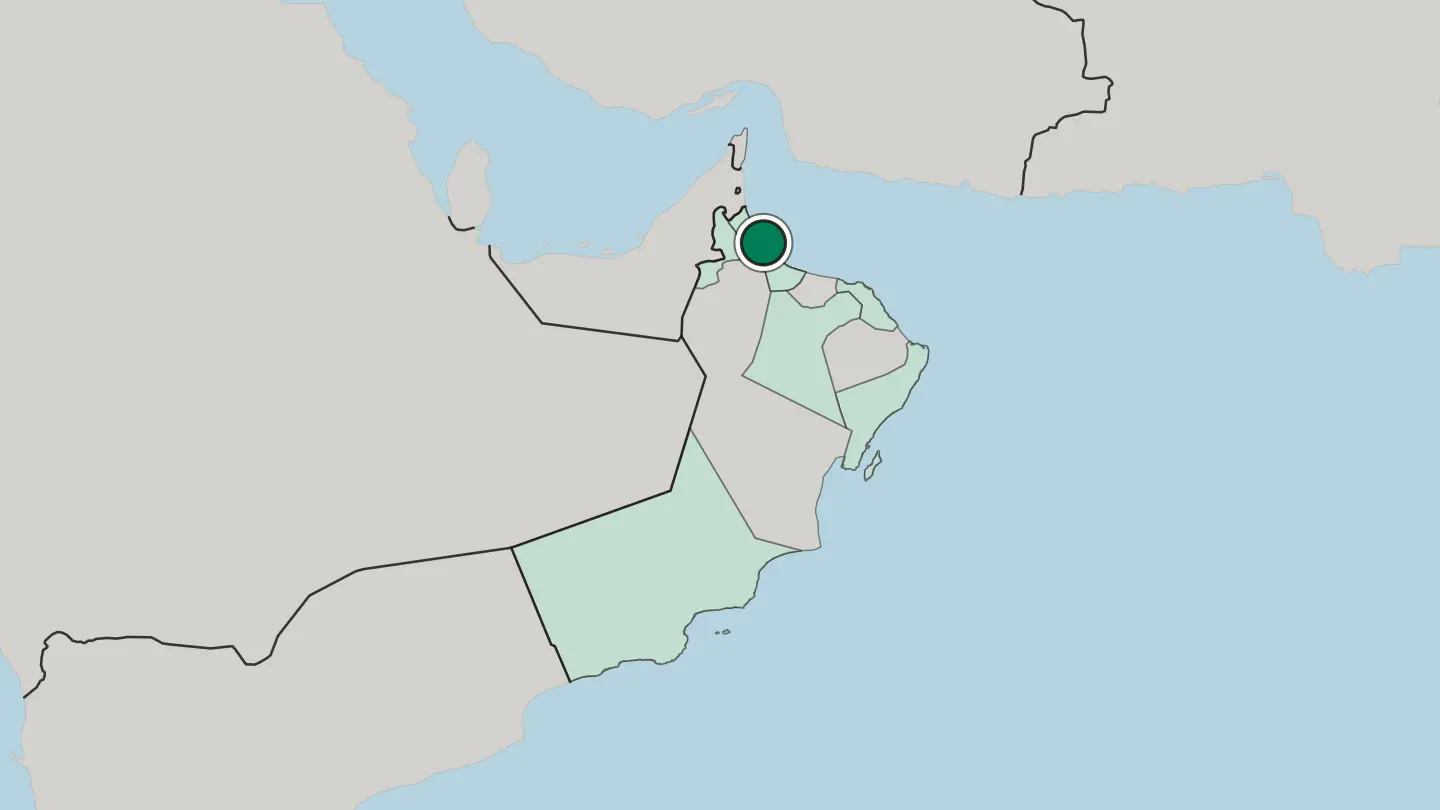
 Oman
Oman
Nizwá
Nizwa is an old inland city of Oman, once the capital of the interior, famed for its great round fort and its date-palm oasis below Jebel Akhdar.Where to stay →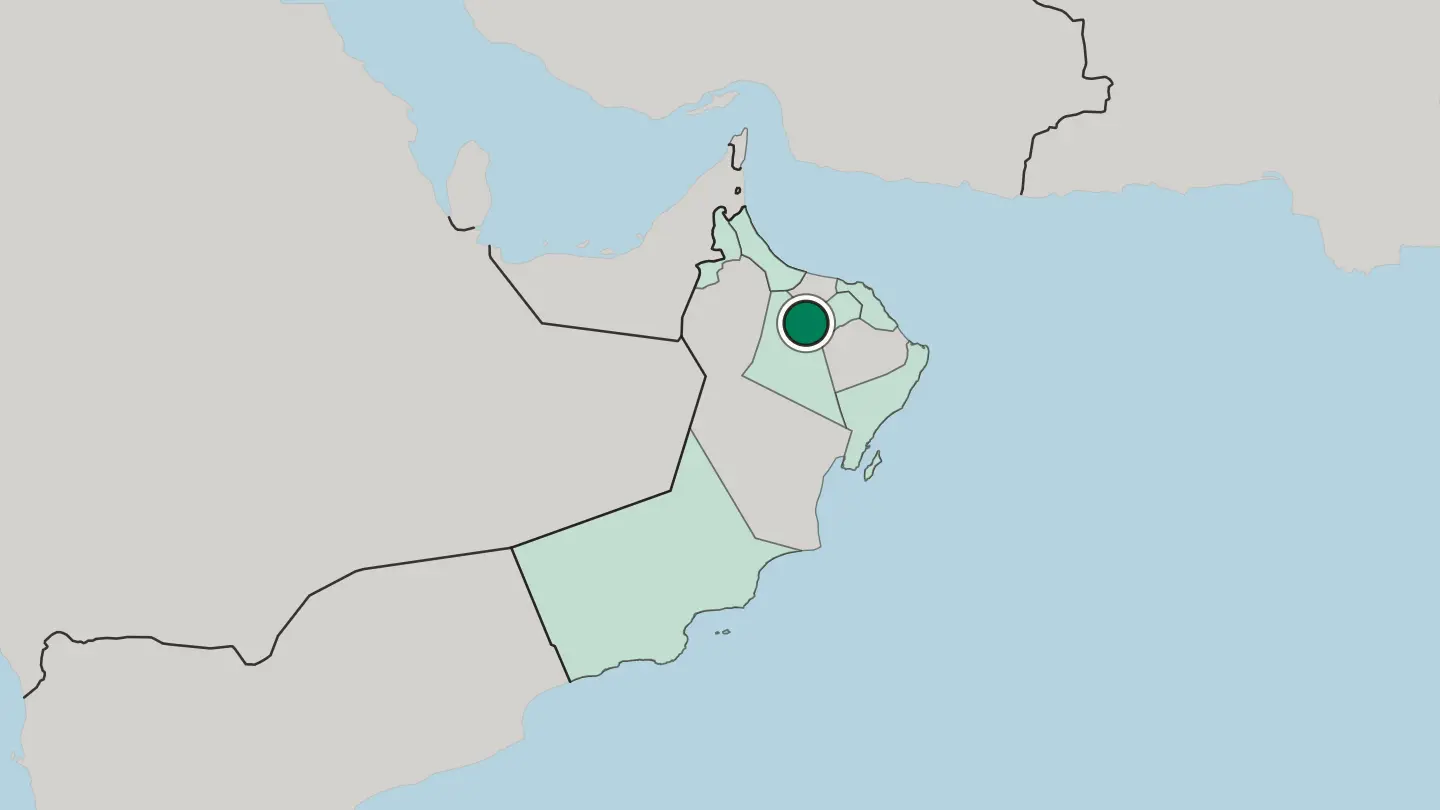
 Oman
Oman
Sur
Sur is the capital of Ash Sharqiyah South Governorate on the Gulf of Oman coast, a shipbuilding city known for its dhow yards.Where to stay →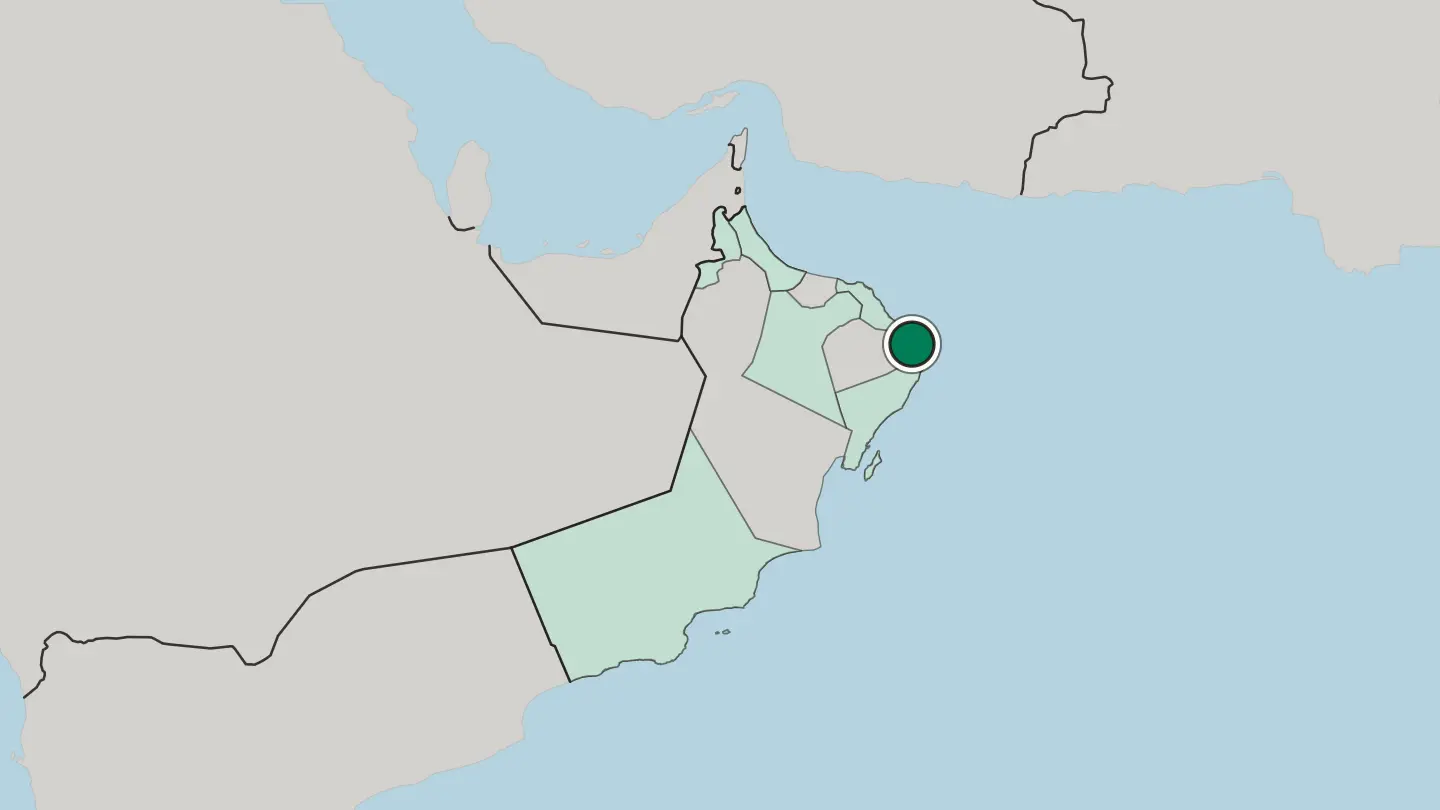
 Oman
Oman
Seeb
Seeb is a coastal fishing province in northeastern Oman, lying along the shore northwest of Muscat and marked by As Sib Fortress.Where to stay →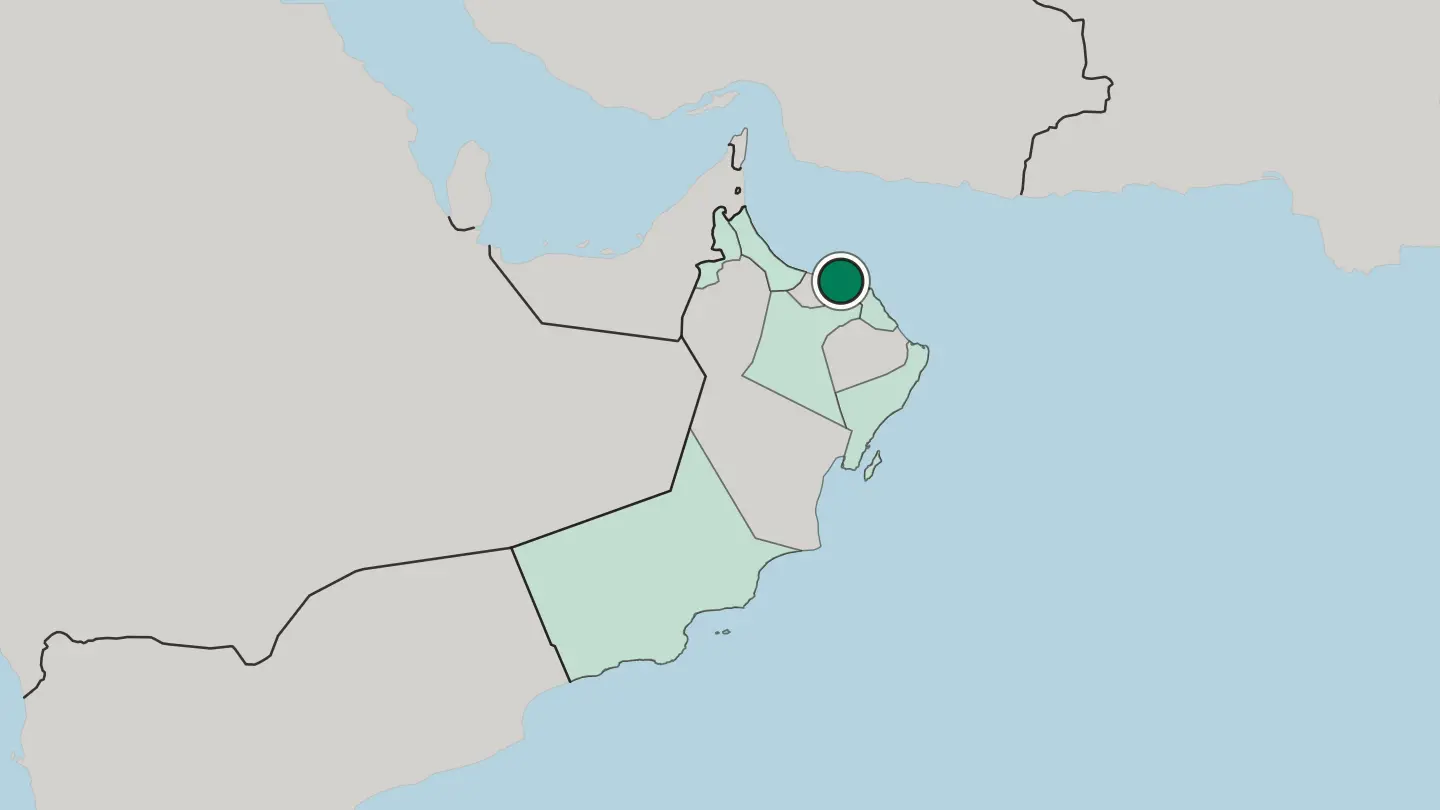 Oman
Oman
Rustaq
Rustaq is a town in the Western Hajar Mountains of northern Oman, once the country's capital, guarded by Rustaq Fort and Al Hamz Castle.Where to stay →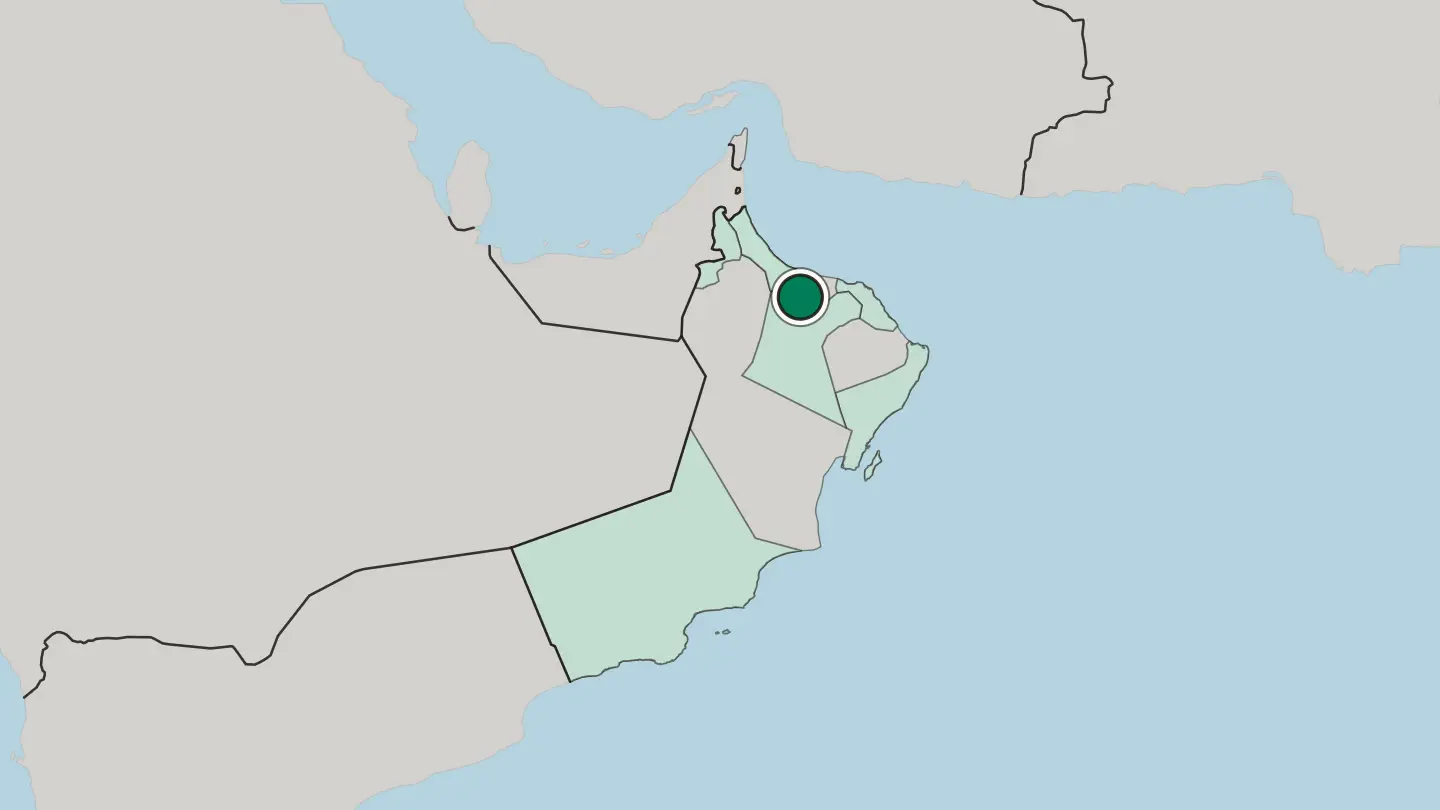 Oman
Oman
Al Buraymī
Al Buraymī is an oasis city in northern Oman, capital of its own governorate, standing on the frontier beside Al Ain in the United Arab Emirates.Where to stay →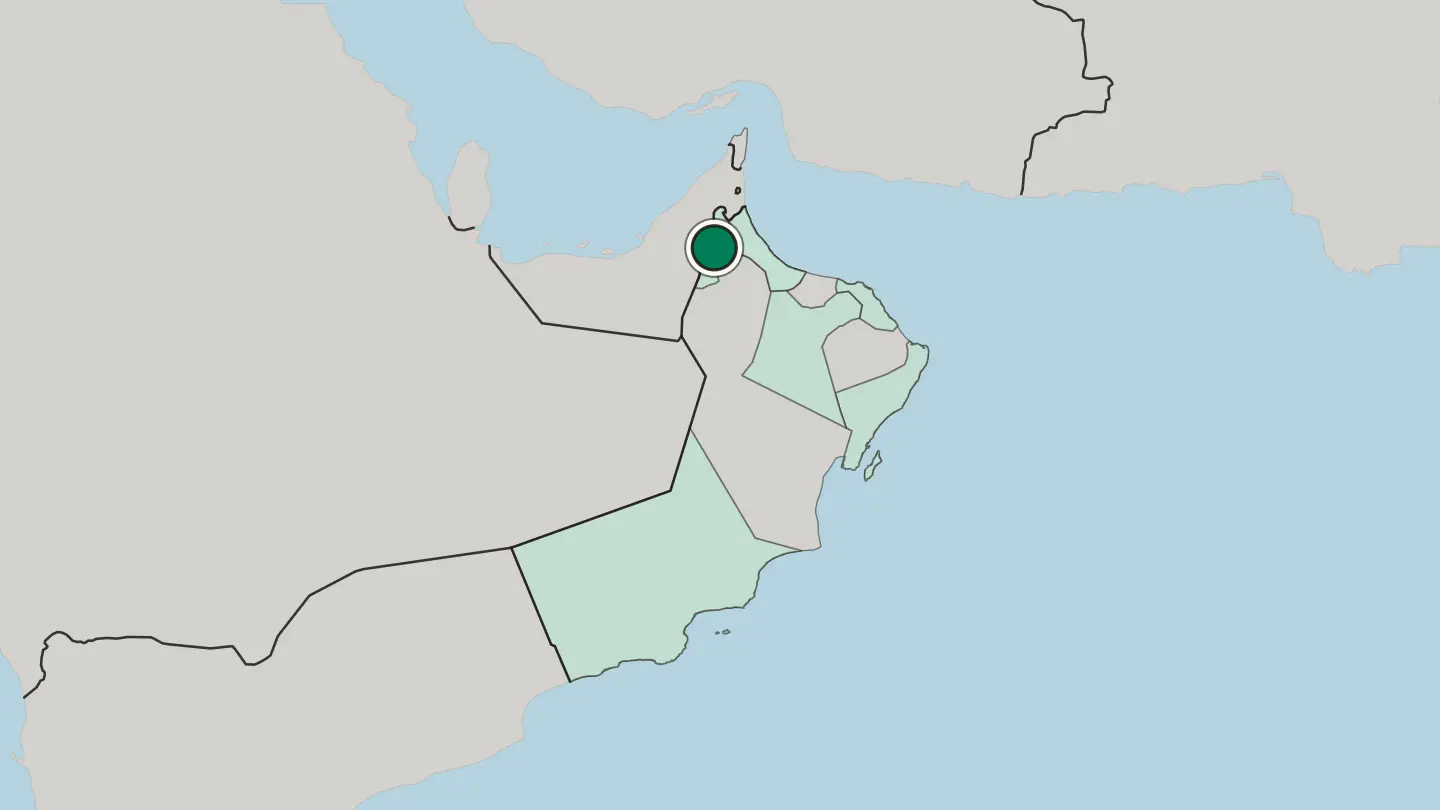
 Oman
Oman
Barkā’
Barkā' is a coastal city in northern Oman, between the Sea of Oman and the Hajar Mountains, about half an hour's drive from As-Seeb.Where to stay →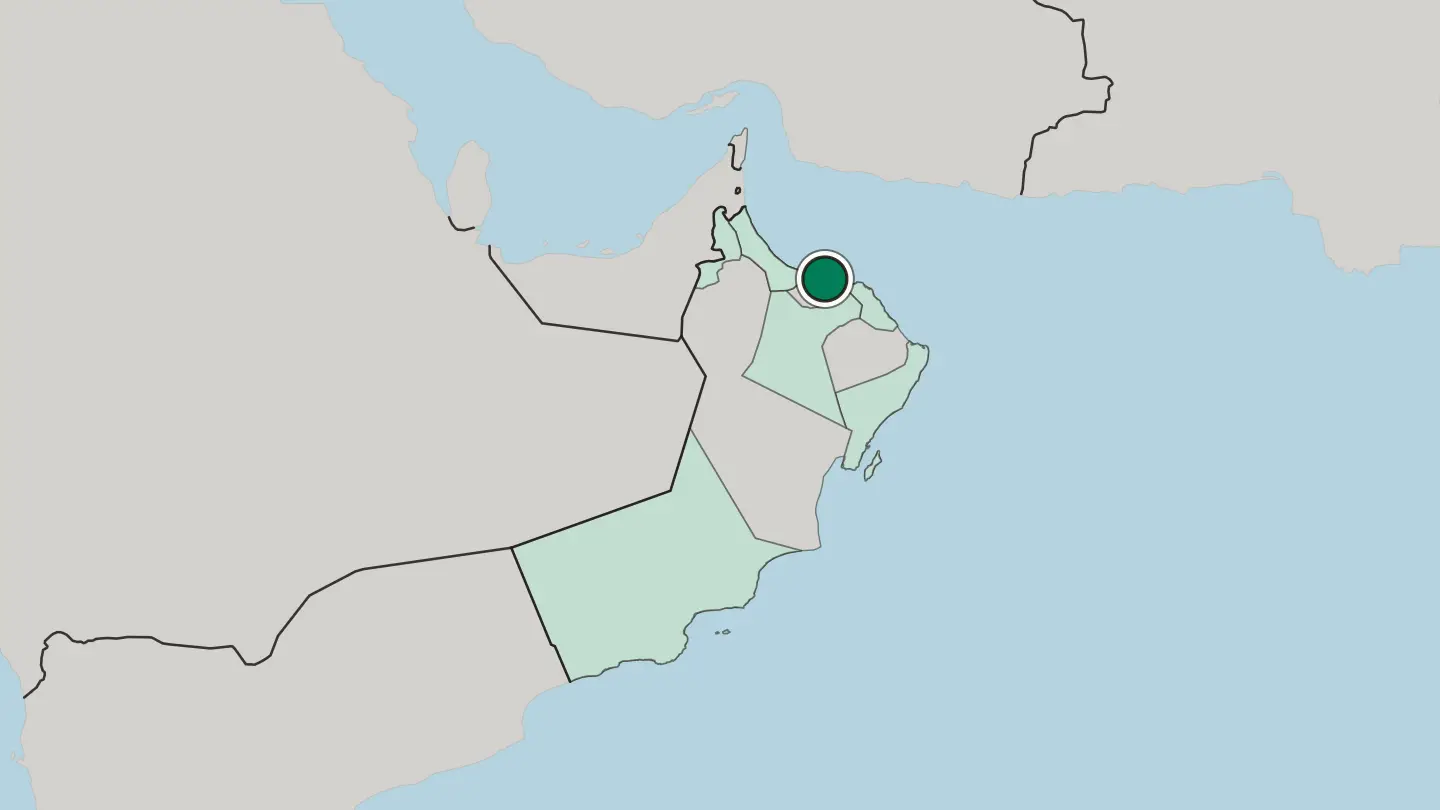
Hotel links are affiliate links: booking through them may earn us a commission, at no extra cost to you. It never affects how places are ranked. How this works
Regions of Oman
Oman
Al Batinah North Governorate
Al Batinah North Governorate is one of Oman's eleven governorates, formed in 2011 and centred on the wilayat of Sohar.Towns & cities →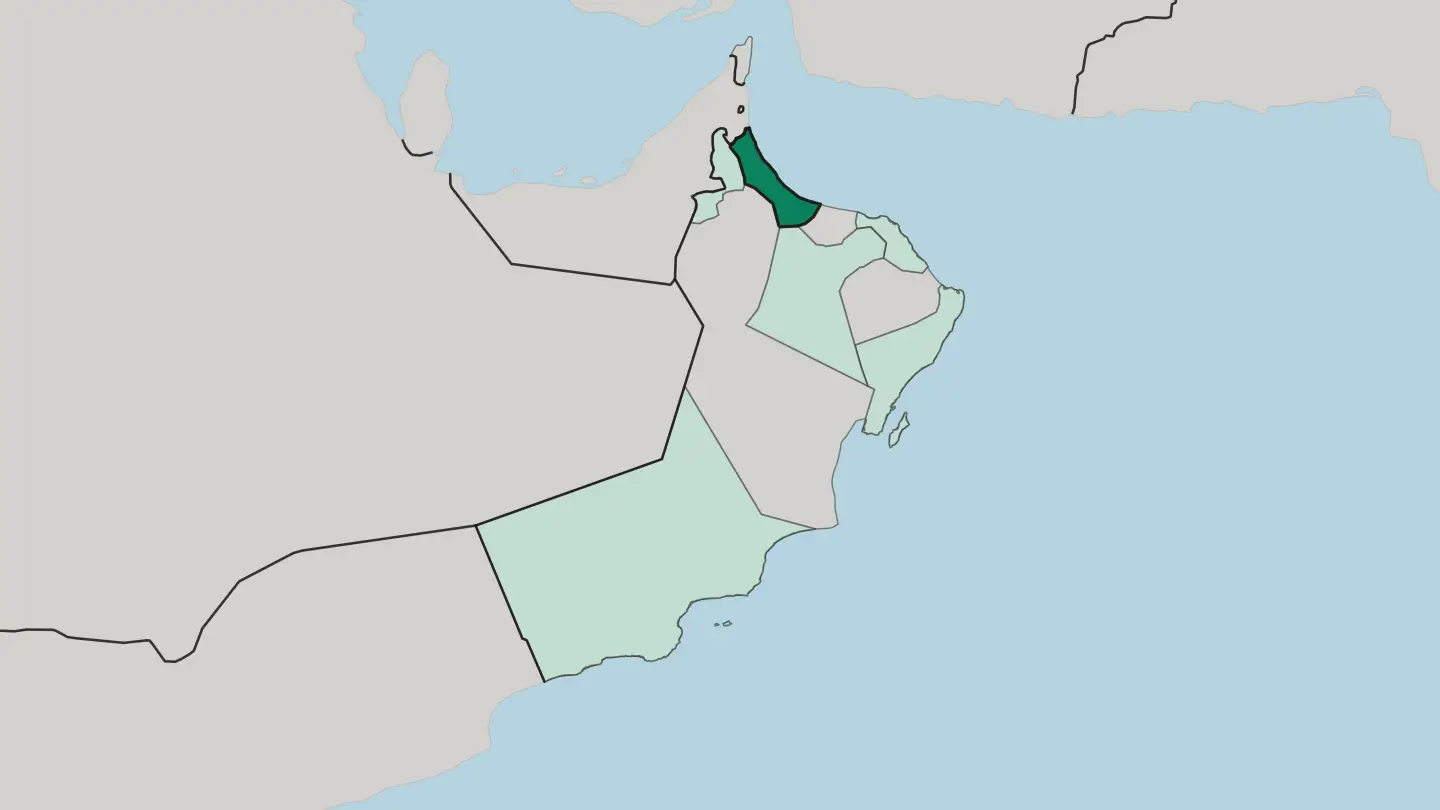 Oman
Oman
Al Batinah South Governorate
Al Batinah South Governorate covers the southern share of Al-Bāţinah, the Omani region bifurcated into two governorates in 2011.Towns & cities →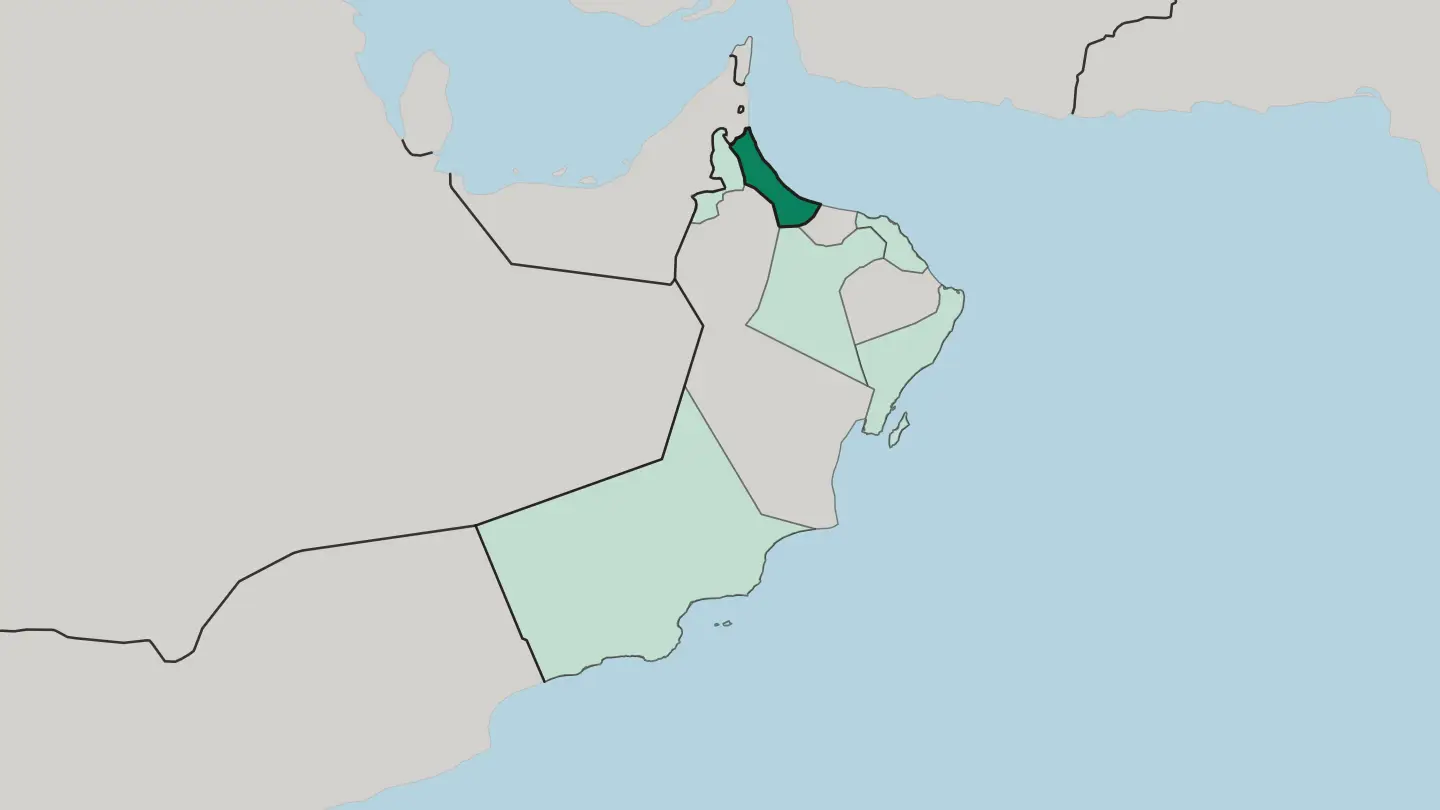 Oman
Oman
Ash Sharqiyah South
Ash Sharqiyah South is one of two governorates that replaced Ash-Sharqiyyah in 2011, the old Omani region whose capital was Sur.Towns & cities →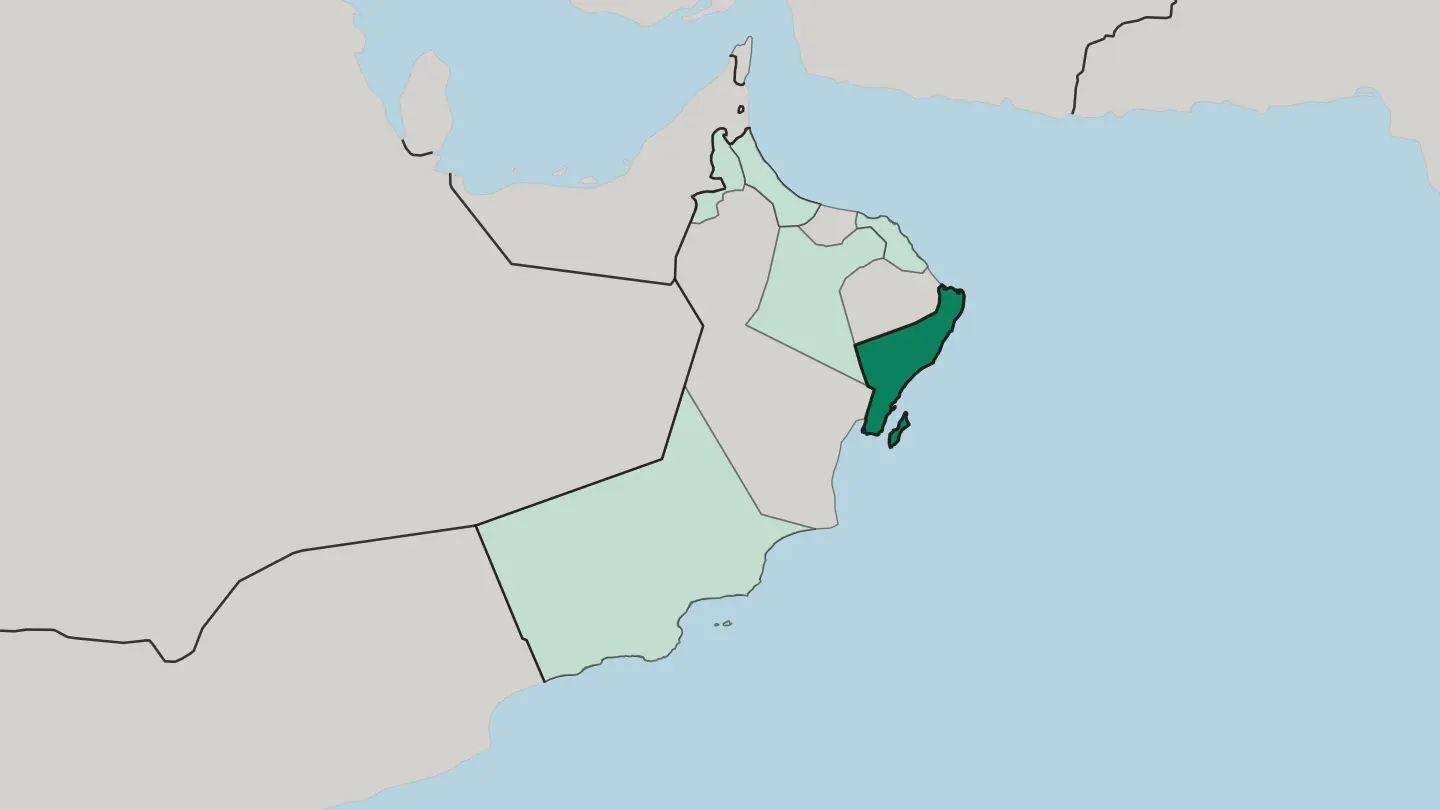 Oman
Oman
Dhofar Governorate
Dhofar is the largest of Oman's eleven governorates by area, a mountainous stretch on the Arabian Sea with Salalah as its capital.Towns & cities →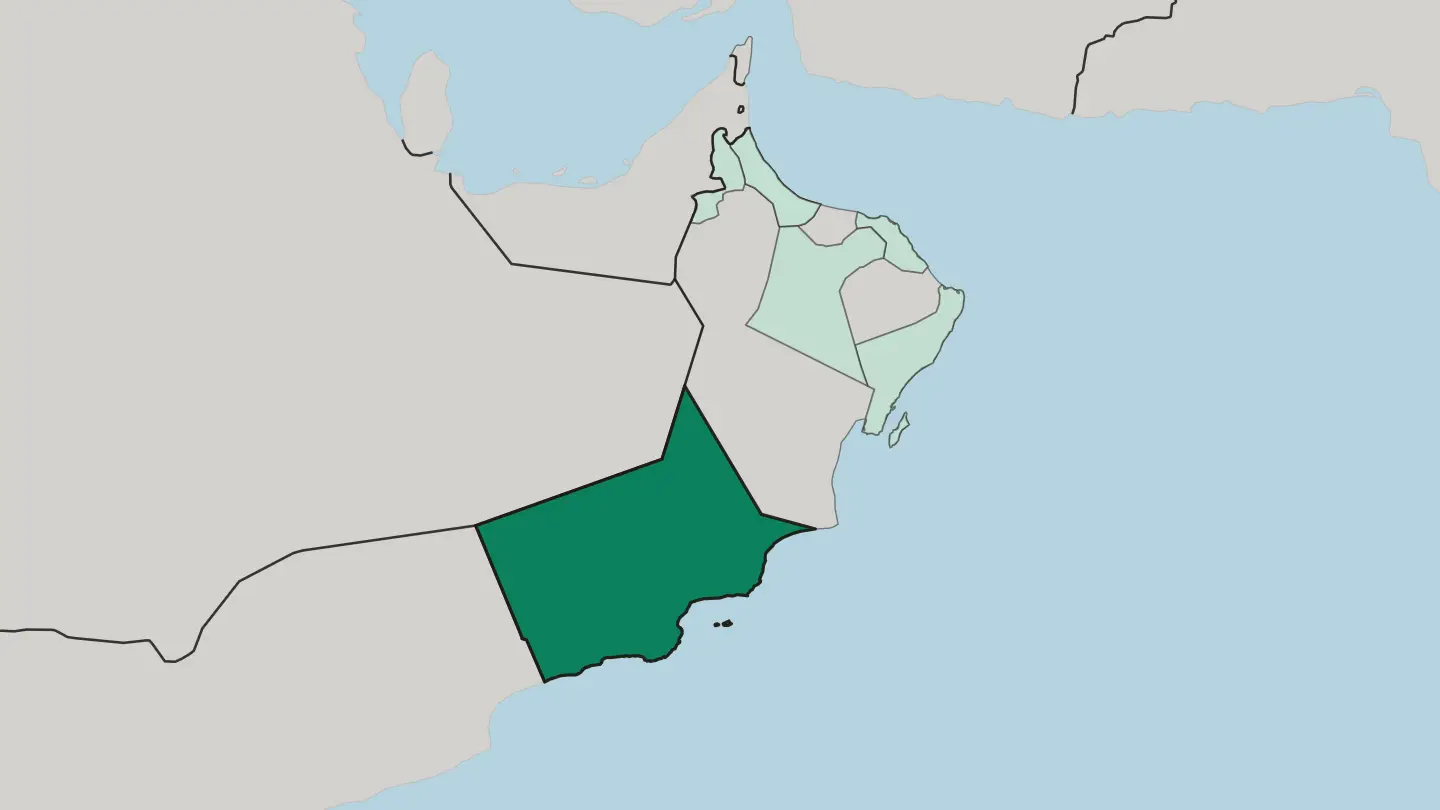 Oman
Oman
Muḩāfaz̧at Masqaţ
Muḩāfaz̧at Masqaţ is the governorate around Muscat, the capital and only metropolis of Oman, and the seat of the country's government on the coast.Towns & cities →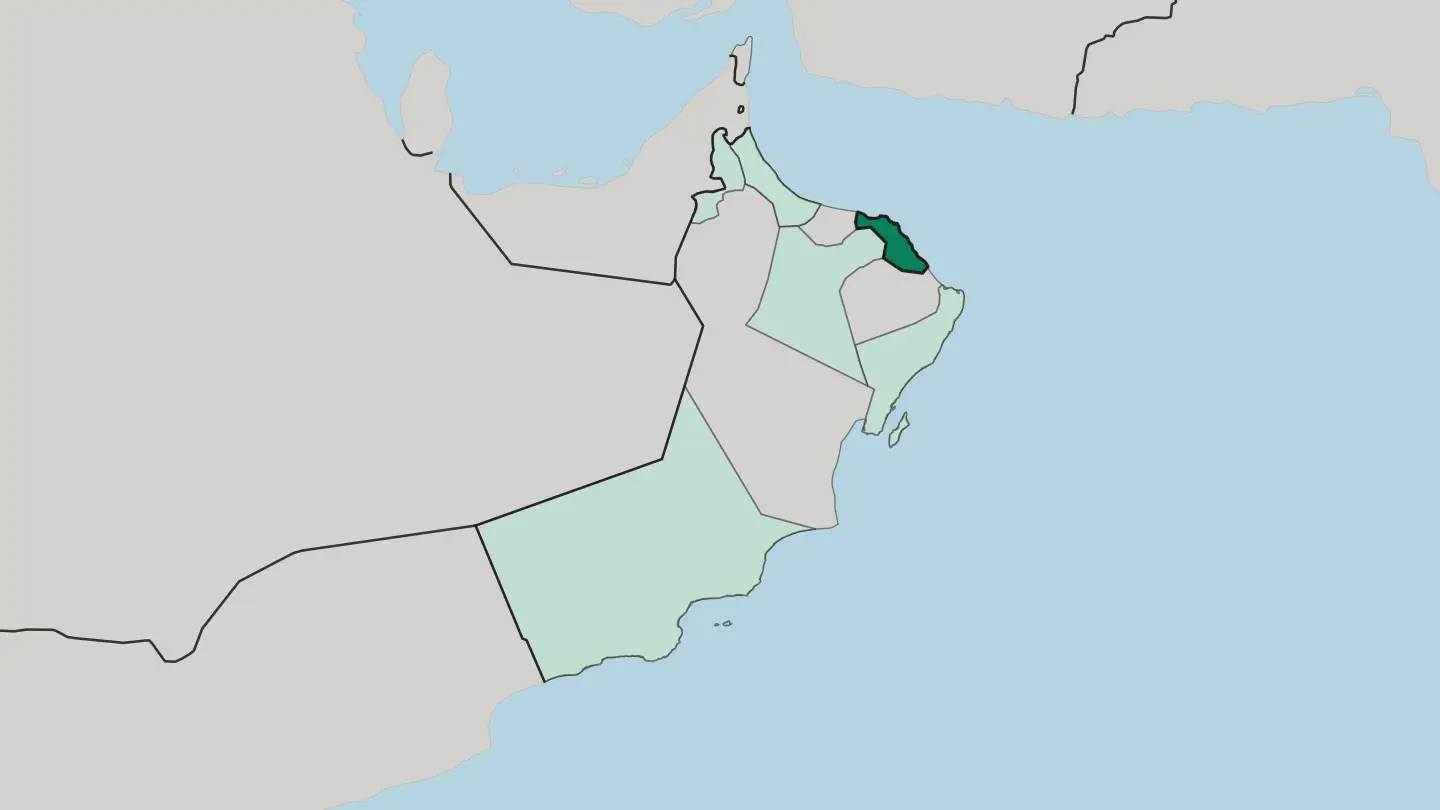 Oman
Oman
Muḩāfaz̧at ad Dākhilīyah
Muḩāfaz̧at ad Dākhilīyah is one of Oman's eleven governorates, a former mintaqah centred on the town of Nizwa.Towns & cities →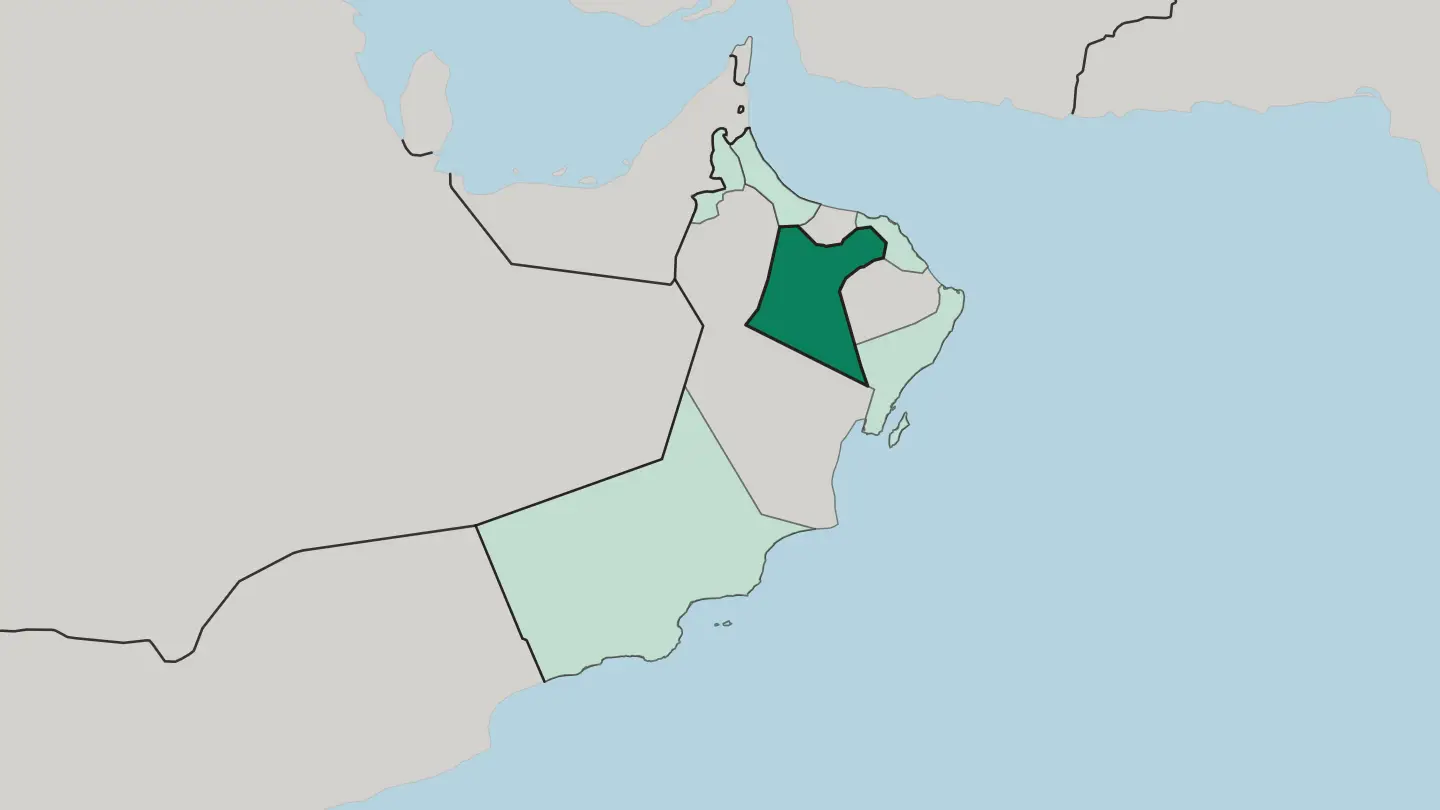 Oman
Oman
Muḩāfaz̧at al Buraymī
Muḩāfaz̧at al Buraymī was created in 2006 from part of Ad Dhahirah Region, and holds the wilayats of Al Buraymi, Mahdah and As-Sunaynah.Towns & cities →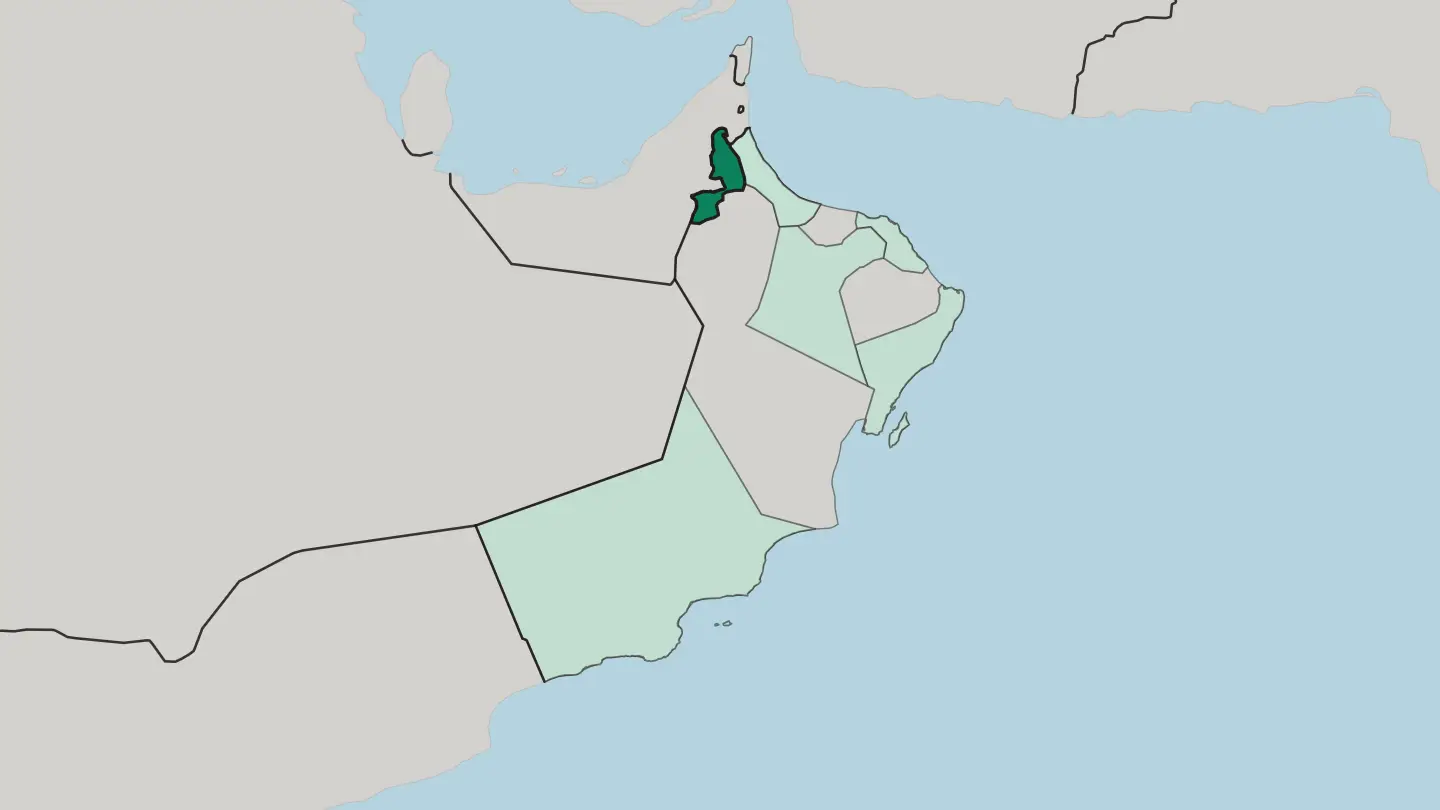
Explore by experience
Not sure which place? Start from how you want to travel.
About Oman
Frankincense made Oman famous long before oil did.
What is Oman known for?
The Dhofar hills in the far south still grow the resin that Roman and Egyptian traders once carried across the ancient world, and Muscat guards a harbour ringed by Portuguese-built forts. Its landscapes carry the country too. The Hajar Mountains rise in the north to the bare summit of Jebel Shams, while the dunes of the Sharqiya Sands and the fjord-like inlets of the Musandam peninsula edge the map.
Fort towns like Nizwa anchor the interior.
Where is Oman?
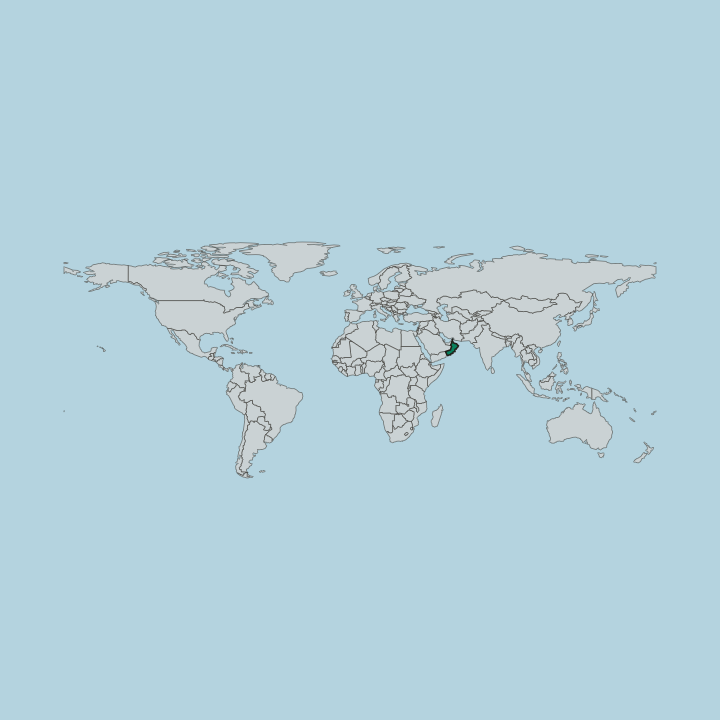
Oman fills the south-eastern shoulder of the Arabian Peninsula, sharing land borders with Saudi Arabia, the United Arab Emirates, and Yemen. Its long coastline turns two ways. The Gulf of Oman washes the north-east, while the Arabian Sea opens off the south, and between them the land climbs, dries, and folds into some of the most varied terrain in the Gulf.
The Hajar Mountains dominate the north. This range curves inland from the Musandam peninsula and rises to Jebel Shams, the highest point in the country, above the deep canyon walls that have earned it comparison with far larger gorges. Behind the mountains the interior falls away into gravel plains and the dune fields of the Sharqiya Sands, a desert of parallel ridges that shift from pale gold to coppery orange as the sun drops.
The far north holds an oddity of the map. Musandam is an exclave, cut off from the rest of Oman by UAE territory, its cliffs dropping straight into the Strait of Hormuz in a maze of saltwater inlets. Far to the south lies Dhofar, a world apart.
Its hills catch the Indian Ocean monsoon and green over each summer, a stretch of seasonal cloud forest unlike anywhere else on the peninsula, centred on the coastal plain around Salalah. Coast, mountain, and sand sit within a single country.
What is the history of Oman?
Oman's wealth began with a tree. The frankincense of the Dhofar hills was traded to Egypt, Greece, and Rome for temple incense and perfume, and the caravan and sea routes that carried it made the southern coast rich centuries before Islam reached Arabia. The faith took a distinctive turn here.
Most Omanis follow the Ibadi branch of Islam, a school older and more austere than the Sunni and Shia mainstreams, and its imams governed the mountainous interior from strongholds like Nizwa for generations. The Portuguese arrived by sea in the early sixteenth century and seized the coastal towns, fortifying Muscat to command the Gulf trade. They held on for over a hundred years.
Omani forces finally drove them out, and from that base the sultanate built a maritime empire of its own, reaching down the East African coast and taking control of Zanzibar, whose clove plantations grew so valuable that Sultan Said bin Sultan moved his capital there in the nineteenth century. The empire later split, and the country turned inward and poor. Everything changed in 1970, when Sultan Qaboos bin Said took power and used the new oil revenue to build schools, hospitals, and roads across a country that had almost none.
That programme is still called the Omani Renaissance. From incense road to modern state, the coast has always looked outward.
What is Oman like?
Omani culture runs on hospitality and restraint. A guest is met with kahwa, the cardamom-spiced coffee poured from a long-spouted pot, and with dates and dense, rosewater-perfumed halwa, served in the majlis where news, disputes, and family ties are worked out. The Ibadi tradition shapes the tone.
It favours moderation and tolerance over display, and that reserve shows in dress as much as manners, where men wear the ankle-length dishdasha and the embroidered kumma cap. The khanjar completes the picture. This curved silver dagger, worn at the waist on formal occasions, appears on the national emblem.
Food follows the calendar and the land. Shuwa, lamb marinated in spices and buried to cook slowly underground, is the centrepiece of Eid, while the coast leans on fish and rice and the interior on dates from the palm gardens fed by the ancient falaj irrigation channels. Craft survives in living markets.
The Friday livestock auction and silver stalls of the Nizwa souq, backed by its seventeenth-century fort, still draw traders in from the surrounding wilayats, and Bedouin weaving and camel gear turn up at the desert markets edging the Sharqiya Sands. One country, many inherited skills.
What is the climate of Oman?
Oman is hot and dry for most of its extent. The coastal cities and the interior around Muscat run to fierce desert heat in summer and warm, comfortable winters, which is when most travellers come. The one exception sits in the south.
Each year from June to September the Indian Ocean monsoon, known locally as the khareef, wraps the Dhofar hills around Salalah in cool mist and drizzle and turns the slopes green while the rest of the country bakes. The mountains stay cooler year-round. Winter is the season here.
How do you get to Oman?
Most visitors arrive through Muscat International Airport, at Seeb on the edge of the capital, the hub for the national carrier and the busiest entry point in the country. Salalah in the south has its own airport, busiest in the monsoon months when travellers fly down for the khareef greenery rather than drive the long desert road. The country is big and spread out.
Beyond the two cities, a hire car is the usual way to reach the Hajar forts, the Sharqiya dunes, and the coast, since distances between regions run to many hours. Plan around the drive.
Good for
Updated October 2026