Qatar: Regions, Cities & Travel Guide
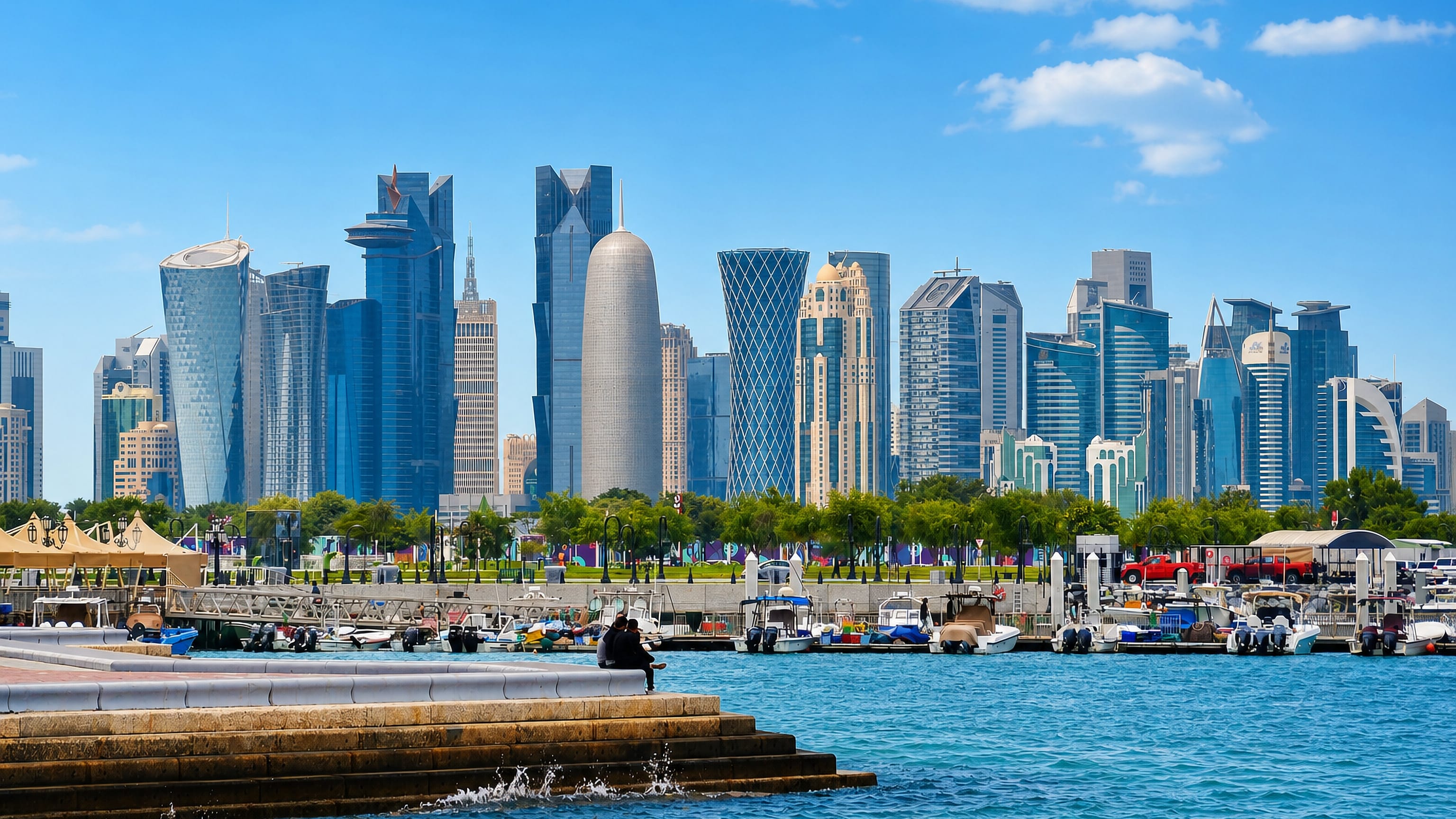
Qatar is a peninsular Arab country on the Persian Gulf, its glass-towered capital Doha rising from flat desert.
Hotel links are affiliate links: booking through them may earn us a commission, at no extra cost to you. It never affects how places are ranked. How this works


Top destinations in Qatar
Cities to start from, then drill into areas and hotels.
 Qatar
Qatar
Doha
Doha stands on the Persian Gulf coast in eastern Qatar, capital of the country and seat of Baladīyat ad Dawḩah, known for the Museum of Islamic Art.Where to stay →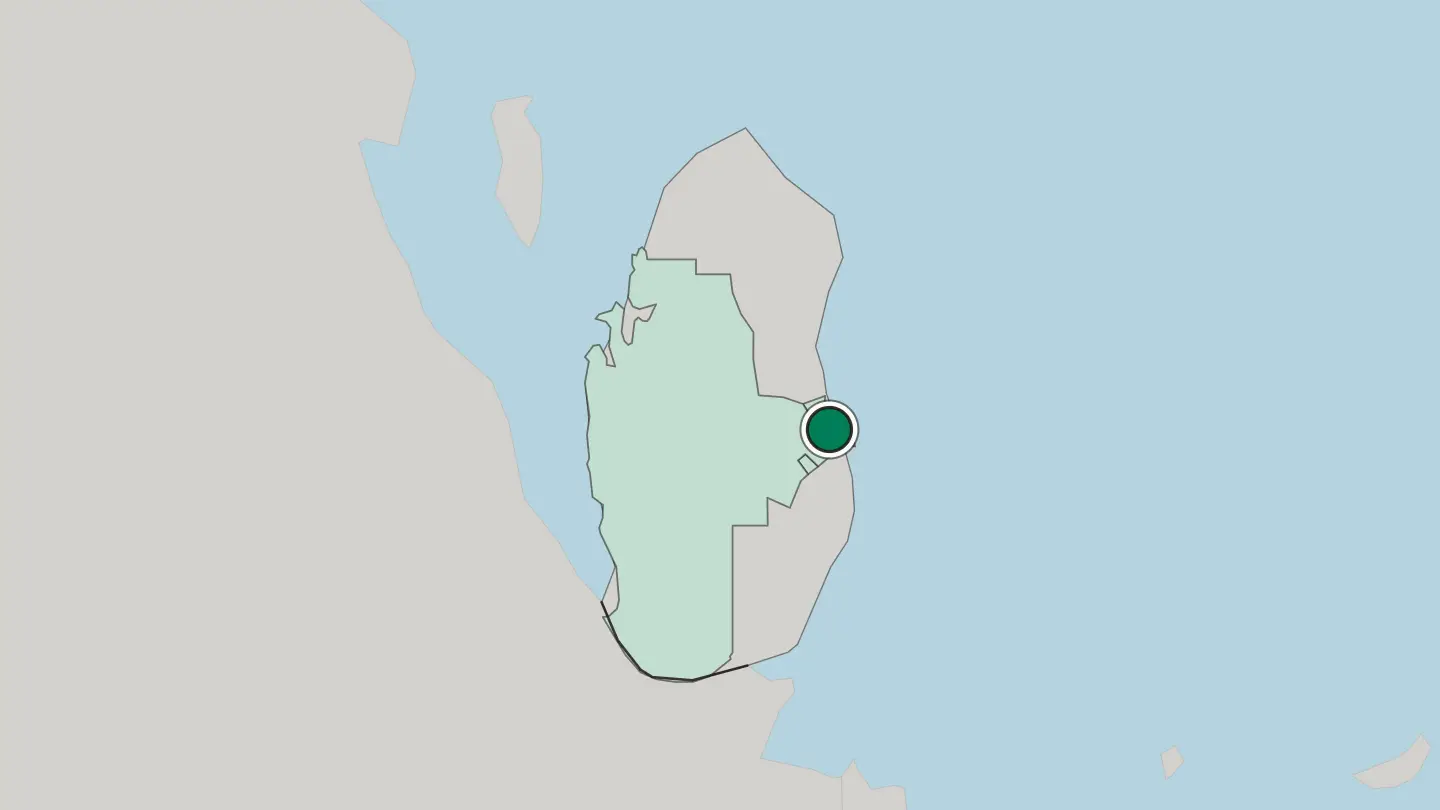
 Qatar
Qatar
Ar Rayyān
Ar Rayyān is the main city of Al Rayyan Municipality in Qatar, part of the Doha Metropolitan Area and site of the Aspire Zone.Where to stay →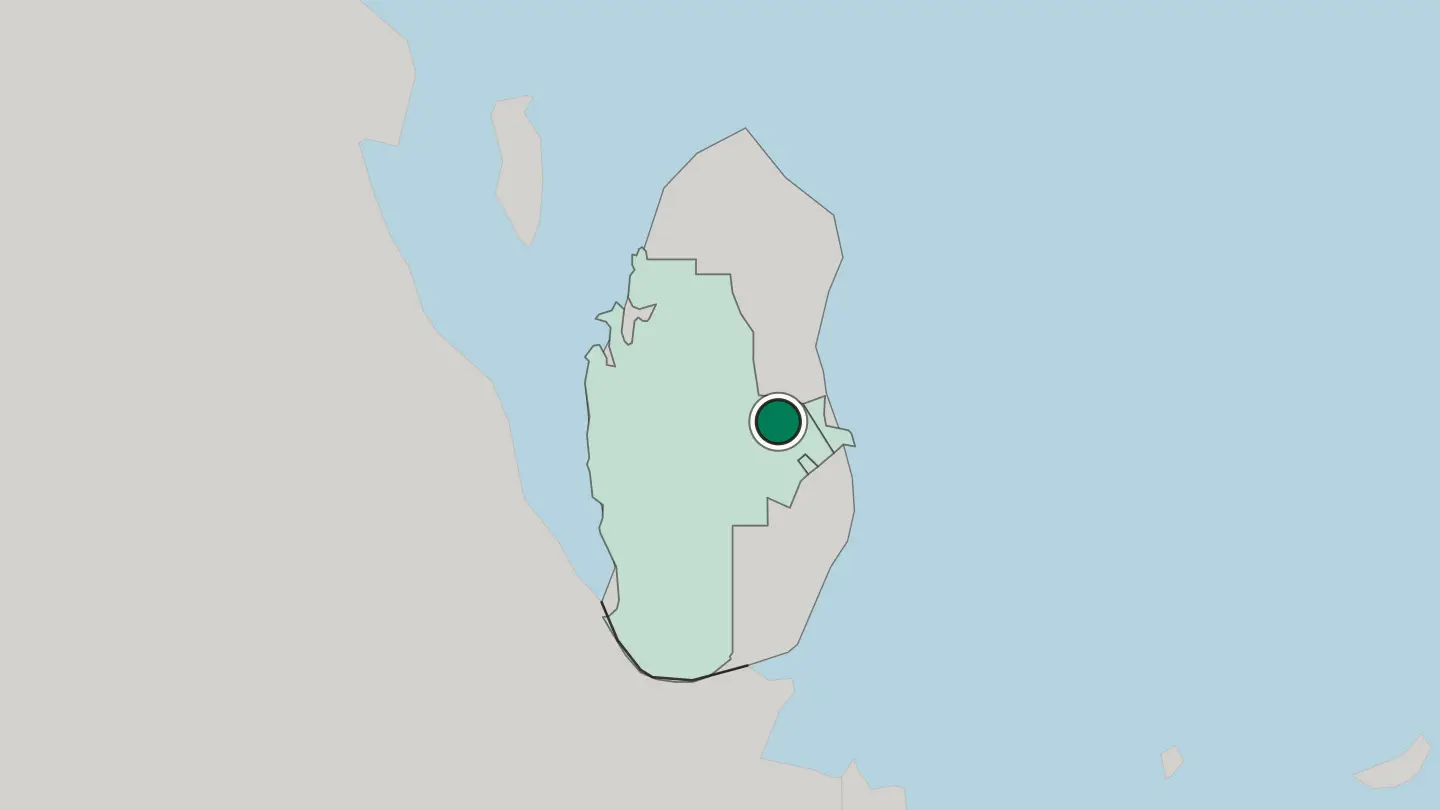
Hotel links are affiliate links: booking through them may earn us a commission, at no extra cost to you. It never affects how places are ranked. How this works
Regions of Qatar
Qatar
Baladīyat ad Dawḩah
Baladīyat ad Dawḩah is the municipality of Qatar built around Doha, the country's capital, the region also written as Ad-Dawhah.Towns & cities →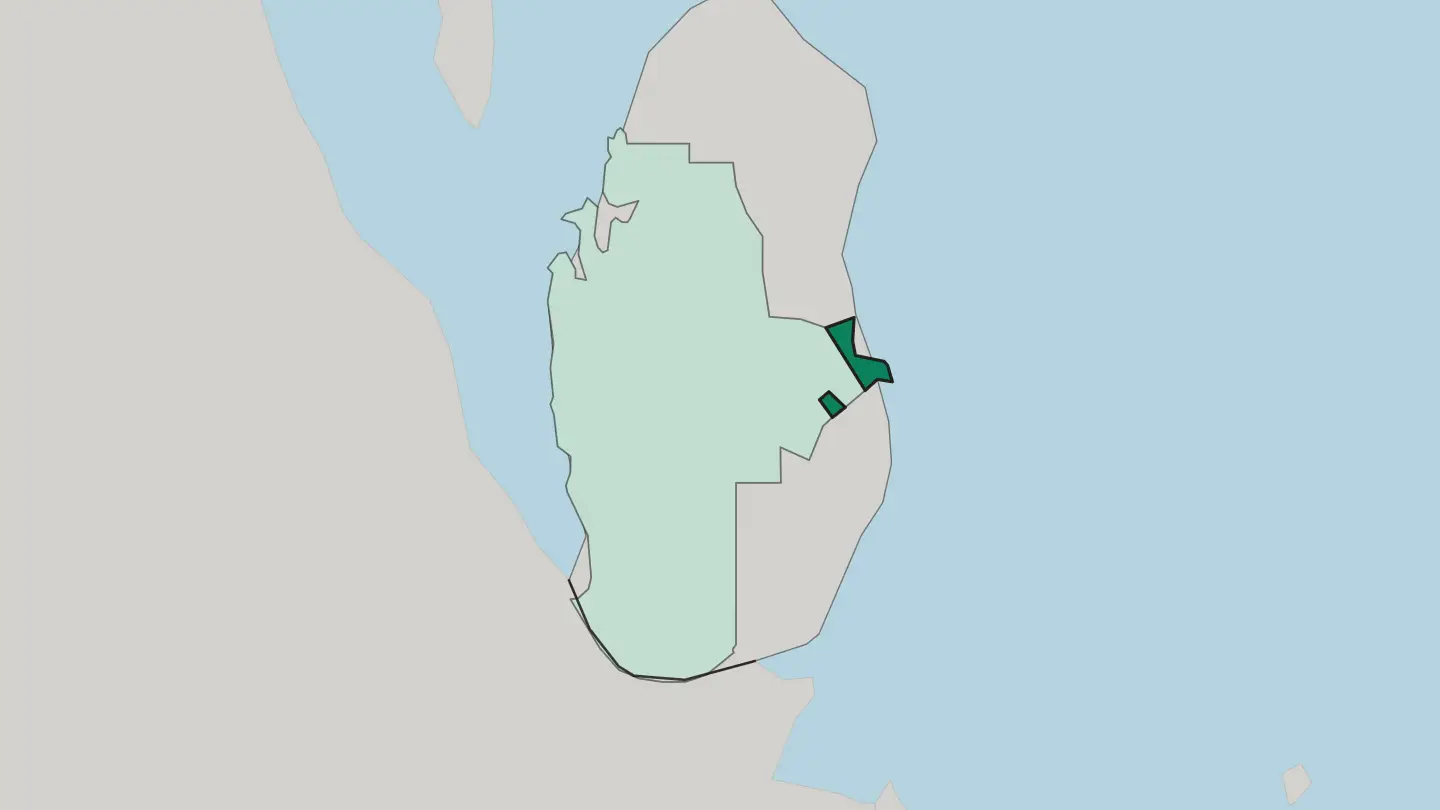 Qatar
Qatar
Baladīyat ar Rayyān
Baladīyat ar Rayyān, or Al Rayyan Municipality, is the third-largest of Qatar's municipalities, part built-up city and part open interior.Towns & cities →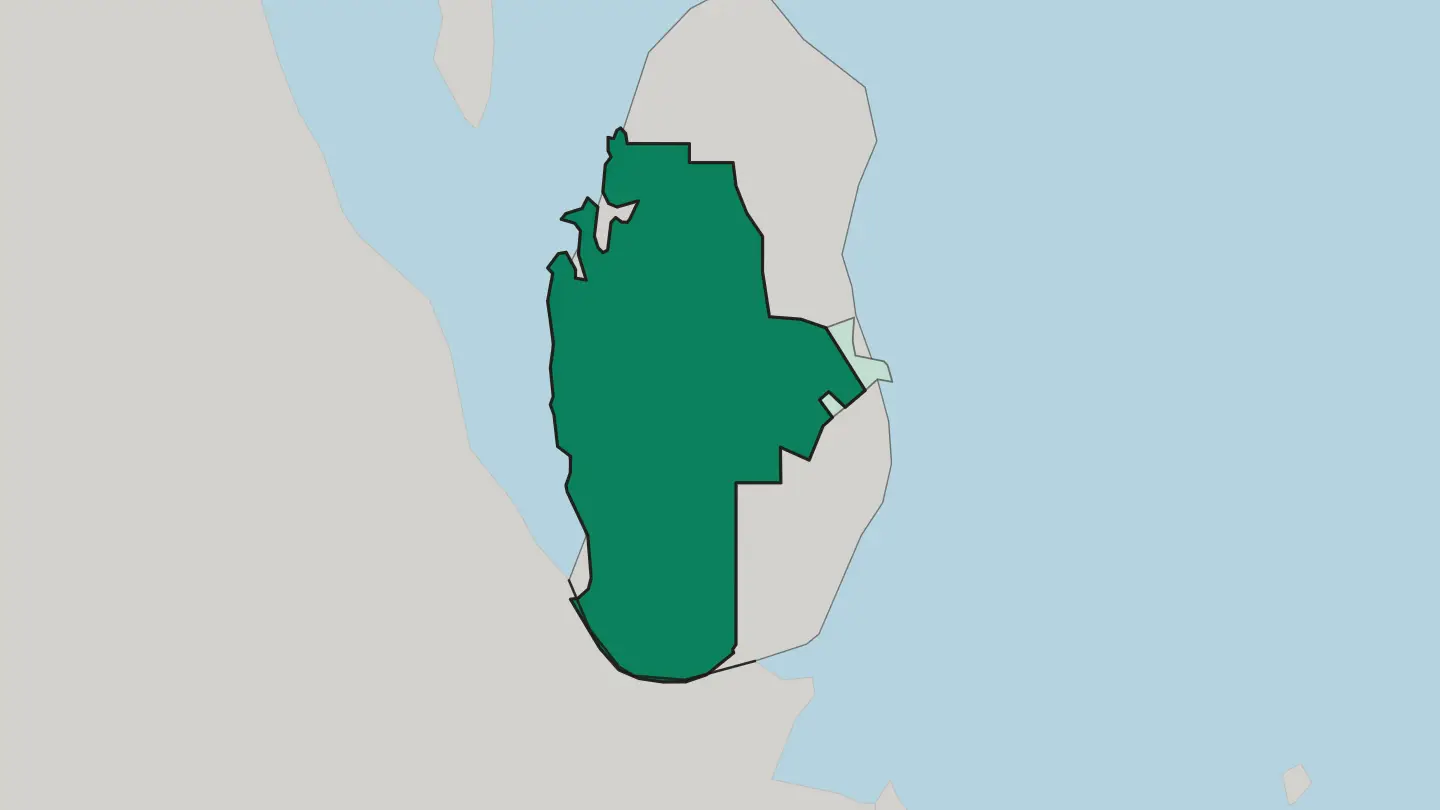
About Qatar
What is Qatar known for?
Qatar is known for turning pearling-era wealth into a country of skylines and museums. Doha carries almost the whole story. Its Corniche sweeps past the Museum of Islamic Art, whose pale limestone tiers rise on an island near the old dhow harbour, while Souq Waqif keeps the trade, spice, and falcon stalls alive.
Beyond the capital the desert takes over. At Khor Al Adaid, the dunes drop straight into a saltwater inlet of the Gulf.
Where is Qatar?
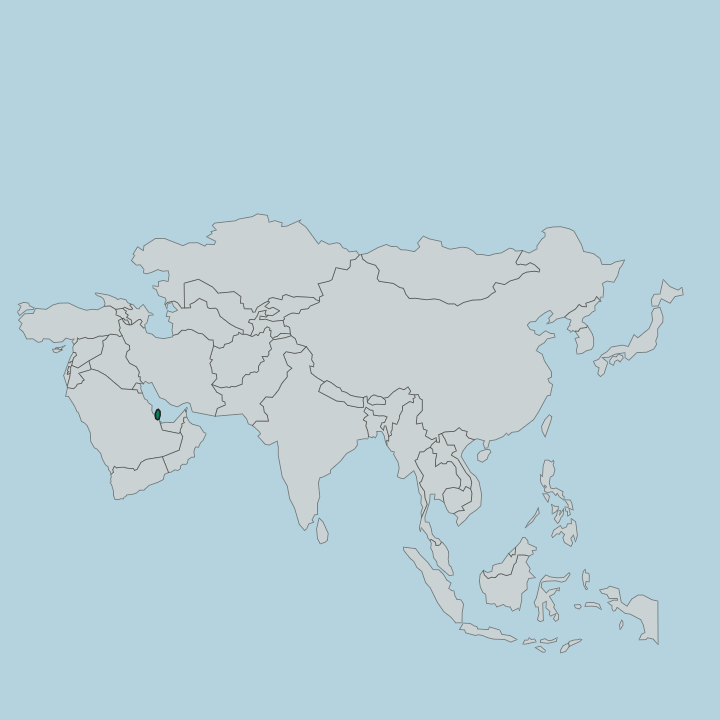
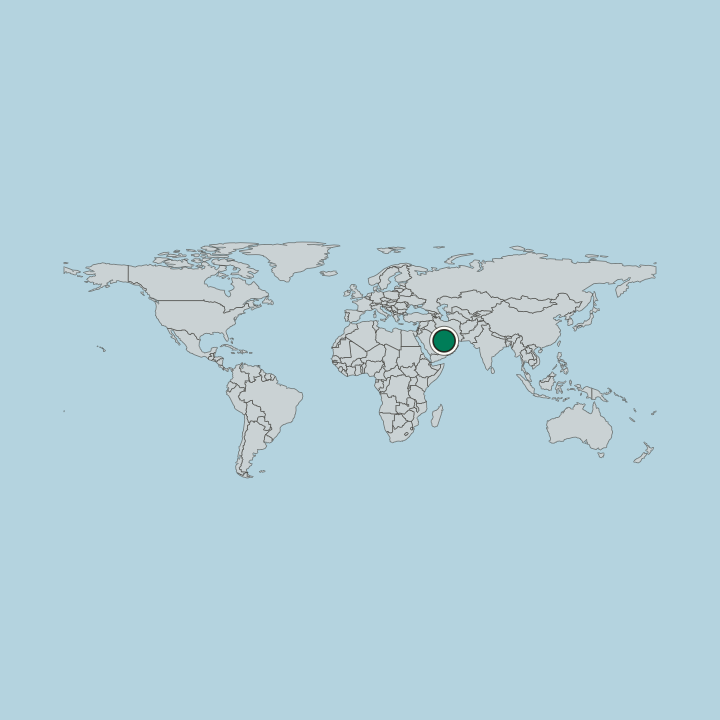
Qatar occupies a low thumb of land pushing north from the Arabian Peninsula into the Persian Gulf. The peninsula runs roughly 100 miles from base to tip. Its only land frontier is with Saudi Arabia across the base in the south; on every other side the Gulf closes in, with the Gulf of Bahrain separating it from Bahrain to the west.
The country is almost entirely flat, barren desert, its highest ground a low limestone rise called Qurayn Abu al Bawl in the far south near the Saudi border. Sand dominates the far south. There the dunes of Khor Al Adaid march down to the Inland Sea, a rare place where a mobile dune field meets a tidal inlet of the Gulf.
Salt flats, the sabkhas, spread across the coastal lowlands, left behind as the fierce sun evaporates seawater. Fresh water is scarce, so there are no permanent rivers at all. Most of the population clusters along the eastern shore, where Doha, Al Wakrah to the south, and Al Khor and Lusail to the north form an almost continuous coastal band.
The ruined pearling town of Al Zubarah stands alone on the north-western coast, its fort watching an empty shore. From capital to desert edge, the distances stay short.
What is the history of Qatar?
Qatar's fortunes were once measured in pearls. For centuries the peninsula's coastal families lived by diving the Gulf beds each summer, and by fishing the shallows the rest of the year, in settlements scattered along the eastern shore. Al Zubarah on the north-western coast grew into a thriving pearling and trade port in the eighteenth century, until raids and shifting fortunes left it in ruins.
The Al Thani family emerged as the leading power on the peninsula. A treaty signed with Britain in 1868 recognised Mohammed bin Thani and set the dynasty on its course, though Ottoman forces occupied the peninsula from 1871 before withdrawing in the years around the First World War. The pearl trade then collapsed.
Cultured pearls from Japan gutted the market in the 1920s and 1930s, and the peninsula fell into hard poverty until oil was struck at Dukhan in 1939. Britain kept Qatar as a protected state until the wider withdrawal from the Gulf, and full independence came on 3 September 1971. Gas changed everything after that.
The vast offshore North Field, one of the largest natural-gas reserves on earth, funded the Doha of towers and museums that visitors see. From pearl beds to gas fields, the sea made this country twice.
What is Qatar like?
Qatari culture holds the desert and the sea in the same grip as its skylines. Bedouin custom still shapes daily manners. The majlis, the sitting room where guests are received over cardamom coffee and dates, remains the heart of hospitality, and falconry keeps its old prestige, with hunting birds bought and traded at the Falcon Souq beside Souq Waqif.
The table tells the same story. Machboos, a spiced rice cooked with fish or meat, anchors the national kitchen, alongside harees, a slow porridge of wheat and meat, and luqaimat, the syrup-soaked dumplings served at festivals. Faith orders the calendar and the skyline alike, from the call to prayer to the pale geometry of the Museum of Islamic Art, which gathers metalwork, ceramics, and manuscripts from across the Islamic world under I. M. Pei's design.
Modern Qatar pours the same energy into culture. Katara Cultural Village stages concerts, film festivals, and a dhow-building revival on the shore between West Bay and The Pearl-Qatar, while the country's museums and galleries turn gas wealth toward art. Arabic is the language of the street and the state, though English runs freely through business and daily life.
Old and new sit side by side here, unforced.
What is the climate of Qatar?
Qatar runs on a hot desert climate with a long, punishing summer. From May to September the daytime heat is fierce, and along the Gulf coast the humidity turns even the shade oppressive, while the shamal, a dry north-westerly wind, drives dust and haze across Doha. Winter is the gift.
From November to March the days stay warm and the evenings cool pleasantly, the brief winter rains barely wetting the sabkha flats. That short cool season is when almost everyone visits.
How do you get to Qatar?
Nearly everyone arrives by air at Doha. Hamad International Airport, a few miles south of the city centre, is one of the Gulf's major hubs and the home base of Qatar Airways, feeding connections across Asia, Africa, and Europe. The single land crossing runs south to Saudi Arabia at Abu Samra.
Once you land, the country is small enough that Al Wakrah, Al Khor, and the dunes of Khor Al Adaid all lie within a short drive of the capital. Distances here stay measured in minutes.
Good for
Updated September 2026