Russia · Arkhangelsk Oblast
Where to Stay in Kotlas, Arkhangelsk Oblast
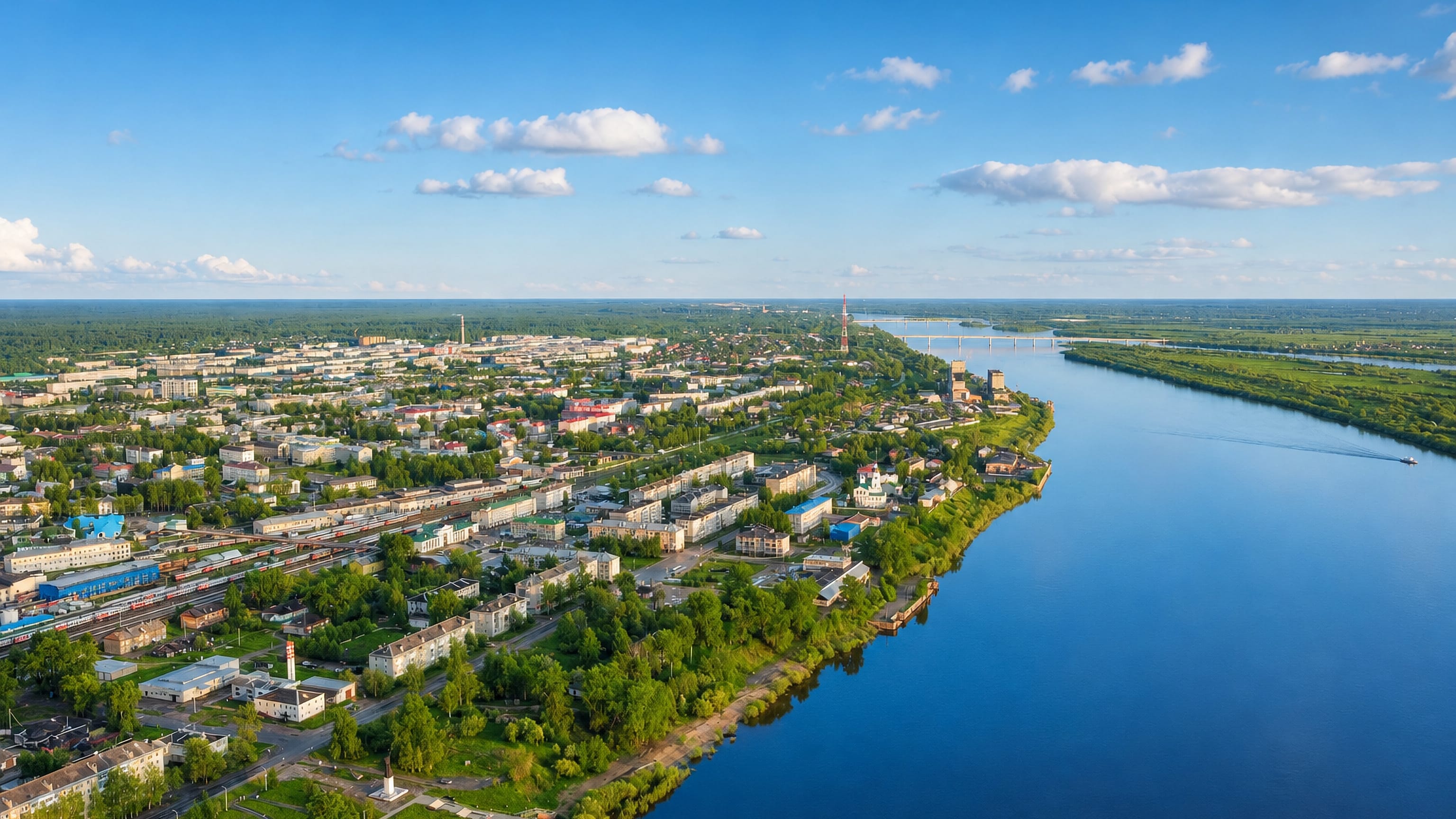
Kotlas is the river port at the confluence of the Northern Dvina and the Vychegda, a rail junction of Arkhangelsk Oblast dating from 1890.
Find your area →


Where to stay in Kotlas
The practical side of choosing where to sleep.
Trains decide it for most. Kotlas works as a junction between central Russia and the Komi Republic, so a bed near the rail side saves the awkward transfer that a late arrival otherwise faces. The museum is close to that side.
Kotlasskiy kraevedcheskiy musey and the Народный дом both sit within the built-up middle, which is small enough that no stay there needs a car for anything. Arkhangelsk Oblast is large and thinly built, which is why a town at a crossing of rails and rivers ends up doing more work for travellers than its size suggests. Short walks, plain streets. The confluence is the alternative.
Rooms toward the water put the port and the shipyard in view, and the Northern Dvina and the Vychegda make a better morning than the platforms do for anyone not catching a train. Vondokurye lies further out. The Holy Trinity church there is a reason to have transport, and it argues for staying wherever the road out of Kotlas is easiest rather than wherever the walk is shortest.
Both sides suit a single night. That is worth planning around.
Things to do in Kotlas
Ranked by global recognition; descriptions from Wikidata (CC0).
Museums & Galleries
1- Kotlasskiy kraevedcheskiy musey
Churches & Religious Sites
3- Saint Stephen of Perm Church (Kotlas) Heritage
- Holy Trinity church in Vondokurye Heritage
- Церковь (Котлас) Heritage
Castles & Historic Sites
1- Памятник труженикам тыла и детям войны
Landmarks & Notable Places
2- Колокольня (Котлас) Heritage
- Народный дом (Котлас) Heritage
worth knowingacross 4 categories in Kotlas
About Kotlas
Two rivers make the town.
What is Kotlas known for?
The Northern Dvina and the Vychegda come together at Kotlas, and the confluence explains the river port, the shipyard, and the rail junction that links central Russia with the Komi Republic. Trains and barges share the work. Beyond the water, the Kotlasskiy kraevedcheskiy musey and the Saint Stephen of Perm Church give the town its indoor stops.
What are the main landmarks in Kotlas?
The Kotlasskiy kraevedcheskiy musey is the first stop indoors. Two churches carry the older fabric: the Saint Stephen of Perm Church in the town and the Holy Trinity church in Vondokurye beyond it, with the Колокольня standing as the bell tower of the set. The Народный дом adds the civic side.
So does the Памятник труженикам тыла и детям войны, which marks the home-front workers and the children of the war rather than the soldiers.
What is the history of Kotlas?
The railway made Kotlas. A settlement at the junction of the Northern Dvina and the Vychegda became a town from 1890 as the line reached it, and the two forms of transport, rail and river, have set its purpose ever since. Incorporation followed in 1917.
That date fixed the town's standing in Arkhangelsk Oblast, by which time the port and the shipyard at the confluence were already the reason for its existence. Older buildings survive nearby. The Holy Trinity church in Vondokurye stands outside the modern town and predates most of what Kotlas itself contains, and the Saint Stephen of Perm Church carries an older dedication into the streets.
Civic life left its own marks. The Народный дом served as the people's house, the Колокольня and the Церковь mark the religious fabric, and the Памятник труженикам тыла и детям войны remembers those who worked the home front and the children who lived through the war. The museum holds the rest.
Kotlasskiy kraevedcheskiy musey keeps the record of a town whose two rivers carried its traffic long before the rails arrived from central Russia.
Where is Kotlas?
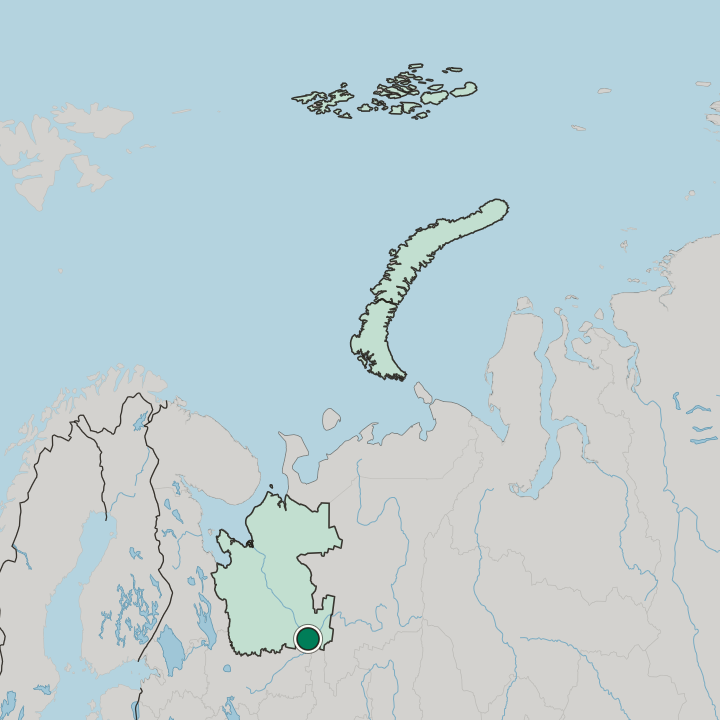
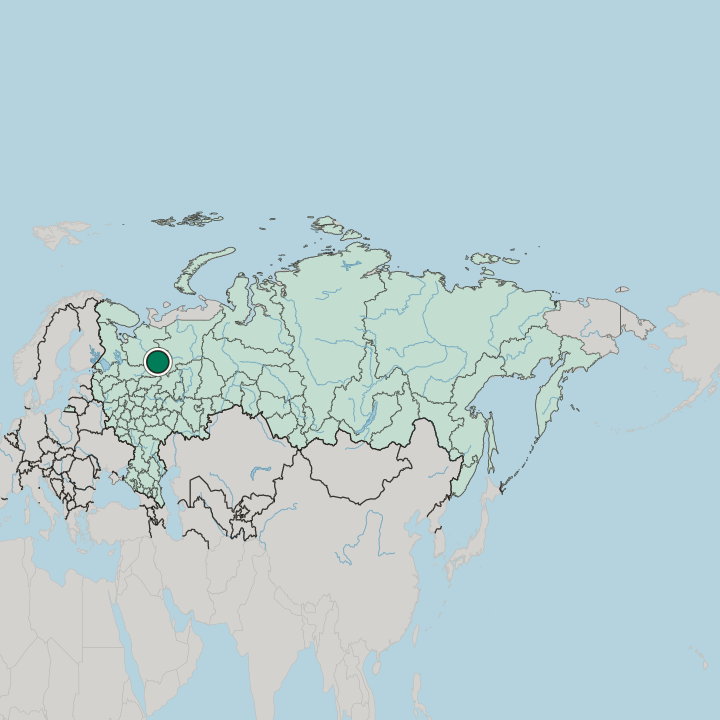
Everything here begins at the confluence. The Northern Dvina takes in the Vychegda at Kotlas, and the town spread around the junction covers roughly 68 square kilometres of Arkhangelsk Oblast, on ground that belongs to the subpolar north. The Komi Republic begins beyond it.
Water sets every edge here, from the two rivers themselves to the banks the port and the shipyard occupy.
What is the climate of Kotlas?
The rivers freeze and the town waits. Kotlas sits in the subpolar north of Arkhangelsk Oblast, which gives it a long winter of short days over the Dvina and the Vychegda, and a brief warm season when the water opens again. Ice governs the calendar.
Navigation on the Northern Dvina depends on the thaw, and the shipyard's year follows the same rhythm as the port's.
How do you get to Kotlas?
Kotlas is a junction first. The rails that connect central Russia with the Komi Republic cross here, which makes the town an easier place to reach by train than its position in Arkhangelsk Oblast would suggest. Water supplies the other route.
The Northern Dvina and the Vychegda both serve the port, and traffic on them runs when the ice allows rather than to a timetable.
Good for
More cities in Arkhangelsk Oblast
Updated September 2026