Russia
Arkhangelsk Oblast, Russia — Towns & Travel Guide
Arkhangelsk Oblast is Russia's vast far-northern region on the White Sea, all taiga, timber, and Arctic coast.
Find your area →


Towns & cities in Arkhangelsk Oblast
Pick a town or city — each links to where to stay.
 Russia
Arkhangel’sk
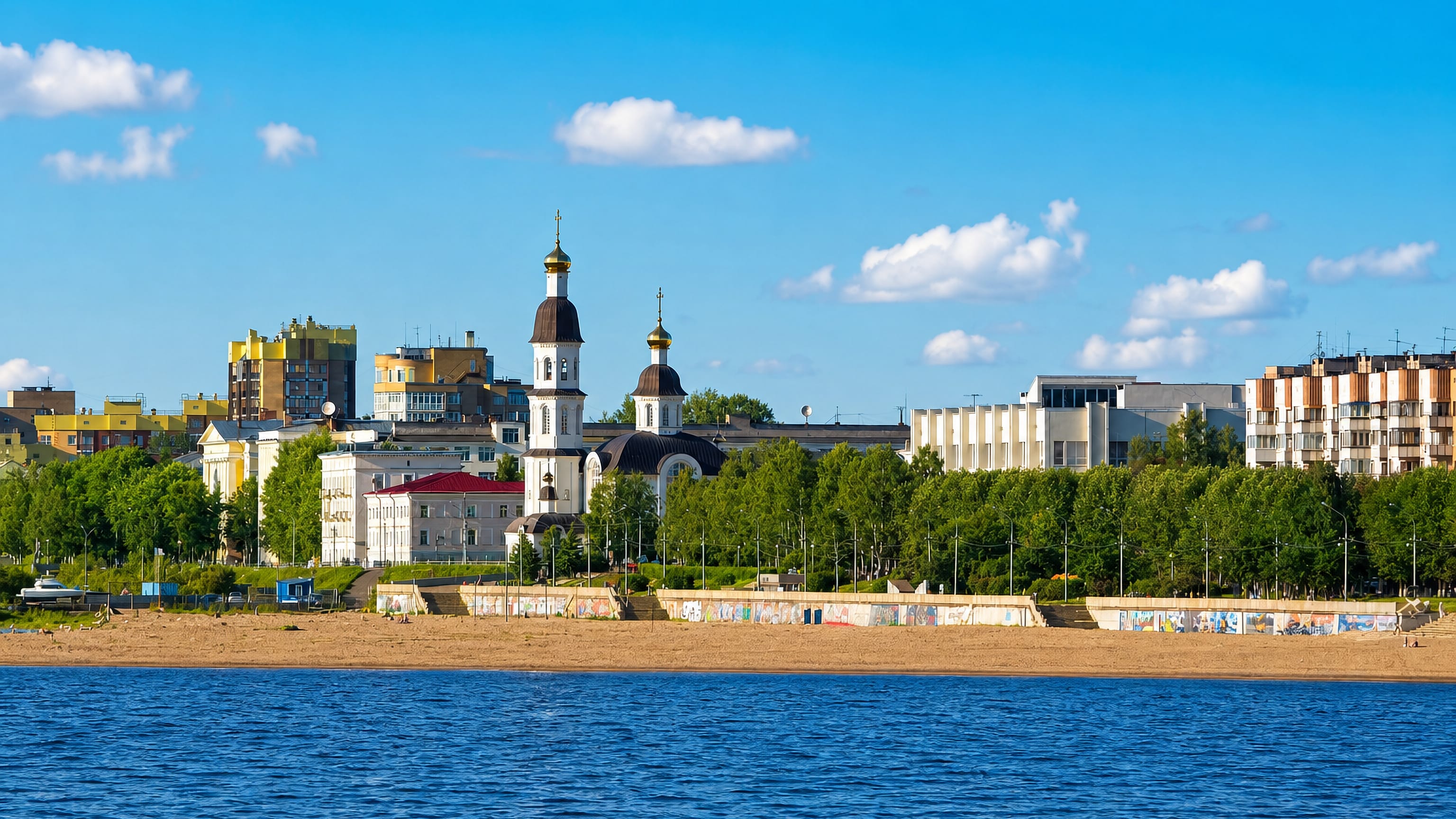
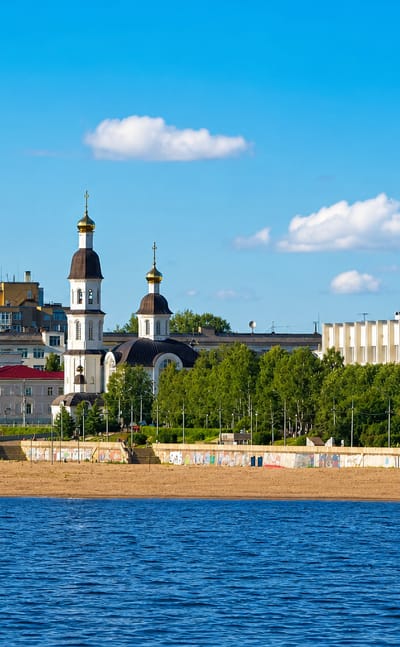
Timber quays line the Northern Dvina at Arkhangel'sk, a port city near the White Sea in Arkhangelsk Oblast, known for Gostiny Dvor and its river delta.Where to stay →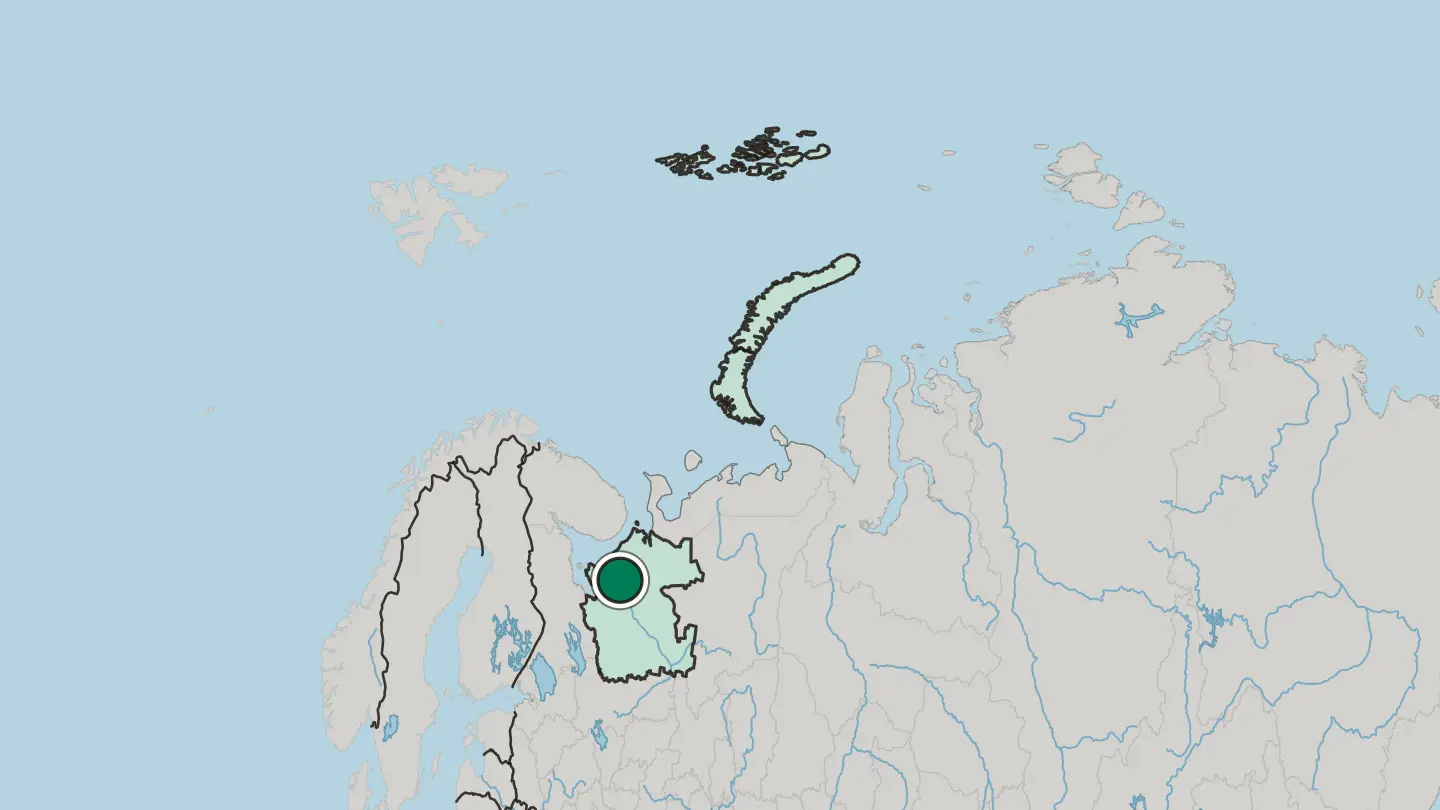
 Russia
Severodvinsk
Severodvinsk lies in the delta of the Northern Dvina west of Arkhangelsk, a shipyard city of 1936 whose permit rules apply to foreign visitors.Where to stay →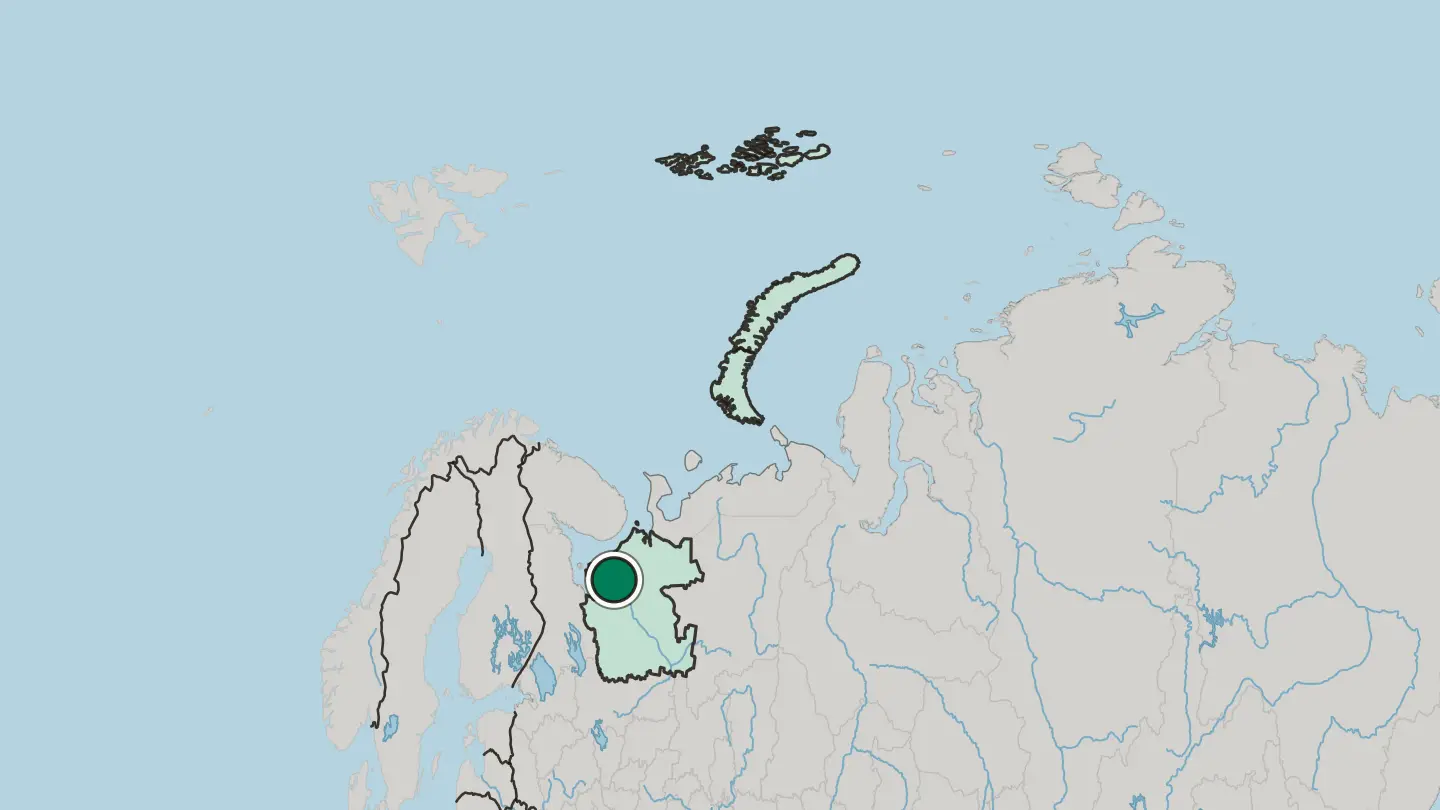
 Russia
Kotlas
Kotlas is the river port at the confluence of the Northern Dvina and the Vychegda, a rail junction of Arkhangelsk Oblast dating from 1890.Where to stay →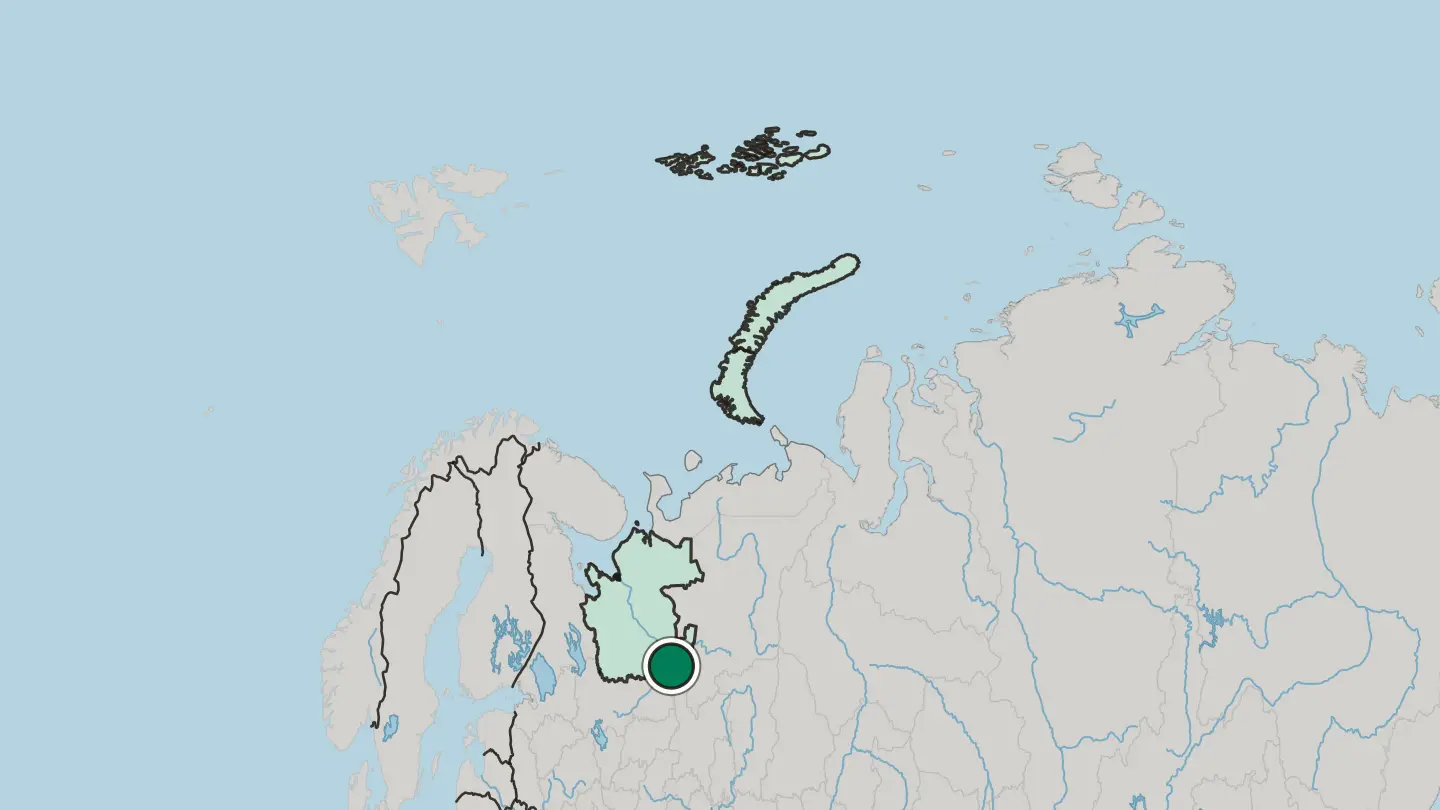
About Arkhangelsk Oblast
Timber and the sea define it.
What is Arkhangelsk Oblast known for?
Arkhangelsk, the capital, sits at the mouth of the Northern Dvina and has shipped the North's forests out through the White Sea for centuries. Its coast belongs to the Pomors. These were seafaring people who once sailed ice-strong boats called kochi to hunt and trade across the whole of the Russian Arctic.
Far offshore lie the region's Arctic archipelagos, from the Solovetsky Islands in the White Sea to Novaya Zemlya on the edge of the Kara Sea. This is one of the great wooden-architecture landscapes of Russia.
Where is Arkhangelsk Oblast?
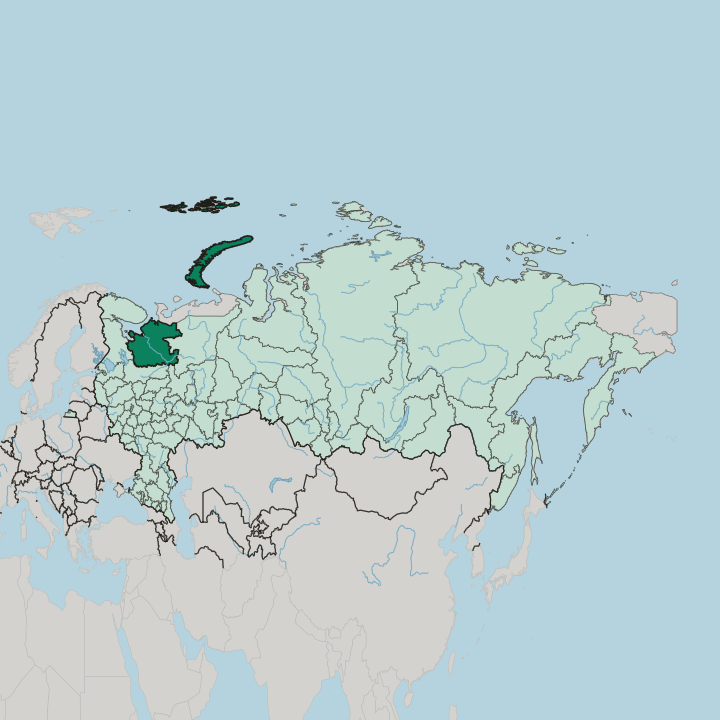
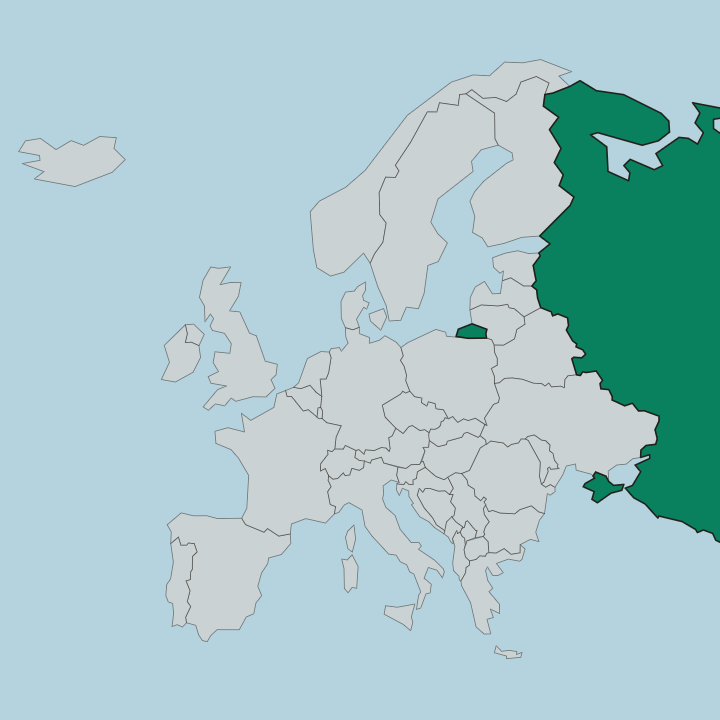
Arkhangelsk Oblast fills the far north-west of Russia, where the East European Plain runs out into the Arctic. It is the largest of Europe's first-level administrative divisions. Counting the Nenets Autonomous Okrug it governs, the region covers roughly 587,400 square kilometres of forest, bog, and cold coast, more than most whole countries manage.
Its northern edge is all sea. The White Sea bites deep into the coast, taking in the Onega, Dvina, and Mezen bays, and beyond it the Barents and Kara Seas reach toward the pole. The Northern Dvina is the region's spine.
It gathers the waters of the interior and runs some 744 kilometres to Dvina Bay, reaching the White Sea at Arkhangelsk. The Onega, the Mezen, the Pinega, and the Vaga drain the rest. Almost every part of the mainland lies under taiga, dense spruce, pine, and birch broken by rivers and mire, thinning to open tundra in the far north.
Far offshore, the region's reach extends across the Arctic Ocean. The Solovetsky Islands sit in the White Sea itself, while Novaya Zemlya and Franz Josef Land lie hundreds of kilometres north, among the last land before the ice.
What is Arkhangelsk Oblast like?
This is Pomor country. The culture here grew from the sea, built by the Pomors who fished, hunted, and traded along the White Sea and out into the Arctic in their kochi. Their world produced a distinct northern craft tradition, from the painted Kargopol clay toys of the south to the carving and boat-building of the coastal villages.
Wood shaped everything. The region holds some of the finest surviving wooden architecture in Russia, tall shingled churches and belfries raised without a single nail, and the open-air museum of Malye Karely near Arkhangelsk gathers many of them under the pines. Faith left deep marks on this coast.
The Solovetsky Monastery, founded in 1436 out in the White Sea, became one of the wealthiest and most powerful in the country before the Soviet state turned it into a prison camp. Russian is the common tongue, spoken with the flat, old northern accent that linguists prize. Life runs to the seasons here, to the timber cut, the fishing, and the long white summer nights.
Winter closes much of it down. The North keeps its own slow rhythm, far from the noise of Moscow.
What is the history of Arkhangelsk Oblast?
The Pomors were here first. Long before any city, this coast was their land, and the old trading post of Kholmogory handled the region's furs, salt, and timber for the whole Russian North. Arkhangelsk itself was founded in 1584, when Ivan the Terrible ordered a fortress raised on Cape Pur-Navolok beside a monastery of the Archangel Michael.
It became Russia's first sea port. That single window on the ocean carried the country's foreign trade until Saint Petersburg rose in 1703 and drew the ships away, after which timber revived the town and the oblast took its present shape in 1937.
What is the climate of Arkhangelsk Oblast?
The climate is subarctic and long-wintered. Snow and hard frost hold from about November to March, and the White Sea freezes solid along its shores. Summers are short, cool, and often wet, running from June into August.
Arkhangelsk lies about 300 kilometres south of the Arctic Circle, so it escapes true polar night, but the White Nights of late spring keep the sky bright almost around the clock. Autumn comes early. The far Arctic islands stay colder and icier still.
How do you get to Arkhangelsk Oblast?
Arkhangelsk is the way in. The city has the region's main airport and sits on the railway that runs north from Moscow, the line that revived its timber trade in the industrial age. Most travellers arrive by that overland route or by air.
From the capital, roads and rail thread south and inland toward Kotlas, but the network thins quickly across such distances. Reaching the Solovetsky Islands or the far Arctic archipelagos means a boat or a small plane, and only in the open season.
Common questions
What is the best area to stay in Arkhangelsk Oblast?
Severodvinsk: the White Sea coast near the capital.
Good for
More regions in Russia
Updated September 2026