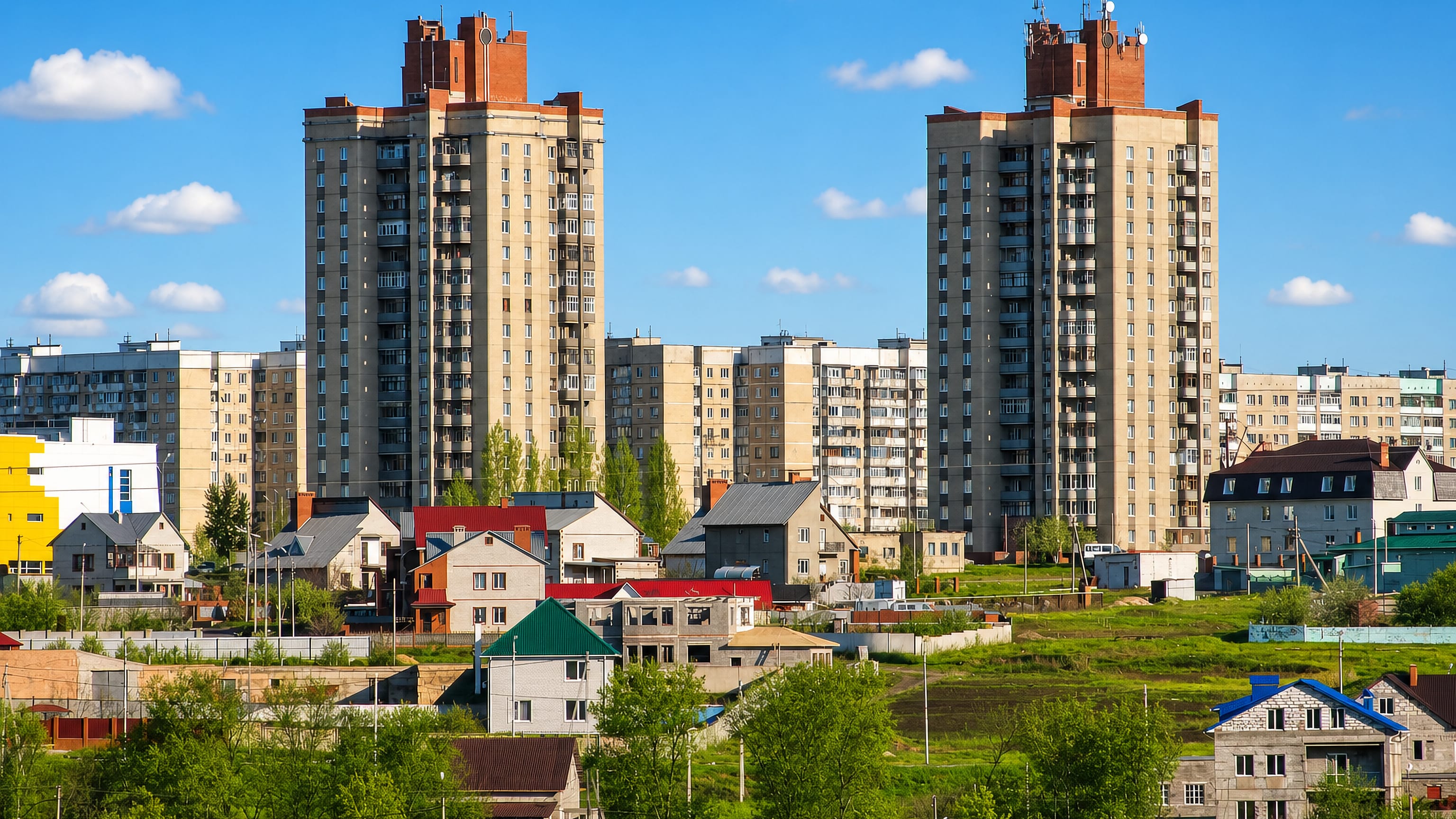
Russia · Belgorod Oblast
Where to Stay in Gubkin, Belgorod Oblast
Gubkin took shape in 1939 on the Oskolets in Belgorod Oblast, a twentieth-century town also carried on the record as Korobkovo.
Find your area →


Where to stay in Gubkin
How the choice of base plays out on the ground.
Gubkin covers ground. Roughly 109 square kilometres of Belgorod Oblast carry the town, so the first decision is whether a bed sits in the built centre where the academicians' busts and the monument to Lenin stand, or out toward the edges. The centre keeps the memorials.
The Church of the Apostle James, the House of Creativity for Children and Adolescents and the busts of Shevyakov and Lazarev fall within the same core, which makes a central room the one that needs no transport. Tyoply Kolodez is the other option. The Saint Michael church there sits away from the centre, so a stay near it trades the busts and the House of the landowner Korobkov for quieter ground on the same municipal territory.
Water is the third axis. The Oskolets runs through, a tributary of the Oskol, and rooms near it put the river ahead of the memorials without leaving Gubkin behind. Belgorod is the alternative entirely. Anyone who needs a larger base can look to Belgorod, 138 kilometres away, though that turns a stay in Gubkin into a day trip rather than a place to sleep.
Things to do in Gubkin
Ranked by global recognition; descriptions from Wikidata (CC0).
Churches & Religious Sites
2- Saint Michael church, Tyoply Kolodez Heritage
- Церковь апостола Иакова
Castles & Historic Sites
4- Бюст академика И.М. Губкина Heritage
- Бюст академика Л.Д. Шевякова Heritage
- Бюст академика П.П. Лазарева Heritage
- Памятник В.И. Ленину Heritage
Landmarks & Notable Places
2- Дом помещика Коробкова Heritage
- Дом творчества детей и подростков Heritage
worth knowingacross 3 categories in Gubkin
About Gubkin
The busts here are of academicians.
What is Gubkin known for?
Three stand in the town, Shevyakov, Lazarev and Gubkin, and the last of those three shares his name with the place that raised the monument to him. A monument to Lenin stands with them. The Church of the Apostle James and the Saint Michael church at Tyoply Kolodez carry the older kind of landmark, and two mass graves hold Soviet soldiers killed in the fighting.
What are the main landmarks in Gubkin?
Three busts, one monument and two churches. Shevyakov, Lazarev and Gubkin are commemorated as academicians, the monument to Lenin stands separately, and the Church of the Apostle James and the Saint Michael church at Tyoply Kolodez are the religious buildings on the list. Two mass graves belong to the war.
One holds 169 Soviet soldiers and the other 11, both killed in the fighting, and the House of the landowner Korobkov is the one domestic building on the register.
What is the history of Gubkin?
The town dates from 1939. The name Korobkov recurs in the official form Korobkovo, and the House of the landowner Korobkov is the one building on the register that points back to whatever stood on the Oskolets before the town was constituted. War came soon after.
Two mass graves hold Soviet soldiers, 169 in one and 11 in the other, and they are among the earliest memorials a town constituted in 1939 could have. Gubkin sits 138 kilometres northeast of Belgorod, far enough into Belgorod Oblast to be a centre in its own right rather than an outlying district of the regional capital. Science supplied the town's icons.
Busts of the academicians Shevyakov, Lazarev and Gubkin were raised here, and one of the three carries the same name that the town itself goes by. A monument to Lenin belongs to the same century. The Church of the Apostle James and the Saint Michael church at Tyoply Kolodez sit on the other side of that ledger, and the House of Creativity for Children and Adolescents shows what a town builds once the memorials are up.
The Oskolets stayed put through all of it. Gubkin grew across roughly 109 square kilometres around that river, a tributary of the Oskol, which is a wide footprint for a place constituted only in the last century.
Where is Gubkin?
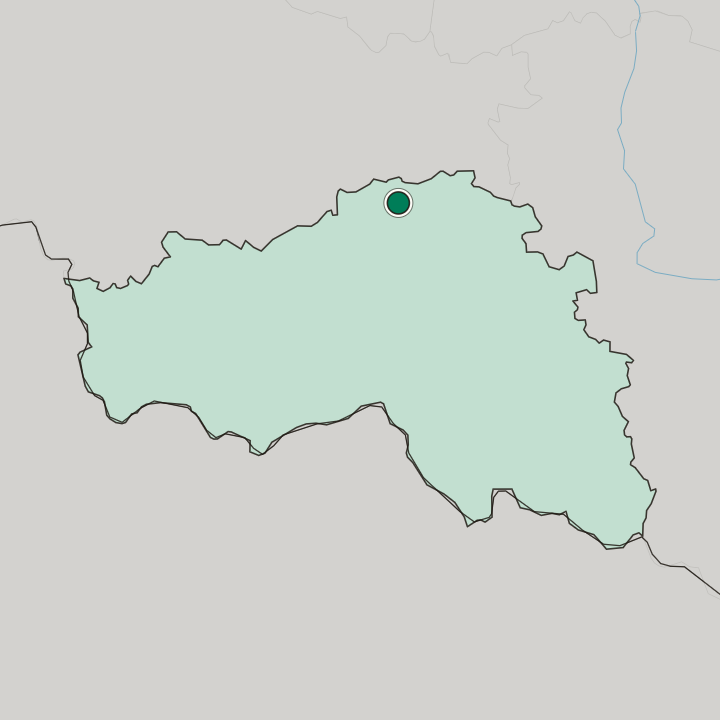
The Oskolets threads the town. Gubkin spreads over roughly 109 square kilometres of Belgorod Oblast around that river, which joins the Oskol rather than running to a sea of its own. Tyoply Kolodez lies within the same bounds.
Gubkin stands 138 kilometres northeast of Belgorod, so the regional capital is a real distance from this ground and the Oskolets is what the town actually sits on.
What is the climate of Gubkin?
Nothing maritime reaches here. Gubkin lies in the temperate band of the northern hemisphere, with the Oskolets and the Oskol as the only water of any size nearby, so the year runs on inland terms rather than coastal ones. The rivers are small.
Neither the Oskolets nor the Oskol is large enough to moderate a season the way a sea would, which is why the contrast between the halves of the year is the main thing a visitor to Belgorod Oblast plans around.
How do you get to Gubkin?
Belgorod is the reference point. Gubkin lies 138 kilometres northeast of it, which makes the regional capital the practical starting point for anyone arriving from outside Belgorod Oblast. The town itself is spread out.
Arriving is one problem and crossing roughly 109 square kilometres to reach Tyoply Kolodez or the Saint Michael church is another, so local movement matters as much as the approach from Belgorod does.
Good for
More cities in Belgorod Oblast
Updated September 2026