Russia · Kaluga Oblast
Where to Stay in Obninsk, Kaluga Oblast
Obninsk grew from 1946 on the bank of the Protva, a science town of Kaluga Oblast built around nuclear physics and meteorology.
Find your area →


Where to stay in Obninsk
The practical side of choosing where to sleep.
Most beds sit in the institute districts, within reach of the Institute of Physics and Power Engineering and the Museum of history of city of Obninsk, and that is the practical base for a first visit as well as for anyone whose business is with the research bodies themselves. The walking is flat and green. Streets here were planned with trees and courtyards from the beginning, so the distance from a room to the monument to Kurchatov, the World of the Atom mosaic or the town park is measured in minutes rather than in transfers.
Belkino is the other choice. On the edge of the town, the Belkino Estate keeps its main house, its park and the Saints Boris and Gleb Church, and a night out that way trades shops and services for old lime avenues and quiet, with the Protva never far off. If you care more about the older layer than about the laboratories, that side also puts you nearer the Morozov dacha and the Bugry estate that Konchalovsky used.
Rooms are limited in both. Obninsk covers only about forty square kilometres, so nothing is truly out of reach from either base, and the sensible plan is to take what is free and walk the rest.
Things to do in Obninsk
Ranked by global recognition; descriptions from Wikidata (CC0).
Museums & Galleries
1- Museum of history of city of Obninsk
Churches & Religious Sites
1- Saints Boris and Gleb Church, Belkino Heritage
Castles & Historic Sites
4- Бюст С.Т. Шацкого (Обнинск) Heritage
- Мозаичное панно «Мир атома» (Обнинск) Heritage
- Панно-сграффито на здании ВНИИГМИ-МЦД (Обнинск) Heritage
- Панно-сграффито на здании Дома офицеров (Обнинск) Heritage
Landmarks & Notable Places
8- Institute of Physics and Power Engineering JSC Heritage
- Obninsk Meteorological tower Heritage
- Obninsky estate Heritage
- Belkino Estate Heritage
- Автоматическая телефонная станция ФЭИ (Обнинск) Heritage
Show 3 more →
- Административное здание ФЭИ (Обнинск) Heritage
- Главный дом (Белкино (примыкает к г. Обнинск)) Heritage
- Дача Трояновских (усадьба Бугры, дача Кончаловского) (Обнинск) Heritage
worth knowingacross 4 categories in Obninsk
About Obninsk
Science built this town.
What is Obninsk known for?
Laid out after the Second World War as a research settlement, Obninsk gathered institutes working on nuclear physics and atomic energy, on meteorology, radiology and geophysics, and they still set the rhythm of the streets. The Institute of Physics and Power Engineering stands at the centre of that story, the Obninsk Meteorological tower rises above the treeline, and a monument to Kurchatov marks the man whose work the place was founded to continue. Even the wall art follows suit.
The World of the Atom mosaic and the sgraffito panel on the House of Officers put the same subject in public view.
What are the main landmarks in Obninsk?
Two eras share the register. The scientific one gives the Institute of Physics and Power Engineering, the Obninsk Meteorological tower, the monument to Kurchatov and the dacha he used, along with the World of the Atom mosaic and the sgraffito panel on the House of Officers. The older one is quieter and greener: the Belkino Estate with its main house and park, the Saints Boris and Gleb Church, the Obninsky estate that gave the town its name, the Morozov dacha and the Bugry estate associated with Konchalovsky.
A bust of Shatsky stands nearby. The Museum of history of city of Obninsk holds the thread between the two.
What is the history of Obninsk?
Estates came first on this stretch of the Protva. Belkino, with its main house, its park and the Saints Boris and Gleb Church, and the Obninsky estate that eventually lent the town its name, were the settled landscape here long before any institute existed, and the Morozov dacha and the Bugry estate used by Konchalovsky belong to the same country of summer houses. Teachers worked here too.
A bust of Shatsky and the surviving house built for the staff of a children's home for Spanish children record an earlier stretch of that story, one of schooling and shelter rather than laboratories. Everything changed in 1946. In the years after the Second World War the settlement was rebuilt as a research town, its institutes assigned to nuclear physics and atomic energy, to meteorology and radiology, and to radiation chemistry and geophysics, with the Institute of Physics and Power Engineering as the anchor of the whole enterprise.
Kurchatov kept a dacha here, and the monument raised to him stands among streets that were laid out for the people his programme brought. Mass graves from the war years remain at Belkino and in the town. The Obninsk Meteorological tower, the World of the Atom mosaic and the sgraffito panels on the House of Officers and on the meteorological institute round out a townscape that advertises what it was built to do.
Where is Obninsk?
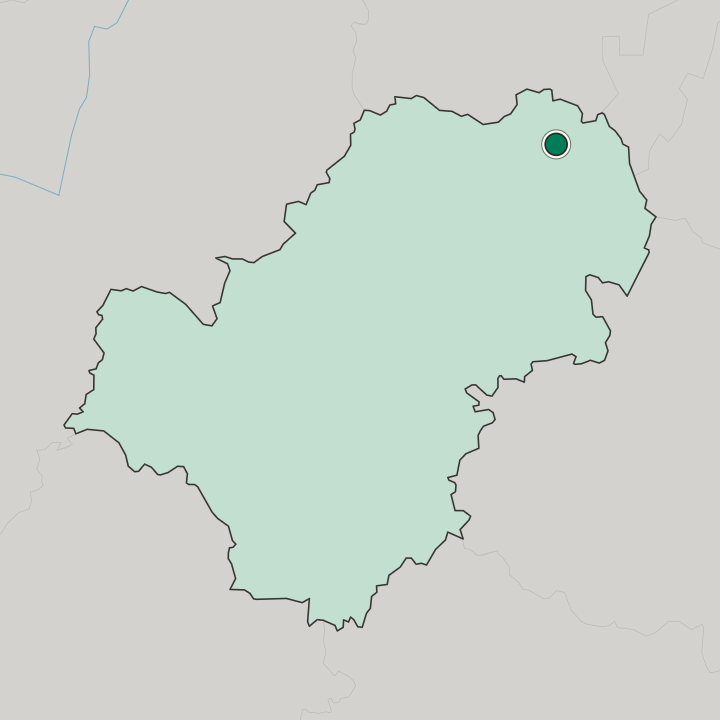
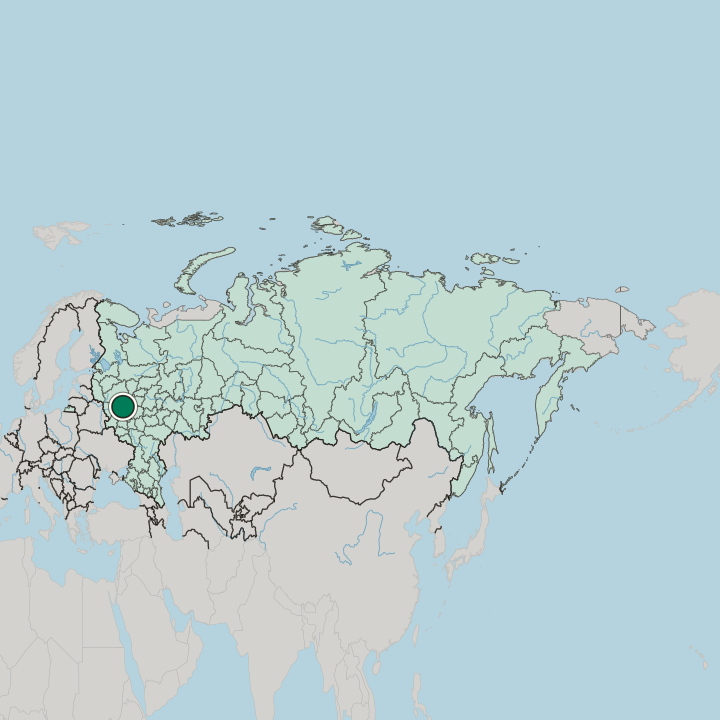
The Protva does the shaping here. Obninsk stands on the bank of that river in Kaluga Oblast, a hundred kilometres south-west of Moscow and eighty north-east of Kaluga, on gently rolling ground where mixed woodland still runs up to the streets and out past Belkino. Its footprint is small.
Barely forty square kilometres of parks, institutes and housing make up the whole town, which is why the countryside starts within a walk of most addresses.
What is the climate of Obninsk?
The Protva freezes and the woods go quiet, and for several months of the year Obninsk keeps the settled snow cover that the country between Moscow and Kaluga expects, with short grey days and cold that stays put rather than swinging about. Then the thaw arrives. Spring runs fast through the Belkino park and the avenues of the institute districts, summer is warm and green and long enough for river weather to matter, and autumn turns the mixed woodland early.
How do you get to Obninsk?
Moscow is the usual starting point. The city lies a hundred kilometres to the north-east, close enough that Obninsk is an ordinary day trip, while Kaluga sits eighty kilometres the other way and serves as the regional alternative. Both approaches are by road.
Once here the institute districts, the Museum of history of city of Obninsk and the walk out to the Belkino Estate need nothing more than time.
Good for
Another city in Kaluga Oblast
Updated October 2026