Russia · Karachayevo-Cherkesiya
Where to Stay in Cherkessk, Karachayevo-Cherkesiya
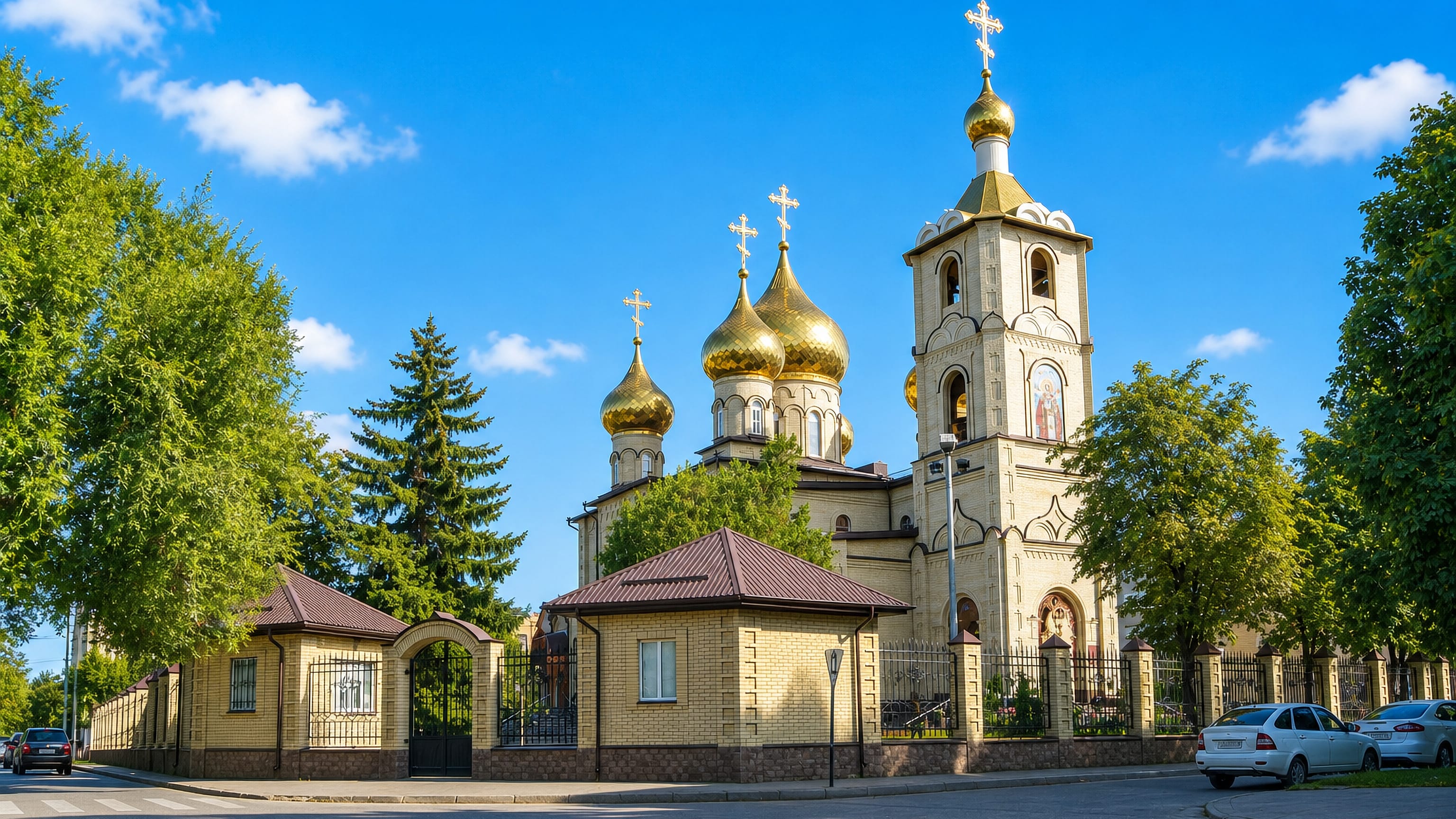
Capital of Karachay-Cherkessia, Cherkessk began in 1825 as the Cossack stanitsa of Batalpashinskaya and kept the plan it was given.
Find your area →


Where to stay in Cherkessk
How the choice of base plays out on the ground.
Two clusters matter. The first is the old civic corner, where the Provincial government offices, the Samoilenko Hotel and the former commercial bank stand close enough together that a stay among them gives a visitor the whole imperial-era inventory of Cherkessk in one short walk, with the Aliev House a little further along. Rooms in that quarter put the working capital of Karachay-Cherkessia on the doorstep, which is convenient for anyone whose visit involves the republic's offices and inconvenient only in that the streets stay busy on weekday mornings.
The second cluster gathers around the Baychorova museum-reserve and the Friendship of Peoples Monument, where the town gives itself more room and the walking is easier. If you are here for the museum-reserve, its collections and its natural-heritage side, an address in that direction shortens every day and leaves the evening free for the Church of the Intercession or the Saint Gevorg church a few streets over. Either cluster keeps the town within a walk.
Cherkessk covers barely seventy square kilometres, so the choice between the two clusters is a matter of what you want outside the window rather than how far you will have to travel, and either one leaves the whole grid of the stanitsa within reach on foot.
Things to do in Cherkessk
Ranked by global recognition; descriptions from Wikidata (CC0).
Churches & Religious Sites
1- St. Gevorg church, Cherkessk
Castles & Historic Sites
1- Friendship of Peoples Monument in Cherkessk Heritage
Landmarks & Notable Places
5- Provincial government offices, Cherkessk Heritage
- Samoilenko Hotel Heritage
- Банк коммерческий (Черкесск) Heritage
- Дом Алиева (Черкесск) Heritage
- Храм Покрова Пресвятой Богородицы (православный) (Черкесск) Heritage
worth knowingacross 3 categories in Cherkessk
About Cherkessk
Cherkessk carries the offices.
What is Cherkessk known for?
As the political, economic and cultural centre of Karachay-Cherkessia it holds the republic's institutions, among them the Baychorova museum-reserve, whose remit runs to natural heritage as well as to history and culture. Its street corners keep an older town underneath the administrative one: the Samoilenko Hotel, the Provincial government offices, the Aliev House and the former commercial bank. Faiths sit side by side.
The Church of the Intercession and the Armenian Saint Gevorg church stand in the same town as the Friendship of Peoples Monument.
What are the main landmarks in Cherkessk?
The Friendship of Peoples Monument is the piece most visitors photograph, and the Baychorova museum-reserve is where the republic explains itself, its holdings covering the history, the culture and the natural heritage of Karachay-Cherkessia together. Older buildings survive in the centre. The Samoilenko Hotel, the Provincial government offices, the Aliev House and the former commercial bank are the fabric of the town that grew out of the stanitsa, and two places of worship anchor the rest: the Church of the Intercession and the Armenian Saint Gevorg church.
None of it takes long. A morning covers the lot.
What is the history of Cherkessk?
It began as a stanitsa. Batalpashinskaya was laid out in 1825 as a Cossack settlement, and the regular grid of that foundation still governs how the middle of Cherkessk is walked, block by block rather than by any winding older lane. Trade followed the garrison.
By the closing decades of the imperial period the settlement had acquired the buildings that now carry its heritage listings, among them the Samoilenko Hotel, the former commercial bank and the Provincial government offices, together with merchant houses of which the Aliev House is the best known. The name changed with the century, from Batalpashinskaya to Cherkessk, and the town took on the role it still has as the seat of Karachay-Cherkessia and the centre of the republic's political, economic and cultural life. Soviet decades added the civic set pieces, the Friendship of Peoples Monument chief among them, and gathered the region's collections into what is now the Baychorova museum-reserve, a body whose responsibilities extend from archaeology and folk culture to the natural landscapes of the republic.
Congregations stayed. The Church of the Intercession and the Armenian Saint Gevorg church remain in use, and between them and the Cossack grid the town keeps the outline of every stage it has passed through.
Where is Cherkessk?
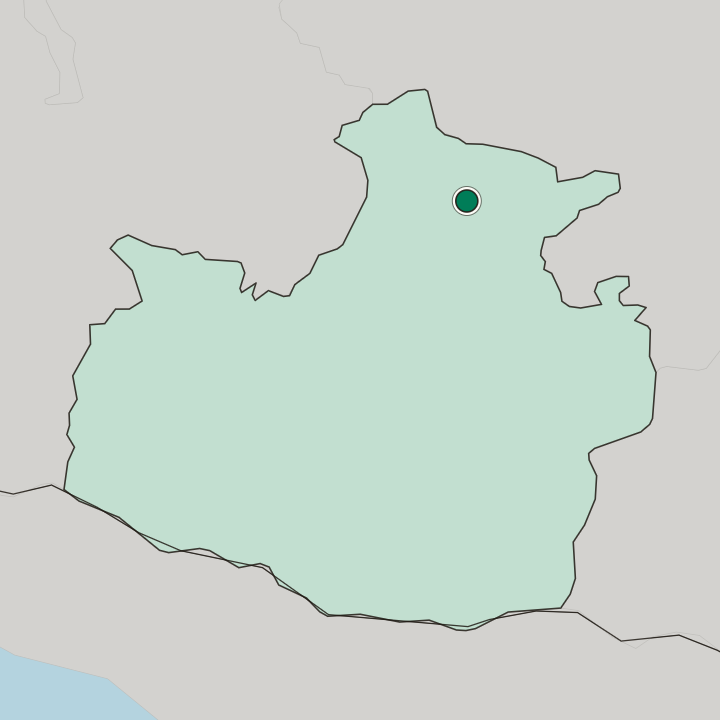
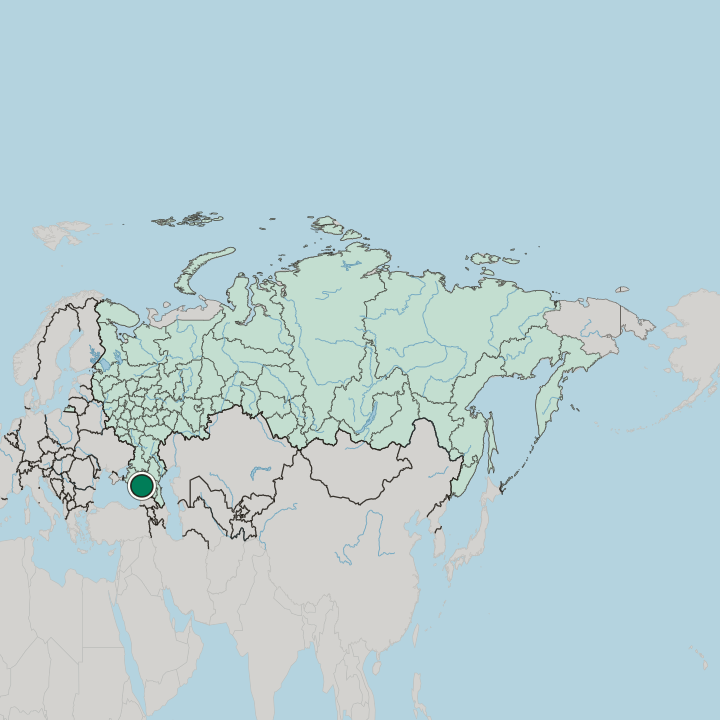
Cherkessk holds the middle of Karachay-Cherkessia's affairs rather than the middle of a dramatic landscape. The town spreads across roughly seventy square kilometres in a temperate part of Russia, its streets still following the rectangular sweep laid down for the stanitsa, and it functions as the point where the republic's business, administration and cultural institutions all come together. The grid makes orientation simple.
Whatever lies beyond the edge of town, the Baychorova museum-reserve is the place that documents it.
What is the climate of Cherkessk?
Winter is the shorter half. Frost and some snow reach the streets of Karachay-Cherkessia's capital, but the cold season lacks the length a subpolar winter brings, and the town is usually walkable throughout it. Warmth returns early.
From spring into autumn the open ground around the Friendship of Peoples Monument stays in use, and the high-summer afternoons push people onto the shaded side of the street until the evening cools the grid of Cherkessk again.
How do you get to Cherkessk?
Roads run to the capital. Because Cherkessk is the administrative seat of Karachay-Cherkessia, the routes that matter within the republic all end here, and arriving from elsewhere in Russia generally means a road journey for the final stretch. Buses use the central streets.
From the middle of town the Provincial government offices, the Samoilenko Hotel and the Baychorova museum-reserve are close enough to reach on foot with a map and no hurry.
Good for
Updated September 2026