Russia · Penza Oblast
Where to Stay in Kuznetsk, Penza Oblast
Kuznetsk dates from 1699. The Penza Oblast town sits in the foothills of the Volga Upland, mainly on the left bank of the Truyov.
Find your area →


Where to stay in Kuznetsk
Where visitors usually base themselves, and why.
Ascension Cathedral fixes the middle. The protected addresses of Kuznetsk run to merchant houses, and Дом купца Боброва, Дом купца Кривова and Лавка Феклистова all name the trade that built them, which makes a central room the one that puts most of the register within a walk. Merchants shaped the stock.
A stay here means sleeping among frontages that went up for trade rather than for visitors, and the Church of the Theotokos of Kazan closes the set at one end while Ascension Cathedral holds the other. Kuznetsk railway station sits on the Kuybyshev Railway, which gives the town a second centre of gravity and a reason to take a room on that side when the departure is early. The Truyov offers the third.
Kuznetsk was built mainly on the left bank of that river, so water rather than a square is the reference for anyone who prefers it, and the foothills of the Volga Upland stand around it. Twenty-three square kilometres is not much ground. Everything named here falls inside it, and the difference between one address and another is measured in minutes rather than in the character of a district.
Things to do in Kuznetsk
Ranked by global recognition; descriptions from Wikidata (CC0).
Churches & Religious Sites
2- Ascension Cathedral, Kuznetsk Heritage
- Church of the Theotokos of Kazan, Kuznetsk Heritage
Castles & Historic Sites
3- Кч4 steamer in Kuznetsk Heritage
- Бюст А.Н. Радищева (Кузнецк) Heritage
- Памятник работникам обувной фабрики, погибшим в годы Великой Отечественной войны (Кузнецк) Heritage
Landmarks & Notable Places
8- Kuznetsk railway station (Kuybyshev Railway) Heritage
- Дом купца Боброва Heritage
- Дом врача Шакина Heritage
- Бывший магазин купца Боброва (Кузнецк) Heritage
- Городская усадьба (Кузнецк) Heritage
Show 3 more →
- Дом купца Кривова (Кузнецк) Heritage
- Дом фабриканта Шульпина (Кузнецк) Heritage
- Жилой дом (Кузнецк) Heritage
worth knowingacross 3 categories in Kuznetsk
About Kuznetsk
Merchant houses, and plenty of them.
What is Kuznetsk known for?
Kuznetsk keeps Дом купца Боброва, Дом купца Кривова, Дом фабриканта Шульпина and Дом врача Шакина among its protected addresses, and each is entered under a personal name rather than a street. Two churches rise above that. Ascension Cathedral and the Church of the Theotokos of Kazan carry the religious side of a town whose register otherwise reads as a list of who lived and traded where.
What are the main landmarks in Kuznetsk?
Ascension Cathedral leads the register. The Church of the Theotokos of Kazan follows it, and beyond the two churches the list turns domestic with Дом купца Боброва, Дом врача Шакина and Дом фабриканта Шульпина. One entry is a vessel. Кч4 steamer in Kuznetsk is listed as a monument in its own right, while Кинотеатр «Комсомолец», Земская больница and Пожарная часть cover the civic side of Кузнецк.
What is the history of Kuznetsk?
Kuznetsk begins in 1699. The town grew on the left bank of the Truyov in the foothills of the Volga Upland, and by the time its buildings were being written down the register had filled with merchants: Дом купца Боброва, Дом купца Кривова, Лавка Феклистова and Дом фабриканта Шульпина all carry the name of whoever built or owned them. The plan itself is protected. Планировка города Кузнецка appears on the list as an object in its own right, which puts the layout of the streets on the same footing as the houses standing along them.
Public building left its own marks. Земская больница, Пожарная часть and Городская усадьба all sit on the protected list beside the merchant frontages, which is the ordinary civic furniture of a town of that period. Then came 1918. Здание реального училища is listed because the establishment of Soviet power in Kuznetsk was proclaimed there on 25 January of that year, and the register says so in the entry itself. Later decades added their own. Кинотеатр «Комсомолец» and Памятник работникам обувной фабрики belong to the town's twentieth century, and Kuznetsk railway station tied the place into the Kuybyshev Railway.
Where is Kuznetsk?
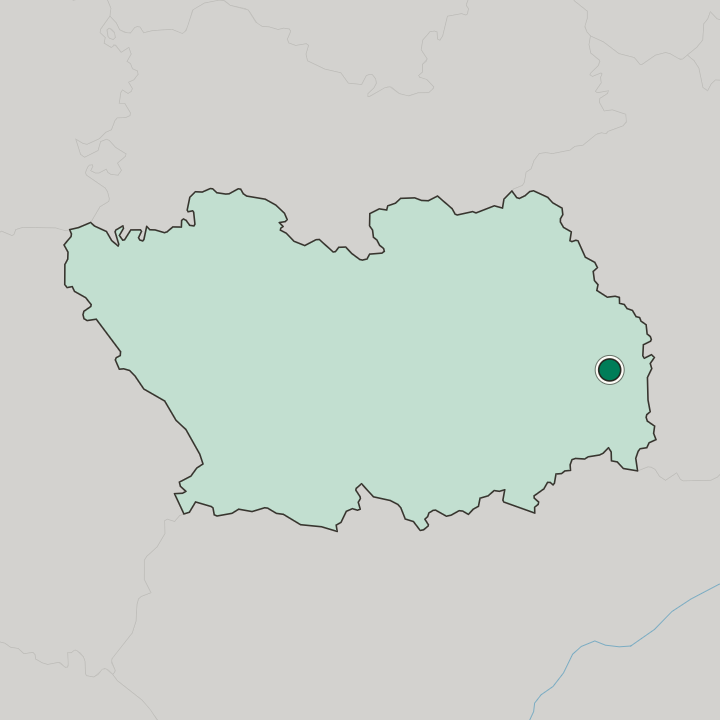
The Truyov draws the line. Kuznetsk stands mainly on the left bank of that river, with the foothills of the Volga Upland behind it, which gives the town a floor of valley ground and a rising edge on one side. Penza Oblast holds the rest.
Nothing in the record names a lake, a coast or a border near Kuznetsk, so the river and the upland are the two features that place the town at all, inside some twenty-three square kilometres of ground.
What is the climate of Kuznetsk?
The Volga Upland is the nearest thing to a moderating agent, and it is not much of one. Kuznetsk lies inland in the northern temperate band, where the year divides cleanly into a warm half and a cold one with no sea to blunt either. Figures are absent.
What the record supplies is the band, the foothills and the Truyov, and those three between them explain more about the ground than about the air.
How do you get to Kuznetsk?
Kuznetsk railway station carries the name of the town. It belongs to the Kuybyshev Railway, which ties Kuznetsk to a named railway rather than to a road alone, and it is the only arrival point the record names. Roads fill the gap.
Nothing in the register fixes a highway number or an airfield, so the approach across Penza Oblast to the Truyov bank is described by the station at the end of it rather than by the route itself.
Good for
More cities in Penza Oblast
Updated October 2026