Thailand · Changwat Surin
Where to Stay in Surin, Changwat Surin
Surin, capital of Changwat Surin in Isaan, is the Thai town whose elephants, Khmer ruins and silk carried its name east of Bangkok.
Hotel links are affiliate links: booking through them may earn us a commission, at no extra cost to you. It never affects how places are ranked. How this works


Where to stay in Surin
Where visitors usually base themselves, and why.
The Surin Elephant Round-up decides this question more than any street does. Beds in the town are plain and few, and the week the elephants arrive is the one week of the year when booking early is the whole difference between a room in Surin and a room somewhere else in Changwat Surin. Outside that week the calculation flips.
Municipal Surin covers a little over eleven square kilometres, so almost anything inside it leaves the silk shops, the provincial offices of Changwat Surin and the edge of the rice plain inside a short walk. Distance stops mattering. Choose instead by what the day is for.
Beyond the built-up blocks Changwat Surin opens into rice country and the scattered Khmer ruins that give the province its second reason to visit. Rooms out there are thin. A stay on the outskirts suits you if the plan is a car and a run at the temples, since the ruins sit apart from one another and a driver loses nothing by sleeping away from the centre.
Isaan rewards the patient. Bangkok lies 431 kilometres west-southwest, far enough that few people pass through Surin by accident, and almost every guest has come deliberately for the elephants, the silk or the stones.
Find hotels in Surin
Direct booking searches for these neighbourhoods.
The round-up side of Surin
Surin fills for the round-up, and a central room is the difference between walking to the elephants and driving in across Changwat Surin. Beds are limited here, so book early.Find hotels in The round-up side of SurinShoppers working through Surin's silk and jasmine rice trade on footCentral Surin
The silk sellers and the provincial administration of Changwat Surin occupy the same compact grid, so one central bed covers both errandsFind hotels in Central SurinDrivers setting out for the Khmer ruins scattered across Changwat SurinThe Changwat Surin outskirts
Those ruins lie far apart out on the rice plain, and a room on the edge of Surin puts the car on the provincial roads first thing. Beds are limited here, so book early.Find hotels in The Changwat Surin outskirtsHotel links are affiliate links: booking through them may earn us a commission, at no extra cost to you. It never affects how places are ranked. How this works
About Surin
Elephants come first.
What is Surin known for?
The Surin Elephant Round-up comes round each November, and the animal has since become the emblem of the whole province rather than of the town alone. Silk and rice follow. Weavers here work fabric that carries the name of Surin far beyond Isaan, and the jasmine rice grown on the surrounding plain is prized across Thailand.
Khmer ruins scatter the countryside around.
What are the main landmarks in Surin?
No single monument stands for Surin. Khmer ruins are what most visitors come to see, and they lie scattered across Changwat Surin rather than inside the municipality, which makes the province the exhibit and the town the base for working through it. Elephants supply the other answer.
Once a year the Surin Elephant Round-up puts the provincial emblem in front of a crowd, and the long working bond between the town's people and the animal is what the event rests on.
What is the history of Surin?
Stone came before paperwork here. The Khmer ruins standing across Changwat Surin are the oldest thing the province has to show, and they record a period when this part of Isaan lay inside a political world whose centre was elsewhere. The record then thins.
What survives in the everyday is not a charter but a habit, the long working relationship between the people of Surin and elephants, which is old enough that the animal, not any building, became the emblem of the province. That relationship is the local history. It is also the one a visitor is most likely to meet.
Administration arrived later and named things twice. Surin is written สุรินทร์ in Thai, and the municipality itself is registered as เทศบาลเมืองสุรินทร์, the formal title under which the town governs its eleven-odd square kilometres. Changwat Surin repeats the same word upward.
Distance from Bangkok did the rest of the shaping, because a provincial capital 431 kilometres out in Isaan develops its own centre of gravity rather than living in a capital's shadow. Silk weaving and jasmine rice kept the countryside occupied while the town handled the province's business, and both still travel out of Isaan under the name of Surin.
Where is Surin?
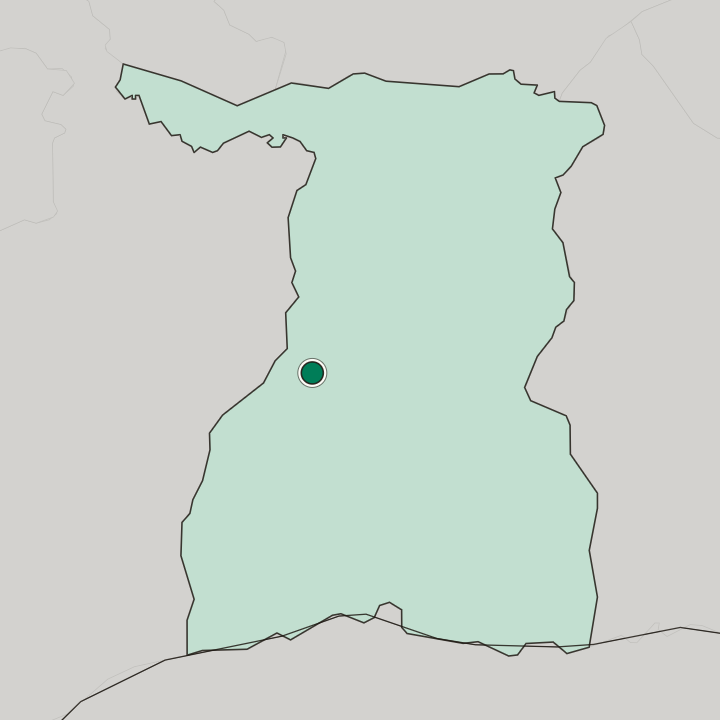
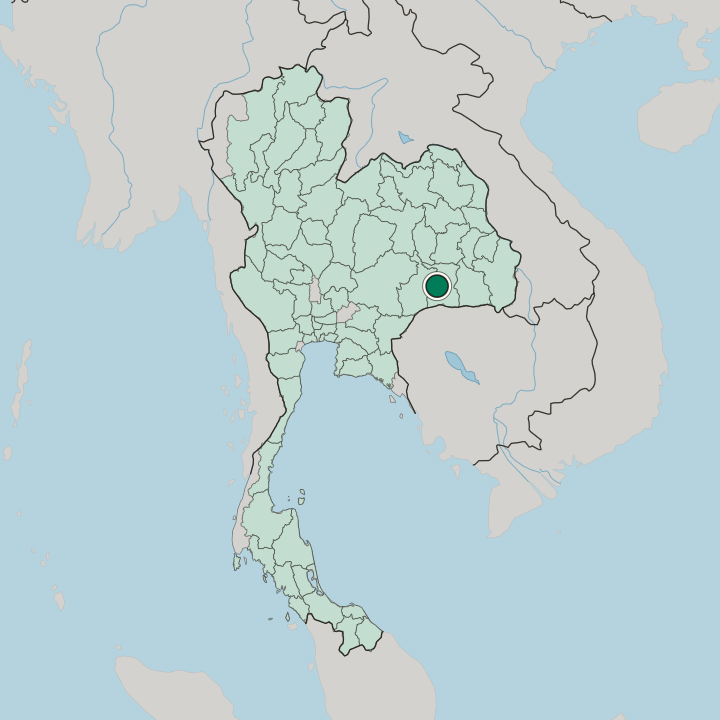
Municipal Surin is small, a little over eleven square kilometres of built ground set inside a much larger province. Rice country surrounds it. Changwat Surin is farmland first, the ground that produces the jasmine rice the area is known for, and the Khmer ruins that draw visitors stand out in that farmland rather than in the town.
Bangkok lies 431 kilometres west-southwest, out beyond the far edge of Isaan.
What is the climate of Surin?
The monsoon runs this calendar, not the thermometer. Surin sits well inland in Isaan, far from any coast, so the year divides into a wet stretch when the rice fields fill and a dry one when the fields go brown and the ruins are easiest to walk. Heat is the constant.
November, the month of the Surin Elephant Round-up, falls after the rains have finished and before the heat builds again.
How do you get to Surin?
Bangkok is the reference point for every arrival. The 431 kilometres between the two are covered overland across Isaan, and a traveller reaching Surin has usually spent the better part of a day doing it, whichever way the journey was made. That distance filters the crowd.
Surin runs Changwat Surin's administration, and provincial traffic that has business with the capital ends up in the same eleven square kilometres.
Common questions
What is the best area to stay in Surin?
The round-up side of Surin: November arrivals who want the Surin Elephant Round-up on their doorstep. Central Surin: Shoppers working through Surin's silk and jasmine rice trade on foot. The Changwat Surin outskirts: Drivers setting out for the Khmer ruins scattered across Changwat Surin.
Updated September 2026