Timor-Leste: Regions, Cities & Travel Guide
Timor-Leste holds the eastern half of Timor plus the Oecusse exclave, ringed by coral and the Timor Sea, with Dili as its capital.
Hotel links are affiliate links: booking through them may earn us a commission, at no extra cost to you. It never affects how places are ranked. How this works


Top destinations in Timor-Leste
One city to start from, then drill into its areas and hotels.

 Timor-Leste
Dili
Dili is the capital of Timor-Leste, a Portuguese-founded port on the north coast of Timor between the sea and the mountains.Where to stay →
Hotel links are affiliate links: booking through them may earn us a commission, at no extra cost to you. It never affects how places are ranked. How this works
Browse by region
One region so far — open it to see its cities and towns.
About Timor-Leste
Timor-Leste is one of the newest countries on earth.
What is Timor-Leste known for?
Divers know it best. The reefs off Atauro, an island north of Dili in the Timor Sea, rank among the most bio-diverse anywhere, and blue and sperm whales pass along the same north coast on their yearly migration. Inland the ground rises fast to Tatamailau, the peak Portuguese-era maps called Mount Ramelau, above coffee slopes and old hill towns.
The eastern tip guards Jaco, an uninhabited island the local Fataluku treat as sacred.
Where is Timor-Leste?
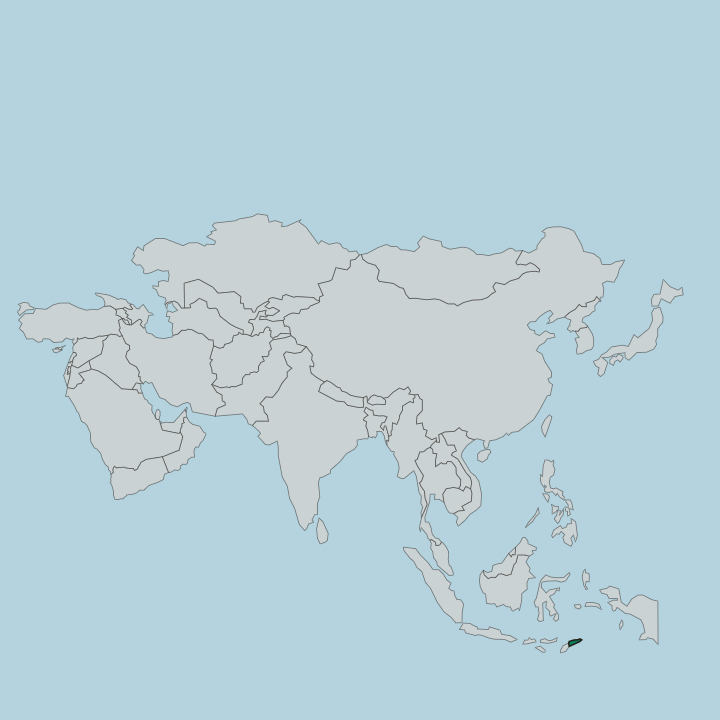
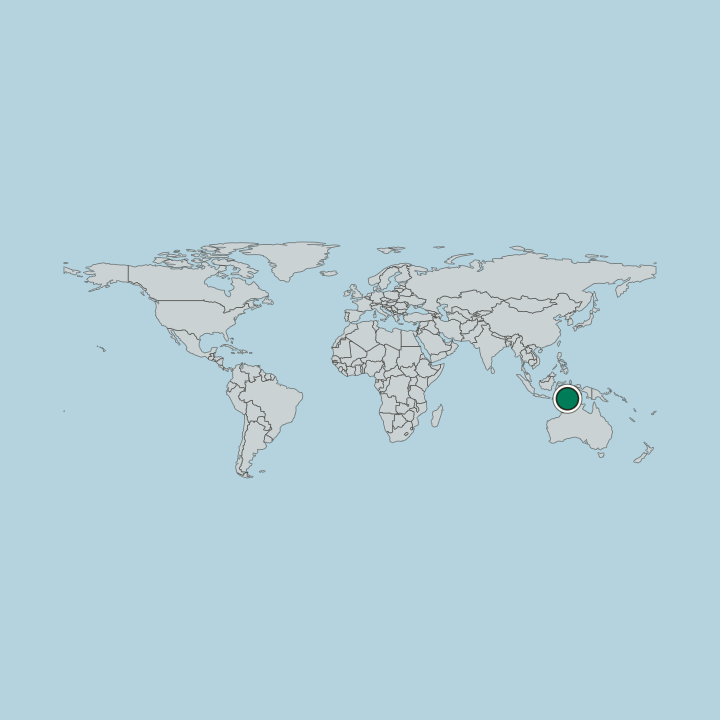
Timor-Leste occupies the eastern half of Timor, the island it shares with Indonesia, and adds the coastal exclave of Oecusse tucked into Indonesian territory on the north-west shore. Two offshore islands round out the map. Atauro rises steep and dry a ferry ride north of Dili, while tiny Jaco sits off the far eastern cape, uninhabited and edged with white sand.
The whole country covers only about the area of an average small province, yet almost none of it is flat. A spine of inactive volcanic ridges runs the length of the interior, climbing to Tatamailau, the peak Portuguese maps knew as Mount Ramelau, at 2,963 metres. From that spine the land tips two ways.
The north coast, where Dili and Baucau sit, is dry and reef-fringed against the calm Timor Sea. The south coast, facing Australia across deeper water, catches more rain and spreads into wider coastal plains before the ground climbs again. Rivers run hard in the wet season and shrink to gravel in the dry, so most travel still follows the coast roads and the switchbacks over the middle.
It is a small country built almost entirely on slopes.
What is the history of Timor-Leste?
Portuguese traders reached Timor in the sixteenth century, drawn first by its sandalwood and later by the coffee they planted across the cool highlands around Ermera and Maubisse. Their hold was thin but long. For close to four centuries the eastern half of the island stayed Portuguese while the Dutch took the west, a split that still survives on the map as the modern border with Indonesia.
That old order ended fast in 1975. As Portugal withdrew, the Fretilin movement declared an independent state on 28 November 1975, and Indonesian forces invaded barely a week later, on 7 December. The occupation that followed lasted a generation and cost an estimated third of the population through fighting, hunger, and massacre.
Resistance never stopped, in the mountains and in the towns alike, and it carried figures like Xanana Gusmão from prison to the presidency. A United Nations vote in 1999 finally forced Indonesia out. On 20 May 2002 Timor-Leste restored its independence and became the first new sovereign state of the twenty-first century.
The scars of that fight still shape its politics. They also explain the quiet pride you meet everywhere.
What is Timor-Leste like?
Timorese life braids together three strands: deep animist tradition, Portuguese-brought Catholicism, and the shared language of Tetum. The mix is everyday, not showy. A village keeps its uma lulik, the sacred ancestral house whose carved posts and steep thatch hold the clan's spirits and heirlooms, and the same family walks to Mass on Sunday.
Tetum carries daily talk in the markets and on the radio, while Portuguese runs through church, courts, and school. Weaving ties it all together. Across the country women hand-loom tais, the striped ceremonial cloth whose patterns mark region, clan, and occasion, worn at weddings and funerals and given as the highest gift.
Food follows the land and the reef. Grilled fish, rice, corn, and cassava anchor most meals, and the highland coffee that the Portuguese planted is now the country's proudest export and its unofficial national drink. Music and oral storytelling still carry history that was never written down.
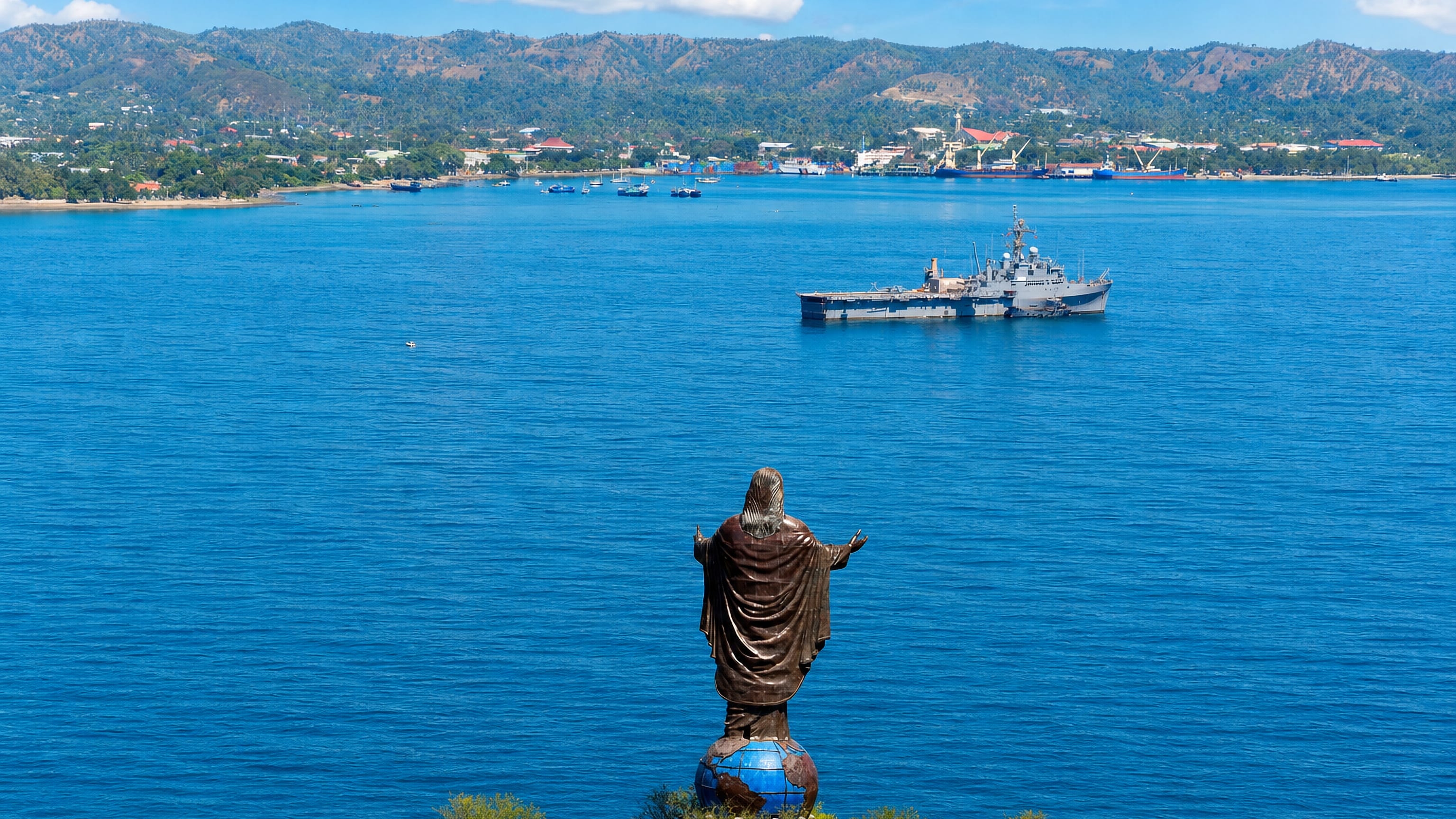
Above Dili the Cristo Rei statue looks out over the Timor Sea, a gift from the Indonesian years that the capital has quietly kept and made its own. Faith here is loud and communal. So is the memory of the long struggle that made the nation.
What is the climate of Timor-Leste?
Timor-Leste runs on two seasons, not four. Temperatures stay warm and steady year-round on the coast. The wet monsoon soaks the country from December into May, when the south coast and the highlands take by far the heaviest rain and mountain roads wash out.
The dry season, roughly June to September, brings clear skies, the best diving off Atauro, and the reliable window for climbing Tatamailau before dawn. Altitude cools things fast. Nights in the highlands can turn genuinely cold while Dili stays hot.
How do you get to Timor-Leste?
Nearly everyone arrives through Dili. The capital's Presidente Nicolau Lobato airport handles the short international hops, mostly from Bali and Darwin, and a scatter of regional links. There is no other way to fly in.
From Dili, ferries and small boats reach Atauro to the north, coast roads run east to Baucau and on toward Jaco, and rough highland routes climb inland toward Tatamailau. Overland crossings from Indonesian West Timor also feed into Oecusse and the western border. Once you land, expect slow going.
Good for
Updated September 2026