
Trinidad and Tobago: Regions, Cities & Travel Guide
Trinidad and Tobago is the southernmost Caribbean nation, a two-island republic off Venezuela with Port of Spain as its capital.
Hotel links are affiliate links: booking through them may earn us a commission, at no extra cost to you. It never affects how places are ranked. How this works


Top destinations in Trinidad and Tobago
One city to start from, then drill into its areas and hotels.

 Trinidad and Tobago
San Fernando
San Fernando is Trinidad's second city, a carnival town on the Gulf of Paria built over San Fernando Hill with the refineries lying to its north.Where to stay →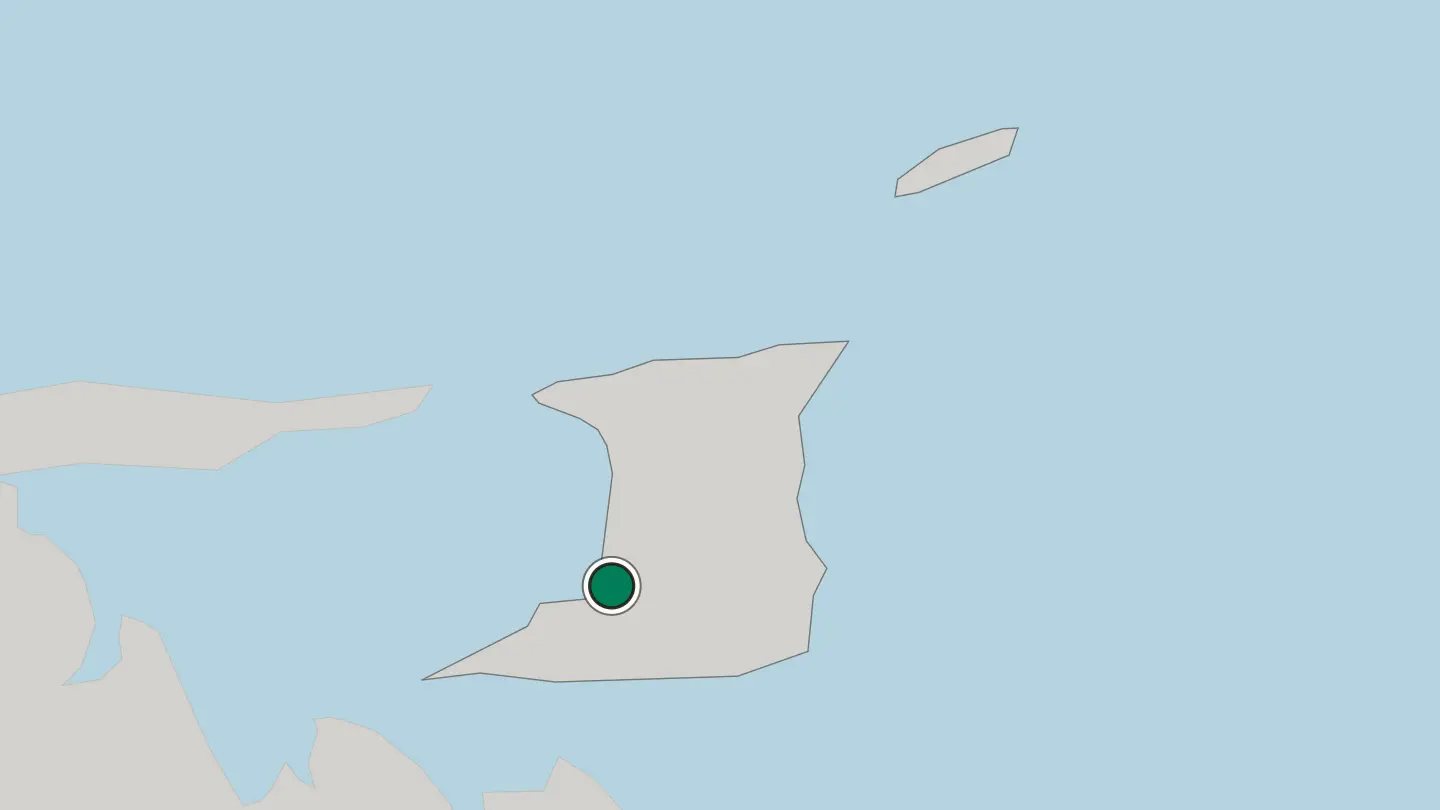
Hotel links are affiliate links: booking through them may earn us a commission, at no extra cost to you. It never affects how places are ranked. How this works
Browse by region
One region so far — open it to see its cities and towns.
About Trinidad and Tobago
What is Trinidad and Tobago known for?
Trinidad and Tobago is the birthplace of the steelpan and of Carnival as the Caribbean stages it. The larger island wears the forested Northern Range along its north edge, and the capital, Port of Spain, sits below those hills on the Gulf of Paria. Oil and gas built the industrial south around San Fernando.
Tobago is the quieter half. Its reefs and rainforest draw divers and birdwatchers far from the calypso din of Trinidad.
Where is Trinidad and Tobago?
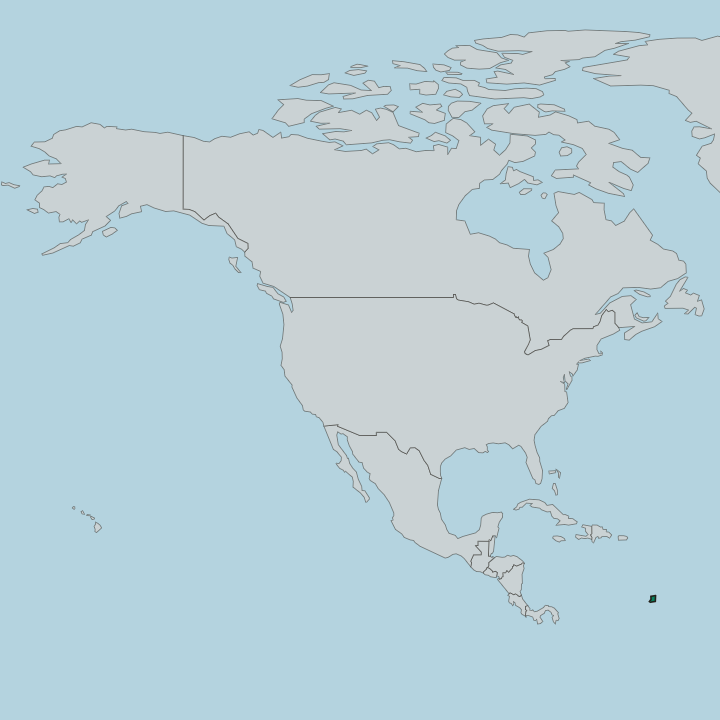
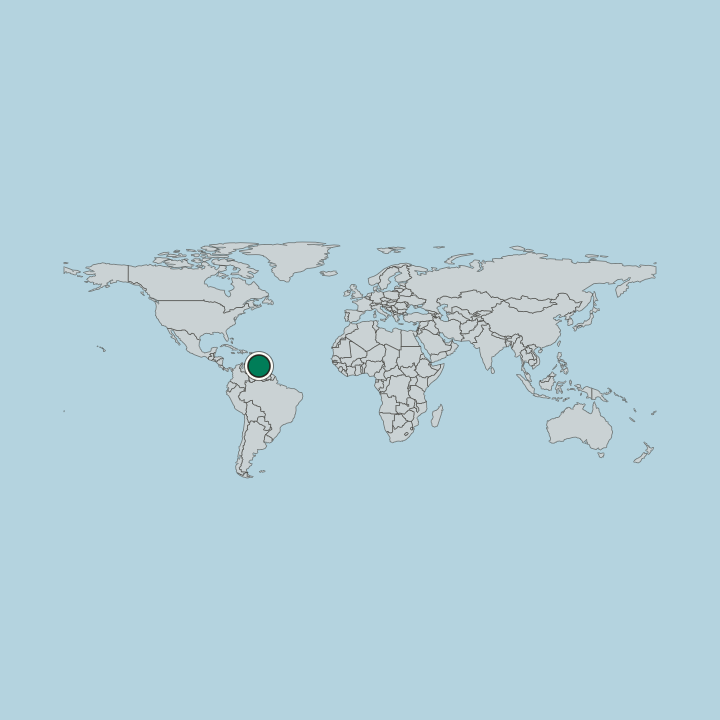
Trinidad and Tobago is the southernmost link in the Caribbean island chain, sitting just off north-eastern Venezuela at the mouth of the Orinoco. It is two islands, not one. Trinidad, the larger, is a continental fragment sheared from South America, and its rocks and wildlife belong to that mainland rather than to the volcanic arc that formed most of the West Indies.
Geology set the tone. The forested Northern Range runs the length of Trinidad's north coast, an eastward extension of the Andes whose highest point, El Cerro del Aripo, tops out near the centre of the ridge. South of those hills the land flattens toward the Gulf of Paria, the shallow sea that separates the island from the Venezuelan coast.
Water and tar mark the extremes of this small country. The Caroni Swamp spreads its mangroves along the west coast below Port of Spain, roosting ground for the scarlet ibis, while the Nariva wetland soaks the east. In the south-west sits the Pitch Lake at La Brea, the largest natural asphalt deposit on earth.
Tobago, low and green to the north-east, is a different landscape again: a spine of rainforest hills dropping to reefs and calm bays. Two islands, one nation, wildly unlike each other.
What is the history of Trinidad and Tobago?
Columbus reached Trinidad in 1498 and claimed it for Spain, which held the island loosely for three centuries while its Amerindian population collapsed. The turn came late. A Spanish decree opened Trinidad to Catholic settlers in the 1780s, and French planters poured in from the smaller islands with enslaved Africans to work new sugar and cocoa estates, so that a Spanish colony took on a French-speaking, African-labouring character before Britain seized it in 1797.
Tobago changed hands even more often, fought over by Spain, France, the Dutch, and Britain until it too became British and was finally yoked to Trinidad as a single colony in 1889. Emancipation in 1834 emptied the estates of forced labour, and the planters answered by shipping in indentured workers from India across the following decades. That migration reshaped the country permanently.
Its Indo-Caribbean and Afro-Caribbean descendants form the two largest communities in roughly equal measure, alongside a substantial mixed group, a layering visible in every market and menu. The two islands won independence from Britain in 1962 under Eric Williams, and became a republic in 1976. Port of Spain has been the seat of power throughout.
From Columbus to republic, the through-line is arrival after arrival.
What is Trinidad and Tobago like?
Two great migrations, African and Indian, meet in almost everything Trinidad and Tobago makes. The country invented the steelpan, hammering tuned notes from discarded oil drums in the yards around Port of Spain, and it turned the pre-Lenten Carnival into the region's loudest, most elaborate festival. Music kept multiplying from there.
Calypso grew out of the songs enslaved workers used to mock their masters, soca charged it with Indian percussion and heavier bass in the 1970s, and the two now soundtrack the road march every Carnival Monday and Tuesday. The table tells the same layered story. Doubles, a fried-bread-and-chickpea street snack, came straight from the Indo-Caribbean kitchen, while roti, pelau, and callaloo carry African, Indian, and Amerindian threads at once.
Faith is just as mixed. Catholic, Hindu, and Muslim festivals all mark the public calendar, and Divali lights and Hosay processions share the year with Carnival. The islands read the world through their own two halves.
That is the whole point of the place.
What is the climate of Trinidad and Tobago?
The climate is tropical, warm the year round, and split into two seasons rather than four. A dry season runs from January into May, bringing bright days, cooler nights, and steady trade winds off the Caribbean. The wet season takes over from June to December, hotter and heavy with afternoon downpours that green the Northern Range and swell the Caroni Swamp.
Both islands sit south of the main hurricane belt, so the worst Atlantic storms usually pass to the north. It rarely turns cold. Sun and rain, not summer and winter, order the year.
How do you get to Trinidad and Tobago?
Most travellers arrive by air into Piarco International Airport, east of Port of Spain and the country's main gateway on Trinidad. Tobago has its own airport at Crown Point for the beach-and-reef crowd, and a fast inter-island ferry links Port of Spain with Scarborough for those crossing between the two. The islands are compact.
A hire car reaches most of Trinidad in a day, though the Northern Range roads run slow and winding. Choose your island, then your entry point. The hop between them is short.
Good for
Updated September 2026