United States · West Virginia
Where to Stay in Huntington, West Virginia
Huntington sits where the Guyandotte River joins the Ohio, a Marshall University town and West Virginia's second-largest city.
Hotel links are affiliate links: booking through them may earn us a commission, at no extra cost to you. It never affects how places are ranked. How this works


Where to stay in Huntington
Where the beds are, and what that means for the visit.
Marshall University decides more of this than either river does. Beds cluster near the campus and along the downtown grid that runs back from the Ohio River, and a term weekend at Marshall will take those rooms before anything else in Cabell County goes. Term dates matter more than the map.
The Big Sandy Superstore Arena works the same way on event nights, and its crowd draws on the same downtown room stock, so two unrelated calendars can collide on a single Saturday. Wayne County holds the other end. The city runs across Cabell County and Wayne County, which is a lot of ground for a place this size and puts a room at the far end of it a drive from the Huntington Museum of Art rather than a walk.
Camden Park pulls families, and a stay built around it wants a night rather than an afternoon. Ashland takes the overflow. Huntington shares a metropolitan area with Ashland that reaches over seven counties and three states, West Virginia, Kentucky and Ohio, so a full night in Huntington is never the only option within a short drive.
That matters most when Marshall University has a home weekend.
Find hotels in Huntington
Direct booking searches for these neighbourhoods.
The Marshall University blocks
the campus sets the calendar for this side of Huntington, and rooms here go first on any Marshall home weekend. Rooms are few around here — worth securing early.Find hotels in The Marshall University blocksevent nights at the Big Sandy Superstore Arena and a walk back afterwardsDowntown by the Big Sandy Superstore Arena
the arena fills the downtown grid on a schedule of its own, unrelated to the Marshall University year. Beds are limited here, so book early.Find hotels in Downtown by the Big Sandy Superstore Arenafamilies building a stay around Camden Park instead of the downtown gridThe Wayne County end, toward Camden Park
Huntington reaches across Cabell County into Wayne County, and this end answers to Camden Park rather than the campus. Lodging is scarce in this area; reserve in advance.Find hotels in The Wayne County end, toward Camden Parkanyone who finds Huntington full on a Marshall home weekendAshland, the metropolitan area's other pole
the Huntington-Ashland metropolitan area spans seven counties in West Virginia, Kentucky and Ohio, so the room search need not stop at the city lineFind hotels in Ashland, the metropolitan area's other poleHotel links are affiliate links: booking through them may earn us a commission, at no extra cost to you. It never affects how places are ranked. How this works
Things to do in Huntington
Ranked by global recognition; descriptions from Wikidata (CC0).
Museums & Galleries
2- Huntington Museum of Art
- Touma Museum of Medicine
Churches & Religious Sites
3- Fifth Avenue Baptist Church Heritage
- First Presbyterian Church Heritage
- First United Methodist Church Heritage
Stadiums & Sports
1- Big Sandy Superstore Arena
Parks & Gardens
1- Camden Park
Landmarks & Notable Places
5- Campbell-Hicks House Heritage
- Memphis Tennessee Garrison House Heritage
- Cammack House Heritage
- Campbell House Heritage
- President's House Heritage
worth knowingacross 5 categories in Huntington
About Huntington
The nickname is the Jewel City.
What is Huntington known for?
Marshall University sets the rhythm of the place, and the Huntington Museum of Art holds the largest art collection in West Virginia, which is more museum than a city this size normally carries. Two local claims get repeated: the West Virginia-style hot dog began here, and the world's largest rotating root beer mug turns in Huntington. Restaurants and music carry the evenings.
What are the main landmarks in Huntington?
The Huntington Museum of Art is the largest of its kind in the state, and it is the single strongest reason to give Huntington a full day rather than an hour between other things. Camden Park pulls a different crowd. Older houses carry much of the rest, among them the Campbell-Hicks House, the Cammack House and the Memphis Tennessee Garrison House, along with Trinity Episcopal Church and the Fifth Avenue Baptist Church.
The Touma Museum of Medicine is the outlier on that list.
What is the history of Huntington?
Huntington dates from 1871. That is a young founding for a city on the Ohio River, which had carried traffic past this bank for as long as anyone had been moving goods through the valley, and the settlement that took the name arrived late to a well-used river. The Guyandotte River joins it here, and that confluence is the geography the city was laid out to use.
Cabell County made it the seat. Wayne County took the rest of the ground, which is why the city answers to two county lines rather than one. Huntington ended up the second-largest city in West Virginia, which for a place founded in 1871 is a fast result by the standards of the state.
What survives from the early decades is mostly domestic. The Campbell House, the Cammack House and the Campbell-Hicks House are on the record, as is the Memphis Tennessee Garrison House, and the congregations kept their own buildings standing alongside them. Trinity Episcopal Church, the First Presbyterian Church, the Fifth Avenue Baptist Church and the First United Methodist Church all hold ground in the same city, which says something about how quickly it filled out after 1871.
The President's House rounds out the list. None of it is grand, and that is the point.
Where is Huntington?
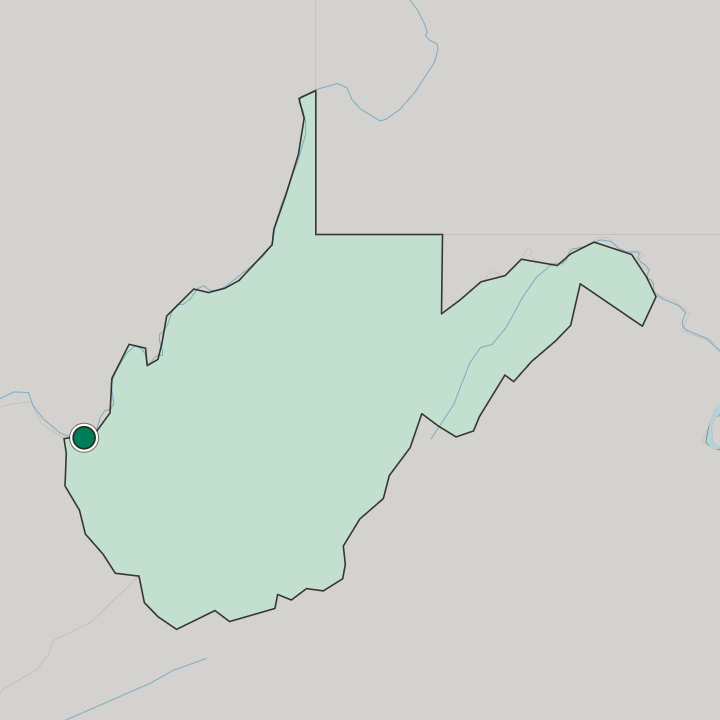
The Guyandotte River ends its run here. The Ohio River runs along one edge and the Guyandotte River comes in behind it, and the ground between them, in the southwestern part of West Virginia, is what the city was laid across. Cabell County holds most of it, Wayne County the remainder, and the whole city covers about 48 square kilometres.
Ashland shares the same river valley.
What is the climate of Huntington?
The Ohio River valley does the work here. Air settles in a river valley the way it does not on open ground, so Huntington holds humidity through the summer months and traps cold air along the water when the wind drops in winter. Fog is a river thing.
Spring and autumn are the useful windows for anything that involves walking between the Huntington Museum of Art and the campus.
How do you get to Huntington?
Three states meet around this city. The Huntington-Ashland metropolitan area reaches over seven counties in West Virginia, Kentucky and Ohio, so the state line is close on more than one side and a drive in can start in any of the three. Marshall University draws its own traffic.
Once here, the core is compact and walkable, which is the practical argument for a stay in Huntington over a base anywhere else in Cabell County.
Common questions
What is the best area to stay in Huntington?
The Marshall University blocks: term-time visits whose whole reason for the trip is Marshall University. Downtown by the Big Sandy Superstore Arena: event nights at the Big Sandy Superstore Arena and a walk back afterwards. The Wayne County end, toward Camden Park: families building a stay around Camden Park instead of the downtown grid. Ashland, the metropolitan area's other pole: anyone who finds Huntington full on a Marshall home weekend.
Good for
Updated October 2026