United States
West Virginia, United States — Towns & Travel Guide
West Virginia is the only American state lying wholly within the Appalachian Mountains, a folded upland of ridges, coalfields and whitewater rivers.
Hotel links are affiliate links: booking through them may earn us a commission, at no extra cost to you. It never affects how places are ranked. How this works


Towns & cities in West Virginia
One town here has its own guide — it links to where to stay.
 United States
Huntington
Huntington sits where the Guyandotte River joins the Ohio, a Marshall University town and West Virginia's second-largest city.Where to stay →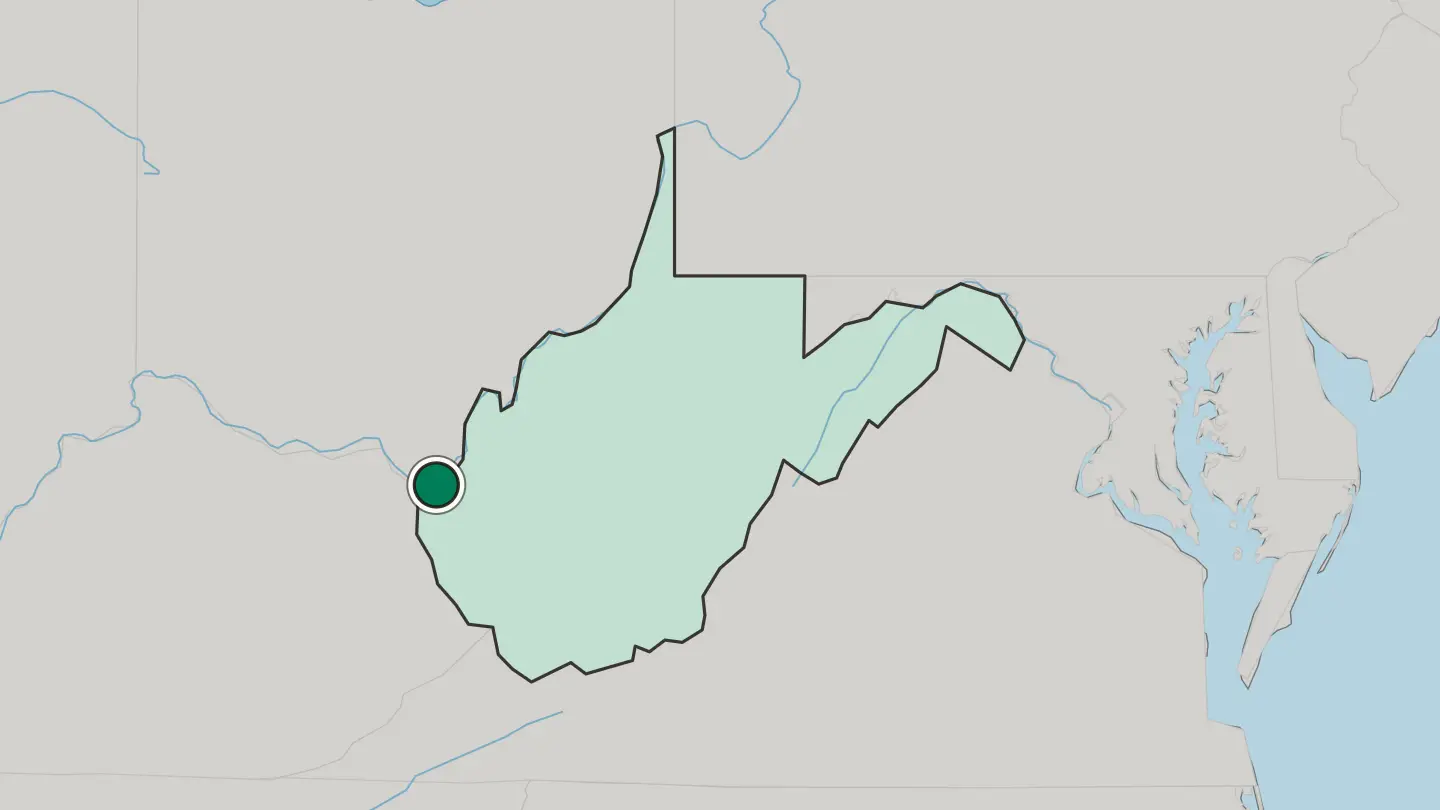
Hotel links are affiliate links: booking through them may earn us a commission, at no extra cost to you. It never affects how places are ranked. How this works
About West Virginia
The mountains shape all of West Virginia.
What is West Virginia known for?
The whole state folds into the ridges and plateaus of the Appalachian Mountains, and its people call it the Mountain State without any irony at all. Coal built the towns. Seams under the southern counties fed furnaces and railroads across the country, and the New River Gorge pulls rafters and climbers to its whitewater and sandstone cliffs.
John Denver fixed the image in a single chorus, and 'Take Me Home, Country Roads' still names the place.
Where is West Virginia?
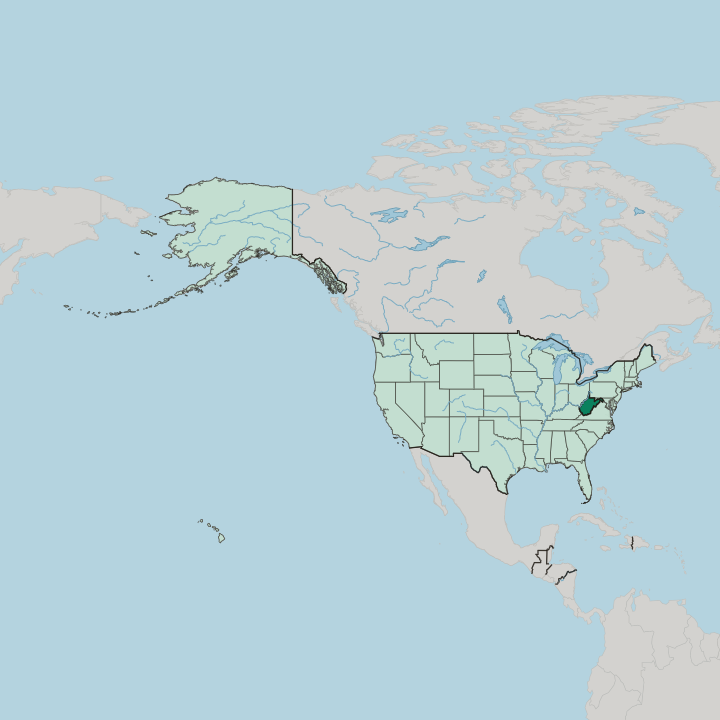
West Virginia sits in the central Appalachian Mountains, the only American state to lie entirely inside that range. It is an odd, angular shape. Two panhandles pull it in opposite directions.
The Northern Panhandle runs up a narrow neck between Ohio and Pennsylvania, while the Eastern Panhandle reaches back toward Washington between Maryland and Virginia. Virginia wraps the long southeastern border, while Ohio and Kentucky lie across the Ohio River to the west and southwest. The land tilts west, then climbs east.
West of the crest, the dissected Allegheny Plateau falls in steep hills and hollows toward the Ohio River, and this is the state's coal and gas country. Eastward rise the Allegheny Mountains and the long parallel folds of the Ridge and Valley, capped by Spruce Knob, the highest point in the state. A thin edge of the Blue Ridge clips the Eastern Panhandle.
Rivers do the carving. The New River, among the oldest rivers on the continent, carved the gorge that carries its name; the Kanawha drains the interior; the Monongahela flows north toward Pittsburgh; and the Potomac traces part of the eastern boundary. The Monongahela National Forest blankets much of the high country between.
What is West Virginia like?
Culture here grows out of the mountains and the mines. The coalfields shaped a hard, self-reliant streak, and the state motto, Montani Semper Liberi, meaning mountaineers are always free, is stamped on the seal. Labor history runs deep.
In 1921 thousands of armed miners marched on the southern coalfields in the Battle of Blair Mountain, the largest armed uprising in the country since the Civil War. Music carried the same roots outward. Fiddle tunes, ballads and banjo picking from these hollows fed the birth of old-time and bluegrass, and John Denver's 'Take Me Home, Country Roads' became the anthem the whole state sings.
Everyday life leans rural and neighbourly. People here answer to 'Mountaineers', a name the state wears with pride, and autumn Saturdays turn on West Virginia University football in Morgantown. The food is its own dialect.
Pepperoni rolls, born in the coal camps, sit next to ramps, buckwheat cakes and country ham at church suppers and firehouse fundraisers. Craft traditions still hold on: quilting, glassblowing in the Ohio Valley towns, fiddle-making. It is a place that guards its own.
What is the history of West Virginia?
The state was born of war. When Virginia voted to leave the Union in 1861, its western counties flatly refused to follow. Delegates gathered at Wheeling, threw out secession, and stood up a loyal 'Restored Government of Virginia' in its place.
Congress and President Lincoln did the rest, and on June 20, 1863 the mountain counties entered the Union as the thirty-fifth state, the only one ever carved out of a Confederate state during the fighting. Coal, salt and timber shaped what came after.
What is the climate of West Virginia?
Altitude runs the weather here. The lower Ohio Valley in the west is humid and warm through the summer, closer to the mild pattern of the Upper South than to the mountains. Climb the ridges and it changes fast.
The high Alleghenies around Snowshoe and Cheat Mountain get long, cold winters and heavy snow, enough to run the state's ski slopes for months. Rain falls year-round. Spring green comes late to the high hollows, and autumn colour lingers there after the valleys have turned.
How do you get to West Virginia?
Most trips begin behind the wheel. West Virginia's own hub is Yeager Airport at Charleston, a compact field with a handful of connections, so many travellers fly into Pittsburgh, Washington or Columbus instead and drive in over the ridges. The interstates thread the valleys: I-64 and I-77 cross at Charleston, I-79 climbs north to Morgantown, and I-81 skirts the Eastern Panhandle.
Trains still run too. Amtrak's Cardinal winds through the New River Gorge three times a week, stopping at Charleston, Huntington and White Sulphur Springs on its way between the East Coast and Chicago.
Common questions
What is the best area to stay in West Virginia?
Charleston: a first base in the state capital. Fayetteville: whitewater rafting and the New River Gorge Bridge. Harpers Ferry: Civil War history in the Eastern Panhandle. White Sulphur Springs: a grand mineral-springs resort stay. Snowshoe: downhill skiing on Cheat Mountain.
Good for
More regions in United States
Updated September 2026