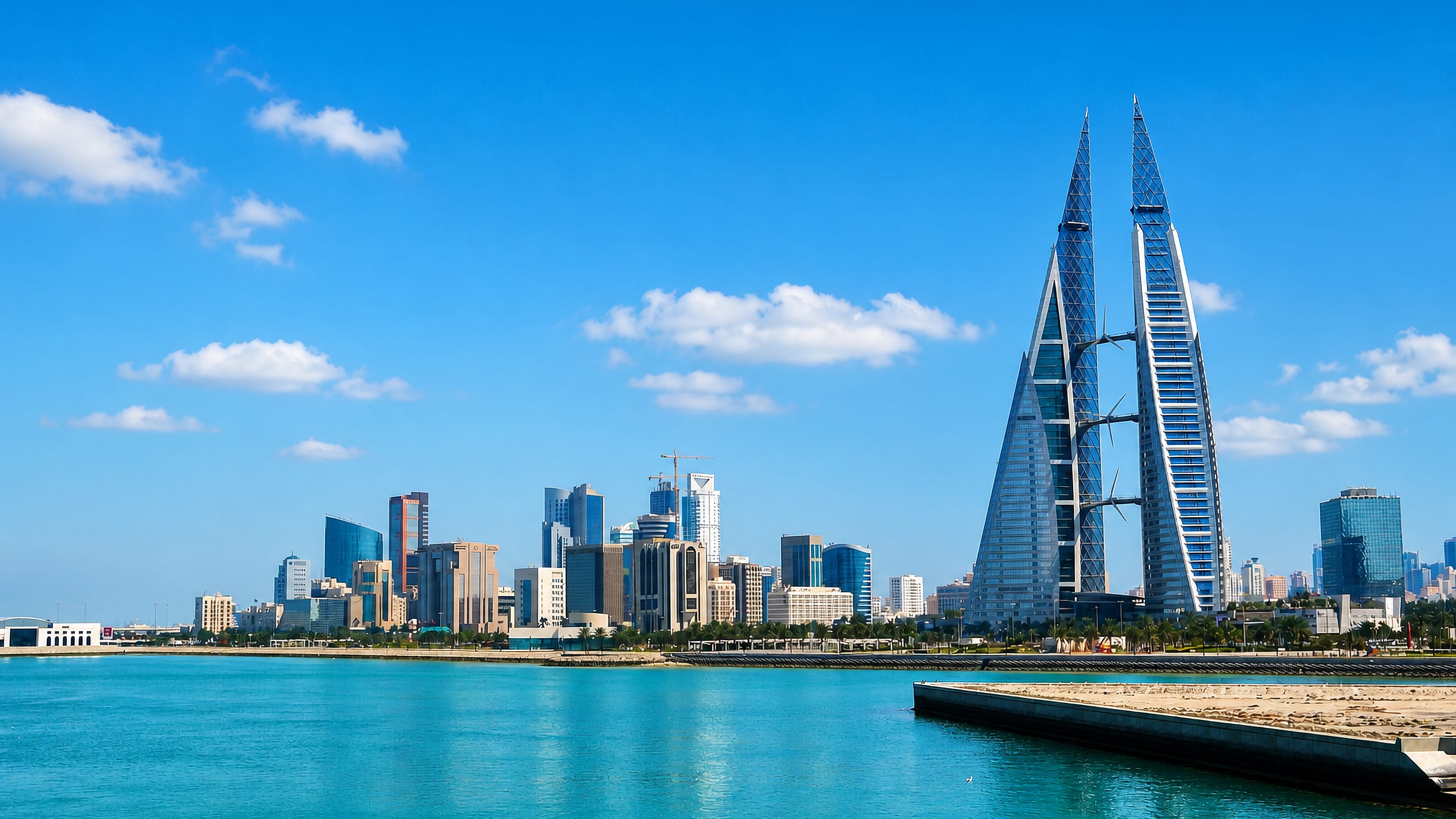
Bahrain: Regions, Cities & Travel Guide
Bahrain is an island kingdom in the Persian Gulf, an archipelago off eastern Saudi Arabia, with Manama as its capital.
Hotel links are affiliate links: booking through them may earn us a commission, at no extra cost to you. It never affects how places are ranked. How this works


Top destinations in Bahrain
Cities to start from, then drill into areas and hotels.
 Bahrain
Manama
Manama is the capital and largest city of Bahrain, a Persian Gulf trading port known for Bab Al Bahrain and the Bahrain National Museum.Where to stay →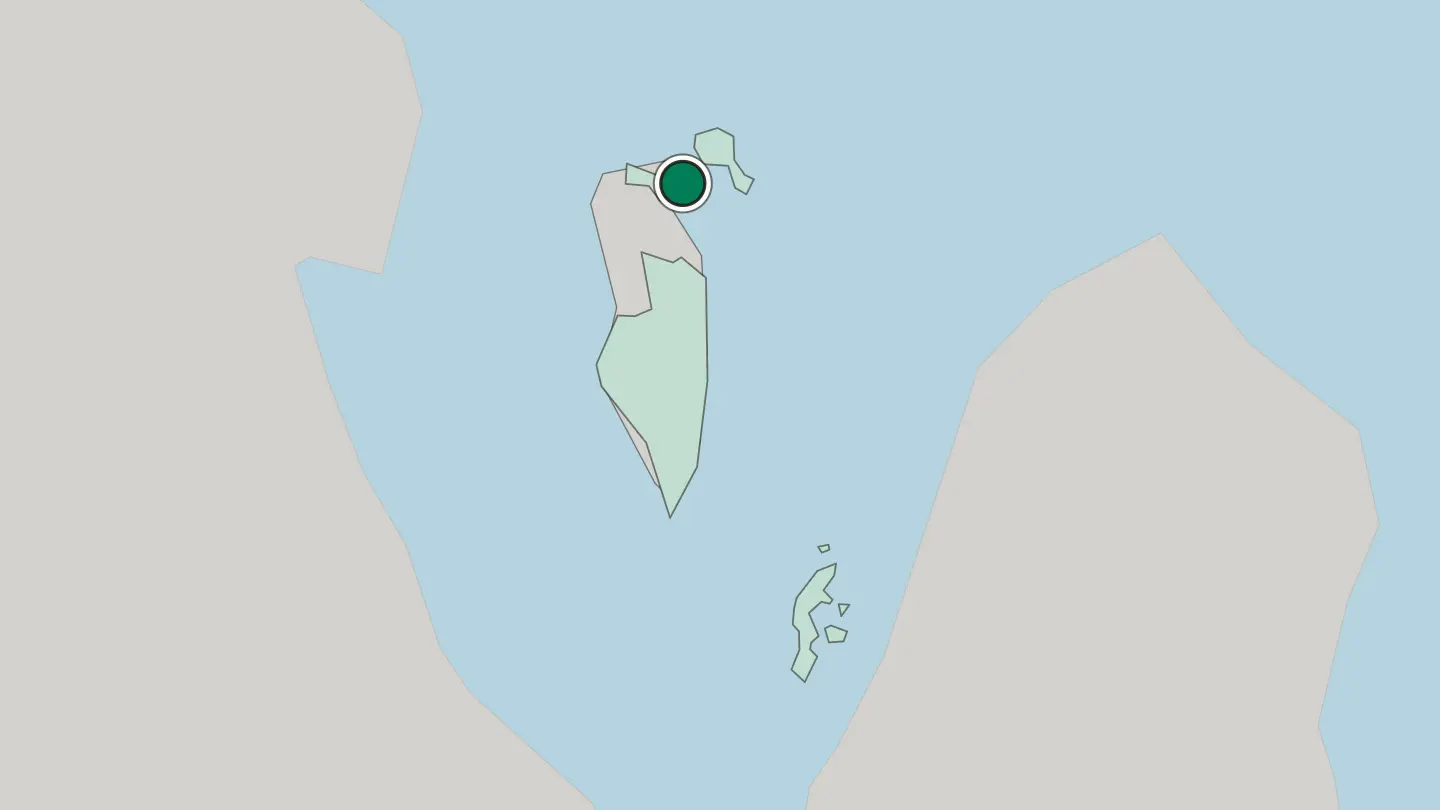
 Bahrain
Al Muharraq
Al Muharraq is the old capital of Bahrain, on an island of pearl-merchant houses beside the Persian Gulf.Where to stay →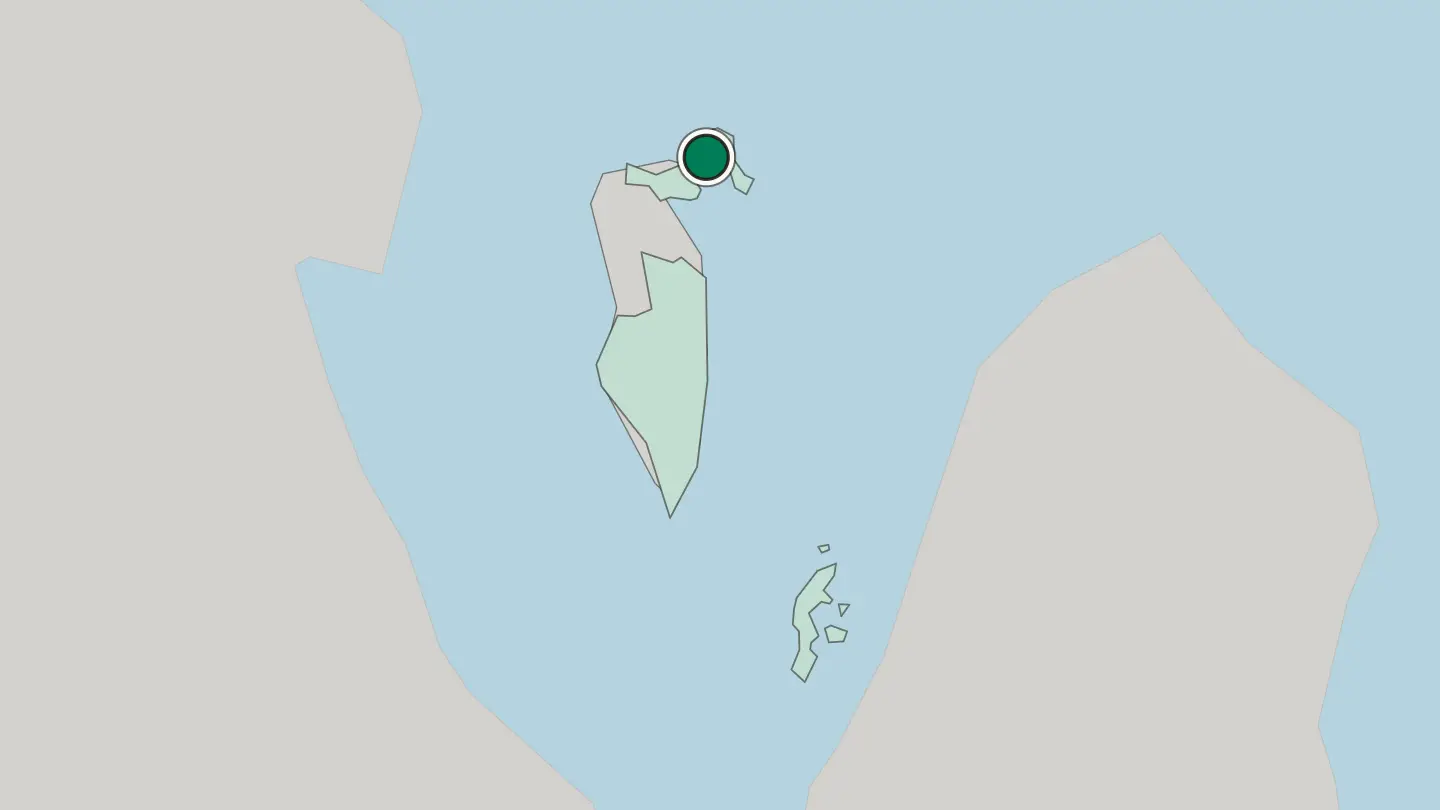 Bahrain
Ar Rifā‘
Ar Rifā', or Riffa, is divided into East Riffa, West Riffa and North Riffa, three parts of the Southern Governorate in the Kingdom of Bahrain.Where to stay →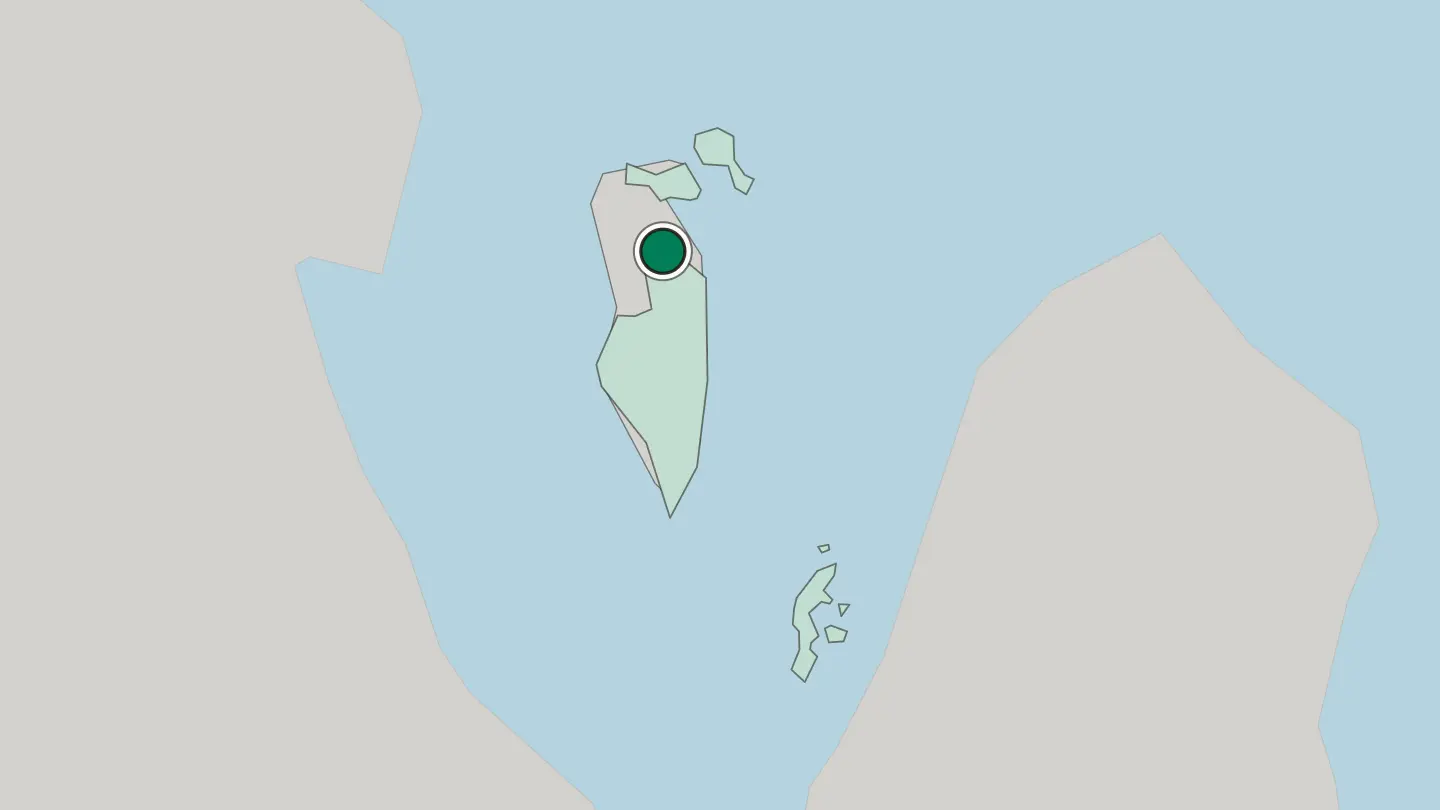
Hotel links are affiliate links: booking through them may earn us a commission, at no extra cost to you. It never affects how places are ranked. How this works
Regions of Bahrain
Bahrain
Capital Governorate
The Capital Governorate is the seat of government of Bahrain, the compact urban region built around the capital city of Manama.Towns & cities →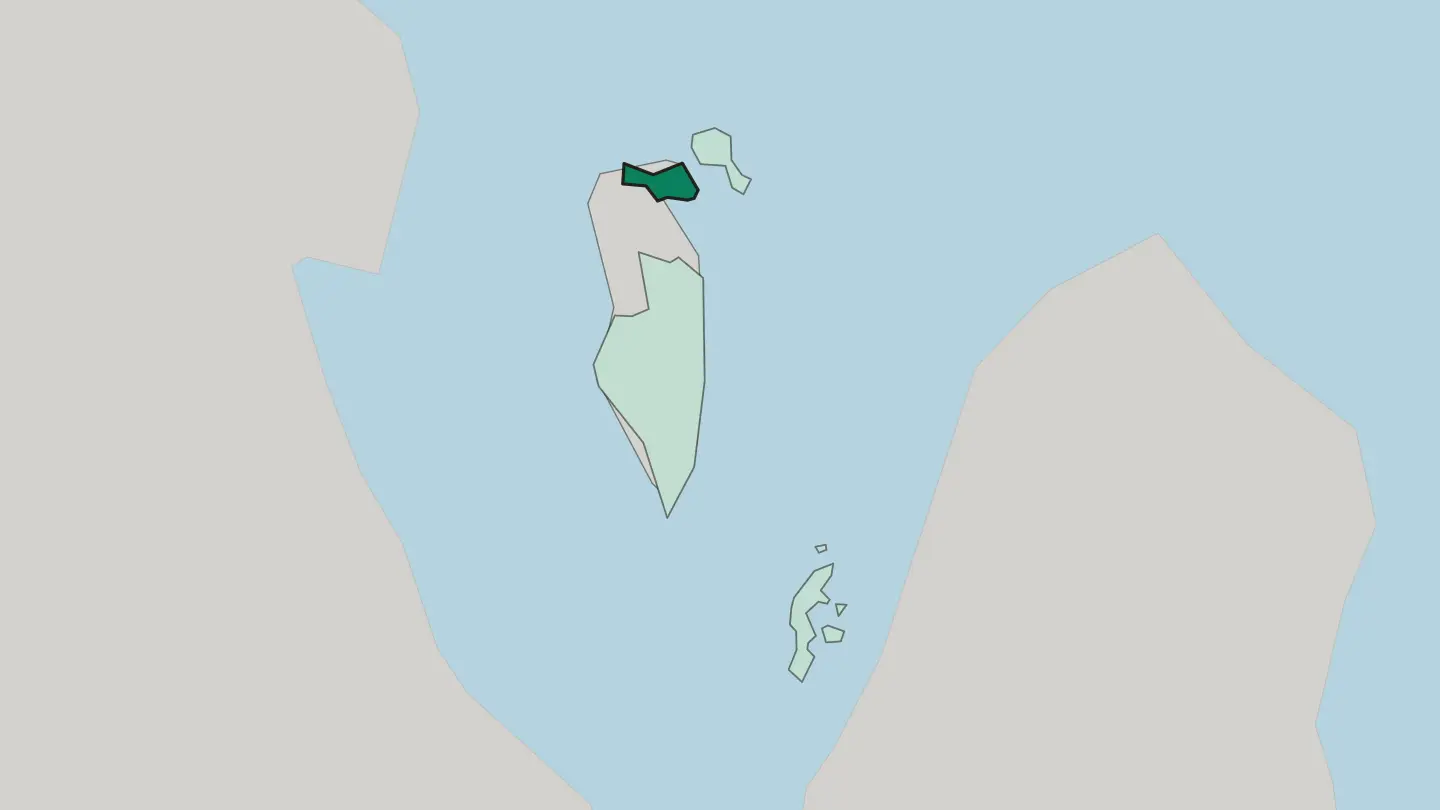 Bahrain
Muharraq Governorate
Muharraq Governorate is one of the four governorates of Bahrain, covering Muharraq Island, its outlying islets and the town of Al Hadd.Towns & cities →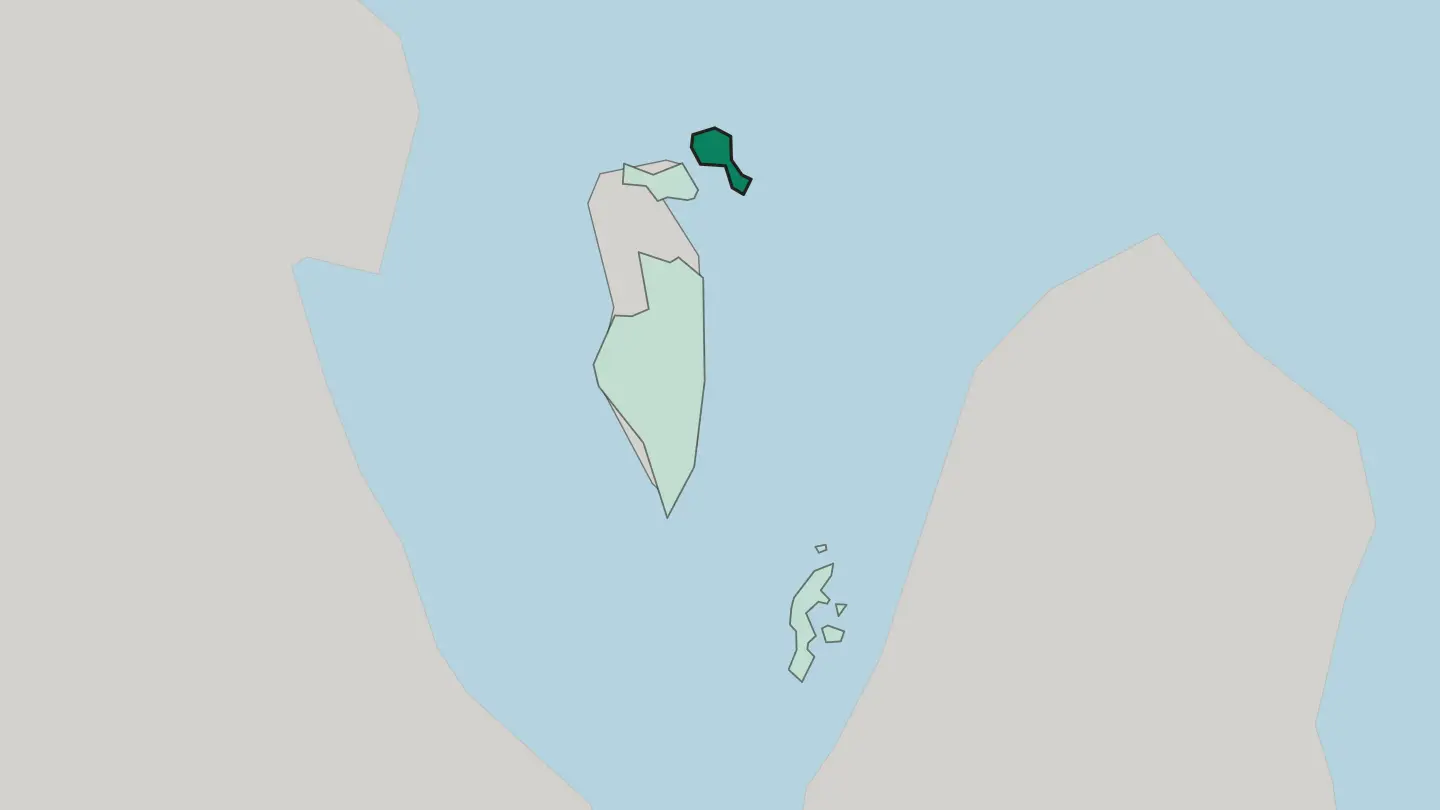 Bahrain
Southern Governorate
The Southern Governorate covers the largest area of Bahrain's four governorates and takes in Juzur Hawar and parts of the old municipalities.Towns & cities →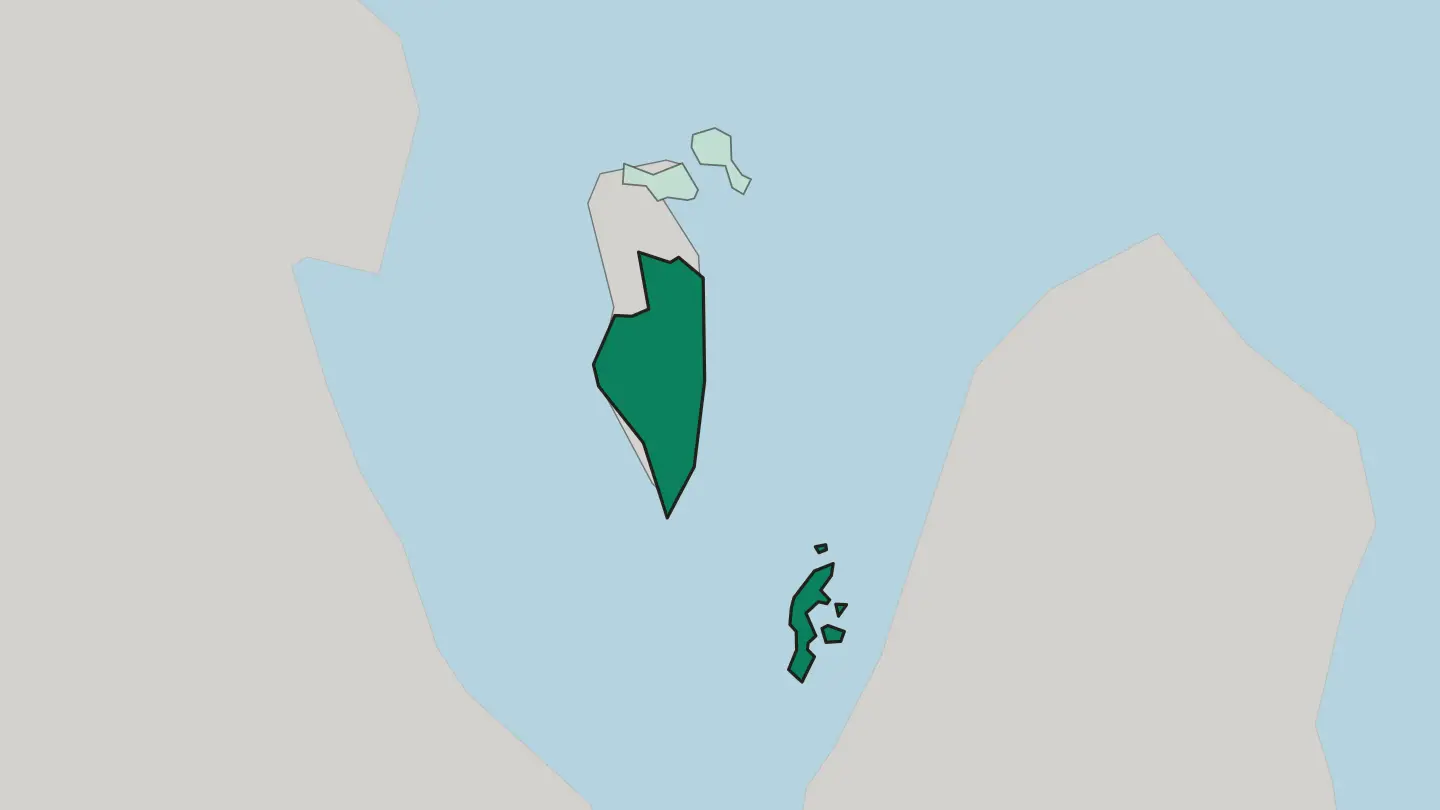
About Bahrain
Bahrain built its name on pearls.
What is Bahrain known for?
For centuries divers worked the oyster beds off Muharraq, and that trade made the archipelago one of the wealthiest ports in the Gulf long before oil arrived. The past sits close to the surface here. Qal'at al-Bahrain, the earthen fort mound above the northern shore, marks the ancient capital of Dilmun, while the lone Tree of Life stands out on the southern desert flats near Jabal ad Dukhan.
Manama pulls the other way, all glass towers and shopping malls.
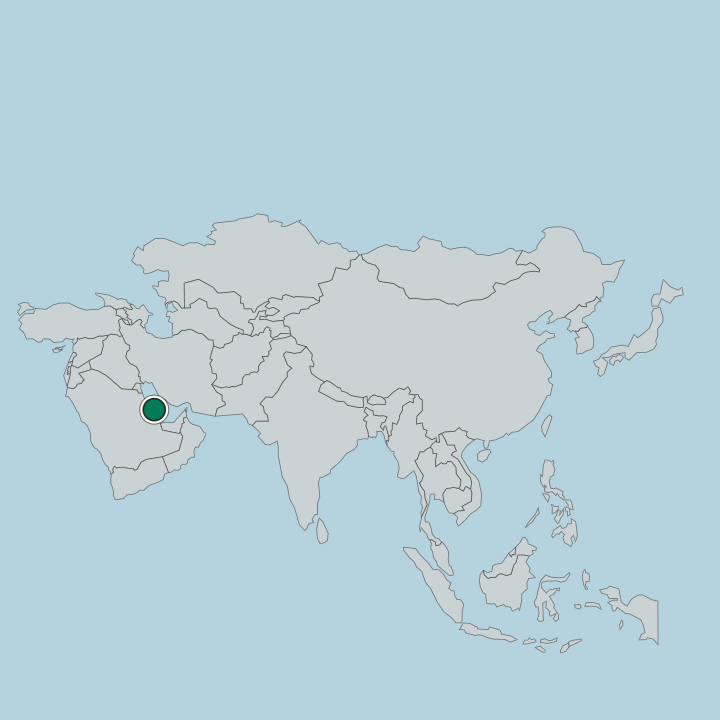
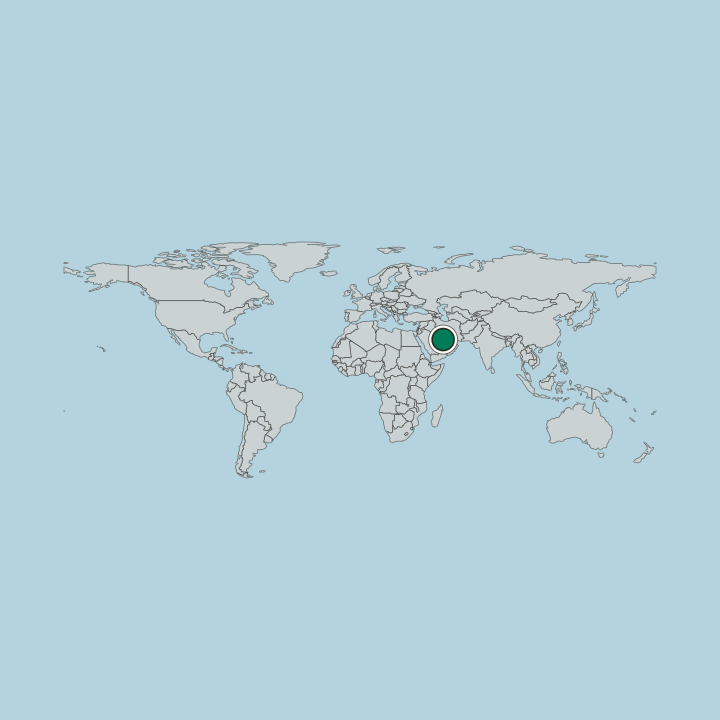
Where is Bahrain?
Bahrain is an archipelago in the Persian Gulf, tucked into a shallow bay between the eastern coast of Saudi Arabia and the peninsula of Qatar. It is one of the smallest countries in Asia. The land is a cluster of low, flat islands: 33 of them are natural, and dozens more have been reclaimed from the sea around the edges of the main island.
Bahrain Island holds around four-fifths of the territory and nearly all of the people. Manama sits at its northern tip. The ground is arid limestone and sand, ringed by sabkha salt flats and shallow reefs, with almost no fresh surface water and only a thin band of date gardens along the northern springs.
Nowhere rises far. The single hill of Jabal ad Dukhan lifts the interior a little above the plain, its haze giving it the name Mountain of Smoke, and the old oil field spreads out below it. Muharraq lies just across the water to the north-east, carrying the airport and the former capital, linked to the main island by a chain of bridges.
Off to the south-east, the low Hawar Islands scatter toward Qatar. To the west, the King Fahd Causeway runs across the sea to Saudi Arabia, the kingdom's only land link to the mainland. From shore to salt flat the country stays close to sea level.
What is the history of Bahrain?
Few small places carry a past this old. Around 2000 BC the islands were the heart of Dilmun, a trading power that Mesopotamian tablets named as a source of copper and pearls and a stop on the sea route to the Indus. The burial mounds that dot the northern plain and the tell at Qal'at al-Bahrain both date from that age, the fort mound built up in layer after layer by Kassites, Greeks, Portuguese, and Persians in turn.
Pearls carried the islands through the long centuries that followed. Divers went down without air on the beds off Muharraq, and by the nineteenth century the fisheries had made the town one of the richest ports on the Gulf, ruled by the Al Khalifa family who took the islands in 1783. Cheap cultured pearls from Japan broke that trade in the 1930s.
Oil saved it. The first well on the Arab side of the Gulf came in near Jabal ad Dukhan in 1932, and the money remade the country. Britain, long the protecting power, withdrew from the Gulf, and Bahrain declared independence in 1971.
The kingdom took its present shape when the ruler assumed the title of king in 2002. Pearl to petroleum, the thread never quite breaks.
What is Bahrain like?
Bahrain reads as a Gulf crossroads worn smooth by trade. Arab, Persian, and Indian threads run through the food, the music, and a mixed society where Bahraini nationals and expatriate workers from across South Asia live side by side. The sea shapes the table.
Fresh hammour comes grilled or folded into machboos, the spiced rice with dried loomi lime that anchors most family meals, and muhammar, the sweet date rice, sits beside it on feast days. Manama keeps its older rhythm in the lanes behind Bab Al Bahrain, where the souq sells gold, oud, spices, and cloth much as it long has. The pearling heritage of Muharraq, its divers' houses and merchant courtyards along a marked walking route, is protected as a World Heritage trail.
Faith and leisure share the same map here. The vast Al Fateh Grand Mosque, one of the largest in the world under a single dome, anchors the religious life of the capital, while Adliya fills after dark with galleries and kitchens, and the Formula One race at the Sakhir circuit draws the whole region for a weekend each spring. It is a conservative country with a liberal seam.
One archipelago, many tongues.
What is the climate of Bahrain?
The kingdom's climate is hot and arid. Winters, from about December to March, are mild and pleasant, with warm afternoons and cool nights that make the season the one most travellers choose. Summer is another matter entirely: from May into September the Gulf heat and humidity build to a brutal peak, and the haze that gives Jabal ad Dukhan its name settles over the islands.
Rain barely comes at all. A few showers fall in the cooler months, and the rest of the year the sky stays clear.
How do you get to Bahrain?
Flights bring in nearly all visitors. Bahrain International Airport sits on Muharraq, just across the bridges from the capital, and connects the kingdom to hubs across the Gulf, Europe, and South Asia. There is also a way in by road.
The King Fahd Causeway carries a steady stream of cars across the water from Saudi Arabia, busiest on weekends. From either entry the distances are short. Manama and the whole island chain lie within a half-hour drive.
Good for
Updated September 2026