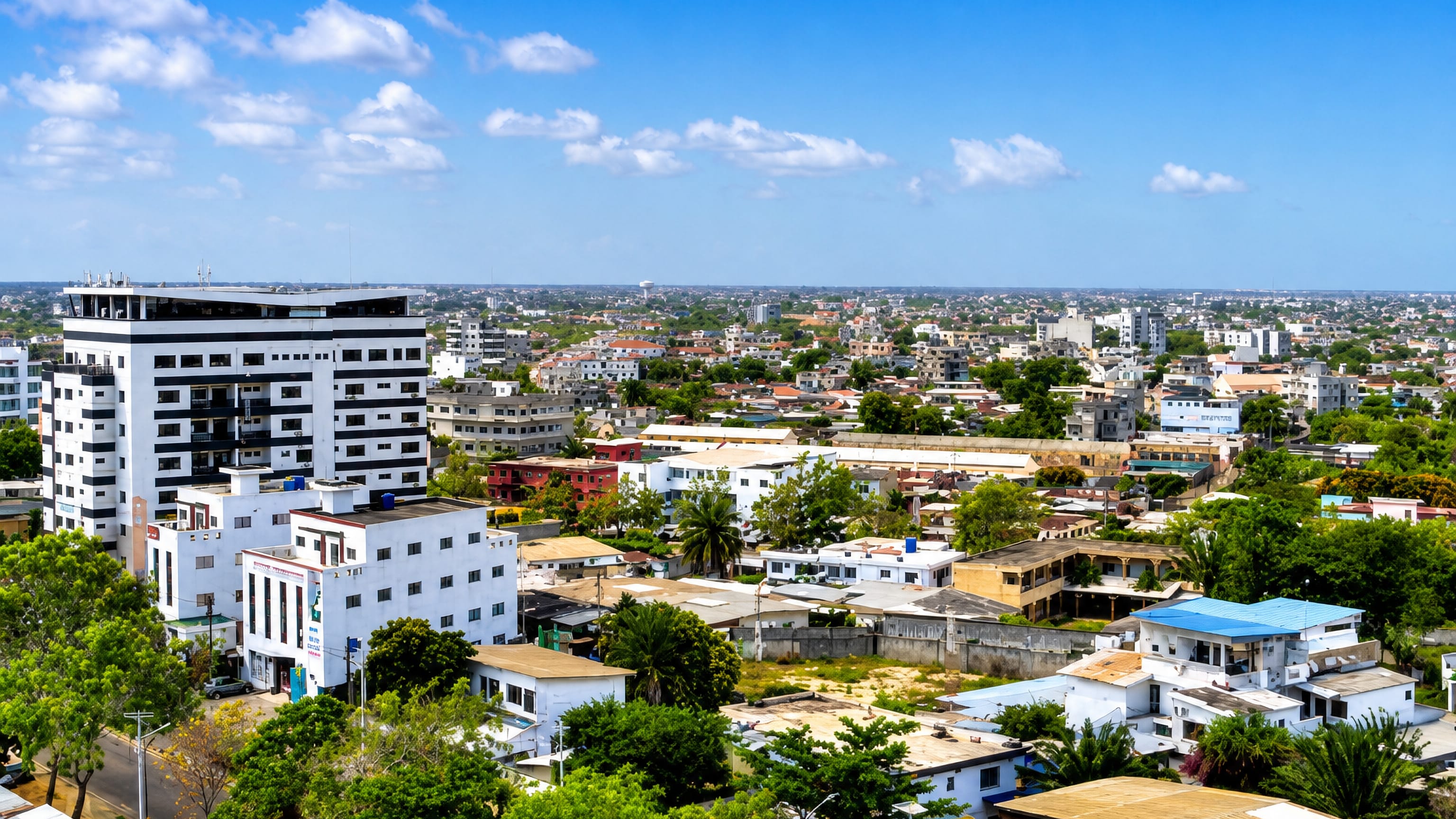
Benin: Regions, Cities & Travel Guide
Benin is a country in West Africa, the old land of Dahomey, running north from the Bight of Benin to the Niger.
Hotel links are affiliate links: booking through them may earn us a commission, at no extra cost to you. It never affects how places are ranked. How this works


Top destinations in Benin
Cities to start from, then drill into areas and hotels.

 Benin
Benin
Cotonou
Cotonou is the largest city of Benin, a busy port on the West African coast between the Atlantic and the lagoon of Lake Nokoué.Where to stay →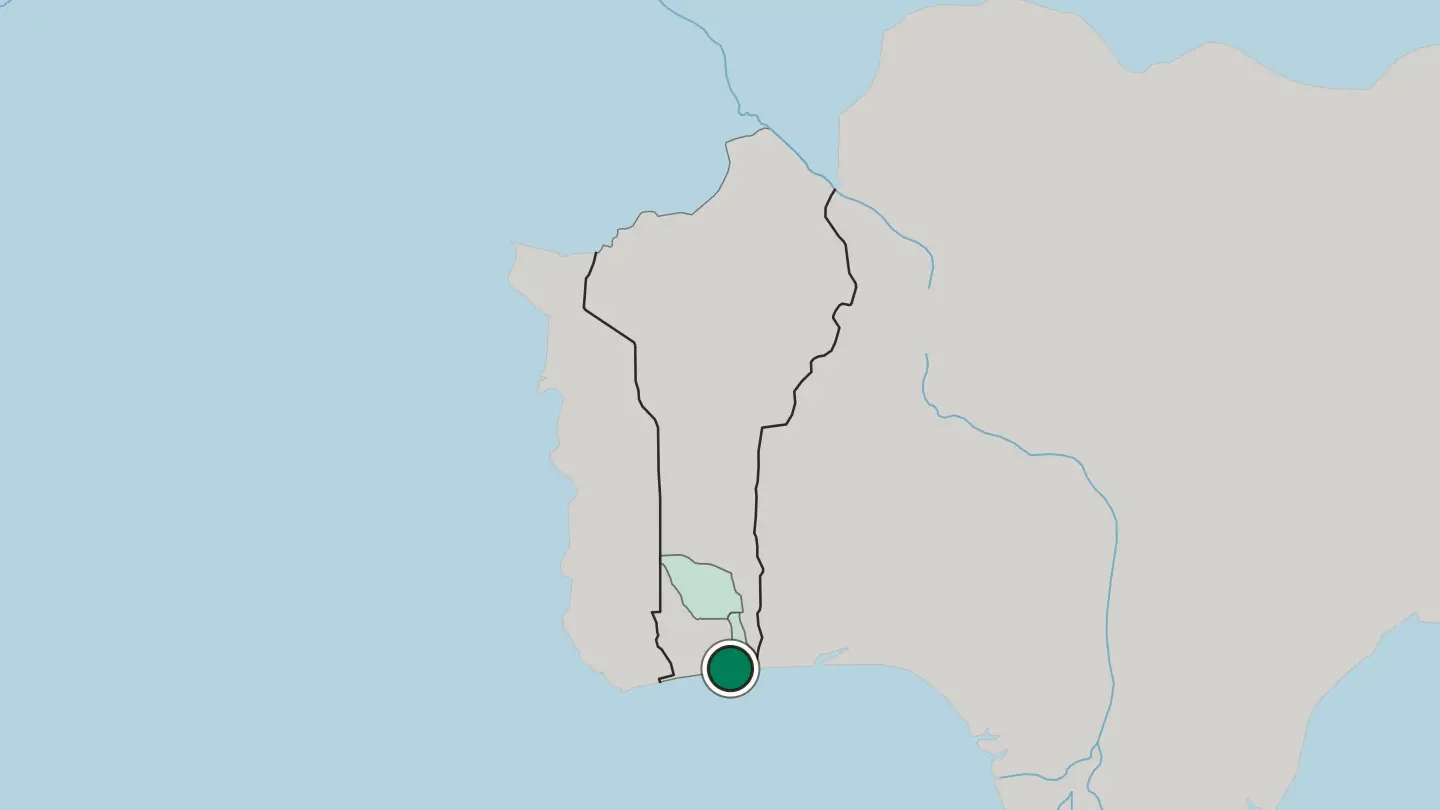
 Benin
Benin
Porto-Novo
Porto-Novo is the capital of Benin in West Africa, an old town on a lagoon, known for its Afro-Brazilian houses and a great mosque built like a church.Where to stay →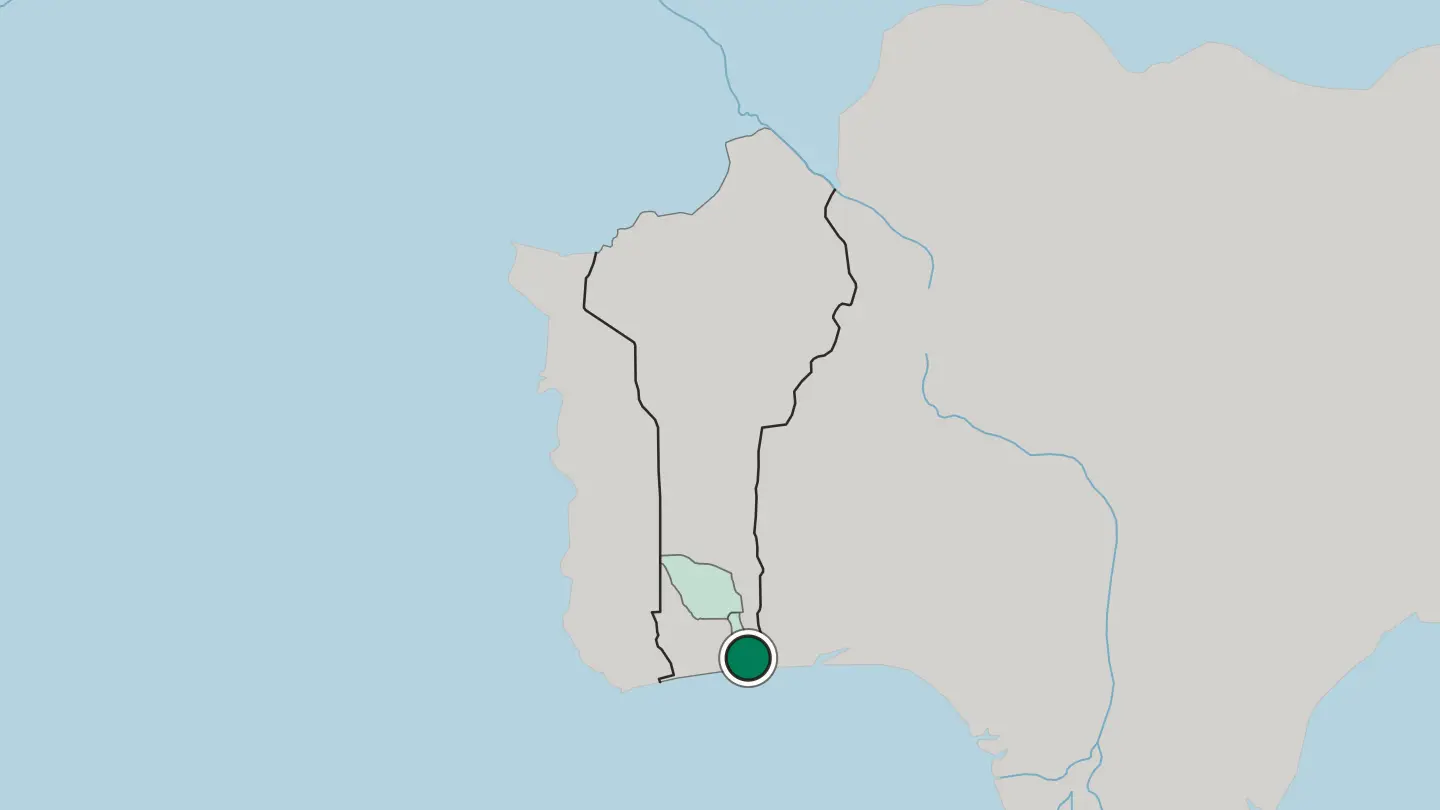
 Benin
Benin
Abomey
Abomey, also written Agbome, is a former capital of Benin, seat of the Zou Department, and site of the Royal Palaces of Abomey.Where to stay →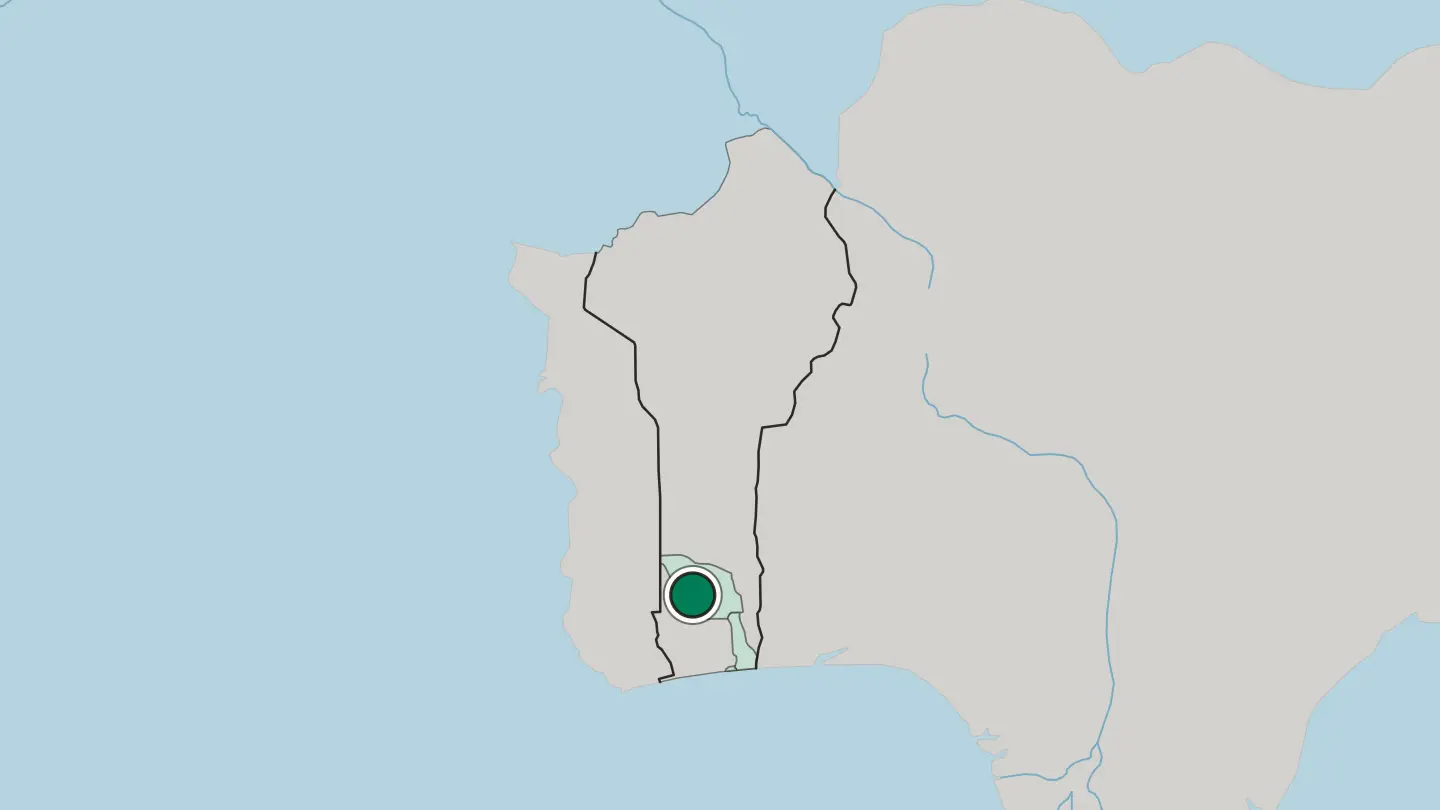
Hotel links are affiliate links: booking through them may earn us a commission, at no extra cost to you. It never affects how places are ranked. How this works
Regions of Benin
Benin
Département de l’Ouémé
Département de l'Ouémé is named for the Ouémé River and holds Porto Novo, the capital of Benin, across nine communes.Towns & cities →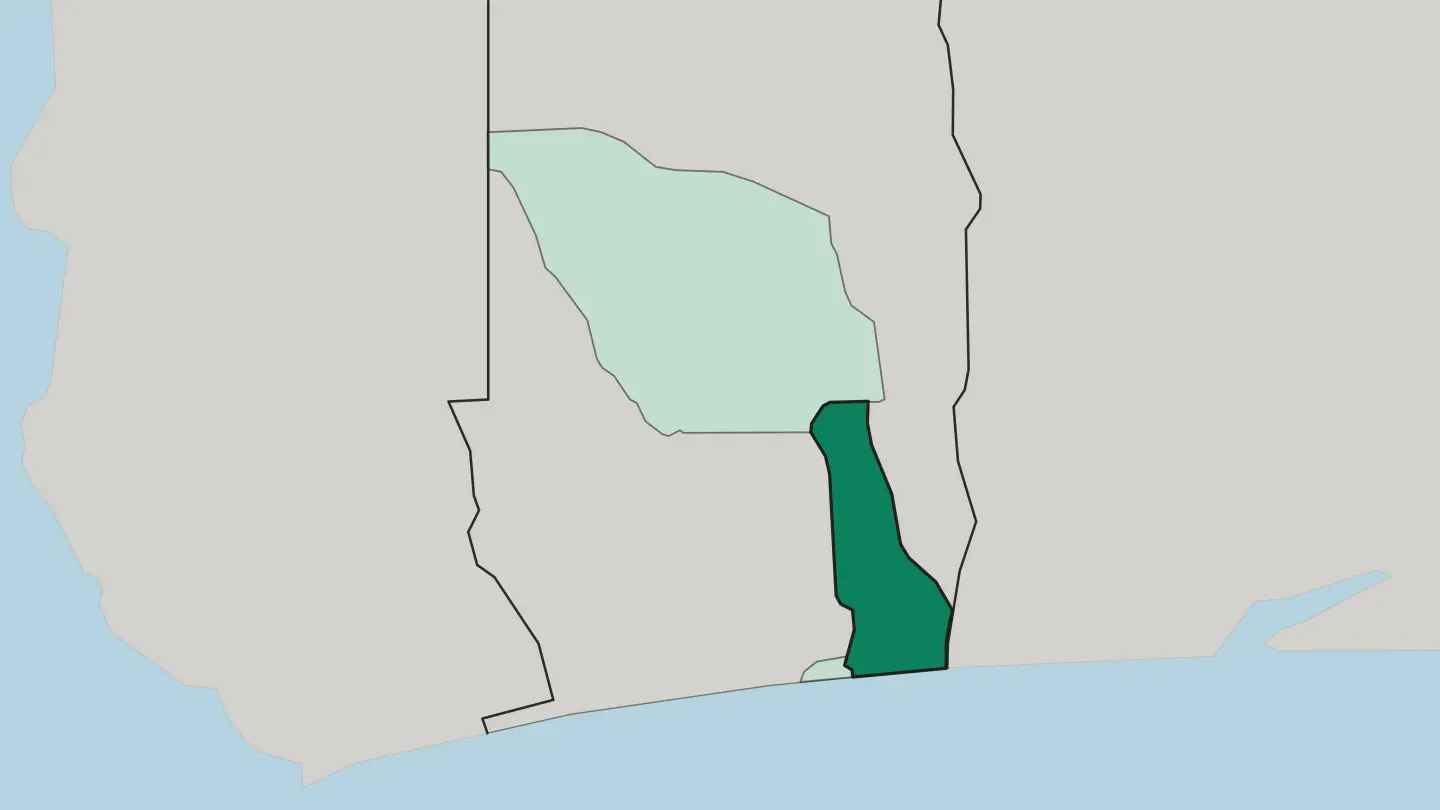 Benin
Benin
Littoral
Littoral is the smallest of Benin's twelve departments, 79 square kilometres holding Cotonou, the country's largest city, as its capital.Towns & cities →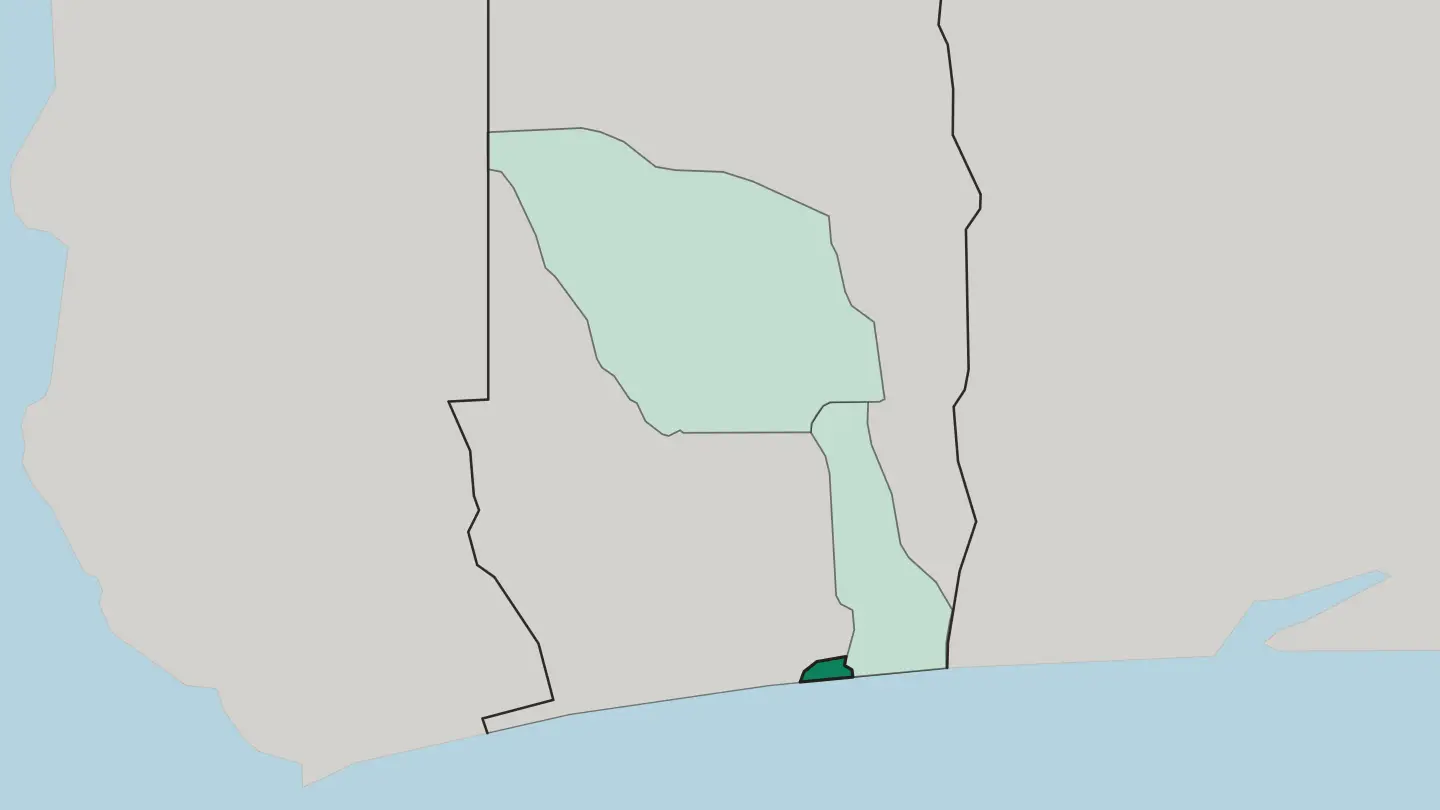 Benin
Benin
Zou Department
The Zou River names Zou Department, whose capital is Abomey and whose nine communes make up one of the twelve departments of Benin.Towns & cities →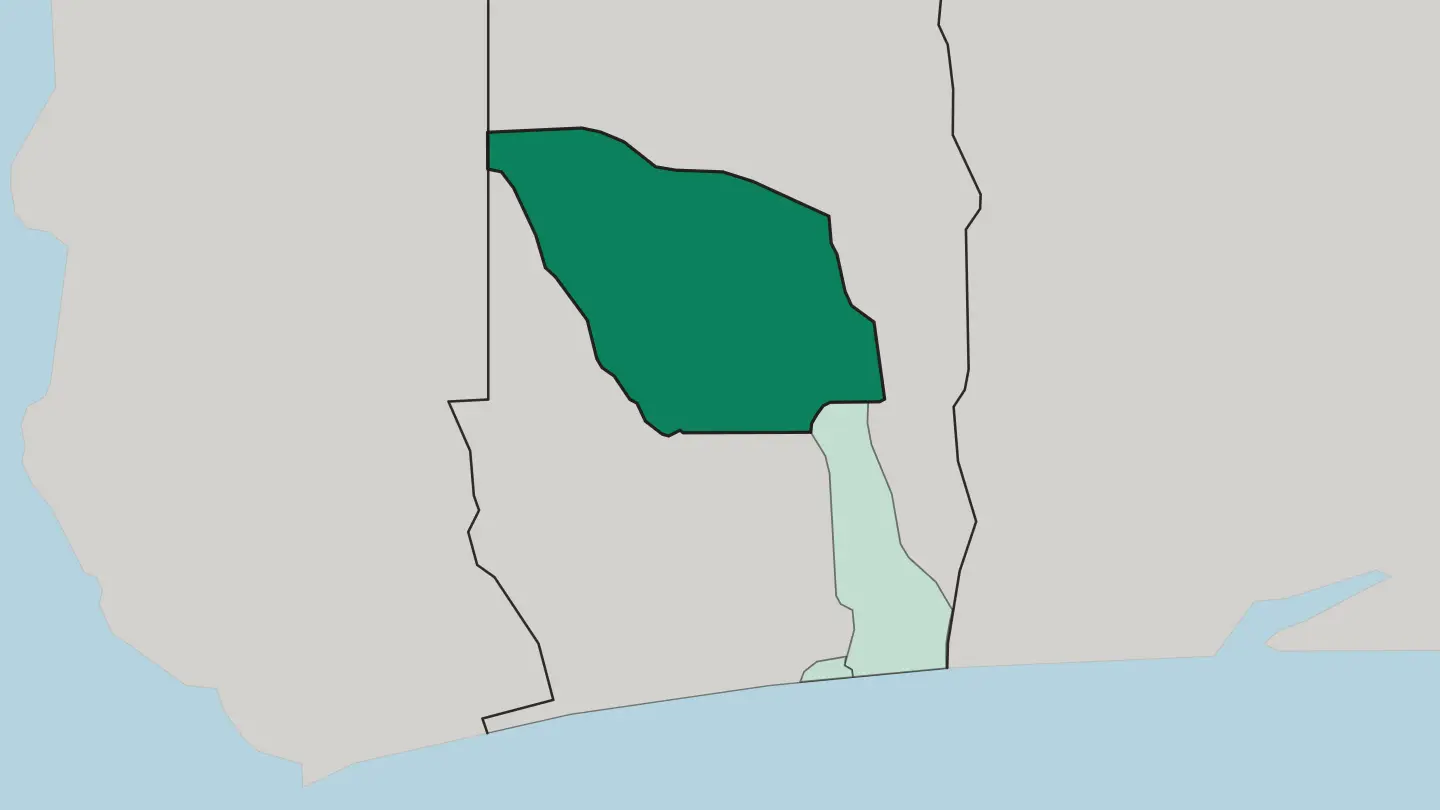
About Benin
Benin is where Vodun began.
What is Benin known for?
The old Kingdom of Dahomey ruled from Abomey, whose earthen royal palaces still stand behind the coast, and its slaving port at Ouidah gave the Atlantic trade one of its darkest gateways. Wildlife draws travellers north to Pendjari National Park. Elephants, lions, and hippos roam its savannah, while on Lake Nokoué the stilt town of Ganvié sits entirely on water.
It is a small country with a very long memory.
Where is Benin?
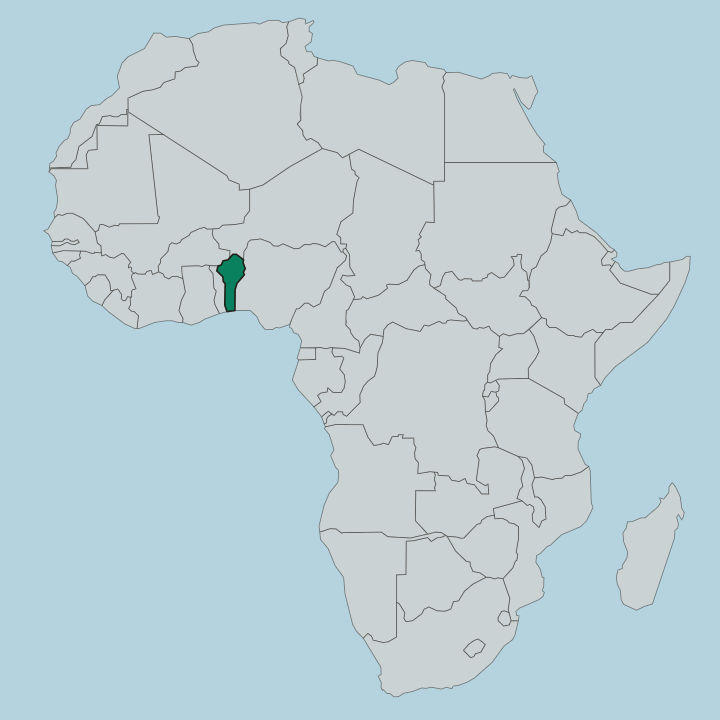
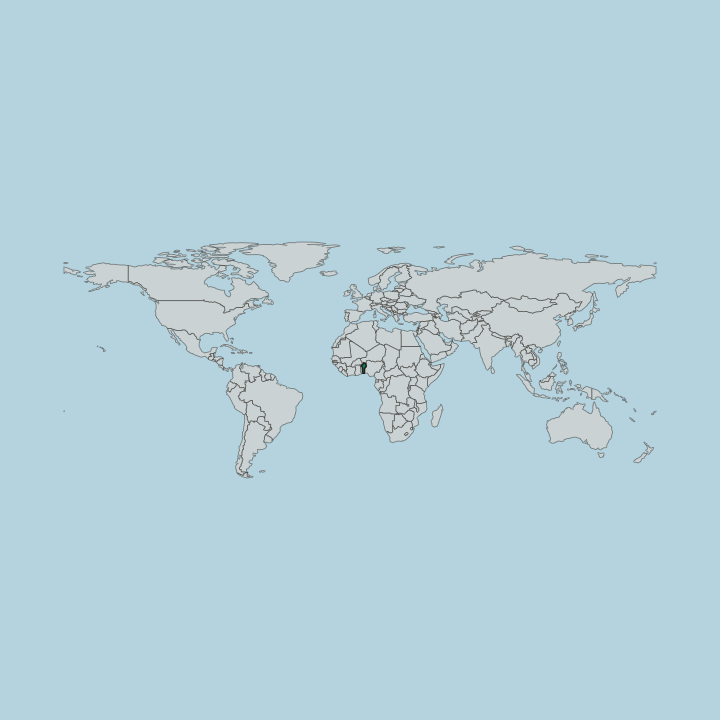
Benin is a narrow strip of West Africa that stretches inland from a short Atlantic shore, tucked between Togo to the west and Nigeria to the east. Its coast is low and sandy. A line of lagoons and tidal marshes backs the beach along the Bight of Benin, and behind them the ground climbs gently into the wooded plateaus of the south.
Three rivers order this southern country. The Ouémé, the longest in Benin, runs down from the interior toward the coast, gathering the Okpara and the Zou as it drains the plateau toward the lagoons and Lake Nokoué. North of the plateaus the land opens into broad savannah, the terrain that fills most of the map.
The far north is a different country in feel. Around Natitingou the Atacora hills rise in long ridges of quartzite, the only real relief in an otherwise flat land, and beyond them the savannah runs on toward the Niger River, which marks the border with the republic of the same name. This northern basin holds the wildlife country of Pendjari National Park, where the plains carry elephants and lions.
From the surf at Grand-Popo to the dry hills above Natitingou, the distance is only a day's drive, yet the landscape changes completely. Palm and lagoon give way to grass and stone.
What is the history of Benin?
For three centuries the story of Benin is the story of Dahomey. The Fon kingdom rose at Abomey in the seventeenth century, and under kings like Agaja it pushed south to seize Allada and the port of Ouidah, winning direct access to the Atlantic. That access made it rich and terrible.
Dahomey traded captives through Ouidah in vast numbers, defended by a standing army that famously included a corps of women soldiers, the warriors European visitors called the Amazons. The kings ruled as absolute monarchs from the earthen palaces of Abomey, and Vodun shaped the court and the calendar alike. The French ended it by force.
A colonial army under Alfred-Amédée Dodds took Abomey in 1892, and within a decade Dahomey had been folded into French West Africa as a colony. Independence came in 1960, first as the Republic of Dahomey. The name carried the weight of one kingdom over many peoples, and in 1975 the country renamed itself Benin, after the historic bight rather than the Fon state.
Coups and shifting regimes followed for years. The land holds all of it at once. A traveller can stand in a royal palace at Abomey, walk the slave road at Ouidah, and read the whole arc in a single day.
What is Benin like?
Benin gave the world Vodun. The religion is not folklore here but a living faith, recognised by the state, woven through daily life across the Fon south and honoured each January at the great festival on the beach at Ouidah. Its deities, its drums, and its masked processions run alongside Christianity and Islam without contradiction.
Many peoples share the country at once. Fon and related groups hold the coast and plateau, the Yoruba the south-east near the Nigerian border, and the Bariba and Somba the northern savannah around Natitingou, each with its own language, dress, and craft. The royal past still speaks through art.
Abomey's kings commissioned appliqué banners, brass figures, and carved thrones that read almost as a written record, and that craft tradition carries on in the town's workshops. Music and dance mark births, funerals, and Vodun rites in equal measure. Food leans on maize, yam, and cassava, with fiery pepper sauces and the fermented dough dish that anchors a southern meal.
In the north the table shifts toward millet, grilled meat, and the flavours of the Sahel. From coast to savannah the culture never sits still.
What is the climate of Benin?
Benin is tropical, and the rain governs the year. The south, near the Bight of Benin, keeps two wet seasons, a long one from April to July and a shorter one in September and October, split by a drier spell. The north around Natitingou runs on a single rhythm instead.
There the rains fall from May to October, and the dry months bring the Harmattan, a dusty north-easterly wind off the Sahara that hangs a haze over the savannah from December into March. Whatever the season, Benin stays hot. It is warmest and most humid on the coast.
How do you get to Benin?
Nearly everyone flies into Cotonou. Cardinal Bernardin Gantin International Airport, in the Cadjéhoun district of the city, is the country's main gateway, with links to European hubs and across West Africa. From there the coast road runs west to Ouidah and Grand-Popo and east toward Porto-Novo, the official capital just short of the Nigerian border.
Reaching the north means a long haul up the trunk road through Parakou toward Natitingou and Pendjari National Park. Benin is longer than it looks. Overland border crossings from Togo and Nigeria are common too.
Good for
Updated September 2026