Belarus · Minsk Oblast
Where to Stay in Slutsk, Minsk Oblast
Slutsk stands on the Sluch River south of Minsk, a town whose woven silk sashes once carried its name across the Polish-Lithuanian Commonwealth.
Find your area →


Where to stay in Slutsk
Where the beds are, and what that means for the visit.
The sash museum decides most itineraries here. Slutsk is compact, and a room within reach of the Sluck Homeland Museum also puts Помнік Сафіі Слуцкай and the older monastic ground inside a walk of fifteen minutes or so. The Sluch draws the other line.
Streets facing the river give a quieter setting, with water and open ground on one side and the town's shops a few blocks behind. Both bases work for a short visit. Monastic Slutsk is the third option.
The Bernardine monastery in Sluck and Слуцкий Свято-Троицкий монастырь sit apart from the commercial streets, and lodging near them suits travellers who came for the heritage rather than for the shops. Слуцкие замки belong to the same layer. Anyone reading the town as a defensive site as much as a weaving one will want to be within walking distance of that ground, which is easier to arrange in the older quarters than on the approach roads. Distance is the only real cost.
Minsk lies about 105 kilometres north, and a night there before or after buys a wider hotel market than Slutsk District can offer on its own.
About Slutsk
Silk made the name.
What is Slutsk known for?
Ornamental sashes woven in Slutsk travelled the length of the Polish-Lithuanian Commonwealth, and the Sluck Homeland Museum holds the town's account of that trade. Two monasteries survive alongside that story. The Bernardine monastery in Sluck and Слуцкий Свято-Троицкий монастырь carry the religious record, while Помнік Сафіі Слуцкай fixes a single remembered figure at the centre of it.
The Sluch runs past all of it.
What are the main landmarks in Slutsk?
Five sites carry the town's history, and they split neatly between faith, defence, and craft. Слуцкие замки stand for the defensive layer. The Bernardine monastery in Sluck and Слуцкий Свято-Троицкий монастырь represent two monastic foundations, Catholic and Orthodox, that between them shaped the built fabric more than any secular building did. Sluck Homeland Museum holds the sashes. Помнік Сафіі Слуцкай completes the set, a monument to a figure the town has kept in its own memory rather than borrowed from elsewhere.
What is the history of Slutsk?
Slutsk dates its founding to 1116. That places the town among the older settlements of Minsk Region, established on the Sluch well before the political unions that later shaped it, and the site has not shifted since. Castles followed. Слуцкие замки record the period when the place mattered as a defensive point, and the fortifications gave the town a standing that its later weaving trade would build on rather than replace.
Silk changed what the name meant. Ornamental sashes woven in Slutsk reached buyers across the Polish-Lithuanian Commonwealth, which turned a district town on the Sluch into a byword for a single luxury product. The craft outlived the Commonwealth.
The Sluck Homeland Museum holds that record, and the older spelling Sluck preserved in its name is itself a trace of the period when the sashes were made. Слуцк is the name in Belarusian and Russian alike. Помнік Сафіі Слуцкай keeps one person from that long span in public view, and the Bernardine monastery in Sluck and Слуцкий Свято-Троицкий монастырь keep the confessional record beside it. Both monasteries stand within the town rather than out in the district. The town still administers Slutsk District.
Where is Slutsk?
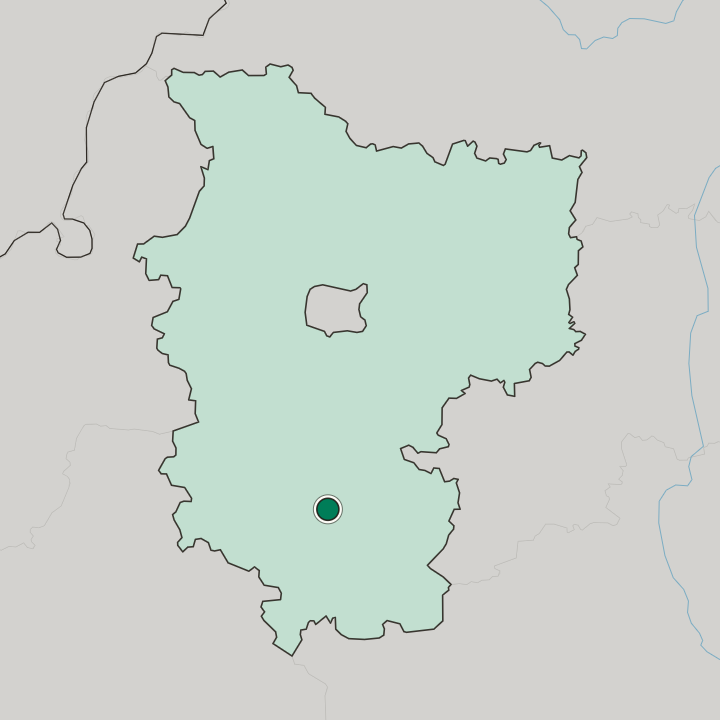
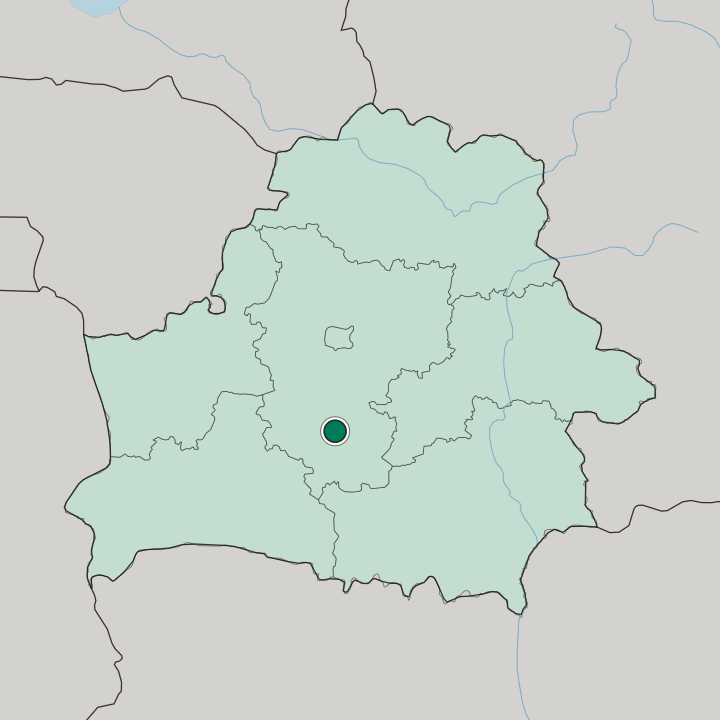
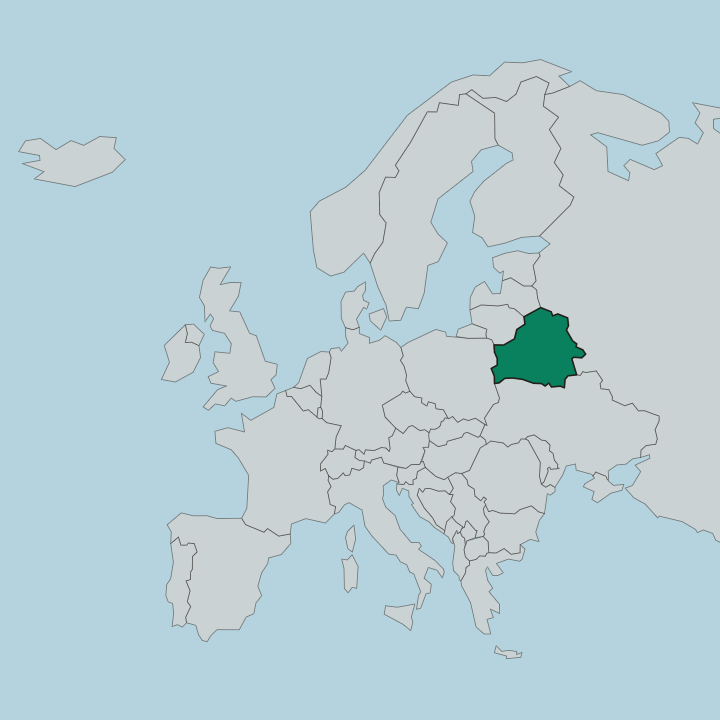
Water and distance define the setting. Slutsk lies on the Sluch some 105 kilometres south of Minsk, deep in the interior of Minsk Region and far from any coast. Slutsk District spreads around the town.
As the district's administrative centre, the town gathers in the business of a catchment that reaches a good way out past its last streets.
What is the climate of Slutsk?
The Sluch marks the seasons. Slutsk sits in the temperate band of the northern hemisphere with no sea within reach, so the winter cold settles in and stays while the summer warmth arrives quickly and does not last long. The dark months run long.
Spring melt raises the Sluch before the growing season begins, and the water has fallen back again by the time the warmest weeks arrive.
How do you get to Slutsk?
Slutsk sits 105 kilometres from the capital. The approach from Minsk runs south, and the distance is short enough to cover comfortably within a morning, which is why many people see the town without staying overnight. Local traffic ends here.
Everything moving within Slutsk District converges on the administrative centre, so onward connections to the smaller settlements of Minsk Region are arranged from the town rather than from anywhere nearer them.
Good for
More cities in Minsk Oblast
Updated September 2026