Belarus: Regions, Cities & Travel Guide
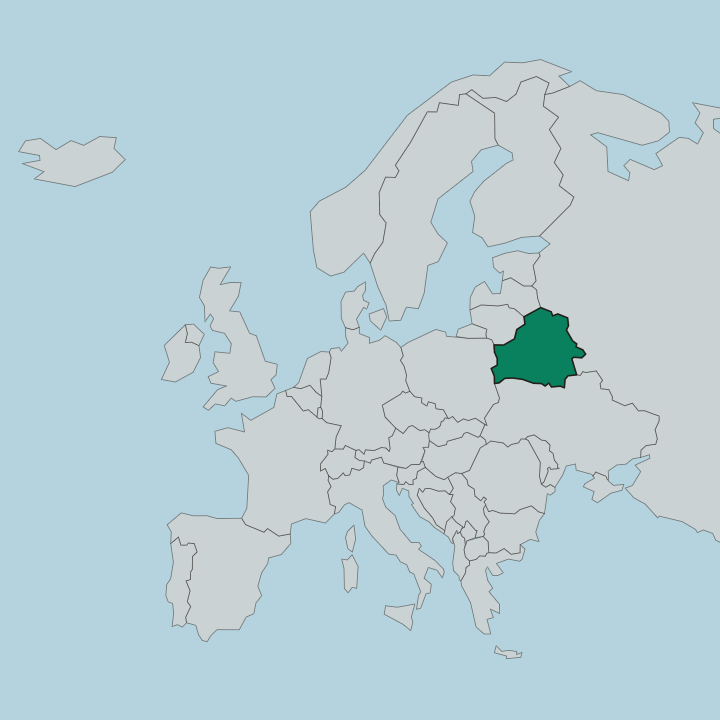
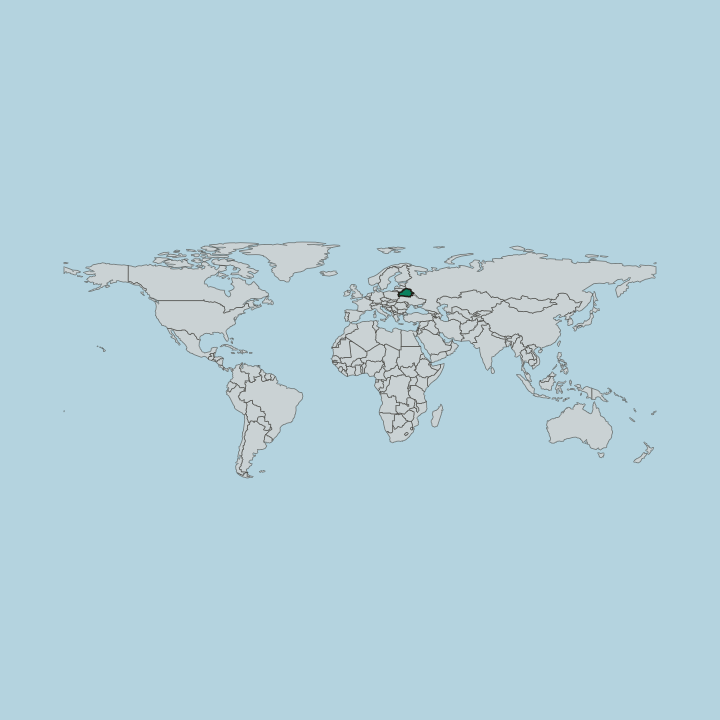
Belarus is a landlocked country in Eastern Europe, bordered by Russia, Ukraine, Poland, Lithuania, and Latvia, with Minsk at its centre.
Top destinations →

Top destinations in Belarus
Cities to start from, then drill into areas and hotels.
 Belarus
Minsk
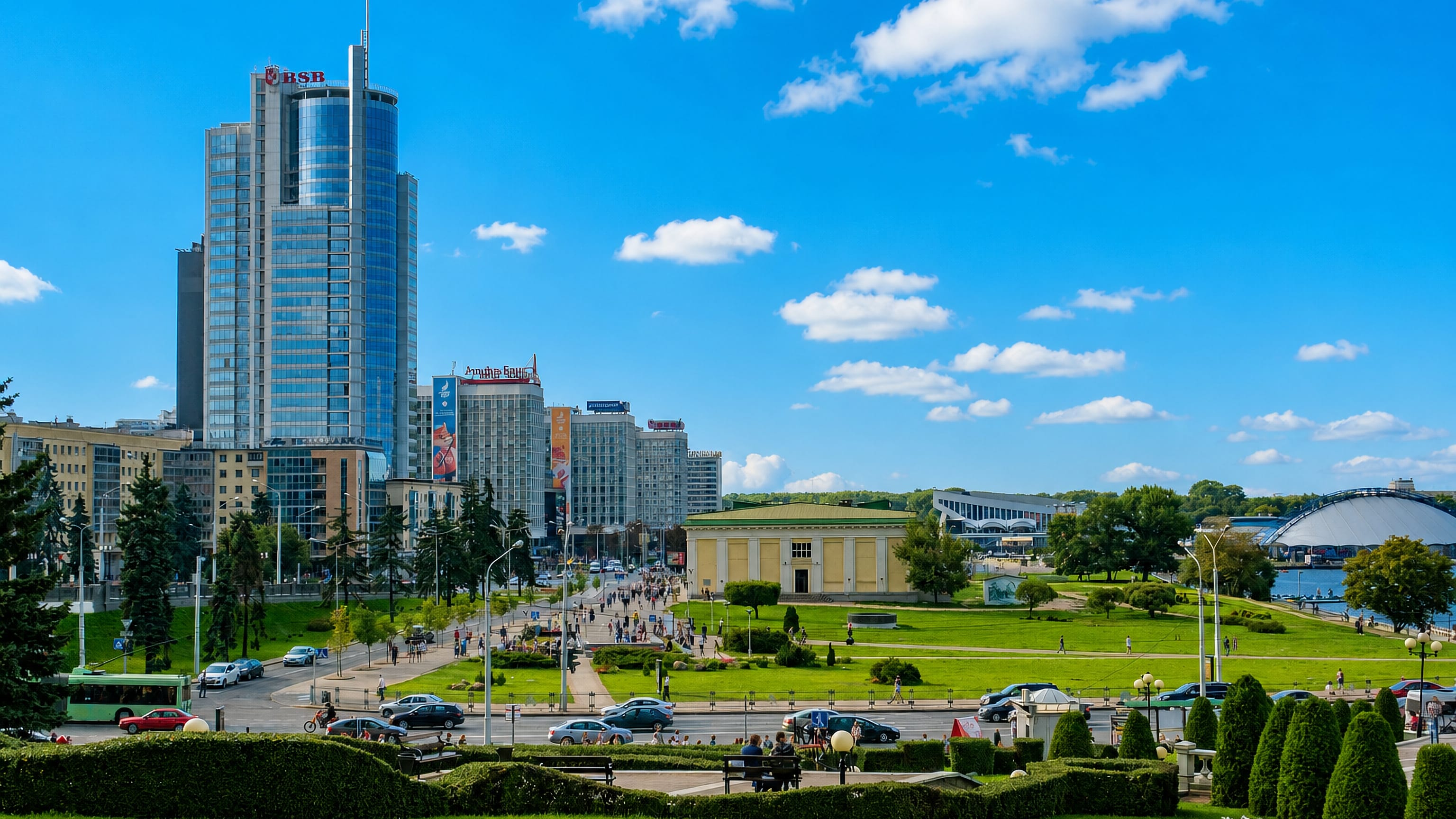
Minsk is the capital of Belarus, set on the Svislach and the now-buried Nyamiha at the country's centre.Where to stay →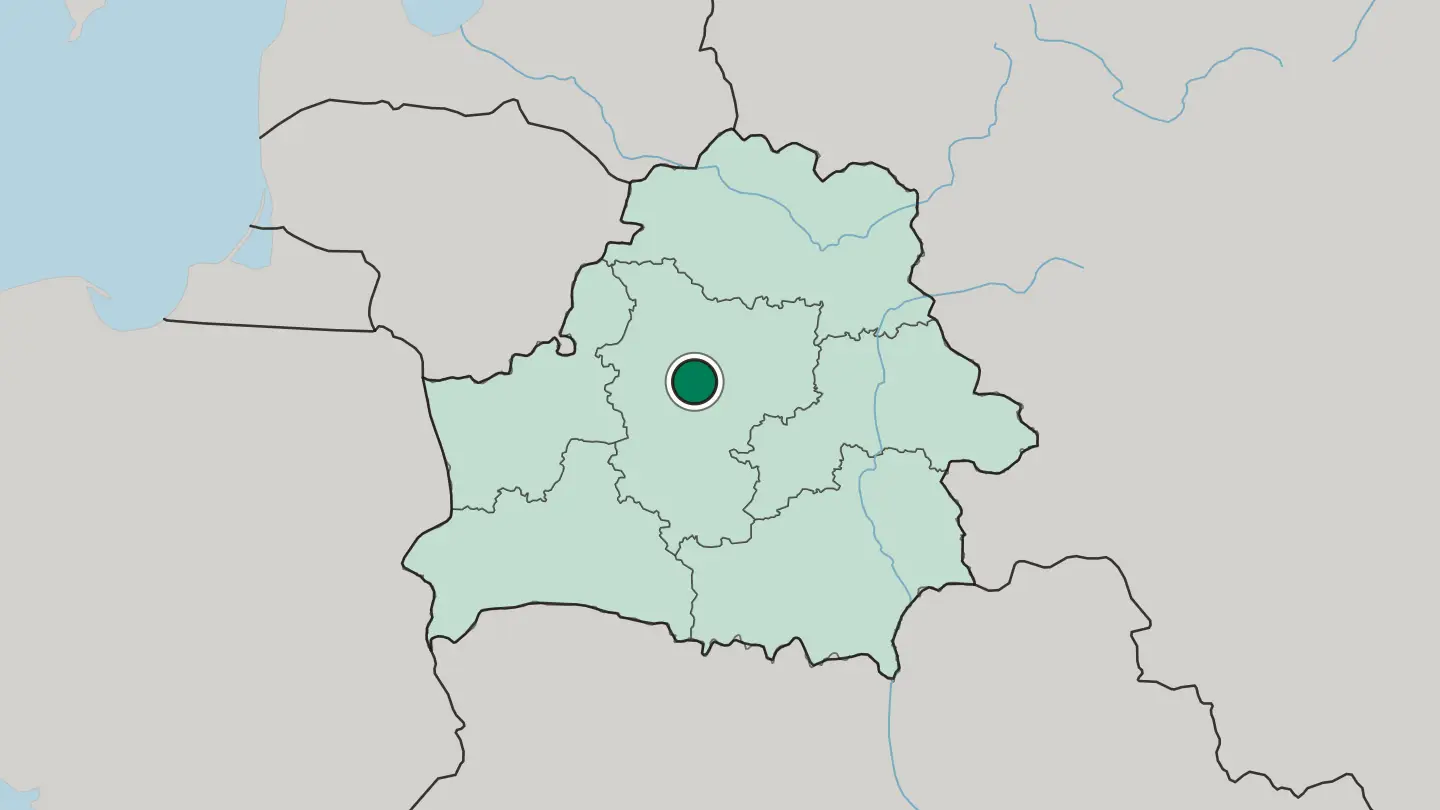
 Belarus
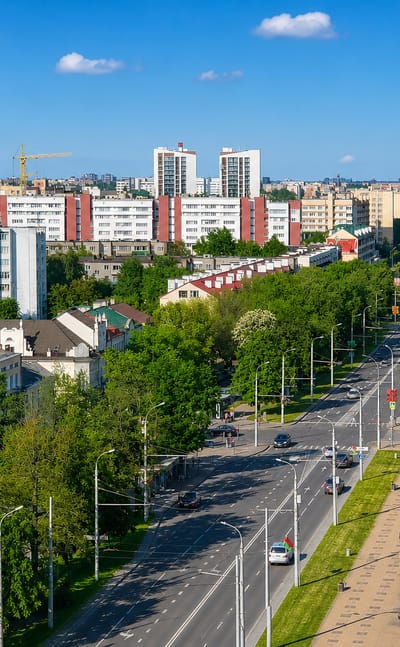
Hrodna
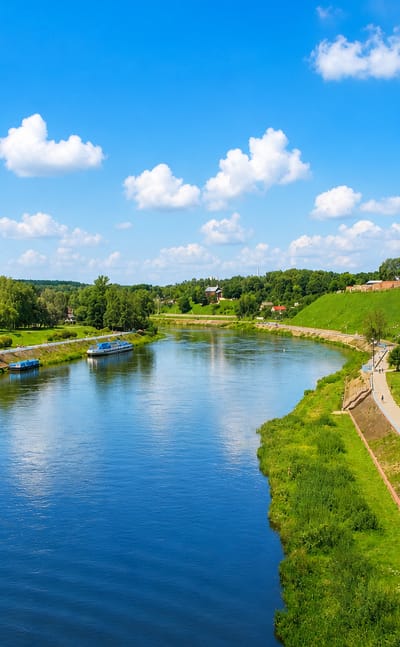
The Neman curves past Hrodna, one of the oldest cities in western Belarus and the seat of Grodno Oblast, guarded by its Old and New castles.Where to stay →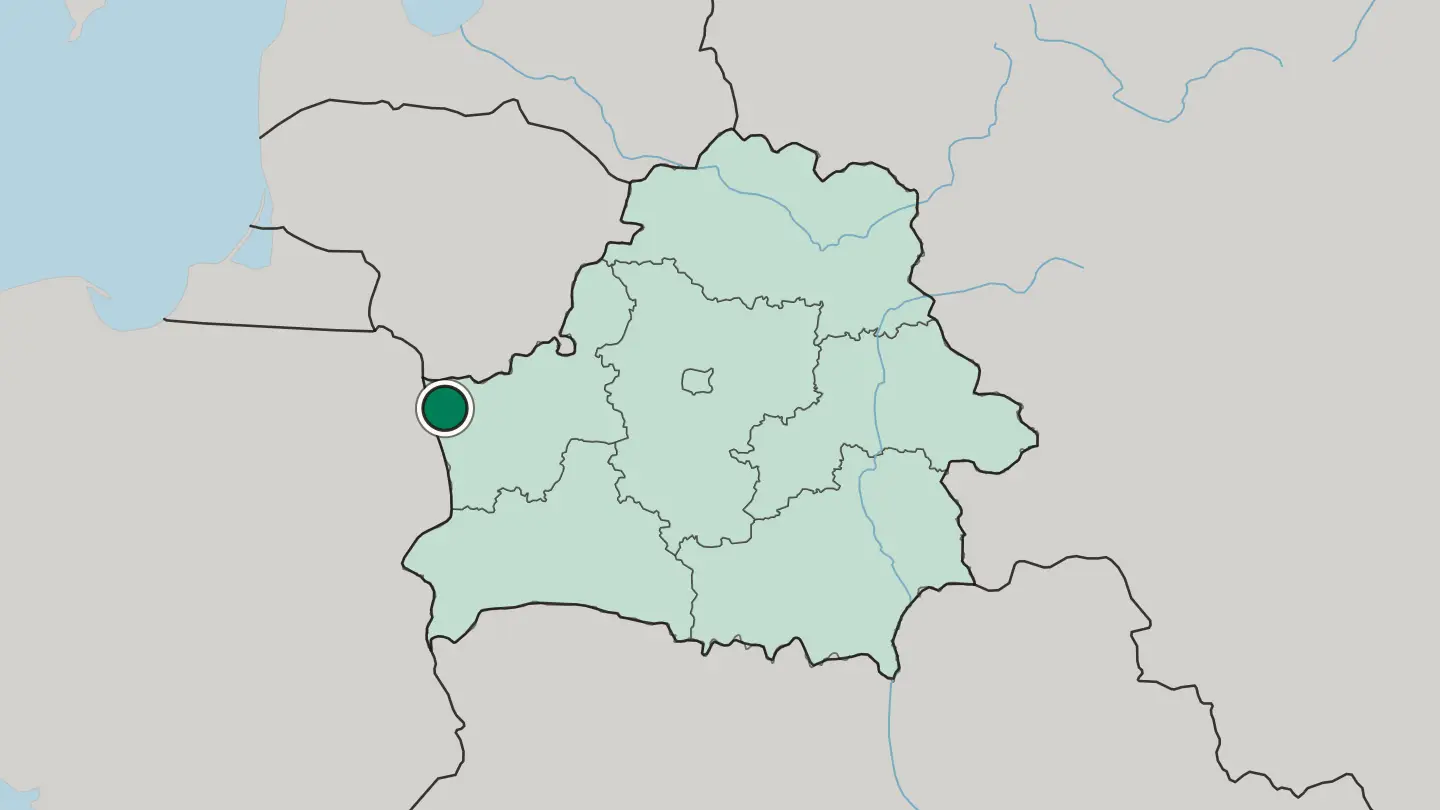
 Belarus
Brest
Brest guards the western frontier of Belarus, a city in Brest Oblast known for the vast Brest Fortress and the Berestye Archeological Museum.Where to stay →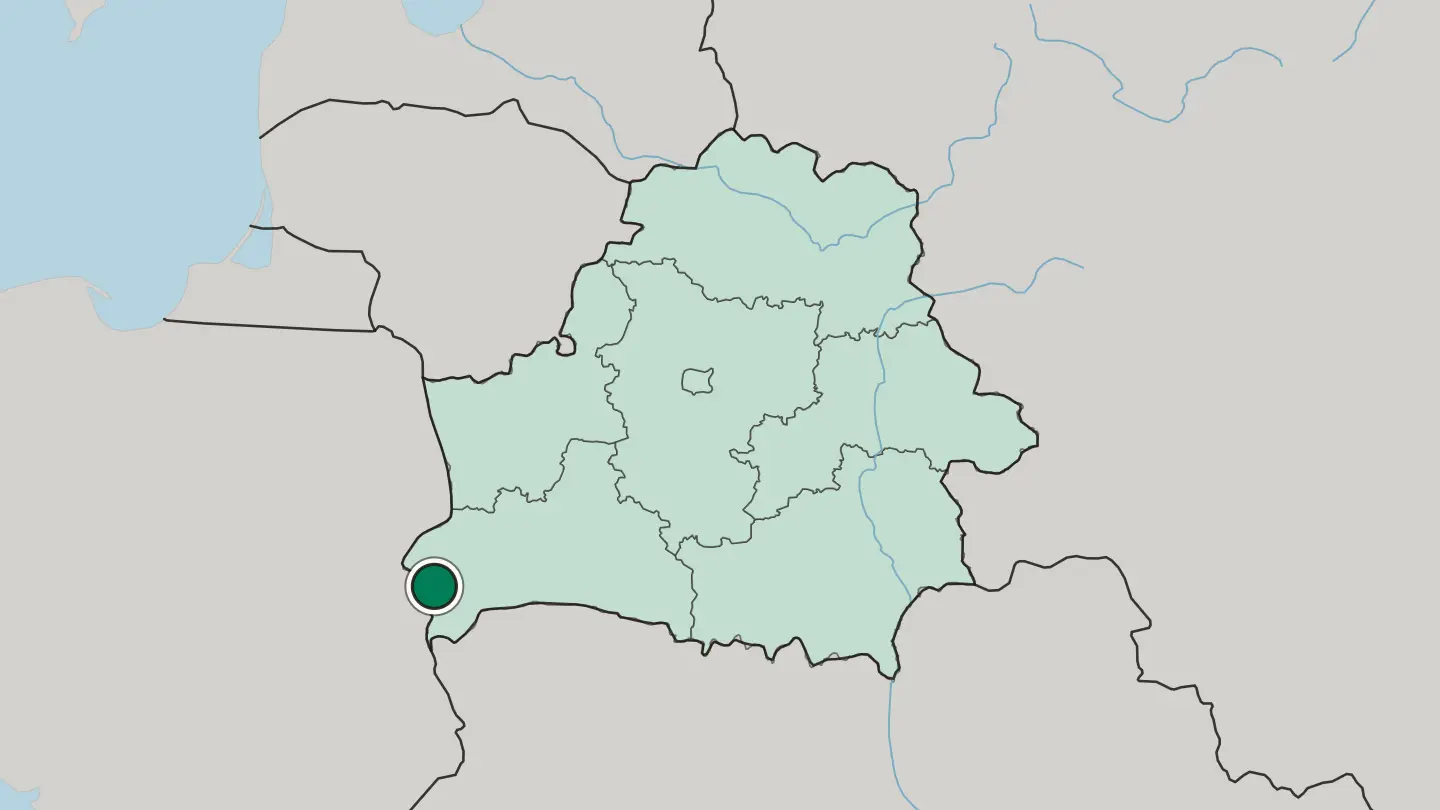
 Belarus
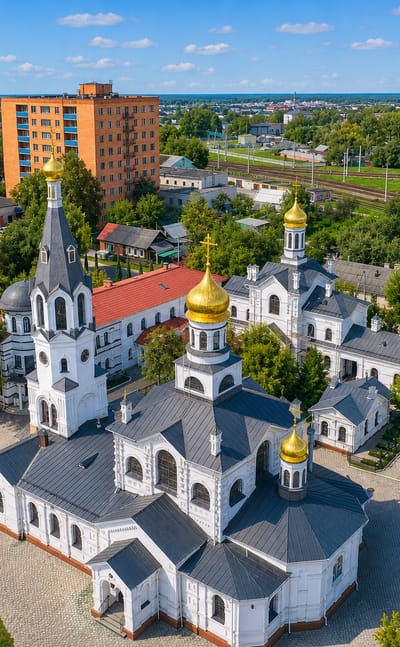
Homyel'
The Sozh runs below Homyel', the second-largest city in Belarus and the seat of Homyel' Voblasc', crowned by the riverside Gomel Palace and Park Ensemble.Where to stay →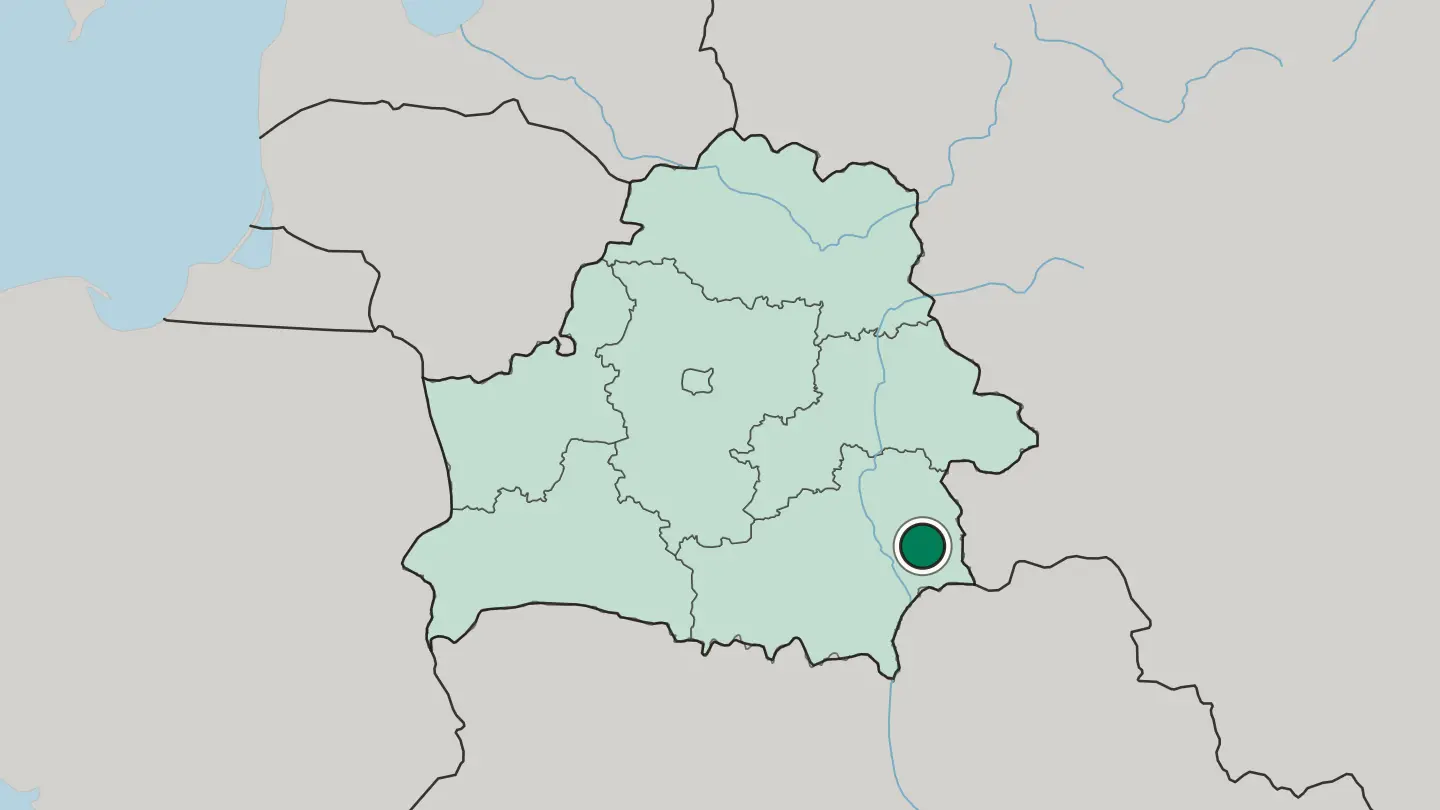 Belarus
Vitebsk
The Western Dvina divides Vitebsk, a city in north-eastern Belarus and the seat of Vitebsk Oblast, known as the birthplace of Marc Chagall.Where to stay →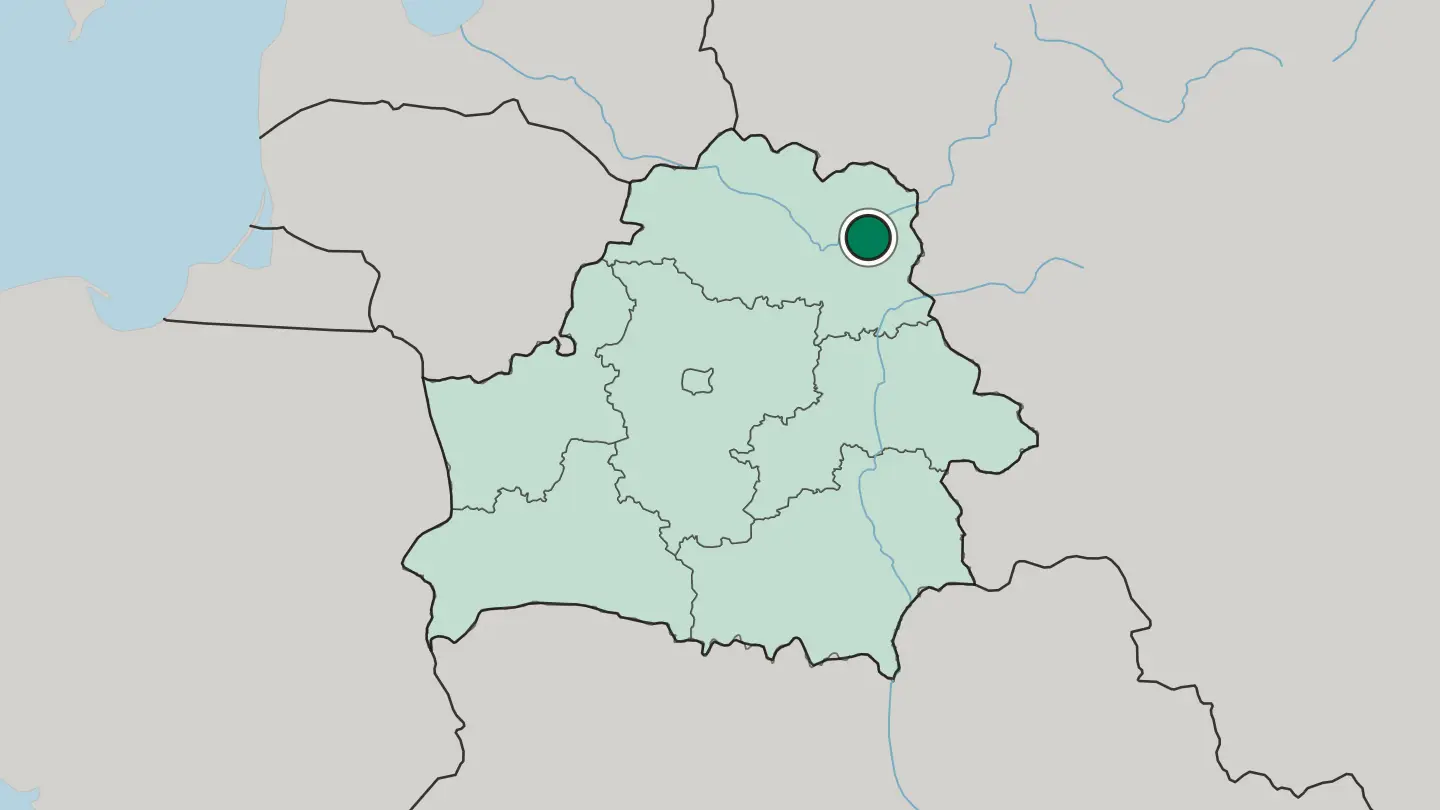
 Belarus
Mahilyow
The Dnieper River runs through Mahilyow, third-largest city of Belarus and the administrative centre of Mogilyov Oblast, recorded from 1267.Where to stay →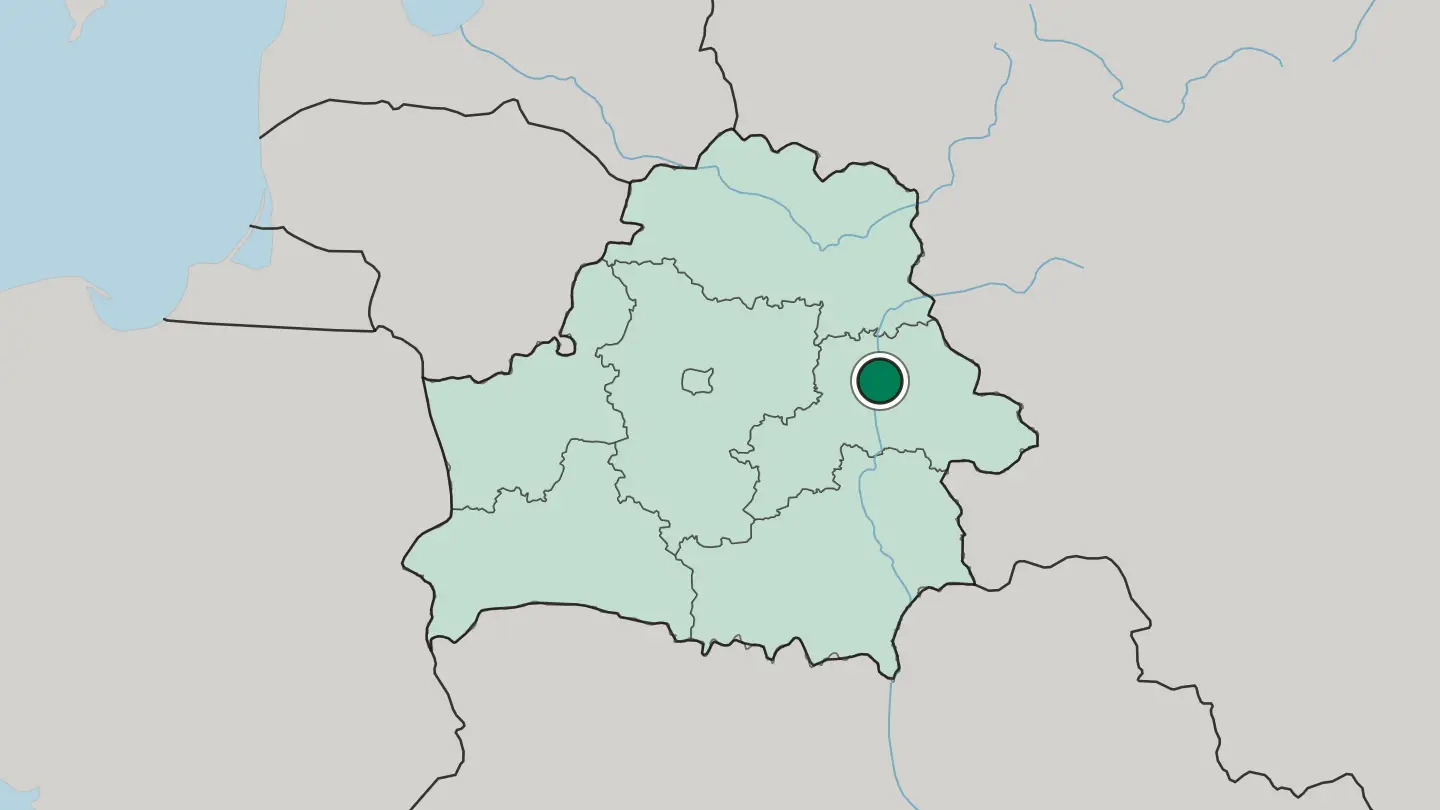
 Belarus
Polotsk
Polotsk is the oldest city of Belarus, an ancient seat of princes on the Western Dvina river.Where to stay →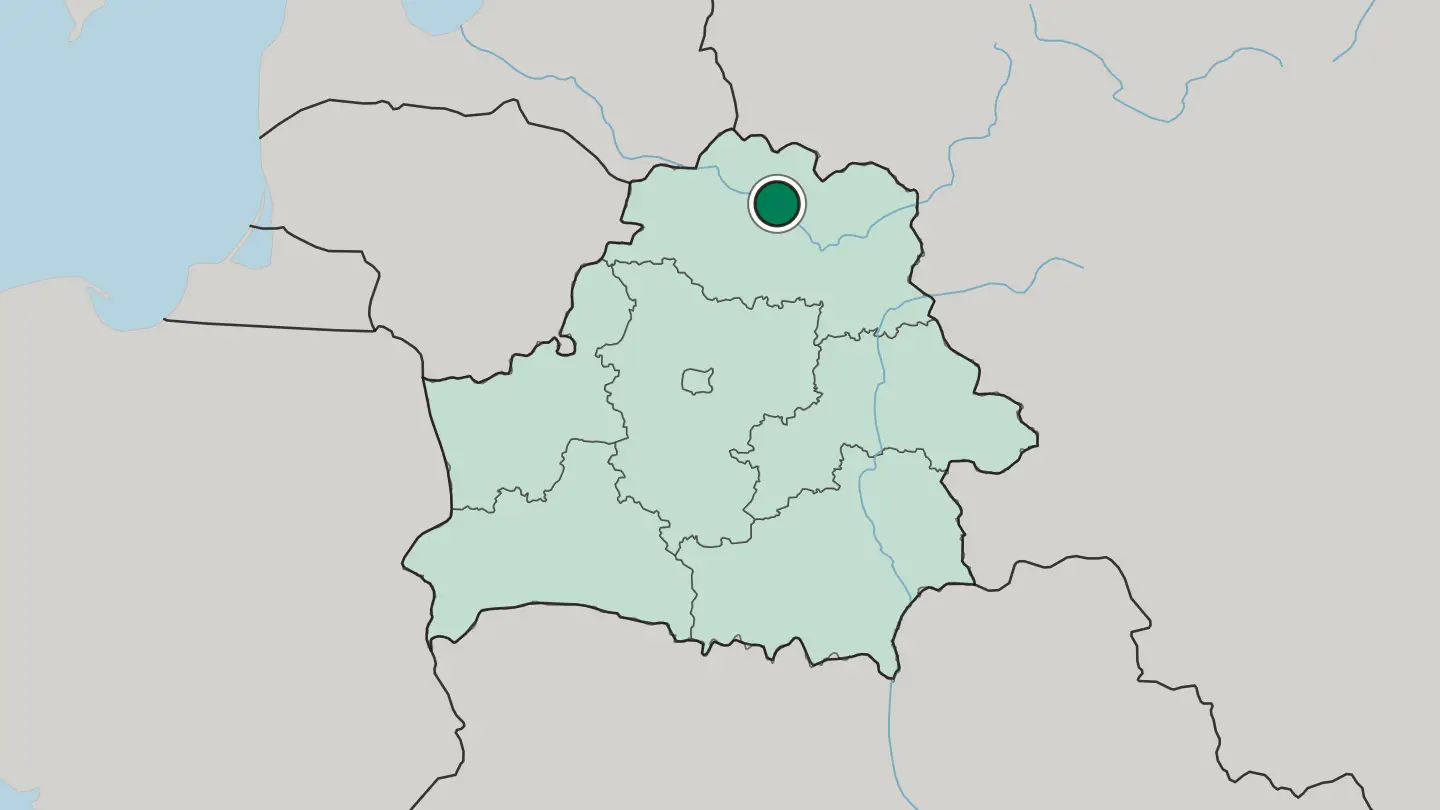
 Belarus
Pinsk
Pinsk is an old town of southern Belarus, the capital of the Polesian marshes, a river port with a baroque old town on the edge of the great wetlands.Where to stay →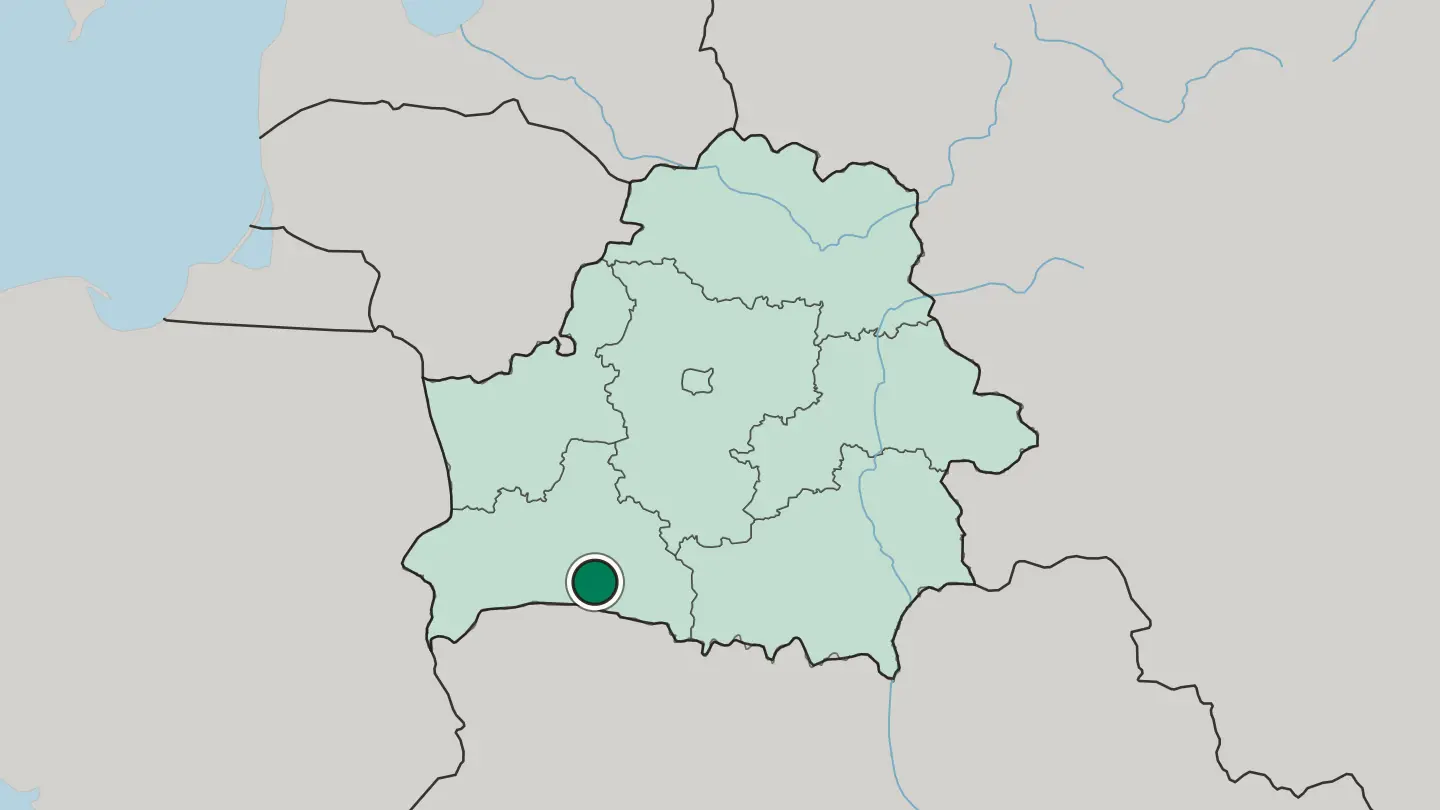
 Belarus
Bobruysk
Bobruysk stands on the Berezina River in Mogilyov Oblast, a city of Belarus dating from 1387 and known for its castle ground.Where to stay →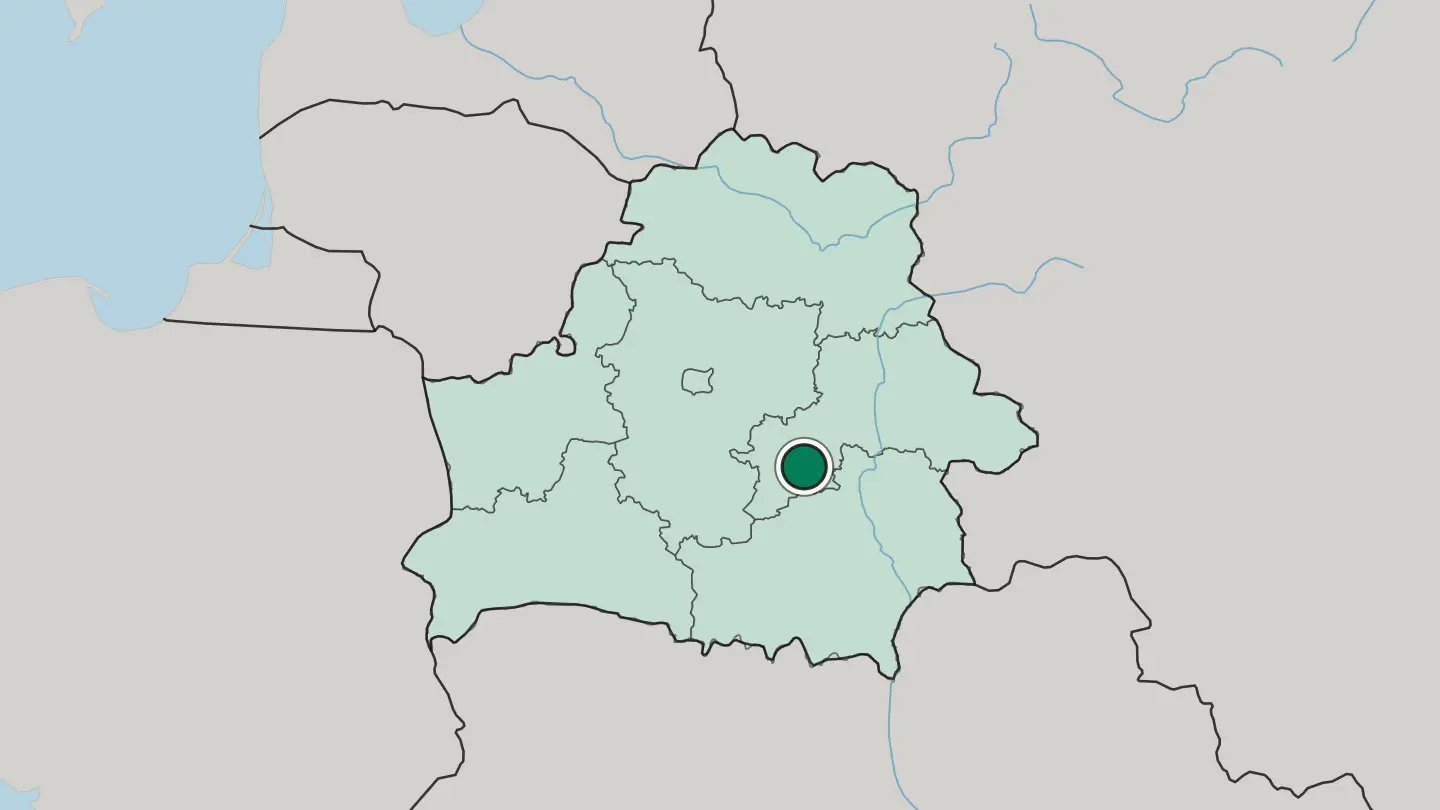
Regions of Belarus
Belarus
Brest Oblast
Brest Oblast fills the south-western corner of Belarus, where the Western Bug marks the Polish border and Polesia's marshes spread east.Towns & cities →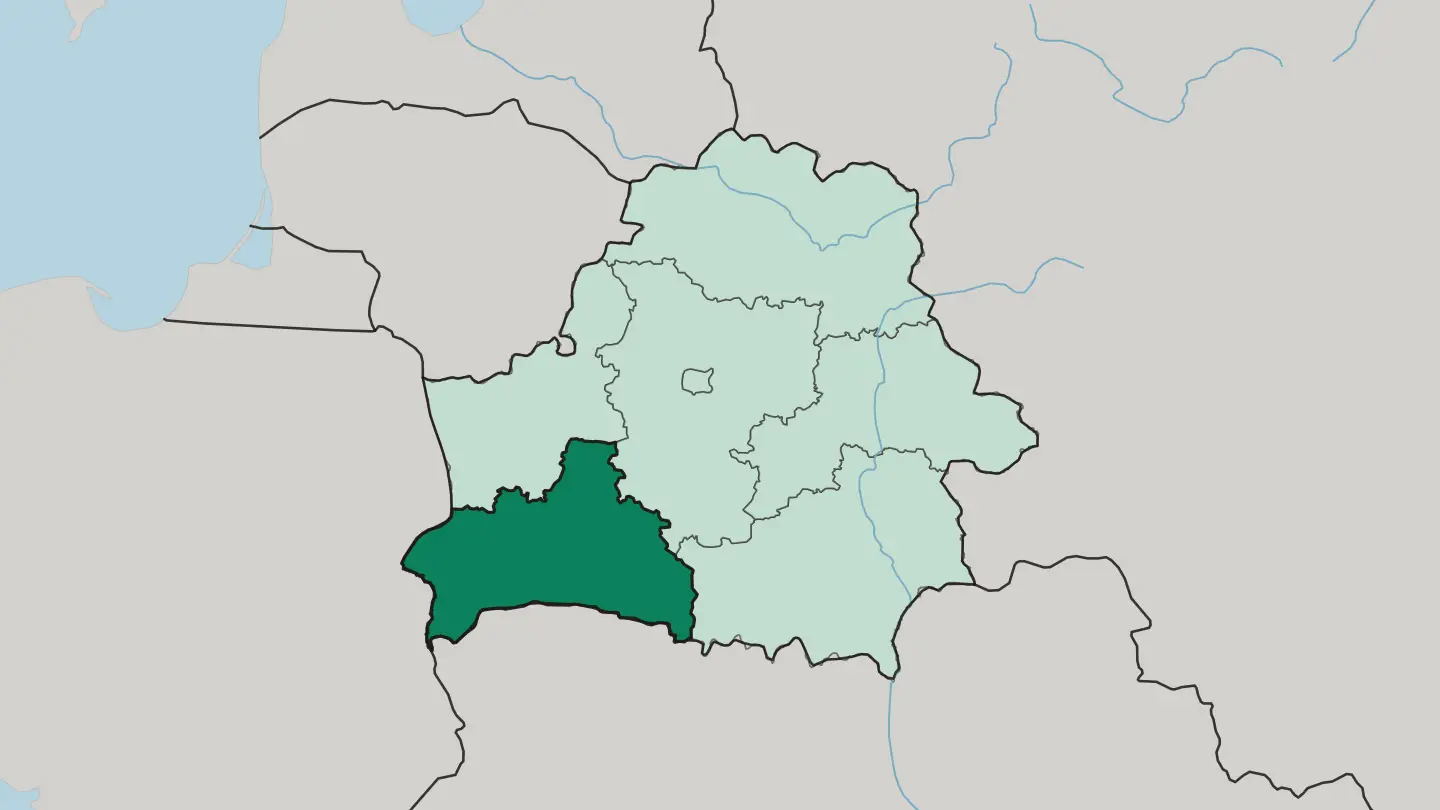 Belarus
Grodno Oblast
Grodno Oblast is Belarus's western corner, where the Neman flows toward the Polish and Lithuanian borders.Towns & cities →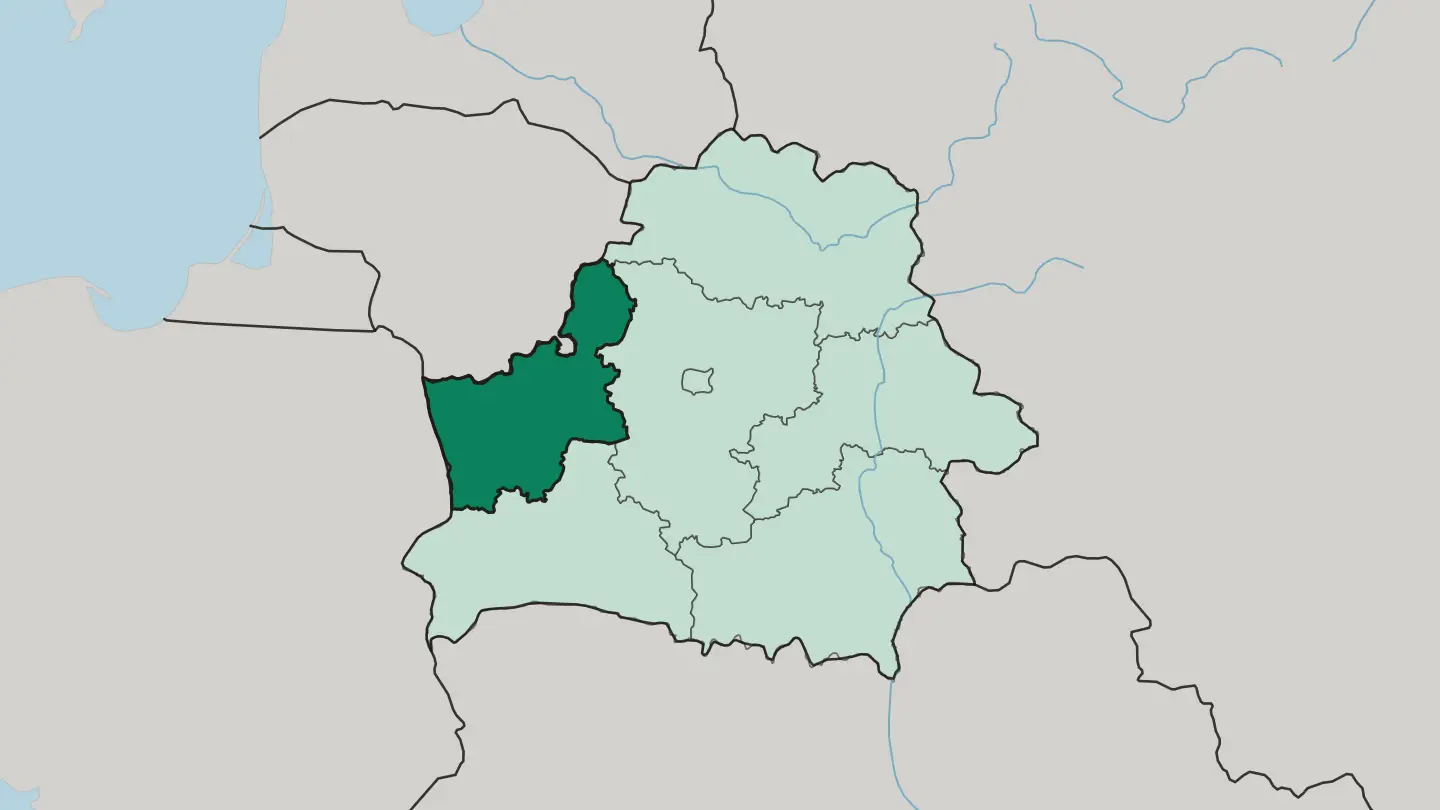 Belarus
Homyel’ Voblasc’
Homyel' Voblasc' fills the south-east corner of Belarus, a flat land of rivers and pine forest centred on the city of Homyel.Towns & cities →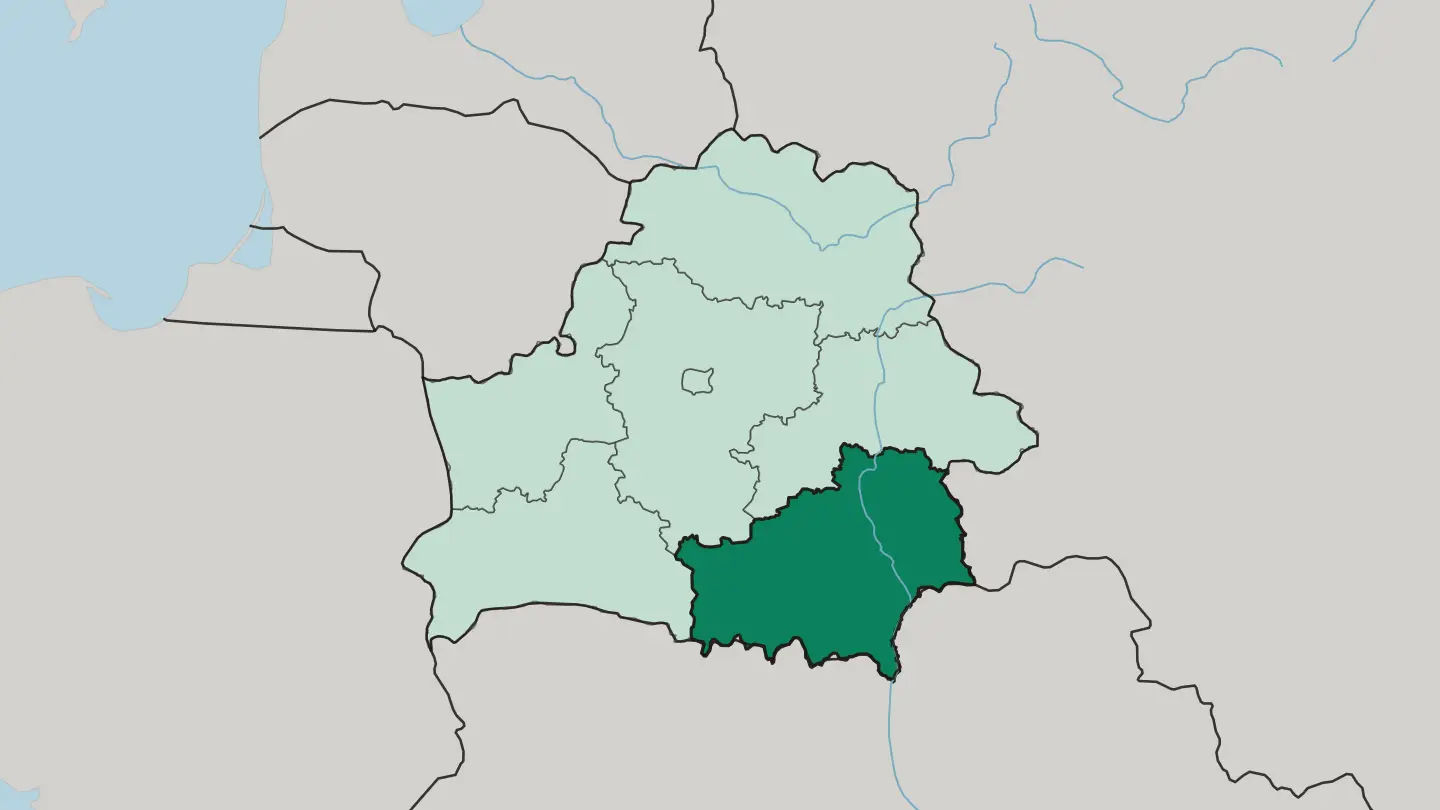 Belarus
Horad Minsk
Horad Minsk is the capital region of Belarus, the city of Minsk set apart as a region of its own on the Svislach river.Towns & cities →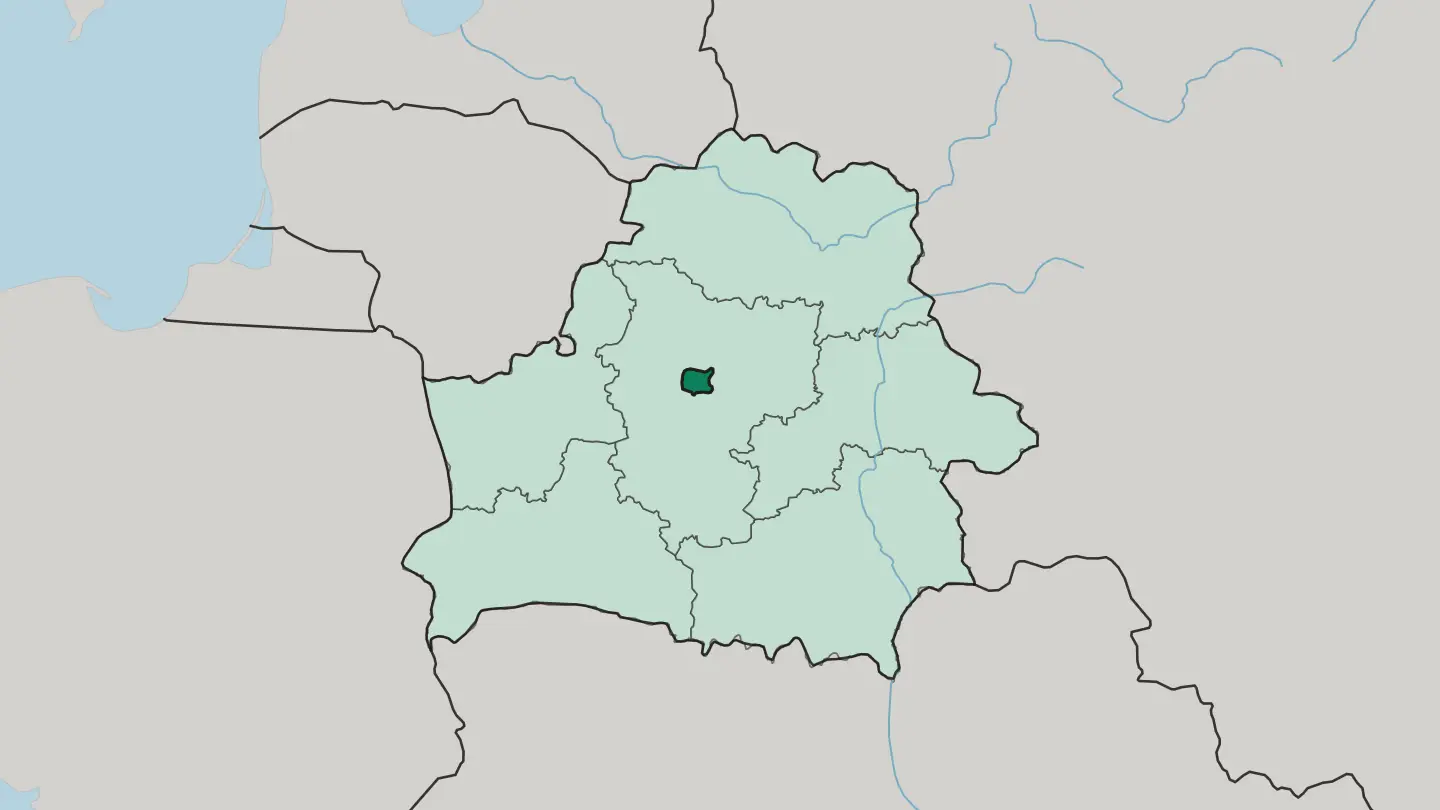
 Belarus
Minsk Oblast
Minsk Oblast wraps the whole of central Belarus around its capital, from Lake Naroch to the Berezina.Towns & cities →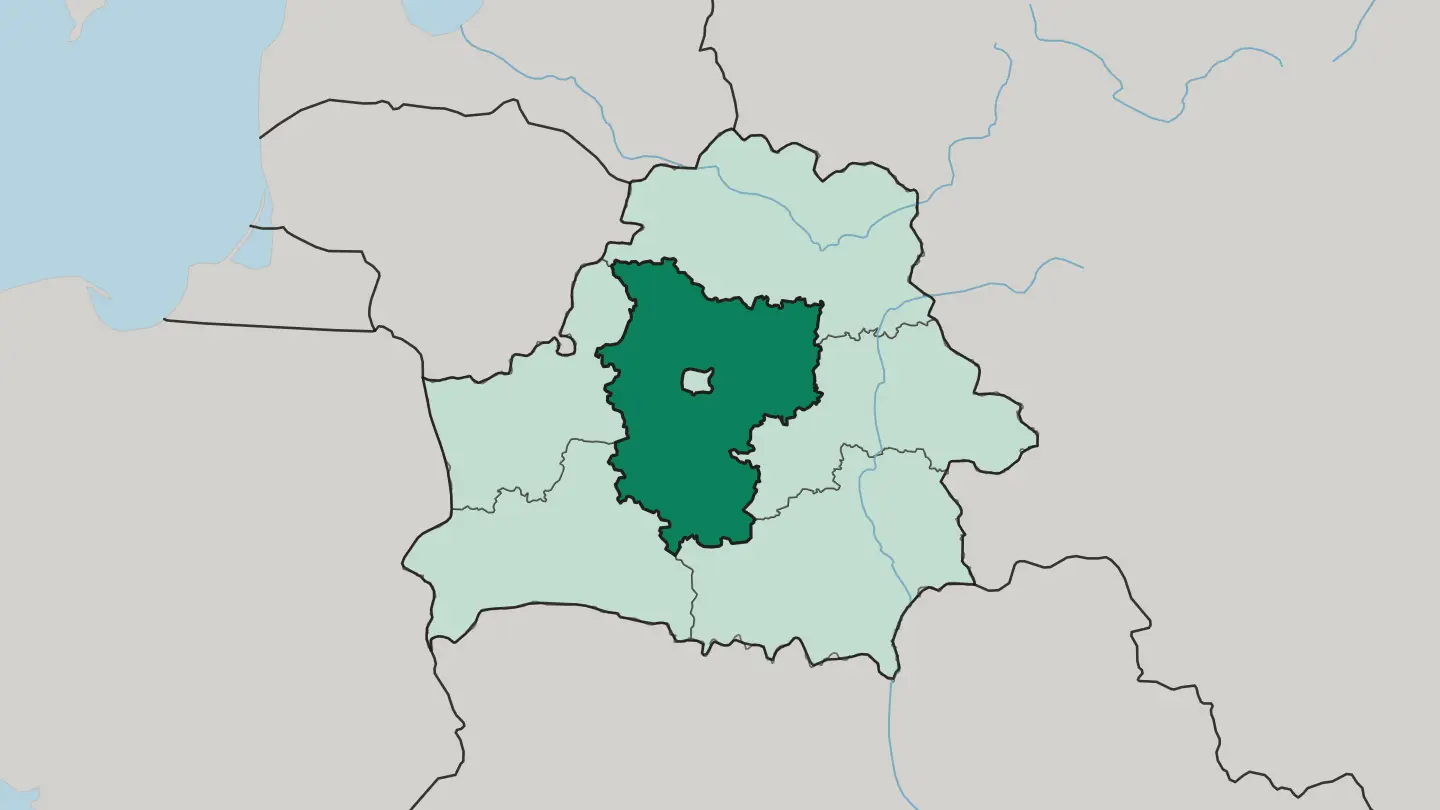 Belarus
Mogilyov Oblast
Mogilyov Oblast is the eastern region of Belarus, spread along the upper Dnieper where the country meets Russia.Towns & cities →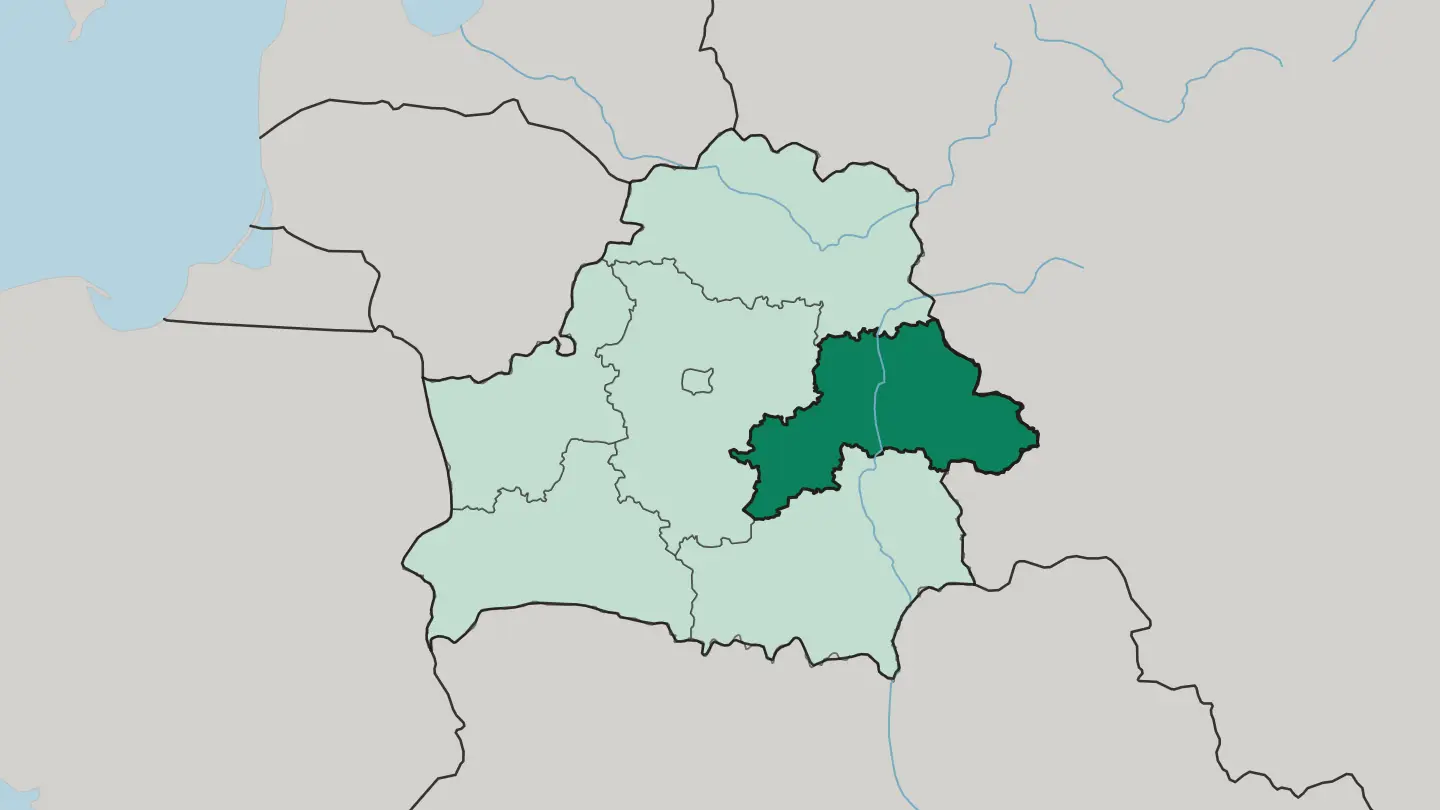 Belarus
Vitebsk Oblast
Vitebsk Oblast is the lake-strewn northern region of Belarus, holding Polotsk, Vitebsk and the Braslau Lakes near the Latvian border.Towns & cities →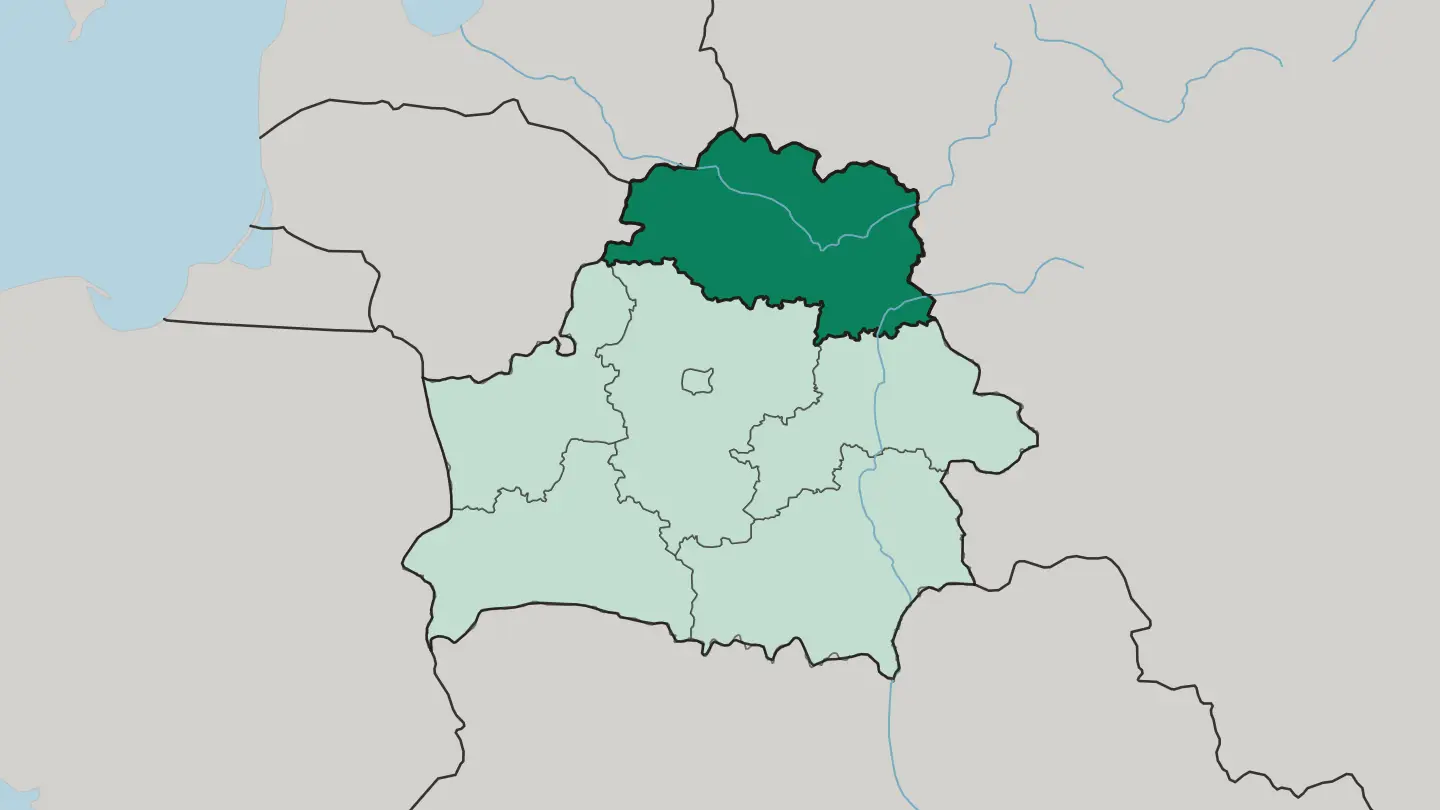
Explore by experience
Not sure which place? Start from how you want to travel.
About Belarus
Belarus keeps a low profile among European destinations.
What is Belarus known for?
The country is known for old castles, tracts of forest left largely undisturbed, and the visible imprint of its decades inside the Soviet Union. Its ties with neighbouring Russia remain close, and the border between the two stays open. Grand fortresses and quiet nature are the draw.
Much of what a visitor comes to see sits away from Minsk, out in the regions.
Where is Belarus?
Belarus is landlocked. It sits in Eastern Europe with no sea of its own, ringed instead by land borders that run to five neighbours: Russia along the east and northeast, Ukraine to the south, Poland to the west, and Lithuania and Latvia to the northwest. That position, wedged between the Baltic states and the wider expanse of Russia, has always made the country a corridor between east and west.
Its shape on the map is compact and unbroken. You reach it overland, from one neighbour into the next. The interior is hemiboreal, a belt of cool mixed forest that gives Belarus its reputation for undisturbed nature.
Woodland covers wide stretches of the country, thinning where farmland and towns take over. Administratively the land divides into six regions, set around Minsk near the middle. Minsk itself stands apart from those regions, governed as a city with its own special status.
The distances are continental, and travel between regions means long overland hauls. From the Polish frontier in the west to the Russian border in the east, Belarus reads as one broad, even sweep of Eastern Europe.
What is the history of Belarus?
Belarus counts its history from the tenth century. The record of settlement here runs that deep, and the centuries since have layered the land with the marks of larger powers that governed it in turn. Castles and country estates survive from those older years.
Then came the Soviet era. For most of the twentieth century Belarus was one of the constituent republics of the Soviet Union, bound politically and economically to Russia and the neighbours along its eastern edge. Independence came in 1991, when the Soviet Union dissolved and Belarus emerged as a sovereign republic in its own right.
The state that took shape then is organised into six regions, with the capital Minsk set apart under its own special status. Close ties with neighbouring Russia have continued since, the open border between them a standing sign of it. Soviet heritage remains plainly visible, in the architecture, the monuments, and the rhythm of public life.
For the traveller, that mix is the appeal, a country that keeps its castles, its nature, and its Soviet-era fabric without dressing them up for show. History here is worn openly.
What is Belarus like?
Russian is the language a visitor hears and reads across Belarus, and the country's official name, Республика Беларусь, appears in that Cyrillic script on signs and documents. Culturally the country sits at a meeting point in Eastern Europe, between Russia to the east and Poland and the Baltic states to the west, and it has absorbed something from each side. The heaviest imprint here is Soviet.
Decades inside the Soviet Union left their mark on architecture, public art, and daily habits, and that heritage is one of the things the country is known for. Away from the towns, culture leans on the land itself. The castles and country estates that survive from earlier centuries anchor a sense of older, pre-Soviet Belarus, while the forests and undisturbed nature give the country an outdoors, unhurried character.
This is not a place shaped for mass tourism. It stays off most travellers' itineraries, and what culture a visitor meets tends to be lived rather than staged, markets, monuments, and quiet provincial centres out in the six regions. Belarus keeps to itself, and shows itself plainly to those who come.
What is the climate of Belarus?
Belarus has a hemiboreal climate. Sitting inland in Eastern Europe with no coast to soften it, the country runs to cold, snowy winters and warm summers, the seasons swinging widely across the year. Between them, spring and autumn pass quickly.
The cool, moist conditions suit the forests that cover so much of the land, and keep the countryside green through the warmer months.
How do you get to Belarus?
Every way in crosses a land border. Landlocked and without a coast, it has no ferries; arrivals come by road and rail across the borders it shares with Poland, Lithuania, Latvia, Ukraine, and Russia. The border with Russia stays open, making the eastern approach the simplest.
Most international routes converge on Minsk, the capital and largest city, from which the six regions spread out. Travel between them means covering long overland distances.
Updated September 2026