Canada · Yukon
Where to Stay in Whitehorse, Yukon
Whitehorse, capital of Yukon and the largest city in Northern Canada, stands on both shores of the Yukon River at kilometre 1426 of the Alaska Highway.
Hotel links are affiliate links: booking through them may earn us a commission, at no extra cost to you. It never affects how places are ranked. How this works


Where to stay in Whitehorse
Where the beds are, and what that means for the visit.
The Yukon River splits the choice. Downtown holds the west shore and Riverdale the east, and the bridge between them is short enough that picking a side is a question of character rather than of distance. Downtown is the museum half.
The MacBride Museum of Yukon History, the Old Log Church Museum and the Kwanlin Dün Cultural Centre all fall within a walk of one another there, which settles the matter for anyone who came for the collections. Riverdale trades that for quiet. It faces Downtown across the water and costs nothing in time to anyone driving rather than walking.
North of both, the streets near the Takhini Arena run closer to the Alaska Highway than to the river, which suits a late arrival off the road or an early start back onto it. Whitehorse covers 416 km² in all. The city is far larger on the map than it is on foot.
You want Downtown for a first visit. For a longer stay with a vehicle, Riverdale or the Takhini side gives more room and a shorter run to the Alaska Highway.
Find hotels in Whitehorse
Direct booking searches for these neighbourhoods.
Downtown
The west-bank half of Whitehorse, where the Old Log Church Museum, the MacBride Museum of Yukon History and the Kwanlin Dün Cultural Centre all fall inside one walk of the Yukon River frontage.Find hotels in Downtowna bank of the Yukon River away from the museum streetsRiverdale
The east shore of Whitehorse, reached by bridge from Downtown, quieter than the museum side. Beds are limited here, so book early.Find hotels in Riverdaleskating nights at the Takhini Arena and a short run back onto the Alaska HighwayTakhini
The northern edge of Whitehorse around the Takhini Arena, closer to the Alaska Highway than to either bank of the Yukon River. Rooms are few around here — worth securing early.Find hotels in TakhiniHotel links are affiliate links: booking through them may earn us a commission, at no extra cost to you. It never affects how places are ranked. How this works
Things to do in Whitehorse
Ranked by global recognition; descriptions from Wikidata (CC0).
Museums & Galleries
3- Yukon Beringia Interpretive Centre
- MacBride Museum of Yukon History
- Yukon Transportation Museum
Stadiums & Sports
2- Takhini Arena
- Canada Games Centre
worth knowingacross 2 categories in Whitehorse
About Whitehorse
The river does the organising here.
What is Whitehorse known for?
Whitehorse spreads over both shores of the Yukon River, Downtown on one bank and Riverdale on the other, and the same water gives paddlers a route straight out of the city. Three museums anchor the other half. The MacBride Museum of Yukon History, the Yukon Transportation Museum and the Yukon Beringia Interpretive Centre give the territory's largest city a set of collections that no other place in Yukon keeps.
What are the main landmarks in Whitehorse?
Seven sites make the public list. The MacBride Museum of Yukon History takes the territory as its subject, the Yukon Transportation Museum takes the routes into it, and the Yukon Beringia Interpretive Centre goes back further than either. Two of the seven are not museums.
The Takhini Arena and the Canada Games Centre carry the sport a northern city moves indoors, while the Kwanlin Dün Cultural Centre and the Old Log Church Museum keep their ground on the Downtown side of the Yukon River.
What is the history of Whitehorse?
A stretch of white water did the naming. White Horse Rapids on the Yukon River were held to resemble the mane of a white horse, and the settlement that grew beside them took its name from that likeness rather than from any founder. Two dates anchor it.
The record opens at 1898 and incorporation as a city follows only in 1950, and that half-century separates a camp on a river bank from a chartered municipality with a territory to run. The Alaska Highway changed the terms. Whitehorse ended up at kilometre 1426 of it, which gave a river town an overland spine between British Columbia and Alaska.
Yukon put its seat here too. Whitehorse holds that seat and stands as the largest city in Northern Canada, which is why the territory's museums, offices and services concentrate on these two river banks rather than anywhere further north. The river outlasts all of it.
The Yukon rises in British Columbia, passes the city, and reaches the Bering Sea only after a long crossing of Alaska. Whitehorse sits well upstream of that ending, in southern Yukon, on a stretch of water that was a working route long before it was scenery.
Where is Whitehorse?
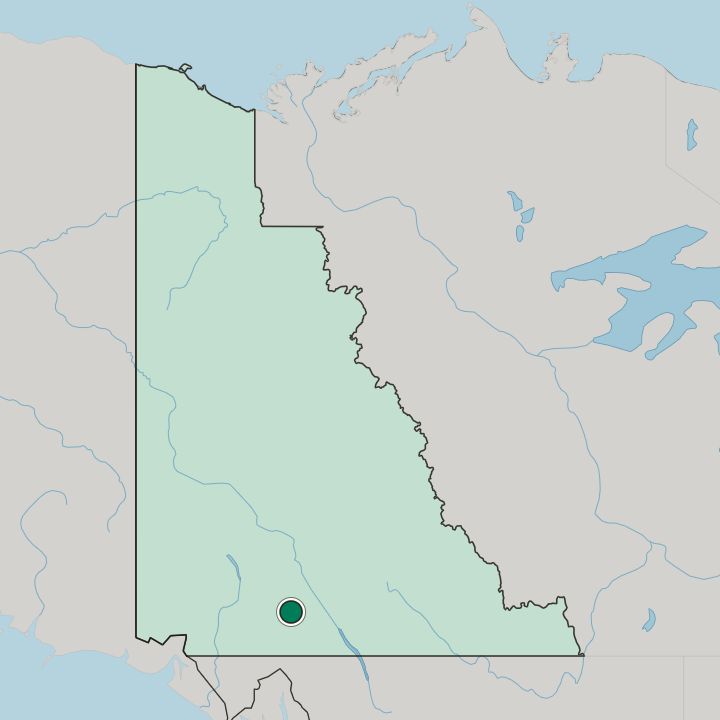
Whitehorse stands in southern Yukon, on both shores of the Yukon River, over ground that runs to 416 km². The water arrives from far off. It rises in British Columbia, passes Downtown and Riverdale on its way north, and reaches the Bering Sea only after crossing Alaska, which leaves the city a long way upstream of anywhere the water ends.
Trails leave the built-up ground on both banks.
What is the climate of Whitehorse?
Distance from salt water does the work. Whitehorse lies far inland in southern Yukon, and the Yukon River reaches the Bering Sea only after crossing Alaska, which is a fair measure of how little any ocean has to say about the air over the city. Yukon winters run long.
Snow feeds the ski and hiking trails the city keeps rather than closing them, and the Takhini Arena and the Canada Games Centre take in whatever the cold drives indoors.
How do you get to Whitehorse?
The Alaska Highway is the way in. Whitehorse sits at its kilometre 1426, which puts the city on the overland line running between British Columbia and Alaska through the middle of southern Yukon. The Yukon River is the other approach.
Paddlers put in on the Yukon River and let the current carry them north out of the city, which is the slower arrival and by a long way the older one.
Common questions
What is the best area to stay in Whitehorse?
Downtown: walking between the MacBride Museum of Yukon History and the Kwanlin Dün Cultural Centre. Riverdale: a bank of the Yukon River away from the museum streets. Takhini: skating nights at the Takhini Arena and a short run back onto the Alaska Highway.
Good for
Updated October 2026