Democratic Republic of the Congo · Province de l’Équateur
Where to Stay in Mbandaka, Province de l’Équateur
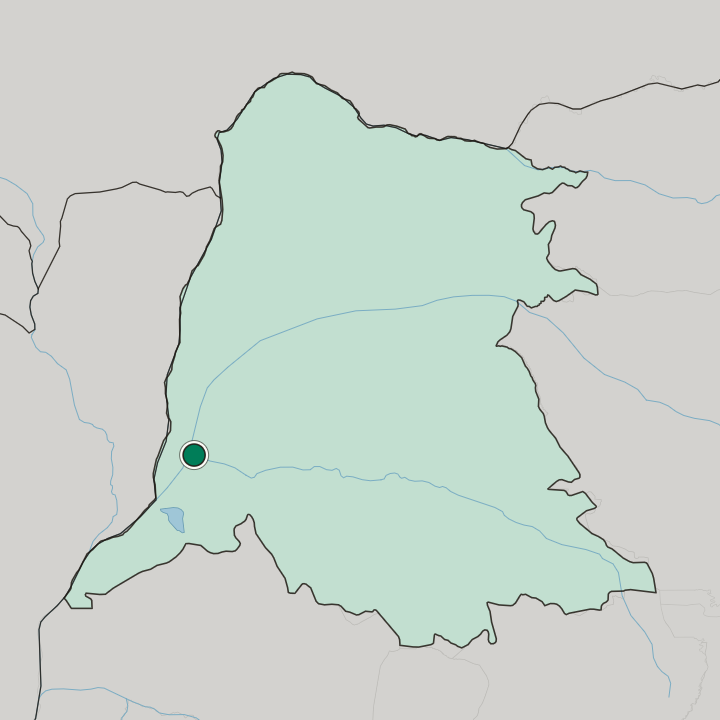
Mbandaka is the capital of Équateur Province, a Congo Basin river city where the Ruki joins the Congo River.
Hotel links are affiliate links: booking through them may earn us a commission, at no extra cost to you. It never affects how places are ranked. How this works


Where to stay in Mbandaka
Where the beds are, and what that means for the visit.
The choice in Mbandaka is the water or the ground behind it. A room near the Congo River frontage puts the landings, the provincial offices of Équateur and the National Museum of Mbandaka inside a walk of minutes, which is what a short visit wants and what anyone with business on the river needs. If the museum and the river frontage are why you came, stay on that side.
Beds are few either way. What exists clusters where the traffic already comes ashore, so a late booking usually means taking whatever the bank still has. Back from the water the blocks loosen, the yards widen and a night is quieter for it, at the cost of the walk to the museum and the sight of the current going past.
That trade suits a longer stay. Anyone coming off a boat should measure the distance from the landing before booking inland, because the city runs a long way along the bank and a point that looks central on a map can sit half an hour from the water. The Ruki side is working ground.
Nothing out there is arranged for visitors.
About Mbandaka
The rivers do the work here.
What is Mbandaka known for?
Mbandaka sits at the junction of two big waterways, the Congo River and the Ruki, and the administration of Équateur, its trade and its traffic all follow from that position rather than from any road. The National Museum of Mbandaka holds the city's formal collection. In 1886 the Belgians attached the name Coquilhatville, which the city carried through the colonial period.
What are the main landmarks in Mbandaka?
The National Museum of Mbandaka carries the city's formal collection, and it is the one sight that pulls a visitor away from the water for an hour or two. The rivers supply the rest. Where the Ruki comes into the Congo River the bank is working ground rather than a promenade, and that stretch shows what the city actually does better than any monument would.
Grand set pieces are few.
What is the history of Mbandaka?
The river came first, and the station after it. A post went down on this bank in 1883, at a spot where a boat could work upstream, downstream or into the Ruki from one landing, and the settlement that grew around it never left that logic behind. In 1886 the Belgians renamed it Coquilhatville.
The name arrived with colonial rule and lasted about as long, the town serving through those decades as the administrative point for a stretch of the Congo Basin that no road network could have held together. The colonial name did not survive. Mbandaka replaced Coquilhatville, and the seat of Équateur Province stayed exactly where it had been put, which is the ordinary outcome for a town whose reason to exist is a confluence rather than a decree.
The Democratic Republic of the Congo inherited both the town and the job it does. What the city is called has changed more than what it is for, and the traffic that turns at the mouth of the Ruki is doing the work the station of 1883 was placed there to catch.
Where is Mbandaka?
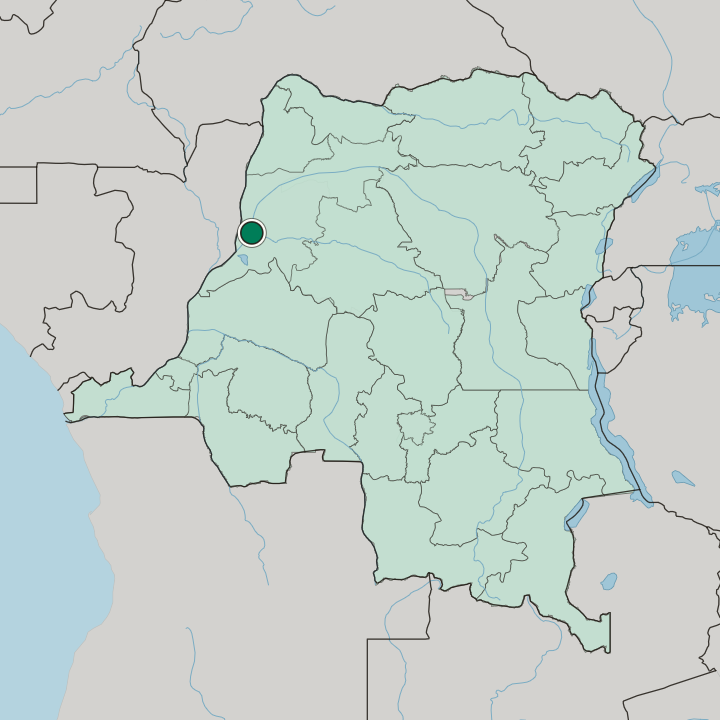
The Congo Basin sets the terms. Forest and water run out in every direction from the city, with no high ground to break the view and no natural edge but the banks themselves, which is why the rivers carry what roads carry elsewhere. The Ruki adds its water just here.
Below the confluence the Congo River keeps going, as it does for most of the length of the Democratic Republic of the Congo. The equator passes just south, and Équateur Province takes its name from that line.
What is the climate of Mbandaka?
Rain is the constant. The Congo Basin generates its own weather, drawing moisture off the forest and returning it as afternoon storms that can arrive in any month, so a dry spell here means fewer downpours rather than none. Heat sits close to the water and barely shifts across the year, because the equator does not permit the seasonal swing that places further north or south take for granted.
Humidity is what visitors remember, and it is heaviest in the hours before a storm breaks over the Congo River.
How do you get to Mbandaka?
Water is the main way in. Boats come down the Congo River from the upper reaches and up from the lower river, and a passage that looks straightforward on a map runs to days rather than hours, because the current, the loading and the state of the channel set the timetable. Flights are the fast alternative.
The Ruki carries its own traffic in from the country behind the city, though roads into the Congo Basin stay poor enough that little of consequence reaches Mbandaka on wheels.
Updated September 2026