Central African Republic: Regions, Cities & Travel Guide
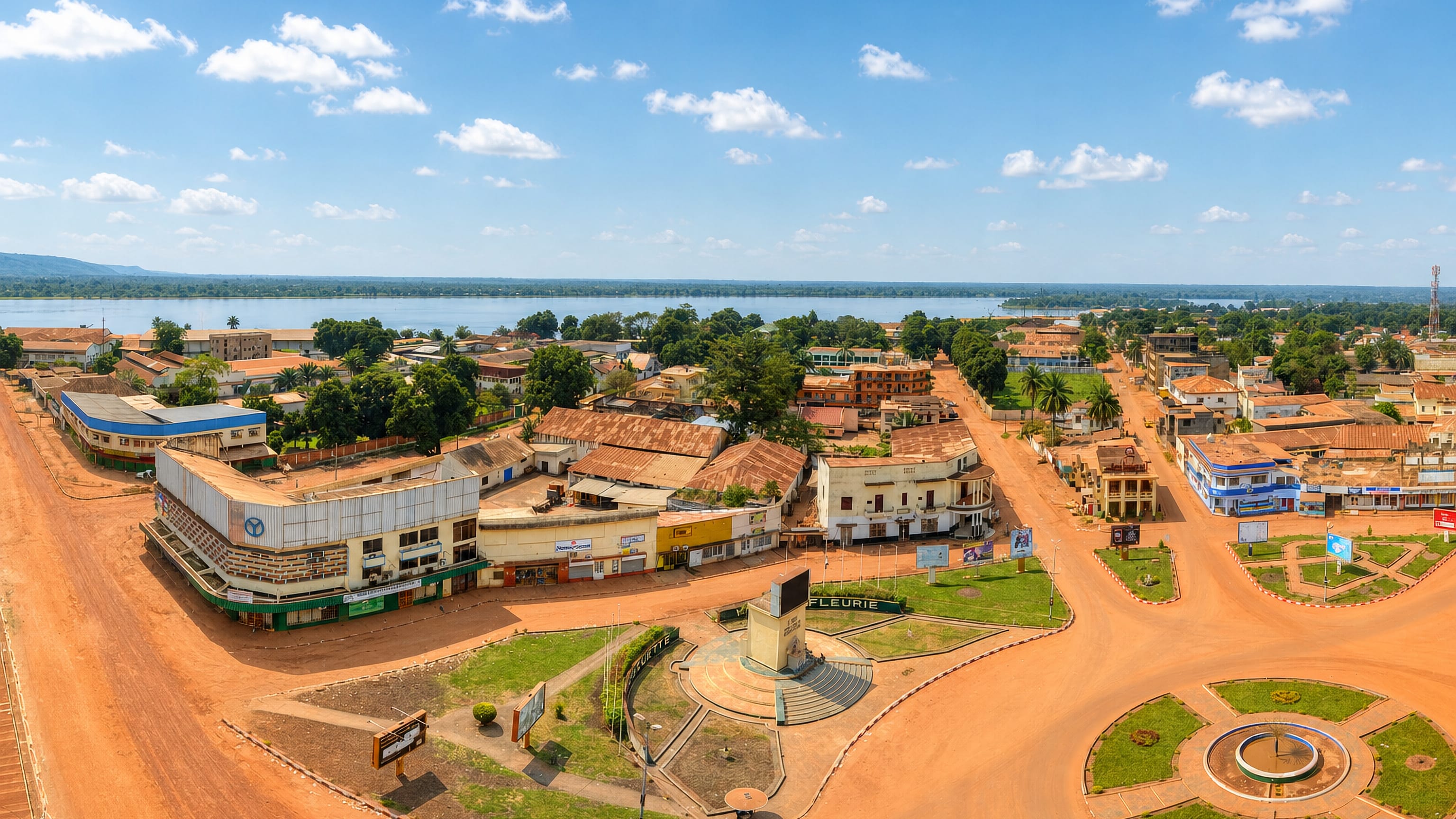
The Central African Republic is a landlocked country in the heart of the continent, with Bangui on the Ubangi River as its capital.
Hotel links are affiliate links: booking through them may earn us a commission, at no extra cost to you. It never affects how places are ranked. How this works


Top destinations in Central African Republic
One city to start from, then drill into its areas and hotels.
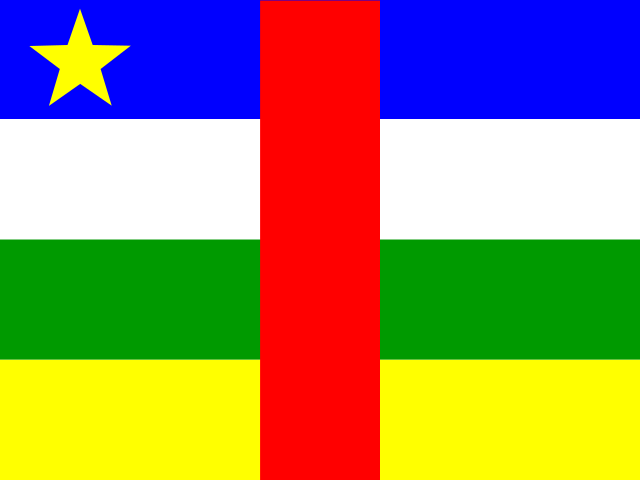 Central African Republic
Bangui
Bangui rises from the north bank of the Ubangi River, the capital of the Central African Republic, known for the Boganda National Museum.Where to stay →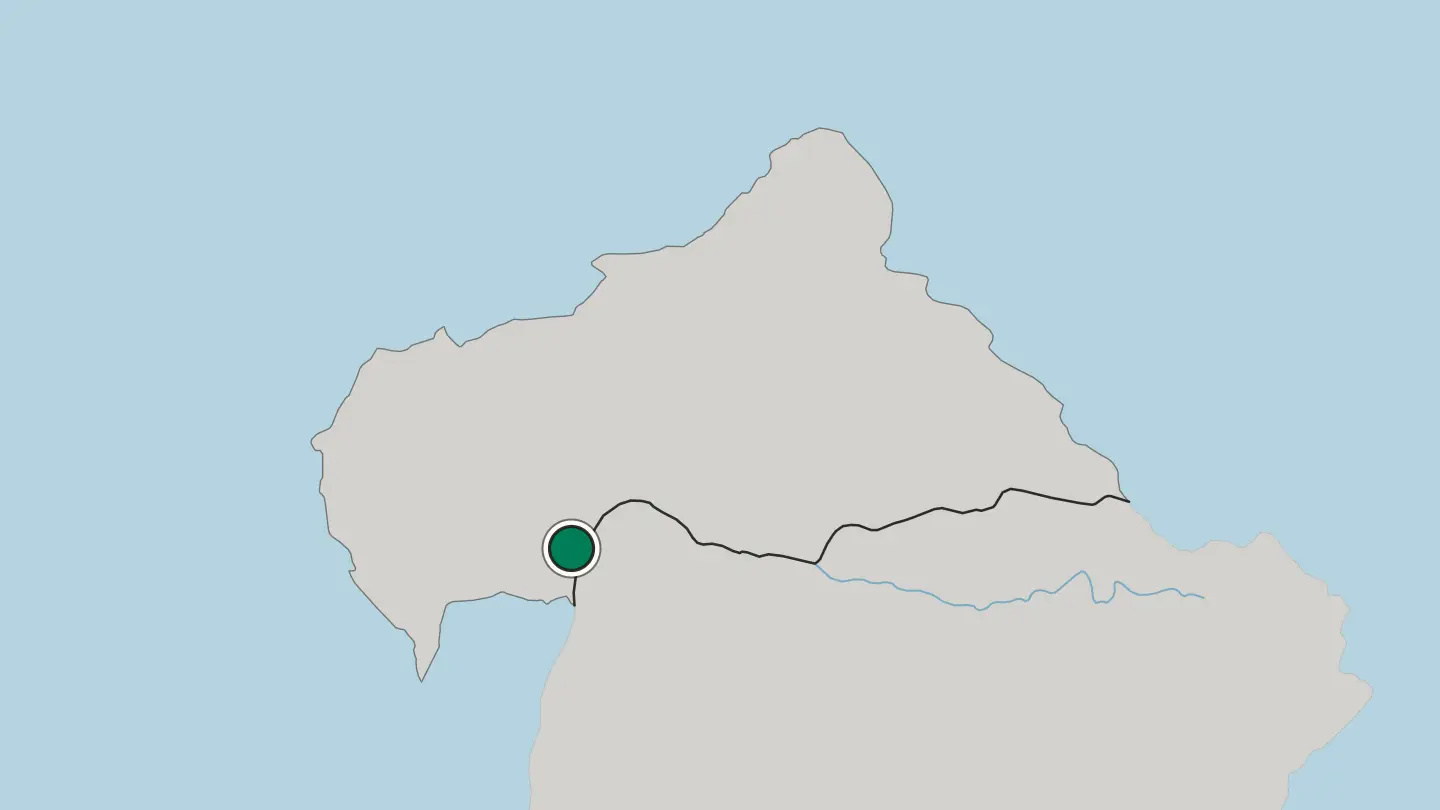
Hotel links are affiliate links: booking through them may earn us a commission, at no extra cost to you. It never affects how places are ranked. How this works
Browse by region
One region so far — open it to see its cities and towns.
About Central African Republic
What is Central African Republic known for?
The Central African Republic is known above all for the forest wildlife of Dzanga-Sangha, the special reserve in the far south-west where western lowland gorillas and forest elephants gather at the Dzanga Bai clearing. Bangui, the capital, sits on the wide Ubangi River. Its Boganda National Museum holds masks, sanza harps, and hunting weapons from the country's dozens of ethnic groups.
West of the city, the Boali Falls drop over a schist cliff on the Mbali River. Wild ground, deep forest.
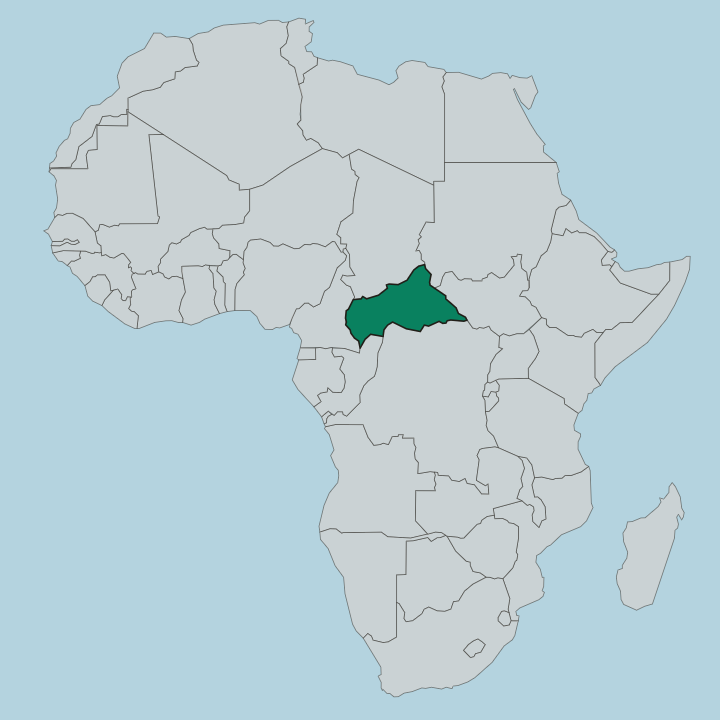
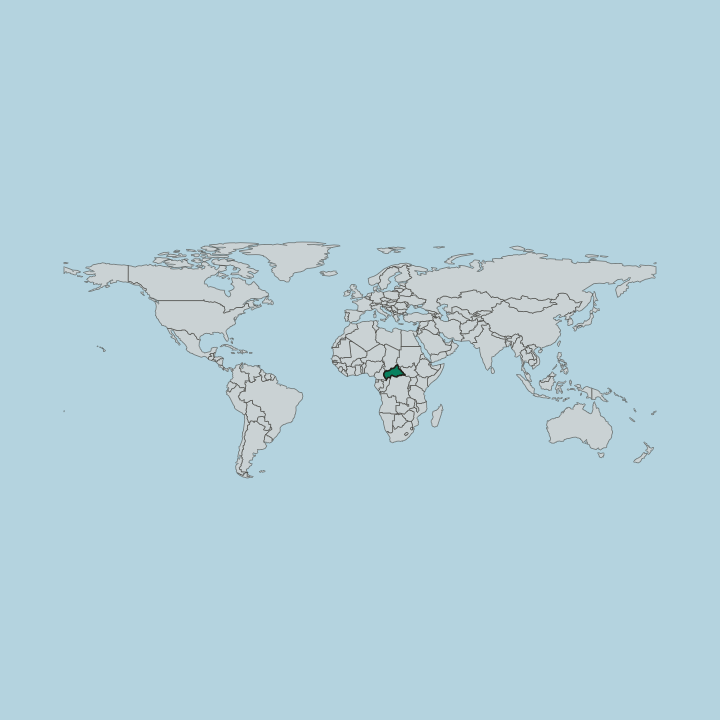
Where is Central African Republic?
The Central African Republic occupies a broad plateau at the centre of the continent, ringed by six neighbours and reaching no coast of its own. Two great river basins order the land. About two-thirds of the country drains south toward the Ubangi River, which forms much of the southern border and carries the water on to the Congo, while the northern third feeds the Chari and its headwaters toward distant Lake Chad.
The Sangha River threads the dense forests of the far south-west. Between the basins, the ground rises and falls in a long swell of savanna. The terrain shifts markedly from north to south.
Dry Sahelian plains open across the north, giving way to wooded savanna over the central plateaus, and finally to humid tropical rainforest in the south-western corner around Dzanga-Sangha. In the west the land climbs toward Mont Ngaoui, the country's highest point near the Cameroon frontier, rising to roughly 1,410 metres. The Boali Falls break the Mbali River over a schist wall on the road out of Bangui.
From dry plain to closed forest, the country holds several worlds at once.
What is the history of Central African Republic?
Long before Europeans arrived, the plateaus and forests here were home to dozens of peoples with distinct languages and traditions. French expansion reached the Ubangi in 1889, when a post was founded at Bangui on the river's northern bank. The territory was organised as the colony of Ubangi-Shari, named for the two river systems that drain it, and ruled from afar within French Equatorial Africa.
Decades of concession-company rule followed. Rubber and other extraction weighed heavily on the population across the early colonial years. The path to self-rule was shaped above all by Barthélemy Boganda, a former priest and the first Oubanguian elected to the French National Assembly, who campaigned against colonial abuses.
He died in a plane crash in 1959, months before independence. The Central African Republic became a sovereign state in 1960. The decades since have been troubled by coups, an emperor's brief self-crowned rule, and recurring conflict that has marked daily life.
Through all of it, the Ubangi has kept flowing past the capital he helped bring to nationhood.
What is Central African Republic like?
Some eighty ethnic groups share the country, and their languages, drums, and dances give its culture great depth. French is the official language, but daily life runs on Sango, a Ngbandi-based creole understood almost everywhere. Music binds it together.
The sanza thumb piano carries older songs, while Bangui's bands fold Congolese rumba and soukous into a distinct Central African sound heard across the river ports. In the south-western rainforest, the Aka people keep a tradition of layered, interweaving polyphonic singing that UNESCO has recognised as a heritage of humanity. Food leans on cassava, pounded into a fufu that soaks up sauce at almost every meal.
Cooks braise cassava leaves into saka-saka, simmer okra and fish into dongo-dongo, and fold groundnuts through chicken and meatballs in the peanut-rich dishes of the region. The Boganda National Museum in Bangui gathers the masks, instruments, and tools of these many peoples under one roof. Regional dances mark hunts, funerals, and new encampments.
One republic, many voices at once.
What is the climate of Central African Republic?
The Central African Republic is hot the year round. The south sits under a tropical climate with a long rainy season, feeding the forests around Dzanga-Sangha, while the north follows a drier savanna pattern with a pronounced dry spell from December through February. Higher ground tempers the heat.
The western plateau around Bouar, near a thousand metres, stays noticeably cooler than the sweltering river lowlands of Bangui. Rain runs the calendar here more than temperature does.
How do you get to Central African Republic?
Nearly all visitors arrive by air. Bangui's international airport is the country's main gateway and the hub for onward travel to every corner of the interior. Roads reach out from the capital toward Bouar and Berbérati in the west, but distances are long and conditions rough.
For the Dzanga-Sangha reserve in the deep south-west, most travellers charter a light aircraft over the forest rather than face days of driving. Plan every leg well ahead. Overland options stay limited.
Good for
Updated September 2026