Colombia · Departamento del Chocó
Where to Stay in Quibdó, Departamento del Chocó
Quibdó, capital of Chocó, stands on the Atrato in the Pacific Region of Colombia, an Afro-Colombian river city in the tropics.
Hotel links are affiliate links: booking through them may earn us a commission, at no extra cost to you. It never affects how places are ranked. How this works


Where to stay in Quibdó
Where visitors usually base themselves, and why.
The Atrato sets the terms. Quibdó grew along the river, and rooms near the bank keep the water in view, which is the main reason to choose one side of the Chocó capital over the other. Older streets sit back from it.
The Edificio del Palacio Episcopal, the Colegio Carrasquilla, and the Escuela Modelo stand among them, so a base in that quarter puts the city's early public architecture within an easy walk. Come for the memory centre and the choice narrows. The Muntú Bantú Centro de Memoria Afrodiasporica holds the Afro-Colombian record of Chocó, and staying within reach of it lets you return across two days rather than rushing one visit.
Two other names appear on the heritage list. The Antiguo Hospital San Francisco de Asís and the Cárcel Anayanci are landmarks rather than lodgings, but they mark the older core, and beds near them sit at the centre of Quibdó rather than its edges. Heat shapes the practical choice too.
Quibdó sits in the tropics, so shade and a short distance between your bed and the Atrato count for more than any view from higher ground.
Find hotels in Quibdó
Direct booking searches for these neighbourhoods.
The Atrato bank
The Atrato runs the length of Quibdó, and rooms on the bank keep the river and the far shore of Chocó in view from the window.Find hotels in The Atrato bankWalkers who want the Edificio del Palacio Episcopal at the doorAround the Palacio Episcopal
The Edificio del Palacio Episcopal anchors the older civic streets of Quibdó, with the Colegio Carrasquilla and the Escuela Modelo standing close by.Find hotels in Around the Palacio EpiscopalVisitors coming for the Muntú Bantú memory centre in ChocóNear Muntú Bantú
The Muntú Bantú Centro de Memoria Afrodiasporica sets out the Afro-Colombian record of Chocó in one building, and a bed nearby allows more than a single pass through it.Find hotels in Near Muntú BantúHotel links are affiliate links: booking through them may earn us a commission, at no extra cost to you. It never affects how places are ranked. How this works
Things to do in Quibdó
Ranked by global recognition; descriptions from Wikidata (CC0).
Museums & Galleries
1- Muntú Bantú Centro de Memoria Afrodiasporica
Castles & Historic Sites
5- Antiguo Hospital San Francisco de Asís Heritage
- Colegio Carrasquilla Heritage
- Cárcel Anayanci Heritage
- Edificio del Palacio Episcopal Heritage
- Escuela Modelo Heritage
worth knowingacross 2 categories in Quibdó
About Quibdó
What is Quibdó known for?
Quibdó holds the capital role in Chocó, a department of the Pacific Region of Colombia whose people are predominantly Afro Colombian, including Zambo Colombians, and whose life turns on the Atrato. Memory is kept deliberately here. The Muntú Bantú Centro de Memoria Afrodiasporica gathers the record of the African diaspora in Chocó, and a run of early public buildings, the Escuela Modelo, the Colegio Carrasquilla, and the Edificio del Palacio Episcopal, carries the rest.
What are the main landmarks in Quibdó?
Six named landmarks carry Quibdó's public memory. The Muntú Bantú Centro de Memoria Afrodiasporica documents the African diaspora of Chocó, while the Edificio del Palacio Episcopal, the Antiguo Hospital San Francisco de Asís, and the Cárcel Anayanci survive from the city's older civic and institutional fabric. Two schools complete the list.
The Colegio Carrasquilla and the Escuela Modelo stand as early education buildings of the Chocó capital, and both belong to the same short list of named sites.
What is the history of Quibdó?
Quibdó dates from 1648. The town took hold on the bank of the Atrato, in the part of Colombia that faces the Pacific, and the river remained the line along which everything reached it. Its people came to be predominantly Afro Colombian, with Zambo Colombians among them, and that composition has defined the culture of Chocó ever since.
Quibdó became the departmental capital. Later centuries left the buildings that still carry the record. The Antiguo Hospital San Francisco de Asís, the Cárcel Anayanci, the Colegio Carrasquilla, the Escuela Modelo, and the Edificio del Palacio Episcopal each served a public function in the growing capital, and together they map how a river town organised itself.
Hospital, prison, two schools, and a bishop's palace. Between them they cover the institutions a Colombian departmental seat needed, and their survival gives Quibdó a physical record of its own past. The Muntú Bantú Centro de Memoria Afrodiasporica belongs to a more recent turn, an institution built to hold the Afro-diasporic memory of the Chocó and to make it public.
The Atrato still runs past all of it. Quibdó has changed shape many times since 1648, but the relation between the town and the river has not, and the capital of Chocó is still read from the water first.
Where is Quibdó?
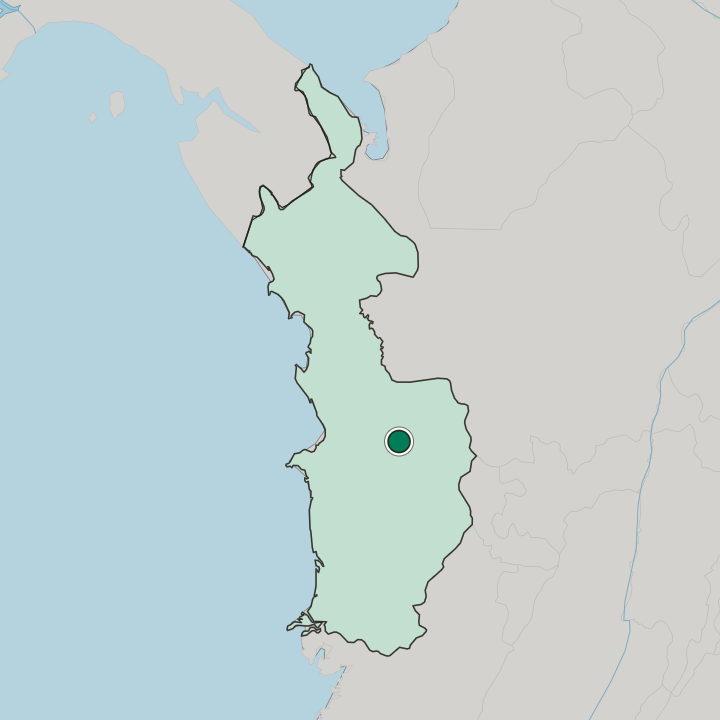
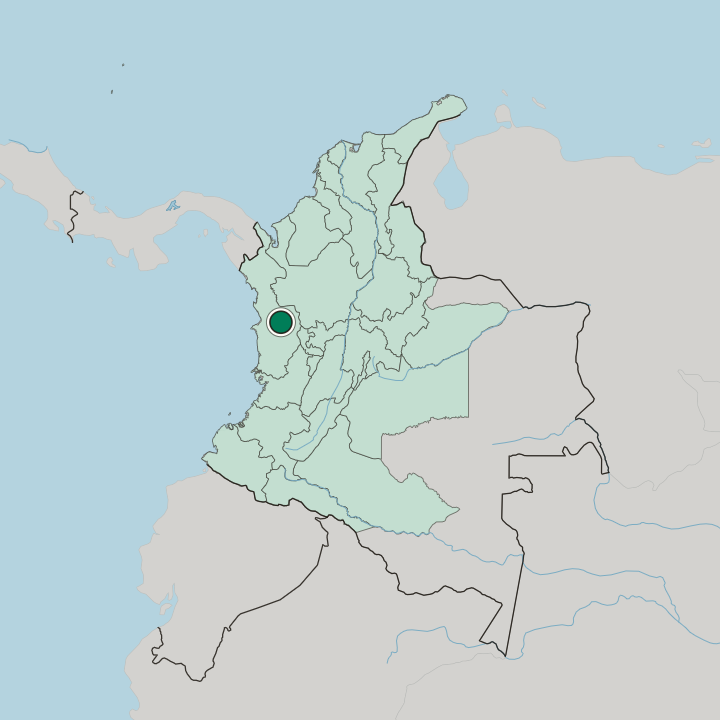
Quibdó lies on the Atrato in the Pacific Region of Colombia. Its municipal territory is large. The city occupies one stretch of a river that runs through Chocó, and the surrounding department covers a broad tropical territory of which Quibdó is the administrative centre.
Everything here is measured from the Atrato.
What is the climate of Quibdó?
The Pacific governs the air over Chocó. Quibdó sits in the tropics on the Atrato, and moisture moving in off the Pacific keeps the days warm and heavy through the whole year rather than dividing them into a hot season and a cold one. Wet spells come with it.
Travellers dress for warmth and water in equal measure, and the river gives the clearest reading of how much has fallen upstream in the Chocó.
How do you get to Quibdó?
The Atrato is Quibdó's oldest route. The river links Quibdó to the settlements of Chocó, and for much of the city's life the water carried whatever arrived and whatever left. Overland approaches came later.
Quibdó is the departmental capital of Chocó and the point most travel through the Pacific Region of Colombia converges on, whether the last stage comes overland or along the Atrato itself.
Common questions
What is the best area to stay in Quibdó?
The Atrato bank: Riverfront rooms where the Atrato passes Quibdó. Around the Palacio Episcopal: Walkers who want the Edificio del Palacio Episcopal at the door. Near Muntú Bantú: Visitors coming for the Muntú Bantú memory centre in Chocó.
Updated September 2026