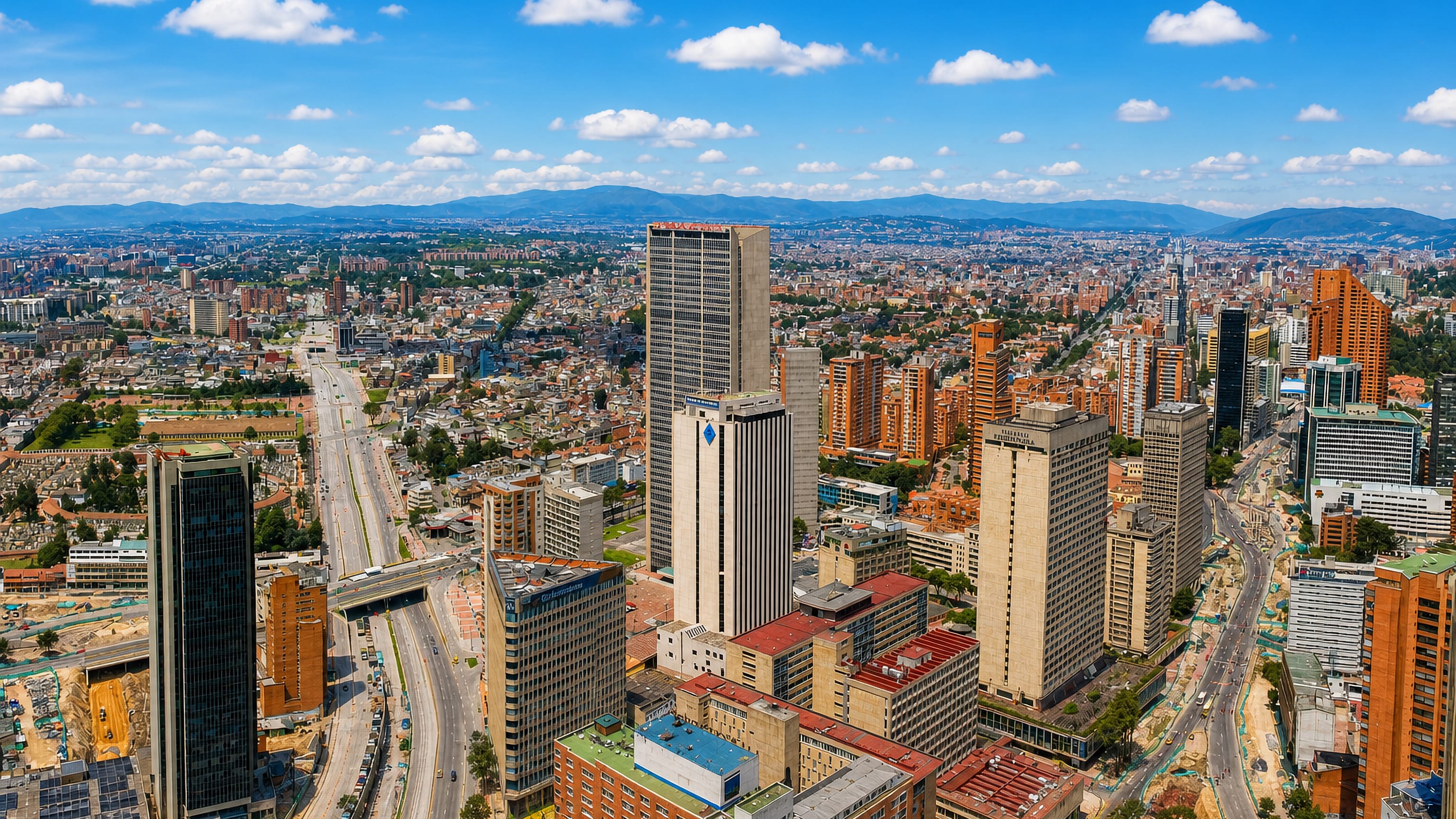
Colombia: Regions, Cities & Travel Guide
Colombia is a country at the northwest corner of South America, fronting the Caribbean Sea and the Pacific Ocean, with Amazon jungle inland.
Hotel links are affiliate links: booking through them may earn us a commission, at no extra cost to you. It never affects how places are ranked. How this works


Top destinations in Colombia
Cities to start from, then drill into areas and hotels.
 Colombia
Bogotá
The Gold Museum anchors Bogotá, the capital and largest city of Colombia, a metropolis of colonial churches and grand museums founded in 1538.Where to stay →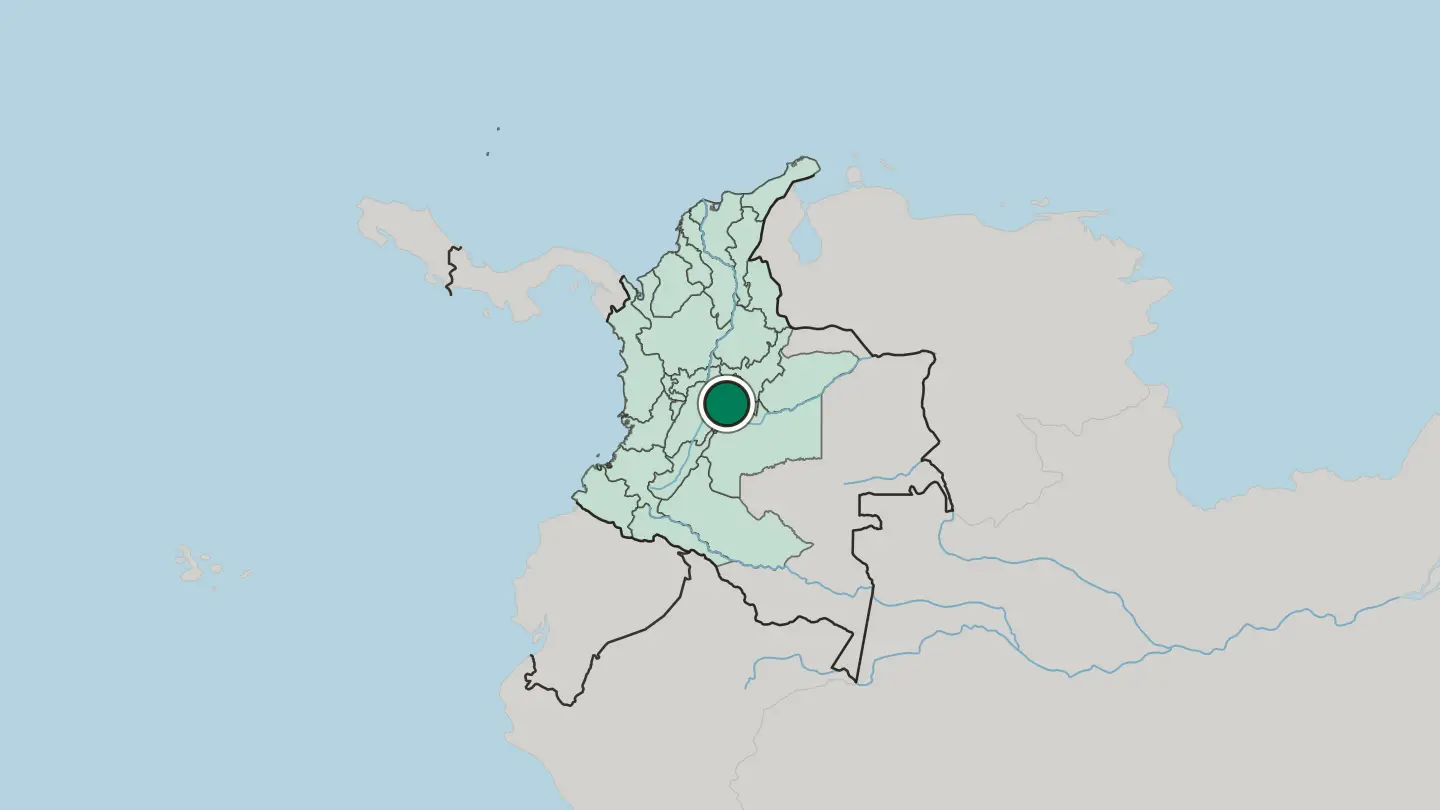
 Colombia
Medellín
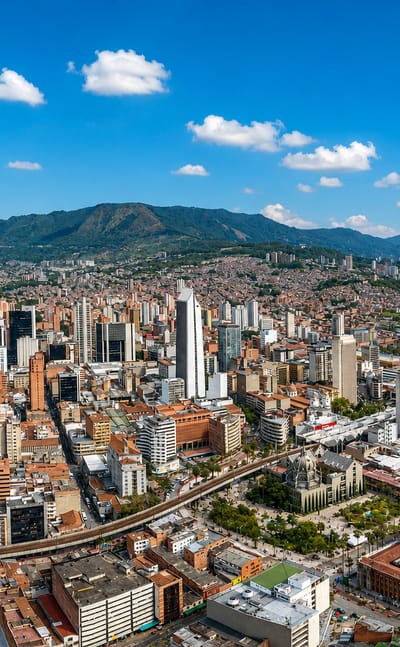
Medellín fills the Aburrá Valley in the Andes Mountains, the second-largest city in Colombia and the capital of Antioquia.Where to stay →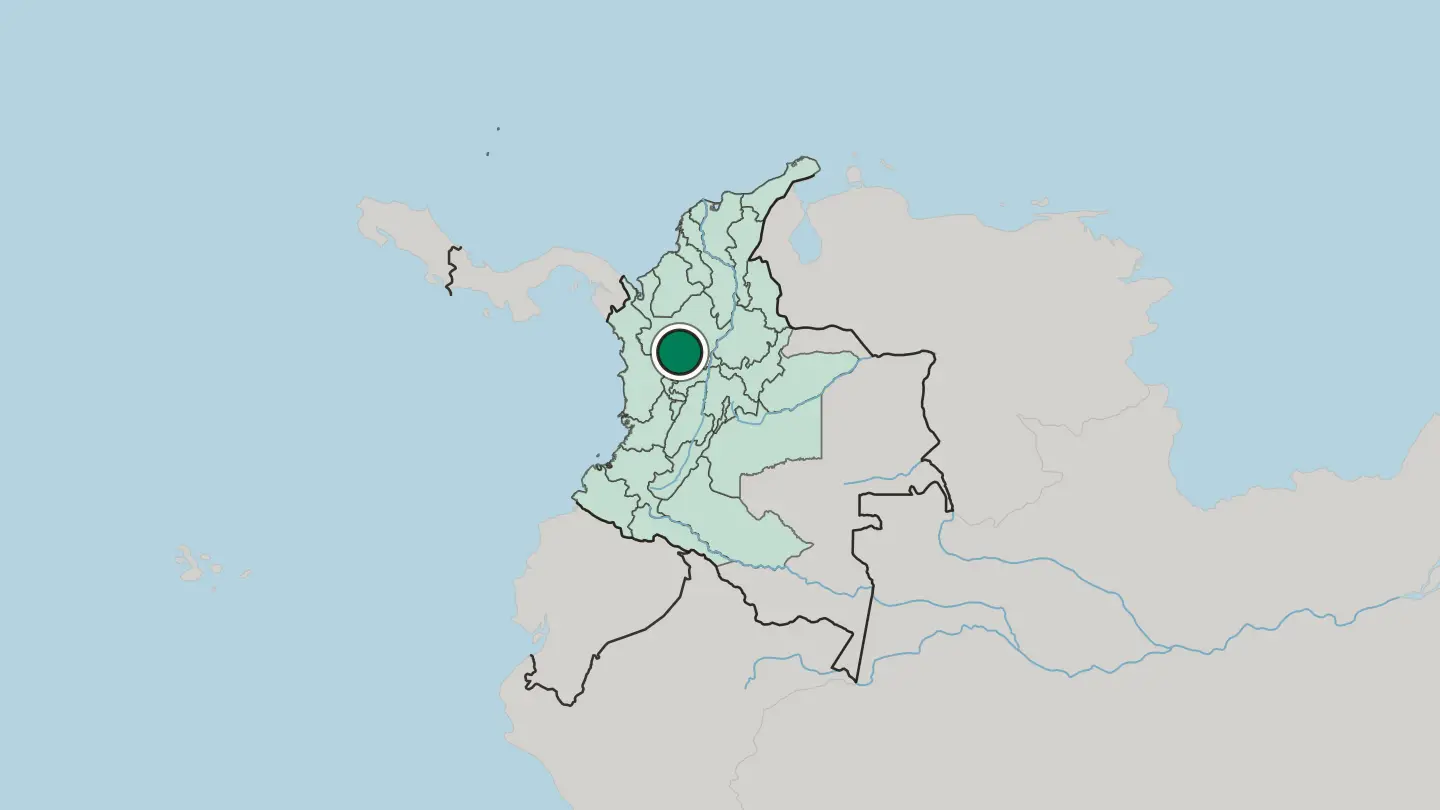
 Colombia
Cartagena
The Castillo de San Felipe de Barajas guards Cartagena, a city on Colombia's Caribbean coast founded in 1533 as Cartagena de Indias.Where to stay →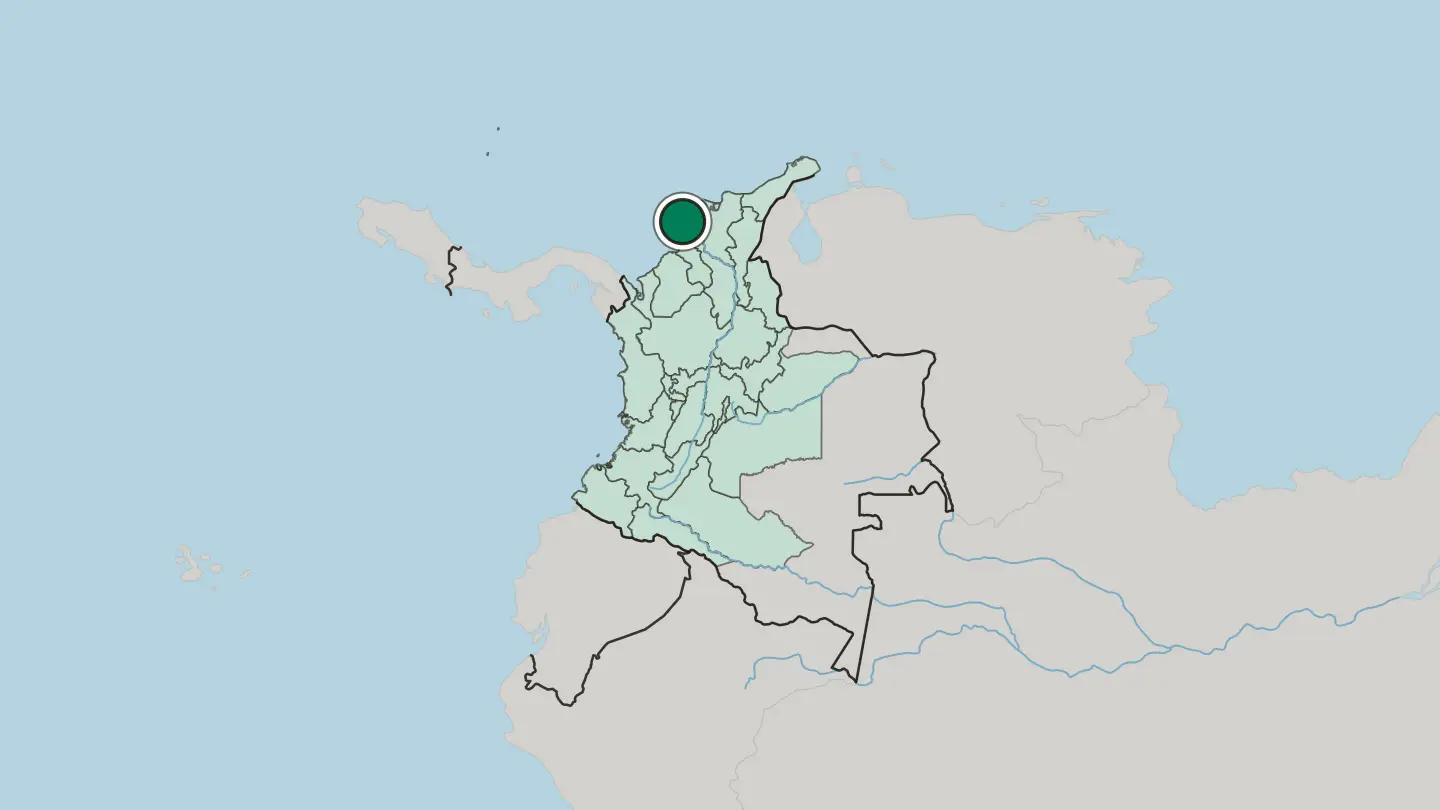
 Colombia
Cali
Santiago de Cali, founded in 1536, is the capital of the Valle del Cauca department and one of Colombia's largest industrial cities.Where to stay →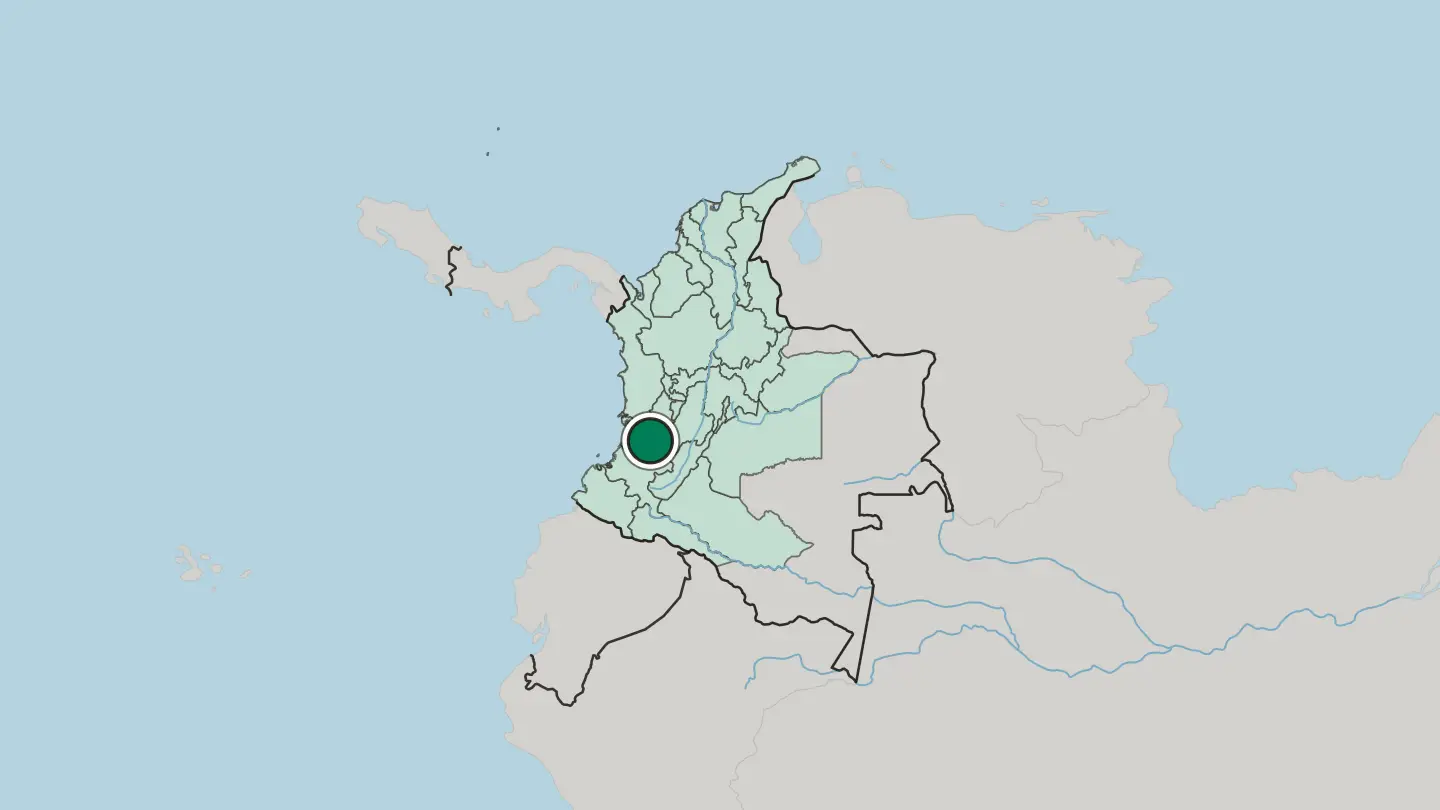
 Colombia
Barranquilla
Carnaval runs Barranquilla for four days. A Caribbean port at the Magdalena River's mouth, capital of the Departamento del Atlántico.Where to stay →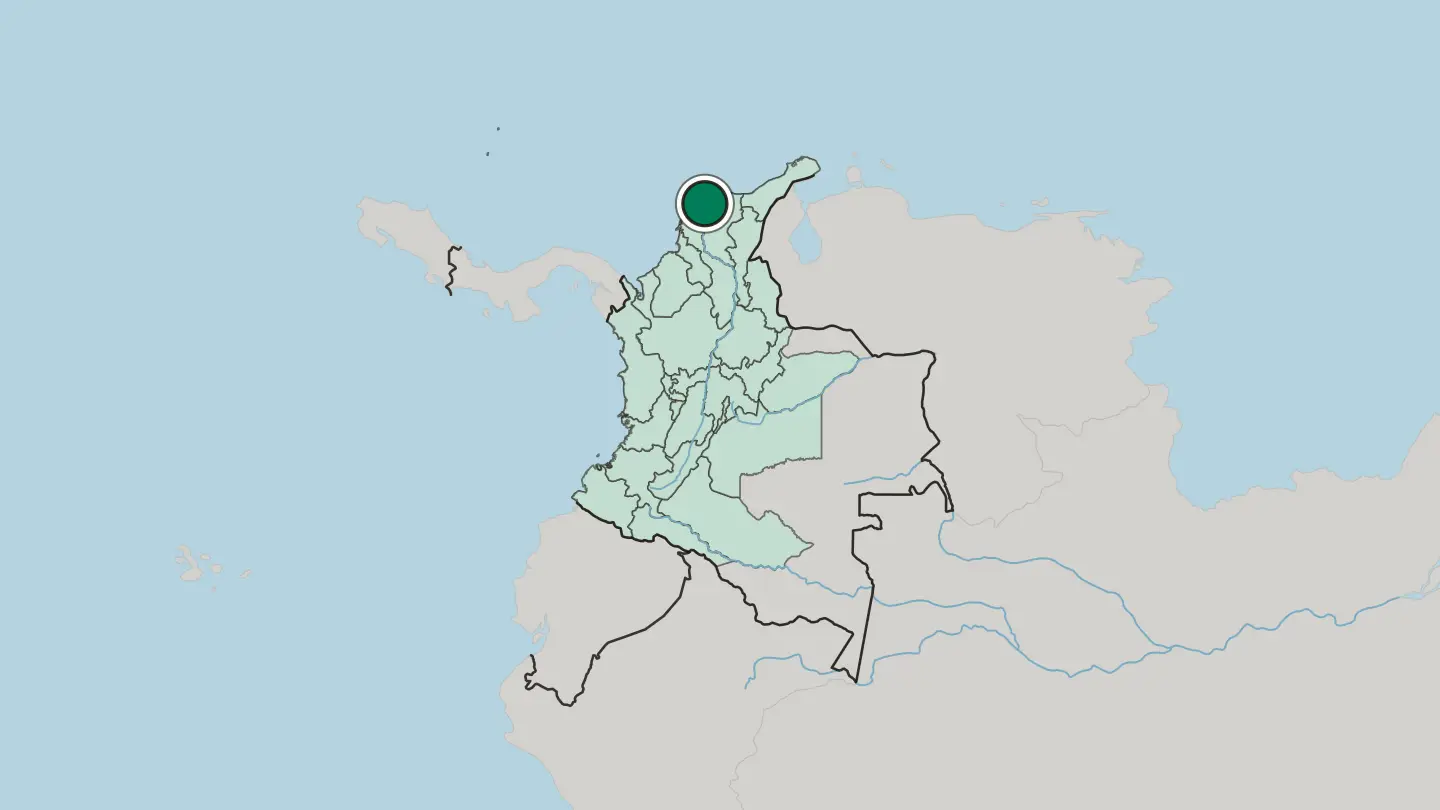
 Colombia
Santa Marta
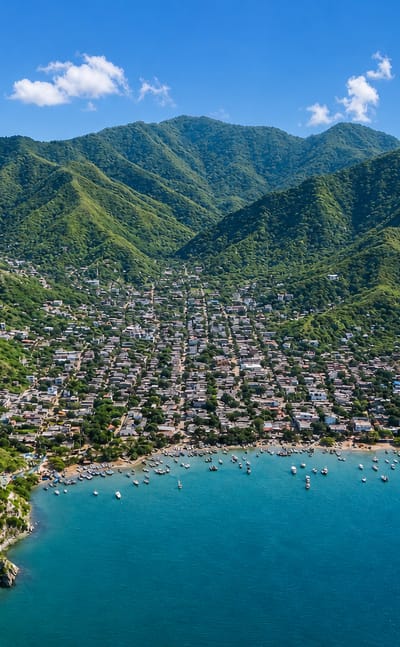
The Caribbean laps the old quays at Santa Marta, a port city on Colombia's Costa Norte and capital of the Departamento del Magdalena.Where to stay →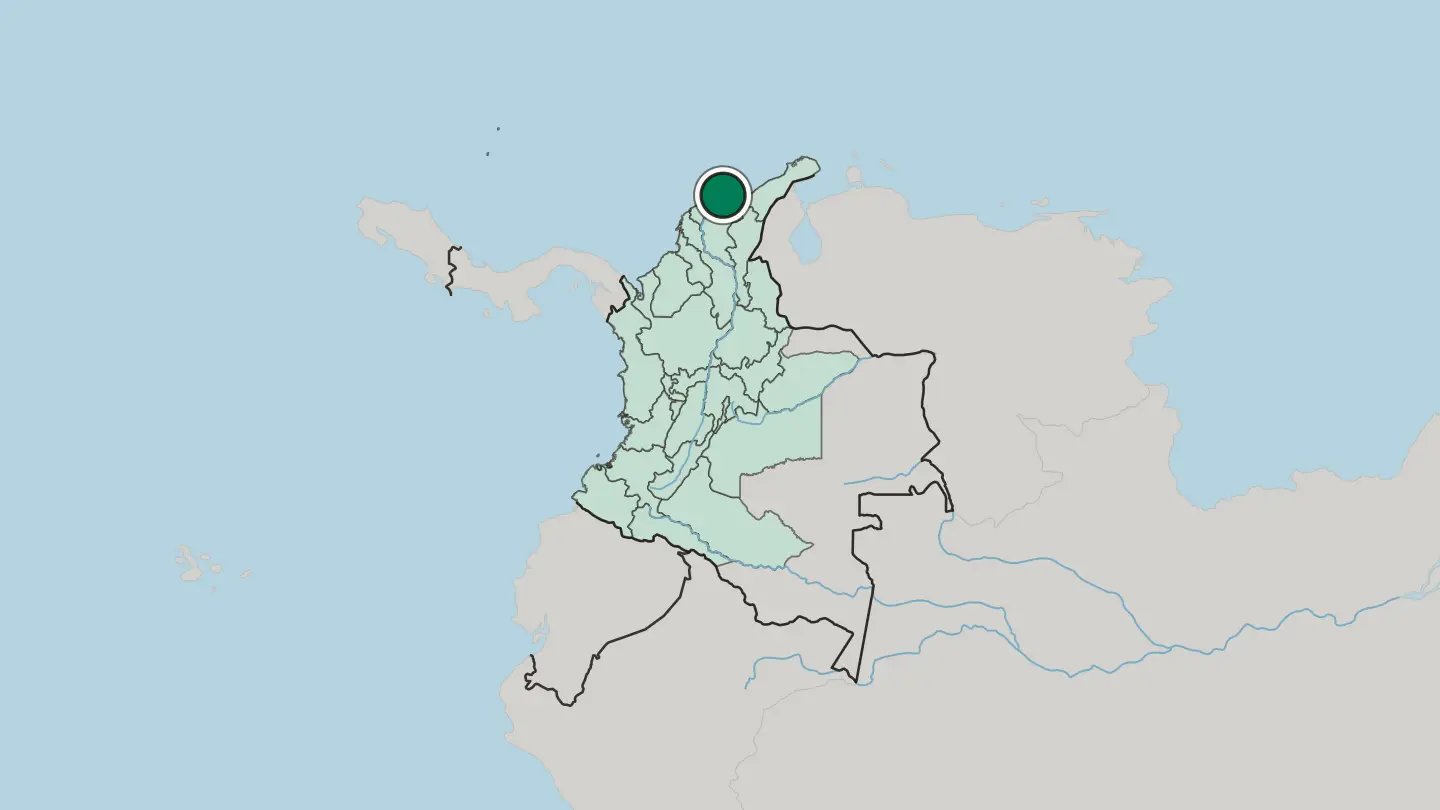
 Colombia
Pereira
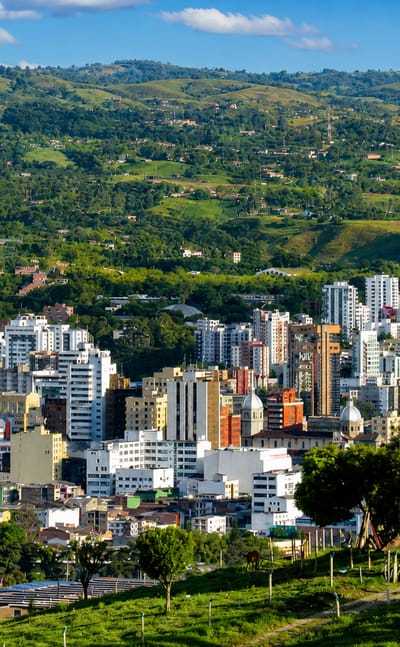
Coffee terraces climb the slopes around Pereira, capital of Colombia's Departamento de Risaralda, in the Otún valley on the Central Cordillera.Where to stay →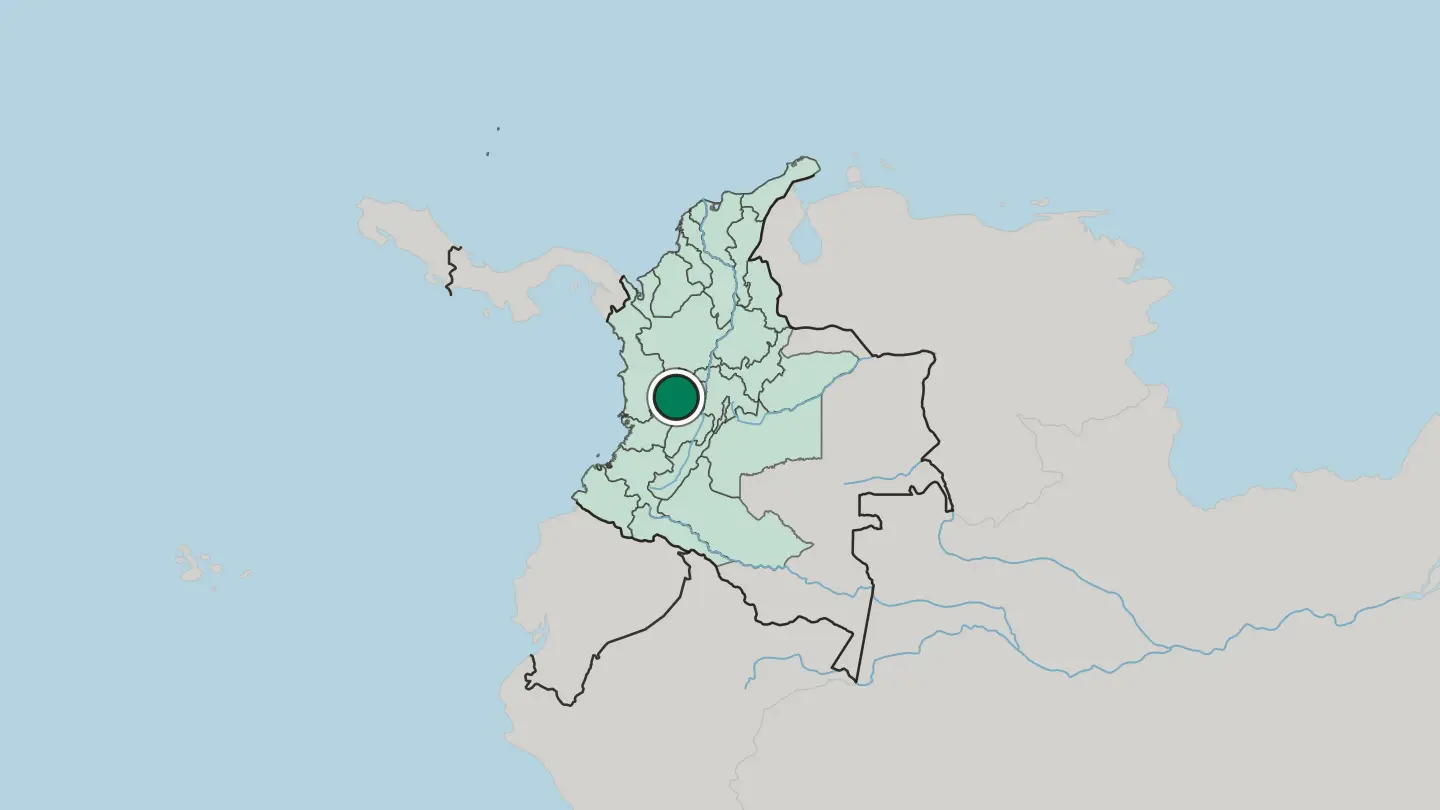
 Colombia
Bucaramanga
Bucaramanga, founded in 1622, is a museum city of Santander whose compact centre holds the Catedral de la Sagrada Familia and the Capilla de Los Dolores.Where to stay →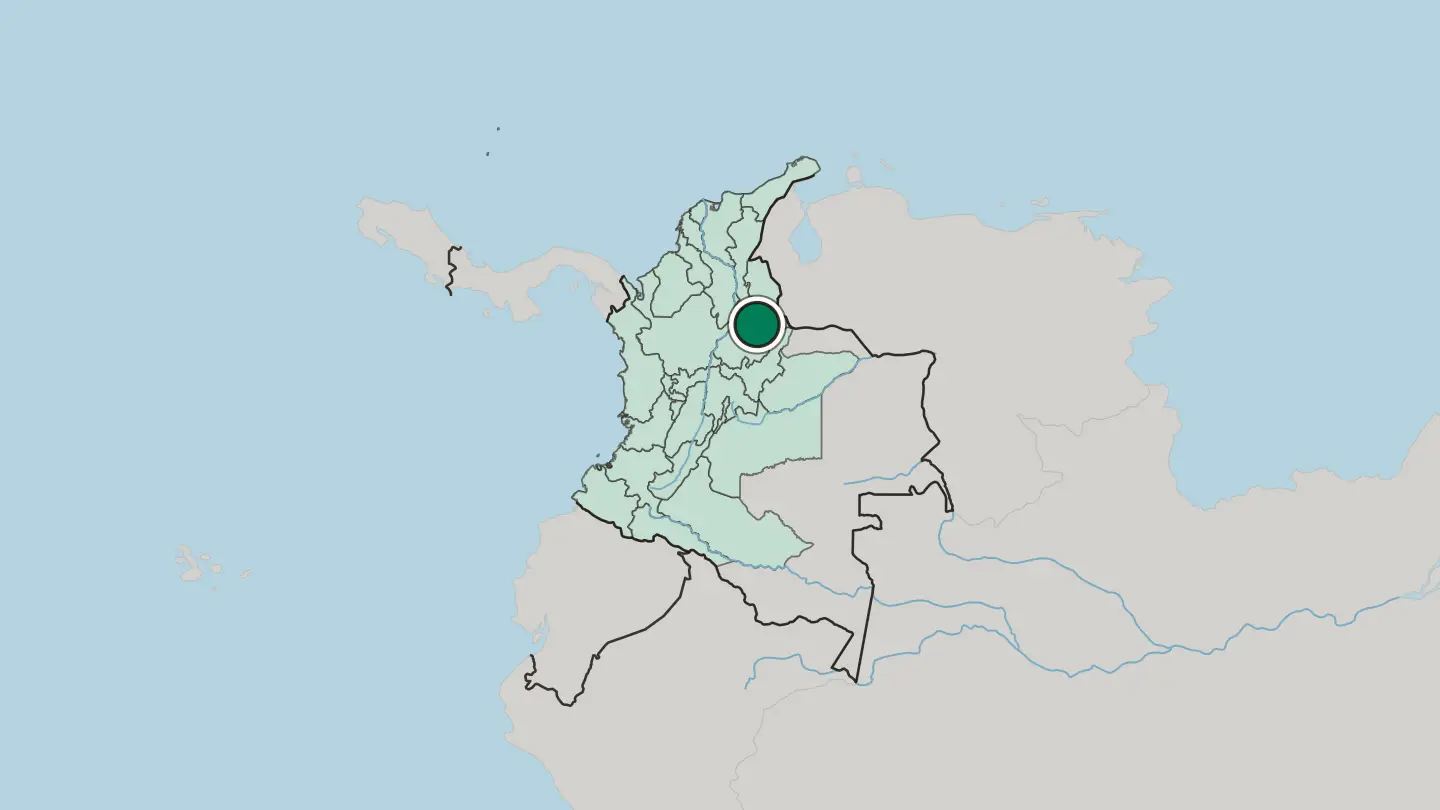
 Colombia
Cúcuta
Cúcuta, officially San José de Cúcuta, is the capital of Norte de Santander, in its own valley under the Andes at the border with Venezuela.Where to stay →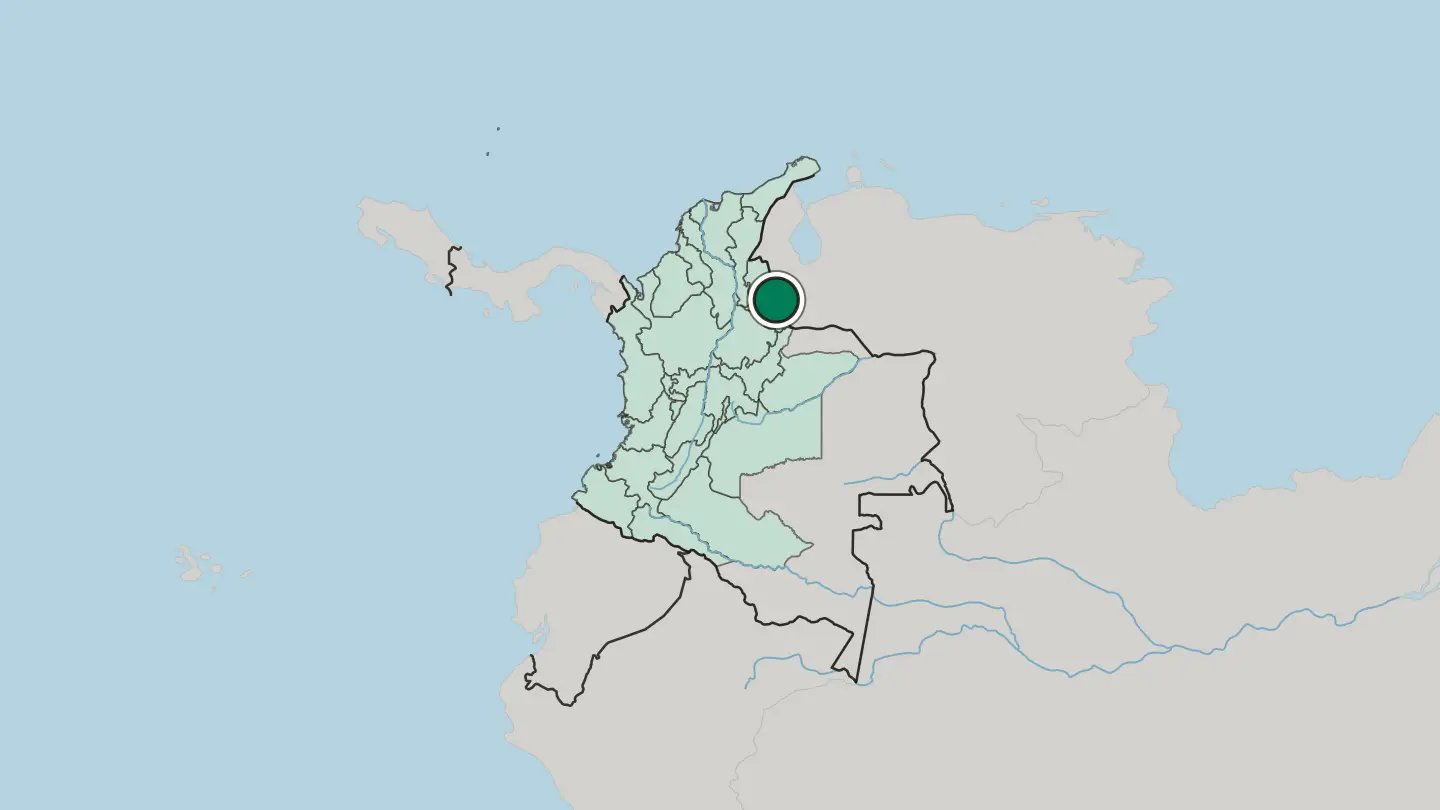
Hotel links are affiliate links: booking through them may earn us a commission, at no extra cost to you. It never affects how places are ranked. How this works
Regions of Colombia
Colombia
Departamento de Antioquia
Coffee plantations cover the hillsides of Antioquia, a mountain department in the Andino region of Colombia and one of its historic coffee lands.Towns & cities →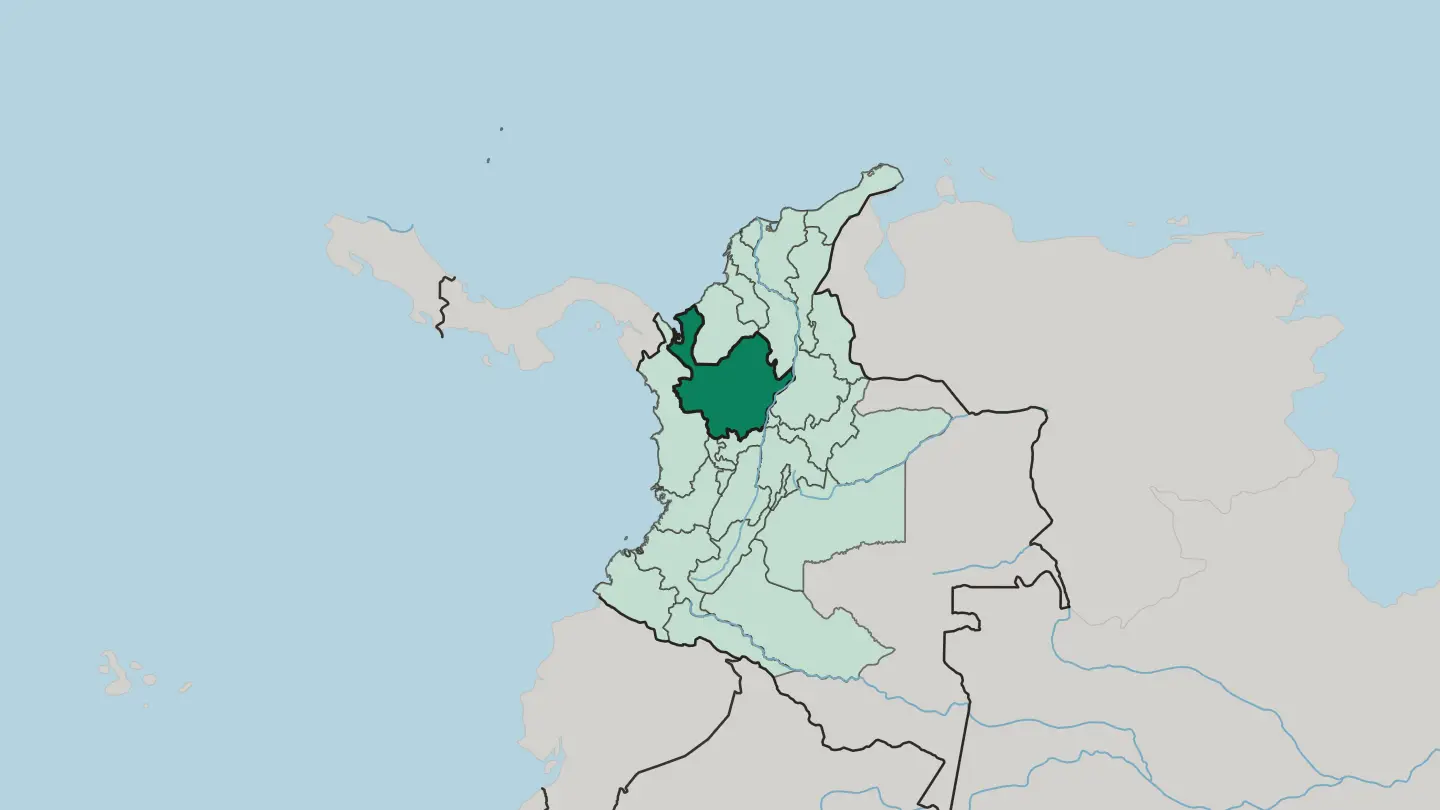 Colombia
Departamento de Bolívar
Bolívar stretches down northern Colombia from the walled city of Cartagena along the Magdalena River toward the interior.Towns & cities →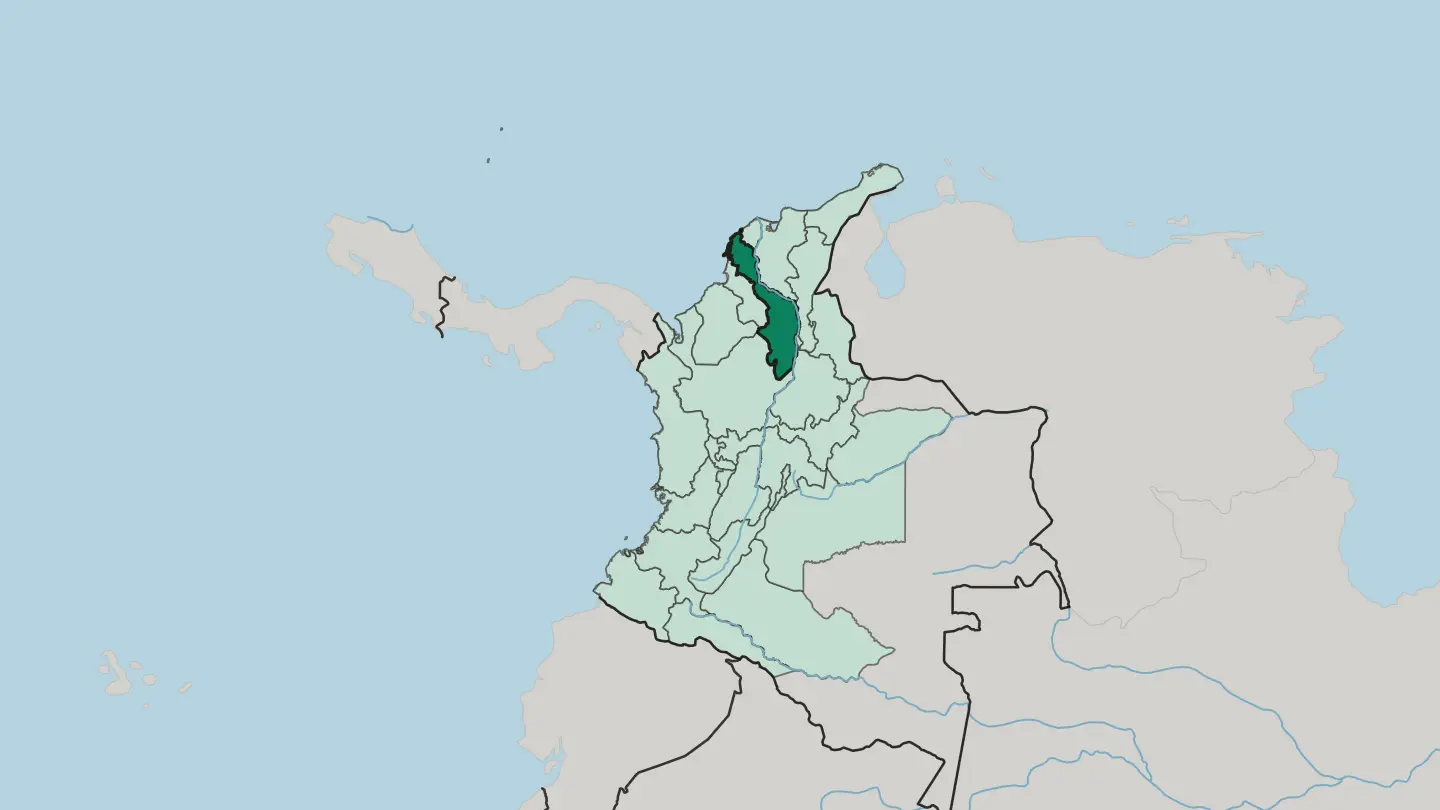
 Colombia
Departamento de Boyacá
Boyacá is Colombia's high Andean heartland, where the Eastern Cordillera folds into cold plateaus, glacier peaks, and colonial towns.Towns & cities →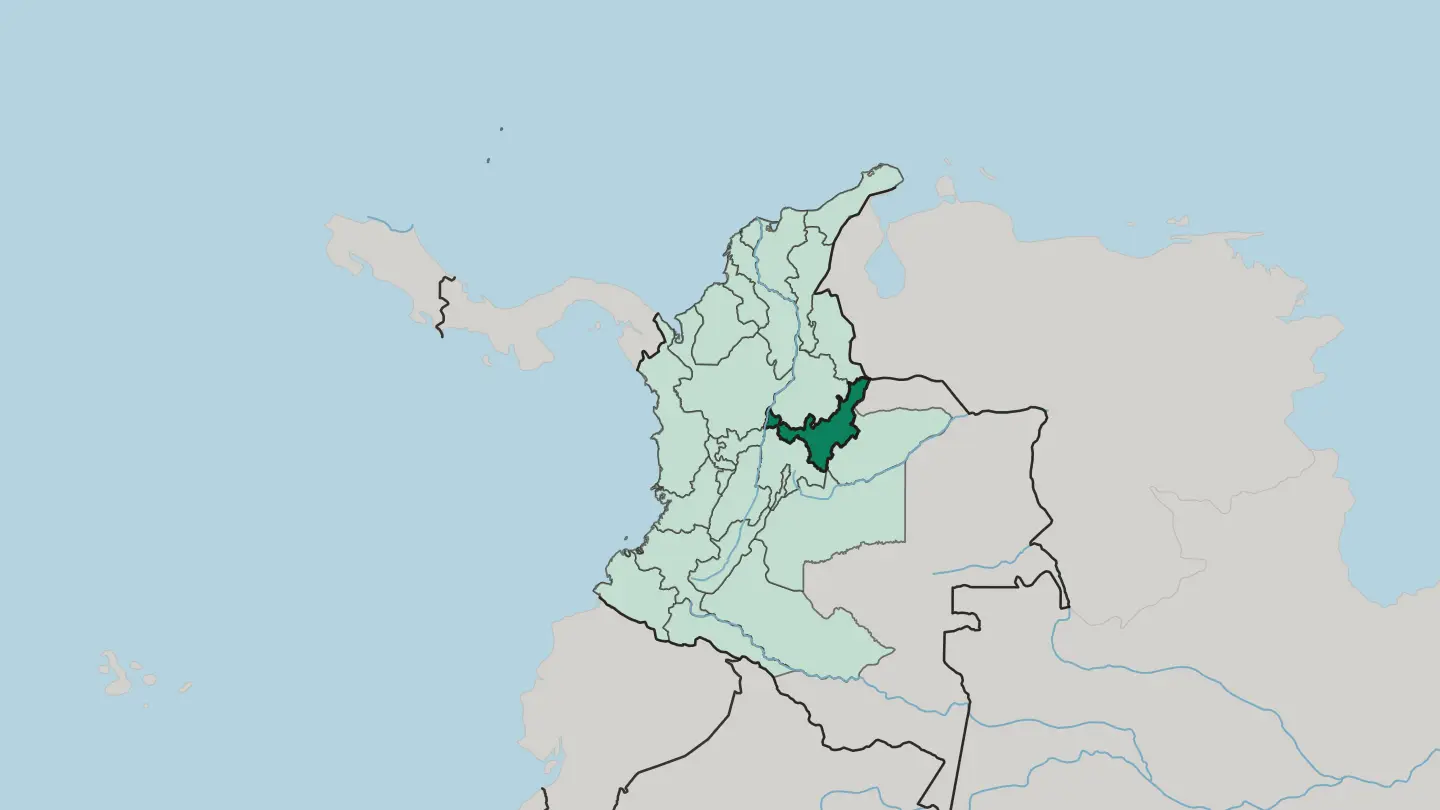
 Colombia
Departamento de Caldas
Caldas is Colombia's coffee heartland, its Andean ridges climbing from the Cauca River to the snows of Nevado del Ruiz.Towns & cities →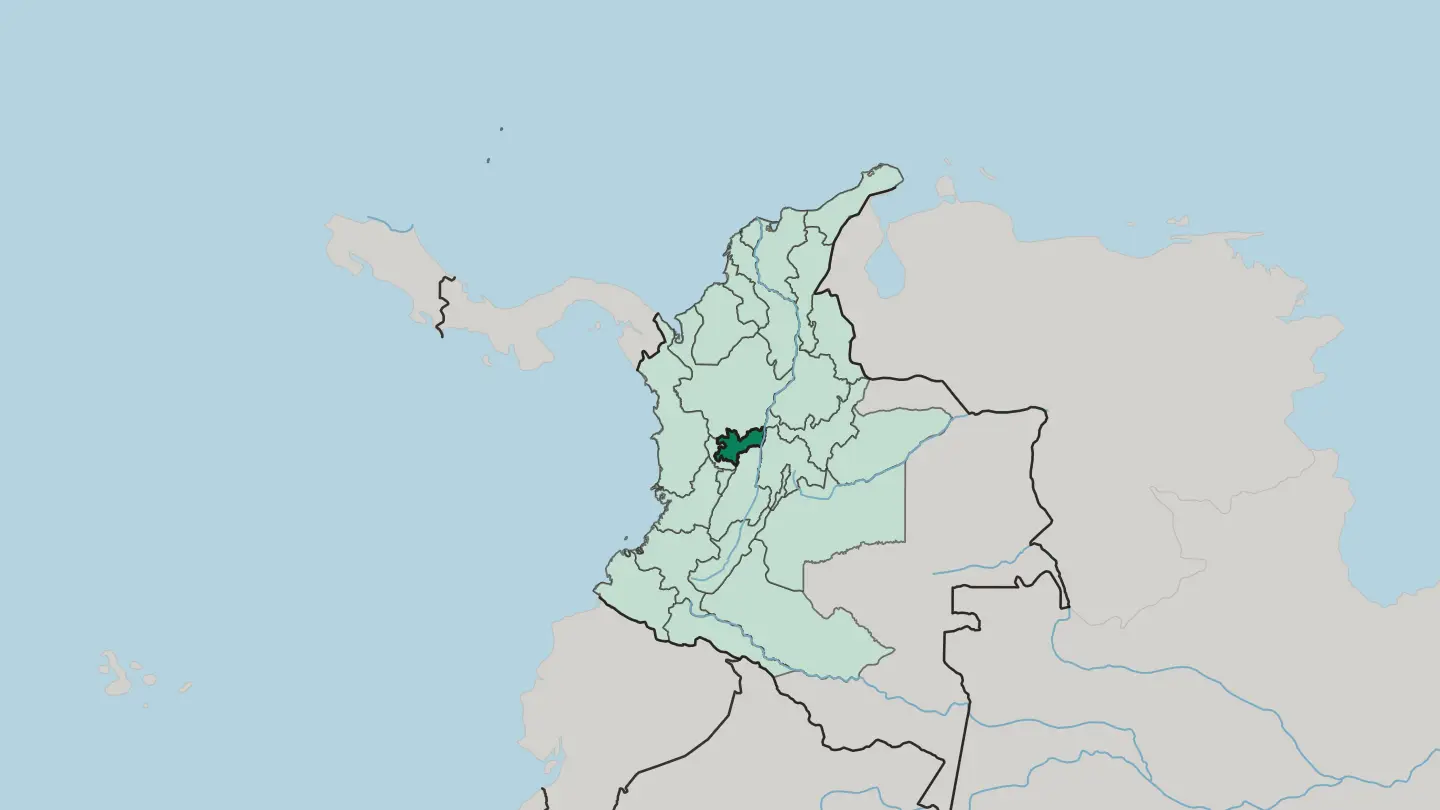 Colombia
Departamento de Casanare
Casanare is Colombia's cattle-country department, an ocean of Llanos grassland east of the Andes, ruled by the capital at Yopal.Towns & cities →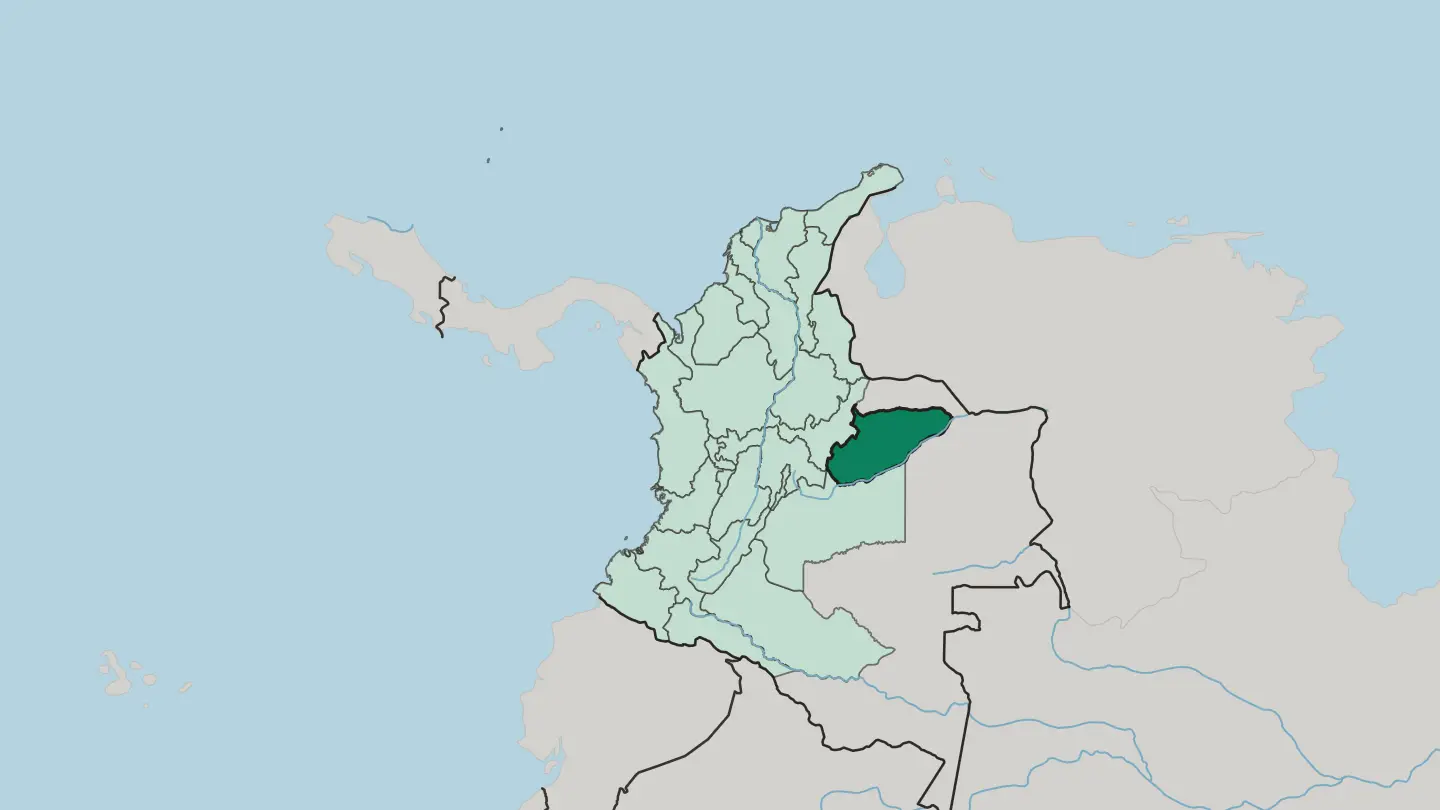
 Colombia
Departamento de Cundinamarca
Cundinamarca wraps the Eastern Cordillera around Bogotá, from the cold savanna down to the warm Magdalena valley.Towns & cities →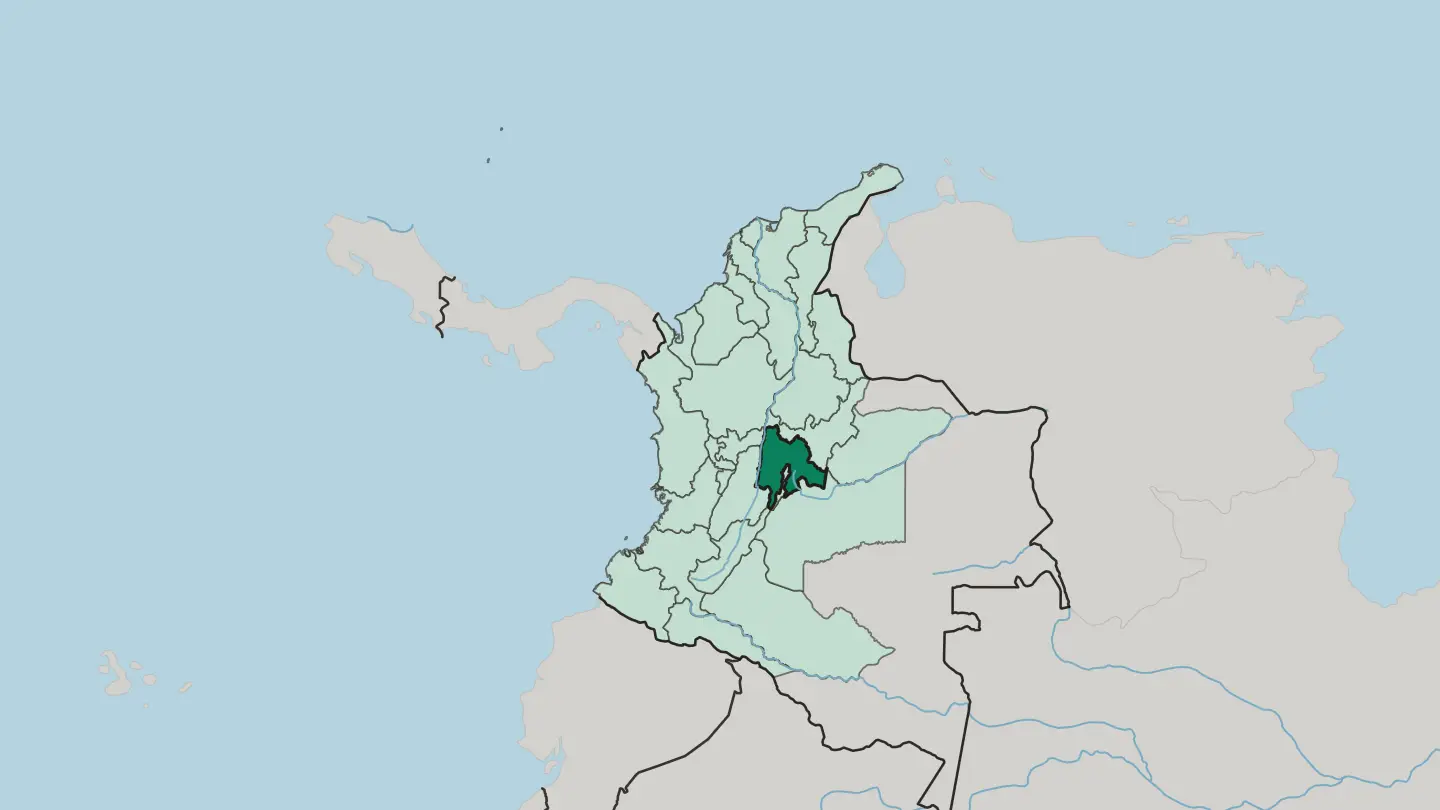
 Colombia
Departamento de Córdoba
Córdoba is Colombia's cattle department on the Caribbean, where the Sinú River threads north through savanna to Montería and the sea.Towns & cities →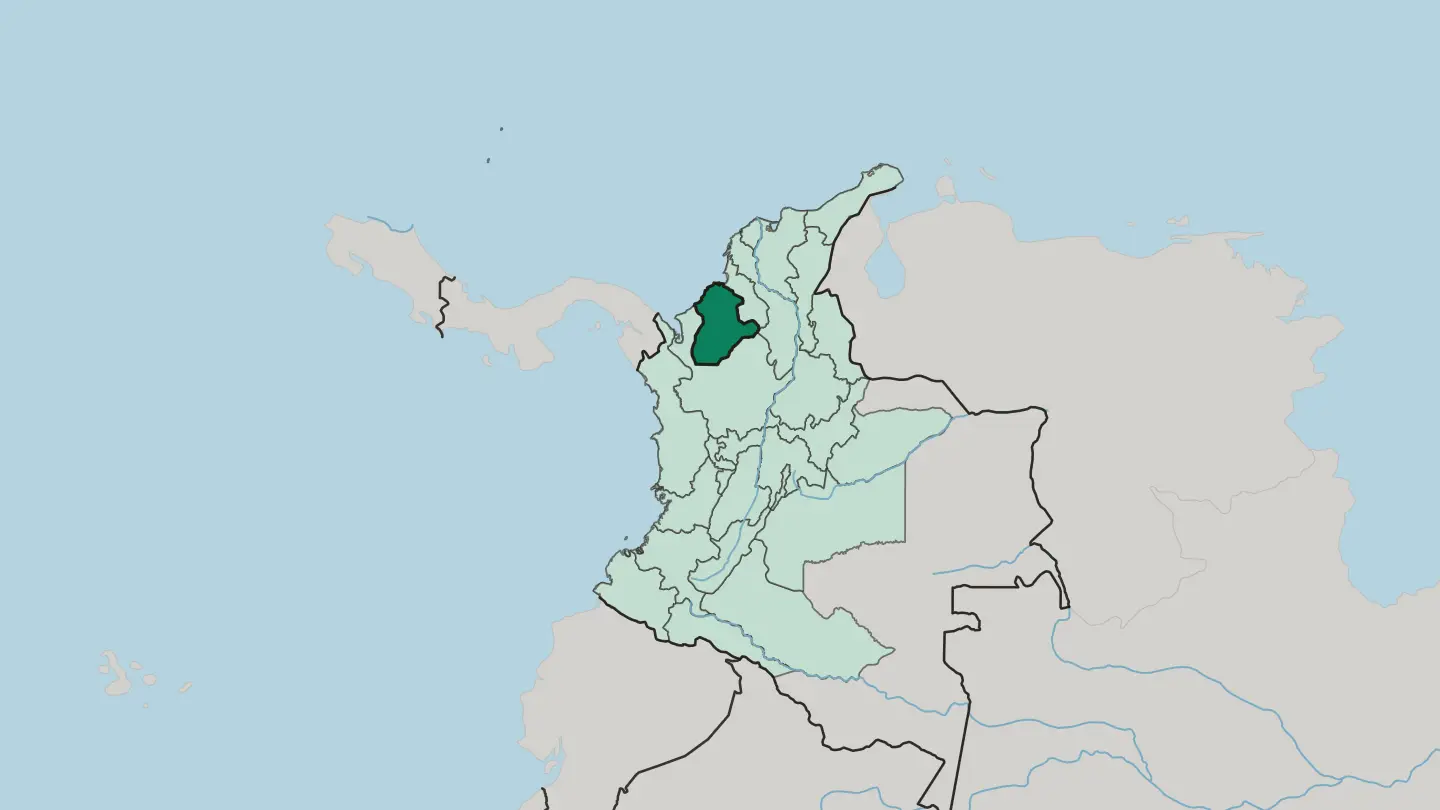 Colombia
Departamento de La Guajira
La Guajira is Colombia's desert peninsula, the Wayuu homeland reaching to Punta Gallinas, the northernmost point of mainland South America.Towns & cities →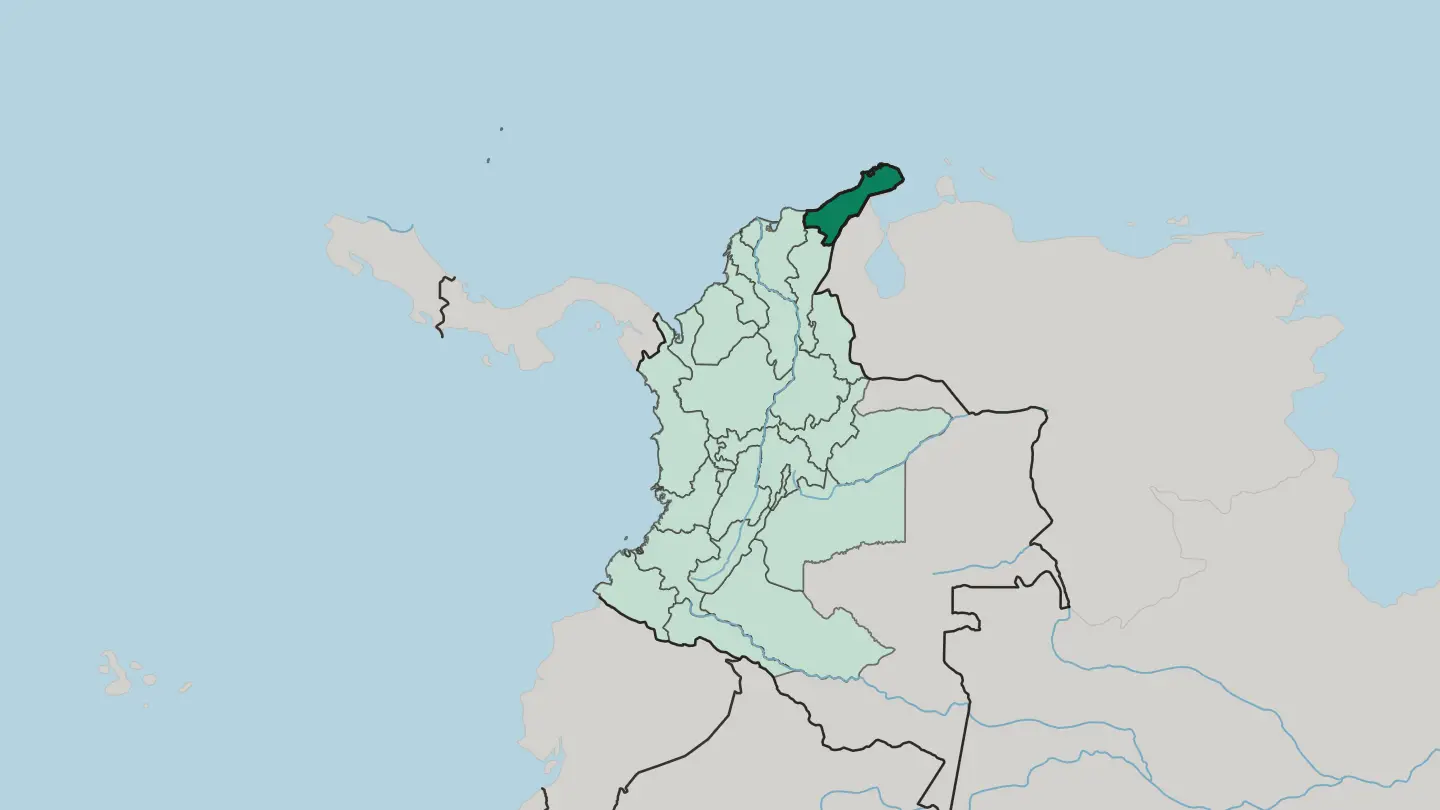
 Colombia
Departamento de Nariño
Nariño is Colombia's south-western corner, where the Andes drop from Pasto and the Galeras volcano to the Pacific shore at Tumaco.Towns & cities →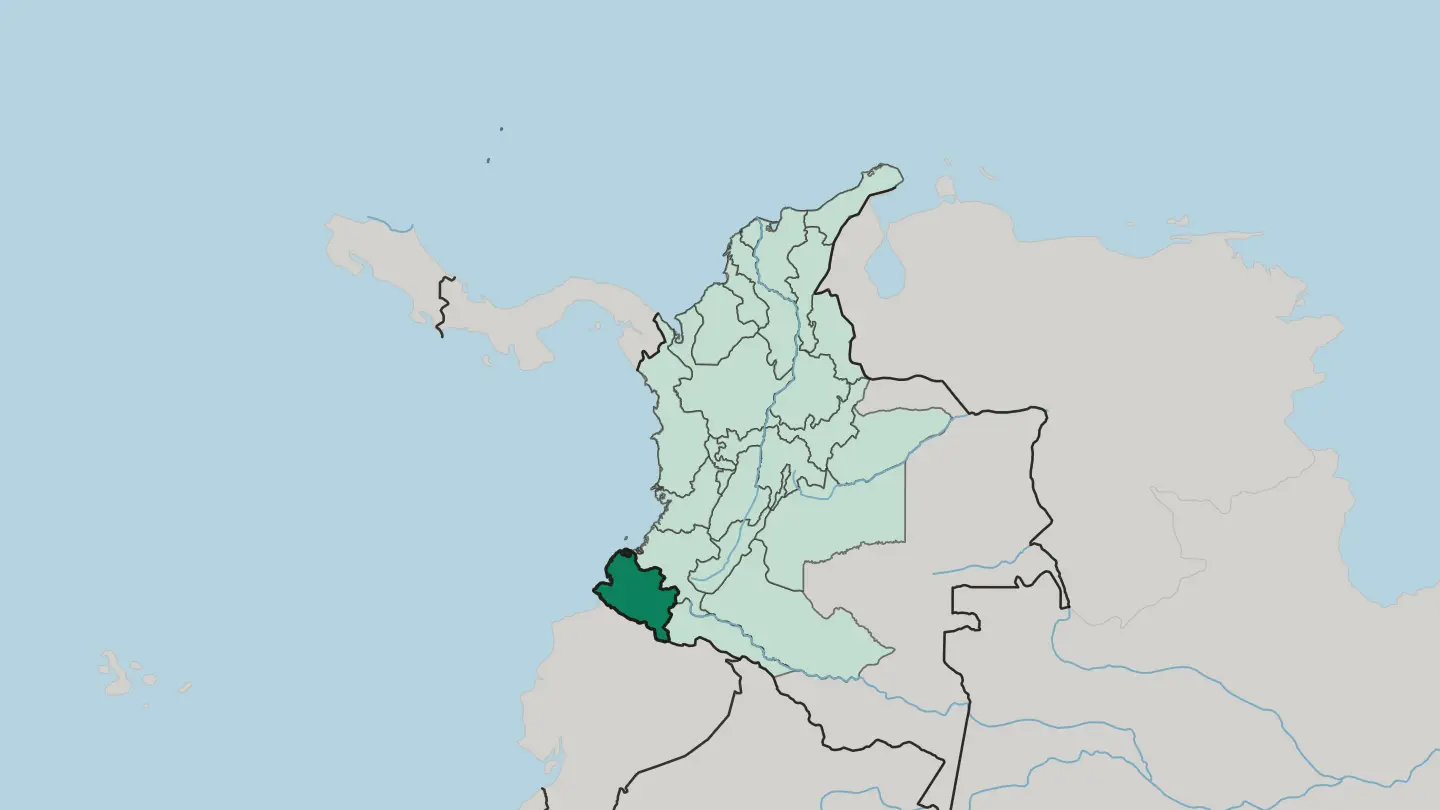 Colombia
Departamento de Norte de Santander
Norte de Santander is a Colombian department on the Venezuelan border, where the Andes fall toward Cúcuta and the Catatumbo lowlands.Towns & cities →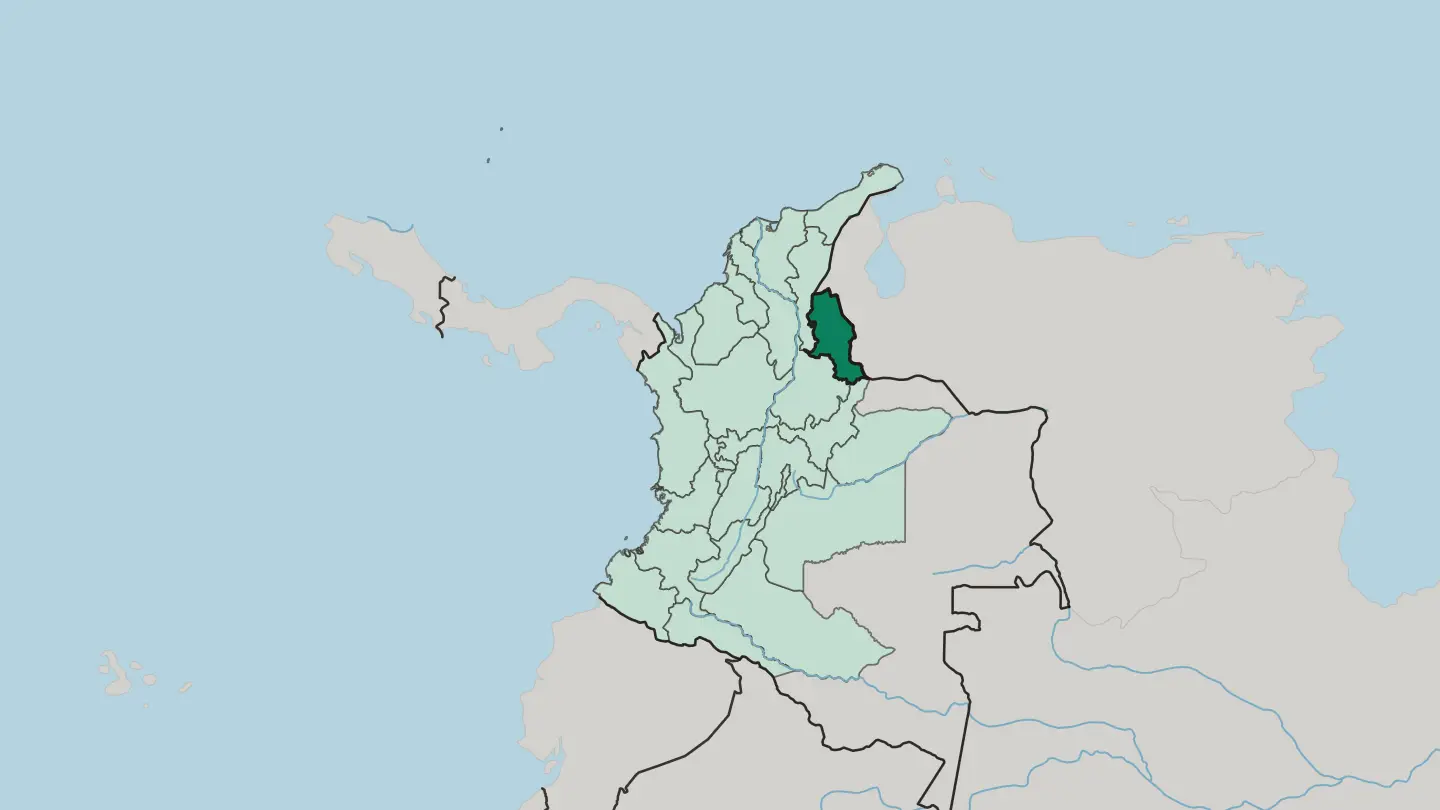 Colombia
Departamento de Risaralda
Risaralda is a small Andean department in western Colombia, coffee country pressed between two mountain ranges around its capital, Pereira.Towns & cities →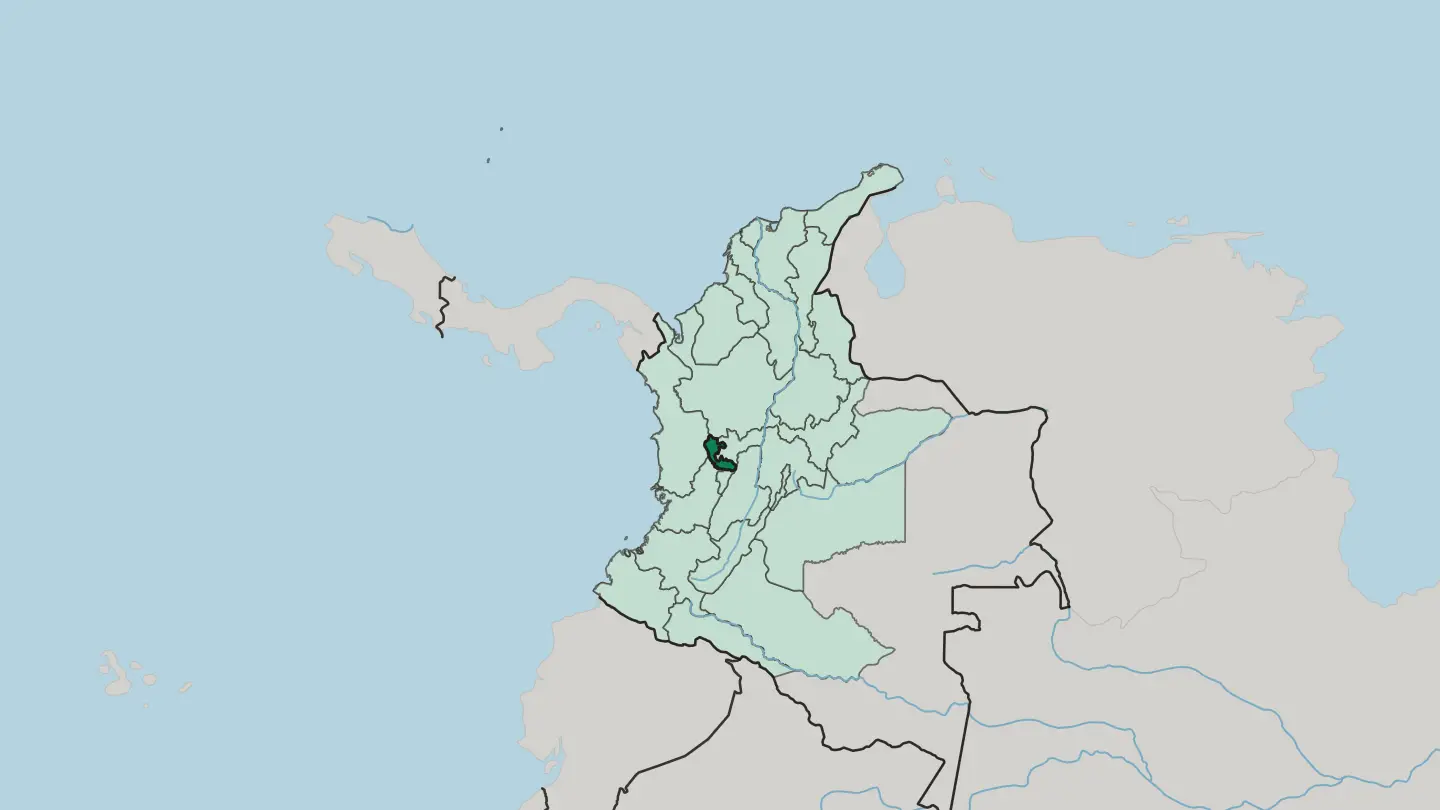 Colombia
Departamento de Santander
Santander climbs the Colombian Andes from the Magdalena River, a department of canyon country, colonial towns and the city of Bucaramanga.Towns & cities →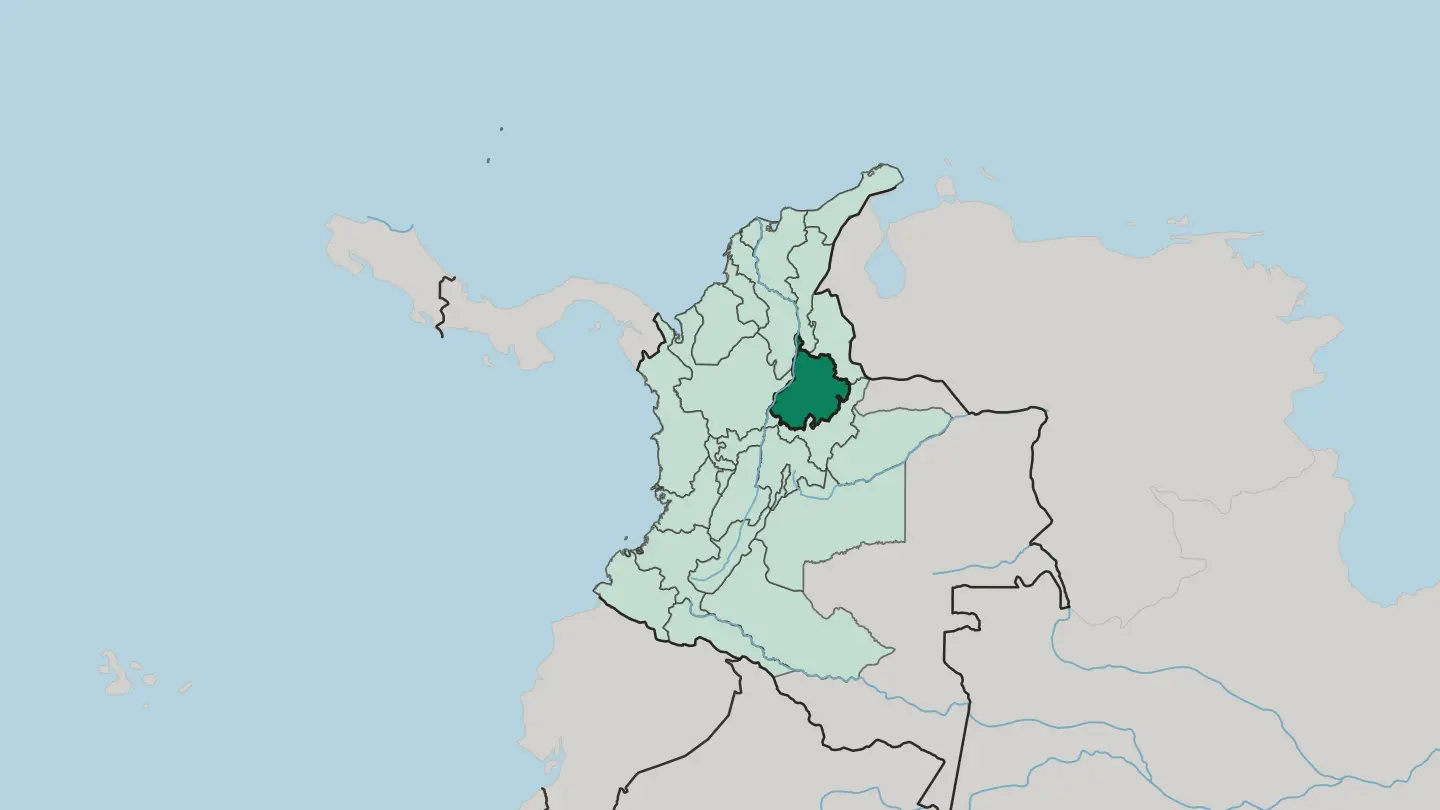 Colombia
Departamento de Sucre
Sucre is a Caribbean department of Colombia, its coast on the Gulf of Morrosquillo and its interior a mix of savanna and low hills.Towns & cities →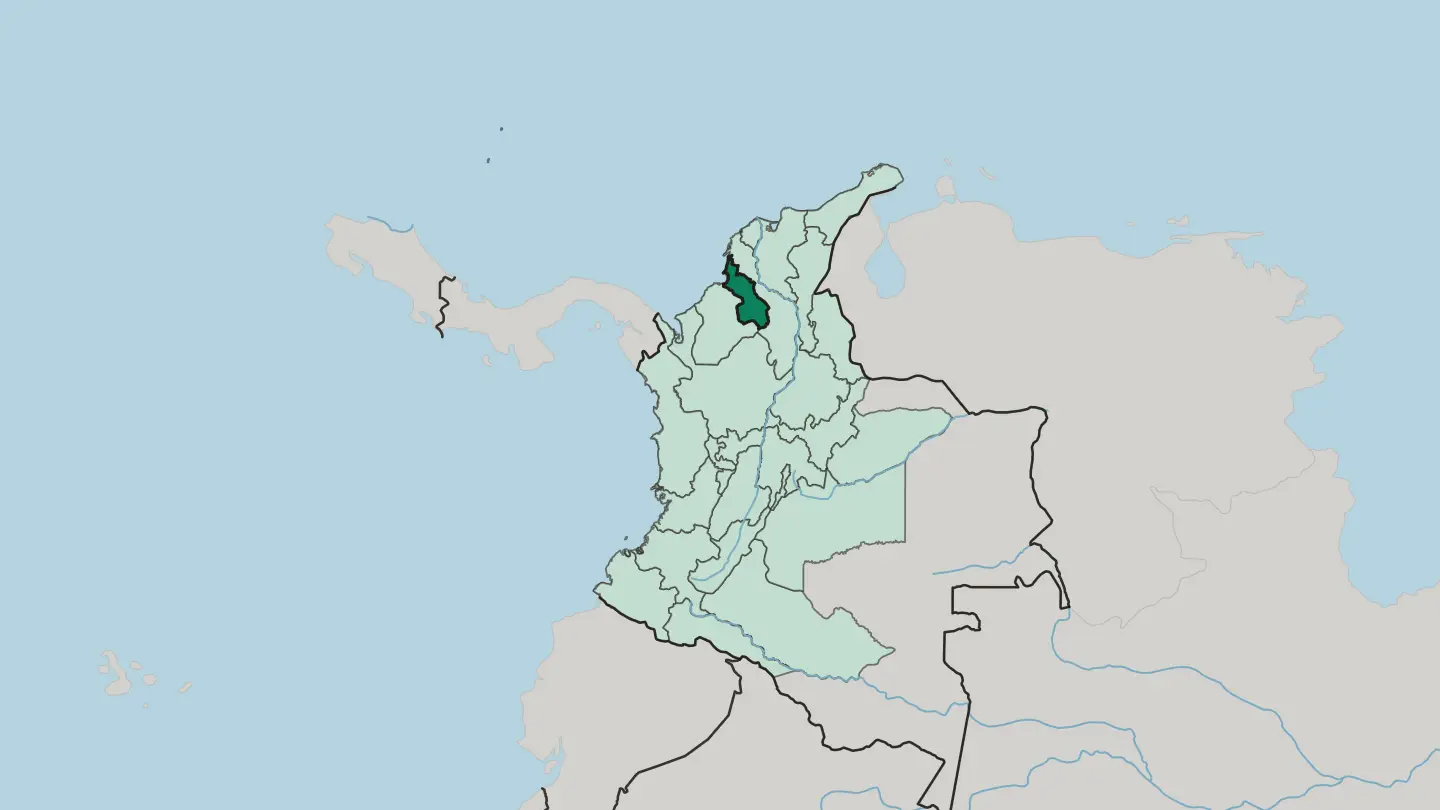
 Colombia
Departamento de Tolima
Tolima is an Andean department in central Colombia, split by the Magdalena River between snowbound volcanoes and coffee-draped slopes.Towns & cities →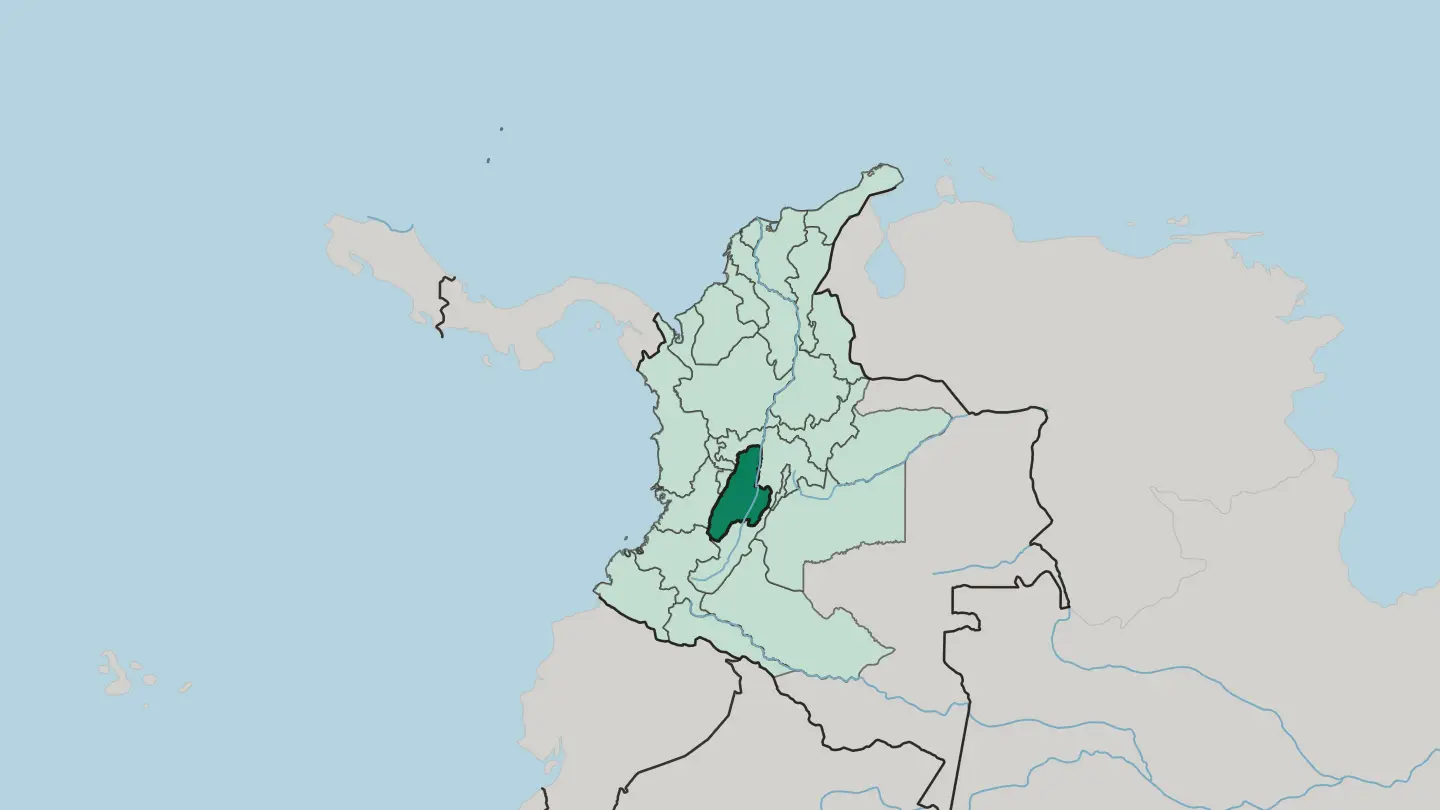 Colombia
Departamento del Atlántico
Atlántico is Colombia's small Caribbean-coast department, where the Magdalena River meets the sea at the port of Barranquilla.Towns & cities →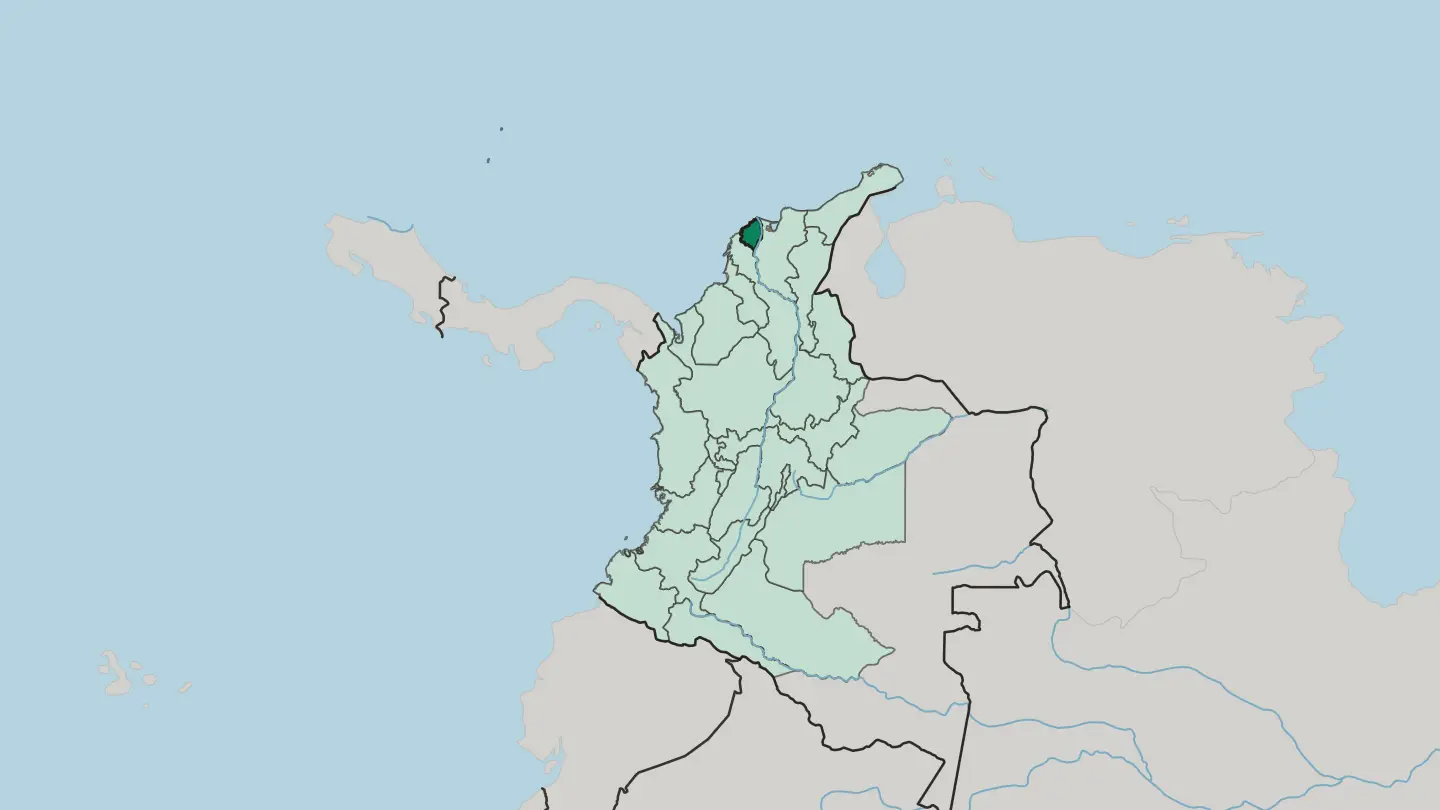
 Colombia
Departamento del Caquetá
Caquetá is Colombia's Amazon frontier, where the Andes drop into rainforest and Florencia opens the door.Towns & cities →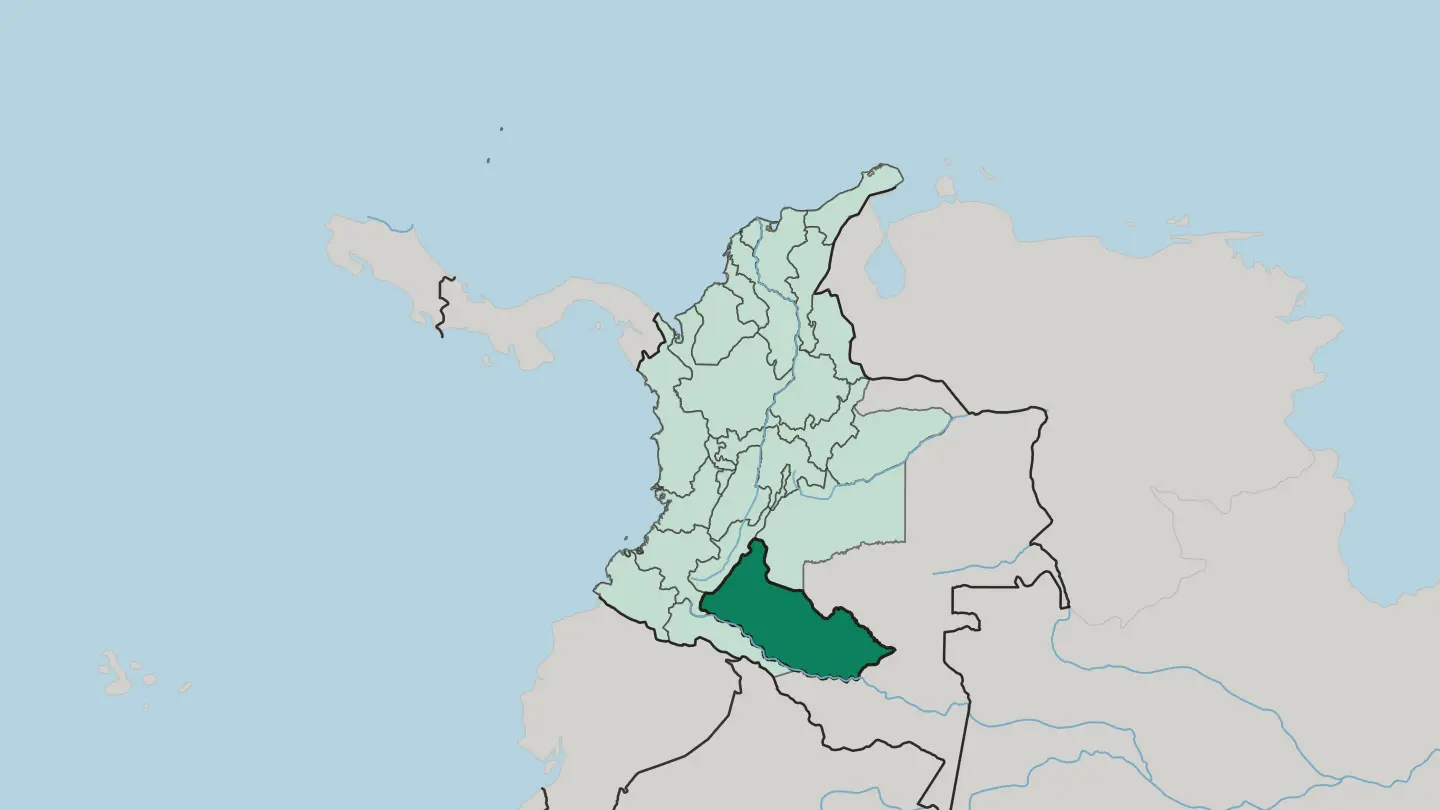
 Colombia
Departamento del Cauca
Cauca is a department of southwestern Colombia, running from the Pacific coast up into the Andes around its white colonial capital, Popayán.Towns & cities →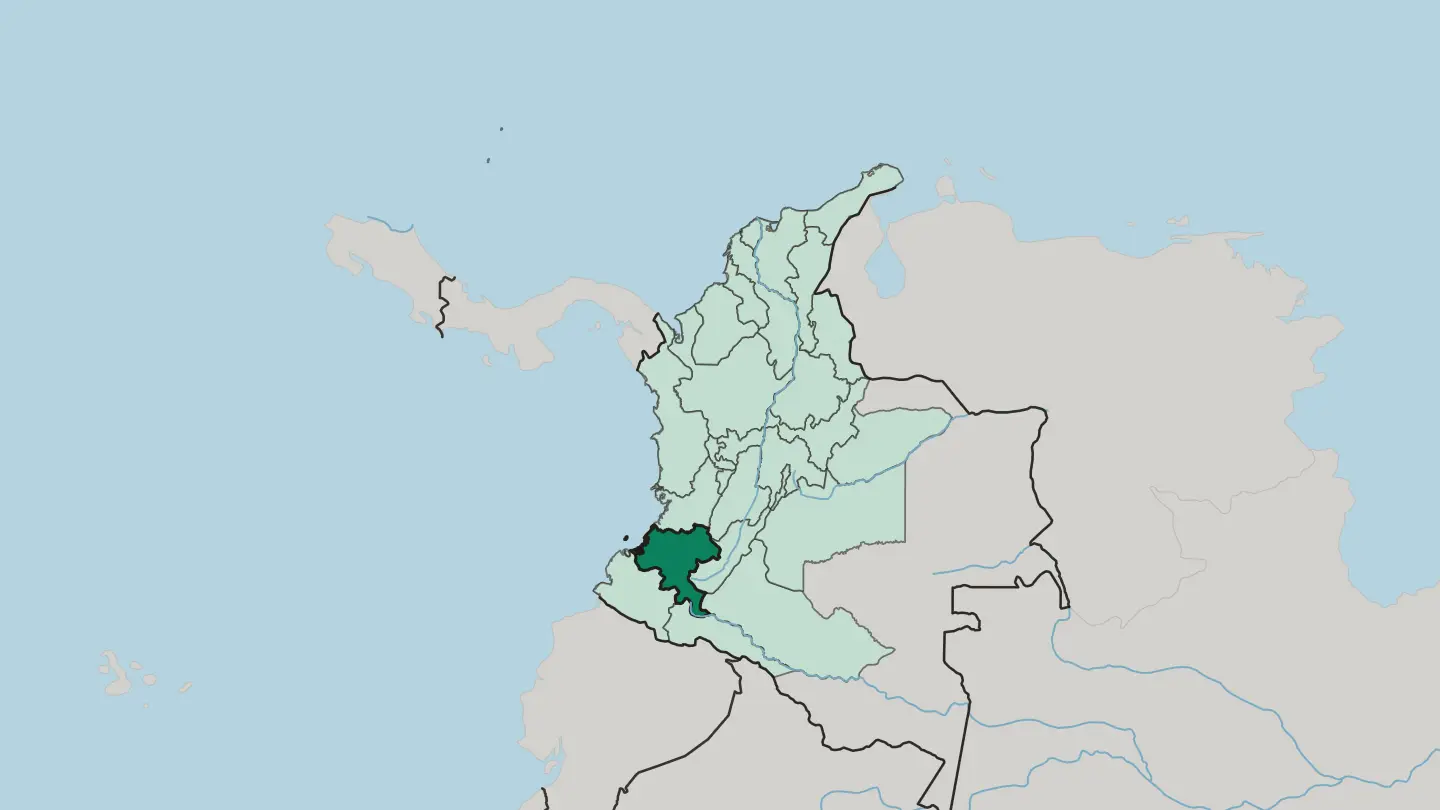 Colombia
Departamento del Cesar
Cesar is the accordion heart of northern Colombia, a hot inland valley of cattle plains and vallenato between two great mountain walls.Towns & cities →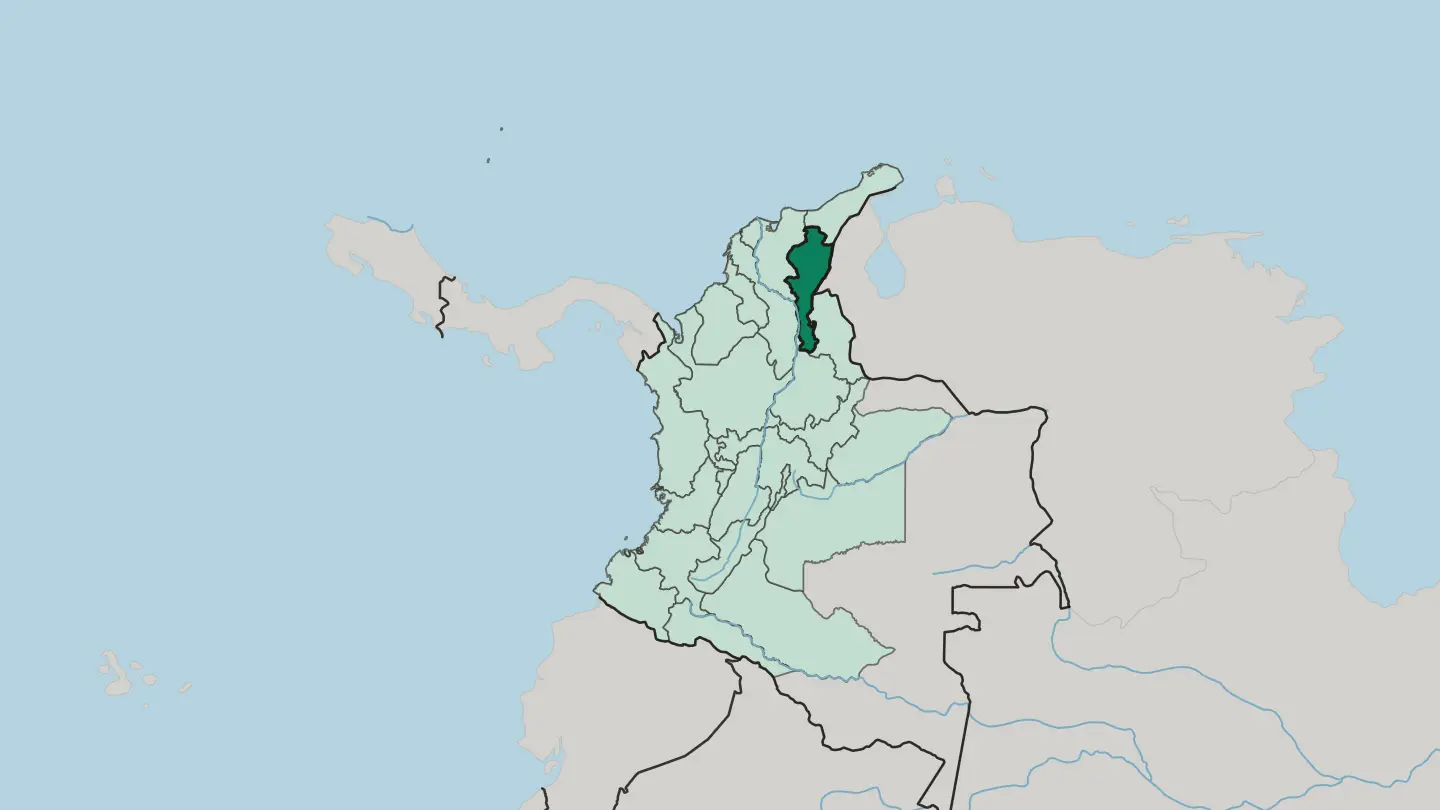 Colombia
Departamento del Chocó
Chocó is Colombia's Pacific rainforest department, the only one touching two oceans, drenched by some of Earth's heaviest rain.Towns & cities →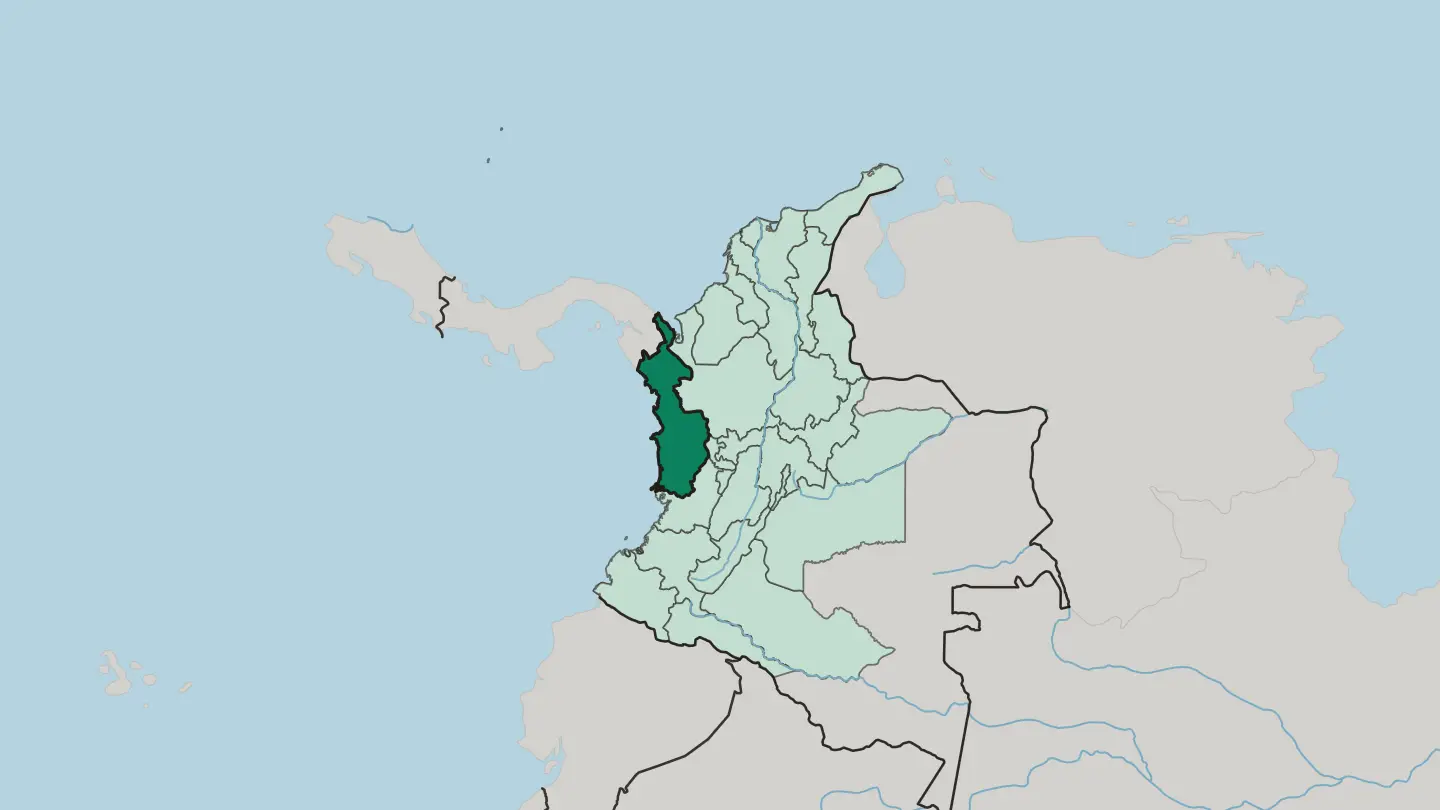
 Colombia
Departamento del Huila
Huila fills the upper Magdalena valley in southwest Colombia, between two Andean ranges, with Neiva as its riverside capital.Towns & cities →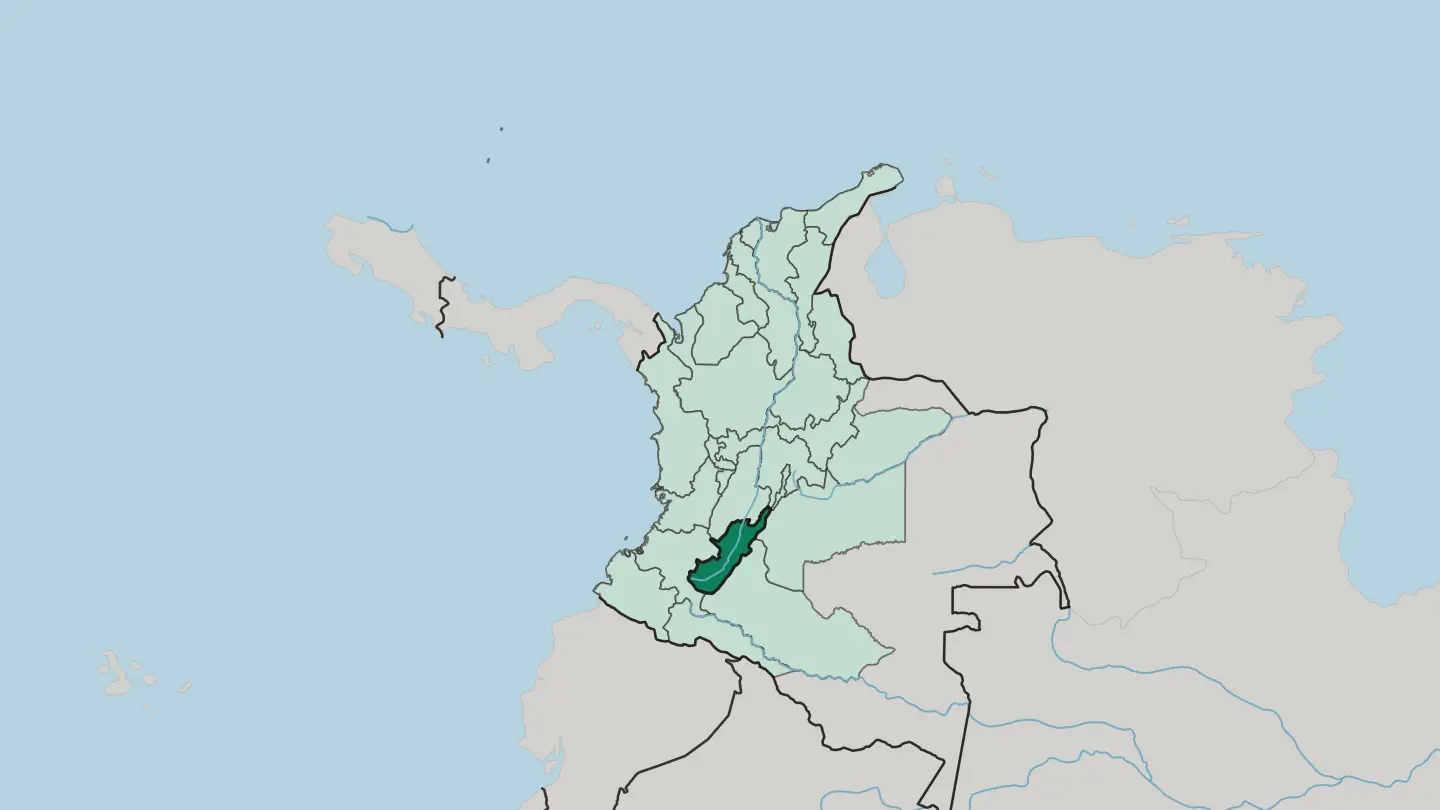 Colombia
Departamento del Magdalena
Magdalena runs from Caribbean beaches up to the snow of the Sierra Nevada de Santa Marta, with Santa Marta as its old port capital.Towns & cities →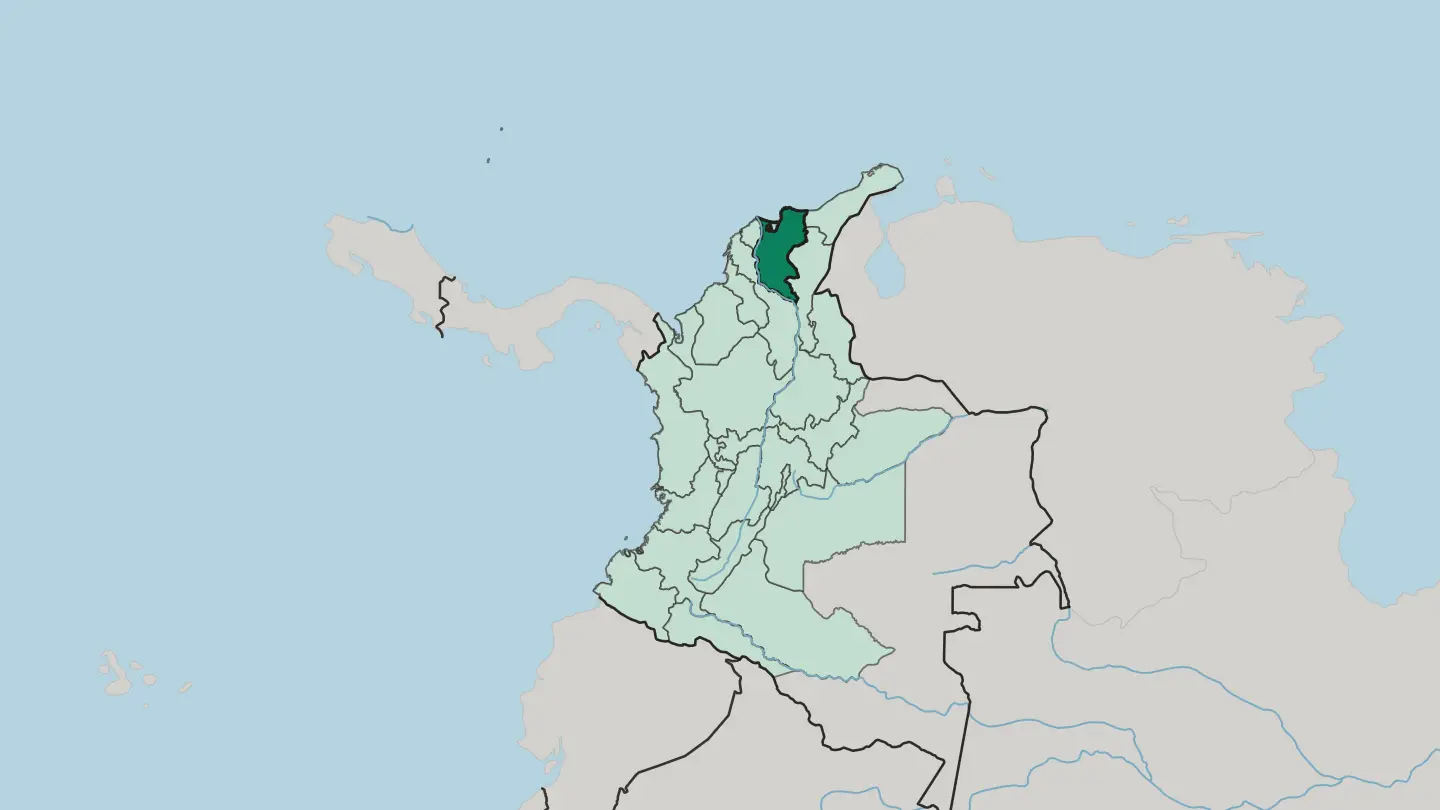
 Colombia
Departamento del Meta
Departamento del Meta opens onto Colombia's eastern Llanos, a plains region of cattle ranches, joropo music, and the coloured river Caño Cristales.Towns & cities →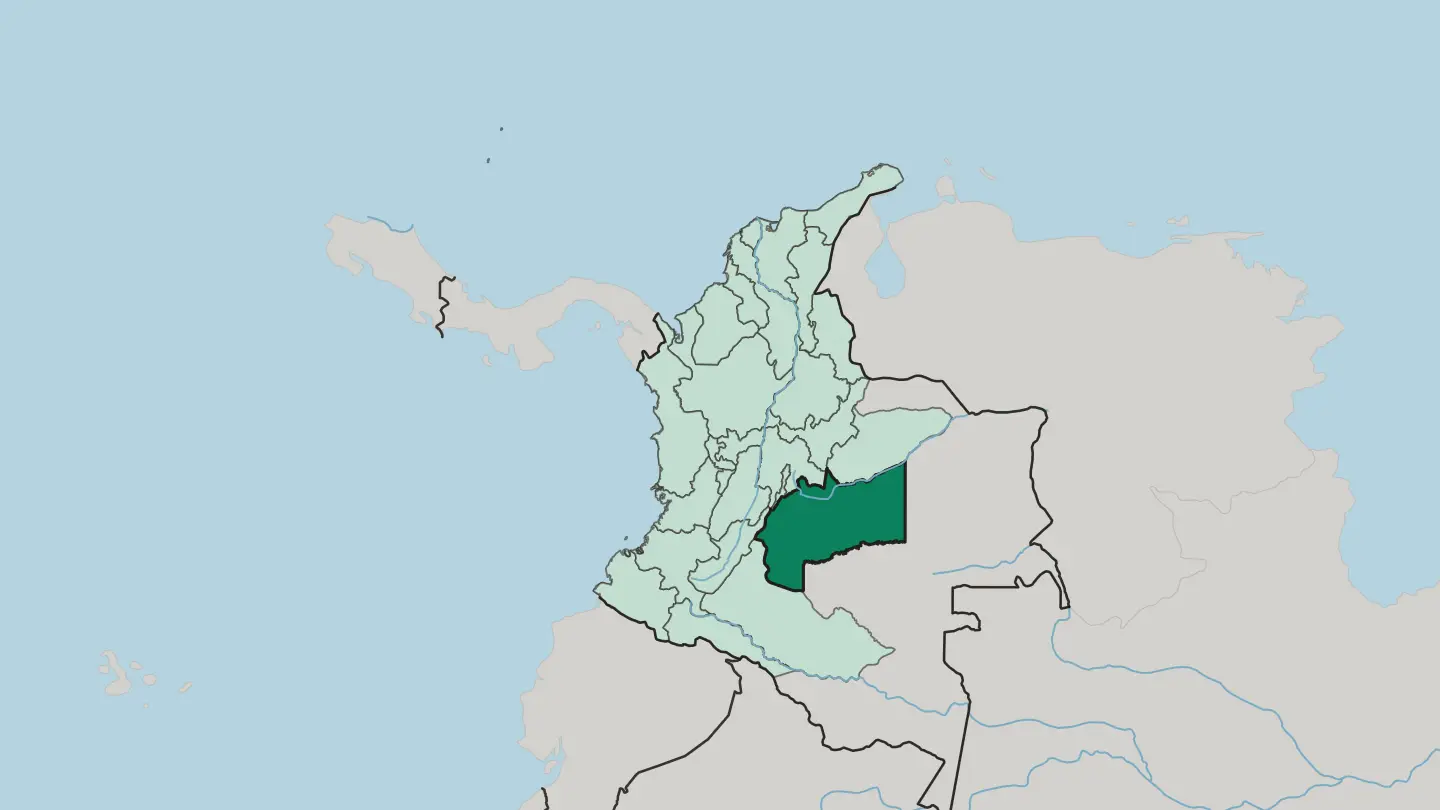 Colombia
Departamento del Putumayo
Putumayo is where the Colombian Andes fall away into the Amazon, a frontier department of rivers, cloud forest and yagé country.Towns & cities →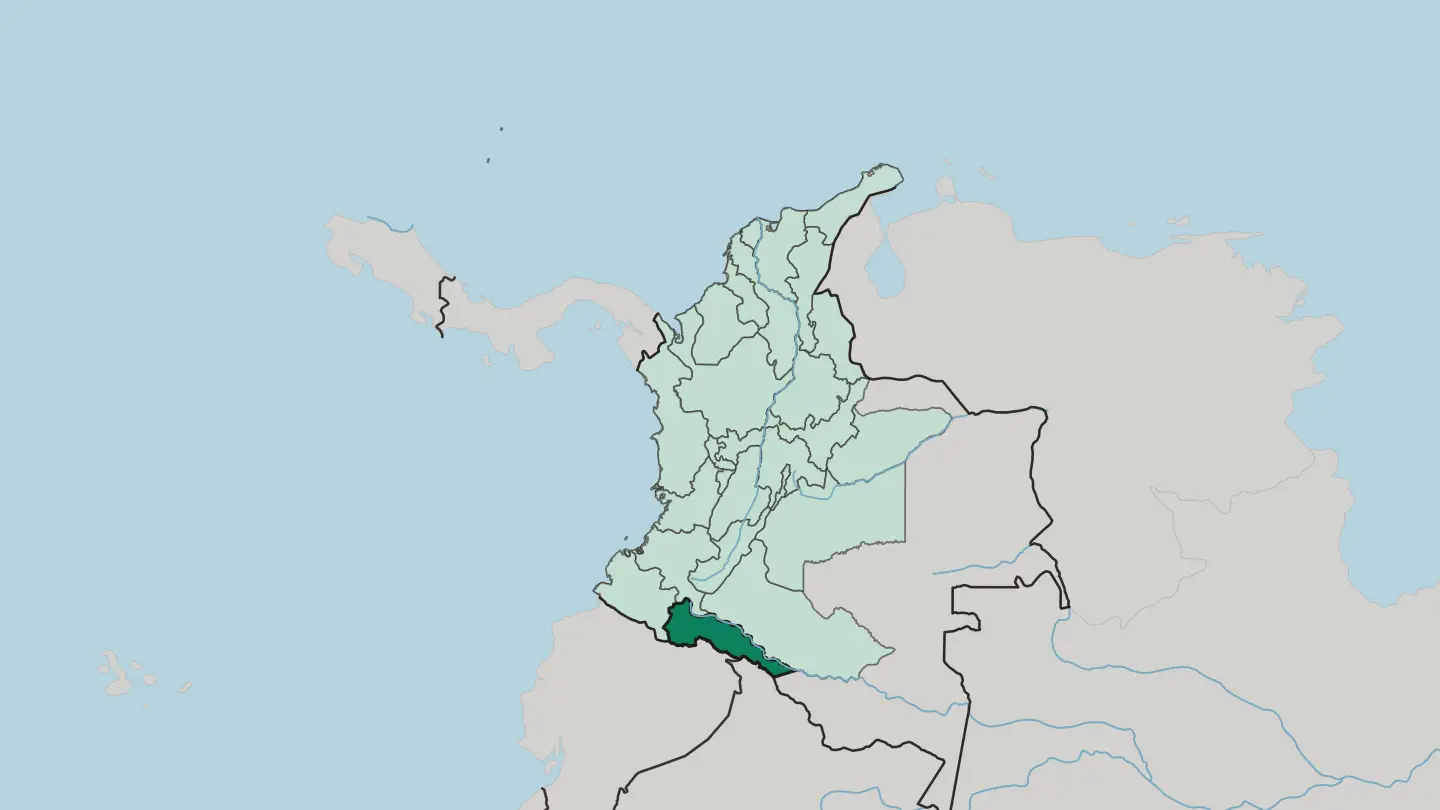 Colombia
Departamento del Valle del Cauca
Valle del Cauca fills the Cauca River valley of western Colombia, from Andean ridges down to the Pacific port of Buenaventura.Towns & cities →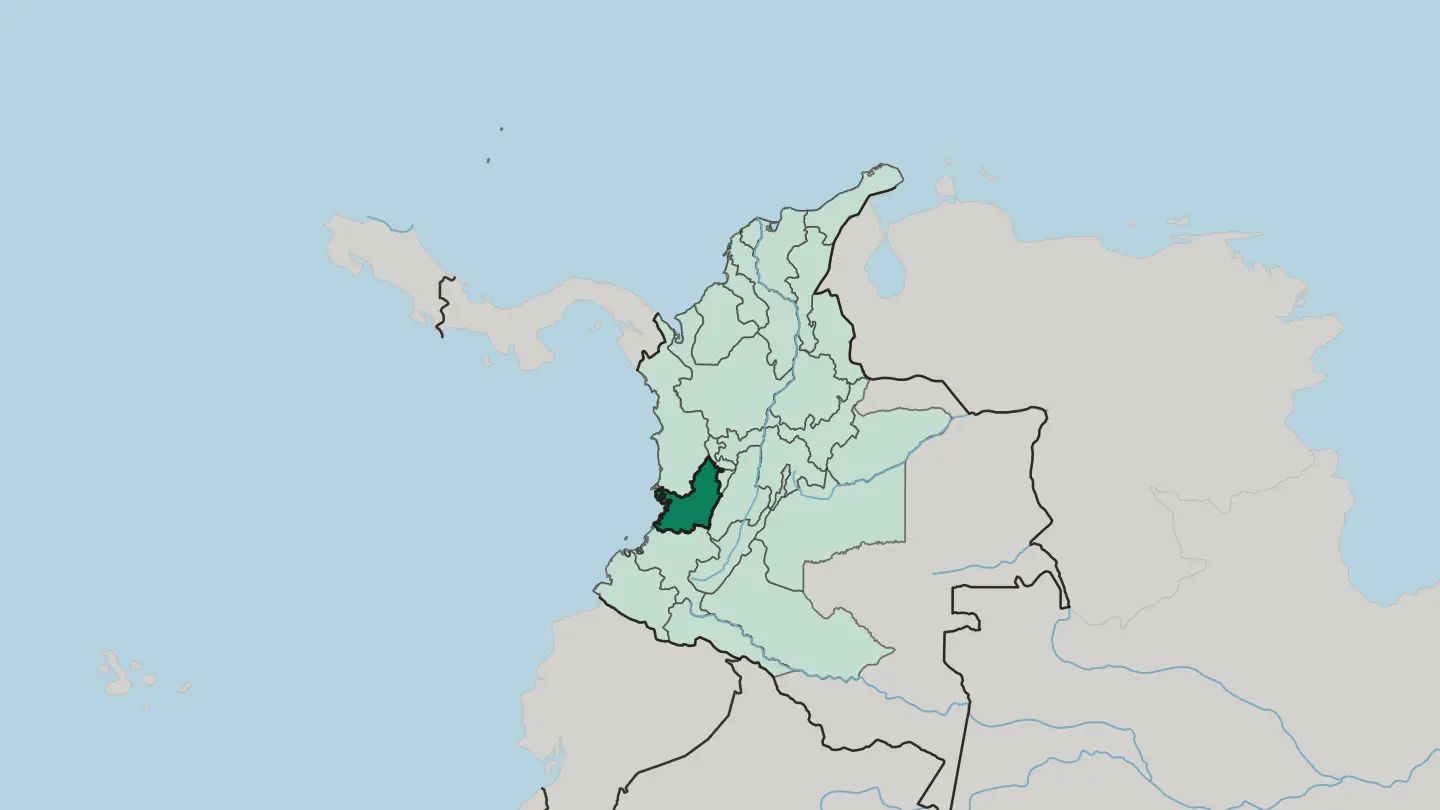 Colombia
Distrito Capital de Bogotá
The Capital District holds Bogotá, capital of Colombia, a first-order territory ranked beside the departments rather than inside Cundinamarca.Towns & cities →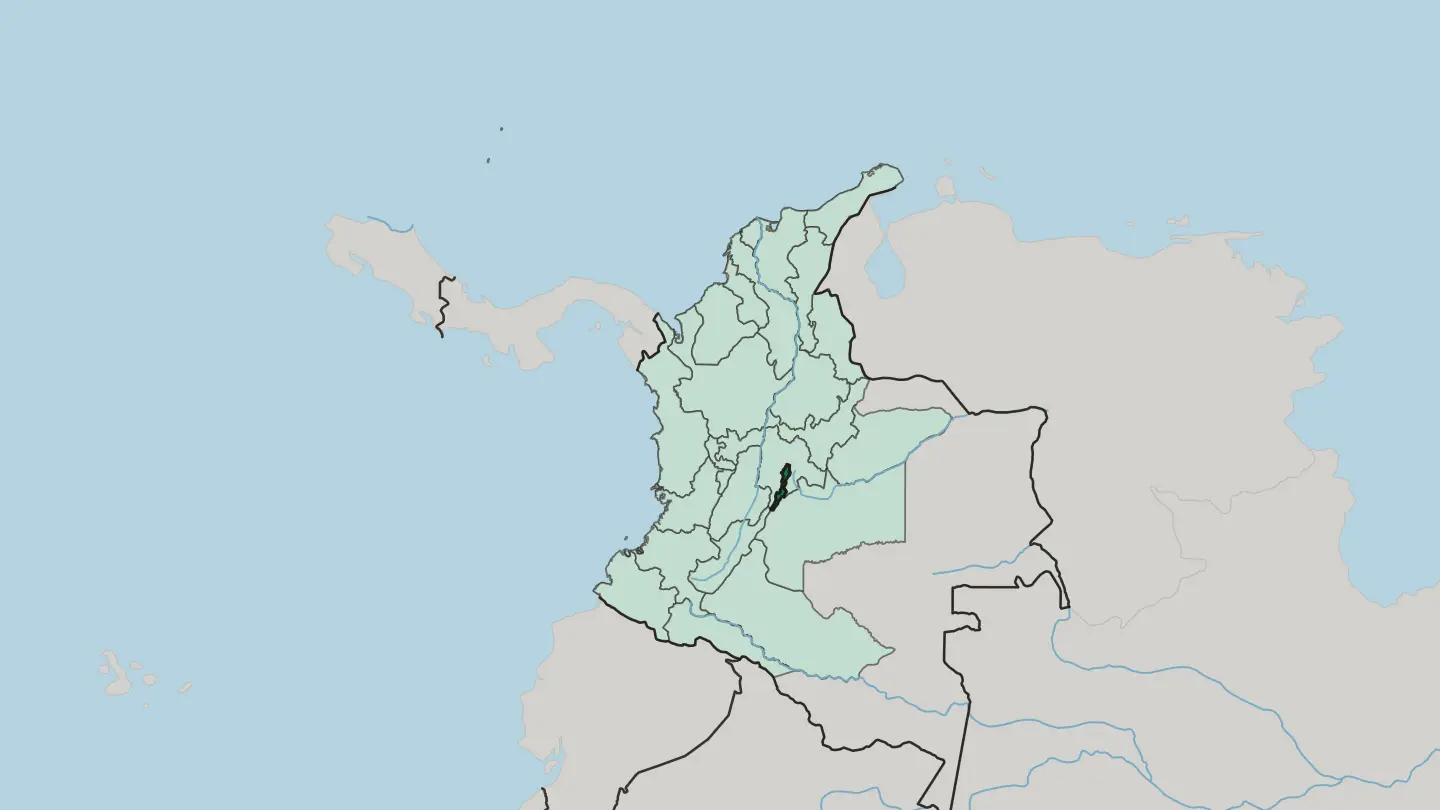 Colombia
Providencia y Santa Catalina, Departamento de Archipiélago de San Andrés
Providencia y Santa Catalina lie in the Caribbean Sea north-east of San Andrés, part of a Colombian island department far out from the mainland.Towns & cities →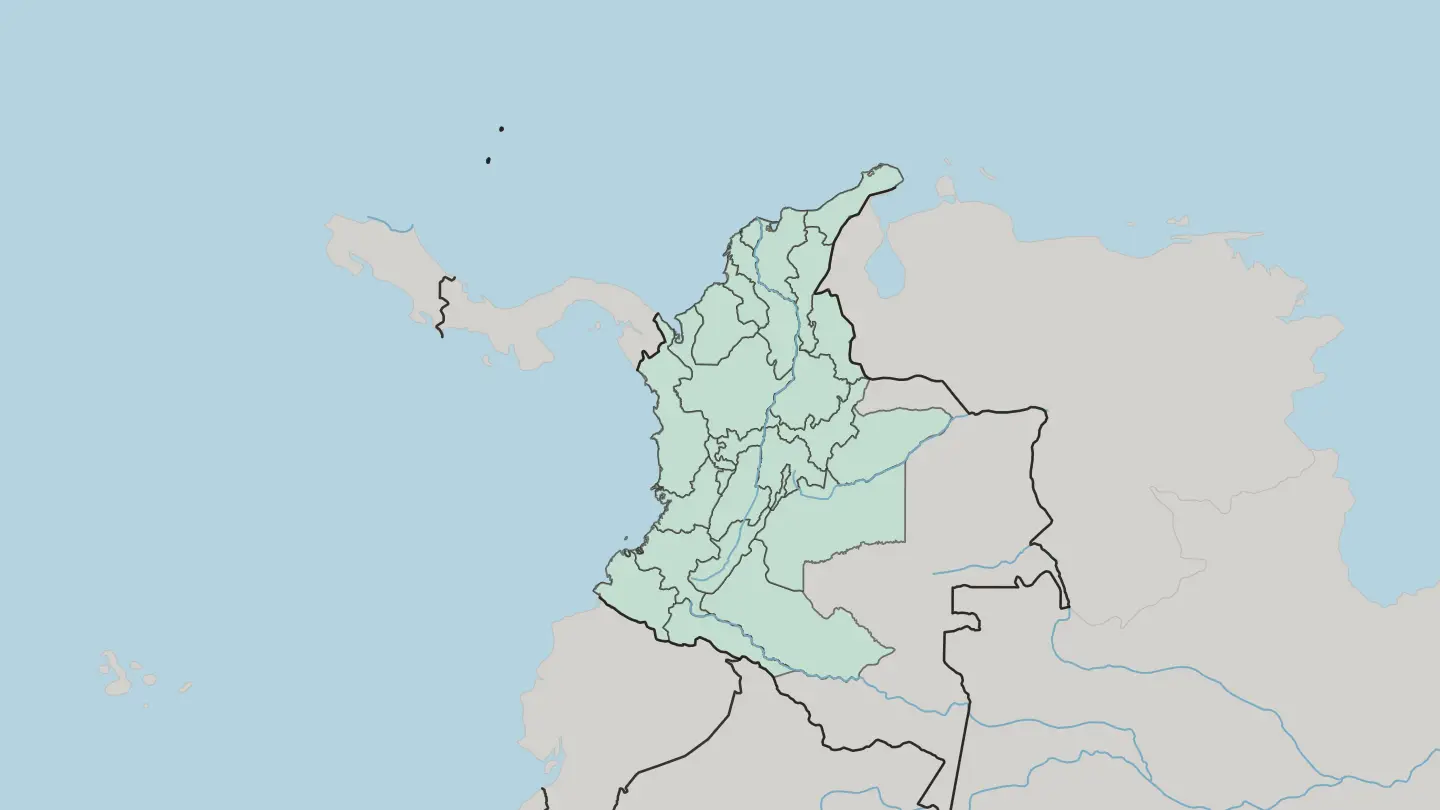
 Colombia
Quindío Department
Quindío is Colombia's coffee heartland, a small Andean department of wax palms, colonial towns, and green mountain slopes.Towns & cities →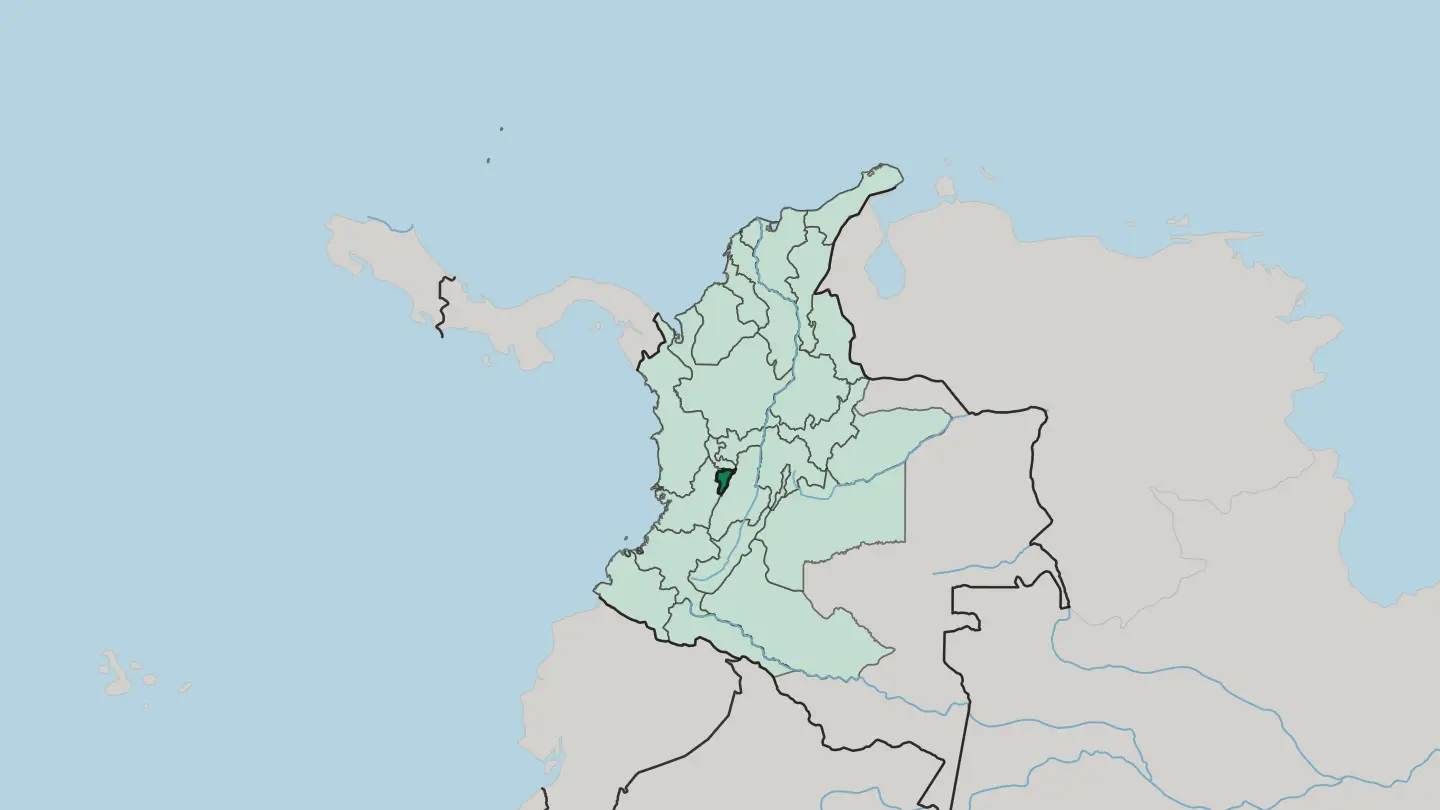
Explore by experience
Not sure which place? Start from how you want to travel.

About Colombia
Colombia is known first for its range of landscapes.
What is Colombia known for?
Few countries pack Caribbean and Pacific coasts, high mountains, and stretches of Amazon jungle into one territory. Its cultural mix is just as broad, drawing on Indigenous civilizations that predate colonization, the African diaspora, and settlers who arrived from Europe and the Middle East. Cities carry much of the draw. Bogotá anchors the interior as the capital and largest city, while Medellín, Cali, Barranquilla, and Cartagena rank among the other major urban centres.
Where is Colombia?
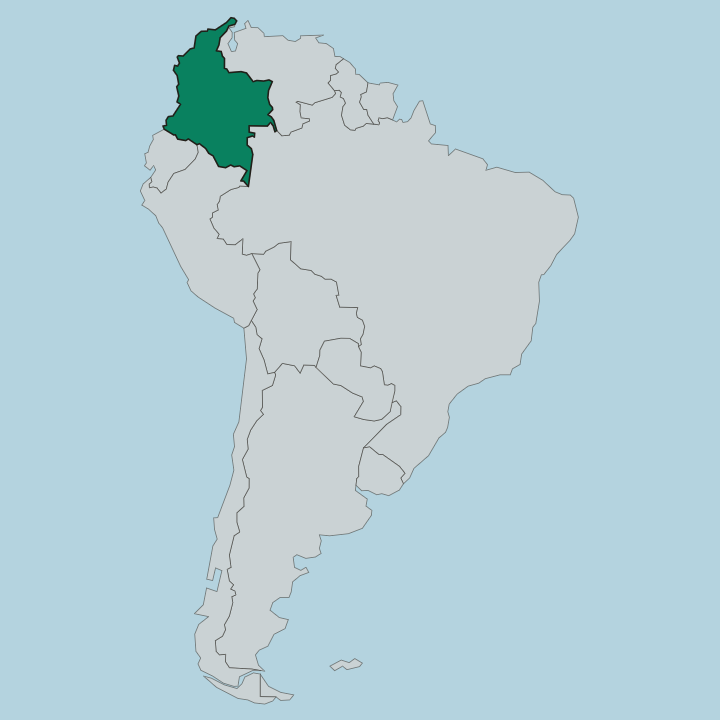
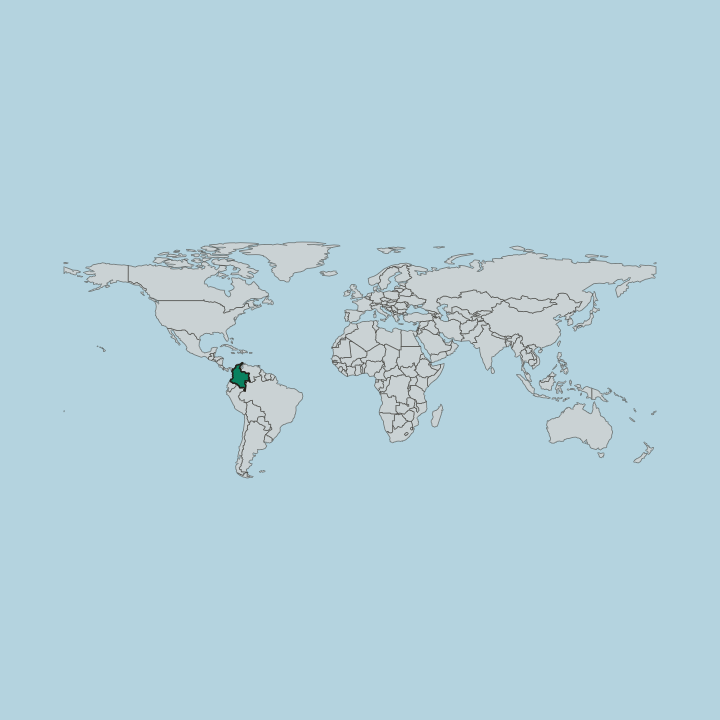
Colombia occupies the northwest corner of South America, the only country on the continent with coastline on both the Caribbean Sea and the Pacific Ocean. Its mainland borders run long. Venezuela lies to the east and Brazil to the southeast; Peru and Ecuador close the south and southwest; and Panama joins it to the northwest, forming the land bridge on to Central America.
The territory is large, covering ground roughly twice the size of France. Beyond the mainland, insular regions reach north into waters that belong geographically to North America. Inland the land climbs and falls across mountainous regions before dropping away into Amazon jungle across the south and east.
Two long coasts frame the country. The Caribbean shore runs the length of the north, while the Pacific edges almost the entire west. Between the oceans and the forest, Colombia is divided for administration into 32 departments, among them the Capital District built around Bogotá.
This spread of coast, mountain, and rainforest gives Colombia as much geographic variety as any country in South America, and it explains why travel here shifts so sharply from one region to the next.
What is the history of Colombia?
Colombia's history reaches back to the Indigenous civilizations that lived across these lands long before any European arrival. Their societies predate colonization by centuries. The territory was later governed as a colony, and the Spanish that took root then remains the country's main language.
Colonial rule reshaped religion, law, and cuisine. The push for self-rule came early. The year 1810 is remembered as the start of Colombia's long road to independence, the point when the break from colonial authority is usually said to have begun.
Waves of people followed, and each left a mark. Africans brought to the region during the colonial period seeded a lasting African diaspora whose cuisine, art, and traditions still shape the country's culture. Later migrants arrived from Europe and the Middle East, adding further threads to an already mixed society.
Out of Indigenous roots, the colonial encounter, and these successive migrations grew the plural nation recognised across Colombia. That blend of origins is the root of the country's diverse cultural heritage. The country holds all of these pasts together, and none has fully displaced another.
What is Colombia like?
Life in Colombia runs on a plural culture that has been built from several roots at once, none of them the whole story. Spanish is the official language, spoken across the country, while Creole, English, and dozens of other tongues are recognised region by region. Religion, cuisine, and art carry the same inheritance.
The colonial centuries laid down one set of customs; the African diaspora added another; and Indigenous communities kept traditions that predate colonization entirely. Immigration from Europe and the Middle East folded in further ways of cooking, worshipping, and making art. Across all of it, the Spanish language provides a common thread that ties the regions together even where local speech and custom diverge.
The result shows in the regions. What people eat, speak, and celebrate can shift between the Caribbean north, the mountainous interior, and the Amazon south. No single culture defines the whole.
That plurality is itself the national trait, and Colombians tend to wear their regional differences with some pride. Difference is the point. It is a culture of many origins held together within a single country.
What is the climate of Colombia?
Colombia lies in the tropics. Elevation, not the calendar, is what really sets its climate, because a country that runs from hot coastline up into high mountains and down again into rainforest spans several climate zones at once. Along the Caribbean and Pacific coasts the air stays hot and humid.
Higher up, in the mountainous interior, temperatures ease steadily as the land rises. The Amazon south is warm and wet. Instead of summer and winter, most regions simply mark wetter and drier spells through the year.
How do you get to Colombia?
Most visitors reach Colombia by air, arriving first in Bogotá, the capital and the country's principal hub. Overland routes cross the borders it shares with Venezuela, Ecuador, Peru, Brazil, and Panama. Sea approaches come by way of its long Caribbean and Pacific coasts.
Once inside, distance is the real obstacle. Because the mainland covers ground roughly twice the size of France, flights between the major cities spare travellers days that the mountain roads would otherwise swallow. Plan the internal legs early.
Good for
Updated September 2026