Spain · La Rioja
Where to Stay in Logroño, La Rioja
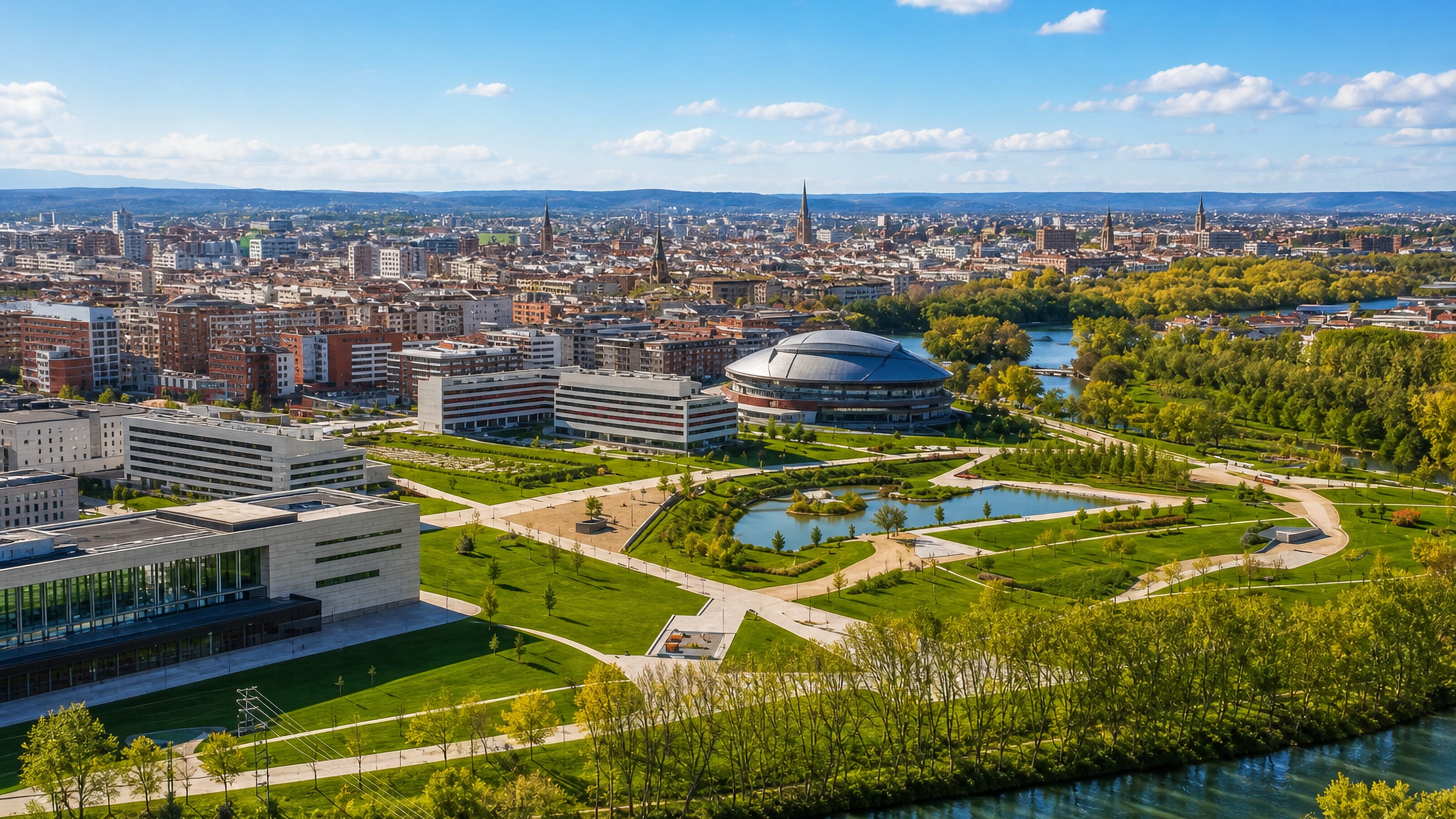
Vineyards run to the edge of Logroño on the Ebro, capital of La Rioja, known for the bars of Calle Laurel and the twin towers of La Redonda.
Hotel links are affiliate links: booking through them may earn us a commission, at no extra cost to you. It never affects how places are ranked. How this works


Where to stay in Logroño
How the choice of base plays out on the ground.
Logroño keeps almost everything worth reaching inside the Casco Antiguo. The old quarter is four streets deep between the Ebro and the Muralla del Revellín, and Calle Laurel, Calle San Juan and the Co-cathedral of Santa María de la Redonda all sit inside it. Wine shops and bars fill the ground floors of the old town.
Nights are loud. Bar noise carries up the narrow blocks until late, so a room on an inner courtyard is worth asking for, and anyone who wants to sleep should look one street back from the tapas run. El Espolón is that street back.
The nineteenth-century grid around the paseo and the Gran Vía holds the larger hotels, the Museo de La Rioja and the Theatre of Bretón de los Herreros, and it stays quiet without putting you more than ten minutes from the old town. Drivers can go further out. Varea sits east along the river where the Roman town of Vareia stood, with the vineyard roads of the Rioja Alta starting at the door, though beds out there are few and the walk back in is long.
Find hotels in Logroño
Direct booking searches for these neighbourhoods.
Casco Antiguo
Four streets deep around the Co-cathedral of Santa María de la Redonda, loud until lateFind hotels in Casco AntiguoSleepers who want the paseo and the Museo de La Rioja instead of bar noiseEl Espolón
The nineteenth-century grid off the Gran Vía, ten minutes on foot from the old quarterFind hotels in El EspolónDrivers starting the Rioja Alta vineyard roads at the doorVarea
The riverside edge on the site of Roman Vareia, few beds and a long walk back in. Rooms are few around here — worth securing early.Find hotels in VareaHotel links are affiliate links: booking through them may earn us a commission, at no extra cost to you. It never affects how places are ranked. How this works
Things to do in Logroño
Ranked by global recognition; descriptions from Wikidata (CC0).
Museums & Galleries
3- Museo de La Rioja Heritage
- Casa de las Ciencias
- Casa de la Danza
Churches & Religious Sites
3- Co-cathedral of Santa María de la Redonda Heritage
- Church of San Bartolomé Heritage
- Church of Santa María de Palacio Heritage
Castles & Historic Sites
3- Theatre of Bretón de los Herreros Heritage
- Palacio del Espartero Heritage
- Biblioteca de La Rioja, Exconvento de la Merced y Ex-fábrica de Tabacos de Logroño Heritage
worth knowingacross 3 categories in Logroño
About Logroño
What is Logroño known for?
Logroño is known for Rioja wine and for the tapas that go with it. One street does most of the work. Calle Laurel packs dozens of bars into a few hundred paces, each one built around a single dish, and the ritual is to take one plate and move on.
Pilgrims pass through the same lanes. The Camino de Santiago enters over the Puente de Piedra and runs along Calle Mayor past the Church of Santiago, where a goose-game board is set into the pavement outside the door.
What are the main landmarks in Logroño?
Logroño shows two towers before anything else. The Co-cathedral of Santa María de la Redonda raises its pair of baroque steeples over the old town, and the Church of Santa María de Palacio answers with a stone needle a few streets off. Defence left its mark too.
What survives of the Muralla del Revellín is the gate the city held against a French siege in 1521, El Cubo del Revellín stands beside it, and the Museo de La Rioja fills a baroque palace with everything dug out of the valley since Vareia.
What is the history of Logroño?
Logroño grew out of a river crossing on the Ebro. Before the town there was Vareia, the Celtiberian and Roman port at the head of navigation, whose site lies east of the modern streets at Varea. The bridge made the difference.
Alfonso VI granted a charter in 1095 to the settlement that had gathered at the ford, and the pilgrim road to Compostela pulled traders, hospitals and French masons across it for the next four centuries. Its walls went up in the twelfth century, and the town spread along the pilgrim road inside them rather than out across the fields. Border wars followed.
Castile and Navarre fought over the crossing until the frontier settled, and in 1521 a French and Navarrese army besieged the town for eleven days without taking the Revellín, an event the city still marks each June with bread, fish and wine. Vines made the modern city. When phylloxera destroyed the French vineyards in the eighteen-seventies, Bordeaux merchants crossed the Pyrenees, bought Rioja grapes and taught the barrel ageing that fixed the style, and the railway carried the results out of the Ebro valley.
Logroño became the provincial capital in 1833.
Where is Logroño?
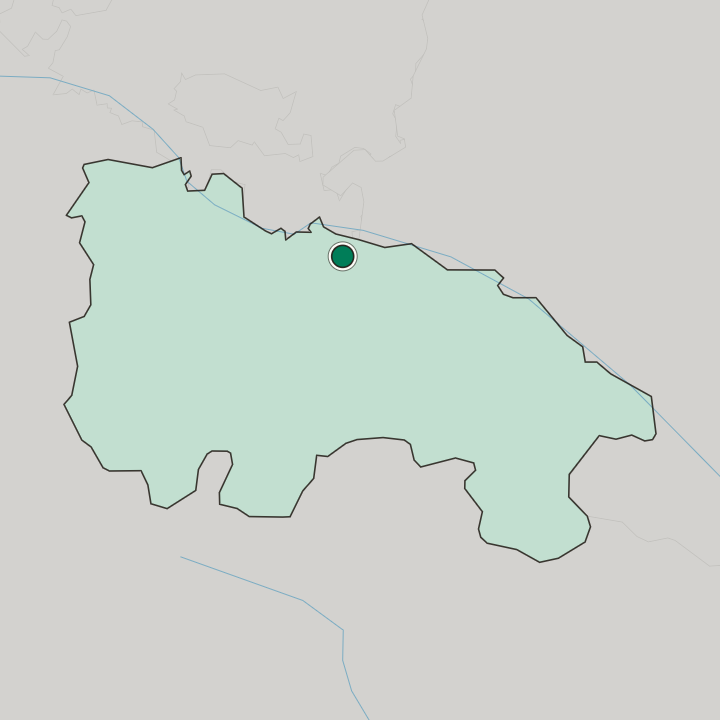
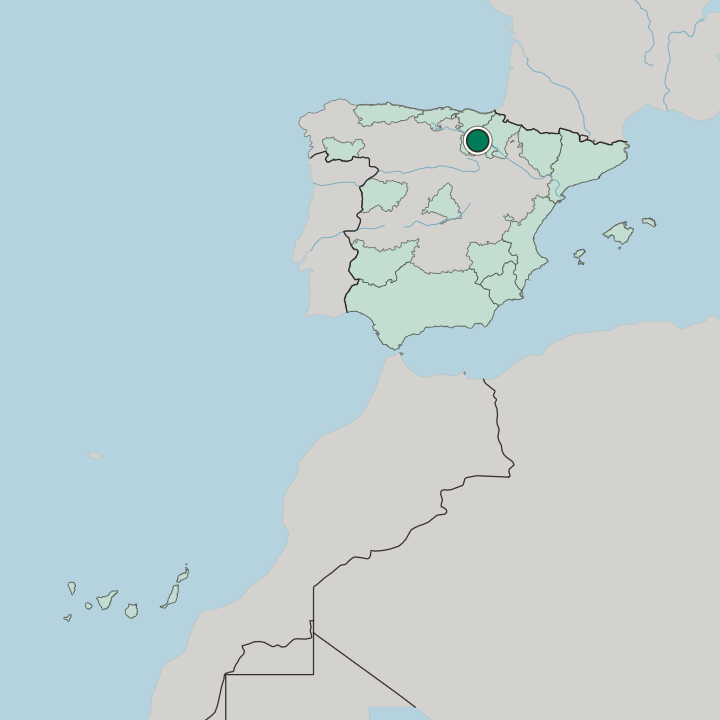
Logroño lies in the Ebro valley of northern Spain, on the south bank of the river where the Iregua comes down from the mountains. The valley floor here is wide and flat, given over to vines and vegetable ground, and the two walls that hold it are visible from any street. The Sierra de Cantabria closes the north.
Southward the land climbs into the Cameros hills toward the Sierra de la Demanda.
What is the climate of Logroño?
Logroño takes its weather from the Ebro corridor rather than from either sea. The Sierra de Cantabria blocks most of what the Atlantic sends, so rain stays moderate and the summers run hot and dry over the vines. Then the cierzo arrives.
That north-west wind funnels down the valley in winter, dries the air, and makes the cold feel sharper than it reads on any thermometer.
How do you get to Logroño?
Logroño sits on the A-12 and the AP-68, the two roads that carry most arrivals from Burgos and from Zaragoza. Rail is thinner. One line crosses the Ebro valley between Bilbao and Zaragoza, calling at the station under the Gran Vía, and a bus is the only public way out to Haro and the cellars of the Rioja Alta.
Agoncillo airport lies east of the city. Walkers come in on foot over the Puente de Piedra, following the Camino de Santiago in from Viana and out again towards Navarrete.
Common questions
What is the best area to stay in Logroño?
Casco Antiguo: Tapas hopping on Calle Laurel between the Ebro and the Revellín. El Espolón: Sleepers who want the paseo and the Museo de La Rioja instead of bar noise. Varea: Drivers starting the Rioja Alta vineyard roads at the door.
Good for
Updated October 2026