Gabon: Regions, Cities & Travel Guide
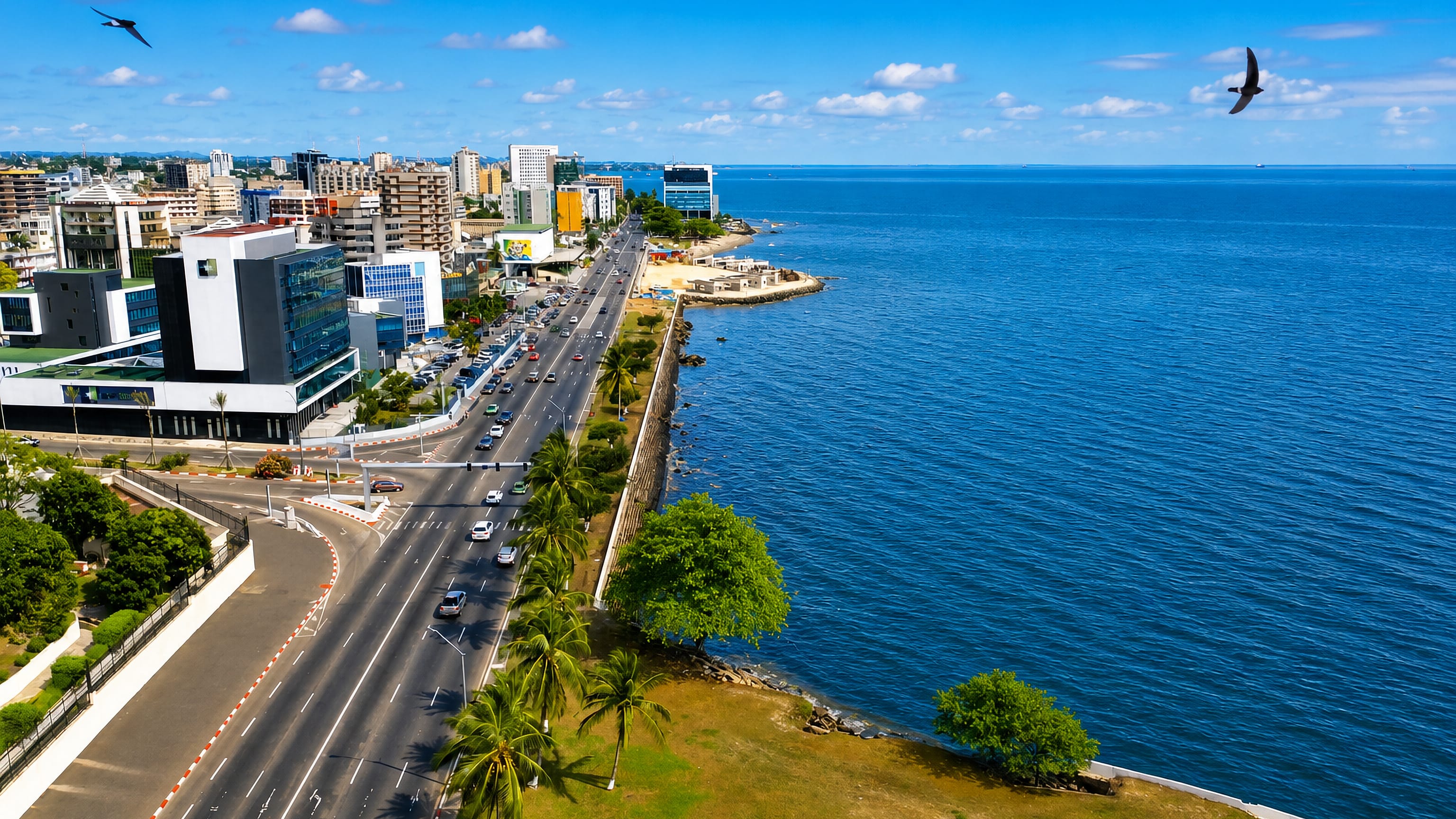
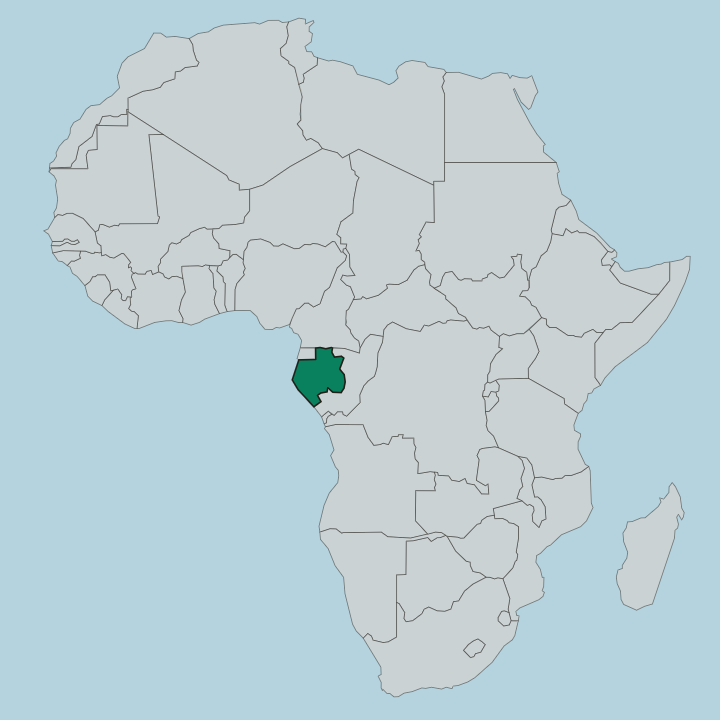
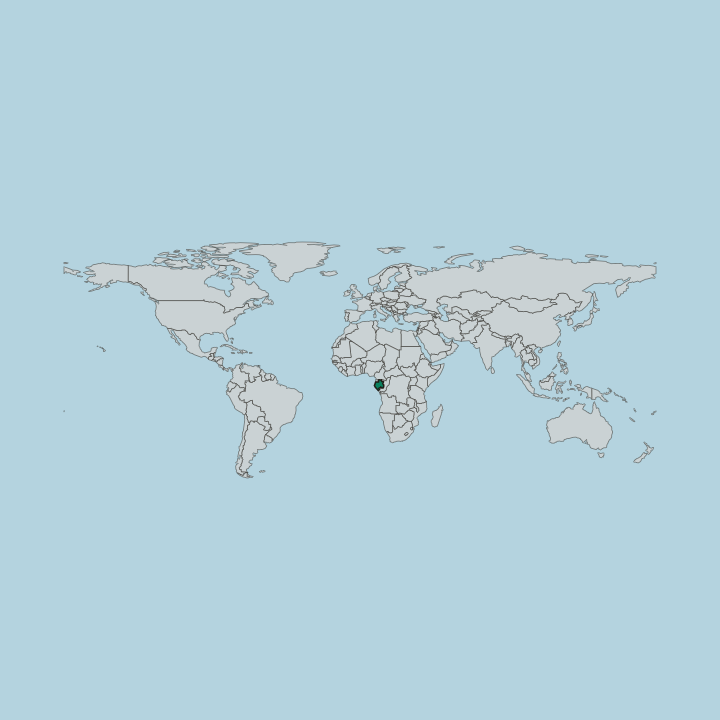
Gabon straddles the equator on the Atlantic coast of Central Africa, a rainforest nation of national parks with Libreville on its estuary.
Hotel links are affiliate links: booking through them may earn us a commission, at no extra cost to you. It never affects how places are ranked. How this works


Top destinations in Gabon
Cities to start from, then drill into areas and hotels.

 Gabon
Gabon
Libreville
Libreville is the capital of Gabon on the Komo estuary, an Atlantic port on the equator, founded in the last century as a town for freed captives.Where to stay →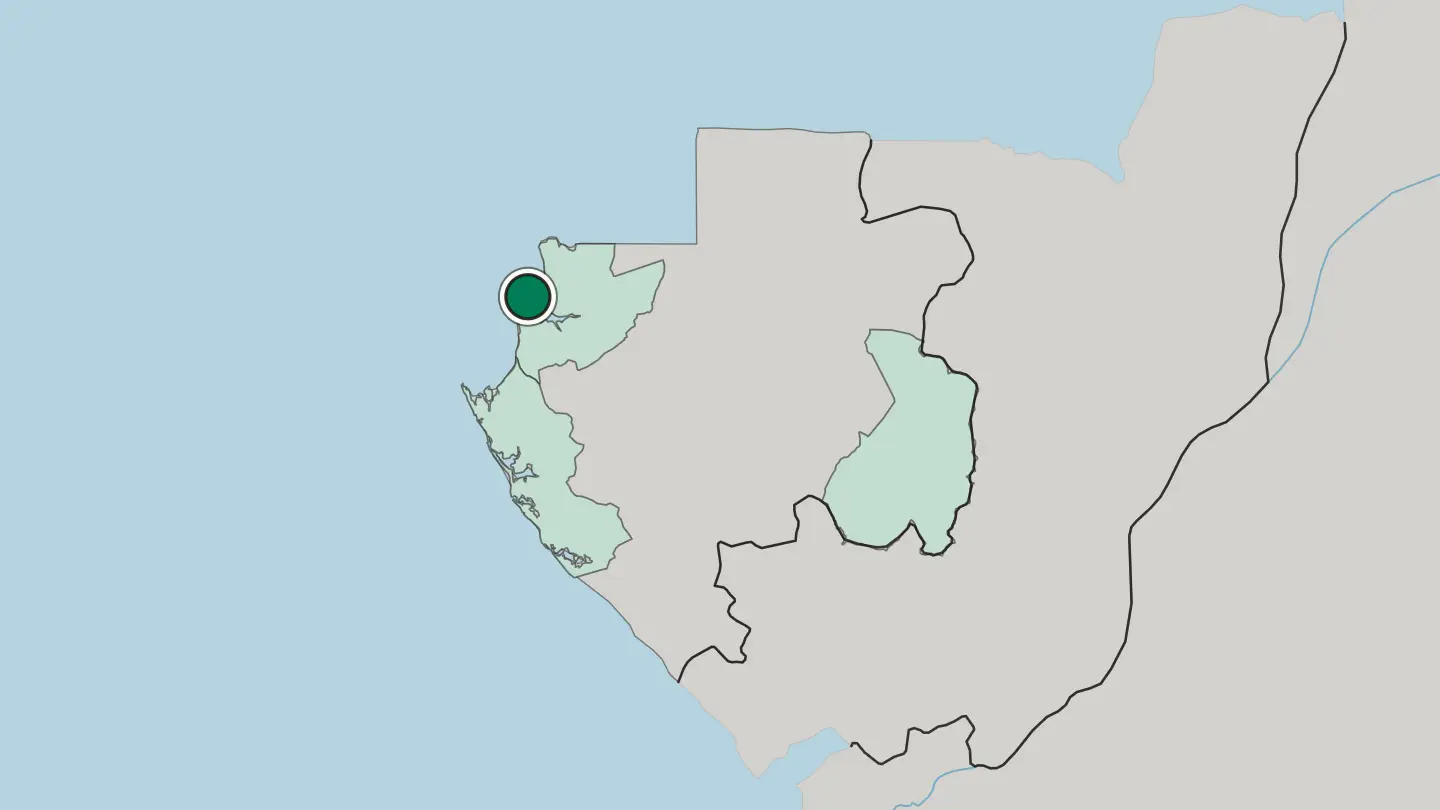 Gabon
Gabon
Port-Gentil
Port-Gentil is a city of the Atlantic coast of Gabon, the country's oil capital, set on an island at the mouth of the Ogooué with no road to the mainland.Where to stay →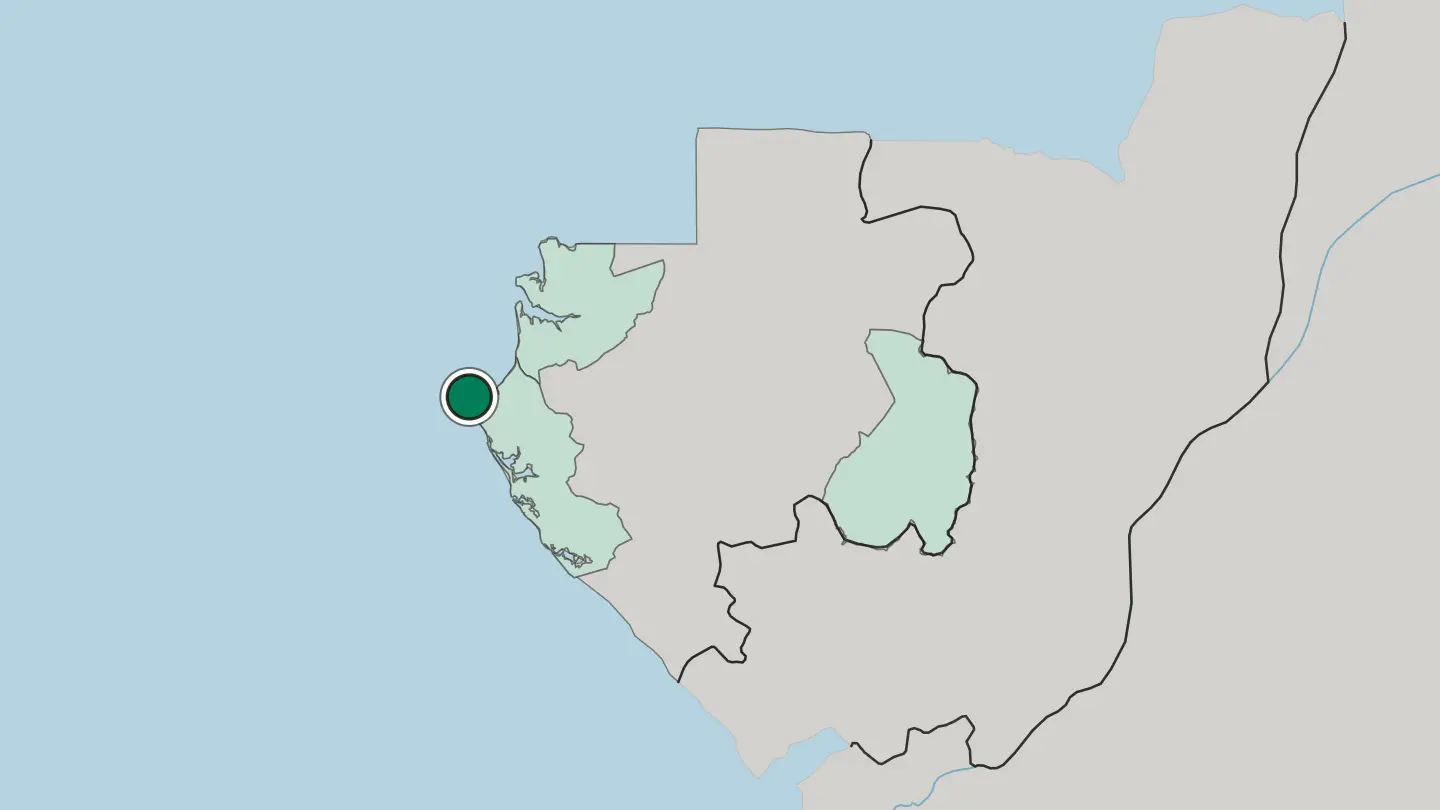 Gabon
Gabon
Franceville
Rail ends here. Franceville is the capital of Haut-Ogooué Province in southeastern Gabon, on the east bank of the Ogooué.Where to stay →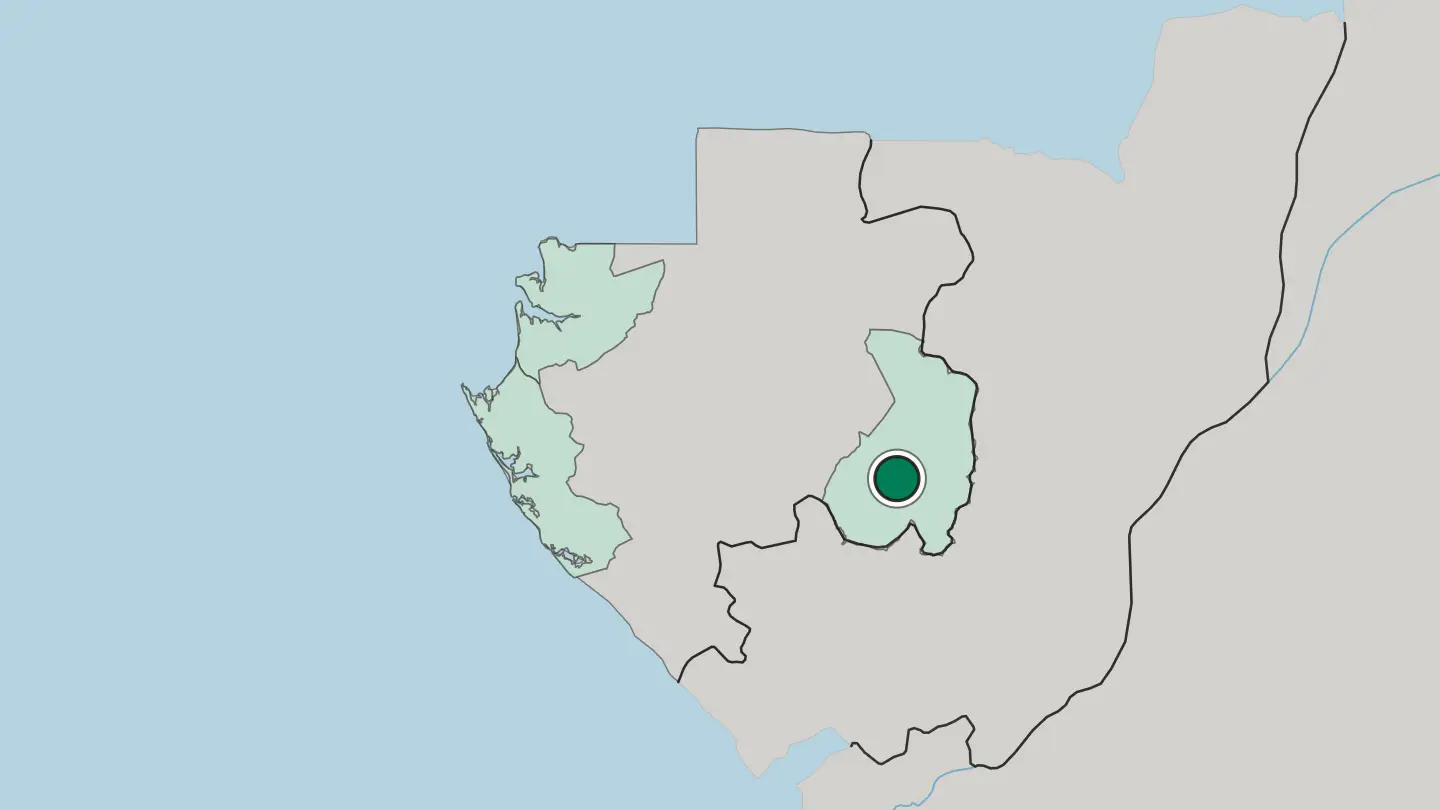
Hotel links are affiliate links: booking through them may earn us a commission, at no extra cost to you. It never affects how places are ranked. How this works
Regions of Gabon
Gabon
Estuaire
Estuaire is the Gabonese province around the Gabon Estuary, holding both Akanda, its seat, and Libreville, the national capital.Towns & cities →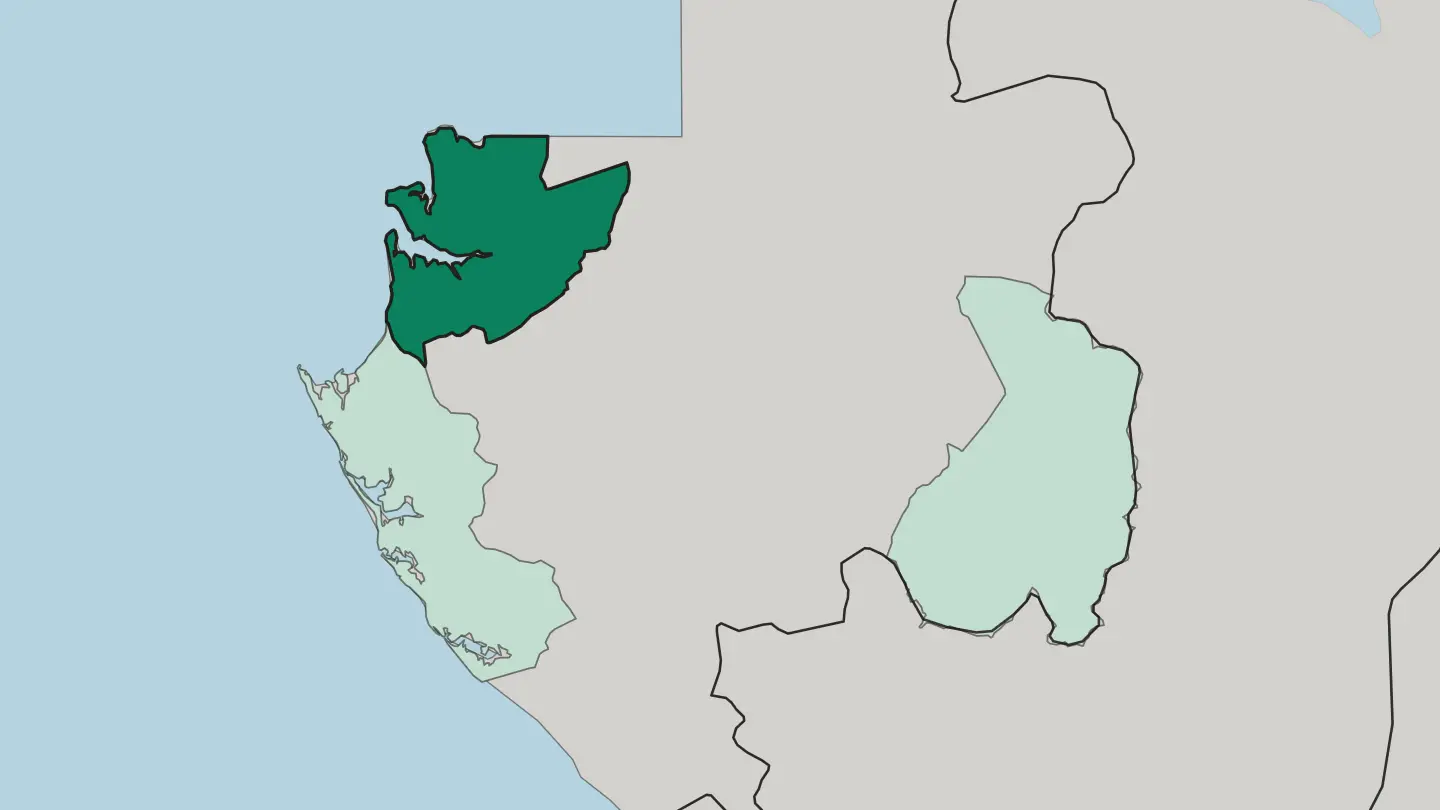 Gabon
Gabon
Province de l’Ogooué-Maritime
Ogooué-Maritime is one of Gabon's nine provinces, with Port-Gentil as its capital and a name pairing the Ogooué with the sea.Towns & cities →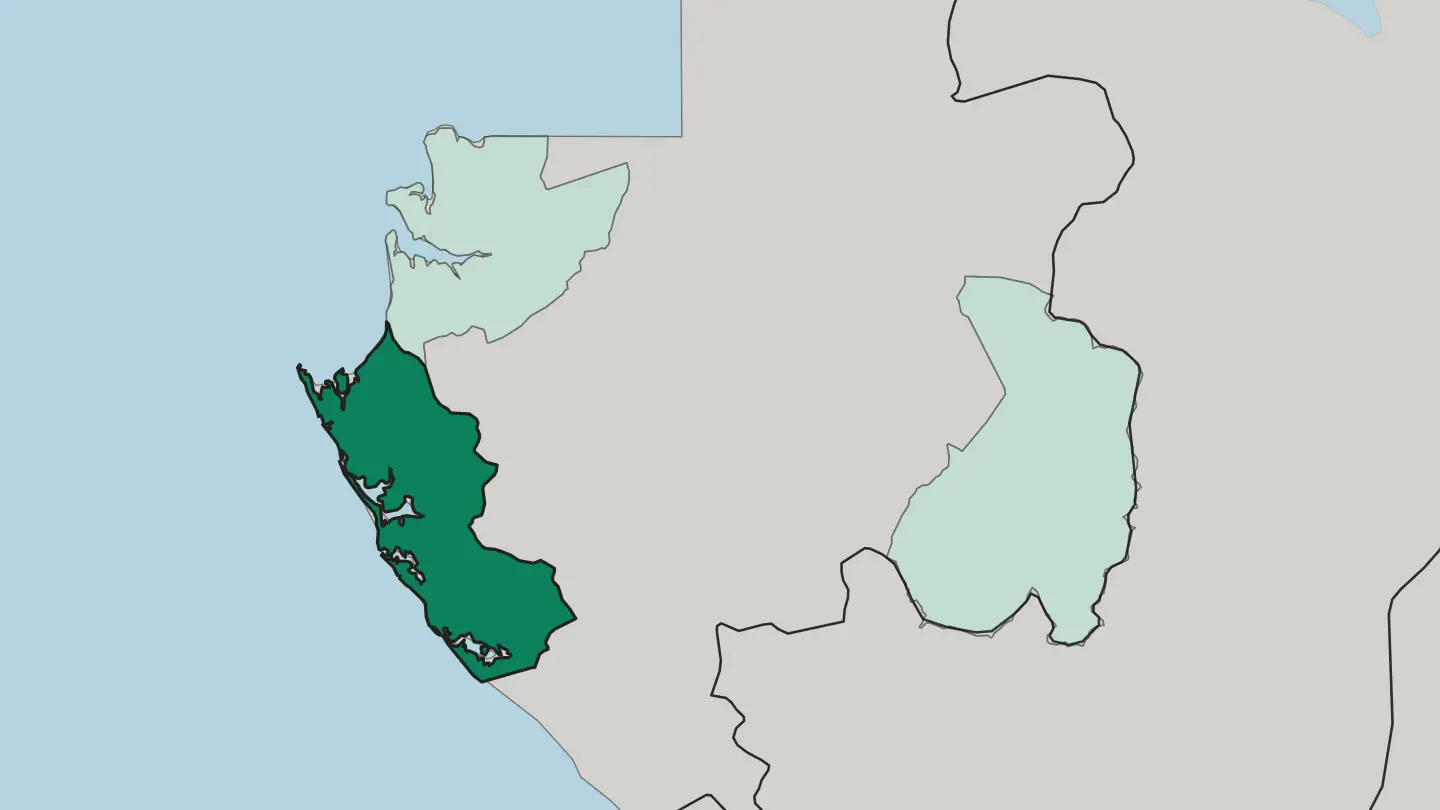 Gabon
Gabon
Province du Haut-Ogooué
Haut-Ogooué is a mining province of Gabon named for the Ogooué River, with Franceville as its capital and namesake of francevillite.Towns & cities →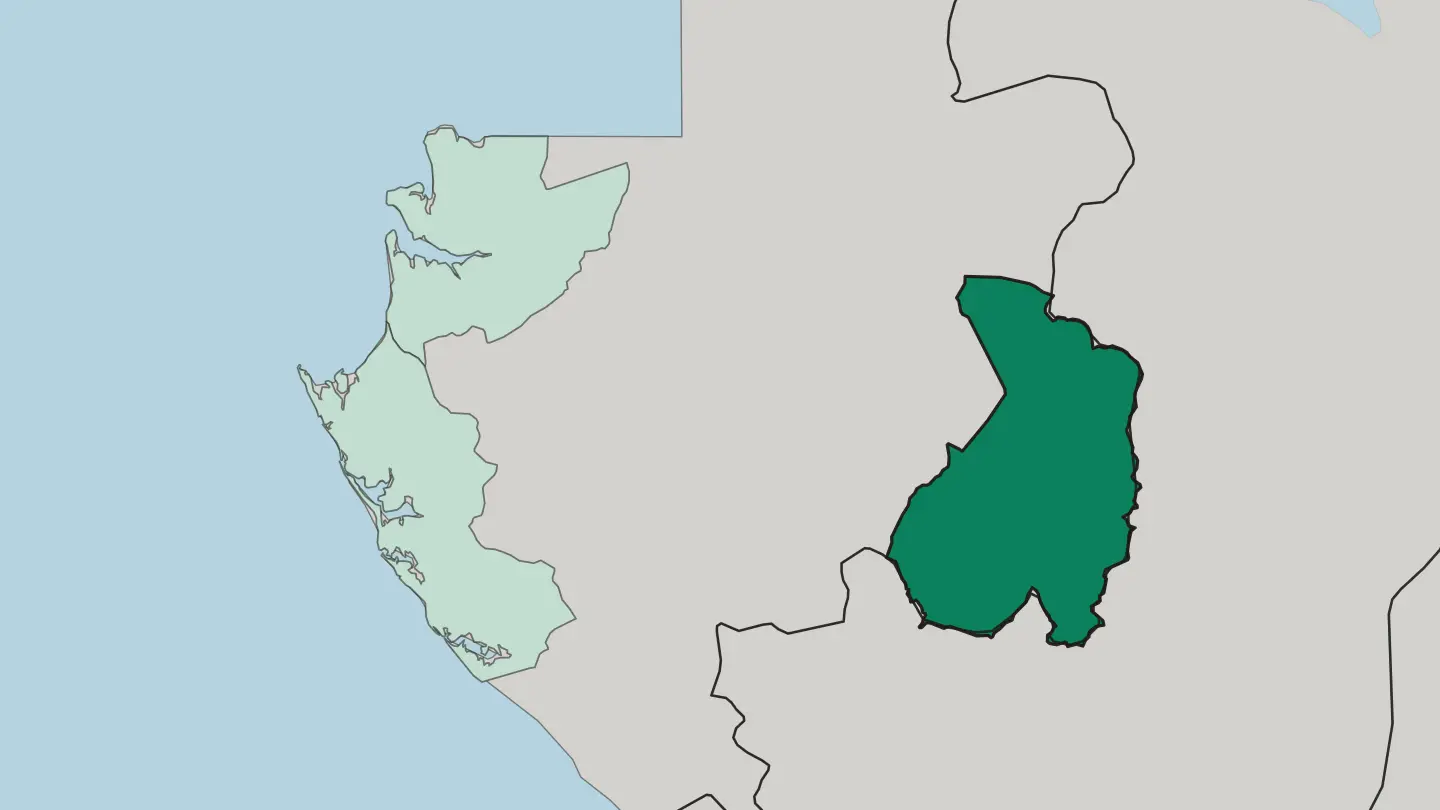
About Gabon
Gabon is a forest country.
What is Gabon known for?
What draws travellers is the wildlife inside it, and the sight of forest elephants and lowland gorillas stepping out of the trees onto open Atlantic beaches in Loango National Park. Inland, Lopé National Park, a UNESCO World Heritage Site, mixes ancient savanna with forest and shelters mandrill troops. The Ogooué River threads the interior, and Libreville anchors the estuary coast.
Thirteen national parks protect that wildlife.
Where is Gabon?
Gabon sits on the equator, its western edge on the Gulf of Guinea and its interior deep in the forests of Central Africa. Behind the coastal plains the land rises into hills and low mountains. The Crystal Mountains stand to the north-east of Libreville, while the Chaillu Mountains bunch up in the centre of the country and shed rivers in every direction.
Forest is the constant. Dense equatorial rainforest blankets the land, broken here and there by patches of savanna in the east. Water orders the map.
The Ogooué River gathers the interior and empties into the Atlantic through a wide delta near Port-Gentil, on Mandji Island. Along its middle course sits Lambaréné, a town built on an island where the river runs more than half a mile wide. On a tributary, the Ivindo, the Kongou Falls drop through the forest inside Ivindo National Park.
The coast itself is a run of lagoons, sandbars, and beaches, among them the wild shoreline protected inside Loango National Park. From surf to summit, the country stays green.
What is the history of Gabon?
Long before Europeans arrived, Myène-speaking peoples such as the Mpongwe traded along the Gabon Estuary, while the Fang migrated south from the Cameroon forests into the land north of the Ogooué River. Portuguese sailors reached the coast in the fifteenth century, and the estuary became a hub of Atlantic trade, including the slave trade that Myène coastal polities helped broker. France took the coast in the nineteenth century.
In 1849 freed captives founded a settlement they named Libreville, the free town, on the north bank of the estuary. Colonial rule folded the territory into French Equatorial Africa in 1910, governed from afar as one piece of a vast federation. At Lambaréné, on the Ogooué River, Albert Schweitzer opened his hospital in 1913 and ran it until his death, work that won him the Nobel Peace Prize.
Independence came on 17 August 1960. Léon M'ba became the first president, and after his death Omar Bongo took power and held it for four decades through a single-party state built on the country's oil wealth. That long tenure still shapes the nation.
A coup in 2023 overthrew his son and successor, Ali Bongo.
What is Gabon like?
Gabon is a small country with a crowded map of peoples, more than forty ethnic groups in all. The Fang spread across the north and the interior, while Myène communities such as the Mpongwe hold the old trading coast around Libreville. No single national folk style flattens this.
Music, masks, and ceremony shift from one language group to the next, and the Bwiti spiritual tradition, rooted in the iboga plant, remains a living thread of ritual life across much of the forest belt. French binds the country together as its common tongue, a legacy of the colonial decades, spoken over dozens of home languages. City life concentrates hard in Libreville and Port-Gentil, where oil money built a coastal, French-inflected culture of cafés, music, and football.
Beyond the cities the forest sets the rhythm. Villages along the Ogooué River still move by pirogue, and the fish and cassava of the river and coast anchor the everyday table. The country reads as many small worlds under one flag.
What is the climate of Gabon?
Sitting on the equator, Gabon is hot and humid the year round, with temperatures that barely move from one month to the next. The rhythm here is rain, not temperature. A long dry season runs from June to August, cooler and often overcast on the coast, and this is when trails harden and wildlife gathers in the clearings of Lopé National Park.
The wet months, heaviest around March and again in the late months of the year, drench the forest and swell the Ogooué River.
How do you get to Gabon?
Nearly everyone arrives through Libreville. Léon-Mba International Airport, a short drive from the capital's centre, takes the long-haul and regional flights that connect Gabon to Europe and the rest of Africa. From there the country opens up by small plane, road, and rail.
The Trans-Gabon Railway climbs inland from the coast toward Franceville in the south-east, passing the station for Lopé National Park on the way. Coastal towns like Port-Gentil, cut off by delta and forest, are reached mainly by air. Plan the internal legs early.
Good for
Updated October 2026