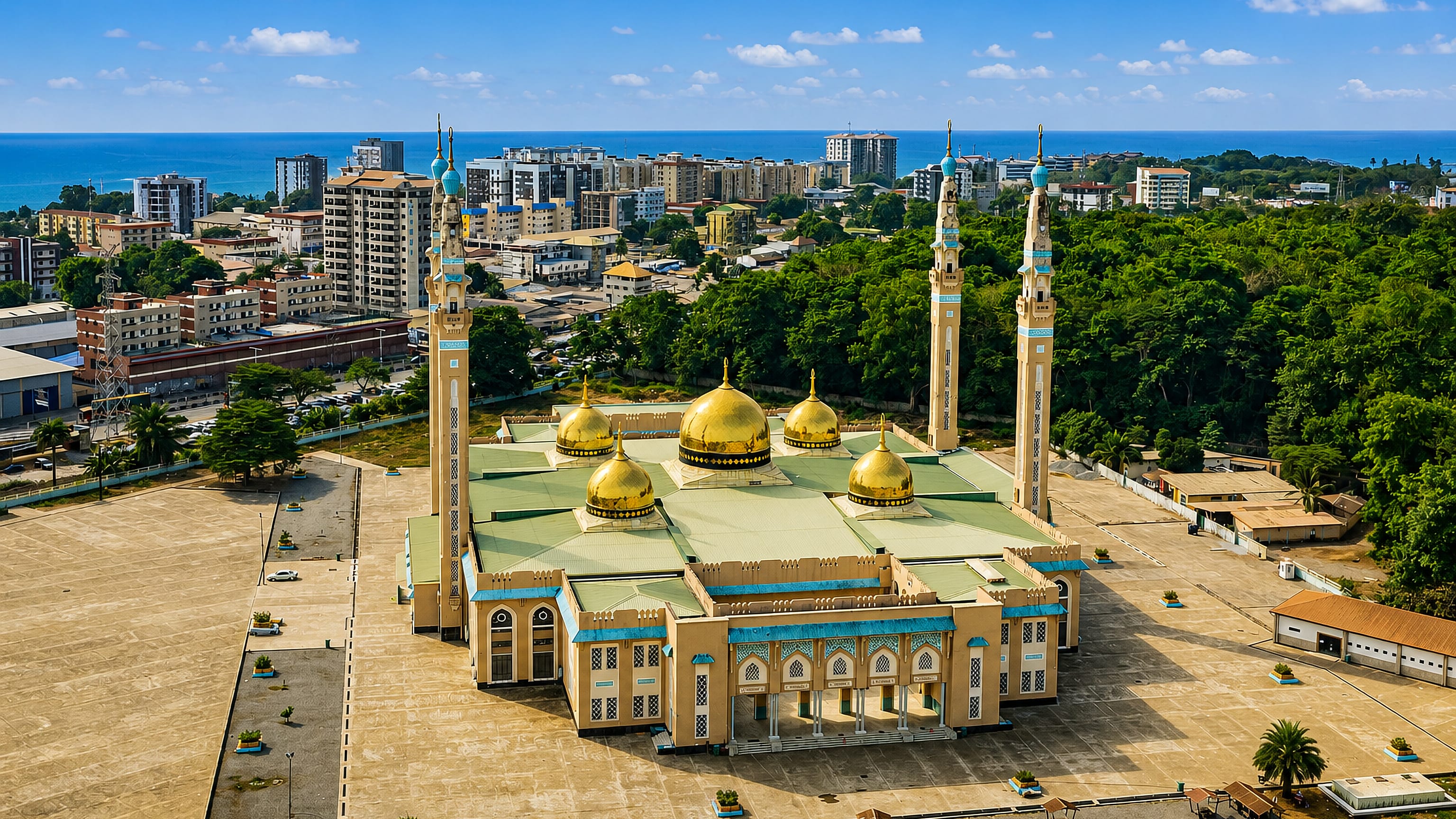
Guinea: Regions, Cities & Travel Guide
Guinea is a West African country on the Atlantic, its capital Conakry set on the Kaloum peninsula.
Hotel links are affiliate links: booking through them may earn us a commission, at no extra cost to you. It never affects how places are ranked. How this works


Top destinations in Guinea
One city to start from, then drill into its areas and hotels.
 Guinea
Conakry
Ships crowd the harbour at Conakry, the port capital and largest city of Guinea, its economic and cultural centre on the West African coast.Where to stay →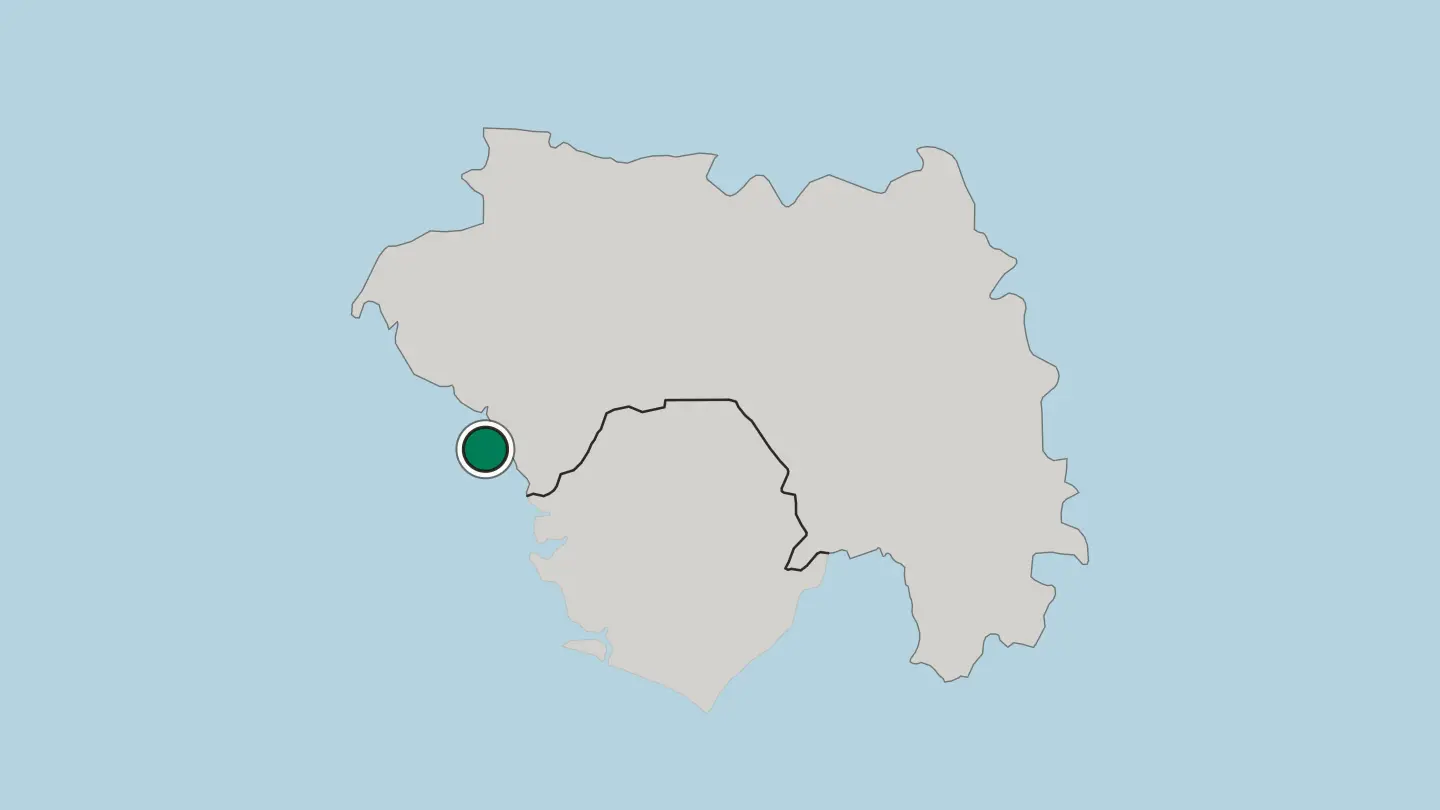
Hotel links are affiliate links: booking through them may earn us a commission, at no extra cost to you. It never affects how places are ranked. How this works
Browse by region
One region so far — open it to see its cities and towns.
About Guinea
What is Guinea known for?
Guinea is known above all for the Fouta Djallon, the highland plateau that gives rise to the Niger, the Gambia, and the Senegal rivers and earns the country its name as the water tower of West Africa. Rivers and falls give the country its character. Waterfalls such as the Voile de la Mariée near Kindia drop over rock, while the Îles de Los scatter off Conakry in the Atlantic.
Its music travels far, carried by the djembe and the kora. Mount Nimba marks the forested south-east.
Where is Guinea?
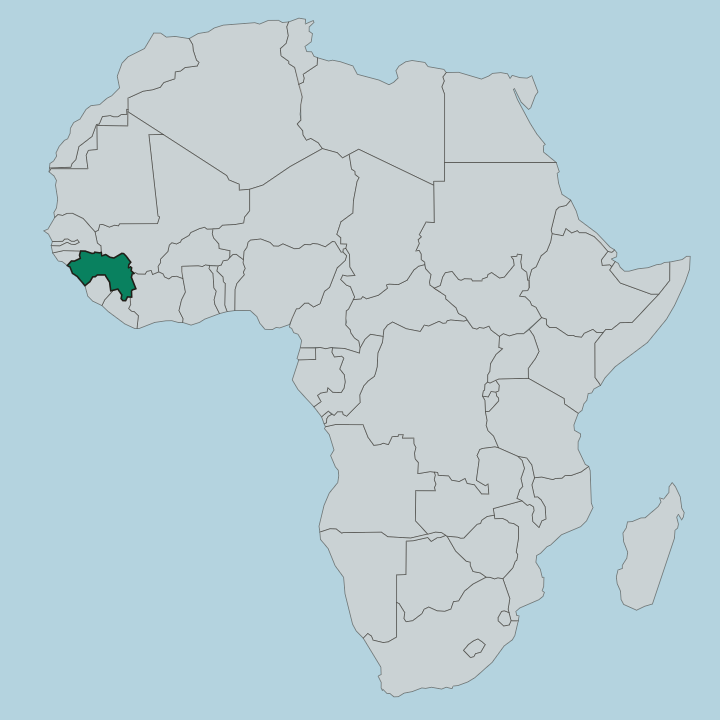
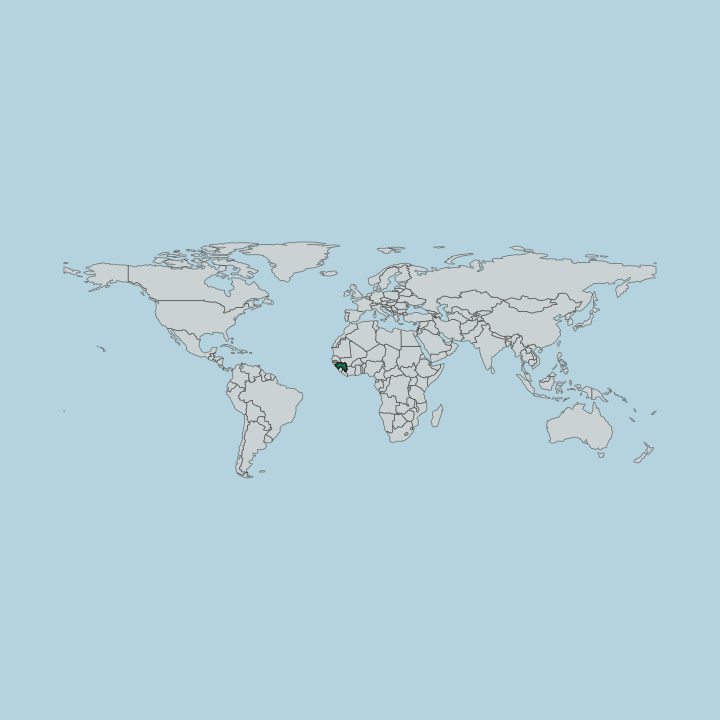
Guinea faces the Atlantic in West Africa, wrapping around Guinea-Bissau, Senegal, Mali, Ivory Coast, Sierra Leone, and Liberia along a long, curving land border. The country divides into four natural regions that could almost be separate countries. Maritime Guinea runs behind the coast, a low plain where drowned river valleys form inlets, tidal marshes, and mangrove behind the port of Conakry.
Behind it the land climbs. The Fouta Djallon plateau rolls across the middle of the country in grassland and sandstone at roughly nine hundred metres, and from these heights the Niger, the Gambia, and the Senegal rivers all begin their journeys, which is why the plateau is called the water tower of West Africa. Mount Loura tops the highland.
North-east of the plateau the ground opens into Upper Guinea, a savanna of the Niger plains broken by rounded granite hills, sloping away toward the dry country near Mali. The south-east is different again. There the rainforest of Forest Guinea covers the hills, and Mount Nimba rises on the Liberian and Ivorian frontier as the highest point in the country.
Few nations of this size pack in so many kinds of ground.
What is the history of Guinea?
Guinea's past reaches back through the great West African states whose trade in gold and salt crossed the savanna of Upper Guinea. The medieval Mali Empire drew part of its wealth and its Mandinka heartland from this ground, and the memory of that era survives in the griots' oral epics still sung to the kora. Later a Fula theocracy took shape in the Fouta Djallon highlands.
In the nineteenth century the Mandinka leader Samori Touré built the Wassoulou Empire across the interior and fought a long war against French expansion before his capture in 1898 handed the territory to France. Colonial rule bound the region into French West Africa for decades. Then, in 1958, Guinea broke away.
Under Ahmed Sékou Touré, whose party swept the territorial vote, the country rejected the constitution offered by France and chose immediate independence, the only French colony in Africa to do so, and it proclaimed a sovereign republic on the second of October. France pulled out abruptly and took what it could. Sékou Touré, a descendant of Samori Touré, ruled until his death in 1984.
The thread from the Mali Empire to that defiant vote runs straight through the country's sense of itself.
What is Guinea like?
Guinea's culture is layered from its peoples and its regions, and music holds it together. The Fula of the Fouta Djallon, the Mandinka of Upper Guinea, and the Susu of the coast around Conakry each bring their own language, dress, and table, and Islam runs through most of daily life. Sound is the country's calling card.
The djembe drum and the twenty-one-stringed kora carry rhythms that spread from Guinea across the world, and the wooden-keyed balafon keeps a tradition traced back to the courts of the old Mali Empire. Griots still hold the histories. These praise-singers memorise lineages and epics, and a wedding or a naming can turn on their words.
Food shifts by region over a shared base of rice, served with peanut sauce, okra, and the smoked-fish stews of the coast, mopped up with tapalapa bread. Craft carries the same regional stamp, from Fouta Djallon indigo cloth to Forest Guinea masks. Hospitality is close to a rule, and a guest is fed first.
What ties the four regions together is less a single style than a shared pulse.
What is the climate of Guinea?
Guinea runs on two seasons rather than four. A long, heavy rainy season soaks the country from roughly May to November, and Conakry on the coast takes some of the fiercest downpours in West Africa when the monsoon winds turn inland. The dry months that follow are hotter and dusty, when the Harmattan blows off the Sahara.
Altitude rewrites the weather entirely. The Fouta Djallon stays notably cooler and fresher than the humid coast, which is why the highlands draw walkers. Pack for rain or for dust.
How do you get to Guinea?
Nearly all visitors arrive through Conakry. Ahmed Sékou Touré International Airport, on the Kaloum peninsula a short drive from the centre, is the country's main gateway and handles the flights from Europe and elsewhere in Africa. From the capital the going gets slower.
Roads climb inland to Kindia and up into the Fouta Djallon, while the far cities of Kankan and Nzérékoré lie a long haul across the interior, so many travellers fly the domestic hops or budget a full day on the road. Overland routes also cross from the neighbouring countries. Nothing in Guinea is as close as it looks.
Updated September 2026