Croatia · Zadar County
Where to Stay in Zadar, Zadar County
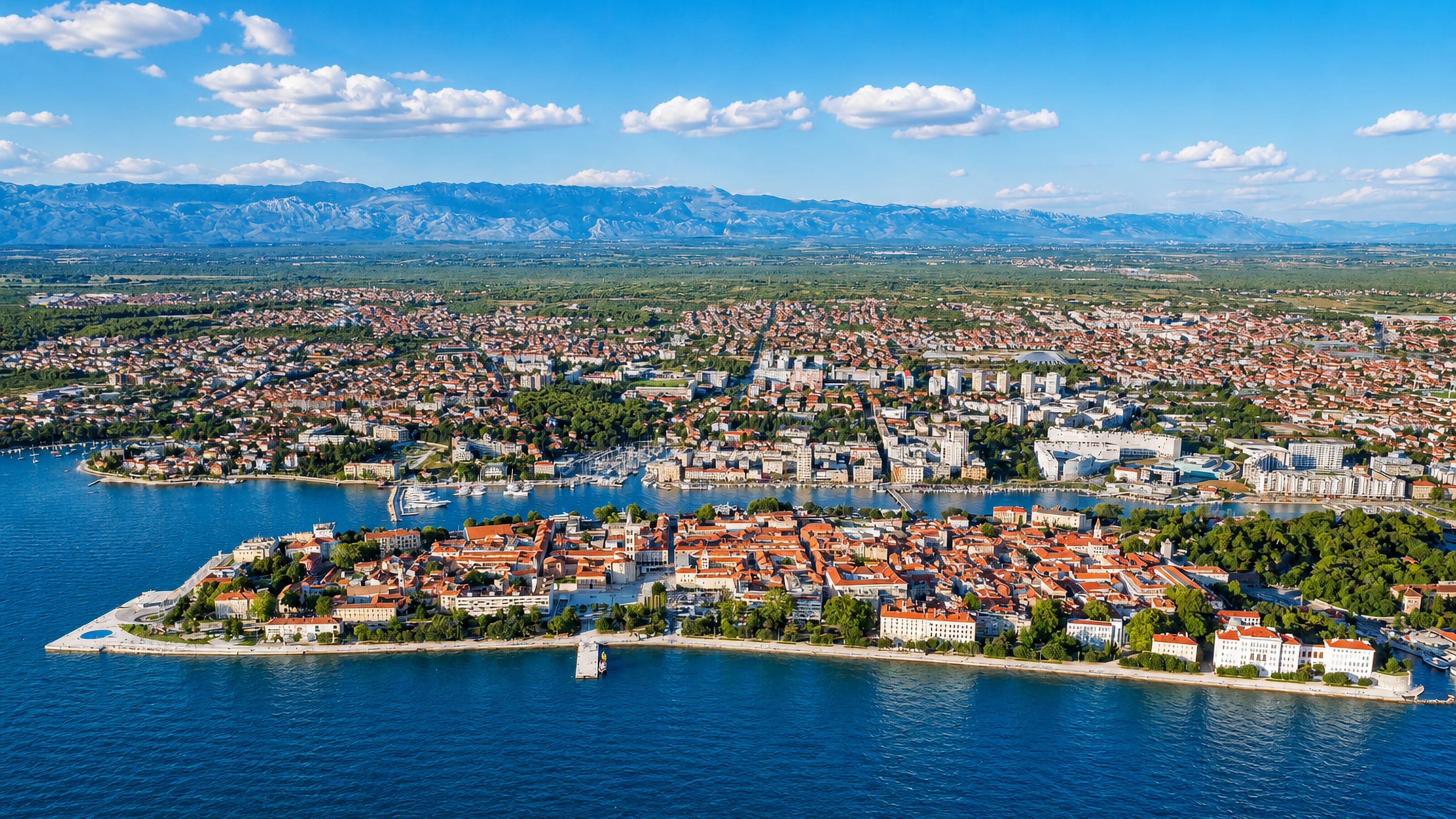
Stone quays face the Adriatic Sea at Zadar, the largest city of northern Dalmatia and seat of Zadar County, known for the Church of St. Donatus.
Hotel links are affiliate links: booking through them may earn us a commission, at no extra cost to you. It never affects how places are ranked. How this works


Where to stay in Zadar
How the choice of base plays out on the ground.
Zadar splits cleanly between its walled peninsula and the mainland districts that grew behind it, and where you sleep decides how your day begins. The historic core packs the Church of St. Donatus, Zadar Cathedral, and the Monument to the Sun within a few pedestrian minutes of the water. Staying on the peninsula puts the Adriatic Sea at the end of every lane.
Marble streets and church bells wake you. The trade-off is noise and a scarcity of beds, since the old town of Zara is small and much of it is protected heritage rather than hotel space. Beyond the walls, the mainland quarters spread toward the ferry port and the coast road, offering more rooms and easier parking without losing sight of the sea.
These districts suit travellers who want a base for day trips into Zadar County and the wider northern Dalmatia coast, then a short walk or bus back to the Church of St. Chrysogonus and the cafes near St. Mary's Church. Families and drivers do better here than on the cramped peninsula. The choice is genuinely binary: atmosphere and stone underfoot, or space and a car that fits.
Find hotels in Zadar
Direct booking searches for these neighbourhoods.
Old town peninsula
The walled peninsula sets Zadar Cathedral, the Roman forum, and the seafront Monument to the Sun within a few minutes of each other, though beds are scarce inside the protected core of old Zara. Few places to stay nearby — book ahead.Find hotels in Old town peninsulaDrivers and families basing themselves for day trips across Zadar CountyMainland quarters
The mainland districts behind the walls hold more rooms, parking, and the ferry port, keeping the Adriatic Sea and the Church of St. Chrysogonus a short walk or bus ride awayFind hotels in Mainland quartersHotel links are affiliate links: booking through them may earn us a commission, at no extra cost to you. It never affects how places are ranked. How this works
Things to do in Zadar
Ranked by global recognition; descriptions from Wikidata (CC0).
Museums & Galleries
1- Archaeological Museum Zadar
Churches & Religious Sites
3- Our Lady of Health Church in Zadar Heritage
- Church of St. Donatus
- Zadar Cathedral
Castles & Historic Sites
2- Monument to the Sun
- Zadar (Samian Ware Discovery Site)
worth knowingacross 3 categories in Zadar
About Zadar
What is Zadar known for?
Zadar is known as the oldest continuously inhabited city in Croatia and the cultural and transit centre of northern Dalmatia. Its walled peninsula holds the round Church of St. Donatus, the Romanesque bulk of Zadar Cathedral, and the seafront Monument to the Sun. The Adriatic Sea frames it all.
Visitors reach the historic core to see Roman and medieval Zara layered street by street, with the Archaeological Museum Zadar gathering the finds that a harbour town accumulates over two thousand years of trade and rule.
What are the main landmarks in Zadar?
Zadar keeps its main landmarks on the old peninsula. All are walking distance apart. The pre-Romanesque Church of St. Donatus rises in a plain stone cylinder above the Roman forum, while Zadar Cathedral anchors the skyline with its long Romanesque facade.
At the waterfront the Monument to the Sun catches the light beside the sea. Smaller but no less old, the Church of St. Chrysogonus, St. Mary's Church, and the Church of St. Simon mark the medieval streets, and the Archaeological Museum Zadar holds the artefacts pulled from centuries of harbour life.
What is the history of Zadar?
Zadar is Croatia's oldest continuously inhabited city. Settled on its Adriatic peninsula long before Rome walled it, the town of Zara under Roman rule laid out the forum whose paving still surfaces beside the round Church of St. Donatus, a plain drum built from Roman spolia that remains the emblem of the early medieval city. Zadar Cathedral rose later as the see grew in reach.
The Archaeological Museum Zadar now keeps the layered evidence of these centuries, from Samian ware and inscriptions to the fittings of long-vanished buildings. Control of the harbour passed between rival powers for the better part of a thousand years. Venice, Hungary, and later empires each left a mark on the churches and the street plan, and the medieval sanctuaries of St. Mary's Church and the Church of St. Chrysogonus survived siege after siege.
War scarred the old town badly in the twentieth century, and reconstruction slowly knit the peninsula back together. The modern Monument to the Sun now sits where new architecture meets the Roman and Romanesque core, a city still shaped by the sea that first made it worth holding.
Where is Zadar?
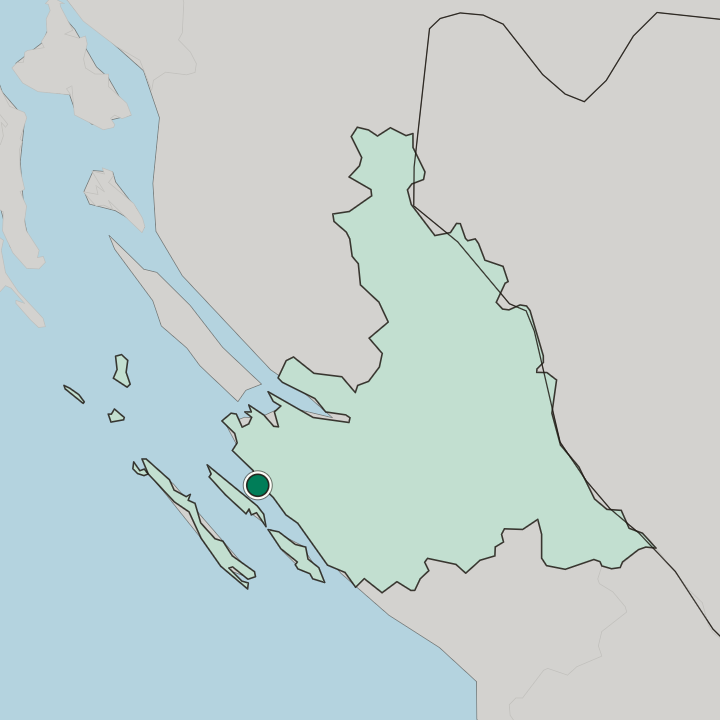
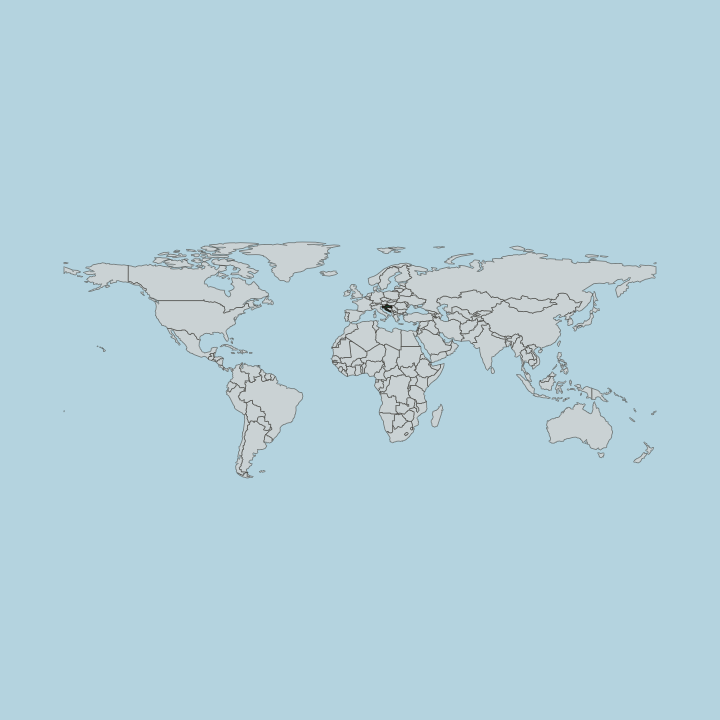
Zadar sits on the Adriatic Sea, where a low limestone peninsula juts into a sheltered channel at the northwestern edge of the Ravni Kotari plain. The old city occupies the peninsula; the mainland districts spread across the flat farmland behind it in northern Dalmatia. Water surrounds three sides of the core.
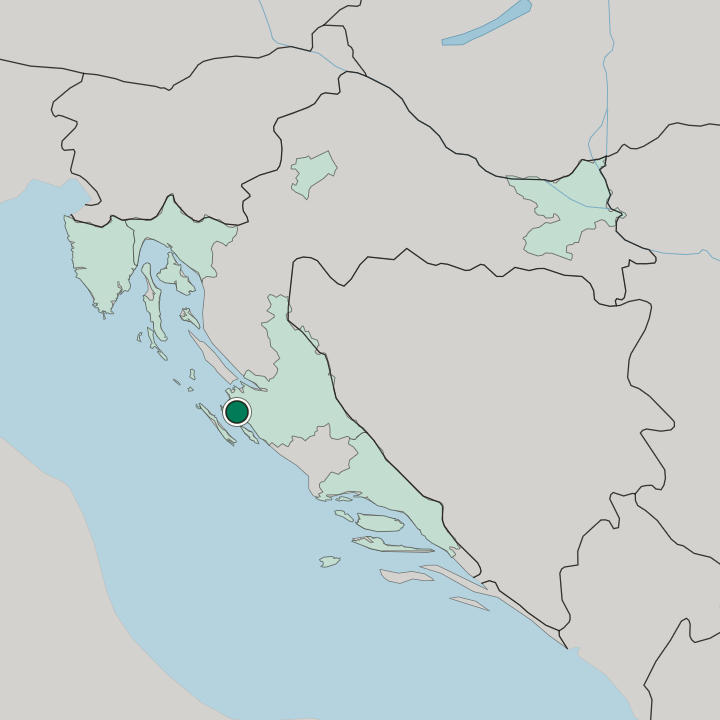
As the seat of Zadar County, the city looks out to the islands and channels that break the coast, with the Adriatic reaching in to define its harbours, its light, and the marble streets that catch the evening sun.
What is the climate of Zadar?
Zadar has a Mediterranean climate shaped by the Adriatic Sea. Summers are long, hot, and dry, with clear skies drawing crowds to the peninsula and the seafront by the Monument to the Sun. Winters stay mild and wet.
The cold bura wind can sweep down off the mainland behind the Ravni Kotari plain, rattling the channel and clearing the air for days. Rain falls mostly in the cooler months, leaving the stone of the old town of Zara washed and bright for the long dry season that follows.
How do you get to Zadar?
Zadar is reached by road, sea, and air along the Adriatic coast. The city lies on the main Dalmatian coastal corridor, tied to the rest of Croatia by motorway and to the islands by the ferries that work its harbour. An airport serves northern Dalmatia a short drive from the centre.
Boats matter here. From the ferry port the sea routes fan out to the offshore islands and down the Zadar County coast, and buses link the mainland districts to the walled peninsula where the Church of St. Donatus marks the heart of the old town.
Common questions
What is the best area to stay in Zadar?
Old town peninsula: First-time visitors who want the Church of St. Donatus and Monument to the Sun on their doorstep. Mainland quarters: Drivers and families basing themselves for day trips across Zadar County.
Good for
Updated September 2026